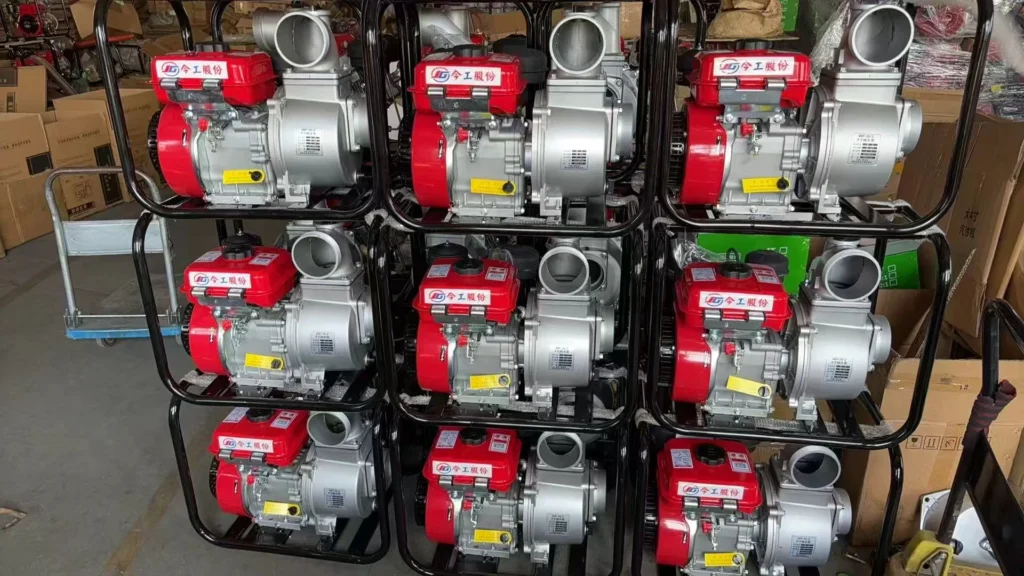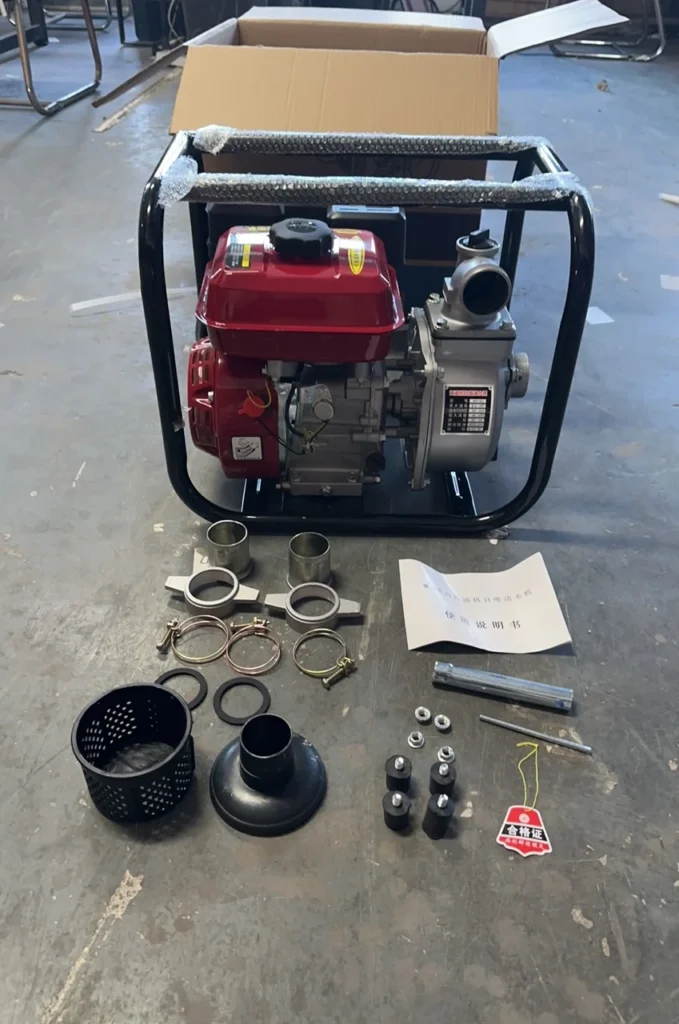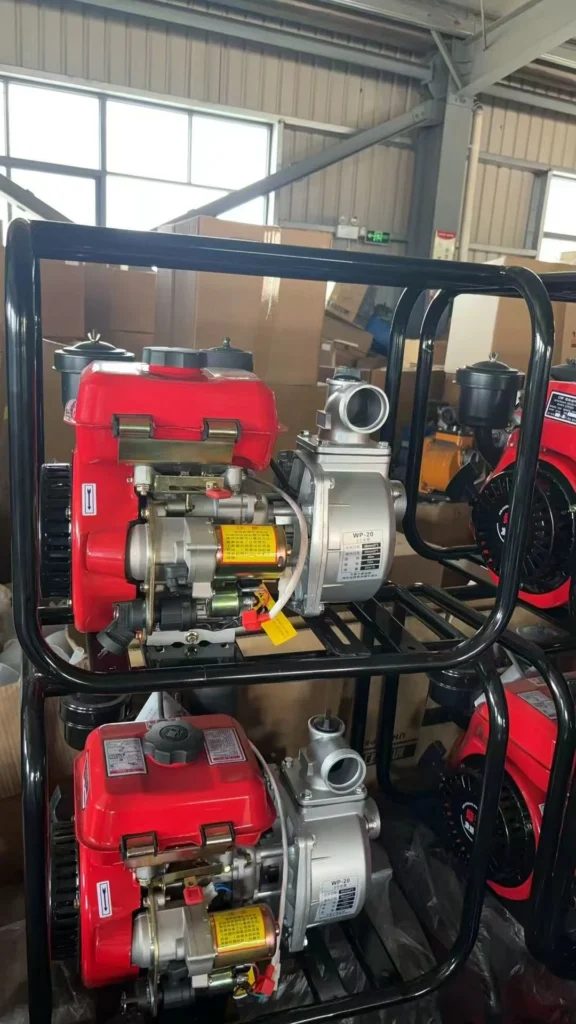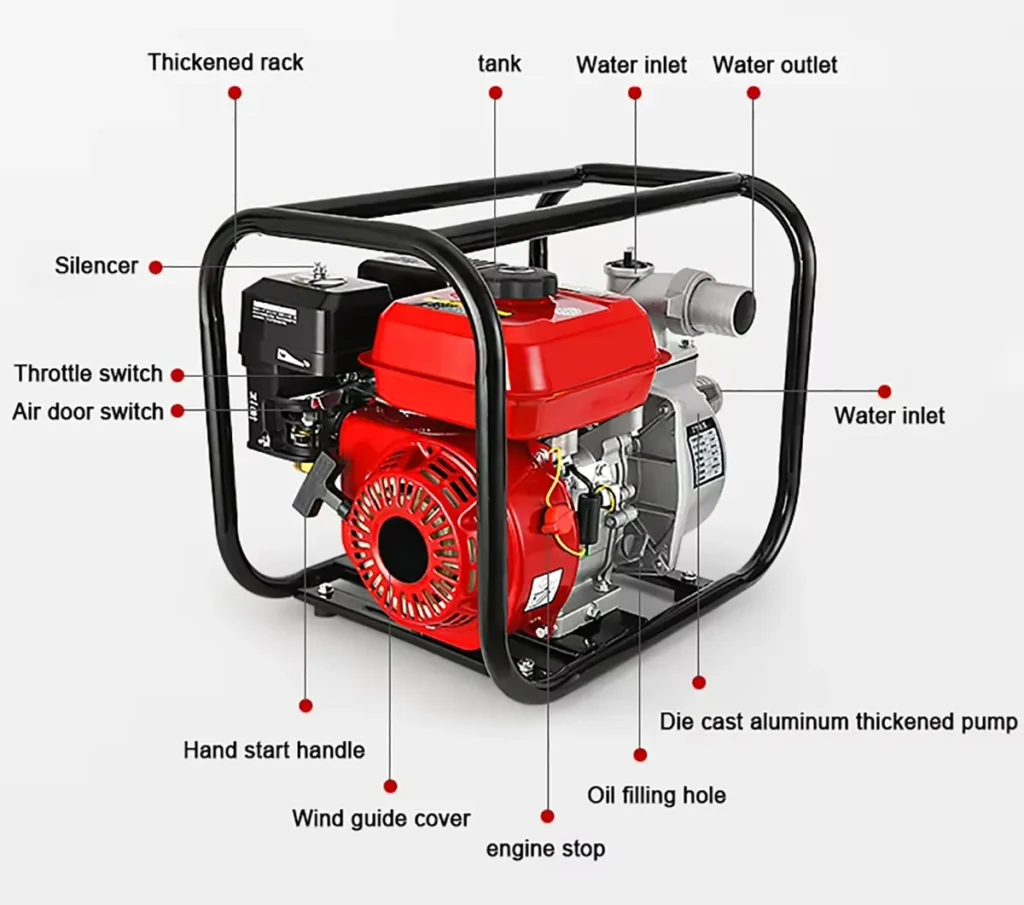
Diesel Water Pump

Motorization and operational context
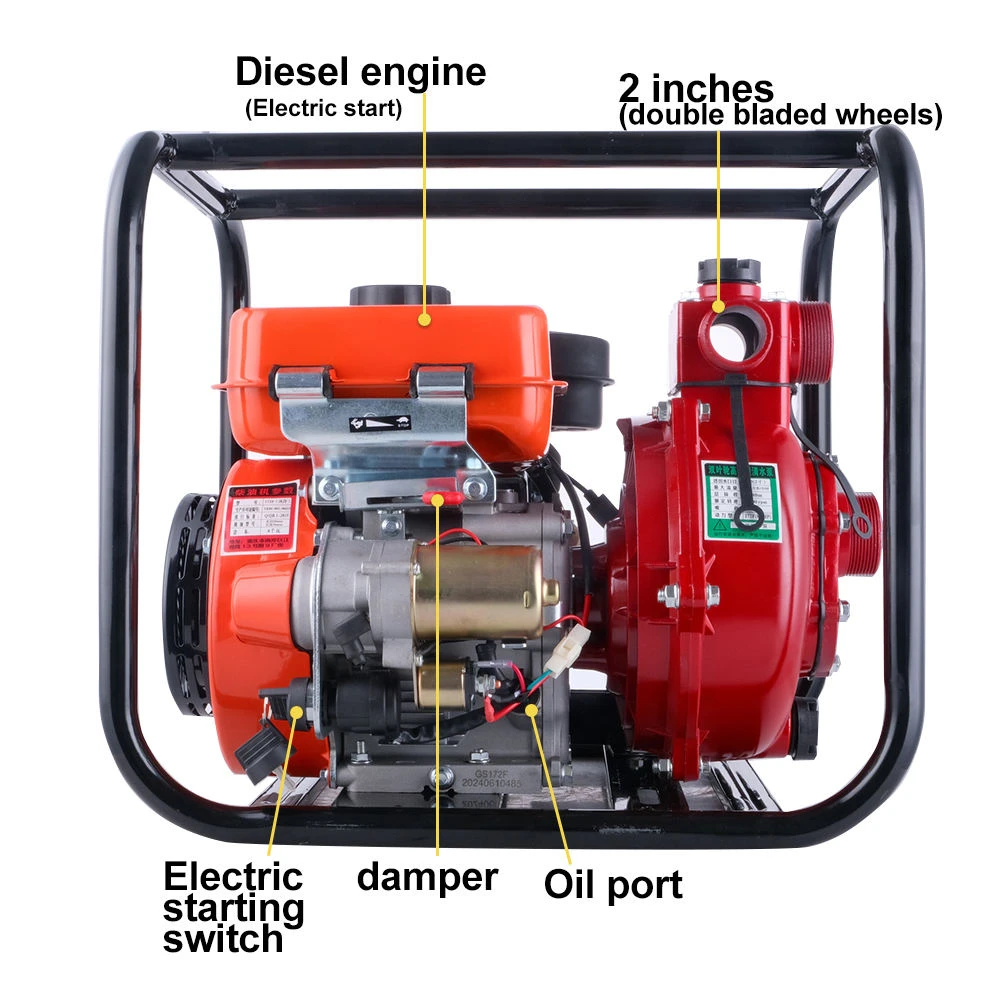
- Diesel water pumps come in various types: portable, stationary, agricultural, and industrial, each designed for specific heavy-duty or continuous use.
- Diesel pumps are durable, fuel-efficient, and perform well in tough conditions.
- They are suitable for heavy-duty, high-pressure, and long-duration operations.
- Diesel pumps are reliable in remote areas without electricity and cost-effective over time.
- This contrasts with gasoline water pumps, which are generally designed for lighter, lower-pressure applications.
Technical Explanation
- Gasoline engines use spark ignition and operate at lower compression ratios, so gasoline fuel pumps deliver fuel at lower pressures and are usually located inside the fuel tank.
- Gasoline pumps are designed to prevent fuel vaporization due to gasoline’s high volatility.
- Diesel engines use compression ignition with higher compression ratios, requiring fuel pumps that deliver fuel at higher pressures.
- Diesel fuel pumps are typically located outside the fuel tank and handle thicker, less volatile diesel fuel.
- Diesel water pumps are generally more durable, fuel-efficient, and suitable for heavy-duty applications.
- Gasoline pumps focus on lower pressure delivery and volatility management.
- Internal components differ: gasoline pumps have finer mesh filters, diesel pumps have larger filters to accommodate thicker fuel.
- Maintenance and service requirements vary between diesel and gasoline pumps.
Reference: https://canongenset.com/diesel-engine-water-pump/
Product Specification Range Data
Diesel water pumps from this source have a wide power output range spanning from 25 kW up to 1000 kW, covering various sizes and applications. However, although the product mentions both gasoline and diesel powered pumps, the specific power output range is only given for diesel pumps, with no explicit power output range provided for gasoline water pumps.
Reference: https://www.alibaba.com/product-detail/XBC-Water-Pumps-Gasoline-diesel-Powered_1600064280408.html
Specific Product Specification Data:
| Pump Type | Discharge Diameter | Power Output (HP) |
| 2 inch Diesel water pump | 50 mm | 4 HP |
| 3 inch Diesel water pump | 80 mm | 6 HP |
| 4 inch Diesel water pump | 100 mm | 9 HP |
| 6 inch Diesel water pump | 153 mm | 15 HP |
| 2 inch Diesel Cast pump | 50 mm | 6 HP |
| 3 inch Diesel Cast pump | 80 mm | 9 HP |
| 3 inch Diesel Trash pump | 80 mm | 9 HP |
| 1.5 inch High pressure diesel | 40 mm | 6 HP |
| 2 inch High pressure diesel | N/A | 6 HP |
Authoritative Web Source
- Agricultural irrigation: pumping water from wells, rivers, or other sources to irrigate crops.
- Construction sites: pumping water from excavations, ditches, or other areas.
- Firefighting: supplying water to fire hoses and sprinkler systems.
- Drainage: removing water from flooded areas or construction sites.
Manufacturer Product And Application Overview
Diesel engine agricultural water pumps are essential for irrigation, draining flooded fields, supplying water to livestock, and moving water efficiently across large areas. They are also used in construction sites and flood control. Powered by diesel engines, these pumps offer reliable, long-duration performance with features like automatic shutdown to protect the engine and pump, making them ideal for demanding agricultural and industrial environments.
Reference: https://www.hnybpumps.com/pump/engine-pump-pump-trailer/diesel-engine-agriculture-water-pump.html
Manufacturer Product Description:
Diesel water pumps, especially high-pressure self-priming types, are widely used in agricultural irrigation and industrial facilities for process water transfer, handling clear or gray water, sewage treatment, and managing liquids containing solids. Their design supports continuous-duty operation in stationary applications.
Reference: https://www.mstpumps.com/water-pumps/diesel-water-pump/agricultural-high-pressure-diesel-self.html
Gasoline Water Pump

Manufacturer Product Line Description With Application Examples
- Suitable for homeowners, gardeners, boat owners, and recreational users.
- General purpose pumps for dewatering tasks.
- High-pressure pumps for irrigation and fire suppression.
- Trash pumps for contractors and rental applications, handling solids and large water volumes.
- Submersible pumps for decorative fountains, garden irrigation, drainage of basements and sumps, slurry and dirty water pumping.
- Used for emptying pools, spas, hot tubs, and water storage.
- Employed in construction sites, cooling towers, parking lot sumps, and farm stock tanks.
Reference: https://powerequipment.honda.com/pumps/choose-a-pump
Manufacturer Product Description With Application Scenarios
- Irrigation for crops, gardens, and lawns.
- Firefighting with high-pressure water delivery.
- Construction water transfer for foundations, concrete mixing, and cooling.
- Drainage of flooded areas, basements, pools, and ponds.
- General use in agricultural, construction, and industrial sectors.
Reference: https://robin-power.com/robin-pump.html
Product Description and Use Case Examples
- Used extensively in agriculture/farming for irrigation systems and mounting on farm equipment.
- Suitable for pumping solids, debris, and wastewater, useful in flood clearance and quarry emptying.
- Favored by construction companies and municipalities for heavy-duty water transfer.
- Applicable for clean water pumping in pools, hot tubs, and water gardens.
- Portable and selected based on flow, pressure, suction, and pumping distance requirements.
Reference: https://www.craftop.com/product/gasoline-water-pump-gwp4310-10-best-gas-water-pump/
Diesel Water Pump
Technical standard and manufacturer data
The typical fuel consumption rate for diesel water pumps, especially fire pump drivers, is defined as the amount of fuel consumed at full load conditions. This rate is usually specified by the diesel engine manufacturer in their literature or data sheets. According to the 2022 NFPA 20 standard revision, the fuel consumption rate at rated horsepower is multiplied by 12 hours of run time plus allowances for sump and expansion (5% each) to size fuel tanks. This ensures sufficient fuel supply for operation, typically allowing about 8 hours of operation at two-thirds fuel tank capacity. The fuel consumption rate is calculated as the fuel supply rate minus the fuel return rate, reflecting actual fuel used by the engine. Modern diesel engines are more fuel-efficient than older models, and this consumption rate forms the basis for fuel tank sizing and operational planning.
Reference: https://www.sfpe.org/publications/fpemagazine/fpeextra/fpeextra2022/fpeextraissue83
Statistical Data
Water pumps generally last between 60,000 to 90,000 miles, with some lasting over 100,000 miles. This lifespan applies broadly regardless of whether the engine is diesel or gasoline, and depends largely on maintenance and engine usage.
Reference: https://akmicorp.com/water-pump-installation-did-you-know/
Anecdotal And Expert Opinion
Diesel water pumps can last anywhere from 50,000 miles to over a million miles depending on operating conditions. There is no fixed maintenance interval for diesel water pumps, and they are often expected to last the life of the engine under normal use. Replacement is typically done upon failure or when signs of wear appear, rather than on a scheduled basis.
Reference: https://gmb.net/blog/replace-pump-before-failure/
Technical And Engineering Evidence
- Hot galvanizing of canopy and components provides superior corrosion resistance, extending operational lifespan.
- Modular design allows easy replacement of damaged parts, minimizing downtime and maintenance costs.
- Optimized engineering ensures high fuel efficiency and reliable performance.
- Durable structure and sound attenuation improve operational reliability in harsh environments.
- Eco-friendly engines reduce fuel consumption and emissions, supporting both efficiency and sustainability.
Reference: https://dewateringpumps.com/diesel-pumps/
Testimonial And Descriptive Evidence
- Diesel water pumps are made from high-quality materials, making them strong and long-lasting.
- They can handle heavy tasks without damage, ensuring durability in demanding conditions.
- These pumps operate efficiently for many years, reducing the need for replacement.
- Diesel pumps consume less fuel compared to other types, leading to cost savings and operational efficiency.
- Maintenance is simple and requires little attention, contributing to reduced downtime and lower repair costs.
Reference: https://www.wetongmechine.com/blog/What-are-the-advantages-of-diesel-water-pumps
Best Uses
Product specification and application description
- Diesel water pumps are robust and durable, suitable for heavy-duty and continuous operation.
- Ideal for remote locations or areas without electricity due to diesel engine power.
- Commonly used in agriculture, construction, and emergency response industries.
- Diesel engines provide high torque at low RPM, making them effective for pumping water over long distances or to significant heights.
- Fuel-efficient compared to gasoline engines, allowing longer operation on the same fuel amount.
Industry and municipal application overview
- Diesel water pumps are used in remote agricultural irrigation and greenhouse operations.
- Support hydroponics and drainage control, contributing to food security.
- Employed in industrial processes such as fluid transport, chemical processing, and cooling systems.
- Used in municipal water treatment, sewage transport, and flood management.
- Important for environmental conservation efforts like wetland restoration and aquifer recharge.
参考: https://www.jandjpumps.com/understanding-water-pumps-types-uses-and-how-they-work
Agricultural application case study
Diesel water pumps provide an affordable and reliable solution for water management in agricultural areas lacking reliable electricity. They enable efficient irrigation by extracting water from rivers, reservoirs, and wells, ensuring steady water supply to fields. These pumps help control irrigation schedules and water distribution precisely, maximizing water use efficiency and crop yields, especially in regions facing water scarcity.
Reference: https://www.unnatipumps.com/how-can-a-water-pump-boost-your-agricultural-production/
Gasoline Water Pump
Descriptive And Functional Evidence
- Portable and easily transported to different locations.
- Independent from electrical power, suitable for off-grid use.
- High power output for efficient water pumping.
- Self-priming feature reduces startup time.
- Robust and durable design for tough conditions.
- Versatile for multiple applications such as agriculture, construction, and emergency response.
Reference: https://talebkasimy.com/23759/2024/05/17/what-is-a-gasoline-water-pump/
Descriptive And User-Experience Evidence
- Can be used in remote locations without electricity.
- Lightweight and compact for easy transport and storage.
- Easy to refuel on-site.
- Reliable and durable construction.
- Simple controls and user-friendly interface.
- Easy to operate even for users without prior experience.
Reference : https://www.deponpump.com/water-pump/portable-diesel-water-pump/portable-gasoline-water-pump.html
Testimonial And Descriptive Evidence
- Gasoline water pumps are lightweight and compact, facilitating easy transportation and storage.
- They do not require an electrical power source, making them ideal for remote locations.
- Easy to operate with simple controls and quick start features.
- Require minimal maintenance and are durable.
- Suitable for various applications including agriculture, construction, emergency flood response, and firefighting.
Descriptive Evidence
- Designed to be lightweight and easy to transport.
- Suitable for various locations including remote outdoor settings and construction sites.
- Valuable in emergency situations like floodwater management.
- Easy to operate with simple controls and user-friendly features.
- No specialized training required for operation.
参考: https://www.gtltoolsgroup.com/a-the-benefits-of-investing-in-a-portable-gasoline-water-pump.html
Best Uses
Industry and Application Examples
|
Environment/Industry |
Typical Tasks and Applications |
| Construction | Dewatering excavation sites, concrete mixing water transfer, site drainage |
| Agriculture | Irrigation, livestock watering, pond management |
| Emergency Response | Flood control, firefighting support, disaster relief |
| Industrial | Liquid transfer in manufacturing, tank emptying, wastewater management |
| Mining | Dewatering, slurry transfer, process water management |
| Municipal | Stormwater management, sewer bypass, water main repair support |
| Marine | Bilge pumping, ballast transfer, general marine water transfer |
| Landscaping | Water feature maintenance, irrigation, drainage solutions |
参考: https://pacerpumps.com/gasoline-engine-driven-transfer-pumps-guide-pacer-pumps/
Product Feature and Research-Based Evidence
- Uses petrol fuel, making it convenient for use in areas without electricity.
- Lightweight and portable design for easy transport and operation.
- Durable frame construction for stability during use.
- Self-priming technology allows easy starting without external priming.
- Ideal for small to medium water transfer tasks such as irrigation, pool drainage, and emergency water handling.
- Powered by an air-cooled 4-stroke engine, offering fuel efficiency and reliable performance.
- Suitable for residential, agricultural, and light commercial applications.
Field Test Data And Efficiency Analysis
| Engine Type | Typical Ideal Efficiency (%) | Real-World Efficiency Range (%) | Notes |
| Diesel | 30-40 | 15-20 | Small engines affected by parasitic losses; better than gasoline in small sizes |
| Gasoline (Spark Ignition) | 25-30 | ~10 | Small engines vary widely; can be as low as 10% efficiency |
Additional notes:
- Small engines (<5-10 kW) have lower efficiencies than textbook values.
- Parasitic losses (cooling fan, injection pump) reduce diesel engine efficiency.
- Mechanical transmission losses can reduce overall system efficiency to as low as 60% in small systems.
- Field tests on small kerosene-fueled pumps showed very low total system efficiencies (0.75-3.5%), mainly due to pipeline losses.
This evidence shows that while diesel engines generally have higher thermodynamic efficiency and better real-world efficiency than gasoline engines, actual power output in field conditions is influenced by many factors including engine size, maintenance, and system losses.
Reference: https://www.fao.org/4/ah810e/AH810E09.htm
Diesel and gasoline engines differ in design and intended use, affecting their power output and durability. Diesel engines are typically more robust and suited for continuous duty applications like water pumping, offering stable power output over long periods. Gasoline engines, often lighter and designed for intermittent use, may provide similar peak power but generally have shorter service life under continuous load. The trade-off between power output and engine life is critical when selecting engines for water pumps, as continuous operation demands engines rated for sustained power rather than peak horsepower. Torque characteristics also influence performance under load, with diesel engines often having better torque rise, improving their ability to maintain power output during pumping.
Reference: https://www.frontierpower.com/resources/articles-and-links/make-sense-of-diesel-engine-specs/
Maintenance
Maintenance Guideline for Marine Diesel Engines
- Change engine oil and oil filters at manufacturer-recommended intervals to prevent sludge and wear.
- Replace fuel filters regularly and inspect injectors to ensure clean combustion.
- Flush and replace coolant as needed to avoid overheating.
- Inspect raw water pumps, fresh water pumps, and heat exchangers for leaks or corrosion.
参考: https://dieselpro.com/blog/category/taking-care-of-your-marine-diesel-engine/
Maintenance Guideline With Intervals
- Change engine oil regularly according to manufacturer recommendations using specified oil types.
- Replace fuel filters every 200-300 hours to prevent clogging and engine inefficiency.
- Clean or replace air filters regularly to maintain engine efficiency.
- Monitor coolant levels and replace coolant every 500-600 hours to prevent overheating.
- Inspect and maintain the battery, ensuring terminals are clean and battery is charged.
- Inspect mechanical components such as seals, gaskets, and bearings; lubricate as recommended.
- Clean the pump strainer after each use to prevent debris buildup.
- Properly store the pump during downtime by draining fuel and running the engine periodically.
Maintenance Guideline
- Conduct regular visual inspections of the pump and engine components to detect wear or leaks.
- Maintain the fuel system by regularly replacing fuel filters and checking for contamination.
- Change engine oil and oil filters at intervals recommended by the manufacturer.
- Monitor and maintain the cooling system, including coolant replacement every 500-600 hours.
- Perform battery maintenance by checking voltage, electrolyte levels, and cleaning terminals.
- Lubricate moving parts as per manufacturer guidelines to prevent wear.
- Regularly test the pump operation through scheduled runs.
- Test emergency shutdown systems periodically.
- Inspect seals and gaskets for wear and replace as needed.
- Keep an inventory of critical spare parts to reduce downtime.
- Ensure maintenance personnel are trained and maintain detailed service records.
- Schedule professional inspections to preemptively address issues.
Informational List
Common Safety Concerns Associated With Diesel Water Pumps Include:
- Fuel spills and leaks, which pose environmental and fire hazards.
- Mechanical failures affecting engine, pump assembly, or fuel system, leading to downtime and safety risks.
- Inadequate maintenance causing reduced performance and potential emergency failures.
- Fuel contamination by water or sediment, impacting reliability.
- Noise and vibration that can cause discomfort or affect nearby equipment.
Mitigation Measures to Address These Concerns Are:
- Regular inspection and maintenance following manufacturer guidelines.
- Training personnel on proper operation and safety procedures.
- Proper fuel management including quality testing and secure storage.
- Emergency response planning for spills, failures, and incidents.
- Noise and vibration control through dampening measures.
- Backup systems to ensure continuous operation during failures.
Product Specification And Qualitative Description
The diesel water pump listings and descriptions do not provide explicit purchase price or FOB price ranges. Instead, they focus on specifications such as engine power, flow rate, fuel tank capacity, and operational advantages like high power output, fuel efficiency, durability, and versatility. Customer testimonials praise the product quality and performance but do not mention prices. Therefore, no direct price comparison with gasoline water pumps can be made based on the available diesel pump data.
Reference: https://www.bisongenerator.com/water-pump/diesel-water-pump/
Comparative Analysis
Gasoline engines generally have lower maintenance costs and fewer routine maintenance requirements compared to diesel engines. Diesel engines incur higher costs due to more frequent maintenance, expensive parts, and emission system repairs. Although diesel engines last longer, this longevity is less relevant for typical water pump usage cycles. Therefore, gasoline water pumps tend to have lower overall operating costs over a five-year period compared to diesel pumps.
Quantitative Data
Diesel agricultural water pumps typically incur annual operating costs around $13,336, primarily due to fuel and maintenance expenses. In contrast, electric pumps cost significantly less to operate, about $5,620 per year, indicating a $7,716 annual savings. Although gasoline pump costs are not explicitly detailed, diesel pumps are known to have higher operating costs due to fuel price volatility and maintenance demands.
Reference: https://www.pumps.org/2022/12/15/ag-pumps-study-details-surprising-energy-savings/
Empirical Cost Data
Empirical data from Ethiopian diesel water pump systems show average annual operating costs (including operation, maintenance, and replacement costs) around $13,182. Over five years, this amounts to approximately $66,000 in operating expenses, excluding initial capital costs. Diesel pumps have relatively low capital costs but high and variable operating costs due to fuel price fluctuations and maintenance needs. Gasoline pump costs are not explicitly provided, but the higher maintenance and fuel costs of diesel pumps suggest gasoline pumps are typically less expensive to operate over five years.
Reference: https://www.sciencepublishinggroup.com/article/10.11648/j.ajasr.20251101.18
Applications
| Sector | Common Applications |
| Construction | Drainage, precipitation, transport of clean or muddy water, removal of rainfall and groundwater |
| Agriculture | Irrigation drawing water from rivers, lakes, or wells |
| Emergency Services | Emergency drainage during natural disasters and floods |
| Outdoor Activities | Portable water pumping for camping, field activities, and temporary water supply or rainwater removal |
| Industrial | Treatment of industrial wastewater and drainage |
Reference: https://www.excalibur-generator.com/gasoline-water-pump.html
How to Choosing Your Pump
Comparative Analysis
| Factor | Gasoline Water Pumps | Diesel Water Pumps |
| Cost | Lower upfront cost, more affordable | Higher upfront cost, more expensive |
| Power | Less powerful, suitable for light tasks | More powerful, ideal for heavy-duty tasks |
| Fuel Efficiency | Less fuel-efficient | More fuel-efficient, pumps more water per gallon |
| Maintenance | Easier to start and maintain | Harder to start and maintain, more complex |
| Emissions | Higher emissions, more environmental impact | Lower emissions despite higher power |
| Durability | Shorter lifespan, may require frequent maintenance | More durable and longer-lasting with proper care |
| Variety | More models available, greater portability | Fewer models, generally less portable |
This comparison supports choosing a gasoline water pump for small, occasional, or budget-sensitive tasks due to its affordability, ease of use, and portability. Conversely, diesel water pumps are better suited for heavy-duty, frequent, or large-scale applications where power, fuel efficiency, and durability are prioritized despite higher initial and maintenance costs.
Reference: https://www.bisongenerator.com/Blog/gasoline-vs-diesel-water-pump.html
Expert Checklist And Industry Report Citations
Pump Type Selection:
Industry experts recommend choosing the pump type (centrifugal, positive displacement, submersible) based on application needs. The Hydraulic Institute reports centrifugal pumps dominate 75% of the market due to versatility and handling large volumes.
Reference: https://www.borrapumps.com/blog/checklist-for-choosing-pipeline-pumps-in-industrial-applications/
Flow Rate and Pressure Requirements: ASME emphasizes accurate determination of flow rate and pressure to avoid operational issues like cavitation. Different industries require different specifications, e.g., high flow for water treatment, precise pressure for chemical processes.
Material Compatibility: Selecting pump materials compatible with fluid properties (pH, temperature, viscosity) is critical. The Hydraulic Institute notes 30% of pump failures relate to material incompatibility. Materials like stainless steel, polypropylene, or ceramics are recommended for corrosive or abrasive fluids. ASTM findings highlight thermoplastic pumps can extend lifespan by up to 50% compared to metals.
Maintenance and Reliability: Over 80% of pump failures stem from poor maintenance. Experts advise regular inspections, vibration checks, and predictive maintenance. Incorporating smart monitoring and automation can reduce maintenance costs by about 30%, enhancing reliability and reducing downtime.
Cost vs. Value Considerations: Industry guidance stresses balancing budget constraints without sacrificing quality. Selecting pumps based on specifications and user feedback helps find cost-effective options that deliver durability and performance.
Consultation with Manufacturers and Experts: Engaging with pump manufacturers and industry specialists is recommended to tailor selections to specific operational needs and fluid characteristics.
Industry Experience: Choose maintenance providers with extensive experience in pump types relevant to your application.
Specialization: Ensure the provider specializes in the specific pump type you use.
Certifications and Endorsements: Verify professional certifications and manufacturer endorsements.
Comprehensive Services: Look for providers offering preventive, corrective, and emergency maintenance.
Customer Support: Evaluate responsiveness, availability, and support quality.
Pr-Hiring Questions: Ask about experience, references, rates, emergency response times, warranty policies, preventive maintenance programs, and compliance with safety standards.
Reviews and Recommendations: Use online reviews, peer recommendations, business directories, and industry forums to assess provider reputation.
Reference: https://www.manwinwin.com/pumps-maintenance/
Conclusion
- Volume and flow: Diesel centrifugal pumps handle high volumes (10-1500 m³/h) and variable flow-head combinations.
- Solids handling: Diesel pumps can manage larger solids (up to 76 mm) due to semi-open impellers and abrasion-resistant casings.
- Application constraints: Diesel pumps are suitable where no external power is available; gasoline pumps are lighter but less efficient.
- Performance and operation: Diesel pumps have fuel autonomy (~40 hours) and can operate under challenging conditions with automatic priming.
- Maintenance: Diesel pumps require simple maintenance, mainly wear parts and filters; advanced controllers can monitor service needs.
参考: https://www.miningweekly.com/article/five-tips-when-choosing-a-diesel-or-electric-pump-2023-07-07
Comparative Factual Evidence
- Diesel pumps are heavier but more fuel-efficient.
- Gasoline pumps are lighter but consume more oil.
- Gasoline pumps are smaller in size and generally have higher power than diesel pumps.
- Both types are commonly used in agricultural irrigation and perform well in that role.
- Gasoline pumps are cheaper and more economical for most farmers.
- Diesel pumps have greater power but lower working efficiency compared to gasoline pumps.
参考: https://www.slongpower.com/info/which-is-better-gasoline-or-diesel-water-pump-68997787.html
Professional Expert Consultant Profile
- A highly experienced pump consultant with decades of engineering and design expertise is available for detailed mechanical design, equipment specification, troubleshooting, and suitability consultation.
- The consultant assists with project plans, reviews, and manufacturer liaison to ensure correct pump selection.
- Experience includes flood control, water supply systems, pump station design, and performance verification.
- The consultant provides technical support from initial design through installation and maintenance phases.
参考: https://www.cecon.com/consultant-resumes/1720
Industry guide recommending professional advice
- The guide advises users uncertain about pump selection to consult with industry professionals or reputable suppliers for expert guidance.
- It stresses the importance of considering manufacturer reputation, certifications, and after-sales support when choosing a pump.
- Users are encouraged to seek advice from engineers or pump specialists to match pumps with specific needs and applications.
- The guide highlights the value of warranties, maintenance support, and technical assistance from suppliers to ensure long-term pump reliability.
Reference: https://www.streampumps.com/pump-knowledge/water-pump-guide-240809.html
Supplier recommendation and expert consultation
- Varco Supply is recommended as a reliable water pump supplier with extensive inventory and availability of pumps and replacement parts, ensuring minimal project delays.
- The supplier offers technical expertise and consultation services to help users select the right pump tailored to their specific needs.
- Varco Supply supports professionals with solutions for various real-world applications, including water delivery, high-pressure cleaning, and debris-filled water pumping.
- Emphasis is placed on the importance of partnering with knowledgeable suppliers who understand industry demands and provide fast delivery and customer support.
Diesel or Gasoline Water Pump Which Is Right for You?
If you need a machine for tough jobs and long hours, you might choose a diesel water pump. For lighter tasks or when you want to carry your pump easily, a gasoline model could work better. Your best choice depends on what you need most—power, portability, easy care, or price. Think about which factor matters most to you before you decide.
Key Takeaways
- Choose a diesel water pump for big, tough jobs that need steady power and long hours of work.
- Pick a gasoline water pump for small, quick jobs where you need a light and easy-to-move pump.
- Diesel pumps last longer and use fuel more efficiently but cost more and need more care.
- Gasoline pumps cost less, start easily, and are simple to maintain but use more fuel and may not last as long.
- Think about your job size, how often you move the pump, your budget, and maintenance ability before deciding.
Overview
Diesel Water Pump
A diesel water pump is made for hard work. These pumps come in different types. Some are portable, and some stay in one place. There are also pumps for farms and factories. Each type has its own job, but all are strong and can run for a long time. You can trust a diesel water pump for big jobs and high pressure. They work well where there is no electricity. Their strong build helps them last many years.
Diesel pumps use compression ignition and need more pressure for thick fuel.
- They have bigger filters to clean diesel fuel.
- People use them for:
- Watering big farms
- Draining water from fields or building sites
- Giving water for firefighting
- Moving water in mines or factories
Diesel water pumps come in many power levels. You can get a small 4 HP pump or a big one with 15 HP. Some factory pumps have even more power.
Gasoline Water Pump
A gasoline water pump is light and easy to carry. You will use these pumps for small jobs at home or work. Gasoline pumps use spark ignition and work with less pressure. They are made to stop fuel from turning into vapor. This is important because gasoline is more likely to turn into vapor than diesel.
- Gasoline pumps have smaller mesh filters for thin fuel.
- You might use them for:
- Watering your garden or lawn
- Emptying pools, hot tubs, or basements
- Handling small water jobs at building sites
- Firefighting in small places
- Pumping water for boats or fun
Pick a gasoline water pump if you want something easy to move and start. These pumps are good for quick jobs and when you need to move them a lot.
Diesel Water Pump
How It Works
A diesel water pump uses a diesel engine to power its movement. You start the engine, and it turns a shaft that drives the pump. The pump pulls water in through an inlet and pushes it out through an outlet. Diesel engines use compression ignition, which means they squeeze air until it gets hot, then inject fuel to make it burn. This process gives the pump strong power and lets it run for long hours without stopping. You can use a diesel water pump even when you do not have electricity nearby.
Pros
- Diesel water pumps are built to last. You get a strong machine made from high-quality materials.
- These pumps handle heavy jobs without breaking down. They work well in tough places like farms or construction sites.
- You save money on fuelbecause diesel engines use less fuel than gasoline engines. Modern designs make them even more efficient.
- Maintenance is simple. You do not need to fix them often, and you can replace parts easily if needed.
- The canopy and parts often have special coatings to stop rust, so your pump lasts longer.
- Diesel water pumps can run for many years. Some last over 100,000 milesif you take care of them.
Tip: When you size your fuel tank, plan for about 8 hours of use at two-thirds capacity. This helps you avoid running out of fuel during long jobs.
Cons
- Diesel water pumps weigh more than gasoline pumps. You might find them harder to move.
- They cost more to buy at first.
- Diesel engines can be louder than gasoline engines.
- You need to keep the fuel clean. Dirty fuel can cause problems.
- Sometimes, starting a diesel engine in cold weather is harder.
Best Uses
You should choose a diesel water pump for big jobs and tough conditions. These pumps work best when you need to move a lot of water or run the pump for many hours. Here are some common uses:
- Irrigating large farms or greenhouses
- Draining water from construction sites or mines
- Emergency flood control and firefighting
- Supplying water in places without electricity
- Industrial uses like moving chemicals or cooling systems
- Municipal jobs such as sewage transport or water treatment
A diesel water pump gives you reliable power and long-lasting service, especially in remote or demanding environments.
Gasoline Water Pump
How It Works
A gasoline water pump has a small engine that uses gasoline. When you start it, the engine spins a shaft. This shaft moves the pump. The pump pulls water in from one side. Then it pushes water out the other side. Most gasoline pumps have a spark plug to light the fuel. This helps the engine start fast and run well. Many pumps can self-prime. You do not need to add water before starting. These pumps work anywhere because they do not need electricity.
Pros
There are many good things about gasoline water pumps:
- They are light and small, so you can carry them easily.
- You can use them where there is no electricity.
- The controls are simple, so anyone can use them.
- You can fill them up with fuel quicklyand keep working.
- They are strong and can handle tough jobs outside.
- Self-primingsaves you time when setting up.
- You do not need special training to use them.
- You can use them for many jobs like gardening or emergencies.
Tip: If you need to move your pump a lot, a gasoline water pump is a good choice.
Cons
There are some things you should know before you buy:
- Gasoline engines use more fuel than diesel ones.
- You may need to add fuel more often on long jobs.
- Gasoline can catch fire easily, so be careful with it.
- These pumps can be loud, especially in quiet places.
- Some pumps may not last as long as diesel pumps if used for big jobs.
Best Uses
Gasoline water pumps are best for small or medium jobs. They are easy to move and set up fast. You can use them in many places and for many things. Here is a table that shows where and how you might use them:
| Environment/Industry | Typical Tasks and Applications |
| Construction | Taking water away, mixing water, draining sites |
| Agriculture | Watering crops, giving water to animals, pond care |
| Emergency Response | Flood help, firefighting, disaster help |
| Industrial | Moving liquids, emptying tanks, managing waste water |
| Mining | Taking water away, moving slurry |
| Municipal | Stormwater work, sewer help, fixing water pipes |
| Marine | Pumping water from boats, moving ballast |
| Landscaping | Caring for water features, watering, draining |
You can trust a gasoline water pump for home, farm, or emergency jobs. It is easy to use and move, so it works well for many people.
Comparison
Power & Efficiency
When you choose a water pump, power and efficiency matter a lot. Diesel engines usually give you more steady power for long jobs. They work well when you need to run the pump for hours without stopping. Gasoline engines can reach high power for short times, but they do not last as long under heavy use.
Here is a table that shows how diesel and gasoline engines compare in real-world tests:
| Engine Type | Typical Ideal Efficiency (%) | Real-World Efficiency Range (%) | Notes |
| Diesel | 30-40 | 15-20 | Better for small engines; more robust for long jobs |
| Gasoline (Spark Ignition) | 25-30 | ~10 | Varies a lot; less efficient for small engines |
Diesel engines also have better torque. This means your diesel water pump can keep working even if the job gets harder. Gasoline pumps may slow down or stop if the load gets too heavy.
Tip: If you need a pump for tough, long jobs, diesel gives you more reliable power and better efficiency.
Fuel & Emissions
Diesel and gasoline pumps use different fuels. Diesel fuel gives you more energy per gallon, so you use less fuel for the same job. Gasoline burns faster and you may need to refill more often. Diesel engines also make less carbon monoxide, but they can produce more soot and smell stronger.
Gasoline engines are easier to start and warm up faster. They may release more carbon monoxide, which is dangerous in closed spaces. Diesel engines are safer for outdoor use and big jobs, but you must watch for smoke and smell.
Portability
You may want to move your pump from place to place. Gasoline water pumps are lighter and smaller. You can carry them by hand or put them in a car or truck. Diesel water pumps weigh more and are harder to move. You may need wheels or a trailer for big diesel pumps.
If you need to move your pump often, gasoline is the better choice. If you keep your pump in one spot, diesel works well.
Maintenance
Both types of pumps need care to keep working well. Diesel pumps need you to change oil and filters often. You must also check the fuel system and keep the fuel clean. Here are some common tasks for diesel pumps:
- Change engine oil and oil filters at the right time.
- Replace fuel filters and check injectors.
- Flush and replace coolant.
- Inspect pumps and heat exchangers for leaks.
Gasoline pumps need regular oil changes and new filters. You also need to clean air filters and check the battery. Here are some tasks for gasoline pumps:
- Change engine oil as the maker says.
- Replace fuel filters every 200-300 hours.
- Clean or replace air filters.
- Check coolant and battery.
- Inspect seals, gaskets, and hoses.
- Clean the pump strainer after each use.
- Store the pump right when not in use.
Note: Gasoline pumps usually cost less to maintain. Diesel pumps last longer but need more care.
Safety
Safety is important when you use any water pump. Diesel pumps can leak fuel, which can cause fires or harm the environment. You must check for leaks and keep the pump clean. Diesel engines can be loud and shake a lot, so use ear protection and keep the pump on a flat surface.
Common safety issues for diesel pumps include:
- Fuel spills and leaks
- Mechanical failures
- Dirty fuel causing breakdowns
- Noise and vibration
You can avoid problems by checking your pump often and following the maker’s rules. Gasoline pumps also need care. Gasoline catches fire easily, so keep it away from flames and store it safely. Always use your pump outside or in a place with fresh air.
Cost
You may wonder about the price. Gasoline water pumps cost less to buy. Most gasoline pumps sell for $65 to $99 each. Diesel water pumps cost more, but sellers do not always list prices. Diesel pumps cost more to run over time because they use more expensive parts and need more care. Over five years, gasoline pumps usually cost less to own and fix.
Note: Diesel pumps last longer, but you pay more for fuel and repairs.
Applications
You can use both pumps for many jobs, but each type works best in certain places. Here is a table to help you see where each pump fits:
| Sector | Diesel Water Pump Applications | Gasoline Water Pump Applications |
| Agriculture | Irrigation in remote fields, moving large amounts of water | Small farm irrigation, garden watering |
| Construction | Dewatering big sites, handling muddy or trash water | Draining small sites, mixing water, quick jobs |
| Emergency Services | Flood control, firefighting, emergency drainage | Fast water removal, small-scale firefighting |
| Industrial | Moving chemicals, cooling systems, wastewater management | Temporary water transfer, light-duty jobs |
| Residential | Backup for flooding, pool and pond management | Emptying pools, draining basements, home emergencies |
| Outdoor Activities | Not common due to weight | Camping, boating, temporary water supply |
You should pick a diesel water pump for big, tough jobs that last a long time. Choose a gasoline pump for small, quick jobs or when you need to move the pump often.
Table: Quick Comparison
| Feature | Diesel Water Pump | Gasoline Water Pump |
| Power | High, steady | Good for short jobs |
| Efficiency | Better | Lower |
| Portability | Heavy, less portable | Light, easy to move |
| Maintenance | More, but lasts longer | Less, easier to maintain |
| Safety | Fuel leaks, noise | Fire risk, fumes |
| Cost | Higher upfront and running | Lower upfront and running |
| Best Use | Big, long jobs | Small, quick jobs |
Choosing Your Pump
Key Questions
Before you pick a water pump, ask yourself a few important questions. These will help you find the best fit for your needs:
- What kind of job do you need the pump for?
- How much water do you need to move, and how fast?
- Will you use the pump in one place, or do you need to move it often?
- What is your budget for buying and running the pump?
- Can you handle regular maintenance, or do you want something simple?
- Will you use the pump indoors or outdoors?
- Do you care about noise, emissions, or fuel safety?
You can use the table below to compare the main factors for gasoline and diesel pumps:
| Factor | Gasoline Water Pumps | Diesel Water Pumps |
| Cost | Lower upfront cost, more affordable | Higher upfront cost, more expensive |
| Power | Less powerful, suitable for light tasks | More powerful, ideal for heavy-duty tasks |
| Fuel Efficiency | Less fuel-efficient | More fuel-efficient, pumps more water per gallon |
| Maintenance | Easier to start and maintain | Harder to start and maintain, more complex |
| Emissions | Higher emissions, more environmental impact | Lower emissions despite higher power |
| Durability | Shorter lifespan, may need more repairs | More durable, lasts longer with care |
| Variety | More models, greater portability | Fewer models, less portable |
Tip: If you need a pump for big jobs or long hours, look at power and durability first. For small, quick jobs, focus on cost and portability.
Decision Tips
You can follow these steps to make a smart choice:
- Decide what type of pump you need for your job. Centrifugal pumps work for most water-moving tasks.
- Check how much water you need to move and the pressure you need. This helps you avoid problems later.
- Make sure the pump materials match the type of water or liquid you will move.
- Think about how much time you can spend on maintenance. Pumps that need less care may save you trouble.
- Balance your budget with the value you get. Sometimes, paying more at first means fewer repairs later.
- Ask experts or suppliers for advice if you are unsure. They can help you match a pump to your needs.
Note: Regular checks and good care help your pump last longer and work better.
When you choose between pumps, remember these key points:
- Diesel pumps handle high volumes, larger solids, and work well where no power is available.
- Gasoline pumps are lighter, smaller, and cost less, making them great for quick jobs and easy moving.
- Both types work well for farm irrigation and emergencies.
Think about your main needs—power, size, and budget. If you still feel unsure, talk to a pump specialist or a trusted supplier for expert advice and support.
FAQ
What size water pump do you need for home use?
You should check how much water you want to move and how fast. For most homes, a small gasoline pump with 1 to 2 horsepower works well. Always read the pump’s manual for flow rate and pressure details.
Can you use a diesel water pump indoors?
No, you should not use a diesel water pump indoors. Diesel engines make fumes that can be dangerous in closed spaces. Always use these pumps outside or in places with good airflow.
How often should you maintain your water pump?
You should check oil, filters, and fuel before each use. Clean or replace filters every few months. Follow the maintenance schedule in your pump’s manual for best results.
Which pump is safer to store at home?
Gasoline pumps need careful storage because gasoline catches fire easily. Diesel fuel is less flammable, but you still need to keep it in a safe, cool place. Always store fuel away from heat and flames.