
220V AC/DC Hybrid Solar Submersible Water Pump for Unstable Sunlight – Working Principle & Technical Deep Dive
Standing in the pump testing bay at Jingong Tech’s Zhejiang plant, I’ve watched the same scene play out dozens of times: a pure DC solar pump sputtering to a halt the moment a tropical squall rolls in. For buyers in Southeast Asia, equatorial Africa, or the Andes foothills, “sunlight instability” isn’t an edge case—it’s Monday. This post is a technician-to-technician walkthrough of our 220V AC/DC hybrid solar submersible series
1. Why “Unstable Sunlight” Changes the Pump Equation
Most solar pump marketing assumes clear-sky conditions. But real-world deployments face:
- Monsoon Southeast Asia: 3–5 consecutive cloudy days.
- Sahelian Africa: Dust haze + grid brownouts.
- Andean Regions: Steep solar angle swings and convective storms.
A pure DC solar pump follows a simple chain: PV array → MPPT controller → Motor. When irradiance drops, the array voltage sags below the Minimum MPPT Window (typically 60–80V), and the pump stalls. The AC/DC hybrid architecture solves this by inserting a second power rail with intelligent decision logic.
2. Hybrid Solar Submersible Water Pump System Architecture: Inside a 220V AC/DC Hybrid Unit
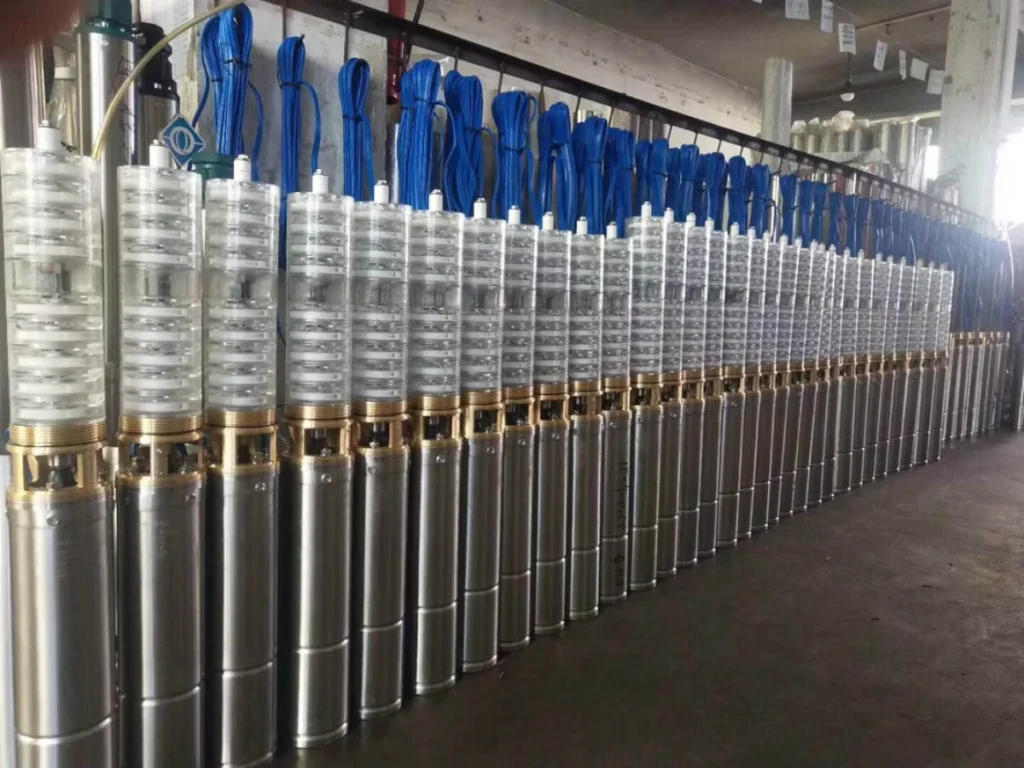
Unlike DIY rigs, a true hybrid integrates five subsystems into one compact unit:
- PV Array: Monocrystalline preferred. Configured to stay above MPPT min even at low light.
- Hybrid Controller (The Brain): Dual-input (DC + AC 220V). Manages MPPT tracking and seamless switching.
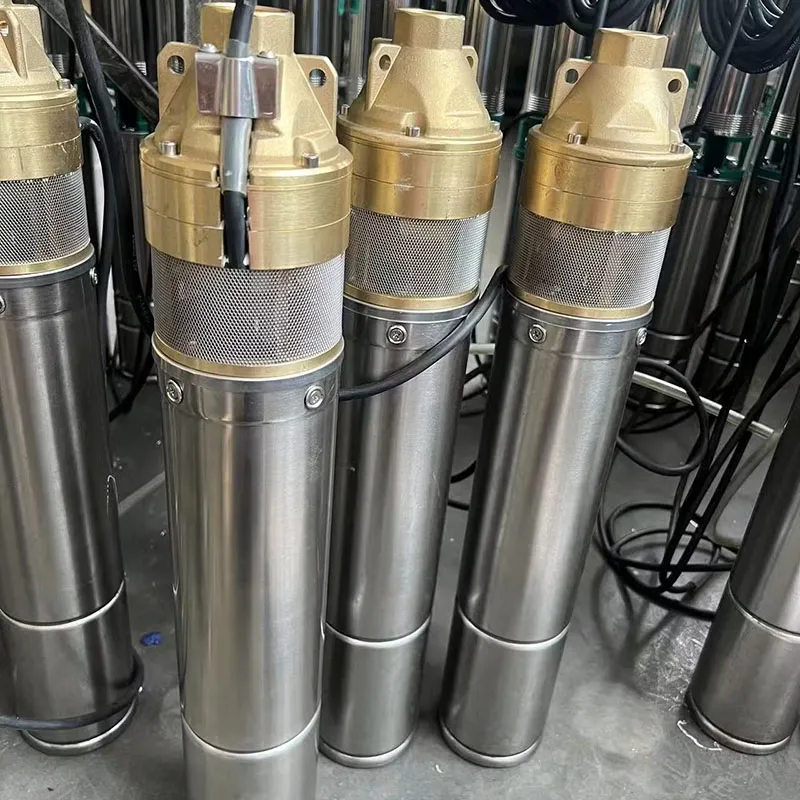
- Submersible Motor: Copper-wound PM motors (0.75–2.2 kW) for efficiency; 3-phase induction (4–5.5 kW) for high-torque deep wells.
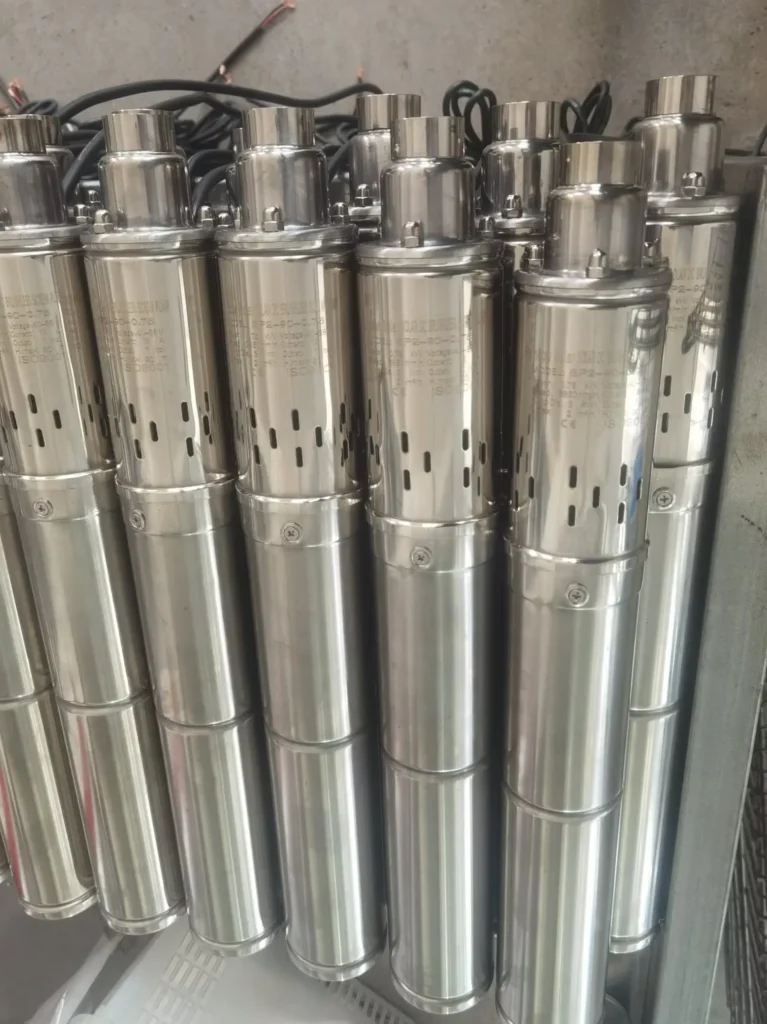
- Pump Hydraulics: Multi-stage centrifugal for deep wells; helical screw for high-pressure applications.
- Sensor Loop: Run-dry and tank-full sensors for automated protection.
2.1 Core Technical Specifications (Jingong Series)
| Model | Rated Power | Max Head | Max Flow | PV Input Range | AC Input | |
|---|---|---|---|---|---|---|
| JG-HSP-0.75 | 0.75 kW | 50 m | 3 m³/h | DC 60–200V | 88–264V | |
| JG-HSP-1.5 | 1.5 kW | 80 m | 5 m³/h | DC 80–300V | 88–264V | BLDC PM |
| JG-HSP-2.2 | 2.2 kW | 110 m | 7 m³/h | DC 100–350V | 88–264V | BLDC PM |
| JG-HSP-4.0 | 4.0 kW | 140 m | 12 m³/h | DC 150–420V | 88–264V | 3-ph IM |
3. Hybrid Solar Submersible Water Pump Working Principle: How the Hybrid Logic Thinks
3.1 DC-First Priority (Sunny Hours)
The controller prioritizes photovoltaic energy. At dawn, once the array clears the MPPT entry threshold (e.g., 90V DC), the controller initiates a soft-start. It uses a Perturb & Observe (P&O) algorithm, nudging the operating voltage every few hundred milliseconds to maximize power extraction ($dP/dV \approx 0$).
3.2 The Handoff (Cloudy/Rainy)
As irradiance drops, the available power falls below the pump’s minimum threshold. The controller triggers a dual-condition switch:
- Voltage Threshold: DC bus drops below a set point (e.g., 80V).
- Hysteresis Timer: Sustained low voltage for >5 seconds (prevents flicker from fast-moving clouds).
The system seamlessly closes the AC 220V input relay. Crucially, the motor does not restart; it transfers the load while spinning, ensuring uninterrupted water flow.
3.3 Returning to Solar (Sun Returns)
Once irradiance recovers and the DC bus exceeds the re-entry threshold (e.g., 95V), the controller fades out the AC supply and resumes MPPT tracking. No user intervention required.
4. MPPT Optimization in Unstable Light
Cheap controllers suffer from oscillation during fast cloud movements. Jingong controllers utilize an Adaptive Step-Size P&O Algorithm. Field tests comparing optimized MPPT vs. standard P&O show a ~14% increase in water output over a 10-hour period under variable cloud conditions. In agriculture, liters per cloudy day matter more than peak Watt specs.
5. Competitive Analysis: Hybrid vs. Alternatives
| Dimension | Pure DC Solar Pump | Pure AC Grid Pump | Non-Smart Hybrid | Jingong 220V AC/DC Hybrid |
|---|---|---|---|---|
| Cloudy Performance | Stalls | Unaffected | Manual Switch | Seamless (<500ms) |
| Grid Outage | Stops | Stops | Stops | PV continues (if sunny) |
| Energy Cost | Zero | High | Low (when sunny) | Near Zero + Backup |
6. Hybrid Solar Submersible Water Pump Application Scenarios & Regional Fit
- SE Asia (ID/PH/VN): Monsoon irrigation. Keeps rice paddies flooded during typhoon season.
- Sub-Saharan Africa (KE/TZ): Dust haze and weak grids. Ensures livestock and crop survival.
- South America (BR/PE): High-altitude Andean farms. Manages steep solar angles and afternoon storms.
- Deep Wells: Where DC-only pumps lack startup torque.
7. Installation & Commissioning Guide
7.1 Wiring Checklist
- PV String: Verify OC voltage is below controller max (allow 20% headroom).
- AC Input: Confirm 220V ±10%. Ensure proper grounding (L/N/PE).
- Motor Cable: Use submersible-grade cable with bonded PE.
7.2 Common Pitfalls (Avoid These!)
Undersized PV: Using 2x250W panels for a 1.5kW pump results in MPPT failure on cloudy days. Rule: PV STC power ≥ 1.3× pump rated power.
No Check Valve: Causes water hammer during AC/DC switches. Install a swing check valve 1m above the pump.
8. Hybrid Solar Submersible Water Pump Real-World Case Studies (Jingong Projects)
Case A: Rice Nursery, Central Luzon, Philippines
Challenge: Typhoon season caused 10–14 consecutive cloudy days; old DC pumps failed. Solution: 2× JG-HSP-1.5 units (4x400W panels). Result: 98% uptime during monsoon. AC backup engaged only 2.3 hours/day during peak storms.
Case B: Maize Co-op, Nakuru County, Kenya
Challenge: Harmattan dust and unreliable grid. Solution: JG-HSP-2.2 unit. Result: Yield increased by 18% vs. neighbors using DC-only pumps. Generator runtime dropped by 80%.
9. Maintenance for Longevity (7+ Years)
- Quarterly: Inspect PV terminals for corrosion (critical in coastal areas).
- Bi-annually: Inspect impeller if sand content is high (>50 ppm).
- Pre-Rainy Season: Perform a manual PV disconnect test to ensure AC bypass functionality.
10. Hybrid Solar Submersible Water Pump Frequently Asked Questions (FAQ)
Does it work with zero sunlight?
Yes. If there is zero sunlight (e.g., midnight), the pump runs 100% on AC 220V (grid or generator). During heavy rain (daytime), the PV contributes whatever power it can (e.g., 10-20% of STC), and the AC fills the rest.
How fast is the switch from DC to AC?
Solid-state versions switch in <100ms; relay versions take 200–500ms. The motor never stops spinning, preventing water hammer and pressure loss.
Do I need batteries?
No. This system uses “water-as-battery” architecture. We recommend oversizing your storage tank/reservoir instead of using chemical batteries.
Can it run on 208V US Commercial power?
Yes. Wire L1-L2 single-phase 208V to the AC input. The controller’s wide input range (88–264V) handles it, though max power will be ~92% of the 230V rating.
What is the MOQ and Warranty?
As a factory-direct manufacturer, our MOQ is flexible (standard 10 pcs mixed for trials). Warranty: 18 months standard, extendable for project contracts.
11. Why Jingong Tech? Factory Credentials
Jingong Tech (Zhejiang) is a leading manufacturer-integrator specializing in booster pumps, submersible pumps, surface/land pumps, and solar pumping systems. With a 12,000 m² facility, 3 production lines, and certifications including CE, RoHS, and ISO 9001, we export to over 30 countries. This technical content has been reviewed by our R&D lead, Wang (Sr. Electrical Engineer, 11 years experience).
12. Hybrid Solar Submersible Water Pump Get a Customized Quote
Specifying for a challenging environment? Send us your requirements:
- Well depth / Head requirement
- Daily water volume target
- Local grid stability
- Preferred PV panel specs
Contact Jingong Sales for a response within 12 business hours.

0 Comments