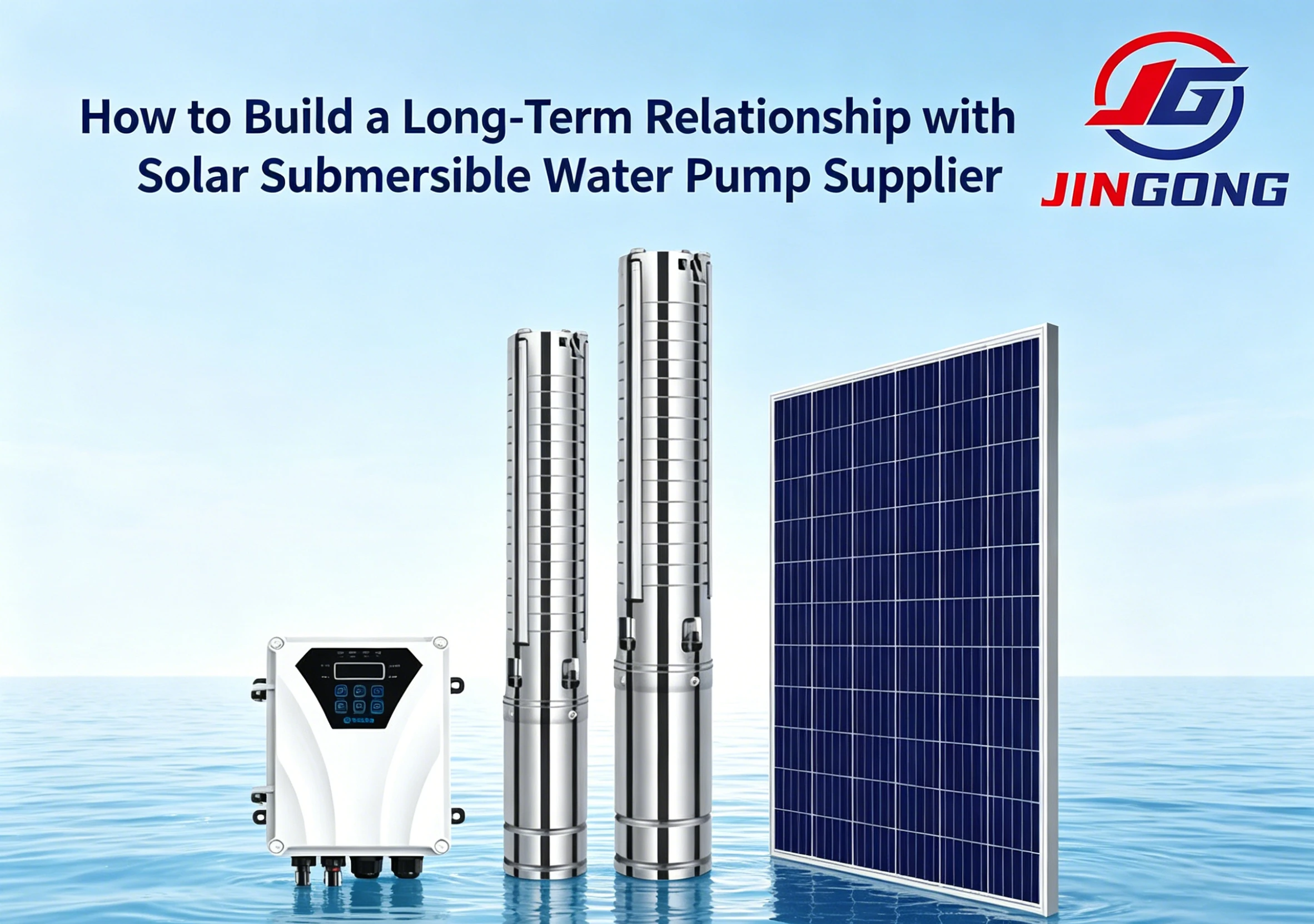
If you are sourcing solar submersible water pumps for farm irrigation in Kenya, a rural water project in the Philippines, a mining site in Chile, or building a distribution brand in Europe, you have likely learned one painful lesson: Switching suppliers is expensive—not just in money, but in time, reputation, and project risk.
A solar submersible pump is not a commodity screw or a length of PVC pipe. It is an electromechanical system that lives underwater, runs on unstable solar input, and must reliably lift water from depths of 100m, 200m, or even 300m+ for 10–15 years. Between the pump end, the BLDC motor, the MPPT controller, PV array sizing, and local water quality (sand, acidity, corrosion), there are at least six technical interfaces where a bad supplier can sink your project.
This guide is written from the perspective of a manufacturer. We are Jingong Technology, based in Zhejiang, China. For over a decade, we have been producing booster pumps, submersible pumps, land pumps, solar pumps, and gasoline/diesel pumps. We have shipped to Africa, Southeast Asia, South America, and the Middle East. We are not here to simply sell our products in this article; we are here to help you build a supplier relationship that survives beyond the first container.
We will cover:
- Why solar submersible pumps demand longer-term partnerships than almost any other industrial product.
- The real, hidden costs of supplier churn (most buyers severely underestimate these).
- A 12-point audit checklist to separate real factories from trading companies.
- The 5-phase trust curve: From RFQ → Sample → Trial Batch → Repeat → Annual Framework.
- What you need to bring to the table (yes, factories audit buyers too).
- Risk control: Price locks, IP protection, warranty enforcement, and FX fluctuations.
- Three anonymized case studies from our experience.
- A downloadable supplier audit sheet to kickstart your vetting process.
Why “Long-Term” Matters Specifically for Solar Submersible Water Pump
Most B2B sourcing guides treat “supplier relationships” generically. However, solar submersible pumps possess four structural characteristics that make long-term partnerships unusually valuable—and unusually fragile.
1. It is a System, Not a Single SKU
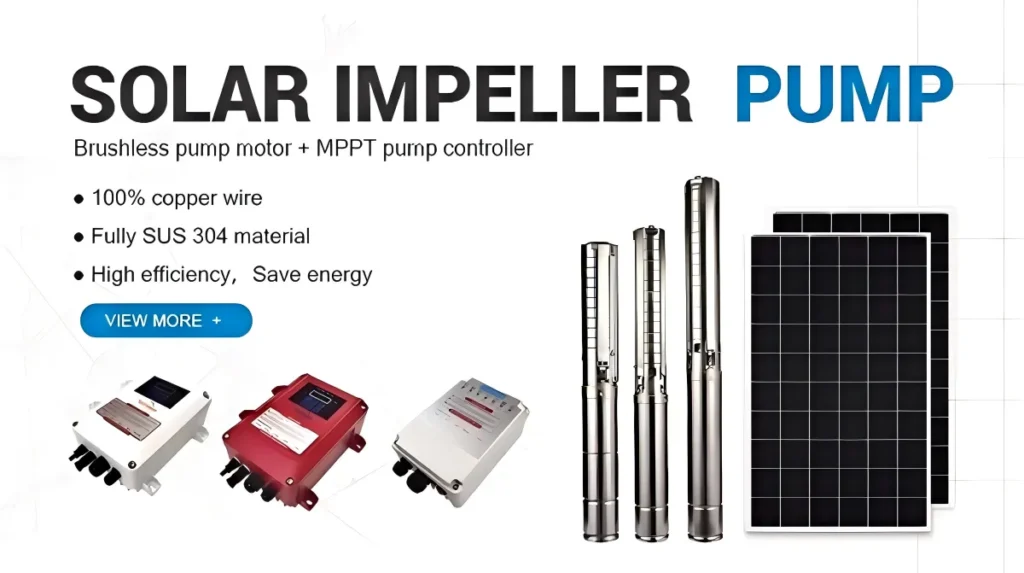
A “solar submersible pump” comprises the pump end (centrifugal impeller or screw-type), the submersible motor (brushed DC, BLDC, or three-phase AC), the controller/MPPT/VFD (often the most failure-prone component), the PV array sizing, and optional battery/AC hybrid bypasses. If you switch suppliers after year two, you aren’t just swapping a pump; you are inheriting controller incompatibility, non-interchangeable spare parts, and PV mismatch. Your service crew ends up carrying two sets of spares, confusing your customers and eroding your margins.
2. Field Failure is High-Visibility and High-Cost
When a 1.5 kW screw solar pump fails in a 120m borehole on a Kenyan bean farm, the farmer does not call the distributor—he calls you. Retrieving, repairing, and reinstalling a submersible unit in a remote area costs $150–$400 per event, before accounting for crop loss. A supplier who ships a batch with marginal winding insulation or a controller firmware bug that only manifests at 45°C will cost you ten times the unit price difference over 24 months.
3. Solar Input Volatility Creates a “Hidden QA Requirement”
Grid-tied pumps enjoy stable voltage; solar submersibles do not. They endure dawn/dusk ramp-ups (low voltage, high current draw), cloud-passage voltage dips, and oversized PV strings on cold mornings (overvoltage stress). A factory that only tests pumps on a stable 3-phase bench will miss failures that appear in week three on-site. Only a supplier with solar-specific burn-in protocols can de-risk this, and such protocols only exist within a long-term partnership where the factory values your field feedback.
4. Customization Compounds Over Time
After your first 20-foot container, you will inevitably want customizations: laser-etched branding, localized manuals, voltage/wattage tweaks for your specific market (e.g., 48V DC for LATAM, 72V for the Middle East), and controller firmware tuned to your preferred panel brands. Trading companies claim to do this; real factories execute it—but only if you are in a framework relationship with committed volume.
Bottom Line: In the solar submersible pump industry, a “supplier” is not merely a vendor; they are a technical partner. The cost of changing partners after year two is conservatively 3–5 times the cost of choosing carefully at year zero.
The Hidden Costs of Supplier Churn
We have audited over 40 distributor relationships that “went wrong” in the past eight years. Here is what actually happened, beyond the procurement textbook.
Reputation Cost (The Silent Killer)
A distributor in Tanzania switched from Factory A to Factory B for a $4.50/unit saving on a 1.5 HP screw solar pump. Six months later, a 14% RMA rate surfaced due to controller MOSFET failure during the hot season. He subsequently lost two county-level irrigation tenders. The $4.50 saving ultimately cost him approximately $27,000 in tender pipeline value over 18 months.
Spare-Parts Fragmentation
Switch suppliers twice in four years, and your warehouse becomes a museum of incompatible parts: three different controller form factors, two different cable gland standards, and seals that don’t fit previous models. Your field technicians carry three different manuals, and your average repair time doubles.
Re-qualification Cost
Every new supplier demands a new sample batch ($800–$2,500), new third-party test reports for local certifications, a new site pilot (minimum one season), and new contract negotiations. A conservative estimate places the cost of switching at $6,000–$15,000 and 4–7 months per supplier, before shipping a single commercial container.
Price Volatility Exposure
Spot-buying suppliers have zero incentive to lock in material pass-through costs. During the 2024–2025 copper and neodymium magnet spikes, spot buyers faced $12–$18/unit price increases within 60 days. Framework buyers with a signed price-review clause saw increases of only 0–4%.
Solar Submersible Water Pump Pre-Screening: 5 Red Flags That Disqualify 80% of Suppliers
Before spending a dime on samples, run these five filters. They take 20 minutes and save weeks of wasted effort.
- The Google Maps Test: Use Google Maps or Baidu Street View on the supplier’s address. Does it resemble a factory (multiple bays, outdoor test ponds, coil winding lines) or an office park? Ask for a live Zoom walkthrough, not a polished pre-recorded video.
- The Product Breadth Paradox: If a supplier lists “solar pumps, submersibles, boosters, gasoline pumps, diesel pumps, swimming pool pumps, and fountain pumps” all claiming “factory direct” with fewer than 20 staff on LinkedIn—they are aggregating. A real factory like Jingong operates over 100 production staff across five distinct product lines. Breadth is possible, but only at significant scale.
- No Solar-Dedicated Engineering: Ask: “Who designs your MPPT firmware? In-house or outsourced?” Outsourced is acceptable if they have a retained engineering team. One-off outsourced firmware becomes a major liability when you need a bug fix in year two.
- Vague Certification Claims: If they cannot produce PDF copies of ISO 9001, CE, RoHS, or TÜV certificates within 24 hours, move on. CE is often self-declared; look for third-party verified documentation.
- MOQ Mismatch: If their MOQ is rigidly 500 pieces on a 2 HP model and they refuse mixed-SKU trial orders, they are not structured for distributor onboarding. Conversely, if they claim “any quantity okay” for a custom screw pump with laser branding—they are being disingenuous. Real factories have real production line setup costs.
The 12-Point Factory Solar Submersible Water Pump Audit Checklist (The Core)
This is the operational core of this guide. Print this. Send it to your sourcing team. Use it during your Zoom audits.
| # | Criterion | Verification Method | Pass Threshold |
|---|---|---|---|
| 1 | Business Entity | Business license, trademark, export license | Verified Manufacturer |
| 2 | Pump-Specific Production | Live video of submersible test tanks, winding machines | Visible, dedicated equipment |
| 3 | Solar Capability | In-house controller production or long-term JV | Firmware modification capability |
| 4 | Certifications | Request PDFs: ISO 9001, CE, RoHS, IP68 Test Report | Provided within 24 hours |
| 5 | Annual Capacity | Monthly/Annual output figures for solar pumps | >50,000 units/year preferred |
| 6 | R&D Headcount | Number of electrical/mechanical engineers | ≥3 FTEs dedicated to solar |
| 7 | QC Protocol | Documented SOP for incoming, pressure, and burn-in tests | Comprehensive written procedure |
| 8 | Export Track Record | References in your target region | ≥2 verifiable contacts |
| 9 | Warranty Policy | Written policy detailing duration and coverage | ≥2 years, documented |
| 10 | OEM/ODM History | Evidence of past branding/packaging projects | ≥3 active OEM accounts |
| 11 | Financial Stability | Credit report (Sinosure/D&B) | Solvent and stable |
| 12 | Communication | Dedicated Export PM, response time | <12h response, technical fluency |
Deep Dive: Certifications That Actually Matter
- ISO 9001: Indicates a quality management system. Essential for consistent output.
- CE & RoHS: Baseline for EU entry. Ensure they are third-party tested (e.g., by TÜV/SGS), not just self-declared.
- TÜV: The gold standard for the German/European professional channel. Difficult to obtain, highly valuable.
- IEC 61215 / 61730: Standards for PV modules. Crucial if your supplier bundles panels.
- IP68 Rating: Proof of submersibility. Demand the test report, not just a stamp on the nameplate.
Deep Dive: QC System – The 72-Hour Burn-In
A standard pump gets a 30-second spin. A solar submersible requires rigorous testing:
- Incoming Material Check: Verifying copper wire gauge, SS grade (304 vs. 201), and magnet grade.
- Winding & Pressure Tests: Surge testing and hydro-testing at 1.5x max head.
- Solar Simulation Burn-In: This is the differentiator. It includes:
- MPPT sweep across the entire voltage window.
- Low-irradiance startup simulation (<30% Voc).
- Overvoltage cutoff testing (cold morning simulation).
- Dry-run protection triggering.
- 2–4 hours of continuous runtime at the rated duty point.
The 5 Phases of Trust Building: Solar Submersible Water Pump From RFQ to Partnership
This is the practical roadmap for evolving from a prospect to a strategic partner.
Phase 1: Technical RFQ & Sample Validation (Days 0–30)
Do not start with “Send me your catalog and FOB price.” Begin with your application data: well depth, static water level, required flow (m³/h), pipe specs, water quality (TDS, sand, pH), and PV array specifications. A serious factory will push back with technical questions. Order 2–3 samples—one for the bench, one for a field pilot, and one for destructive teardown. Ensure the sample matches your intended MOQ specifications (material grade, firmware, cabling).
Phase 2: Small Trial Batch & Site Feedback (Days 30–90)
Order 10–30 units of mixed SKUs. Deploy them in your most challenging environments. Crucially, send detailed field feedback—including photos and videos—to the factory. A factory that ignores this feedback is a red flag. One that asks follow-up questions and offers firmware tweaks is a keeper. Document everything; this becomes your negotiation baseline.
Phase 3: MOQ Negotiation & First Formal PO (Days 90–180)
With proven performance, place your first 20ft or 40HQ order. Prioritize these negotiation points over unit price:
- Mix ratio flexibility (e.g., 40% 1HP, 30% 2HP, 30% 0.75HP).
- Inclusion of 2–3% spare parts (seals, fuses, glands).
- Precise warranty wording in the Proforma Invoice (PI).
- Lead time commitments and penalties.
- Price validity periods (30–60 days minimum).
Phase 4: Repeat Orders & Exclusive Territory (Months 6–12)
Successful first containers warrant discussions on territory and terms: exclusivity (full or semi-exclusive), first-refusal rights on new SKUs, potential co-marketing funds for trade shows, and priority production slots. This is also the stage to implement light OEM: laser etching, custom cartons, localized manuals, and branded controller stickers.
Phase 5: Annual Framework / Joint Development (12+ Months)
The highest value tier. A formal framework includes:
- An annual volume commitment (e.g., 500–2,000 units) tied to a price lock or formula.
- Joint new product development based on your field intelligence.
- Quarterly local spare parts stocking agreements.
- Regular technical training sessions (e.g., quarterly Zoom calls with your installers).
- Extended warranty terms (e.g., 3 years vs. the standard 2).
What Factories Expect From You: The Other Side of the Coin
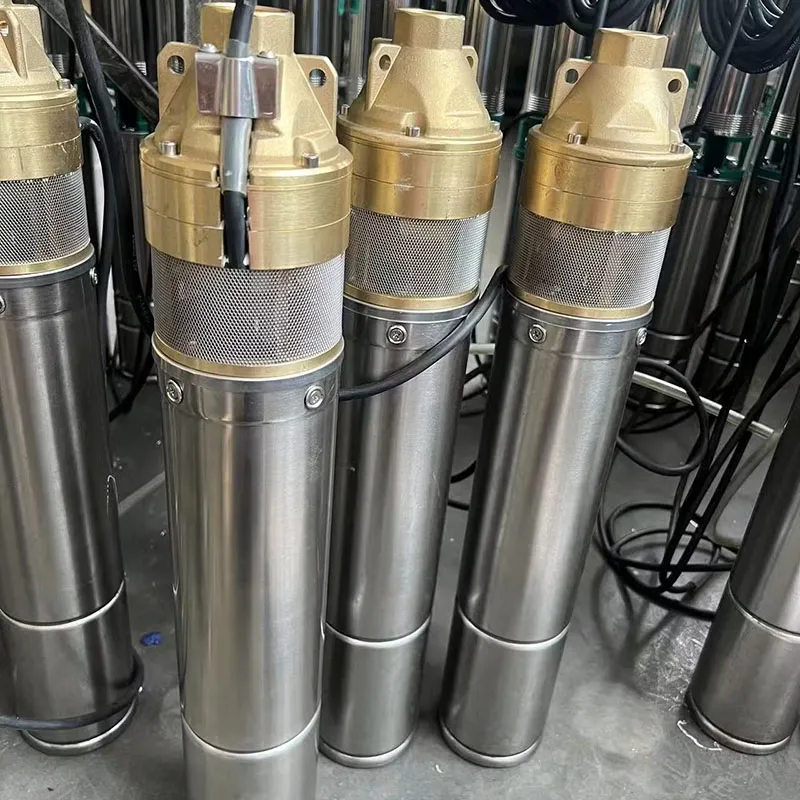
Buyers maintain checklists for suppliers; suppliers maintain them for buyers. Solar Submersible Water Pump To become a prioritized partner, demonstrate the following:
- Forecasting: Provide rough estimates (e.g., “Q2 ~40ft, Q3 ~60ft”). This allows factories to plan raw material procurement (copper, silicon steel). No forecast means you are last in line during peak season.
- Payment Discipline: Adhere to agreed terms (L/C, TT deposits). Chronic 30+ day delays flag you as high-risk.
- Constructive Feedback: Supply photos, flow measurements, and controller error codes. Solar Submersible Water Pump Factories cannot fix problems they cannot visualize.
- IP Respect: Do not forward a supplier’s proprietary controller schematics to a competitor. The Zhejiang pump manufacturing Solar Submersible Water Pump cluster is tightly networked; reputations spread rapidly.
- Face Time: Attend at least one joint meeting annually, Solar Submersible Water Pump either visiting their plant or hosting them in your market. Digital communication remains essential, but physical presence cements trust.
Risk Control: Protecting Your Business in a Long-Term Alliance
Long-term does not equate to blind trust. Implement these operational safeguards:
Price Volatility Management
Copper, NdFeB magnets, and silicon steel are inherently volatile. Adopt one of two models:
- Fixed Price: Simple, but the factory builds in risk premiums.Solar Submersible Water Pump
- Formula Pricing: Base price + (Copper Index Change × Coefficient). This is fairer but requires mutual trust. Since copper constitutes 15–25% of the BOM, a 20% copper price swing translates to a 3–5% pump price adjustment.
Cross-Border Warranty Enforcement
Insist on a written warranty clause in the PI detailing duration, coverage (motor, controller, seals), and the RMA process (photo evidence, replacement shipping terms, cost allocation for dead-on-arrival units). Email promises from sales reps are insufficient if that rep leaves the company.
IP Protection for OEM
For distributors building a brand, protect your investment:
- Execute a bilingual NDA and IP clause within the framework agreement.
- Define exclusivity: “Factory shall not sell laser-etched [YourBrand] designs or derivative white-label products to other buyers.”
- Clarify firmware ownership. Ideally, the factory retains the source code but contractually agrees not to resell your specific variant.
Avoiding Single-Point Failure
Even within a robust long-term relationship, avoid placing 100% of your solar submersible volume on one factory Solar Submersible Water Pump until year three. Maintain a secondary, “warm” qualified supplier (via one trial batch per year). This provides contingency against unforeseen events like factory fires, regional lockdowns, or upstream raw material insolvencies.
Jingong Solar Submersible Water Pump Case Studies: 3 Models of Success
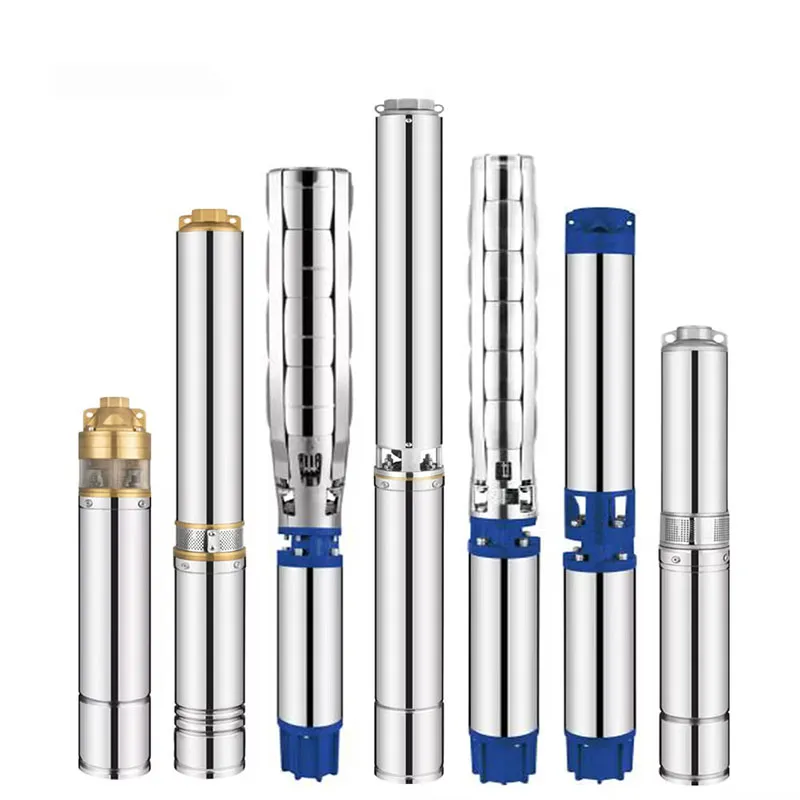
(Patterns derived from real engagements; specific details generalized for privacy.)
Case A: African Agribusiness (50-Borehole Project)
Challenge: An EPC client initially specified centrifugal pumps for 180m depths with low flow requirements. Jingong’s engineering team intervened, recommending screw-type pumps instead.
Engagement: After a successful 8-unit field trial (RMA <2%), the client moved to a framework agreement: 2×40HQ annually with a copper-indexed price formula. Jingong provided a 5% spare parts kit and quarterly remote training.
Result: By year three, the client expanded to 4×40HQ/year and adopted Jingong’s AC-hybrid controllers for dry-season grid backup, winning two additional provincial tenders.
Case B: Southeast Asian Distributor (Hybrid Catalog)
Challenge: A distributor with an established booster pump line sought to enter the solar irrigation market but lacked solar-specific expertise.
Engagement: Through three iterative sampling rounds refining manuals, packaging, and controller stickers, the distributor launched a bundled “Farm Pump Kit.” Leveraging Jingong’s broad product portfolio (booster + submersible + land + solar + gasoline/diesel), they offered a complete solution: a solar submersible for extraction, a booster for distribution, and a gasoline backup.
Result: Semi-exclusive territory rights and a dedicated export project manager led to sustained growth and multiple government contract wins.
Case C: South American NGO (Rural Water Access)
Challenge: Low volume (8–15 units/batch) but extremely high specification requirements (304SS, TÜV certification, 3-year warranty) and stringent documentation needs (traceability of coil batches, SS mill certs).
Engagement: Jingong’s mature QC system, which tags individual units and archives burn-in videos, met the NGO’s audit requirements perfectly.
Result: A four-year ongoing partnership. Although not high-volume, the relationship is highly profitable and serves as a powerful reference for neighboring countries.
Solar Submersible Water Pump Frequently Asked Questions (FAQ)
Q: How long does it realistically take to establish a formal annual framework?
A: Typically 9–15 months. Attempting to rush this process (under 6 months) usually skips the critical trial batch phase, leading to regrets by month 18.
Q: Is OEM/ODM feasible for small distributors ordering 20–30 pieces initially?
A: Deep OEM (custom firmware, new tooling) generally requires a commitment of 200–500+ units annually. However, “Light OEM” (laser branding, custom cartons, manuals, stickers) is absolutely feasible at the 20–30 piece level.
Q: Should I conduct factory audits myself or hire a third party (SGS, TÜV)?
A: Both. Use self-audits (Zoom walkthroughs, reference checks) for speed and agility. Invest in a third-party audit ($1,200–$2,500) for the supplier you intend to sign a multi-year framework with.
Q: What is a realistic warranty period for solar submersible pumps?
A: 24 months is the industry standard. Framework partners can often negotiate 36 months. Note that controllers often have shorter coverage (12–18 months); always clarify this during negotiation.
Q: Can I mix different SKUs within one container?
A: Yes. Most factories allow mixed SKU loading, though minimum quantities per SKU may apply (e.g., 20 pcs/model for solar submersibles). Mixing SKUs is strategically sound as it helps you identify which models resonate most with your local market.
Q: Is “Made in China” reliable for solar pumps in 2026?
A: Top-tier Chinese factories (ISO 9001 certified, with solar-specific burn-in facilities and 5+ years of export history) are globally competitive. The horror stories originate from the bottom tier. Rigorous auditing differentiates the two. The Zhejiang/Jiangsu/Shandong industrial clusters offer profound supply chain advantages, with motors, seals, controllers, and SS casting facilities often located within a 50km radius.
Conclusion & Next Steps
Building a lasting relationship with a solar submersible water pump supplier is less about finding the absolute lowest unit price and more about identifying a technically competent, Solar Submersible Water Pump financially stable partner capable of growing with your business. It requires moving beyond transactional spot-buying toward a structured, phased approach involving rigorous audits, transparent feedback loops, and formalized risk controls.
At Jingong Technology, we have walked this path alongside our partners in Africa, Southeast Asia, and South America. We understand that our success is inextricably linked to yours. Whether you require a robust Solar Submersible Pump Series for deep wells, a Screw Solar Deep Well Pump for low-flow/high-head applications, or a comprehensive OEM/ODM Custom Pump Service, our engineering and export teams are structured to support long-term partnerships.
To assist you in applying the principles outlined in this guide, we have compiled our internal 12-point audit checklist and a technical RFQ template into a single, actionable document.
Download Your Free Supplier Audit Sheet & RFQ Template
Stop guessing and start vetting suppliers like a professional. Solar Submersible Water Pump Get the exact checklist we use internally, plus a technical RFQ template to ensure you receive accurate, comparable quotations.

0 Comments