
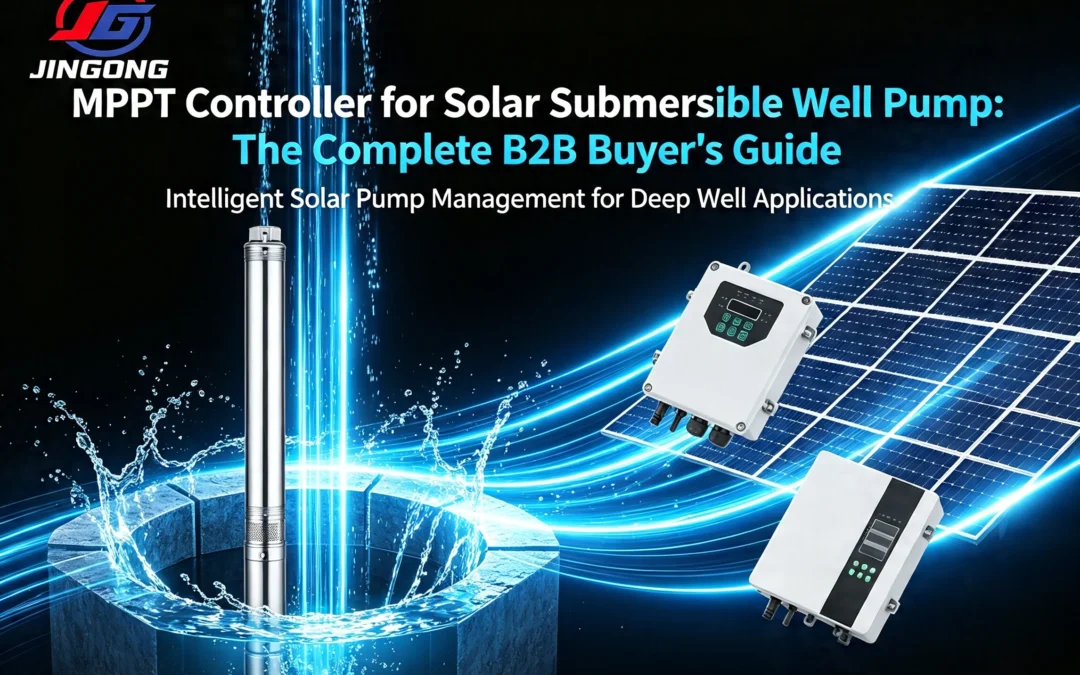
When specifying a solar-powered water supply project—whether it’s a 5-hectare drip irrigation scheme in Spain, a remote village borehole in Kenya, or a mining camp in Chile—the MPPT controller is the component that decides whether your solar submersible well pump runs efficiently for 8 years or fails in month 18.
Most B2B buyers treat the controller as a secondary accessory. That’s the #1 mistake we see at Jingong’s export desk. In our 15+ years supplying solar submersible pumps, centrifugal surface pumps, and diesel/gasoline backup pumps to 40+ countries, controller mismatch accounts for ~34% of post-installation service calls.
This guide is written from the factory floor. We’ll cover:
- What an Solar Submersible Well Pump MPPT controller is (and why it’s not a PV charge controller)
- MPPT vs PWM efficiency gaps that pay for themselves in <18 months
- Solar Submersible Well Pump B2B sourcing parameters (Voc, Isc, IP rating, protection logic)
- Nine industrial protections your project cannot skip
- Jingong’s hybrid-ready architecture (Solar + Grid/Diesel)
- Certification, QA, and bulk/OEM standards
1. B2B Industry Overview & Market Value
1.1 The MPPT Controller’s Role in Off-Grid Water Supply
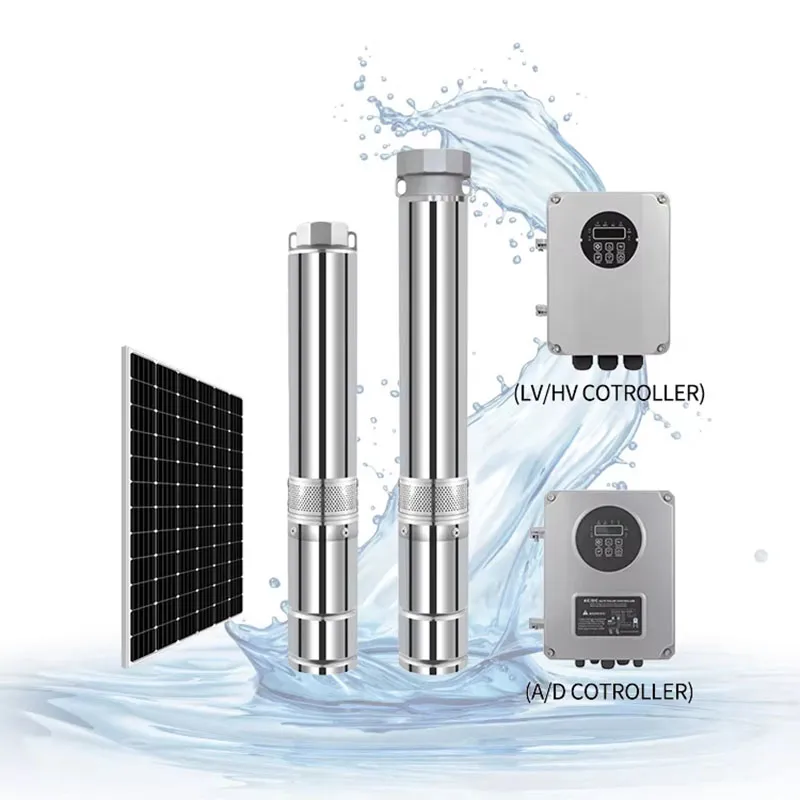
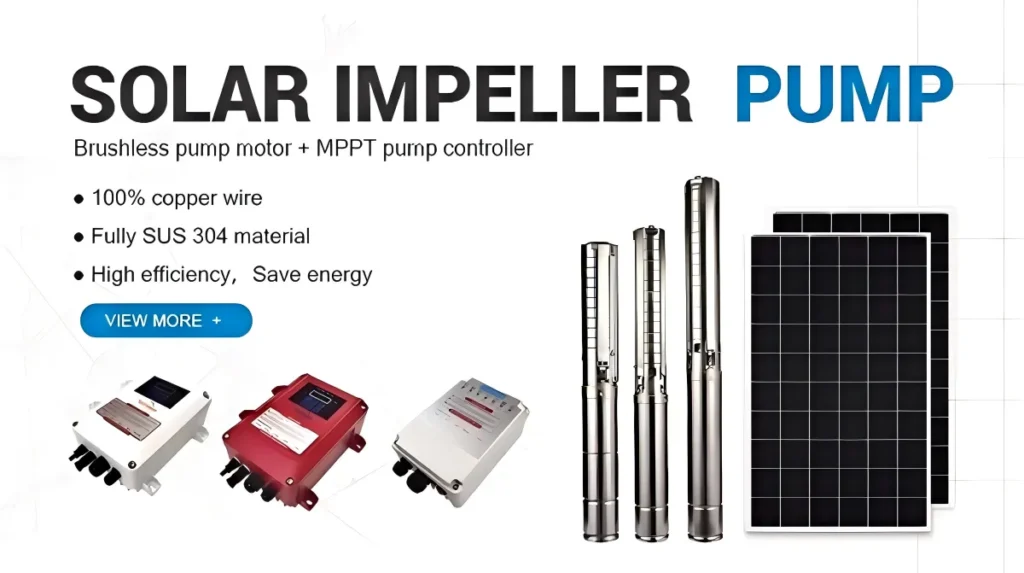
In a solar submersible well pump system, the three active components are: 1. PV Array, 2. MPPT Controller, 3. Pump Motor. The controller is the system brain. Connecting panels straight to a pump motor results in stalling during cloud cover and burnout by season two. The MPPT controller solves three problems: Energy Harvesting (tracking MPP), Motor Conditioning (stable V/f output), and System Protection (dry-run, overcurrent).
1.2 Global B2B Demand Drivers (2026–2030)
The solar pumping controller market rides three macro trends: Agricultural irrigation shifting off-grid (IEA Solar Outlook), remote mining infrastructure, and rural water security programs. For B2B buyers, this means sourcing CE/ISO certified units with IP65 enclosures as a baseline requirement.
1.3 Jingong Product Synergy
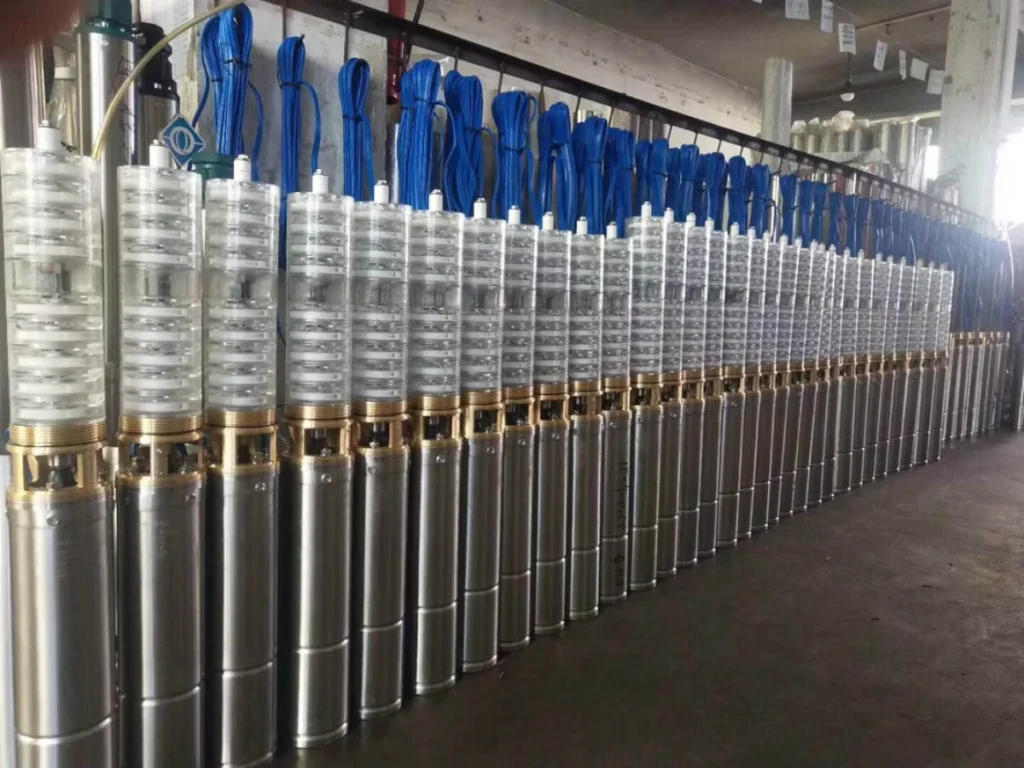
Unlike electronics traders, Jingong is a pump manufacturer. Our MPPT controllers are engineered specifically to match our Solar Submersible Well Pump and solar surface centrifugal pumps. Furthermore, our controllers feature AC bypass ports, allowing seamless integration with our diesel engine pumps for hybrid reliability.
1.4 B2B Pain Points We Solve
- Inefficiency: PWM controllers waste 20–25% energy in weak light.
- Instability: Voltage sag causes deep-well pumps to stall.
- Fragility: Non-waterproof units fail during monsoon seasons.
- Incompatibility: Lack of diesel backup compatibility leads to downtime.
Explore our Hybrid Solar-Diesel Pump Systems »
2. What Is an MPPT Solar Submersible Well Pump Controller?
2.1 Professional Definition
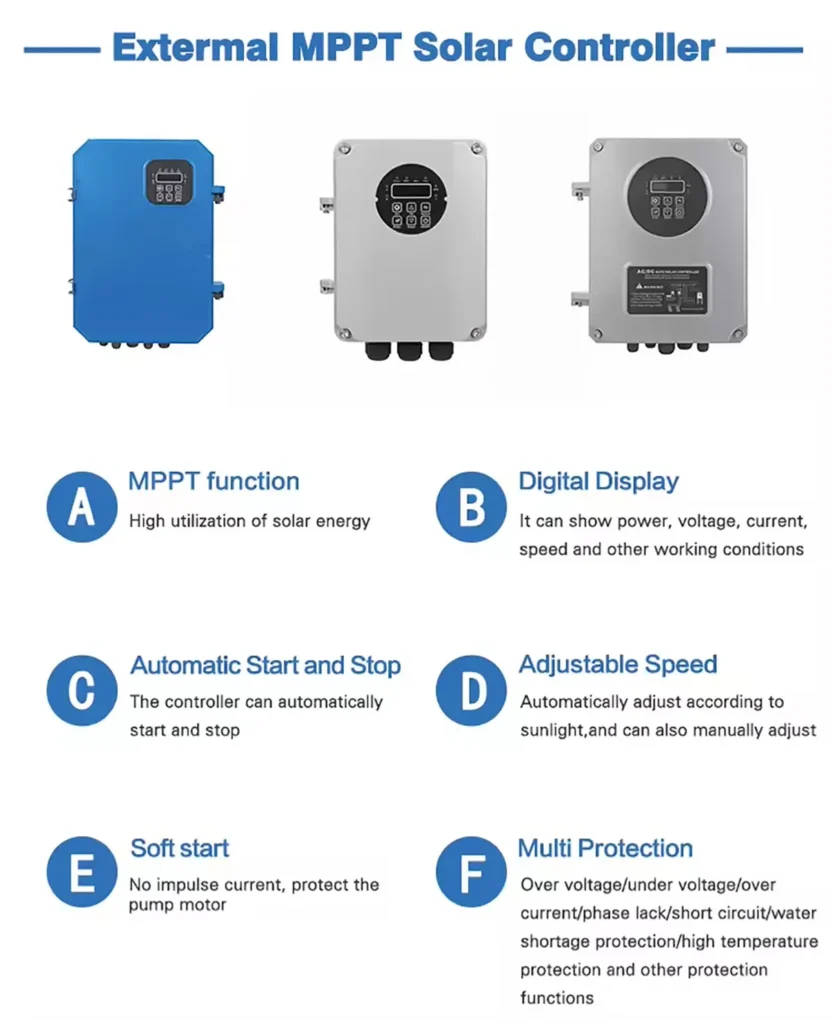
A solar submersible well pump MPPT controller is a power electronics device purpose-built for driving a water pump directly from PV panels. Crucially, a Maximum Power Point Tracking (MPPT) controller for pumps is distinct from a battery charge controller. A charge controller manages panel-to-battery; a pump controller manages panel-to-motor, integrating V/f control and soft-start features essential for hydraulic loads.
2.2 Working Principle in Solar Submersible Pump Context
PV panel output fluctuates with irradiance and temperature. An MPPT controller runs a perturb-and-observe algorithm 10–100 times per second. It samples Voltage (V) and Current (I), calculates Power (P=V×I), and adjusts the electrical operating point to keep the panel pinned to its Maximum Power Point (MPP), converting excess voltage into usable current.
2.3 Core Internal Architecture (Jingong Industrial Grade)
Our controllers feature: High-frequency Ferrite Inductors, Low Forward Drop Schottky Diodes, High-Voltage MOSFET Bridges, Waterproof Thermal-Control Modules (-10°C to +55°C), and a Smart MCU for protection logic. Optional RS485/GPRS modules allow for remote monitoring.
2.4 Pump Compatibility Matrix
| Pump Type | Controller Variant |
|---|---|
| DC Solar Submersible (BLDC/PMSM) | DC-input, DC-output MPPT |
| AC Solar Submersible (3-phase) | DC-input → Inverter Stage → AC output |
| Diesel/Gasoline Pumps | Not MPPT, but used as AC bypass input |
Learn more about Solar Submersible Pump Mechanics »
3. MPPT vs PWM: The B2B Comparison That Closes Deals
3.1 Efficiency: The 20-Point Gap
For B2B buyers, the math is simple. Solar Submersible Well Pump PWM controllers clamp panel voltage, wasting energy. MPPT controllers convert it. Jingong MPPT units offer 95–98% tracking efficiency compared to 70–80% for PWM.
- Weak Light: MPPT maintains >90% efficiency; PWM drops to 50–60%.
- Cold Weather: MPPT converts rising Voc into current; PWM wastes it as heat.
- ROI: The efficiency gain pays back the price difference in 12–18 months.
3.2 Scenario Fit: When to Use Which?
- Deep-Well High-Head (>50m, >3 HP): MPPT is mandatory.
- Small Surface Pumps (<1 HP): PWM can work, but we recommend MPPT for dusty/shady regions.
- Mixed Orientations: Requires Dual-MPPT configurations.
3.3 Protection Stack Comparison
PWM offers basic overcurrent protection. Jingong MPPT adds: Dry-run, Overload, Over/Under Voltage, Anti-Reverse, Overheat Derating, Lightning Surge Protection (SPD), and Stall Detection.
Read our Engineering Pump Sizing Guide »
4. Core Technical Parameters for B2B Sourcing
4.1 Voltage Range (The First Filter)
Always ensure Controller Max Input Voc > Array Voc_max (Cold Coefficient Applied). Ignoring the temperature coefficient (-0.3%/°C) is a common cause of winter controller failure.
4.2 Power Rating: The 1.3× Rule
To ensure longevity, the controller’s rated power should be at least 1.3× the pump’s rated power. For deep-well applications, we advise a 1.5× margin.
- 1 HP (0.8 kW): 50–200V DC in, 13A output
- 5 HP (3.7 kW): 50–450V DC in, 13A output
- 10 HP (7.5 kW): 300–900V DC in, 20A output
4.3 Electrical & Hardware Specs
Key specs include PV Open-Circuit Voltage (Voc), Max Input Current (Isc), Continuous Output Current, and IP65-rated enclosures. All Jingong units undergo salt-spray testing for corrosion resistance.
Download Full Pump Parameter Tables (PDF) »
5. Professional Protection Functions & Industrial Advantages
5.1 Nine-Layer Industrial Protection
- Anti-Dry-Run: Prevents impeller seizure.
- Overload Protection: Limits I²t to prevent overheating.
- Over/Under Voltage: Safeguards against grid/pv fluctuations.
- Reverse Polarity: Blocks damage from incorrect wiring.
- Overheat Derating: Reduces output instead of tripping.
- Lightning Surge (SPD): Built-in Type II SPD on 3HP+ models.
- Stall/Jam Detection: Instant cutoff for sand/rope obstructions.
- Night Auto-Standby: Consumes <1W when idle.
- Sensor Integration: Float switch compatibility.
5.2 Jingong’s Hybrid Bypass Advantage
Most controllers are solar-only. Jingong’s 3 HP+ AC controllers accept a secondary AC input (Grid or Diesel). Logic: Solar → Cloudy → Auto-switch to AC → Solar Recovery → Handback. This ensures zero downtime for critical water supply without needing expensive battery banks.
View our Pump Failure Troubleshooting Guide »
6. Multi-Scenario Application & Product Matching
6.1 Solar Submersible Scenarios
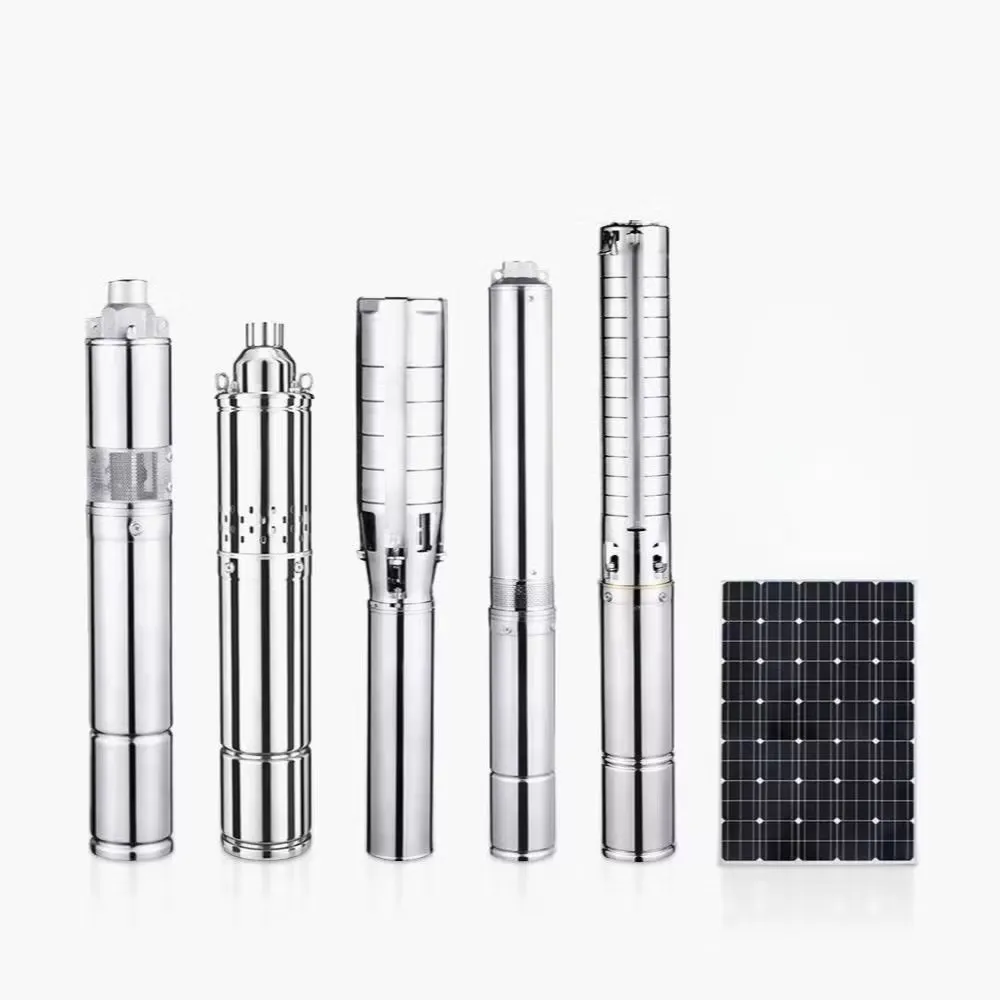
- Deep Boreholes (60–150m): 3–7.5 HP SS304 BLDC + JG-MPPT-AC Series.
- Farm Drip Irrigation: 2–3 HP DC Submersible + JG-MPPT-DC Series.
6.2 Solar Surface (Centrifugal) Scenarios
Lake/Canal intake and orchard spraying benefit from our centrifugal pump line paired with MPPT controllers.
6.3 Multi-Pump Hybrid Systems
As a factory, we provide one-stop solutions: Solar Primary + Diesel Standby + MPPT Controller. One PO, one warranty, one technical contact.
6.4 B2B Customer Segments
We serve Wholesale Distributors (White Label OK), EPC Contractors (Project Bundles), NGOs/Municipalities (Full Cert Packs), and OEM Rebranders.
Browse our Project Case Studies »
7. B2B Sourcing Standard & Selection Guide
7.1 The 6-Point Sourcing Checklist
- Parameter Match (HP, Voltage, PV specs)
- Certification (CE/RoHS/ISO)
- Industrial Protection (Dry-run + Surge)
- Compatibility (AC Bypass/Monitoring)
- After-Sales (Spare parts horizon)
- Batch Customization (Voltage/Branding)
7.2 Sizing Formulas (Jingong Standard)
PV Power ≥ Pump Power / 0.96
Controller Power ≥ 1.3 × Pump Power
Array Voc_max (Cold) < Controller Vin_max
7.3 Pitfall Guide: Cheap Controllers
Beware of faked MOSFET ratings, missing surge protection, and absent after-sales support. If the supplier can’t talk pump curves, they aren’t a pump factory.
Inquire about our Custom/OEM Services »
8. Certification, Quality & After-Sales
8.1 International Certifications
Jingong controllers carry CE (LVD + EMC), RoHS, and ISO 9001 certifications, meeting global compliance requirements.
8.2 QC Workflow
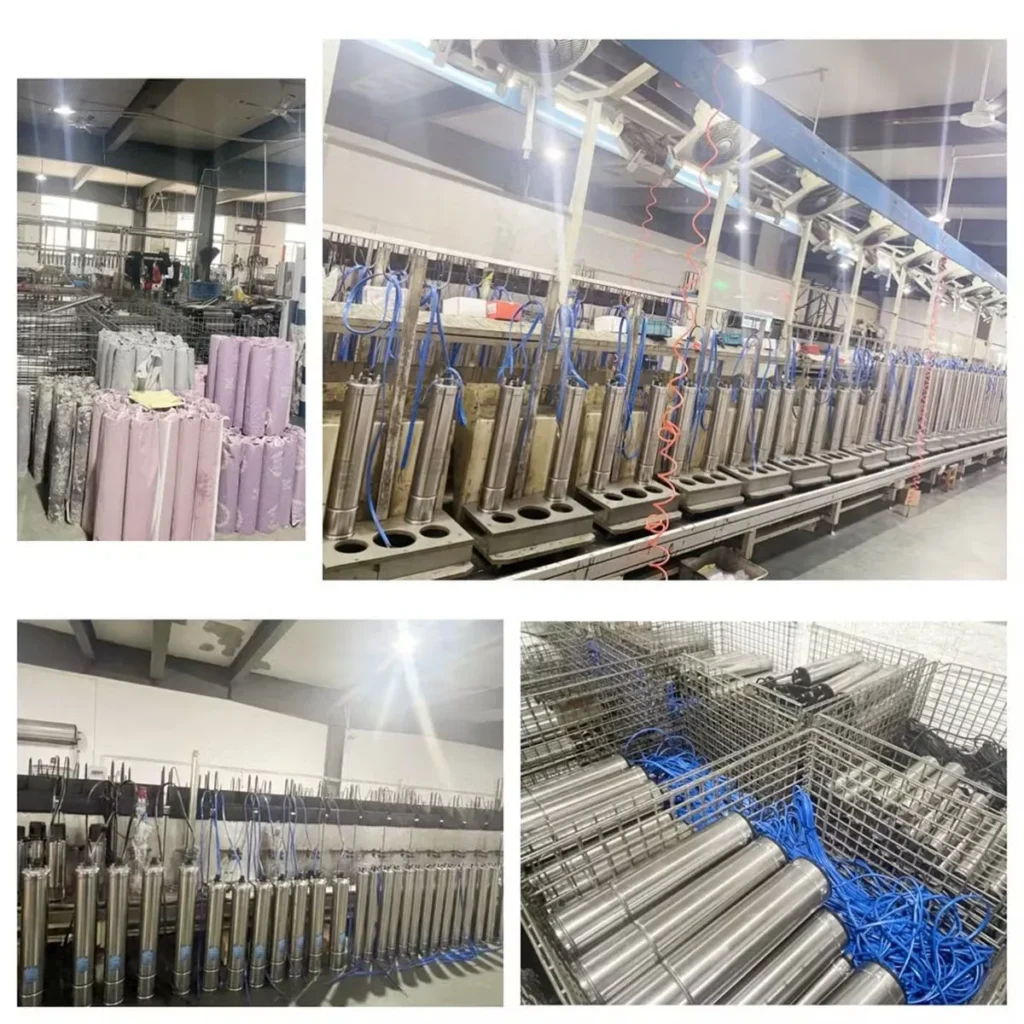
Every unit undergoes ICT, Firmware Verification, Load Aging (4hr @80%, 2hr @110%), Hi-Pot Testing, and IP Leak Checks. Batch records are retained for 5 years.
8.3 Cross-Border After-Sales
We offer a 24-month warranty (extendable), multilingual technical support (EN/ES/FR/RU), and installation guidance including video calls.
View our Certificates Gallery »
9. FAQ for B2B Buyers (Featured Snippet Optimized)
Q1: Can an MPPT controller work with both AC and DC solar submersible pumps?
A: Yes, but you need the correct variant. DC pumps require DC-output MPPT; AC 3-phase pumps require an MPPT controller with an integrated inverter stage.
Q2: How much efficiency improvement does MPPT give over PWM?
A: Field data shows 18–25% more annual energy harvest. In weak-light conditions, the gap can exceed 30%.
Q3: Is MPPT necessary for a small solar surface pump (<1 HP)?
A: While PWM can function, MPPT provides superior ROI in regions with dust or cloud cover. We recommend MPPT for all commercial deployments.
Q4: How do I match solar panel power to the controller and pump?
A: Ensure PV Power ≥ Pump Power / 0.96, Controller Power ≥ 1.3× Pump Power, and always account for the cold temperature coefficient on Voc.
Q5: Can a solar MPPT controller work with a diesel pump backup?
A: Only if the controller includes an AC-input bypass. Jingong 3 HP+ models feature auto-switching logic between PV and AC (Grid/Diesel).
Q6: What is the lifespan of an industrial MPPT controller?
A: 7–12 years with proper sizing. Jingong’s 2024 batch showed a <2% RMA rate in the first year.
Q7: Do you support bulk orders and customization?
A: Yes. We support MOQs by SKU, custom voltage windows, silk-screening, and regional plug standards.
10. Conclusion & B2B Purchase Solution
The MPPT controller is the decision layer of your solar pumping system. For B2B buyers, the criteria are clear: match parameters, insist on industrial protections, size with margin, and prefer factory-direct integration.
Jingong ships MPPT controllers matched to our comprehensive pump lines, backed by CE/RoHS/ISO certifications, 24-month warranties, and OEM options.
Next Steps
- Bulk Inquiry: Email [email protected] with Pump HP + Head + Panel Qty.
- Project Spec: Send borehole data (static level, daily water need) for a free sizing report.
- OEM/White-Label: Discuss enclosure colors, silk-screening, and voltage tweaks.