
As a leading automatic booster water pump manufacturer, Jingong Technology has spent over a decade engineering submersible, surface, solar, and fuel-powered water pump systems for households, farms, and industrial plants across 60+ countries. This guide explains—in plain language and in engineering depth—exactly how an automatic water pressure pump works, what components make it “automatic,” and how to choose the right configuration for your water source.
If you are searching for a reliable automatic booster water pump manufacturer that understands both the physics and the field realities of pressure-boosting systems, this article is written specifically for you.
1. Why Automatic Water Pressure Pumps Matter: Solving Real-World Pain Points
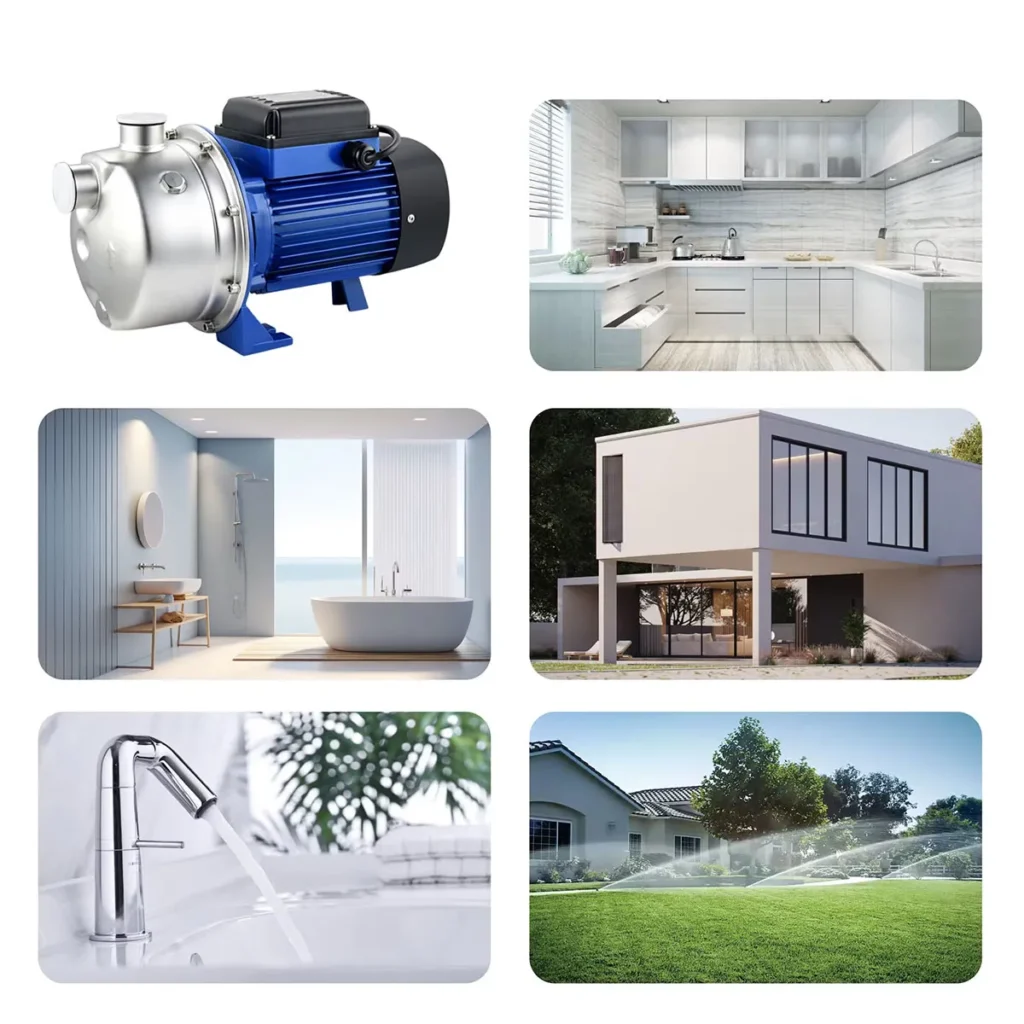
Every automatic booster water pump manufacturer hears the same complaints from end users:
- Unstable water pressure – taps spit, showers flicker, irrigation sprinklers underperform.
- Manual pumps require constant switching – someone must walk to the pump house every time water is needed.
- Water hammer damage – sudden start/stop shocks pipelines, causing leaks and premature joint failure.
- Energy waste – oversized pumps run at full speed even when only a trickle is needed.
- Dry-burn pump damage – running a pump without water destroys the mechanical seal within minutes.
An automatic water pressure pump is an intelligent self-start/self-stop pressure control pump system. It senses pipeline pressure in real time, starts the motor when pressure drops, and stops it when pressure reaches the target—no manual operation, no wasted energy, no dry-burn risk. Being a responsible automatic booster water pump manufacturer means designing systems that eliminate every one of these pain points by default.
1.1 What Is an Automatic Water Pressure Pump?
A simple definition: an automatic water pressure pump is a self-control water pump equipped with a pressure boosting water pump mechanism and an intelligent control loop. It belongs to the broader family of automatic pump systems. When pressure falls below a preset cut-in threshold, the pump starts; when it reaches the cut-out threshold, it stops. A pressure tank buffers the gap between these two points so that a dripping faucet doesn’t trigger a full motor startup.
The four primary categories we manufacture as an automatic booster water pump manufacturer are:
- Automatic Submersible Pressure Pump – for deep wells and boreholes.
- Automatic Surface Pressure Pump – for household and building water supply.
- Solar Automatic Water Pump – off-grid intelligent control for remote areas.
- Diesel / Gasoline Pressure Pump – fuel-powered automatic pressure boosting for farms and field engineering.
To understand the fundamentals of pumping technology, you may refer to the pump overview on Wikipedia.
2. How Does an Automatic Water Pressure Pump Work? The Core Mechanism
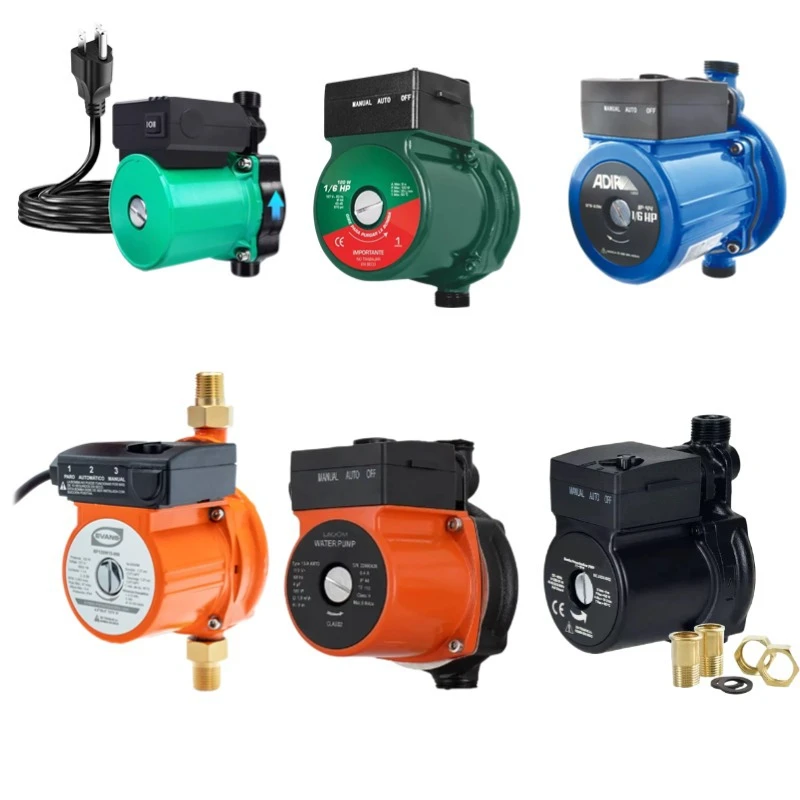
This is the heart of the article. A credible automatic booster water pump manufacturer must explain this clearly for both homeowners and B2B engineers.
2.1 Basic Working Logic (For Homeowners)
The automatic pressure pump working mechanism follows a four-step cycle:
- Pressure drop triggers start – opening a tap lowers pipeline pressure; a pressure switch detects the fall to the cut-in setting (e.g., 0.2 MPa).
- Impeller pressurization – the motor spins the impeller, generating centrifugal force that pushes water into the pipeline at higher pressure.
- Pressure reaches standard → trigger stop – once pressure hits the cut-out setting (e.g., 0.4 MPa), the switch cuts power.
- Pressure tank stabilizes – a captive-air tank supplies a small volume of pressurized water between these settings, preventing short-cycling when a tap merely drips.
This is exactly how a self-priming pressure pump works in practice, and it is the baseline design every serious automatic booster water pump manufacturer starts from.
2.2 Professional Closed-Loop Process (For B2B Industrial Users)
In industrial constant-pressure systems, the water pump automatic start stop principle is managed by a closed-loop control system:
- Real-time pressure monitoring & data collection – a 4–20 mA or 0–10 V pressure sensor continuously measures pipeline pressure.
- Controller signal analysis & calculation – a PLC or variable frequency drive (VFD) compares the measured value against the setpoint using a PID algorithm.
- Motor speed adjustment / pump start-stop – the VFD adjusts motor frequency from 0 to 50 Hz; if demand exceeds one pump’s capacity, a second or third pump is brought online automatically.
- Pipeline pressure feedback & correction – the new pressure is fed back to the sensor, closing the loop and ensuring the deviation stays within ±0.02 MPa.
The water pressure sensing principle combined with a pump intelligent control system forms the basis of modern constant pressure water supply. As the automatic booster water pump manufacturer, Jingong integrates this exact architecture into our high-end product lines.
2.3 Technical Differentiation Across Our Four Main Products
Each product type implements the automatic pressure pump working mechanism differently:
- Submersible Pump: underwater pressure sensing enables a deep-well automatic pressure water supply working mode. The controller sits above ground, but the pressure reference comes from the bottom of the well.
- Surface Pump: ground-level pipeline pressure detection drives a self-priming automatic pressurization principle—ideal for shallow wells, tanks, and municipal feed boost.
- Solar Water Pump: light-energy linkage + pressure dual control. Dedicated MPPT solar pump controllers automatically select between solar panel direct power and battery backup based on real-time irradiance, achieving fully automatic operation with sunlight and water pressure changes.
- Gasoline/Diesel Pump: mechanical pressure sensing + fuel power linkage. A rugged pressure switch triggers automatic start/stop for field non-electric pressure water supply, even in the most remote locations.
2.4 Advanced VFD / PID Constant Pressure Technology
For industrial high-end models, the automatic booster water pump manufacturer deploys VFD-driven PID constant pressure technology:
- Variable frequency speed regulation – instead of on/off, the motor runs at precisely the speed required.
- Real-time constant pressure – the PID algorithm holds pressure within ±0.02 MPa regardless of flow fluctuation.
- Energy saving – because shaft power scales with the cube of speed (P ∝ n³), a 20% speed reduction yields roughly 50% energy savings.
- Noise reduction – soft-start and soft-stop eliminate water hammer and reduce acoustic emission dramatically.
Technical deep-dives on VFD-based constant pressure water supply systems are recommended reading for specifying engineers.
3. Core Components & Functional Analysis of Automatic Water Pressure Pumps
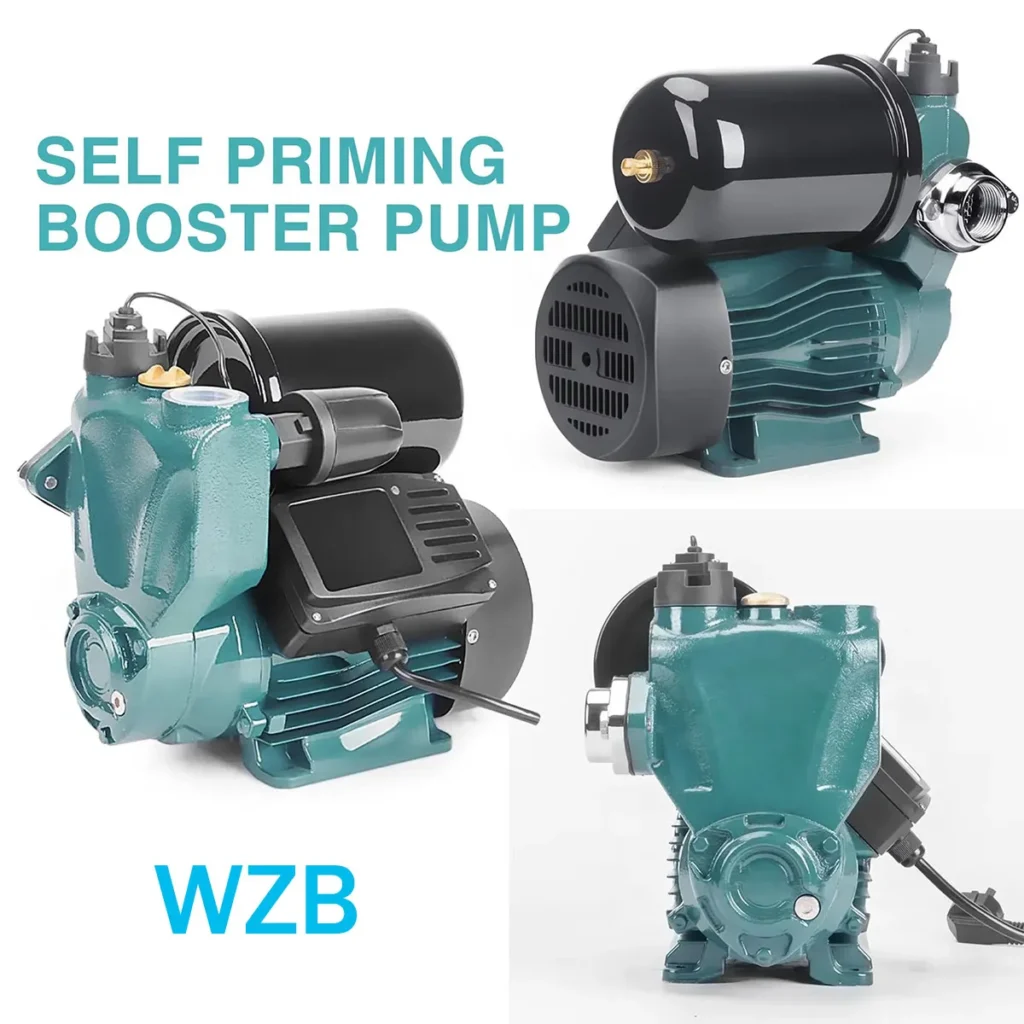
To understand what parts make it automatic, every automatic booster water pump manufacturer should break down the system into three functional groups.
3.1 Core Control Components (The “Automatic” Module)
- Pressure switch – senses discharge pressure; closes contacts at cut-in, opens at cut-out. Adjustable differential prevents short-cycling.
- Flow sensor – detects actual water movement; prevents “dead-head” running when a valve is closed but pressure hasn’t dropped.
- Intelligent controller – the brain. Executes PID loops, manages timers, logs faults, and communicates via RS485 or IoT.
- VFD drive – converts fixed-frequency AC into variable-frequency output to regulate motor RPM.
- Dry-run protection device – cuts power within milliseconds if the source runs dry, protecting the mechanical seal.
The water pump pressure switch function is foundational; it is the component that truly defines an automatic booster water pump manufacturer’s product reliability.
3.2 Pressure Stabilization Components
- Pressure tank – a captive-air vessel that stores energy and delivers water between pump cycles. The pressure tank for water pump is sized based on drawdown calculations (typically 5 L supports 3–5 short draws).
- Buffer diaphragm – separates air from water, maintaining pre-charge pressure (usually 0.15–0.2 MPa below cut-in).
- Water hammer absorber – dissipates pressure spikes caused by sudden valve closure.
3.3 Power Execution Components
- Motor – electric (single/three-phase), solar (DC brushless), or fuel (gasoline/diesel engine).
- Impeller – centrifugal or vortex, material-matched to the fluid (stainless steel for potable water, cast iron for industrial).
- Mechanical seal – the most critical wear part; dry-run protection directly extends its service life.
Learn more about industrial pressure switches and their role in automated pumping.
3.4 Component Differentiation by Pump Type
- Submersible: fully waterproof components rated to IP68, oil-filled motor housing, down-hole pressure transducer.
- Solar: dedicated MPPT controller, DC-AC inverter, PV array combiner, battery management system.
- Diesel/Gasoline: mechanical pressure control parts, throttle actuator, flame-out solenoid, vibration-isolated base frame.
4. Classification & Working Differences of Automatic Pressure Pumps (Core Business Conversion Module)
4.1 Automatic Submersible Pressure Pump

The automatic submersible pressure pump operates underwater with full waterproof automatic induction. It is the preferred solution for deep water sources where the pump must be submerged in the well. As an automatic booster water pump manufacturer, Jingong designs submersibles with integrated dry-run protection and down-hole pressure feedback for deep-well automatic pressure water supply.
👉 Explore: Automatic Submersible Pressure Pump Series
4.2 Automatic Surface Pressure Pump

The automatic surface pressure pump installs above ground, uses self-priming technology for fast startup, and detects pipeline pressure directly. Perfect for household water supply and building pressurization. This is the classic automatic pressure pump for home and farm.
👉 Explore: Automatic Surface Pressure Pump Series
4.3 Solar Automatic Water Pump
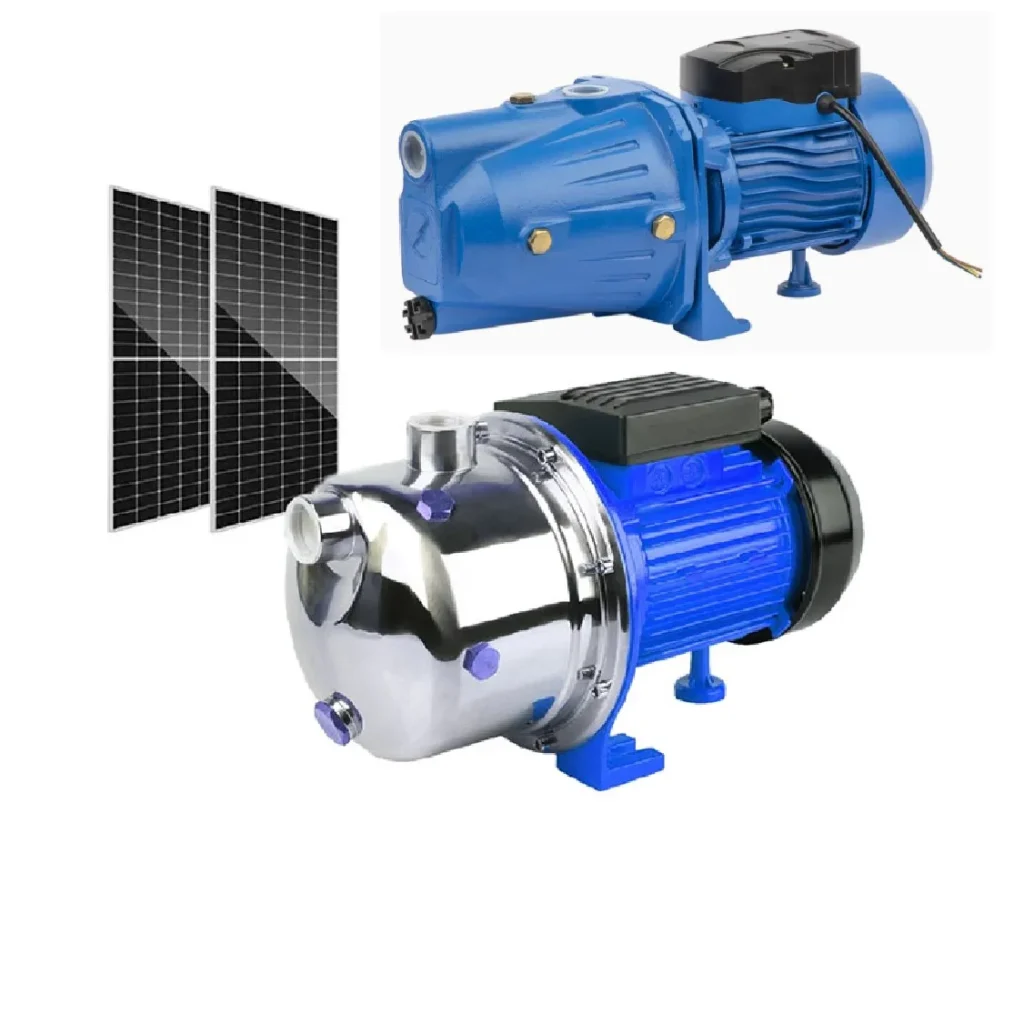
Our solar automatic water pump uses off-grid intelligent control with light-controlled + pressure-controlled dual automatic operation. Energy-saving and environmentally friendly, it is ideally suited for remote areas without grid access. The automatic booster water pump manufacturer integrates MPPT controllers that achieve 99% solar tracking efficiency and automatically switch to battery or AC grid when irradiance is insufficient.
👉 Explore: Solar Automatic Water Pump Series
4.4 Diesel / Gasoline Pressure Pump
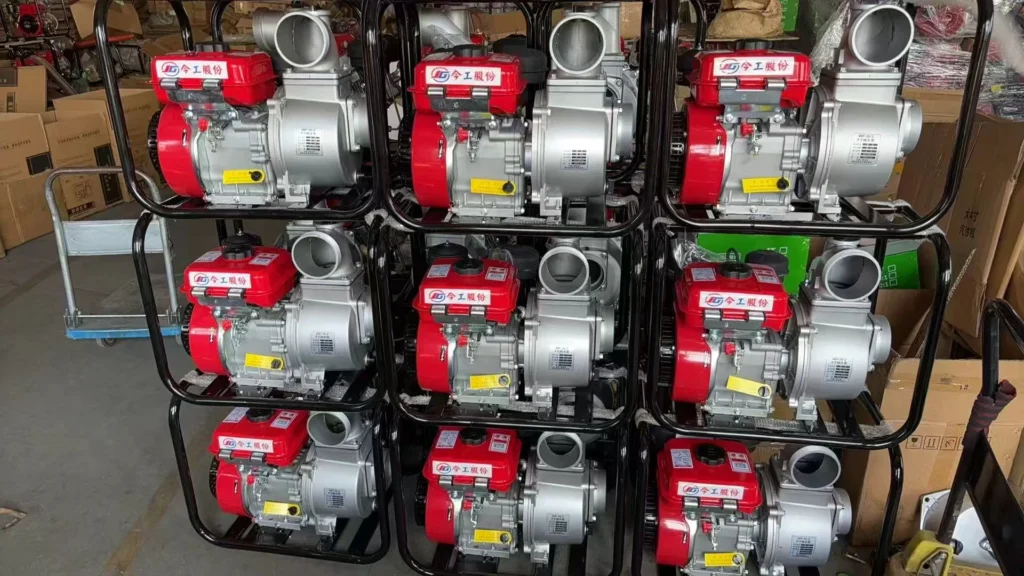
The diesel/gasoline pressure pump is no-electricity-dependent, using mechanical automatic pressure start-stop for field operations. Ideal for farmland irrigation and field engineering where grid power is unavailable. Every reputable automatic booster water pump manufacturer offers this configuration for agricultural resilience.
👉 Explore: Diesel / Gasoline Pressure Pump Series
4.5 Horizontal Comparison
| Pump Type | Applicable Scenario | Power Mode | Pressure Range | Control Accuracy |
|---|---|---|---|---|
| Submersible | Deep wells, boreholes | Electric | 0.2–1.0+ MPa | High |
| Surface | Household, building boost | Electric | 0.2–0.6 MPa | Medium-High |
| Solar | Off-grid, remote irrigation | Solar + Battery | 0.15–0.5 MPa | Medium |
| Diesel/Gasoline | Farmland, field engineering | Fuel | 0.2–0.8 MPa | Medium |
5. Core Advantages & Application Scenarios of Automatic Water Pressure Pumps
Every automatic booster water pump manufacturer touts benefits; here are the evidence-backed ones:
- Automatic start-stop – zero manual intervention; the system self-manages 24/7.
- Constant water pressure – VFD models maintain ±0.02 MPa precision.
- Energy saving – variable speed control cuts energy use by up to 50% versus fixed-speed pumps.
- Dry-run protection – prevents catastrophic seal failure.
- Long service life – reduced cycling extends motor and seal lifespan.
- Low maintenance – sealed components and self-diagnostic controllers minimize service calls.
5.1 Multi-Scenario Application Classification
- Civil scenarios: household water supply, villa water pressure boosting — where the automatic booster water pump manufacturer typically recommends a surface pump with a pressure tank.
- Agricultural scenarios: farmland irrigation, pasture water supply — solar & diesel pumps are core solutions here, delivering the low water pressure solution pump farmers need.
- Industrial scenarios: factory pipeline water supply, construction water delivery — surface & submersible pumps with VFD control deliver industrial-grade constant pressure.
- Off-grid scenarios: remote mountain areas, no-power zones — solar & gasoline pumps provide fully automatic water supply without grid dependency.
Read more about solar-powered constant pressure micro-irrigation systems.
6. Common Faults, Troubleshooting & Maintenance

A trustworthy automatic booster water pump manufacturer doesn’t just sell pumps—it helps customers keep them running. Here are the most common faults:
6.1 Common Faults
- Pressure instability – usually caused by a waterlogged pressure tank or incorrect pre-charge.
- Failure to start – electrical fault, tripped breaker, or failed pressure switch.
- No automatic stop – stuck pressure switch contacts or failed check valve.
- Dry-run alarm – source depletion; the protection system is working correctly.
- Loud noise – cavitation, worn bearings, or water hammer.
6.2 Targeted Solutions for Each Pump Type
- Submersible: inspect down-hole sensors; verify cable integrity; check for sand abrasion.
- Surface: prime the pump; check suction line for air leaks; clean the strainer.
- Solar: clean PV panels monthly; verify MPPT controller logs; inspect battery state of charge.
- Diesel/Gasoline: change engine oil per schedule; drain fuel filter; check spark plug or glow plug.
6.3 Daily Maintenance Specifications
- Regular inspection of pressure tank pre-charge (every 6 months).
- Cleaning of intake screens and impellers.
- Waterproof protection verification for submersible installations.
- Fuel system maintenance for diesel/gasoline pumps.
- Solar panel cleaning and electrical connection checks.
For detailed maintenance procedures, visit our After-Sales Service Page or read the FAQ.
7. Selection Guide & Frequently Asked Questions
7.1 How to Choose an Automatic Water Pressure Pump
As an experienced automatic booster water pump manufacturer, Jingong recommends evaluating five core criteria:
- Water source depth – determines whether you need a submersible or surface pump.
- Usage scenario – household, farm, industrial, or off-grid?
- Power condition – is grid power available, or do you need solar/fuel?
- Required pressure & flow – calculate total head (static + friction losses) and peak demand.
- Budget – balance initial investment against lifecycle energy savings.
7.2 Four-Product Selection Suggestions
- Deep well (>15 m): choose Submersible Pressure Pump.
- Shallow well or tank boost: choose Surface Pressure Pump.
- No grid power + sunny climate: choose Solar Automatic Water Pump.
- No grid power + high flow demand: choose Diesel / Gasoline Pump.
7.3 High-Frequency FAQ (Featured Snippet Optimized)
Q: Are automatic water pressure pumps reliable?
A: Yes. A professionally engineered automatic pressure pump from a qualified automatic booster water pump manufacturer can run 10+ years with routine maintenance, thanks to dry-run protection, VFD soft-start, and sealed components.
Q: Can submersible pumps work with automatic pressure control?
A: Absolutely. Submersible pumps integrate perfectly with pressure switches, VFDs, and intelligent controllers for deep-well automatic pressure water supply.
Q: How long do solar automatic water pumps last?
A: With proper panel cleaning and controller care, the pump unit itself lasts 8–12 years; the PV array lasts 20+ years. Choosing the right automatic booster water pump manufacturer ensures spare parts availability throughout the product lifecycle.
Q: What is the difference between electric and diesel automatic pressure pumps?
A: Electric pumps offer higher control precision and lower operating cost where grid power exists. Diesel/gasoline pumps provide independence from the grid, making them ideal for remote farmland and field engineering. Both are core product lines for any full-spectrum automatic booster water pump manufacturer.
Q: Which automatic pump is best for home use?
A: For most homes, an automatic booster water pump manufacturer would recommend a surface pump with a pressure tank and electronic controller. Deep-well situations require a submersible variant.
Q: Submersible vs surface pressure pump—how to decide?
A: Source depth is the deciding factor. Above 15 meters, submersible; below 15 meters, surface. Your chosen automatic booster water pump manufacturer can help with a site survey.
Q: Solar pump vs diesel pump for irrigation?
A: Solar wins for sustainability and low operating cost in sunny regions; diesel wins for high-flow demands and cloudy climates. A versatile automatic booster water pump manufacturer like Jingong supplies both.
8. Conclusion: Partner with a Professional Automatic Booster Water Pump Manufacturer

Understanding how an automatic water pressure pump works is the first step toward specifying the right system. From the basic pressure-switch-and-tank mechanism to advanced VFD/PID constant-pressure control, the technology has matured into a reliable, efficient, and fully automated solution for every water source scenario.
As a full-spectrum automatic booster water pump manufacturer, Jingong Technology delivers:
- Complete product coverage – submersible, surface, solar, and fuel-powered automatic pressure pumps.
- Engineering expertise – our R&D team holds 15+ patents in pump control systems.
- Global service network – technical support in 12 languages across 60+ countries.
- OEM & ODM capability – custom branding, voltage configurations, and control logic tailored to your market.
When you choose Jingong as your automatic booster water pump manufacturer, you’re not just buying a pump—you’re gaining a technology partner committed to your long-term success.
📞 Get a Free Consultation & Custom Solution
Whether you need a single household booster or a 100-unit farm irrigation project, our engineering team will design a turnkey solution. As your dedicated automatic booster water pump manufacturer, we provide:
- Free technical consultation and site evaluation
- Customized product configuration
- Wholesale & OEM service with competitive pricing
- Full documentation: datasheets, wiring diagrams, and installation guides

0 Comments