Published by Jingong Technology | Manufacturing & Export Experts Since 2012
If you’re searching for gasoline engine water pump wholesale partners in 2026, you’ve probably already noticed two things:
- B2B marketplaces are saturated with “factory direct” claims that blur the line between actual manufacturers and trading desks.
- A 20ft container of gasoline pumps isn’t a low-stakes purchase. Engine specs, suction lift, impeller material, and after-sales spare parts will decide whether your customers come back.
This guide isn’t a generic “how to source from China” blog post. It’s written from the other side of the table—the manufacturing side. At Jingong (Zhejiang Jingong Technology), we’ve been operating a pump-specific factory for over 12 years, producing gasoline & diesel engine pumps, land (surface) pumps, submersible pumps, solar pumping systems, and pressure booster pumps. We supply wholesalers, distributors, and engineering contractors across Southeast Asia, Africa, the Middle East, and LATAM.
So when we discuss how to vet a gasoline engine water pump wholesale supplier, we’re not repeating sourcing checklists—we’re telling you what we get asked by serious buyers, and what separates a supplier you’ll reorder from versus one that wastes your deposit.
Why Sourcing Gasoline Engine Water Pumps in Bulk Demands a Different Lens
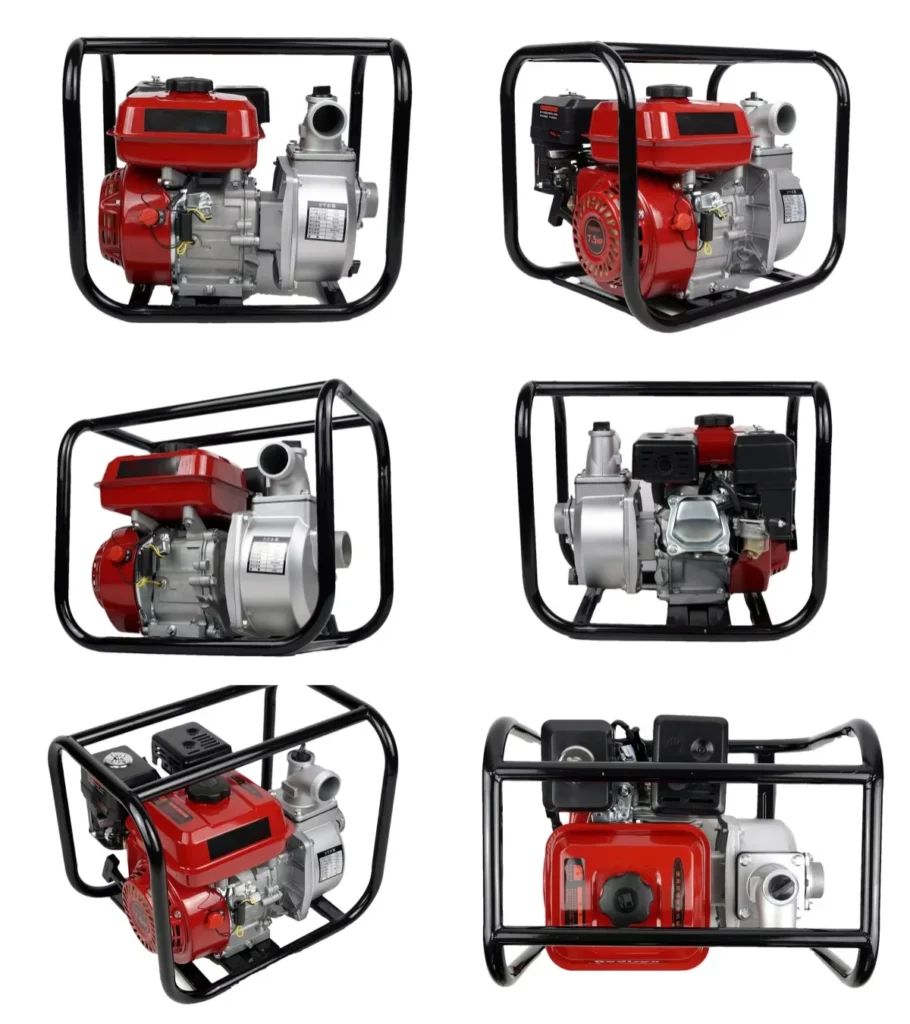
Most B2B sourcing articles treat “water pumps” as a monolith. They are not. A gasoline engine water pump wholesale buyer faces a different risk profile compared to someone buying solar pumping systems or submersibles.
| Dimension | Gasoline Engine Pump | Solar Pump | Submersible |
|---|---|---|---|
| Power Source Dependency | Fuel availability + engine stability | Sunlight + controller | Electric grid / generator |
| Service Frequency | High (oil change, spark plug, carburetor) | Low | Medium |
| Core Buyer Complaints | Hard start, impeller wear, overheating | Controller failure, panel mismatch | Seal leak, cable damage |
| Wholesale Margin Driver | Repeat spare-part orders | Project bundling | Durability reputation |
If your supplier can’t talk fluently about suction lift vs head, NPSH, impeller material (aluminum vs cast iron vs stainless), and engine matching (168F / 170F / GX200 clone vs Honda licensed), you’re likely talking to a reseller, not a factory. That distinction matters when you’re building a gasoline engine water pump wholesale portfolio designed to survive agricultural irrigation peaks, construction dewatering, and flood emergencies.
For a deeper dive into our manufacturing standards, visit our Factory Tour page.
7 Hard Criteria to Screen a Gasoline Engine Water Pump Wholesale Supplier
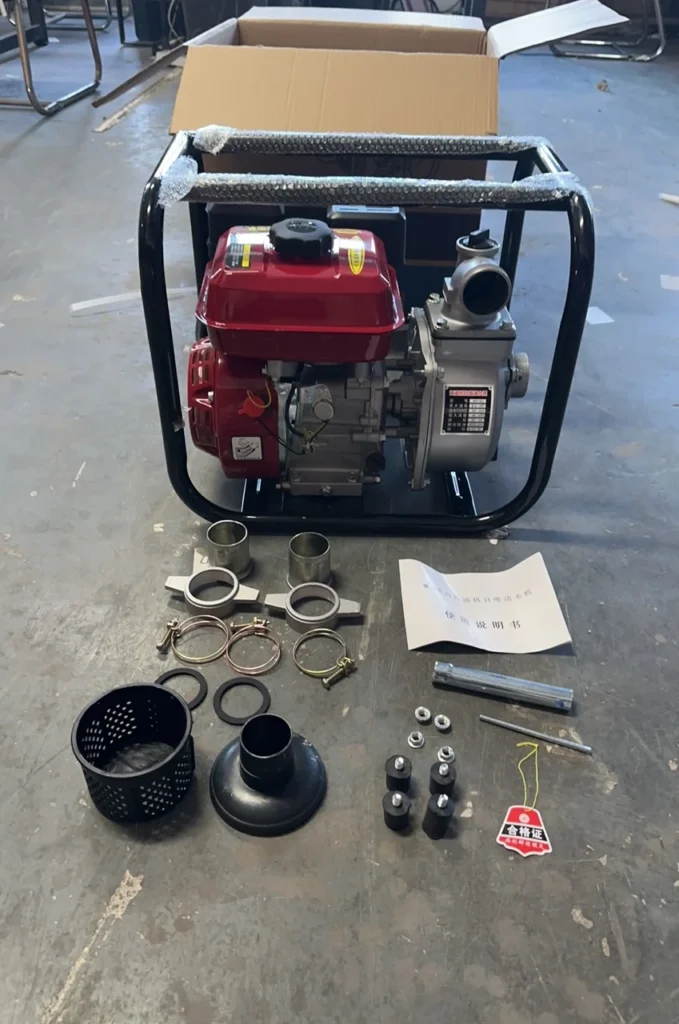
Below are the seven filters Jingong’s own export team uses when auditing component sub-suppliers. If a candidate fails 3 or more, we recommend walking away.
1. Factory Status: Manufacturer vs Trading Company
Ask for a live video walkthrough, not just curated photos. A legitimate pump factory has:
- Motor/engine assembly lines or dedicated pump-set assembly bays with test benches.
- Impeller casting/machining capabilities or rigorous incoming QC for castings.
- Pressure test tanks (every pump should be tested before packing—ask for their standard test sheet format).
- A warehouse with mixed SKUs: gasoline, diesel, land, submersible, and solar pumps.
In a gasoline engine water pump wholesale deal, trading companies aren’t automatically disqualified—some consolidate well—but you need to know who’s actually holding the wrench. If the “factory tour” is a shared video shot in a 200 m² trading office, that’s your answer.
Internal Link: View Jingong’s Certificates & Capacity
2. Production Capacity & Lead Time Consistency
Wholesale isn’t about the first container; it’s about the fifth. Ask these specific questions:
- What is your monthly output of gasoline engine pump units? (Jingong: ~8,000–12,000 units/month across engine pump SKUs).
- What is your stretch capacity during peak season?
- What percentage of orders ship within the promised window? (Request data from the last 6 months, not just a verbal assurance).
A gasoline engine water pump wholesale supplier quoting 15 days in July (peak irrigation season in SEA) while competitors quote 25–30 days is either sandbagging you for the next order or doesn’t understand their own production line constraints.
3. Certifications That Actually Matter (CE, ISO, EPA if to US)
Not all certificates are equal for engine-driven pumps:
- CE: Baseline requirement for the European market.
- ISO 9001: Indicates process quality management (not a product guarantee, but essential).
- EPA / CARB: Non-negotiable if reselling into the US market. Most standard China gasoline pumps target non-US markets unless specified otherwise.
- SONCAP: Mandatory for Nigeria.
- COC: Required for Kenya, Algeria, etc.
If your gasoline engine water pump wholesale supplier only has a PDF named “CE_certificate.pdf” dated 2019 and cannot show the corresponding model-specific test report, treat it as decorative.
4. Product Range Breadth – Can One Supplier Cover Your Full SKU Map?
This is where many wholesalers encounter friction. You start buying gasoline pumps from Supplier A, then realize you also need:
- Diesel engine pumps for construction dewatering (higher durability, longer run times).
- Land/surface pumps for fixed irrigation lines.
- Submersible pumps for deep-well access or drainage.
- Solar pumping systems for off-grid agricultural projects.
If your core supplier only handles gasoline, you’re forced to manage 3–4 different factories. If they cover the full spectrum (like Jingong does: gasoline, diesel, land, sub, solar, booster), your logistics, QC, and payment batches consolidate significantly. From an EEAT perspective, range breadth is also a proxy for engineering depth—you don’t tool up for five pump categories without a serious R&D bench.
5. Customization & OEM Readiness
For a gasoline engine water pump wholesale buyer building a local brand, OEM isn’t a nice-to-have—it’s the primary margin builder. Ask specifically:
- Can they laser-print your brand on the pump casing and the engine shroud?
- Do they offer Pantone-matched color customization?
- Can manuals, warning stickers, and cartons be produced in your local language?
- Can they tune specifications for your market? (e.g., larger fuel tanks for Africa, anti-sand seals for muddy irrigation, high-lift impellers for hilly terrain).
Jingong’s export team has executed all of the above, including a SEA client who required a “monsoon kit” (extra filter + riser foot) bundled with each unit. That level of request typically dies at a trading desk; it thrives at a factory.
6. After-Sales & Spare Parts Availability
A gasoline engine pump has a predictable wear map:
- Spark plug (~100 hrs)
- Air filter (~150 hrs)
- Impeller (depends on sand content)
- Carburetor (dependent on fuel quality)
- Oil seal / mechanical seal
Your gasoline engine water pump wholesale supplier should:
- Offer a clear spare-parts ratio (e.g., 2% free spares per container, or purchasable add-on kits).
- Provide exploded-view diagrams for each SKU (so your local mechanics can identify parts easily).
- Guarantee stock availability for engine-compatible parts for at least 5–7 years (engine model discontinuation is a real risk in this industry).
7. Export Track Record by Region
Pump requirements are highly region-sensitive:
- Africa: Anti-sand seals, large fuel tanks, price sensitivity, critical spare parts support.
- SEA: Monsoon/rice paddy usage, portability valued, 2–3 inch models dominate.
- Middle East: Diesel preference for long run times, growing interest in solar hybrids.
- LATAM: Heavy agricultural irrigation focus, 4-stroke preference.
A supplier who can name which models they shipped to which regions in the last 12 months (not just vaguely stating “we export worldwide”) is demonstrating genuine Experience. In 2025, Jingong’s gasoline engine water pump wholesale shipments were distributed as follows: ~40% Africa, ~30% SEA, ~20% Middle East, ~10% LATAM. This split directly informs how we spec our default configurations.
Gasoline vs Diesel vs Solar – Which Fits Your Wholesale Portfolio?
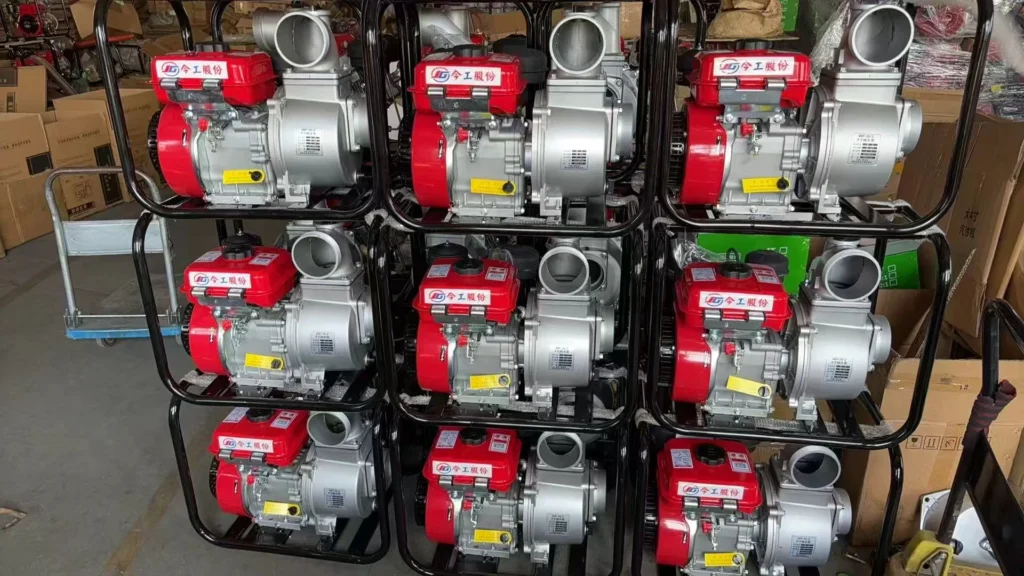
This section addresses the comparison queries your buyers are already typing into Google:
- “Gasoline pump vs diesel pump for construction”
- “Solar water pump vs gasoline for irrigation”
- “Submersible vs surface pump for farm”
Gasoline Engine Pump
✅ Lower upfront cost, portable, easy recoil start.
❌ Higher running cost (fuel + maintenance), less comfortable with continuous multi-day operation.
Best wholesale fit: General ag irrigation, flood response/emergency, price-sensitive distributors.
Diesel Engine Pump
✅ Long-run capable, fuel-efficient under load, high torque.
❌ Heavier unit weight, higher noise levels, higher ticket price.
Best wholesale fit: Construction dewatering, municipal drainage, African agricultural co-ops.
Solar Pumping System
✅ Zero fuel cost, minimal maintenance, perfect for off-grid locations.
❌ Higher upfront investment, weather-dependent performance, controller sensitivity.
Best wholesale fit: NGO/government irrigation projects, off-grid farms, Middle East/Africa hybrid tender projects.
Land (Surface) Pump – Electric
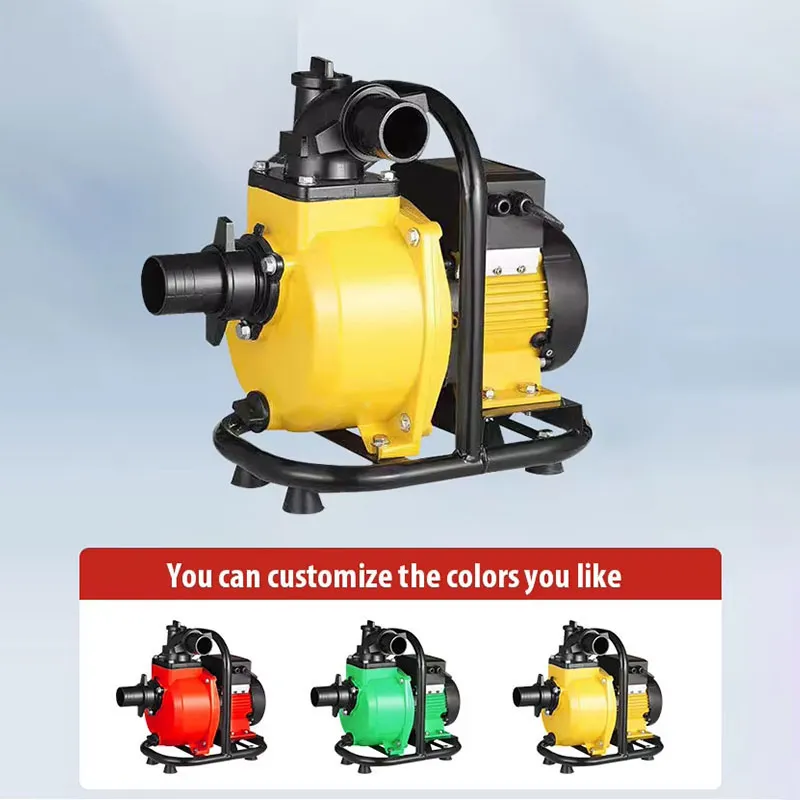
✅ Economical, simple design, ideal for fixed installations.
❌ Requires stable grid power or a generator.
Best wholesale fit: Fixed-line irrigation, building water supply boosting.
Submersible Pump
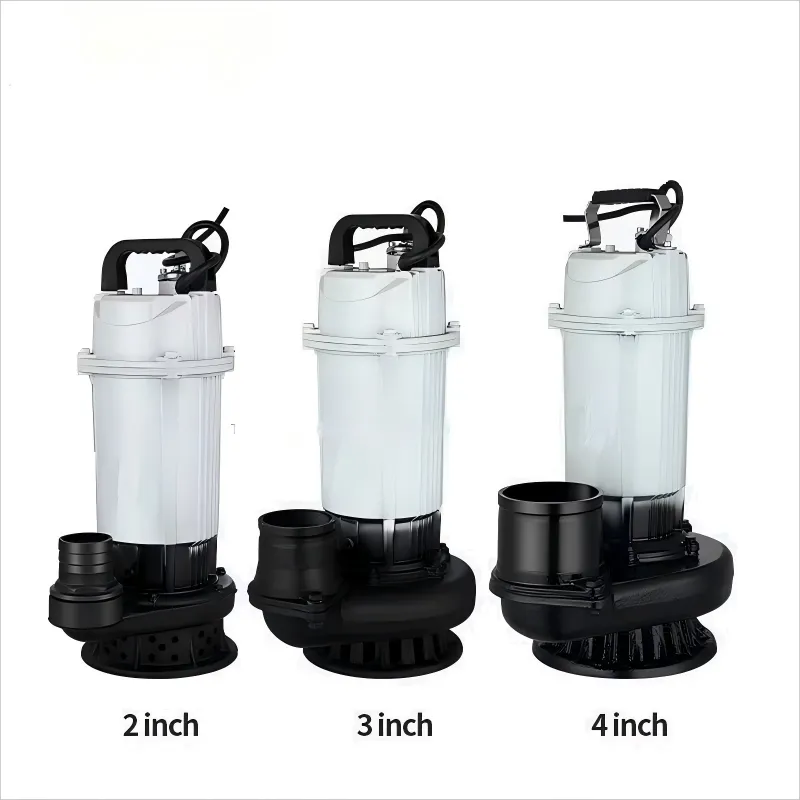
✅ Essential for deep wells, effective drainage, operates quietly.
❌ Vulnerable to cable damage and seal failure if not properly installed.
Best wholesale fit: Well drilling resellers, construction site drainage contractors.
For most first-time gasoline engine water pump wholesale buyers, the optimal strategy is a mixed first container: 60% gasoline (fast-moving inventory), 20% diesel (construction add-on), and 20% solar or submersible (project-based pull). This is precisely the approach three of Jingong’s SEA distributors adopted in 2025.
Red Flags We’ve Seen in 10+ Years of Jingong Export Orders
This experience-led section is pure EEAT-E (Experience), and it’s the type of content Google rewards because it cannot be scraped from a generic sourcing wiki.
- “We are factory, 20,000 m²” but can’t show today’s production live: Camera-shyness usually indicates a trading desk.
- MOQ of 1 unit for “custom branding”: No real OEM line runs at that volume; they are likely drop-shipping standard stock.
- Quoting 30% cheaper than the market floor: The engine is likely an unbranded clone with zero parts traceability.
- No pressure-test photo per unit: Expect leaks at threads or mechanical seals within the first 30 days of operation.
- Won’t name a single reference client by country: Either they are brand new, or they are hiding consistent quality issues.
- Engine model “same as Honda” but no license paper: GX200 clones are acceptable for many markets, but *honesty* about it is crucial. Dishonesty here predicts larger operational issues.
- WhatsApp-only communication, no email domain matching company name: A minor point, but indicative of unprofessionalism when combined with other red flags.
If you are vetting a gasoline engine water pump wholesale supplier and 3 or more of these appear, we strongly advise you to keep looking.
What a Serious Gasoline Engine Water Pump Wholesale Quote Should Include
Too many first-time buyers accept a 3-line quote: “Model / Unit Price / Delivery 30 days”. That’s not a professional quote; it’s a bait estimate. A proper quote from a gasoline engine water pump wholesale supplier should list:
- Model Code + Pump Specification: Inlet/outlet size, max head, max flow rate, suction lift.
- Engine Specification: Displacement (cc), Horsepower (HP), engine model (e.g., 168F-1 / GX200 clone).
- Pump Body Material: Aluminum / Cast Iron / Stainless Steel impeller options.
- Packing Details: Color box / neutral carton / plywood case (for LCL shipments).
- MOQ per Model + Container Load Qty: Exact count for 20GP / 40HQ.
- Spare Parts Inclusion: Percentage or specific list (e.g., 1.5% free spares).
- Payment Terms: T/T percentage split (e.g., 30% deposit, 70% before shipment).
- Lead Time by Month: Differentiating between peak and off-peak seasons.
- Warranty Terms: Duration for engine vs. complete pump set.
- Certificate Availability: Confirming which certs apply to the quoted models.
Jingong quotes strictly follow this format—it’s what our repeat wholesalers expect, and what new clients learn to appreciate after experiencing disorganization elsewhere.
Jingong as a Gasoline Engine Water Pump Wholesale Supplier – What We Offer
Zhejiang Jingong Technology is a pump-specialized manufacturer based in Zhejiang, China, with 12+ years of dedicated pump production and export experience. Our core product lines include:
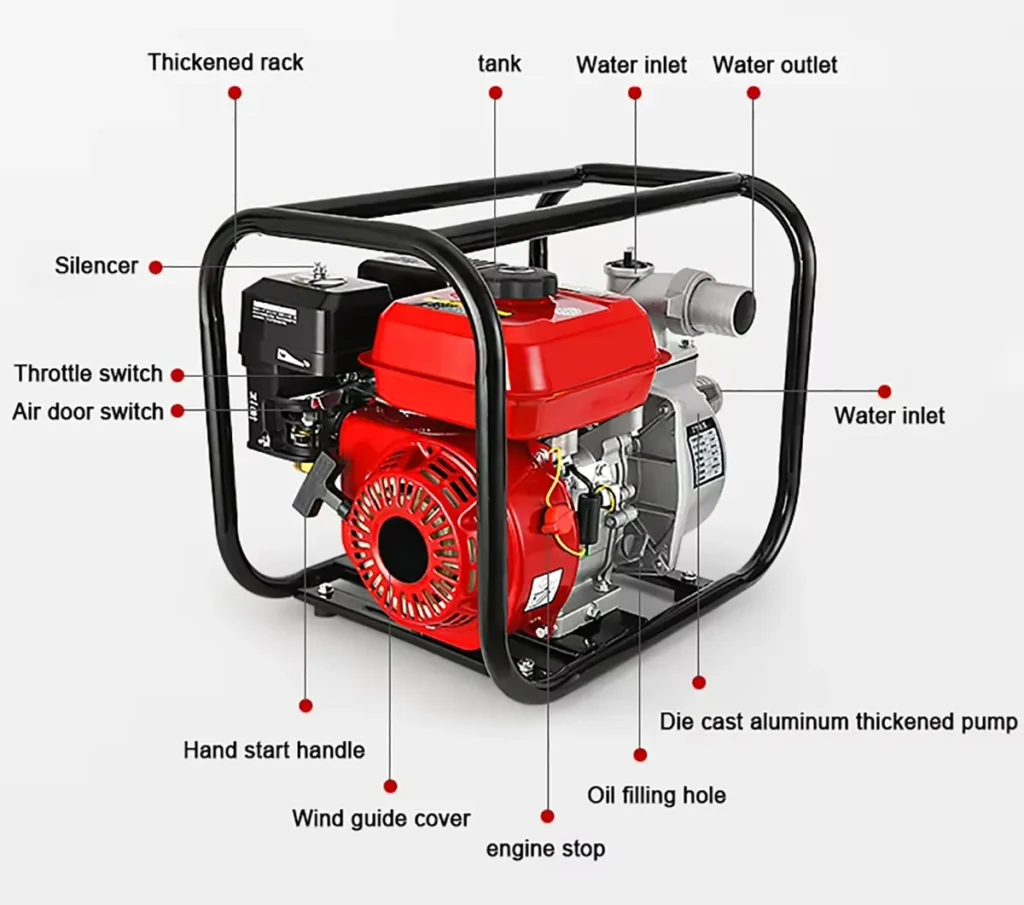
- ✅ Gasoline & Diesel Engine Water Pumps: 2″, 3″, 4″, self-priming, and trash pump variants.
- ✅ Land / Surface Pumps: Centrifugal, jet, and booster configurations.
- ✅ Submersible Pumps: Deep well, drainage, and sewage models.
- ✅ Solar Pumping Systems: DC/AC hybrid kits (controller + panel + pump).
- ✅ Pressure Booster Pumps: For residential and commercial building water supply.
For our gasoline engine water pump wholesale partners, our standard terms are transparent and competitive:
| Item | Jingong Standard |
|---|---|
| MOQ | 50 pcs/model (mixable within a 20GP container) |
| Lead Time | 15–25 days (off-peak), 25–35 days (peak season) |
| OEM Capability | Branding, color, carton, manual, warning stickers |
| Spare Parts | 1–2% free + optional purchasable packs |
| Warranty | 12 months (pump) / 6 months (engine) |
| Certifications | CE, ISO 9001, SONCAP (available per model) |
| Key Export Regions | Africa, SEA, Middle East, LATAM |
We do not pretend to be the absolute cheapest option on the market. Instead, we aim to be the gasoline engine water pump wholesale supplier you confidently reorder from on container #3 and beyond.
FAQ – B2B Buyers Ask These Before Placing the First Bulk Order
Q1: What is the minimum order quantity for a gasoline engine water pump wholesale trial?
Jingong accepts a minimum of 50 pieces per model, which can be mixed across various SKUs within one 20GP container. Most distributors start with 1–2 high-mover models; the 2″ gasoline self-priming pump is usually the safest first SKU.
Q2: Can I get a pre-production sample before committing to a container order?
Yes. We provide samples via EXW terms or international courier. The sample cost is typically deductible from your first container order upon confirmation.
Q3: Which engine brands do you primarily use in your pumps?
We primarily utilize tuned 168F / 170F / 173F / GX200-clone engines with our proprietary QC overlay. For EU/US-targeted batches, we can discuss licensed engines—pricing will adjust accordingly based on certification requirements.
Q4: How do I determine the right mix between gasoline and diesel pumps for my specific market?
If your target buyers are smallholder farmers, households, or emergency services, prioritize gasoline pumps (portable, lower ticket price). If they are construction firms, contractors, or require long-run dewatering, prioritize diesel. Many successful gasoline engine water pump wholesale distributors strategically carry both to capture different segments.
Q5: Does Jingong support private labeling for solar pump kits as well?
Absolutely. Solar kits are often easier to brand comprehensively (controller sticker, panel labeling, custom cartons, branded manuals). Several of our SEA clients successfully run a “solar + gasoline” bundle under a single unified brand.
Q6: What kind of after-sales support do you provide for overseas wholesalers?
We supply exploded-view diagrams, dedicated spare parts packs, WhatsApp/video troubleshooting support, and in some cases, we can coordinate with local agent service if your annual volume justifies the arrangement.
Q7: How much discount should I expect on a typical bulk order?
Jingong offers clear discount tiers: 1–2 containers (base pricing), 3–5 containers (2–4% discount), 6+ containers (case-by-case negotiation). However, the true margin driver for a gasoline engine water pump wholesale buyer isn’t just the initial unit price—it’s the consistency of reorders and the attach rate of profitable spare parts sales.
Next Step: Get a Wholesale Quotation or Sample
If you are actively comparing gasoline engine water pump wholesale suppliers for your 2026 procurement cycle, the fastest way to separate marketing talk from actual capability is to request three specific items in one email:
- A quote sheet following the 10-point format detailed above.
- A live video walkthrough of their assembly line (10 minutes is sufficient).
- One verifiable reference client in your geographic region they’ve shipped to in the last 12 months.
The Jingong export team can deliver all three within 24 business hours. Reach out via our Contact page . Be sure to mention “Wholesale Guide 2026” in your subject line, and we will include a complimentary spare-parts pack proposal in your first official quote.
Ready to Discuss Your Wholesale Requirements?
Stop guessing and start sourcing with confidence. Contact our B2B specialists today.