
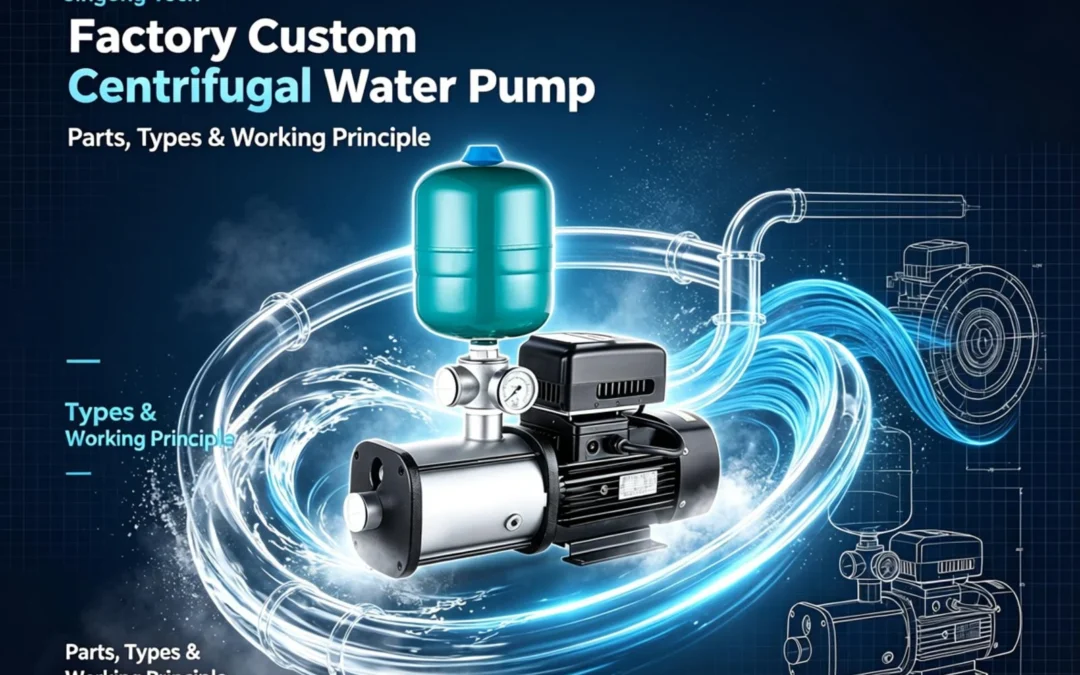
When procurement managers type “Centrifugal Water Pump Manufacturer” into Google, they aren’t looking for a textbook definition — they’re looking for a factory that understands flow, head, NPSH, and whether a submersible, surface, solar, or diesel unit actually survives their jobsite. As a Centrifugal Water Pump Manufacturer based in Zhejiang, China, Jingong Tech has spent the last decade building exactly that: industrial-grade centrifugal pumps (boosters, submersibles, surface/land pumps, solar pumps, gasoline & diesel pumps) for farms, municipalities, construction sites, and OEM distributors worldwide.
This guide consolidates what we’ve learned on the shop floor and in the field — covering parts, operating principle, classifications, performance parameters, application scenarios, troubleshooting, and how to specify a custom centrifugal water pump that actually matches your duty point. If you’re comparing suppliers, skip to Module 10 for our product matrix; if you’re an engineer, start at Module 2.
1. What Is a Centrifugal Water Pump? (Definition & Core Purpose)
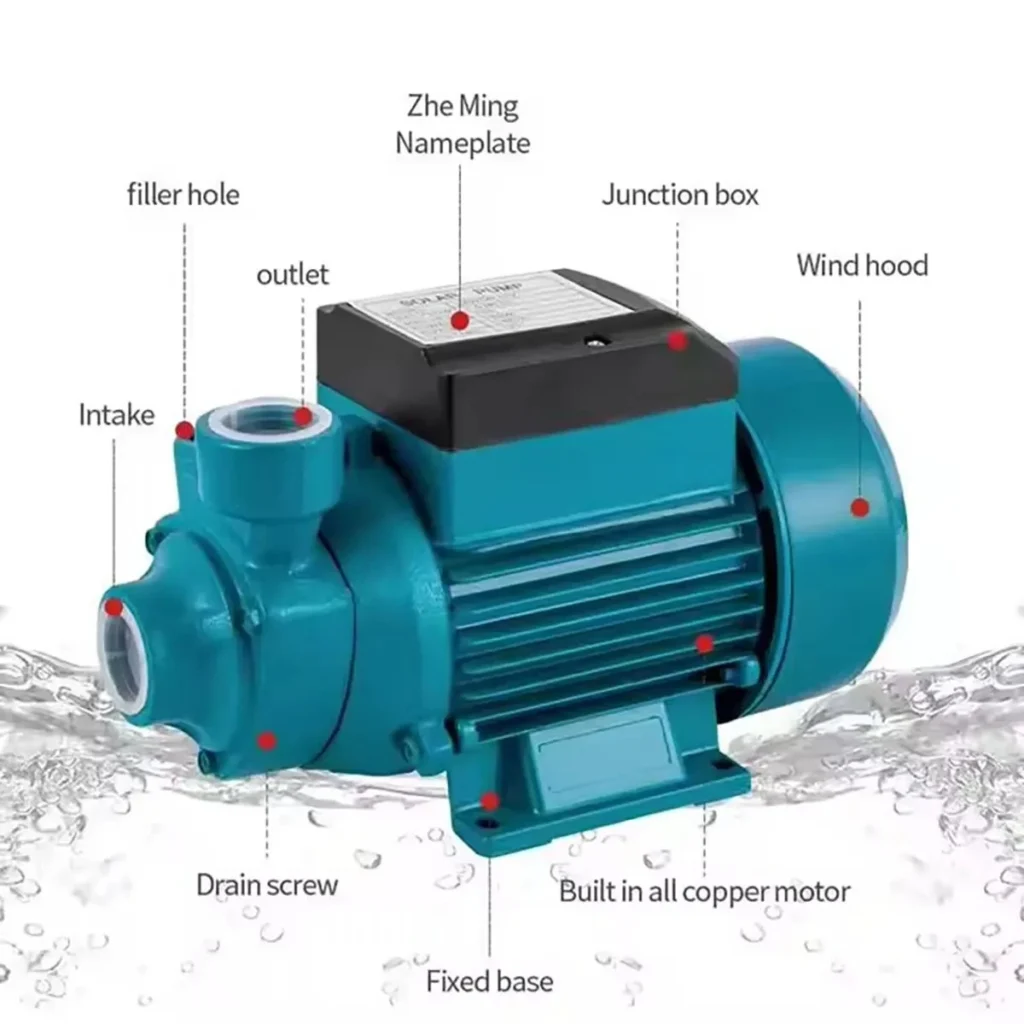
A centrifugal water pump is a dynamic fluid machine that converts mechanical energy — typically from an electric motor, diesel/gasoline engine, or solar-driven motor — into hydraulic energy via centrifugal force. Liquid enters the impeller eye (low-pressure zone), accelerates radially outward along rotating vanes, then decelerates in the volute or diffuser where kinetic energy transforms into pressure energy. The result: steady-flow liquid transfer across a wide range of flow rates and heads.
Among all pump families, centrifugal designs dominate global water-handling infrastructure — from household boosting to agricultural irrigation to industrial process loops — because they deliver high flow at moderate pressure with simple maintenance. When you search for a Centrifugal Water Pump Manufacturer, what you’re really buying is not just the cast iron or stainless steel in the casing, but the hydraulic tuning behind the impeller trim, bearing layout, and seal selection.
1.1 How a Centrifugal Pump Differs from a Positive Displacement Pump
| Feature | Centrifugal Pump | Positive Displacement (PD) |
|---|---|---|
| Flow characteristic | Pressure-dependent (variable flow) | Constant flow regardless of pressure |
| Viscosity handling | Poor above ~500 cP | Excellent for high-viscosity fluids |
| Priming requirement | Usually requires priming (unless self-priming design) | Generally self-priming |
| Typical use | Water, thin liquids, high-flow transfer | Oil, sludge, metering, high-pressure injection |
Wikipedia – Centrifugal pump (external) | Jingong Pump Product Overview [internal]
2. Centrifugal Pump Working Principle & Operating Sequence
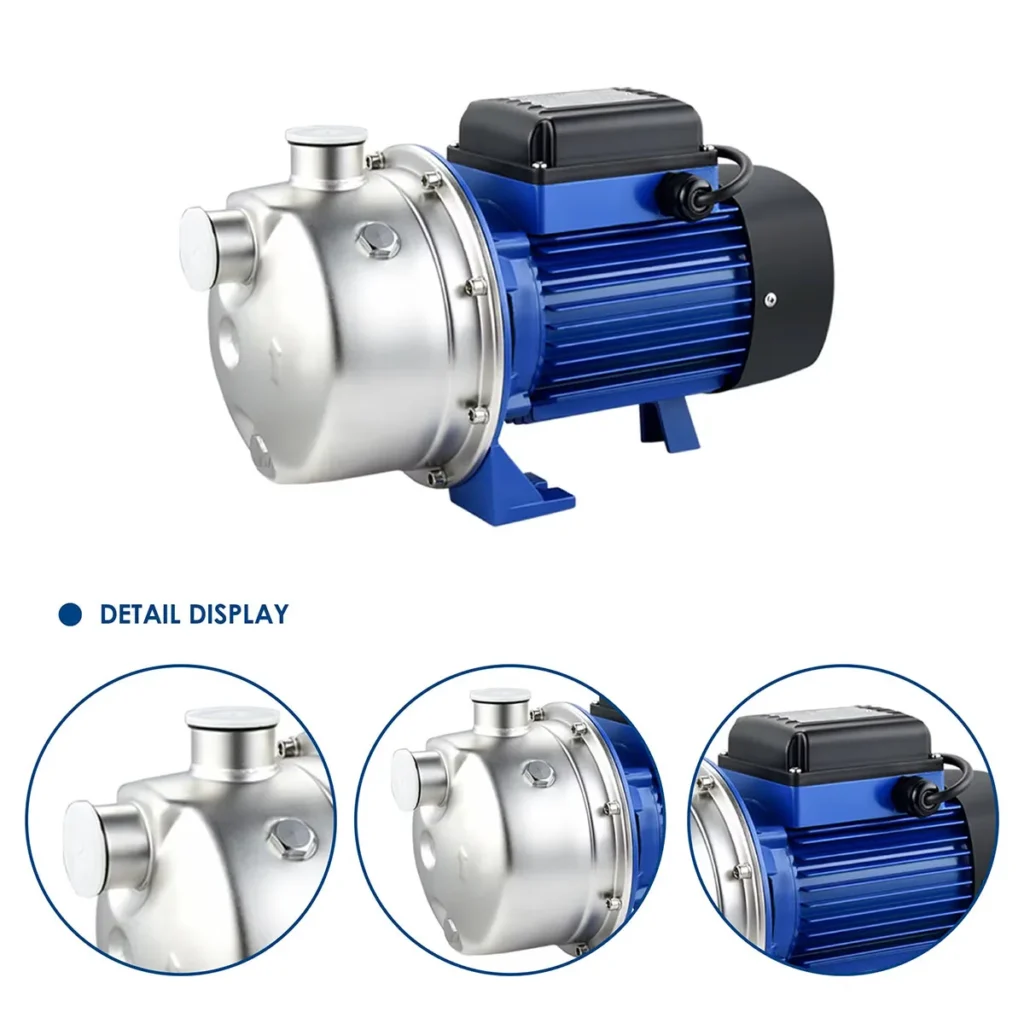
A serious Centrifugal Water Pump Manufacturer doesn’t just cast a casing — it designs around Bernoulli’s principle and conservation of angular momentum. Here’s the sequence as it happens inside every Jingong centrifugal unit:
- Priming: The pump casing and suction line must be filled with liquid before startup. Air pockets cause cavitation and dry-run damage. Self-priming variants recirculate residual liquid to re-prime automatically.
- Impeller rotation: The motor (electric / diesel / gasoline / solar VFD) drives the impeller at rated RPM — commonly 1450, 2900 (50 Hz) or 1750, 3500 (60 Hz).
- Centrifugal acceleration: Liquid at the impeller eye is thrown radially outward. A low-pressure zone forms at the suction side, drawing more liquid in through the inlet flange.
- Volute/diffuser conversion: The volute (spiral casing) or stationary diffuser vanes slow the high-velocity fluid, converting kinetic energy → pressure energy.
- Discharge: Pressurized liquid exits through the discharge flange into the piping system.
2.1 Why Priming Matters (and Why Cheap Pumps Fail Here)
In our Zhejiang workshop, roughly 30% of returned “dead on arrival” units from first-time buyers were simply run dry due to missing foot valve or improper priming. A responsible Centrifugal Water Pump Manufacturer will either spec a foot valve + suction strainer, or recommend a self-priming surface model for above-water installations. We’ll revisit this under Module 8 (troubleshooting).
3. Main Components of a Centrifugal Water Pump (With Material Options)
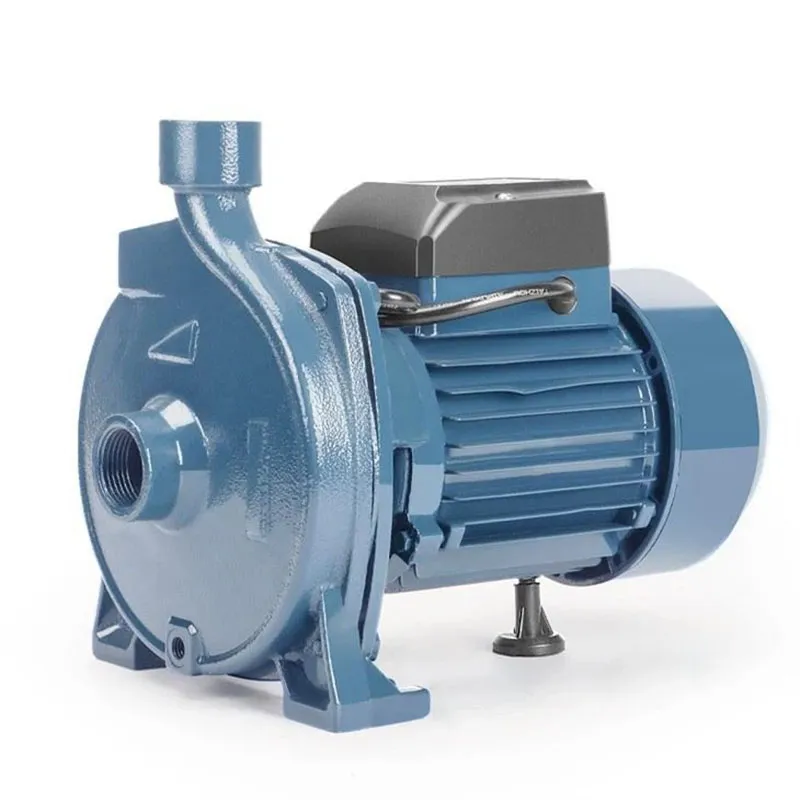
Understanding parts helps you audit a Centrifugal Water Pump Manufacturer’s build quality before placing an order. Below is the anatomy of a typical Jingong centrifugal unit:
3.1 Impeller
The heart of the pump. Options: closed (higher efficiency, clean water), semi-open (handles slight solids), open (heavy solids/slurry, lower efficiency). Materials: cast iron HT200, SS304, SS316, bronze. For solar and potable water lines we default SS304/316; for diesel transfer, cast iron with anti-corrosion coating.
3.2 Pump Casing / Volute
Spiral-shaped to collect discharged fluid and convert velocity → pressure. Material mirrors impeller choice. High-head boosters get thicker wall thickness (e.g., PN16/PN25 rating).
3.3 Shaft & Bearings
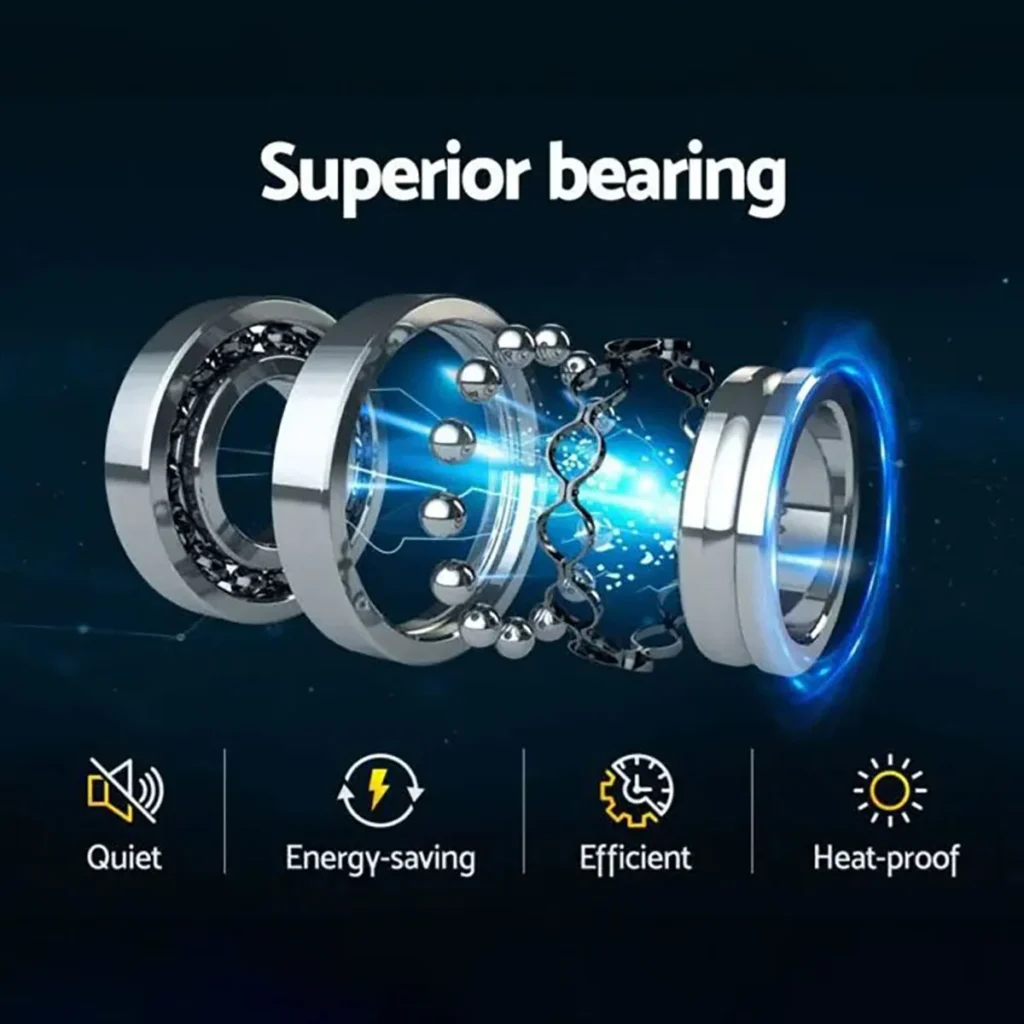
SS420 or 45# carbon steel quenched; bearing brands (NSK/ SKF grade upon request). Misalignment here is the #1 cause of vibration noise in cheap imports — a Centrifugal Water Pump Manufacturer that skips dynamic balancing will cost you downtime later.
3.4 Mechanical Seal vs. Packing Gland
Modern centrifugal water pumps almost universally use mechanical seals (silicon carbide / tungsten carbide / Viton) for leak-free operation. Packing glands still appear on older split-case units and some agricultural surface pumps where field serviceability matters more than zero-leak.
3.5 Suction & Discharge Flanges
Standard DIN / ANSI / JIS drilling. Size from 1″ to 8″+ depending on duty.
4. Types of Centrifugal Water Pumps (Binding Jingong’s Product Line)
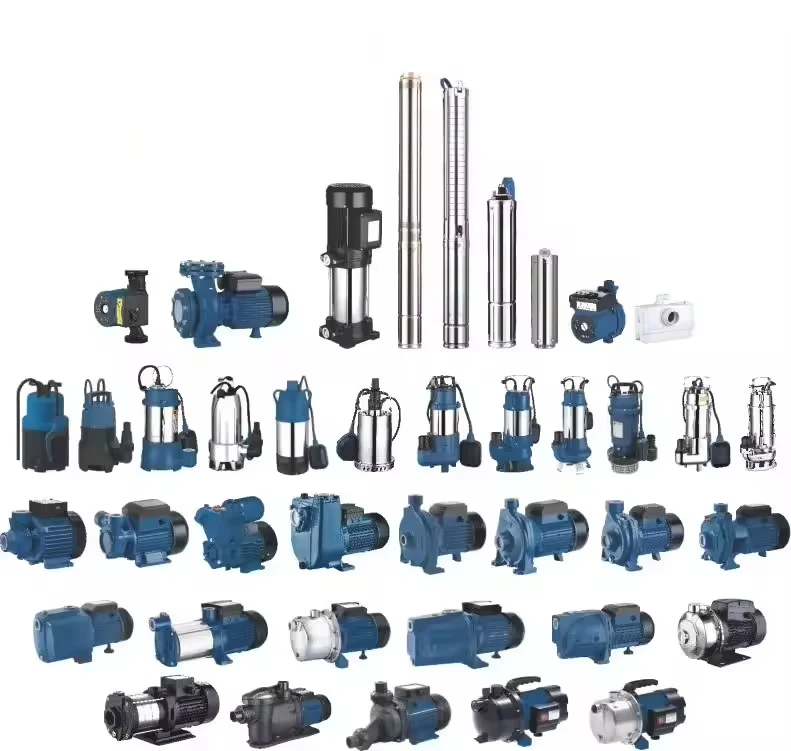
This is where a Centrifugal Water Pump Manufacturer either proves its range or shows gaps. Jingong covers four installation/power configurations, each mapped to distinct duty points:
4.1 Submersible Centrifugal Pump
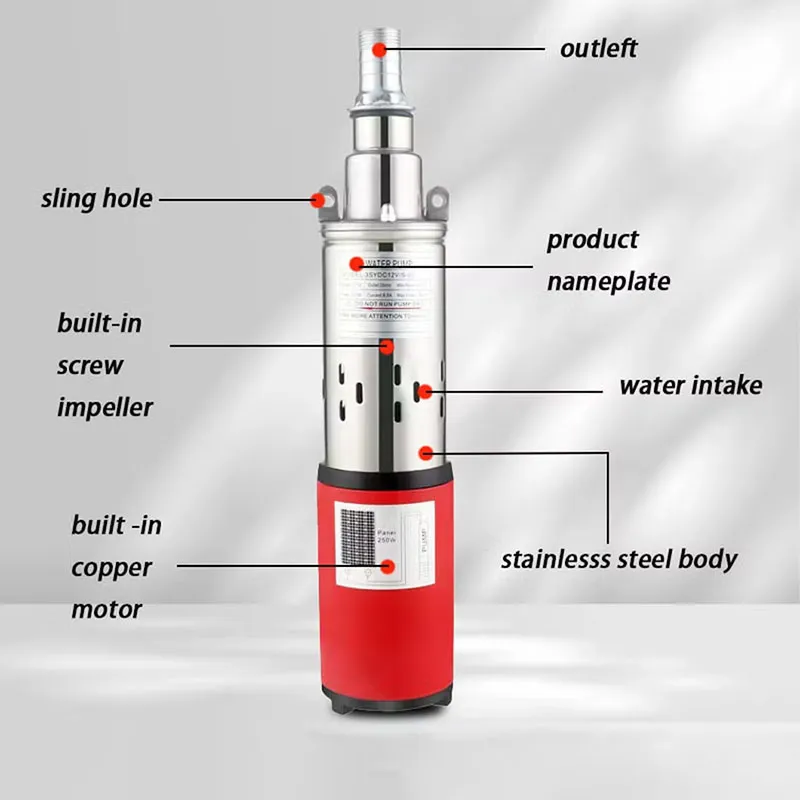
Fully submerged in the fluid source (well, sump, pond, construction pit). No priming needed, compact footprint, quieter since housing dampens motor noise. Jingong submersibles range from 0.5 HP domestic drainage to 50+ HP deep-well irrigation models, SS304/316 or cast iron casing, oil-filled or water-filled motor options.
- Typical duty: Deep well water supply, construction dewatering, sewage/effluent (vortex impeller variant), pond circulation.
- Why buyers choose it: No suction lift limitation, no priming headache, can push water up from depth rather than sucking it up.
- Jingong model family: JG-SP series (stainless deep well), JG-WQ (submersible sewage), JG-QY (construction dewatering).
4.2 Surface / Land Centrifugal Pump
Installed above the water source. Requires priming (or self-priming design). Two common subtypes in Jingong’s catalog:
- End-suction centrifugal: Compact, ISO 2858–ish envelope, maintenance-friendly — our JG-IS / JG-IH series.
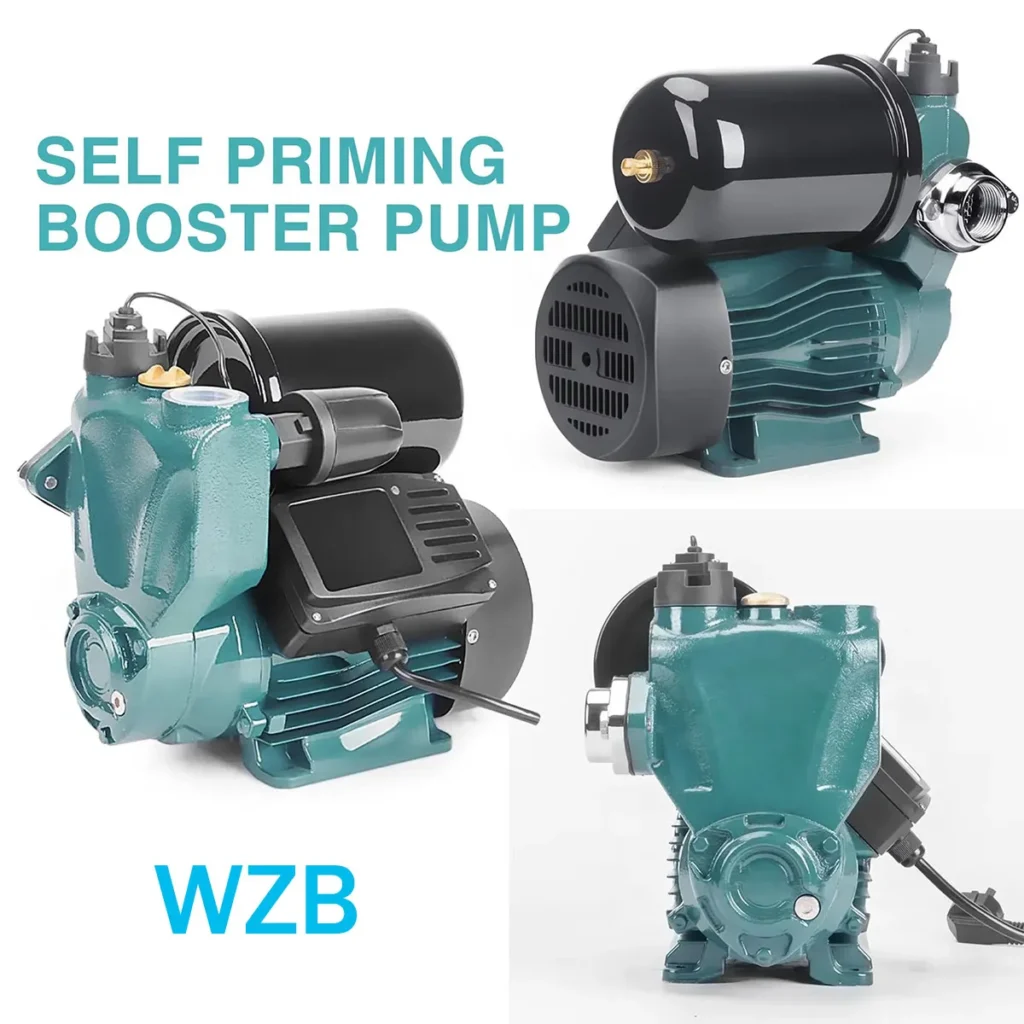
- Self-priming centrifugal: Integral priming chamber, popular for agricultural suction from pond/river — JG-ZX / JG-JET series.
- Multi-stage booster (centrifugal): Stacked impellers for high-rise building / pressure washer / reverse osmosis feed — JG-BOOST series (this is where “booster pump” overlaps centrifugal family).
4.3 Solar Centrifugal Pump
DC brushless motor driven by PV array + VFD/controller, no grid needed. Jingong’s solar centrifugal line pairs helical rotor (for high-head low-flow wells) and centrifugal impeller (for high-flow irrigation) variants, 0.37 kW ~ 5.5 kW typical, MPPT controller, stainless wetted parts for drinking water compliance.
- Sweet spot: Off-grid farm irrigation, livestock watering, remote village supply.
- Why a Centrifugal Water Pump Manufacturer matters here: Solar pump reliability lives or dies by controller matching + motor efficiency curve. We tune the VFD lookup table per panel array size before shipping.
4.4 Diesel & Gasoline Centrifugal Pump
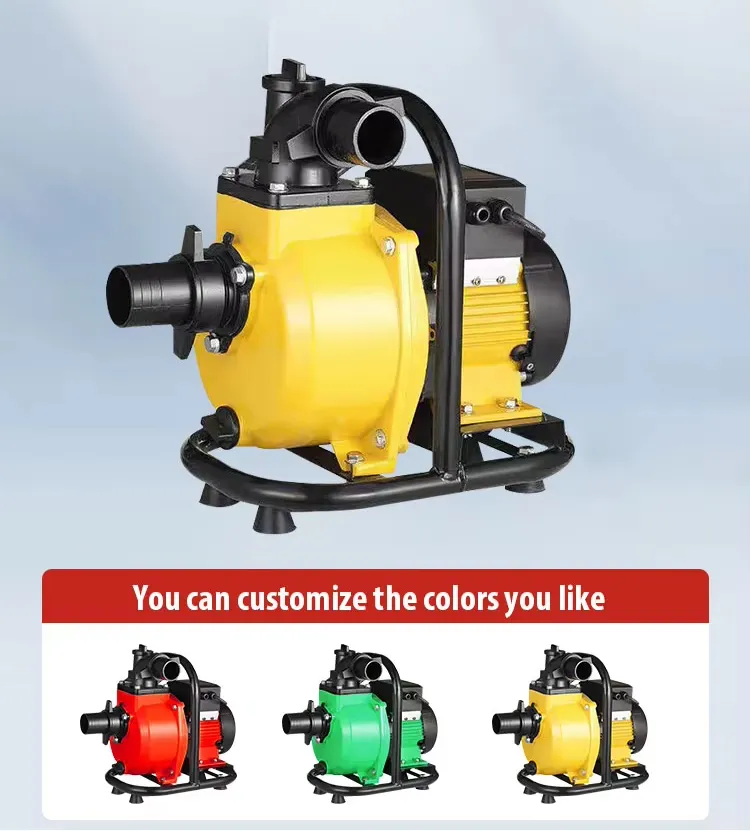
Engine-driven centrifugal — no electricity required. Jingong pairs cast-iron or aluminum-alloy centrifugal volutes with Honda-clone G-series gasoline engines or Changchai/Ricardo diesel engines, 2″ ~ 4″ discharge, flows up to 80 m³/h, heads to 30 m typical.
- Typical duty: Emergency flood drainage, construction site water transfer, mobile firefighting auxiliaries, agri backup when grid fails.
- Portable frames: Wheel kits + anti-vibration mounts standard.
5. Key Performance Parameters (How to Read a Data Sheet)
A credible Centrifugal Water Pump Manufacturer publishes full curves, not just three numbers. Here’s what matters:
| Parameter | Symbol | Unit | Why It Matters |
|---|---|---|---|
| Flow Rate | Q | m³/h or L/min | Duty point #1 — how much water per hour? |
| Head (Total Dynamic Head) | H | m | Vertical lift + friction loss + pressure requirement |
| Power | P | kW / HP | Motor or engine sizing |
| Efficiency | η | % | BEP (best efficiency point) — stay within 70-110% of BEP |
| NPSHr (Net Positive Suction Head required) | NPSHr | m | If NPSHa < NPSHr → cavitation. Critical for hot water / high-suction-lift. |
| Suction Lift | — | m | Theoretical max ≈ 8 m (atmospheric limit); practical ≤ 6 m for surface pumps |
| Speed | n | rpm | 1450/2900 (50 Hz) or 1750/3500 (60 Hz) |
| Working Temperature | T | °C | Seal & gasket selection hinges on this |
5.1 Quick Sizing Rule-of-Thumb
Step 1: Calculate TDH = static lift + friction loss (pipe + fittings + valves) + any required discharge pressure.
Step 2: Plot (Q, TDH) on the pump curve. If your duty falls left of BEP, impeller trim or a smaller pump; right of BEP, you’ll overload the motor.
Step 3: Verify NPSHa ≥ NPSHr + 0.5 m safety margin.
Jingong publishes full Q-H and efficiency curves for every centrifugal model. When you ask a Centrifugal Water Pump Manufacturer for a quote, always ask for the curve — if they can’t produce one, walk away.
Jingong Pump Sizing Worksheet (Download) [internal]
6. Application Scenarios (Where Each Type Goes)
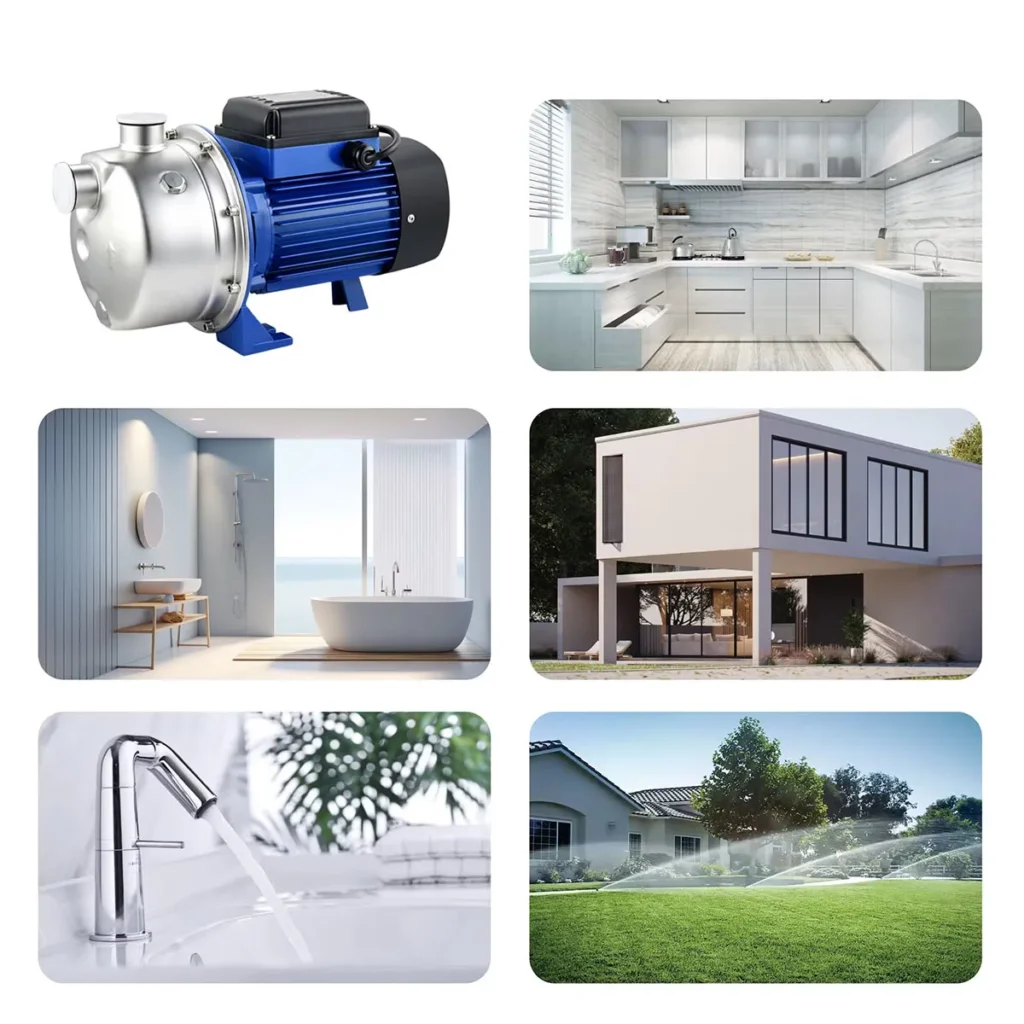
We’ve shipped centrifugals to 40+ countries; here’s how the four families map to real jobsites:
- Agricultural irrigation: Solar centrifugal (off-grid fields), submersible deep-well (pivot systems), diesel portable (seasonal backup).
- Municipal / rural water supply: Multi-stage boosters (centrifugal) for pressure zones, submersible for wellfields.
- Construction & dewatering: Diesel centrifugal (site drainage), submersible (excavation pits).
- Industrial circulation: End-suction centrifugal for cooling tower loops, process water transfer.
- Emergency / disaster response: Portable gasoline centrifugal — FEMA-style stockpiles, flood control.
A Centrifugal Water Pump Manufacturer that only knows “it moves water” won’t survive distributor QA audits. You need to know which impeller handles 100 ppm sand, which seal survives 60 °C, which motor frame fits a 20 ft container load.
7. Advantages & Limitations of Centrifugal Water Pumps (Objective View)
Google’s EEAT penalizes one-sided marketing. Here’s the honest breakdown:
7.1 Advantages
- Simple construction → low maintenance, easy spare parts
- Smooth, pulsation-free flow (vs. PD pumps)
- Scales from 0.5 HP to hundreds of kW
- Accepts multiple drive types (electric / diesel / gasoline / solar)
- Cost-effective at high flow, moderate head
7.2 Limitations
- Requires priming (unless self-priming)
- Poor at high viscosity (>500 cP)
- Cannot develop ultra-high pressure in single stage (multi-stage needed)
- Cavitation risk if NPSH not respected
Jingong mitigates these via self-priming volute options, multi-stage boosters (up to 20+ bar), and NPSH-optimized impeller profiles on request. A good Centrifugal Water Pump Manufacturer tells you when not to use centrifugal — e.g., sludge > 1000 cP → go PD.
8. Maintenance & Troubleshooting (Field-Tested)
Most “pump failure” calls to a Centrifugal Water Pump Manufacturer trace back to 5 issues. Bookmark this table:
| Symptom | Likely Cause | Fix |
|---|---|---|
| Pump runs but no water | Air lock / failed priming / foot valve leak / suction line leak | Re-prime, check foot valve & suction gasket, ensure suction lift ≤ 6 m |
| Low flow / low pressure | Worn impeller, clogged suction, wrong rotation, NPSH cavitation | Inspect impeller clearance, clear strainer, verify phase rotation (3-phase), check NPSH |
| Excessive noise/vibration | Cavitation, misaligned coupling, bearing wear, unbalanced impeller | Check NPSHa, re-align, replace bearings, dynamic balance impeller |
| Seal leaking | Seal face damage, spring fatigue, shaft sleeve worn | Replace mechanical seal kit, check shaft runout (<0.05 mm) |
| Motor overload / trips | Closed valve startup, oversized impeller, voltage drop, bearing seize | Open discharge partially during start, trim impeller, check supply voltage |
8.1 Preventive Maintenance Cadence (Jingong Workshop Recommendation)
- Monthly: Visual check (leaks, vibration, noise), verify pressure gauge readings against curve.
- Quarterly: Grease bearings (if grease-lubricated), check coupling alignment, inspect suction strainer.
- Annually: Pull impeller, measure wear ring clearance, replace mechanical seal proactively, megger-test motor insulation.
Download Jingong Maintenance Checklist PDF [internal]
9. FAQ – Centrifugal Water Pump Buyer Questions
Q1: Is a centrifugal water pump self-priming?
A: Standard end-suction centrifugal is NOT. You need a foot valve + manual prime, or buy a self-priming variant (built-in priming chamber). Submersibles don’t have this problem — they’re already underwater.
Q2: Which is better — submersible or surface centrifugal?
A: If water source is below 7 m and accessible, submersible avoids priming entirely. If source is above pump (pond/river at ground level, pump on bank), surface self-priming is simpler to service.
Q3: Can a centrifugal pump handle dirty water / sand?
A: Vortex or semi-open impeller centrifugal can handle light solids (up to ~10 mm). Heavy sand → stainless wetted parts + hardened wear rings, or consider a slurry PD pump instead.
Q4: How do I size a centrifugal pump for farm irrigation?
A: Determine sprinkler/nozzle total GPM → that’s your Q. Add elevation + friction loss → that’s TDH. Pick a pump whose BEP sits near that (Q, TDH). Solar vs diesel depends on grid access.
Q5: What’s the difference between a booster pump and a centrifugal pump?
A: “Booster” describes the purpose (increase pressure); most boosters are multi-stage centrifugal designs. Jingong’s JG-BOOST series is exactly this.
Q6: NPSHr vs NPSHa — what’s the practical margin?
A: Keep NPSHa ≥ NPSHr + 0.5 m minimum. Hot water or high-altitude? Add more margin — 1.0 m+.
Q7: Can I get a custom-branded centrifugal pump from a Chinese manufacturer?
A: Yes — Jingong offers OEM/ODM: custom nameplate, carton, motor label, even impeller tweak for duty. That’s the value of working with a Centrifugal Water Pump Manufacturer vs a trading company — you get engineering feedback, not just a price.
Q8: What certifications should I require?
A: CE (EU), ISO 9001 (quality system), and for potable water, WRAS / ACS depending on market. Jingong holds ISO 9001 and CE on core centrifugal lines.
Q9: Solar centrifugal — how many panels do I need?
A: Rule: motor kW × 1.3 ÷ panel wattage per unit, then +20% for cloudy margin. Example: 1.1 kW motor → ~1.5 kW array → four 400W panels. Controller MPPT is critical — we pre-size this before shipping.
Q10: Diesel centrifugal — how much fuel per hour?
A: Approx: Fuel L/h ≈ (P_kW × 0.25) for decent-load diesel engine. A 5 kW engine-driven centrifugal burns ~1.2–1.5 L/h at full load.
Q11: Can centrifugal pumps run reversed (as turbines)?
A: Some designs can (pump-as-turbine, PAT), but not standard off-the-shelf units — consult engineering first.
Q12: What’s the typical lead time from a Zhejiang pump factory?
A: Jingong standard centrifugal models: 7–15 days; custom impeller / special material: 20–35 days. Peak season (pre-Ramadan / spring irrigation) book 4+ weeks ahead.
Q13: Do you export to [my country]?
A: Jingong ships to 40+ countries — SEA, Middle East, Africa, LATAM, EU (via CE). Tell us your port; we’ll quote freight + HS code.
Q14: What about warranty?
A: 12 months from shipment (or 1000 running hours, whichever first) on Jingong centrifugal units, excluding wear parts (seal, bearing, impeller wear ring after abrasive duty).
Q15: How do I become a distributor?
A: We support exclusive / non-exclusive distributor agreements by region, with tiered pricing, marketing fund support, and technical training. As a Centrifugal Water Pump Manufacturer, we’d rather grow with 3 solid distributors per country than 30 one-off buyers.
10. Jingong Tech – Your Custom Centrifugal Water Pump Manufacturer from Zhejiang
Jingong is a Zhejiang-based pump factory integrating R&D, casting, machining, assembly, and testing under one roof. Our centrifugal water pump portfolio covers the four families outlined above — plus booster variants — with OEM/ODM customization for international distributors, EPC contractors, and brand owners.
10.1 Why Buyers Choose Jingong as Their Centrifugal Water Pump Manufacturer
- Factory-direct pricing: No trading margin — you deal with the production team.
- Customization: Impeller trim, material upgrade (SS304/316/Bronze), motor brand (ABB/Siemens/Local), nameplate & packaging, voltage/frequency (50/60 Hz).
- Testing: Every centrifugal unit hydro-tested + performance-tested on our test bench before crating.
- Range breadth: From 0.37 kW solar centrifugal to 55 kW multi-stage boosters, from plastic impeller garden pumps to cast-iron diesel portables.
- Certificates: ISO 9001, CE, supporting documentation for WRAS / SASO / SONCAP on request.
10.2 Product Matrix at a Glance
| Category | Jingong Series | Power Range | Typical Head | Key App |
|---|---|---|---|---|
| Submersible centrifugal | JG-SP / JG-WQ | 0.5–45 HP | 10–300 m | Deep well, dewatering, sewage |
| Surface / land centrifugal | JG-IS / JG-ZX / JG-BOOST | 0.75–75 kW | 8–160 m | Irrigation, boosting, circulation |
| Solar centrifugal | JG-SOLAR (helical & centrifugal) | 0.37–5.5 kW | 10–200 m | Off-grid irrigation, remote supply |
| Diesel / gasoline centrifugal | JG-D / JG-G series | 2–10 HP engine | 10–35 m | Emergency, construction, no-grid |
10.3 Request a Quote / Custom Spec
Tell us your flow (m³/h or GPM), head (m or psi), liquid type, power source, and quantity — our engineering team returns a matched model + EXW/FOB price + lead time within 24 hours. Whether you need 10 units for a contractor job or 500 units OEM for your brand, Jingong acts as the Centrifugal Water Pump Manufacturer that backs the spec, not just fills the PO.
📩 Contact Jingong Technical Team [internal] | 📄 Download Full Centrifugal Pump Catalog PDF [internal]