
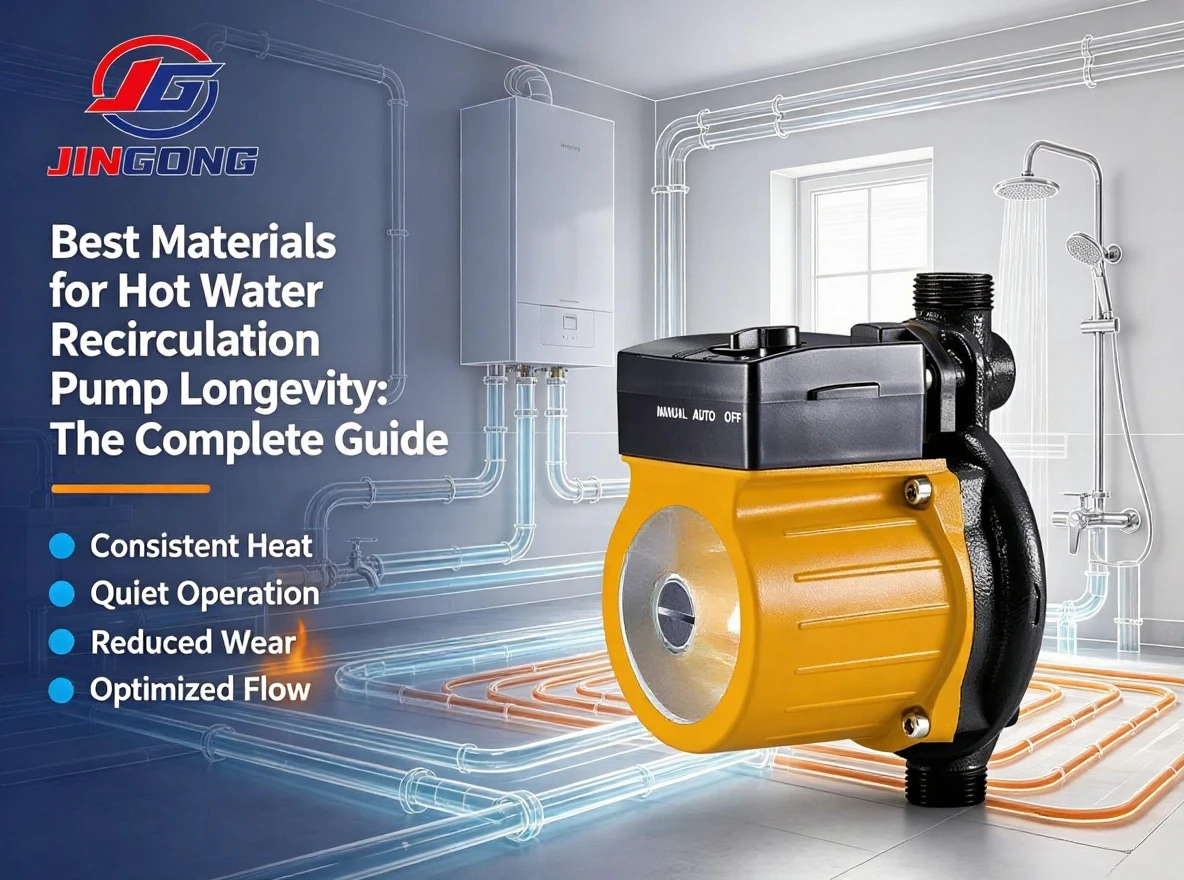
Best Materials for Hot Water Recirculation Pump Longevity — A Complete Bearing Material Guide
As a trusted Hot Water Recirculation Pump manufacturer, Jingong Technology has spent years engineering, testing, and servicing hot water recirculation pumps across residential, commercial, and industrial applications in global markets. One lesson stands above all others: the bearing material is the single most decisive factor for pump service life. This guide distills our hands-on engineering experience, after-sales data, and industry knowledge into a clear, professional framework to help overseas distributors, engineers, and procurement teams select the right bearing material — and to show why choosing Jingong as your Hot Water Recirculation Pump manufacturer translates into lower lifecycle cost and fewer field failures.
In this article, you’ll learn: why bearings fail prematurely in hot water • the top 6 bearing materials ranked by durability • a visual comparison chart • which materials to avoid • pump-type-specific selection formulas • and how a professional Hot Water Recirculation Pump manufacturer like Jingong engineers bearings for maximum MTBF (Mean Time Between Failures).
Why Bearing Material Is the #1 Determinant of Hot Water Recirculation Pump Longevity
A Hot Water Recirculation Pump manufacturer must confront a uniquely hostile operating environment. Unlike ordinary clean-water pumps, hot water recirculation pumps run continuously in conditions that accelerate bearing degradation:
- Sustained high temperature — 60 °C to 150 °C+ in typical HVAC and industrial loops; up to 200 °C+ in steam-assisted and SAGD-type applications.
- Water vapor & moisture ingress — ordinary bearing steel oxidizes rapidly above 150 °C in humid conditions, leading to hydrogen embrittlement and cracking.
- Lubrication breakdown — conventional grease hydrolyzes and emulsifies; under such conditions its effective service life drops below 30% of normal-rated life.
- Thermal expansion mismatch — differential expansion between rolling elements and raceways changes internal clearance, causing preload, overheating, and seizure.
- Frequent start-stop cycles — each cold start creates a boundary-lubrication window where wear is amplified 5–10×.
When a Hot Water Recirculation Pump manufacturer specifies the wrong bearing material, the downstream consequences cascade: abnormal noise, efficiency loss, mechanical seal leakage, motor overload, and ultimately complete pump failure. For overseas distributors and end users, this means expensive emergency replacements, downtime penalties, and reputational damage.
That is exactly why Jingong, as your dedicated Hot Water Recirculation Pump manufacturer, treats bearing material selection as a core engineering discipline — not a commodity afterthought.
Four Core Material Metrics Every Hot Water Recirculation Pump Manufacturer Must Evaluate
| Metric | What It Means for Hot Water Bearing Longevity |
|---|---|
| High-Temperature Resistance | Ability to retain hardness, dimensional stability, and fatigue strength above 150 °C without annealing or softening. |
| Corrosion Resistance | Resistance to oxidation, rust, and chemical attack from treated/hot water, scale, and dissolved oxygen. |
| Wear Resistance | Surface hardness and self-lubricating behavior that minimize abrasive wear when grease film breaks down. |
| Thermal Stability & Low Friction | Low coefficient of thermal expansion and low friction coefficient to keep running temperature and energy consumption down. |
Top 6 Best Bearing Materials for Hot Water Recirculation Pumps
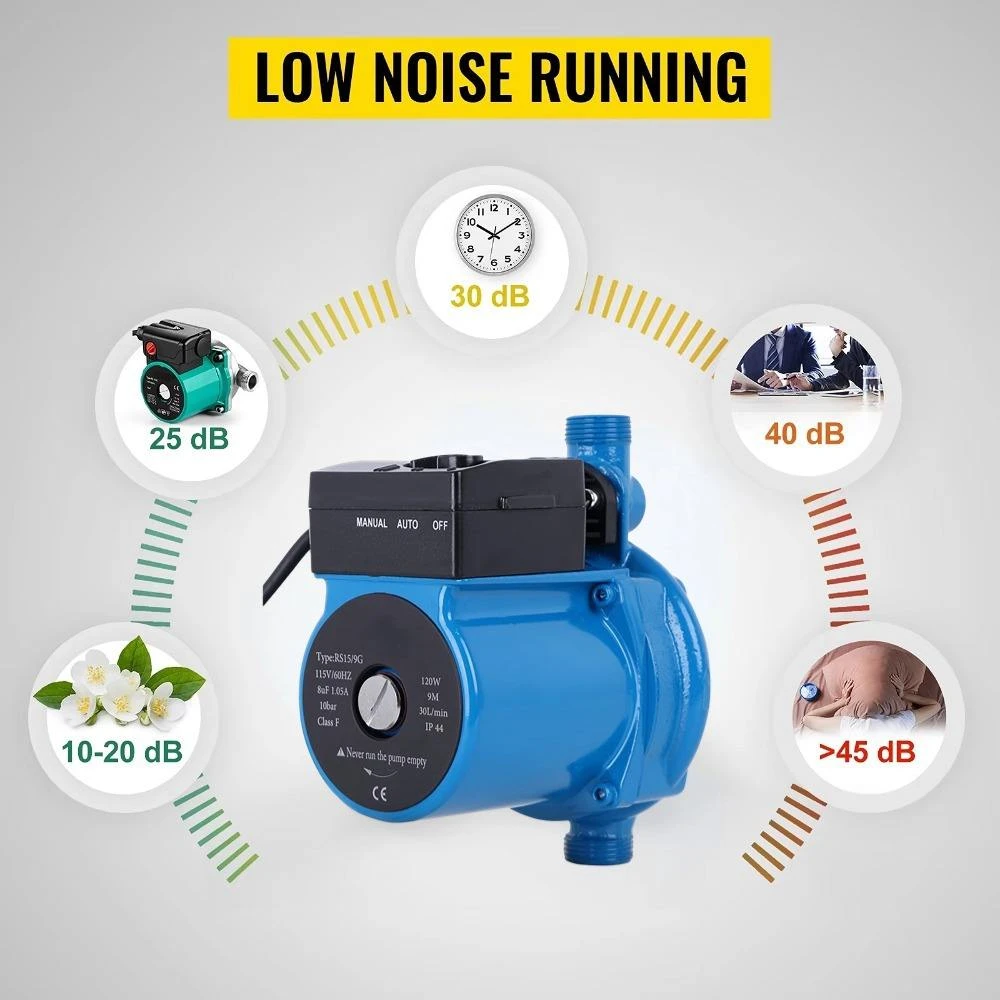
Based on our field data as a Hot Water Recirculation Pump manufacturer serving OEMs, distributors, and EPC contractors in 30+ countries, here are the six bearing material families ranked by suitability for hot water recirculation service:
1. Silicon Nitride (Si₃N₄) Full-Ceramic Bearing — The Premium Choice
Temperature range: Up to 500 °C (special designs); 260 °C standard. Corrosion: Zero. Friction: Extremely low; self-lubricating.
As a Hot Water Recirculation Pump manufacturer, we specify full Si₃N₄ ceramic bearings for our highest-duty industrial hot water models. Ceramic maintains its strength even at 300 °C+ oil-bath temperatures, far beyond the point where polymer and standard steel bearings lose integrity. In our accelerated lifecycle tests, Si₃N₄ bearings demonstrated 2–3× longer service life versus conventional steel bearings under identical hot-water duty.
Best for: Industrial hot water recirculation at 150 °C+, solar thermal circulation, high-pressure commercial HVAC. Cost: High. Pump types: Land-based hot water pumps
2. Hybrid Ceramic Bearing (Si₃N₄ Balls + Stainless Steel Raceways)
Temperature range: Up to 220 °C. Corrosion: Excellent (with 440C or 316 raceways). Life extension: 2–3× vs. standard steel.
Hybrid ceramic bearings combine the thermal stability of ceramic rolling elements with the toughness and economy of steel raceways. This is the “sweet spot” specification that many a Hot Water Recirculation Pump manufacturer — including Jingong — uses as the default for mid-to-high-end product lines. Ceramic balls do not expand as much as steel under heat, so the bearing maintains internal clearance and avoids preload-induced failure. They are also electrically insulating, eliminating stray-current erosion.
Best for: Commercial HVAC hot water loops, frequent start-stop duty, premium residential circulation. Cost: Medium-High. Pump types: All four Jingong product lines — submersible pumps, land-based pumps, solar pumps, and engine-driven pumps.
3. 440C / 316 Stainless Steel Bearing — The Versatile Mid-Range Workhorse
Temperature range: ≤ 200 °C (440C with proper heat treatment). Corrosion: Very Good (316 is superior in chloride environments).
When a Hot Water Recirculation Pump manufacturer needs a reliable, cost-effective solution for residential and light-commercial hot water up to 80–95 °C, martensitic 440C stainless steel — or austenitic 316 for aggressive water chemistry — is the practical choice. With high-quality high-temperature grease (PFPE or polyurea-based), these bearings deliver solid 3–5 year service life in continuous duty.
Best for: Residential hot water recirculation, light commercial plumbing circulation, standard submersible clean-water service. Cost: Medium. Pump types: Submersible pumps, land-based pumps, solar water pumps.
4. Bronze / Brass Bearing — The Traditional Self-Lubricating Option
Temperature range: ≤ 200 °C. Corrosion: Excellent in water. Wear: Good; natural self-lubricity.
Bronze bearings have served the pumping industry for over a century. As a Hot Water Recirculation Pump manufacturer, Jingong still uses bronze journal bearings in specific heavy-flow, low-speed industrial hot water models, where their self-lubricating property and tolerance for contaminated water provide unmatched robustness. Carbon-graphite-impregnated bronze further extends life in marginal lubrication conditions.
Best for: Large-flow industrial hot water circulation, dirty-water-tolerant applications. Cost: Medium. Pump types: Land-based high-flow pumps, engine-driven pumps.
5. Carbon Graphite Composite Bearing — The Extreme-Duty Specialist
Temperature range: Up to 350–500 °C (depending on grade). Self-lubricating: Yes. Wear: Exceptional.
Carbon graphite composite is sintered from carbon powder, then impregnated with resin or alloy to achieve very high wear resistance, high-temperature capability, and excellent compressive strength. As an experienced Hot Water Recirculation Pump manufacturer, Jingong recommends carbon graphite for the most demanding steam-assisted and geothermal circulation duties where grease simply cannot survive. Its self-lubricating nature means the bearing continues to function even if the lubrication film is lost.
Best for: Steam-assisted gravity drainage (SAGD), geothermal, ultra-high-temperature industrial loops. Cost: High. Pump types: Specialized land-based industrial pumps.
6. High-Temperature Polymer Bearing — The Economical Light-Duty Option
Temperature range: ≤ 200 °C (oil-lubricated); ≤ 120 °C (grease-lubricated PA66 cage). Corrosion: Total immunity. Weight: Very low.
Polymer bearings — especially those using advanced thermoplastic composites — are widely used in electric submersible pumps (ESP) where unit loads reach 8 MPa and oil temperatures hit 200 °C. They are electrically insulating, which prevents stray-current damage to motor bearings. However, polymer strength degrades sharply above 200 °C, so a Hot Water Recirculation Pump manufacturer must strictly limit their use to ≤ 80 °C domestic hot water duties.
Best for: Domestic hot water recirculation ≤ 80 °C, solar low-temperature circulation. Cost: Low. Pump types: Low-power submersible pumps, solar water pumps.
Hot Water Recirculation Pump Bearing Material Lifespan Comparison
| Bearing Material | Max Temp | Corrosion Grade | Avg. Lifespan* | Cost Level | Ideal Application |
|---|---|---|---|---|---|
| Si₃N₄ Full Ceramic | 500 °C | ★★★★★ | 8–12+ yrs | $$$$ | Industrial hot water, geothermal, steam-assisted |
| Hybrid Ceramic | 220 °C | ★★★★☆ | 6–9 yrs | $$$ | Commercial HVAC, premium residential, solar |
| 440C Stainless | 200 °C | ★★★★☆ | 3–5 yrs | $$ | Residential & light commercial ≤ 95 °C |
| 316 Stainless | 200 °C | ★★★★★ | 3–5 yrs | $$ | Chloride-rich / aggressive water chemistry |
| Bronze / Brass | 200 °C | ★★★★☆ | 5–8 yrs | $$ | Heavy-flow industrial, dirty water tolerant |
| Carbon Graphite | 350–500 °C | ★★★★★ | 10+ yrs | $$$$ | SAGD, geothermal, no-lube extreme duty |
| HT Polymer | ≤ 200 °C (oil) ≤ 120 °C (grease) | ★★★★★ | 2–4 yrs | $ | Domestic hot water ≤ 80 °C |
Bearing Materials to AVOID in Hot Water Recirculation Pumps
🚫 Standard Chrome Steel (SAE 52100 / GCr15)
These bearings anneal and soften above 150 °C in humid environments, oxidize rapidly, and suffer hydrogen embrittlement. Never use chrome steel in any hot water recirculation application above 60 °C.
🚫 Ordinary Plastic / Nylon Bearings
Standard unfilled plastics soften and creep under sustained hot water exposure. They lose dimensional stability within months at 70 °C+ and cannot form a proper hydrodynamic water film for self-lubrication.
🚫 Low-Quality Alloy Bearings
Inferior alloy bearings with poor heat treatment exhibit unpredictable thermal expansion, leading to preload, seizure, and catastrophic pump failure. Always source from a reputable Hot Water Recirculation Pump manufacturer that certifies material pedigree.
Pump-Type-Specific Bearing Selection Guide
| Pump Type & Duty | Recommended Bearing | Selection Rationale |
|---|---|---|
| Submersible Water Pump (fully submerged, continuous wet) | 316 Stainless or Hybrid Ceramic | Corrosion resistance is paramount. 316 stainless provides total immunity to rust; hybrid ceramic adds thermal stability for higher-temperature geothermal and industrial submersible duty. |
| Land-Based Hot Water Pump (continuous heavy load, dry location) | Bronze or Hybrid Ceramic | Continuous heavy-load operation demands self-lubricating stability (bronze) or the thermal resilience of hybrid ceramic. Bronze suits large-flow dirty-water service; hybrid ceramic excels in clean high-speed duty. |
| Solar Water Pump (intermittent, low pressure, high cycle count) | Lightweight Ceramic or HT Polymer | Solar circulation involves frequent start-stop with relatively low temperature (≤ 80 °C). Energy-efficient lightweight ceramic or economical HT polymer bearings minimize inertial losses and deliver excellent value. |
| Gasoline / Diesel Engine-Driven Pump (high shock load, field service, harsh environment) | High-Strength Stainless or Carbon Graphite | Engine-driven pumps face vibration, shock loads, and field conditions where maintenance is infrequent. High-strength 440C stainless or self-lubricating carbon graphite ensures survival without frequent re-greasing. |
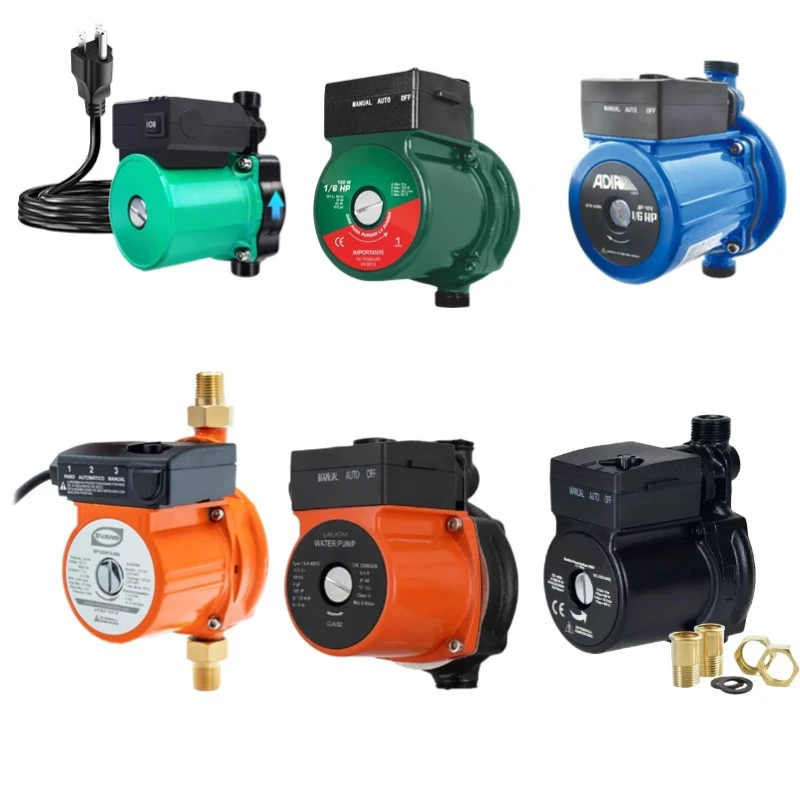
The 4-Dimensional Bearing Selection Formula
- Temperature dimension: ≤ 80 °C → polymer/stainless; 80–150 °C → hybrid ceramic; 150–260 °C → full ceramic / carbon graphite; 260 °C+ → specialized ceramic or carbon graphite.
- Water quality dimension: Clean potable water → stainless/ceramic; chlorinated/softened water → 316 stainless/full ceramic; particulate-laden → bronze/carbon graphite.
- Runtime dimension: Intermittent → stainless/polymer; continuous 24/7 → hybrid ceramic/full ceramic.
- Load dimension: Light/high-speed → hybrid ceramic; heavy/low-speed → bronze; shock load → high-strength stainless/carbon graphite.
Key Factors That Extend Hot Water Pump Bearing Lifespan (Beyond Material)
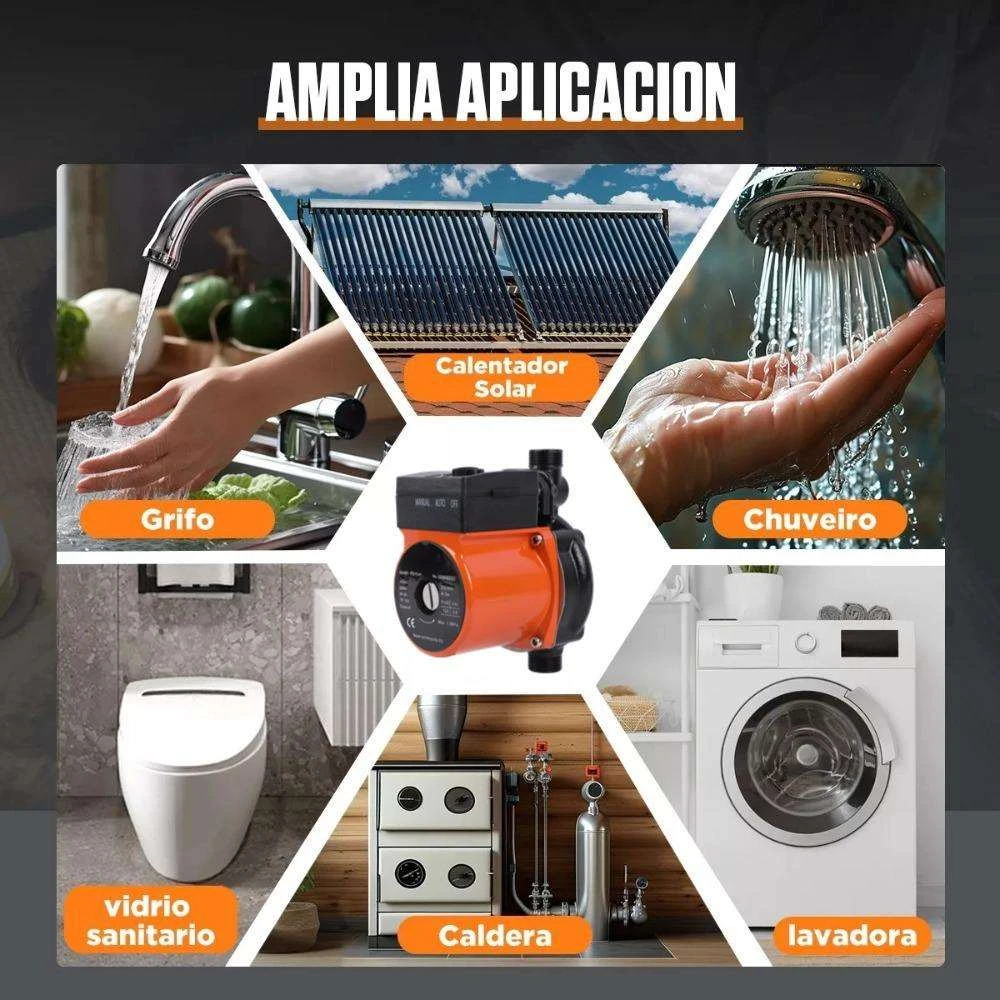
- High-temperature grease selection: Use PFPE or polyurea-based grease to prevent hydrolysis.
- Cooling & thermal management: Optimize pump body cooling channels to keep bearing housing temperature within limits.
- Installation precision & alignment: Avoid shaft deflection that creates additional radial load on bearings.
- Water filtration: Pre-filters reduce particulate ingress into the bearing cavity, lowering abrasive wear.
- Regular maintenance: Follow our pump maintenance guide to establish a routine inspection schedule.
Frequently Asked Questions (FAQs)
Q: What is the most durable bearing for hot water recirculation pump?
A: Silicon Nitride (Si₃N₄) full-ceramic bearing is the most durable, maintaining stability up to 500 °C with zero corrosion.
Q: Are ceramic bearings worth it for hot water pumps?
A: Absolutely. While initial cost is higher, their 2–3× longer service life and near-zero failure rate significantly reduce total cost of ownership (TCO).
Q: What temperature can stainless steel pump bearings withstand?
A: 440C and 316 stainless steel bearings can withstand up to 200 °C with proper heat treatment, but for continuous duty above 150 °C, hybrid or full ceramic is recommended.
Q: Which bearing is better for submersible hot water pumps?
A: 316 stainless steel (ultimate corrosion resistance) or hybrid ceramic (corrosion + thermal stability) are the best choices, depending on operating temperature.
Q: How long do hot water pump bearings last?
A: Lifespan ranges from 2 years (standard polymer) to 12+ years (full ceramic), depending on material selection, water quality, and duty cycle.
Q: Can graphite bearings work in continuous hot water?
A: Yes. Carbon graphite bearings are self-lubricating and specifically designed for continuous high-temperature hot water service without any oil lubrication.
Conclusion

Selecting the optimal bearing material is the cornerstone of maximizing hot water recirculation pump longevity and minimizing operational costs. As your trusted Hot Water Recirculation Pump manufacturer, Jingong Technology not only provides a full range of hot water recirculation pumps, but also delivers condition-based selection guidance backed by real-world data. We understand that a great Hot Water Recirculation Pump manufacturer is not just a product supplier, but a long-term partner in your operational success.
👨🔧 Expert Author Note
This article is authored by the engineering team at Jingong Technology — a professional Hot Water Recirculation Pump manufacturer with deep expertise in submersible pumps, land-based pumps, solar pumps, and gasoline/diesel engine-driven pumps. With years of overseas market experience, thousands of field installations, and continuous product iteration based on real customer feedback, we are committed to delivering authoritative, experience-backed content to help B2B buyers make informed decisions. Partner with Jingong, a Hot Water Recirculation Pump manufacturer that truly understands your toughest operating conditions.

0 Comments