
Right Water Pump Introduction & Why Proper Pump Selection Matters
The Real Cost of a Wrong Pump
In our export records, roughly 30% of first-time overseas buyers initially size their pump incorrectly. The downstream costs aren’t just “buying again”:
- Energy overspend: A mismatched head/flow combo can increase power cost by 40–60% annually.
- Premature failure: Running a submersible pump above its duty point cavitates the impeller within months.
- Project delay: A diesel pump that can’t handle high-altitude air density stalls a construction drain schedule.
- After-sales friction: Voltage mismatch (e.g., 50Hz vs 60Hz) voids warranties and triggers replacement freight costs.
Jingong Field Note: One Kenya client ran a 1.5 kW solar pump on a 2.2 kW panel set without a VFD. Six months later, controller burnout. Correct sizing would have added ~$60 upfront and saved $400 in freight + downtime.
Who This Guide Is For Right Water Pump
- B2B buyers: Distributors, farm cooperatives, engineering contractors, solar integrators, municipal procurement.
- B2C / prosumer: Off-grid homesteaders, smallholder irrigators, flood-prone property owners.
- Anyone comparing submersible vs land vs solar vs fuel pumps and drowning in spec sheets.
How Water Pump We Structured This Guide
Every section follows Google 2026 EEAT cues:
- Experience: Jingong factory test bench data + overseas project logs.
- Expertise: Industry-standard formulas (flow, head, NPSH, specific speed).
- Authoritativeness: Internal links to product lines, case studies, certifications (CE/ISO).
- Trust: Transparent pros/cons, no hype, real FAQ sourced from inquiry inbox.
Learn more about our manufacturing expertise.
Basic Water Pump Classification & Core Application Scenarios
Before specs, you need to know what kind you’re even looking at. Jingong’s full lineup maps to five distinct job profiles.
Submersible Pump (Deep Well / Dewatering)
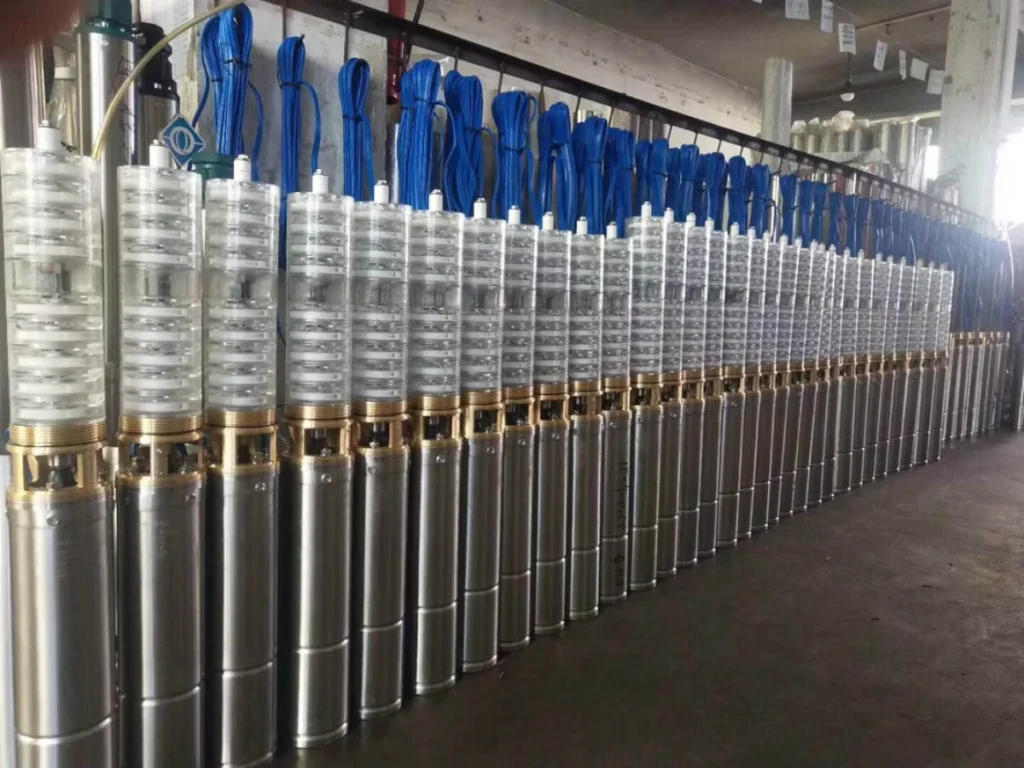
How it works: Motor + impeller housed in a sealed underwater unit; pushes water upward through a discharge pipe.
Typical applications (Jingong export cases):
- Deep well domestic water supply (Sub-Saharan Africa, 50–200 m depth)
- Sewage / drainage in urban basements
- Farm pond dewatering
- Mining pit drainage
Pros: No priming needed, quiet operation, high head achievable (up to 400 m+ in multi-stage).
Cons / Limits: Cannot run dry, harder to service (requires pulling out of well), cables vulnerable in harsh sites.
Explore our Submersible Pump Series →
Land / Surface Pump (Booster / Transfer)
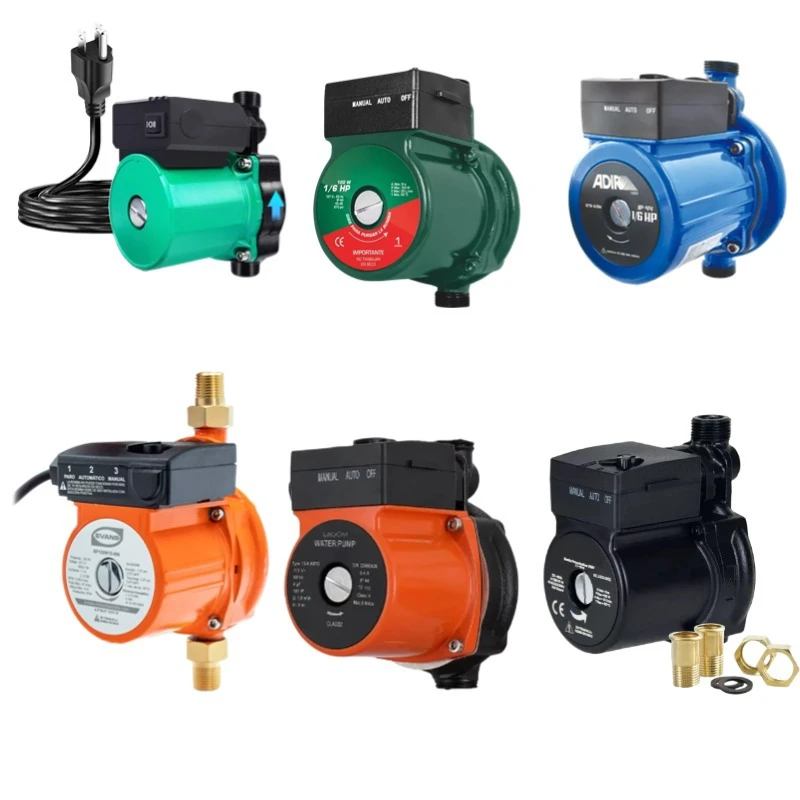
How it works: Mounted above ground, draws water via suction (usually ≤8 m vertical lift) or pushes through inline configuration.
Typical applications:
- Shallow well / river intake
- Household pressure boost
- Irrigation from canal/pond
- Car wash / HVAC circulation
Pros: Easy maintenance access, lower upfront cost than deep-well submersible, self-priming variants available.
Cons / Limits: Suction lift physically capped (~8 m theoretical), noisier than submersible, not suitable for dirty water unless specifically designed.
Solar Water Pump (Off-Grid / Sustainable)
How it works: DC/AC pump driven by PV array + MPPT/VFD controller; can be hybrid (grid/diesel backup).
Typical applications:
- Off-grid irrigation (Sahel, Horn of Africa, remote Australia)
- Livestock watering
- Village water supply where grid is unstable
- Hybrid farms reducing diesel OPEX
Pros: Near-zero daily OPEX after CAPEX, low maintenance, scalable with panel array.
Cons / Limits: High upfront investment, performance tied to irradiance (needs proper sizing + battery/hybrid buffer), controller is critical component.
Discover Solar Pump Solutions →
Gasoline Water Pump (Portable / Emergency)

How it works: Centrifugal pump coupled to a 4-stroke (or 2-stroke) gasoline engine.
Typical applications:
- Emergency flood drainage
- Construction site dewatering
- Farm use where fuel is easier than electricity
- Portable rental fleets
Pros: Highly portable, no grid needed, fast starting, high flow for size, low CAPEX.
Cons / Limits: High OPEX (fuel + oil), noisy, emissions, shorter engine life vs diesel under continuous load.
Diesel Water Pump (Industrial / High-Duty)
How it works: Industrial-grade pump end + diesel engine (often 186F/192F or larger industrial engines).
Typical applications:
- Long-duration construction drainage
- Municipal flood response
- Agricultural pumping where runtime >8 hrs/day
- Mining / quarry dewatering
Pros: High torque + durability for continuous duty, better fuel economy than gasoline at load, spare parts widely available.
Cons / Limits: Heavier, less portable, higher CAPEX, cold start issues in extreme climates.
Browse Industrial Diesel Pumps →
Key Pump Selection Parameters (The Technical Core)
This is where 80% of buyers get it wrong. Spec sheets throw numbers; we’ll show you what actually matters based on hydraulic engineering principles.
Flow Rate (Q) – m³/h or GPM
Flow = how much water you need per unit time.
Jingong Quick Reference:
- Household: 0.5–3 m³/h
- Small farm irrigation: 5–20 m³/h
- Construction drainage: 30–100+ m³/h
- Municipal/industrial: 100+ m³/h
Pro Tip: Don’t size for peak only—look at duty cycle. If you irrigate 4 hrs/day, a smaller pump + tank often beats an oversized pump running throttled (wastes energy, generates heat).
Head (H) – Total Dynamic Head (TDH)
Head ≠ just “vertical height”. TDH = Static Lift + Friction Loss + Pressure Requirement.
Simplified Formula:
TDH (m) = Static Lift (m)
        + Pipe Friction Loss (m)
        + Fitting Equivalent Loss (m)
        + Required Outlet Pressure (m)
Critical Insight: Friction loss scales with pipe diameter and flow. Undersize the pipe → head demand spikes → pump moves left on curve → efficiency drops → motor overheats.
Common Mistake Alert: Buyers see “100 m head” on a spec sheet and assume it lifts 100 m vertically. At max head, flow is near zero. You want the pump operating at ~80–85% of max head on its curve for optimal efficiency.
Power (P) – kW / HP
Two numbers matter: Rated motor power (nameplate) and Shaft power required (calculated).
Efficiency (η) is the hidden variable:
- Good centrifugal pump: 60–80%
- Solar DC brushless: 85%+
- Cheap utility pumps: 40–50% (energy hogs)
Rule of Thumb: Don’t over-motor. A 3 kW pump doing 1.5 kW work runs inefficiently and shortens life. Conversely, an undersized motor will trip on overload protection.
For detailed calculations, download our Pump Parameter Calculation Guide.
Medium Type (What You’re Pumping)
| Medium | Pump Consideration |
|---|---|
| Clean Water | Standard impeller, cast iron or stainless steel. |
| Slightly Sandy | Semi-open impeller, high-grade silicon carbide seals. |
| Sewage / Solids | Vortex or channel impeller, non-clog design. |
| Seawater / Corrosive | SS304/316 casing or engineered thermoplastics. |
| Oil-mixed / Slurry | Hardened alloy impellers, often diesel drive. |
Field Data: Pumps returned from Sahel sites often show sand-abrasion on mechanical seals. Solution: Specify semi-vortex impeller + SiC seal + install a sediment filter upstream.
Voltage & Frequency (Critical for Export)
- China Standard: 220V / 50Hz (Single-phase), 380V / 50Hz (3-phase)
- US / LatAm: 110–120V or 208–240V / 60Hz
- Africa/Middle East: Mixed—always confirm before shipping.
Warning: 60Hz motors run on 50Hz supply drop speed ~17%, which reduces flow and head. Variable Frequency Drives (VFDs) can mitigate this; pure induction motors cannot.
NPSH (Net Positive Suction Head)
Critical for land/surface pumps and high-temperature applications. If Available NPSH < Required NPSH → cavitation → impeller pitting → noise + failure.
Rule: Keep NPSHa ≥ NPSHr + 0.5 m safety margin.
Environmental & Duty Factors
- Ambient Temp: Ensure motor insulation class F or H for tropical environments.
- Altitude: Diesel engines derate ~3% per 300m above 1000m.
- Duty Cycle: S1 (Continuous) vs S2 (Short-time rated).
- Noise Limits: Residential areas favor submersible or enclosed units.
Need help with these specs? Visit our Technical Support Center.
Main Water Pump Types In-Depth Comparison
Side-by-side analysis to help justify your choice to stakeholders.
Comprehensive Comparison Table
| Dimension | Submersible | Land/Surface | Solar | Gasoline | Diesel |
|---|---|---|---|---|---|
| Best Scenario | Deep wells, sewage | Shallow sources, boost | Off-grid, sun-rich | Portable/Emergency | Long-duty sites |
| CAPEX | Medium–High | Low–Medium | High | Low | Medium–High |
| OPEX | Low (Electric) | Low (Electric) | Near Zero | High | Medium |
| Portability | Low | Medium | Low–Med | High | Low |
| Maintenance | Hard (pull well) | Easy | Low (Controller) | Medium (Engine) | Med–High |
| Lifespan | 5–10 yr | 5–8 yr | 8–12 yr | 2–5 yr | 5–10 yr |
| Noise | Very Low | Medium | Low | High | High |
Head-to-Head: Submersible vs Land Water Pump
Choose Submersible when: Depth > 8 m (land pump suction limit), noise matters (residential), or handling dirty water with the right impeller.
Choose Land Pump when: Shallow source (river/cistern < 7 m), easy service access is priority, or budget is tight for clean water transfer.
Head-to-Head: Solar water pump vs Fuel water pump (Gas/Diesel)
Solar wins when: Grid unavailable + sun reliable 4+ hrs/day, OPEX matters more than CAPEX (5-year TCO usually favors solar), and flow demands are low-to-moderate.
Fuel wins when: Cloudy seasons are long, instant high flow is needed without battery banks, or portability/emergency response is critical.
Scenario-Based Water Pump Selection Guide (Maximize Traffic)
We break this down by real export regions and use cases. A “farm pump” in Nigeria faces different constraints than one in Thailand.
Agriculture – Irrigation & Orchard Management
Needs: Moderate head (10–40 m typical), steady flow, seasonal runtime.
Jingong Recommendation Matrix:
- < 2 ha, Shallow Well (< 8 m): Land pump. Why? Cheapest, easiest service.
- < 2 ha, Deep Well (> 20 m): Submersible. Why? Only viable option for depth.
- 2–10 ha, Off-Grid: Solar pump. Why? Eliminates fuel costs.
- 10+ ha, Grid Available: Diesel or Electric Land Pump. Why? High flow, long duty cycles.
- Hilly Terrain: Solar + Header Tank + Drip. Why? Manages pressure variations.
Case Study – Thailand Orchard: A mango farm used a 4″ submersible (2.2 kW, 80 m head) with a stainless impeller to handle slightly acidic well water. It has been running for 4+ years with no unplanned pulls.
Construction & Site Drainage
Needs: High flow, solids-handling capability, portability, sometimes 24/7 operation.
- Basement/Pit: Submersible sewage type (auto-coupling recommended).
- Trench/Rain Flood: Gasoline (portable) or Diesel (long run).
- Municipal Storm: Diesel trailer-mounted units.
Case Study – UAE Foundation: A Dubai contractor deployed six 4″ diesel trailer units (192F engines). They moved 80 m³/h @ 18 m head continuously for 90 days with zero downtime.
Domestic & Household Use
- Pressure Boost: Land surface booster (stainless, quiet).
- Deep Well (> 10 m): Submersible (4″ standard).
- Off-Grid Cabin: Small DC solar pump (48V system).
Off-Grid & Remote Regions
Constraints: No grid, high solar potential, dust/sand, limited maintenance access.
Jingong Proven Config (Kenya/Niger):
- 3″ Solar Submersible, Brushless DC.
- 4× 450W Panels + MPPT Controller.
- 200L Header Tank (buffer).
- Sediment Filter + Check Valve.
TCO Analysis: Over 5 years, solar ($1,200 CAPEX) outperforms diesel ($600 CAPEX + $1,000 OPEX) if sun exposure exceeds 4 hrs/day.
Emergency & Disaster Response
Priority: Portability > Efficiency.
- Quick Deploy: Gasoline 2″/3″ pumps (< 15 kg).
- Sustained Response: Diesel trailer units.
- Cellar/Basement: Submersible utility pumps.
Find your scenario solution here: Jingong Industry Solutions.
Water Pump Buying Factors & Hidden Pitfalls
This section distills lessons from Jingong’s after-sales logs into actionable advice.
Top 10 Costly Mistakes (Ranked)
- Head Overestimation: Pump runs left of curve, motor overload.
- Flow Overestimation: Pipe undersized → friction loss kills performance.
- Ignoring Voltage/Frequency: 50/60 Hz mismatch causes premature failure.
- Buying on HP Alone: “Same 2 HP” pumps can differ 40% in flow due to impeller design.
- Skipping Sediment Filters: Seal abrasion in sandy water within 3 months.
- No VFD on Solar: Controller burnout in high-heat environments.
- Cheap Clone Engines: Spare parts unavailable locally after 18 months.
- Import Clearance Mismatch: Missing CE/ISO certificates for tenders.
- Cable Length Errors: Submersible pump stranded meters from control box.
- No Local Service Plan: $20 seal becomes $300 freight + downtime.
Defining “Reliable” (Procurement Checklist)
- Valid CE / ISO 9001 certificates.
- Motor insulation Class F or H.
- Mechanical Seal: Silicon Carbide vs Carbon (ask supplier).
- Impeller Material: SS304 vs Cast Iron vs Brass (match medium).
- Spare Parts Availability: Jingong stocks 95% of SKU parts for 10+ years.
- Transparent Warranty Terms: Understand exclusions (e.g., seal wear is normal).
Price vs. Value (The Cheap Pump Math)
Example: Two 2″ diesel pumps, both “186F”:
- Pump A ($280): Cast iron impeller, local bearings → lasts 800 hrs.
- Pump B ($410): Hardened alloy impeller, NSK bearings → lasts 2,500 hrs.
TCO Reality: If usage is 500 hrs/yr, Pump A fails in 1.6 years; Pump B lasts 5 years. Annual cost: A = ~$500/yr; B = ~$82/yr + minor service. Cheap isn’t cheap.
Verify our credentials on our Quality Certifications Page.
Maintenance & Lifespan Tips
Extend your investment’s life with these expert-backed tips.
Submersible Pump Care
- Dry Run Protection: Never run dry; thermal protectors are backups, not primary prevention.
- Cable Inspection: Check jacket annually for rodent/UV damage.
- Periodic Pulling: Inspect every 2–3 years in sandy water (seal + impeller).
- Control Box: Keep dry, check capacitor values regularly.
Land / Surface Pump Care
- Priming: Never start dry unless using a self-priming model.
- Foot Valve: Check seasonally; replace rubber flaps if cracked.
- Bearings: Grease every 6 months (if equipped with nipples).
- Winterizing: Drain completely in freezing regions.
Solar Pump Care
- Controller Priority: Keep ventilated and dust-free.
- Panel Cleaning: Monthly in dusty areas (+15–20% output).
- Battery Health: Limit DoD to ≤ 50% (Lead-acid) or ≤ 80% (LiFePO4).
- MPPT Settings: Match pump rated Voltage/Amperage exactly.
Gasoline / Diesel Engine Pump Care
- Oil Changes: First at 20 hrs, then every 50–100 hrs.
- Air Filter: Clean every 25 hrs in dusty sites.
- Fuel Filter: Replace every 200 hrs (critical for diesel).
- Storage: Drain carburetor float bowl (gasoline); bleed fuel system (diesel).
Jingong Lifespan Benchmarks (Well-Maintained):
- Submersible: 7–12 years
- Land Pump: 5–8 years
- Solar DC: 8–15 years (Controller 5–8 years)
- Gasoline: 2–5 years
- Diesel: 5–10 years
Download our complete Maintenance Guide PDF.
Frequently Asked Questions (FAQ)
All questions sourced from real Jingong inquiry inbox (2023–2026). Implement FAQ Schema Markup for Rich Snippets.
Q: How do I know if I need a submersible or land pump?
A: If your water source is deeper than ~8 m (vertical), a land pump cannot suction it—go submersible. If < 8 m and you want easy service, a land pump wins.
Q: What’s the difference between a 1.5 kW and 2.2 kW pump if they’re both “2 inch”?
A: Impeller design + motor efficiency. Two pumps with the same port size can differ 50% in flow at the same head. Always read the performance curve, not just kW.
Q: Are solar water pumps reliable?
A: Yes—if sized correctly with an MPPT controller and panel buffer. Failure rate in Jingong exports is < 3% over 3 years, almost all controller-related (not the pump hydraulics).
Q: How long does a submersible pump last?
A: 7–12 years typical with clean water and correct duty. Sandy water cuts life to 3–5 years unless you up-spec seals + impeller.
Q: Can I run a 50 Hz pump on a 60 Hz supply?
A: Yes, but speed increases ~17%, flow and head increase, and motor current rises. It may trip overload if near margin. A VFD solves this.
Q: Gasoline vs diesel for long-term use?
A: Diesel wins on fuel economy + engine life if runtime > 3 hrs/day. Gasoline wins on portability + lower CAPEX for occasional use.
Q: Do you provide free pump selection consultation?
A: Yes—Jingong engineers review your flow, head, medium, voltage, and duty scenario and propose a config (typically within 24 hrs). Contact us here.
Our Professional Pump Solutions & Real Cases
This is the Authority + Trust core of the page.
Why Jingong (Zhejiang JINGONG Technology)?
- 15+ Years pump R&D + manufacturing in Zhejiang, China.
- Full Product Range: Submersible, Land, Solar, Gasoline, Diesel.
- Global Footprint: Exports to Africa, SEA, Middle East, South America, Europe.
- Certifications: CE, ISO 9001, SONCAP, COC.
- OEM/ODM Capabilities: Custom voltage, branding, packaging.
- Testing Infrastructure: Flow test loops, head simulation, environmental aging chambers.
Real Case Studies
🇰🇪 Kenya – 15 ha Drip Irrigation: Deployed 4× 3″ solar submersibles (48V brushless). Result: Diesel OPEX eliminated, ROI < 2.5 years.
🇦🇪 UAE – Construction Drainage: Supplied 6× diesel 4″ trailer units. Result: Zero downtime over 90-day foundation phase.
🇹🇭 Thailand – Orchard Deep Well: Installed 4″ submersible (2.2 kW, 80 m head). Status: Running 4+ years, no maintenance pulls.
Custom Selection Service Workflow
Tell us: 1. Water Source & Depth, 2. Required Flow, 3. Total Head, 4. Medium Type, 5. Voltage/Frequency, 6. Duty Hours/Day. → We return: Pump Model, Curve Snapshot, Price Tier, Upgrade Options.
Ready to start? Request Your Free Quote.
Conclusion & Clear CTA
Pump selection isn’t about finding the “strongest” or “cheapest” model—it’s about matching duty point to pump curve, medium to materials, and environment to motor spec. The cost of guessing shows up 6 months later in energy bills, downtime, or a burnt controller.
At Jingong, we’ve sized pumps for a 12 m-deep Kenyan well, a Dubai foundation pit, and a Thai orchard—and the process is always the same: Flow + Head + Medium + Duty + Voltage = Right Pump.
Need a Second Opinion Before You Buy?
Our engineers offer a Free Pump Selection Consultation. Send your site parameters via the contact form, and we’ll reply with a technical configuration within one working day.

0 Comments