

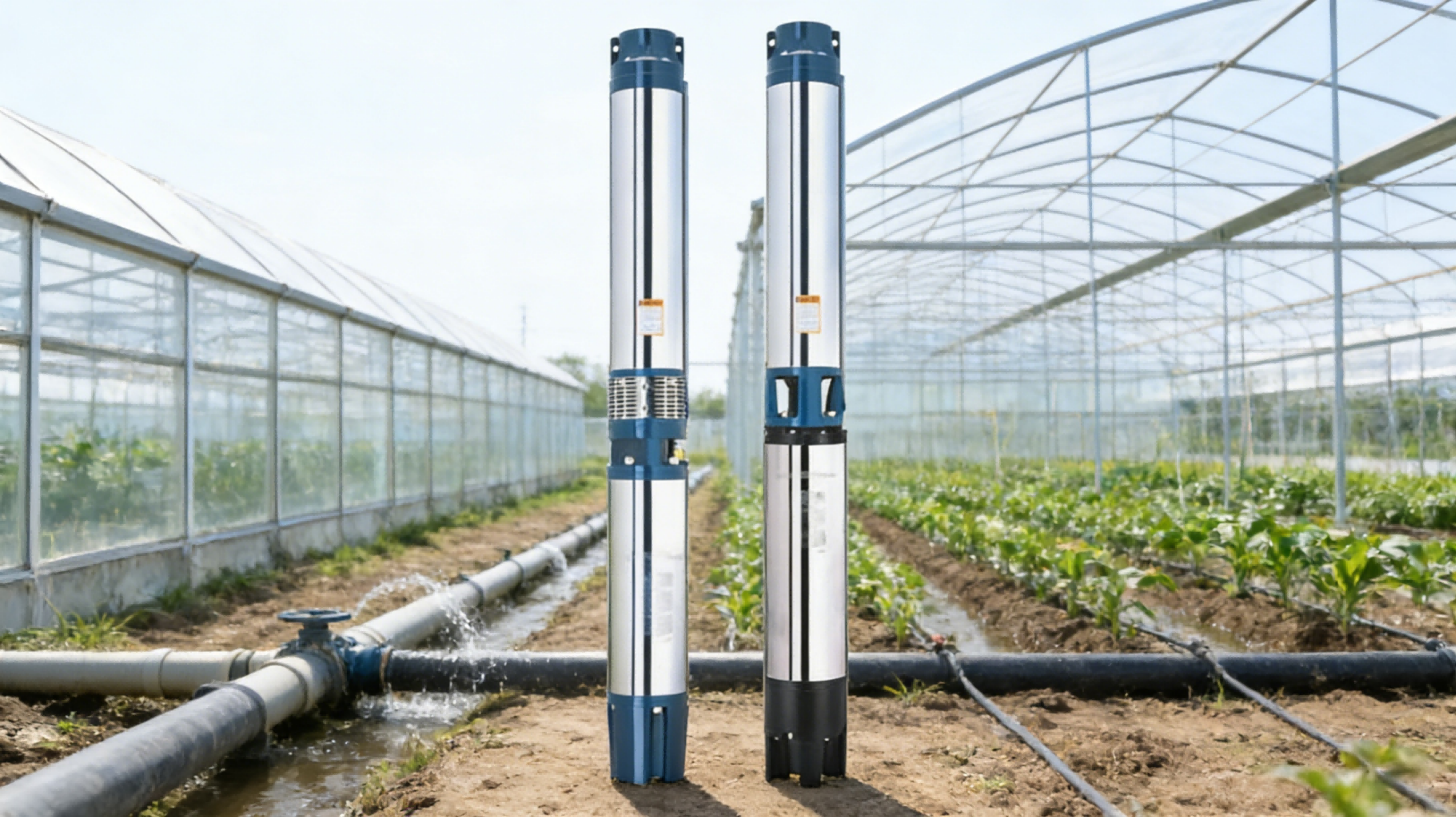
1. Introduction: Why Deep Well Pumps Are a Big Deal Today
Access to reliable water is becoming more critical every year. Climate variability, growing irrigation demands, and expanding rural housing all put pressure on groundwater systems. When surface water becomes unreliable or too expensive, deep wells and the pumps that power them step in.
A deep well pump is not just another piece of hardware. It’s the heart of your water system. When it’s sized, selected, and installed correctly, you barely think about it. When it’s wrong, you feel it every single day—low pressure, breakdowns, and unexpected costs.
In this guide, we’ll look at deep well pumps from both sides:
- The user side: how to get stable water for homes, farms, and projects
- The manufacturing side: what a professional china pump supplier builds into a pump to make it last in real‑world conditions
You’ll also see real product examples from the
Deep Well Pump Series
to turn theory into something you can actually specify and buy.
1.1 From unreliable water to stable supply – what a good deep well pump changes
If you’ve ever dealt with a weak tap, a sprinkler system that randomly stops, or a well that “sometimes works, sometimes doesn’t,” you already know why deep well pumps matter.
A well by itself is just a hole in the ground. What really decides whether you have reliable water every day is the pump sitting down in that column of water. A properly selected and installed deep well pump can:
- Turn a seasonal or marginal well into a stable, year‑round supply
- Deliver consistent pressure so irrigation systems and household fixtures work as they should
- Protect the well structure by avoiding over‑pumping and sand ingress
- Cut down on emergency repairs, truck rolls, and unexpected downtime
On farms, a good deep well pump keeps crops irrigated on the hottest days, when water is most critical. For households and commercial sites, it means you don’t have to think about water at all—you simply open the tap and it works.
That’s why the choice of pump, and of the china pump manufacturers you source it from, directly affects the real‑world reliability and total cost of your water system.
1.2 Why this guide is different: insights from a China pump manufacturer and supplier
Most guides on deep well pumps are written from the installer or homeowner’s point of view. Useful, but they usually stop at “buy a quality pump” or “ask your contractor.”
This guide takes you a level deeper.
It’s written from the perspective of a professional china pump supplier that actually designs, tests, and manufactures complete deep well and submersible pump lines. That means we can talk not only about:
- How to choose between shallow and deep well solutions
- How to size flow and head correctly
…but also about what’s happening inside the factory:
- How materials, motor design, and impeller geometry affect lifespan
- What quality checks and test benches you should ask a manufacturer about
- How to judge if a product line is really suitable for irrigation and groundwater applications, not just “on paper”
Throughout the article, you’ll see practical examples and direct links to real products, like the full
Deep Well Pump Series
covering compact domestic models, high‑pressure irrigation pumps, and high‑volume borehole units.
So instead of generic advice, you’ll get manufacturer‑level insights you can use whether you’re buying a single pump for your own well or sourcing containers of pumps for multiple projects.
1.3 Who this article is for (farm owners, project engineers, distributors, OEM buyers)
This isn’t just an article for DIY homeowners—though you’re absolutely welcome here.
We wrote this guide mainly for people who make decisions about water systems at scale:
- Farm owners and agricultural managers who rely on stable irrigation and livestock water
- Project engineers and consultants designing groundwater and irrigation systems
- Distributors and trading companies looking for a long‑term china pump supplier
- OEM buyers who need private‑label or customized deep well pumps and submersible solutions
If you fit into one of these groups, you’ll find sections on:
- How to size and specify pumps correctly for different applications
- How to compare offers from different china pump manufacturers beyond just price
- How to choose between AC and solar deep well systems for remote or off‑grid sites
We’ll keep the language straightforward and practical, but detailed enough for professionals who need to get it right the first time.
2. Deep Well Pumps 101: Clear Definitions Without the Jargon
Before you compare models and motor sizes, it helps to be clear on a few basic definitions. A lot of problems start simply because the wrong type of pump was installed in the first place.
2.1 What is a deep well pump? How it differs from shallow well and surface pumps
A deep well pump is designed to lift water from wells that go well beyond the reach of suction—typically deeper than about 25 feet (7–8 meters) from the pump to the water surface.
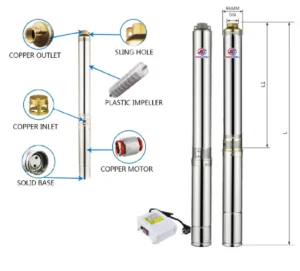
The key differences:
- Shallow well pumps
- Usually installed at the surface
- Rely on suction (atmospheric pressure) to pull water up
- Realistic depth limit: about 25 ft / 7–8 m
- Good for very shallow wells, cisterns, and some surface water
- Deep well pumps
- Typically submersible units installed down in the well
- Push water up instead of trying to suck it
- Can handle 30–300+ meters of lift, depending on the model
- Designed for deep boreholes, drilled wells, and serious irrigation systems
- Other surface pumps (centrifugal, jet, booster)
- Mounted above ground
- Used for pressure boosting, transfer, or as part of jet pump systems
- Require proper priming and are limited by suction height
If your static water level is much below 25 ft, or if the well level drops during pumping (drawdown), you’re in deep‑well territory and should be considering submersible deep well pumps rather than shallow solutions.
If you’re comparing options, you can browse real examples of deep well products (from compact domestic models to heavy‑duty irrigation units) here:
Deep Well Pump Series
2.2 Submersible pumps vs jet pumps vs vertical multistage deep well pumps
When people say “deep well pump,” they might mean a few different technologies. The three most common are:
- Submersible pumps
- Installed down in the well, fully submerged
- Motor and pump are a sealed unit
- Push water up through a riser or drop pipe
- Very common for residential wells, farms, and many irrigation projects
On the product side, this is where you’ll find models like the compact 3‑inch stainless steel drilling pump for homes and gardens:
3SDM Series 3 Inch Drilling Deep Well Submersible PumpAnd also the
2SDM Submersible Deep Well Pump with Control Box
for domestic water supply with easy electrical setup. - Deep well jet pumps
- Pump is above ground
- Uses a jet assembly and venturi down in the well
- Can work at higher depths than simple suction pumps, but generally less efficient than submersible units
- Easier to service because everything is on the surface, but performance and energy use are often not as good for very deep wells
- Vertical multistage deep well pumps (submersible turbine, screw, or multistage centrifugal designs)
- Usually submersible as well, but built with multiple impellers (stages) stacked vertically
- Designed for high head and often higher flows
- Ideal for irrigation, industrial water supply, and deep groundwater extraction
In practice, many “submersible deep well pumps” are exactly this: vertical multistage units, such as stainless steel turbine pumps like the
4SDM Submersible Irrigation Stainless Steel Deep Well Turbine Pump
and the large‑flow
4SP Stainless Steel Well Submersible Multistage Pump.
Submersible pumps and vertical multistage designs are now the standard choice for most deep wells because they combine good efficiency, quiet operation, and strong lifting ability.
2.3 Typical use cases: irrigation, groundwater extraction, livestock, industrial water supply
Deep well pumps show up in more places than most people realize. Common scenarios include:
- Agricultural irrigation
- Feeding drip, sprinkler, pivot, and micro‑irrigation systems
- Pulling water from deep boreholes in regions where surface water is unreliable
- For example, high‑pressure stainless steel models like the
4SDM Submersible Irrigation Pump
are built specifically with irrigation in mind.
- Groundwater extraction for domestic and community supply
- Single homes on wells
- Small communities or housing clusters
- Compact domestic submersible pumps, such as the
SKM Series Centrifugal Domestic Deep Well Pump,
are typical here.
- Livestock and remote water points
- Supplying water to cattle troughs, remote tanks, and grazing areas
- Increasingly paired with solar power in off‑grid applications, using systems like the
PSC Series AC/DC Solar Deep Well Pump.
- Industrial and commercial supply
- Factories, workshops, camps, hotels, and resorts drawing from deep aquifers
- Often using higher‑capacity, larger‑diameter pumps like the 6‑inch borehole unit
6 Inch Submersible Deep Well Borehole Pump
for high volumes of water.

Across all of these applications, the same basic questions come up: How deep is the water? How much flow is needed? What power is available? The next sections are about answering those questions clearly so you can match the right pump to the job.
3. How Deep Well Submersible Pumps Actually Work
Understanding the basic working principle helps you see why deep well pumps are sized and installed the way they are—and why some systems last 10+ years while others fail early.
3.1 Basic working principle: pushing water instead of sucking it
Surface pumps create suction to pull water up. But physics puts a hard limit on how high you can suck water—roughly 10 meters at sea level, and less in practice.
Submersible deep well pumps avoid that problem entirely:
- The pump and motor are installed down in the water column
- The impellers spin and pressurize the water
- The pump “pushes” water up the drop pipe to the surface
Because the pump is located below the water level, it’s always flooded and doesn’t need priming. There’s no long suction line to leak air, and the pump isn’t fighting against the limits of atmospheric pressure.
That’s why submersible designs are the standard in modern deep well systems, from small 3‑inch and 2‑inch domestic units such as the
2SDM Submersible Deep Well Pump with Control Box
all the way to larger multistage irrigation pumps and high‑volume borehole models.
3.2 Key components inside a submersible deep well pump
While models vary, most submersible deep well pumps share a similar internal structure:
- Electric motor
- Sealed against water ingress
- Often oil‑filled or water‑filled for cooling and lubrication
- In quality pumps, you’ll usually see 100% copper windings for better efficiency and lifespan, as used across many domestic deep well series.
- Pump shaft
- Connects the motor to the impeller stack
- Transfers torque while withstanding axial and radial loads
- Impellers and diffusers (stages)
- Each impeller adds head (pressure) to the water
- Multiple stages stacked together deliver the total head needed to lift water from deep levels
- Materials may be stainless steel, engineered plastics, or brass, depending on the model and water quality; for example, the
6 Inch Submersible Deep Well Borehole Pump
uses plastic impellers with a stainless‑steel body to balance performance and corrosion resistance.
- Pump casing and outer shell
- Typically stainless steel for corrosion resistance and structural strength
- Houses the hydraulic components and protects the motor
- Check valve / non‑return valve
- Prevents water from flowing back down into the well when the pump stops
- Reduces water hammer and protects seals and bearings
- Cable and cable guard
- Special submersible‑rated power cable
- Mechanically protected along the drop pipe to avoid abrasion

In more advanced models, you may also see:
- Built‑in control electronics or capacitor
- Dry‑run protection (stops the pump if water levels drop too low)
- Soft‑start features that reduce starting current and mechanical stress
These details are where the difference between a low‑cost generic pump and a professionally engineered deep well pump really shows up over time.
3.3 Why submersible pumps are often the best option for deep wells
When you put all of this together, submersible deep well pumps offer several practical advantages over other options:
- Much greater depth capability
- Because they push water rather than pull it, they can handle 50, 100, 200 meters and more, depending on design
- Higher efficiency in many setups
- Less energy lost to long suction lines and priming issues
- Particularly true for vertical multistage designs like the stainless steel
4SP Submersible Multistage Deep Well Pump.
- Quieter operation
- The motor is underwater—noise is naturally damped
- Ideal for residential and commercial environments
- Greater reliability in deep and variable wells
- No risk of losing prime
- Better suited to wells with fluctuating water levels
- Easier integration with solar and off‑grid systems
- Many modern submersible designs are available in DC and AC/DC hybrid versions, such as the
PSC Series AC/DC Solar Deep Well Pump System
for agriculture and remote irrigation.
- Many modern submersible designs are available in DC and AC/DC hybrid versions, such as the
For most deep wells used in irrigation, livestock, and groundwater supply, a correctly specified submersible pump is simply the most robust and future‑proof choice.
4. Deep vs Shallow Wells: Choosing the Right Pump Type
Choosing between a shallow well pump and a deep well submersible isn’t about brand loyalty—it’s about physics. If you match the pump type to the actual water level and well design, your system runs smoothly. If you get it wrong, you’ll fight the pump for years.
4.1 How well depth is measured (static level, drawdown, total depth)
When someone says “my well is 60 meters deep,” that tells only part of the story. For pump selection, you really need three numbers:
- Static water level
- The depth from ground level to the water surface when the pump is off
- Measured with a weighted tape, electric sounder, or other level tools
- Pumping water level (drawdown)
- The water level after the pump has been running for a while
- This shows how much the water table drops under load
- Total well depth
- The physical bottom of the well or borehole
The pump doesn’t care about total well depth as much as it cares about how far it has to push water from the pumping level up to the discharge point (plus friction losses). That’s why you’ll see later that we focus on Total Dynamic Head (TDH), not just “how deep is the well.”
4.2 When a shallow well pump is enough – and when you must go deep
A shallow well pump or jet pump can be a perfectly good choice if:
- Your static water level is within about 7–8 m (25 ft) of the pump
- Drawdown is limited, so the level doesn’t drop much when pumping
- You prefer having the pump at the surface for easier access
But once the water level gets significantly lower, a shallow pump is simply fighting physics. Symptoms of using a shallow pump where a deep pump is needed include:
- Persistent loss of prime
- Very low or unstable pressure
- Pump running hot or tripping overloads
If the water level is significantly below 25 ft, or if you have seasonal drops, a deep well submersible becomes less of an option and more of a requirement. That’s where compact submersible models like the
3SDM Deep Well Submersible Pump
and higher‑head irrigation pumps such as the
4SDM Irrigation Turbine Pump
come into play.
4.3 Risks of using the wrong pump type (low pressure, burnout, water hammer)
Using the wrong type of pump for your well isn’t just inefficient—it can be expensive and damaging:
- Chronic low pressure
- Sprinklers don’t reach, showers are weak, tanks take forever to fill
- Pump burnout
- Running a shallow pump against too much lift makes the motor work well beyond its design
- Overheating, premature bearing wear, and motor failure follow
- Water hammer and plumbing stress
- Oversized or mis‑matched pumps can cause sudden pressure spikes
- This can damage valves, fittings, and even the well structure over time
- Well damage from over‑pumping
- Pulling water too fast can draw sand and fines into the well
- That increases wear on impellers and can slowly ruin the well screen
Correct pump type is the first layer of protection. After that, correct sizing and control strategy (which we’ll cover next) take care of the rest.
5. Core Specs That Really Matter (And How to Read Them)
Pump datasheets can look intimidating at first: flow curves, head values, power ratings, voltage options, and more. The good news is that only a handful of specs really drive your decision. Once you understand those, comparing models from different china pump manufacturers gets a lot easier.

5.1 Flow rate (GPM / m³/h): matching household, farm, and project demand
Flow rate tells you how much water the pump can deliver, often given in:
- GPM (gallons per minute)
- L/min (liters per minute)
- m³/h (cubic meters per hour)
The “right” flow rate depends on what you’re feeding:
- Typical small home: roughly 5–12 GPM (1–3 m³/h), depending on fixtures and usage
- Larger homes or small farms: 10–25 GPM (2–6 m³/h)
- Irrigation systems: can range from a few m³/h for drip systems up to tens of m³/h for pivots or large sprinklers
An easy way to estimate is:
- List your peak simultaneous uses (showers, taps, irrigation zones running at once)
- Sum up their typical flow rates
- Add a safety margin of about 20%
Then, when you look at a pump curve, make sure your required flow sits within the efficient part of the curve—not at the extreme ends. A balanced product like the
SKM Domestic Deep Well Pump
is designed exactly around these common residential and light‑agricultural demands.
5.2 Total Dynamic Head (TDH): more than just “how deep is the well”
Total Dynamic Head (TDH) is the real “lift” the pump has to overcome. It includes:
- Vertical lift: from pumping water level to the highest discharge point (tank, tower, or system inlet)
- Friction losses: from flowing through pipes, fittings, valves, and filters
- Pressure requirements: if you need a certain pressure at the outlet (for example, 2–3 bar for sprinklers), this converts to additional meters of head
In simple terms:
TDH ≈ (pumping water level depth) + (vertical rise to outlet) + (friction losses) + (required pressure converted to meters)
Most quality pump datasheets show performance in “Head vs Flow.” Once you’ve calculated TDH, you:
- Find your flow on the horizontal axis
- Move up until you reach a curve that provides at least your TDH
- Check that this point is in the pump’s recommended operating range
High‑head multistage pumps like the
4SDM Irrigation Turbine Pump
and
4SP Multistage Deep Well Pump
are designed to maintain strong flow at high TDH values typical of deep wells and pressurized irrigation systems.
5.3 Motor power and voltage options: 110–120 V, 220–240 V, 3‑phase industrial
The motor rating (usually in kW or HP) tells you how much mechanical work the pump can do. More power allows:
- Higher flow at a given head
- Higher head at a given flow
- Handling tougher startup conditions (e.g., higher static head or heavier water columns)
But more HP is not always better. Oversizing can cause:
- Short cycling (pump starts and stops too frequently)
- Higher electricity bills
- Unnecessary stress on the system
Voltage and phase options matter just as much as power:
- 110–120 V single phase: common in North American residential systems
- 220–240 V single phase: common in many global residential and light commercial settings
- 3‑phase (e.g., 380–415 V): typical in industrial and agricultural installations
A flexible china pump manufacturer will offer the same hydraulic design across different motor and voltage options. For example, in the
Deep Well Pump Series
you’ll see similar hydraulic families configured for domestic 220 V use, as well as 3‑phase setups for larger farms and industrial users.
5.4 Materials and protection: stainless steel, plastics, seals, cooling, motor types
Materials are one of the biggest drivers of pump life:
- Stainless steel casings and shafts
- Excellent corrosion resistance
- Mechanically strong, suitable for deep installations
- Used widely across models like the
3SDM Stainless Steel Submersible Pump.
- Engineered plastic impellers and diffusers
- Lightweight, efficient, corrosion‑resistant
- Can handle slightly sandy water if designed properly
- Found in high‑volume units like the
6 Inch Submersible Deep Well Pump with Plastic Impellers.
- Brass or stainless steel impellers
- Very robust and abrasion‑resistant
- Common in premium domestic and light‑industrial pumps such as the
SKM Centrifugal Domestic Deep Well Pump.
Seals, bearings, and cooling also matter:
- Mechanical seals must be suited to the water chemistry
- Bearings must handle axial thrust from multistage impellers
- Motor cooling (water‑filled, oil‑filled, or advanced designs) must be matched to installation depth and water temperature
As a buyer, asking for details on these points is a good way to judge how serious a china pump manufacturer is about long‑term performance.
5.5 Smart protection features: dry‑run, soft start, thermal protection, sand handling
Modern deep well pumps increasingly include built‑in protection features that used to require external devices. Useful ones include:
- Dry‑run protection
- Stops the pump if water level drops below the intake
- Prevents overheating and seal damage
- Soft start
- Reduces the inrush current on startup
- Decreases mechanical stress on couplings and impellers
- Extends motor and electrical component life
- Thermal overload protection
- Shuts down or limits output if the motor overheats
- Protects against blocked impellers, locked rotors, or extreme conditions
- Sand‑handling designs
- Special impeller geometries and clearances
- Help flush out particles instead of grinding them inside the pump
Solar and hybrid systems, such as the
PSC Series AC/DC Solar Deep Well Pump System,
often integrate these protections in the controller as well, adding another layer of safety for off‑grid and remote installations.
6. Sizing a Deep Well Pump for Irrigation and Groundwater Projects
Now that we’ve covered the core specs, let’s put them together. Sizing a deep well pump is about matching what the well can supply with what your system needs—without wasting energy or damaging the well.
6.1 Step-by-step: from water demand to pump model shortlist
A practical sizing workflow looks like this:
- Gather well data
- Static water level
- Pumping water level (after a yield test, if possible)
- Total well depth and casing diameter
- Define usage and demand
- Peak flow requirements (household + irrigation + livestock, etc.)
- Target pressure at the point of use (e.g., 2–3 bar for sprinklers)
- Calculate TDH
- Combine vertical lift, friction losses, and required outlet pressure (as meters of head)
- Match flow and TDH to pump curves
- Use manufacturer curves to find models operating near their best efficiency point (not at the extreme left or right)
- Check power and voltage compatibility
- Confirm the motor rating fits your power supply and electrical infrastructure
- Finalize mechanical details
- Pump diameter vs casing
- Cable length and size
- Drop pipe material and accessories
From a product perspective, this might mean:
- Shortlisting a compact domestic unit like the
2SDM Submersible Deep Well Pump with Control Box
for a smaller home and garden system - Or moving up to a higher‑head irrigation pump such as the
4SDM Submersible Irrigation Turbine Pump
for fields and orchards - Or choosing a high‑volume borehole model like the
6 Inch Submersible Deep Well Borehole Pump
for large agricultural or industrial projects.
6.2 Sizing for drip, sprinkler, pivot irrigation, and livestock watering
Each irrigation method has its own pressure and flow “personality”:
- Drip irrigation
- Low flow, moderate pressure (often 1–2 bar at the emitters)
- Works well with smaller pumps running longer hours
- A domestic‑plus pump like the
SKM Domestic Deep Well Pump
can often handle house + drip if sized correctly.
- Sprinkler irrigation
- Medium to high flow, moderate to higher pressure (2–4 bar)
- Needs more careful TDH calculation due to pressure requirements
- Center pivot or large sprinkler lines
- High flow and pressure
- Often require multistage models like the
4SP Stainless Steel Multistage Deep Well Pump
or 6‑inch borehole pumps
- Livestock watering
- Highly variable demand (peak when animals drink)
- Often best served by pumping into an elevated storage tank, then letting gravity distribute
- Solar‑driven systems such as the
PSC Series AC/DC Solar Deep Well Pump
are very common in remote grazing areas.
The goal is to size the pump so it runs in a stable, efficient band for the type of irrigation you’re using, rather than surging between extremes.
6.3 Avoiding common sizing mistakes (oversizing, short‑cycling, underpowered motors)
Three mistakes show up again and again in well pump troubleshooting:
- Oversizing the pump
- “Bigger is safer” sounds right, but often leads to:
- Short cycling (pump hits pressure too fast and shuts off frequently)
- Wasted energy
- More stress on pressure tanks and fittings
- “Bigger is safer” sounds right, but often leads to:
- Underpowered motors
- Pump technically meets flow/head on paper, but only under ideal conditions
- Any fluctuation in voltage, water level, or friction losses pushes it into overload
- Ignoring real‑world friction and pressure needs
- Designers use static depth only, forget about long pipe runs and filters
- System never quite performs as expected
Working with a china pump manufacturer that provides full pump curves and can review your calculations is one of the easiest ways to avoid these pitfalls. Using well‑documented series like the
Deep Well Pump Series
gives you a clearer picture of what each model can do in the field.
6.4 Planning for future expansion: how to leave room without wasting energy
Most systems don’t stay the same forever. A farm adds more irrigation zones. A small industry expands production. A rural community grows.
Instead of massively oversizing today’s pump “just in case,” a better strategy is:
- Size the pump for current realistic demand + a modest margin
- Choose a motor and hydraulic combination that can tolerate a bit more load in the future (within efficiency range)
- Or plan for a staged upgrade path—e.g., starting with a certain 4‑inch series, then later stepping up to a higher‑flow 4‑inch or 6‑inch model when the system actually expands
For example, you might start a project with:
- A mid‑range multistage unit like the
4SDM Irrigation Turbine Pump
for a few hectares of sprinklers
Then, if the farm doubles in size:
- Move to a larger borehole pump like the
6 Inch Submersible Deep Well Borehole Pump
This approach keeps today’s energy bills under control while still giving you a clear roadmap for expansion.
7. Matching Pump Capacity to Well Yield and Casing
A deep well pump is only as good as the well it’s drawing from. Even the best pump will fail early if it constantly tries to pull more water than the aquifer can comfortably provide, or if it’s squeezed into the wrong casing size.
This is where well yield and well construction come in.
7.1 Why “over-pumping” kills both your pump and your well
“Over‑pumping” means the pump is drawing water faster than the well can naturally refill. It’s one of the quickest ways to destroy both pump and well.
What can go wrong:
- Water level drops too low
- The pump starts to run partially or fully dry
- Motor overheats, seals burn, bearings fail
- Sand and fine particles get pulled in
- Over‑pumping can pull water through the screen too fast, dragging sand into the well
- Sand acts like sandpaper on impellers, diffusers, and seals
- Well structure deteriorates
- Excessive drawdown can damage the screen and formation
- You may permanently reduce well yield over time
Preventing over‑pumping is partly about choosing the right pump capacity and partly about using protections like level sensors and dry‑run protection. Modern submersible models, including several in the
Deep Well Pump Series,
are designed with these protections in mind when paired with the correct controls.
7.2 Testing and understanding well yield before choosing a pump
Before you choose a pump, you need to know roughly how much water the well can reliably supply. A basic yield test usually includes:
- Static water level
- Measure depth to water with the pump off
- Pumping test
- Use a test pump or temporary setup
- Pump at a steady flow rate for a specific period (often 1–4 hours)
- Drawdown behavior
- Monitor how far the water level falls while pumping
- Note whether it stabilizes or continues to drop
From this, you estimate:
- Sustainable yield: the flow rate at which the water level stabilizes without dropping too close to the pump intake
- Safe pump capacity: typically equal to or slightly below the sustainable yield, not the absolute maximum you can pull for a few minutes
Once you know your well’s realistic yield, you can shortlist pumps that match it. For example:
- A modest domestic well might pair well with a
2SDM Submersible Deep Well Pump with Control Box
sized around that sustainable flow - A higher‑yield agricultural well might justify a larger multistage pump such as the
4SP Stainless Steel Submersible Multistage Deep Well Pump
Matching pump to well yield is the difference between a system that runs for 10+ years and one that’s constantly being repaired.
7.3 Choosing the right pump diameter for different well casing sizes
Pump diameter needs to fit comfortably inside the well casing—with enough clearance for:
- Adequate water flow around the motor for cooling
- Easy installation and removal
- Avoiding contact with the casing that could cause vibration or wear
Typical pairings:
- 3‑inch pumps
- For small‑diameter domestic wells and tight spaces
- Example:
3SDM Series 3 Inch Drilling Deep Well Submersible Pump
is ideal for narrow residential boreholes.
- 4‑inch pumps
- Common for most standard household and light‑agricultural wells
- Includes lines like the
4SDM Submersible Irrigation Stainless Steel Deep Well Turbine Pump
and
SKM Domestic Deep Well Pump.
- 6‑inch pumps
- Used for higher‑capacity wells, large irrigation, and industrial supply
- For example, the
6 Inch Submersible Deep Well Borehole Pump
is designed for high‑volume water movement.
A professional china pump manufacturer will usually specify the minimum casing size required for each pump model. Always check this before ordering—especially for retrofit projects where casing size is already fixed.
7.4 Cable length, drop pipe, and accessories that are easy to overlook
It’s easy to focus only on the pump and forget the “supporting cast.” But details like cable length and pipe sizing can make or break an installation:
- Power cable length and size
- Must reach from the pump to the control box or panel with enough slack
- Must be properly sized for voltage drop and current over that distance
- Use submersible‑rated cable and secure it to the drop pipe at regular intervals
- Drop pipe (riser pipe)
- Material: often HDPE, PVC, or steel, depending on depth and local practice
- Diameter: sized to minimize friction losses while matching pump outlet
- Pressure rating: must handle maximum operating pressure with safety margin
- Check valves and fittings
- At least one good non‑return valve near the pump outlet
- Additional valves if the drop is very long or system design requires it
- Safety rope or cable
- Often installed as a backup to support the pump during installation and removal
Quality product lines, such as th Deep Well Pump Series, are designed with these accessories and installation requirements in mind, making it easier for installers and end users to get a complete, reliable system.
8. Installation Insights from the Manufacturer Side
From the factory’s perspective, many “pump problems” are actually installation problems. The pump was fine when it left the test bench—but once it’s in the ground with poor wiring, wrong depth, or no protection, trouble starts.
Here’s what experience on the manufacturing side has shown again and again.
8.1 What installers often get wrong on deep well submersible systems
Even professional installers can occasionally miss key points:
- Incorrect pump depth
- Too close to the bottom: the pump ingests sand and debris
- Too high: the pump may run dry when levels fluctuate
- No allowance for cooling flow
- Pump placed in a way that restricts water circulation around the motor
- Particularly an issue in larger‑diameter casings if the pump is not properly shrouded
- Ignoring pump curves
- Selecting a pump purely on horsepower instead of flow/head requirements
- Poor mechanical support
- Inadequate securing of cable and pump weight
- Using fittings that can’t handle the static and dynamic loads
As a manufacturer, we design lines like the
4SP Stainless Steel Multistage Deep Well Pump
and
3SDM 3 Inch Deep Well Pump
to tolerate some real‑world abuse—but correct installation still multiplies their lifespan.
8.2 Electrical considerations: wiring, control boxes, and protection devices
Electrics are another major source of premature failures:
- Undersized wire
- Excessive voltage drop on long runs
- Motor runs hot, performance suffers
- Incorrect voltage or phase
- Connecting a single‑phase pump to the wrong supply
- Mis‑wiring of control boxes
- Missing or incorrect overload protection
- No proper circuit breaker or motor protection device
- Inconsistent tripping or no protection at all
Many domestic submersibles, such as the
2SDM Submersible Deep Well Pump with Control Box,
ship with matched control boxes to simplify wiring and protection. For larger or solar‑powered systems, external controllers (like those used with the
PSC Series AC/DC Solar Deep Well Pump)
handle both electrical and hydraulic protections in one place.
8.3 Pump placement in the well: distance from bottom, screens, and intakes
Correct vertical placement of the pump in the well is critical:
- Keep a safe distance from the bottom
- Common rule of thumb: at least 3–5 meters (10–15 ft) above the bottom of the well
- Reduces sand and sediment intake
- Stay below static water level, above pump intake safety margin
- The pump intake must remain submerged even when the water level falls during pumping
- Allow for seasonal drops if you’re in a climate with wet and dry seasons
- Respect screen and intake zones
- Avoid placing the pump intake directly opposite a screened section that’s prone to sand
- In larger casings, use a shroud or flow sleeve if needed to direct cooling water past the motor
These guidelines apply across the board, whether you’re installing a slim 3‑inch 3SDM Pump in a domestic well or a robust 6‑inch borehole pump for high‑volume applications.
8.4 When to bring in a local installer vs when remote support is enough
There’s always a balance between doing it yourself and hiring a specialist:
- When remote support is often enough
- Replacing a pump in an existing, well‑documented installation
- Straightforward domestic systems with known depths and power supplies
- Situations where the manufacturer or china pump supplier provides clear wiring diagrams and installation instructions
- When you should strongly consider a local installer
- New wells where yield and drawdown are not yet fully understood
- Large irrigation or industrial systems with complex hydraulics
- Projects in regions with strict code or permitting requirements
A manufacturer like JG PowerTech can offer remote technical guidance, manuals, and pump selection help, but local professionals bring knowledge of site conditions, regulations, and practical nuances that no document can fully replace.
9. Maintenance, Troubleshooting, and Lifespan Optimization
Deep well submersible pumps are largely “out of sight, out of mind.” That’s good for daily life, but it also means small issues get ignored until they turn into big failures.
A little routine attention goes a long way.

9.1 Simple routine checks that dramatically extend pump life
You don’t have to pull the pump every year to maintain it. Most of the useful checks happen at the surface:
- Monitor pressure and flow
- Keep an eye on how quickly tanks fill and how strong irrigation or household pressure feels
- A slow decline is often the first sign something is wrong
- Check pressure switch and tank (if used)
- Make sure cut‑in and cut‑out pressures are correct
- Confirm tank pre‑charge is at the right level
- Inspect electrical components
- Look for tripped breakers, hot spots, or signs of moisture in control boxes
- Listen for relay chatter or unusual noises
- Water quality observation
- Cloudy, sandy, or discolored water can indicate well or pump problems
For solar‑compatible systems like the PSC Series Solar Deep Well Pump, add periodic panel inspection and cleaning to your checklist.
9.2 Early warning signs: low pressure, rapid cycling, noise, cloudy water
Common early warning signs include:
- Gradual loss of pressure or flow
- Could indicate worn impellers, clogged screens, or falling water levels
- Rapid cycling (pump starts and stops frequently)
- Often points to pressure tank or pressure switch issues
- If not corrected, it will shorten motor life
- Unusual noises
- Clicking, humming, or grinding from control boxes or piping
- Can indicate electrical problems or mechanical wear
- Cloudy or sandy water
- May signal well damage, screen issues, or over‑pumping
Responding early usually means the difference between a simple surface‑level fix and a full pump pull. This is why professional china pump manufacturers design product lines like the Deep Well Pump Series to be compatible with common monitoring and protection devices.
9.3 Common failure modes and what usually causes them
Most deep well pump failures can be traced back to a few root causes:
- Dry‑running
- Water level drops below the pump intake
- No dry‑run protection installed or not set correctly
- Cavitation and sand wear
- Over‑pumping or poor well design
- Leads to impeller erosion and performance loss
- Electrical overload and voltage issues
- Undersized cables, unstable grid, or wrong voltage
- Motors overheat and insulation breaks down
- Mechanical fatigue
- Repeated water hammer, frequent starts, or poorly supported piping
Working with a manufacturer that designs motors, hydraulics, and protections as an integrated system—and tests them under realistic conditions—is one of the best safeguards against these failure modes.
9.4 How a reliable china pump manufacturer designs for serviceability and spare parts
From the manufacturing side, “serviceability” doesn’t just mean “can a technician open it.” It also means:
- Standardized components across product families
- Shared impellers, shafts, or seals within the same series
- Easier access to spare parts years down the line
- Clear documentation and labeling
- Model and serial numbers that match datasheets and parts lists
- Wiring diagrams and control box references
- Availability of repair kits
- Seal kits, bearing kits, and impeller sets for high‑volume models
For example, building multiple head and flow variants on a shared platform—like what’s done within the Deep Well Pump Series—allows distributors and service partners to stock fewer part types while still supporting a wide installed base.
10. Deep Well Pumps for Solar and Off‑Grid Applications
As energy prices rise and remote projects expand, pairing deep well pumps with solar has gone from “interesting” to “mainstream.” For irrigation, livestock, and rural water supply, solar deep well systems can be game‑changers.

10.1 Why deep well and solar are a natural fit for modern irrigation
Solar and deep wells work well together because:
- Water demand often peaks when sun is strongest
- Irrigation needs are highest on clear, hot days—exactly when solar output is highest
- Many remote sites lack grid power
- Running grid lines or fuel to remote wells is expensive and logistically difficult
- Water can be stored instead of electricity
- Instead of using batteries, you can pump water into tanks or elevated reservoirs during the day
- Gravity then handles night‑time or peak‑time supply
This is why dedicated solar pump lines, such as the PSC Series AC/DC Deep Well Solar Pump System, are increasingly popular in agriculture and rural water projects.
10.2 DC and hybrid solar submersible pumps: what’s different from standard AC
Solar‑oriented pumps come in a few flavors:
- Pure DC solar pumps
- Designed to run directly from DC power (solar panels, battery banks, or DC sources)
- Often very efficient within a specific operating range
- Hybrid AC/DC pumps
- Can run on DC solar input and AC grid or generator power
- Automatically switch between available sources where controllers support it
- Offer redundancy: solar by day, grid or generator by night or in poor weather
The PSC line is a good example of hybrid thinking:
PSC Series AC/DC Solar Deep Well Pump
can be integrated into systems that change or grow over time, without locking you into one power source from day one.
Behind the scenes, these pumps use specialized controllers (MPPT, soft start, protective logic) to make sure the motor sees stable conditions even when solar input is variable.
10.3 Designing a basic solar deep well system: panels, controller, storage
A simple solar deep well setup usually includes:
- Solar array
- Sized to provide enough power for the pump at desired operating hours
- Tilted and oriented based on local solar conditions
- Pump controller (inverter or DC drive)
- Manages start/stop, dry‑run protection, soft start, and sometimes tank level controls
- Optimizes power extraction from panels (MPPT)
- Submersible pump
- Typically from a solar‑ready series like PSC or similar DC/AC‑compatible models
- Water storage
- Ground‑level tanks or elevated towers
- Sized so that daily pumped volume meets usage even if there are a few cloudy days
- Distribution system
- Gravity or booster pumps, depending on topography and pressure needs
A professional china pump manufacturer with both standard submersible pumps and dedicated solar pump series can help you balance pump choice and panel size instead of oversizing one to compensate for the other.
10.4 Typical scenarios: remote farms, livestock, villages, and backup systems
Solar deep well systems show up in a range of real‑world settings:
- Remote farms and orchards
- No grid access, or unreliable grid
- Solar pump feeds day‑time irrigation directly or fills storage for timed distribution
- Livestock and grazing operations
- Pump water to troughs or tanks scattered over large areas
- Solar avoids long power lines or fuel runs
- Rural villages and community water points
- Central borehole with solar pump and elevated storage
- Gravity distributes to tap stands or houses
- Backup and resilience systems
- Even grid‑connected sites add solar deep well pumps as backup when outages are common
In all of these, the key advantage is independent, low‑maintenance water access. That’s exactly what solar‑ready submersible pump series are engineered for.
11. What Sets a Professional China Pump Manufacturer Apart
With so many china pump manufacturers in the market, it’s easy to think all suppliers look the same at first glance. But once you look behind the catalog photos, differences in engineering, testing, and long‑term support become very clear.
11.1 Inside the factory: design, testing, and quality control that buyers should ask about
Serious manufacturers invest heavily in:
- R&D and design
- Hydraulic design optimized with real pump curves, not just theoretical numbers
- Motors tailored to each pump family rather than generic one‑size‑fits‑all units
- Testing facilities
- Performance test benches to verify head, flow, and efficiency
- Endurance and life testing under real‑world conditions
- Quality control systems
- Incoming material inspection
- In‑process checks during machining, winding, assembly
- Final testing before packing
At JG PowerTech, this is reflected in our modern facility, dedicated engineering team, and focus on “Technological Excellence” and “High Quality” across each product line. Asking any potential supplier to describe their testing process is a quick way to separate serious manufacturers from simple traders.
11.2 How a broad product range simplifies projects (surface pumps, submersible pumps, deep well pump series, solar pump series, accessories)
For project engineers and distributors, working with a manufacturer that covers multiple product families simplifies life:
- One partner for:
- Surface Pump Series (jet, booster, self‑priming)
- Submersible pumps (including sewage and drainage)
- Deep Well Pump Series
- Solar pump series and controllers
- Pipeline centrifugal pumps, motors, and accessories
- Easier system‑level design
- Match deep well submersibles with surface boosters and pressure systems from the same supplier
- Better assurance of compatibility and performance
This is especially valuable for distributors and OEM buyers who want a consistent technical base and shared spare parts across multiple projects.
11.3 Customization options: voltages, materials, curves, branding, and packaging
A flexible china pump supplier can adapt standard products to match your market and project needs:
- Electrical customization
- Different voltages and frequencies (e.g., 50/60 Hz, 110/220/380+ V)
- Single‑phase and three‑phase options
- Material variations
- Stainless grades, impeller materials, seal types for specific water chemistries
- Hydraulic tuning
- Adjusted head/flow curves for priority on efficiency, pressure, or volume
- Branding and packaging
- OEM labels, color schemes, cartons, and manuals customized for your market
Many models in the deep well lineup—such as
3SDM,
4SDM,
4SP,
and
SKM
are designed with this kind of flexibility in mind.
11.4 Why working with a long‑term china pump supplier lowers total cost of ownership
Lowest purchase price and lowest total cost are rarely the same thing. Long‑term partnerships can reduce:
- Stock headaches
- Stable product platforms and spare parts across years
- Predictable lead times and support
- Technical risk
- Shared application knowledge from previous projects
- Faster troubleshooting and better installation guidance
- Operating costs
- Pumps sized correctly from the start
- Higher efficiency models available where energy costs matter
By building an ongoing relationship with a trusted china pump manufacturer, OEM buyers and distributors can offer more reliable, better‑supported solutions to their own customers—without constantly changing brands or designs.
12. How to Evaluate and Compare Deep Well Pump Offers
When you’re comparing offers from multiple suppliers, it can be tempting to focus only on price and horsepower. That’s how many poor‑performing systems get purchased.
Here’s a more structured way to evaluate deep well pump proposals.
12.1 Beyond price: what to check in technical data sheets and pump curves
Always ask for:
- Full pump curves
- Flow vs head curves across the operating range
- Efficiency and power curves if available
- Motor data
- Rated voltage, power, current, and duty cycle
- Protection class and insulation class
- Materials list
- Casing, shaft, impellers, diffusers, seals
- Installation limits
- Maximum depth, max sand content, recommended casing size
Then check:
- Does the proposed operating point sit in a high‑efficiency part of the curve?
- Are materials suitable for your water quality and environment?
- Is motor power appropriate, or clearly over/under‑sized?
Using real products like those in the
Deep Well Pump Series
as benchmarks can help you compare offers that look similar at first glance but differ in important details.
12.2 Questions to ask every potential pump supplier or OEM partner
Good questions to ask include:
- How do you test each pump model before shipment?
- Can you provide references or case studies from similar applications?
- What is your standard warranty, and what does it cover?
- How long do you keep spare parts available after a model is introduced or updated?
- Can you customize voltage, materials, or branding for my market?
You’ll find many of these topics reflected in how a manufacturer presents itself. For example, the
About JG PowerTech
page highlights innovation, global reach, and rigorous testing as core strengths.
12.3 Red flags in quotations, documentation, and after‑sales support
Some warning signs that should make you slow down or dig deeper:
- Incomplete or vague datasheets
- Only horsepower and “max head” listed, no full curves
- No clear quality system
- No mention of testing, certifications, or process control
- Slow or unclear technical replies
- Struggling to answer basic application questions
- Over‑promising efficiency or lifespan without evidence
- Unrealistic claims compared to industry norms
Choosing a reputable china pump manufacturer with transparent documentation and clear contact points is usually worth more than saving a few dollars upfront.
12.4 How JG PowerTech approaches long‑term partnerships with global buyers
At JG PowerTech,long‑term cooperation is built around:
- Technical support from the beginning
- Helping size and select pumps from the right series: surface, submersible,
Deep Well Pump Series, solar, or pipeline centrifugal
- Helping size and select pumps from the right series: surface, submersible,
- Customization where it adds value
- Matching local voltages, installation practices, and branding needs
- Consistent product platforms
- Deep well families like 3SDM, 4SDM, 4SP, SKM, and PSC Solar are engineered for stability in performance and supply
- Clear communication channels
- Easy contact through the website, email, and phone as shown on the
About Us
and contact sections
- Easy contact through the website, email, and phone as shown on the
This combination helps buyers in different regions build reliable portfolios of pumps around a single, trusted china pump supplier.
13. Real‑World Application Scenarios (Short Case‑Style Examples)
Sometimes it’s easier to understand the value of a good pump and a good supplier with concrete examples. Here are three typical scenarios.
13.1 Upgrading a farm’s old jet pump to a submersible deep well system
A mid‑size farm relied on an old surface jet pump pulling from a 45‑meter well. The system suffered from:
- Regular loss of prime
- Poor pressure at the furthest sprinklers
- High energy use due to poor efficiency
Switching to a submersible solution:
- The farm installed a 4‑inch deep well pump from the
4SDM Submersible Irrigation Series - The pump now pushes water from below the waterline, eliminating priming issues
- Pressure at the field improved, and power bills dropped because the new pump operates closer to its best efficiency point
The project showed how upgrading from a shallow‑style system to a properly sized submersible deep well pump can pay off quickly.
13.2 Designing a solar‑powered deep well pump for a remote irrigation project
A remote orchard, far from the grid, needed reliable irrigation water from a 70‑meter borehole. Diesel generators were expensive to run and maintain.
The solution:
- A hybrid solar deep well pump from the
PSC AC/DC Solar Pump Series
was specified - Solar panels run the pump during the day, filling a large storage tank
- A small backup generator can be connected to the same pump via AC input if needed
Result:
- The orchard reduced fuel costs and logistics
- The irrigation schedule is now stable, even in peak season
- Maintenance is minimal compared to generator‑only setups
13.3 Standardizing pumps across multiple sites with one china pump supplier
A regional distributor handled pump supply for multiple small towns, farms, and contractors. Previously, they sourced from several brands, leading to:
- Confusing spare parts inventory
- Inconsistent documentation and training
- Difficult warranty handling
They decided to standardize with a single china pump manufacturer offering:
- Domestic deep well units like
SKM Series - Irrigation pumps like
4SDM - High‑volume borehole pumps like the
6 Inch Submersible Borehole Pump
Outcome:
- Stock management became much simpler
- Technicians trained once could service multiple models
- End customers got faster support and a more consistent experience
This is a typical example of how partnering with a professional china pump supplier can streamline operations for distributors and project integrators.
14. Checklist: Before You Choose Your Next Deep Well Pump
Before you sign a purchase order or place a large shipment, run through these checklists. They’re simple, but they cover most of what really matters.
14.1 Technical checklist (well data, demand, power, materials, controls)
- Well data
- Static water level
- Pumping water level (drawdown test)
- Total well depth and casing diameter
- Demand
- Required flow rate (peak and average)
- Required pressure at point of use
- Type of use: domestic, irrigation, livestock, industrial
- Hydraulic and pump selection
- TDH calculated correctly
- Pump curve checked at operating point
- Pump diameter matches casing and cooling needs
- Electrical
- Available voltage and phase confirmed
- Cable length and size calculated for voltage drop
- Appropriate control box or controller specified
- Materials and protection
- Casing and impeller materials suitable for water quality
- Dry‑run, overload, and thermal protections planned
14.2 Supplier checklist (certifications, testing, lead time, customization, warranty)
- Supplier capabilities
- In‑house R&D and testing facilities
- Clear quality control processes
- Documentation
- Complete datasheets and pump curves
- Installation and wiring manuals
- Logistics and support
- Realistic and reliable lead times
- Availability of spare parts and repair kits
- Customization
- Ability to match local voltage, branding, and packaging needs
- Warranty and service
- Transparent warranty terms
- Clear contact channels for technical support
You can cross‑check many of these points directly on the
JG PowerTech homepage and the About Us
section, which outline the company’s production capabilities, testing, and global reach.
14.3 Downloadable / printable summary (described so it can be turned into a resource later)
For your website or internal use, you can easily convert these checklists into:
- A one‑page PDF checklist for engineers and buyers
- A printable form that project managers fill out before requesting quotations
- A digital form embedded on your website to guide visitors through pump selection
Structuring the questions in the same order as above (well data → demand → pump → electrical → supplier) gives you a simple but powerful framework you can reuse across many projects.
15. Conclusion: Turning Groundwater into a Reliable Asset
Deep well pumps are where raw groundwater becomes practical, usable water—for crops, homes, businesses, and communities. Get the pump and the supplier right, and groundwater becomes a stable asset. Get them wrong, and you inherit a long list of headaches.
15.1 Key takeaways: why deep well pumps matter more than ever
- Deep well pumps are central to reliable irrigation and groundwater supply, especially as surface water becomes less predictable
- Correct type, sizing, and installation are non‑negotiable if you want long‑term reliability
- Modern submersible pumps, including solar and hybrid models, open new possibilities for remote and off‑grid sites
From narrow 3‑inch domestic models to robust 6‑inch borehole pumps, the design decisions behind each product line matter just as much as the model name on the label.
15.2 How choosing the right submersible pump and the right supplier protects your investment
Your investment isn’t just the price of the pump. It’s:
- The cost of drilling the well
- The value of crops or production that depend on that water
- The time and reputation risk when systems fail
Working with a professional china pump manufacturer that:
- Understands submersible and deep well technology in depth
- Offers a full range of products—from surface and submersible to
Deep Well Pump Series
and solar systems - Supports customization, documentation, and long‑term spare parts
…means you’re not gambling with your water supply. You’re building on a tested technical foundation.
15.3 Call to action: how to contact a professional china pump manufacturer for advice and quotations
If you’re planning a new well project, upgrading an old jet pump, or building a distribution portfolio, it’s worth having a direct line to a manufacturer that lives and breathes pumps.
You can:
- Explore the full product range, including deep well, surface, solar, and pipeline pumps, on the
JG PowerTech homepage - Learn more about the company’s capabilities, testing, and global reach on the
About JG PowerTech page - Use the contact options there to share your well data, application details, and project requirements for tailored recommendations
Whether you need a single submersible pump or a long‑term OEM partner, working directly with an experienced china pump supplier is one of the smartest ways to turn groundwater into a reliable, efficient, and long‑lasting asset.

0 Comments