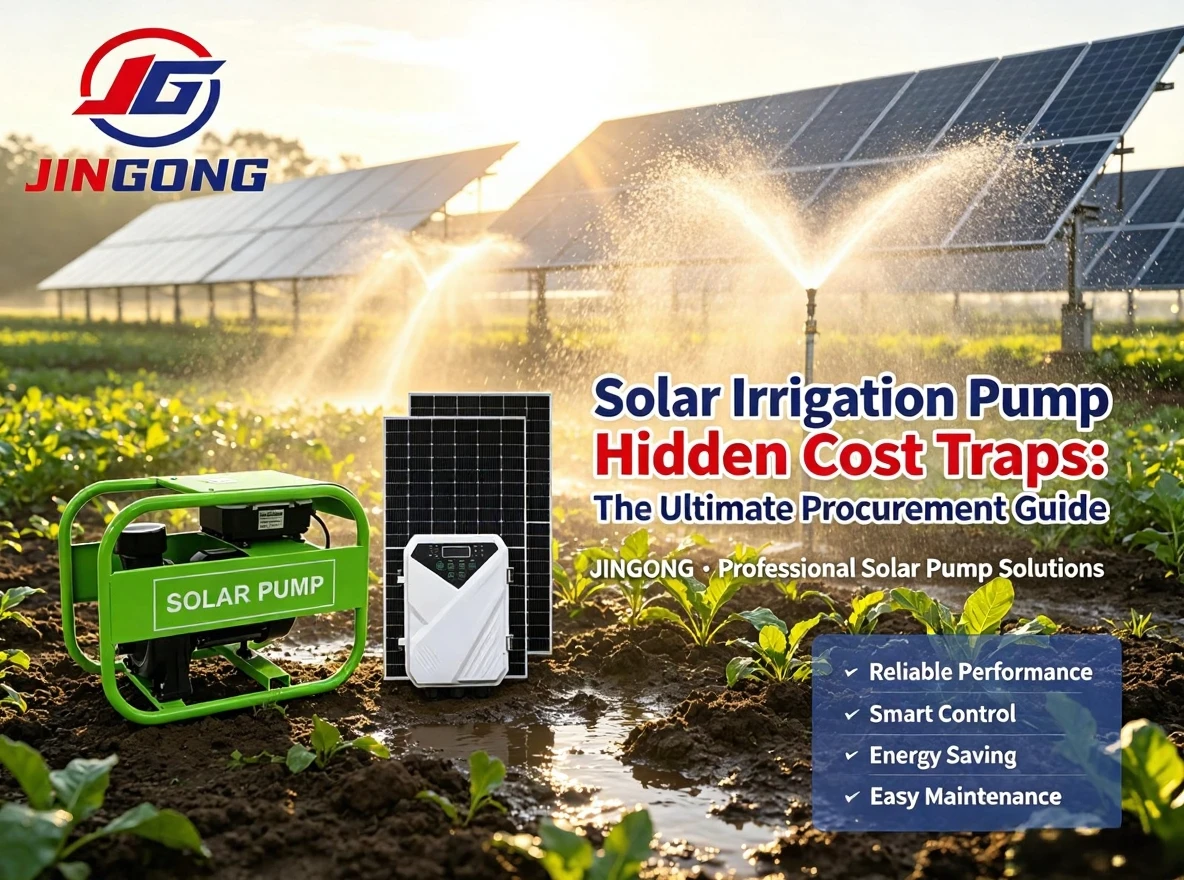
Solar Irrigation Pump Hidden Cost Traps: The Ultimate B2B Procurement Guide
As a direct Solar Irrigation Pump manufacturer with over 15 years of engineering and export experience, we have supplied thousands of solar submersible pumps, solar surface pumps, booster pumps, and diesel/gasoline pumps to farms and remote water projects worldwide. Unfortunately, we consistently see buyers fall into the same trap: focusing solely on the bare pump price while ignoring the hidden cost of solar water pump systems. This comprehensive guide is built from real-world project data to help you understand the true solar irrigation pump procurement cost and avoid expensive solar irrigation pump buying mistakes.
Article Roadmap: We define hidden costs → expose the 8 most expensive solar pump procurement traps → compare solar pump vs diesel pump cost → present a real overseas project loss & recovery case → give you a solar pump procurement checklist → answer the top 5 buyer FAQs → and show why choosing the right Solar Irrigation Pump manufacturer is your highest-leverage decision.
1. What Is a Solar Irrigation Pump Hidden Cost? (Explicit vs. Implicit Cost)
When you request a quote from a Solar Irrigation Pump manufacturer, it is critical to distinguish between explicit and implicit costs. Explicit costs are the pump unit and solar panels. Implicit costs—the real solar pump hidden cost—include installation labor, shipping, customs duties, maintenance, and unexpected downtime. The industry standard for evaluation is the solar irrigation pump total cost of ownership (TCO), also known as the TCO of solar water pump.
TCO = Procurement Cost + Installation & Commissioning + Annual Energy (if any) + Maintenance & Repair + Component Replacement + Crop/Water-Yield Loss Cost
2. Top 8 Hidden Cost Traps in Solar Irrigation Pump Procurement
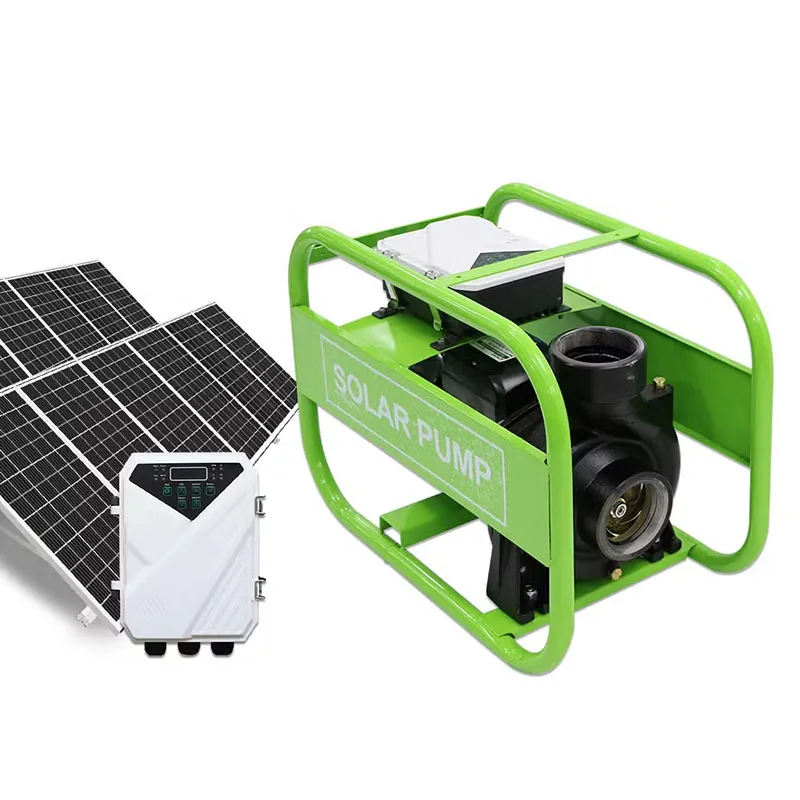
These solar pump procurement traps are the most common reasons why overseas projects exceed their budgets. A reliable Solar Irrigation Pump manufacturer will help you navigate around every single one of them.
⚠️ Trap 1: Low-Quality Solar Panel & Power Mismatch Cost
Undersized or poor-quality PV panels lead to pump idle/overload losses. A professional Solar Irrigation Pump manufacturer always sizes the array at 1.3×–1.5× the pump’s rated power to ensure consistent water yield, even under haze or low irradiance.
⚠️ Trap 2: Unmatched Pump Type Cost (Wrong Solar Pump Selection Cost)
Using a surface pump for a deep well causes immediate burnout. This wrong solar pump selection cost is irreversible. Every experienced Solar Irrigation Pump manufacturer follows this depth-based selection matrix:
| Water Source Depth | Correct Pump Type | Typical Cost Range (USD) |
|---|---|---|
| 0 – 7 m (Pond, River, Tank) | Solar Surface Pump | $200 – $2,000 |
| 8 – 30 m (Shallow Well) | Solar Submersible Pump | $800 – $2,000 |
| 30 – 150 m (Deep Well / Borehole) | Deep-Well Submersible Solar Pump | $1,500 – $3,500 |
⚠️ Trap 3: Solar Irrigation Pump Installation Hidden Cost
Many quotes exclude cables, combiner boxes, mounting structures, and civil works. This solar irrigation pump installation hidden cost can add 15–25% to your budget. A transparent Solar Irrigation Pump manufacturer provides a full Bill of Materials (BOM) upfront.
⚠️ Trap 4: Solar Water Pump Maintenance Cost Trap
Non-standard spare parts and slow overseas after-sales lead to massive repair premiums. This solar water pump maintenance cost trap is easily avoided by partnering with an established Solar Irrigation Pump manufacturer that guarantees 10+ years of spare part availability.
⚠️ Trap 5: Solar Pump Controller Replacement Cost
Cheap PWM controllers operate at 70–75% efficiency and often fail, leading to a solar pump controller replacement cost that could have been avoided with a factory-supplied MPPT controller (93–97% efficiency). A trusted Solar Irrigation Pump manufacturer specifies MPPT as standard.
⚠️ Trap 6: Irrigation Pump Logistics Hidden Fee
Packaging damage, port demurrage, and remote area delivery surcharges are common irrigation pump logistics hidden fee issues. A seasoned Solar Irrigation Pump manufacturer uses reinforced crates and clear Incoterms (FOB/CIF/DDP) to lock your landed cost before shipment.
⚠️ Trap 7: Low Efficiency & Water Yield Loss Cost
Substandard pumps deliver 20–30% less water, causing silent crop loss. A genuine Solar Irrigation Pump manufacturer tests every unit for flow rate and Total Dynamic Head (TDH) before shipment to ensure zero yield loss.
⚠️ Trap 8: Short Service Life & Frequent Replacement Cost
Cheap pumps with inferior bearings fail within 2–3 years. A high-quality Solar Irrigation Pump manufacturer uses stainless steel shafts and mechanical seals rated for 10–15 years, making the lifetime cost of a premium pump actually lower than a cheap alternative.
3. Cross-Product Cost Comparison: Solar Pump vs Diesel Pump Cost
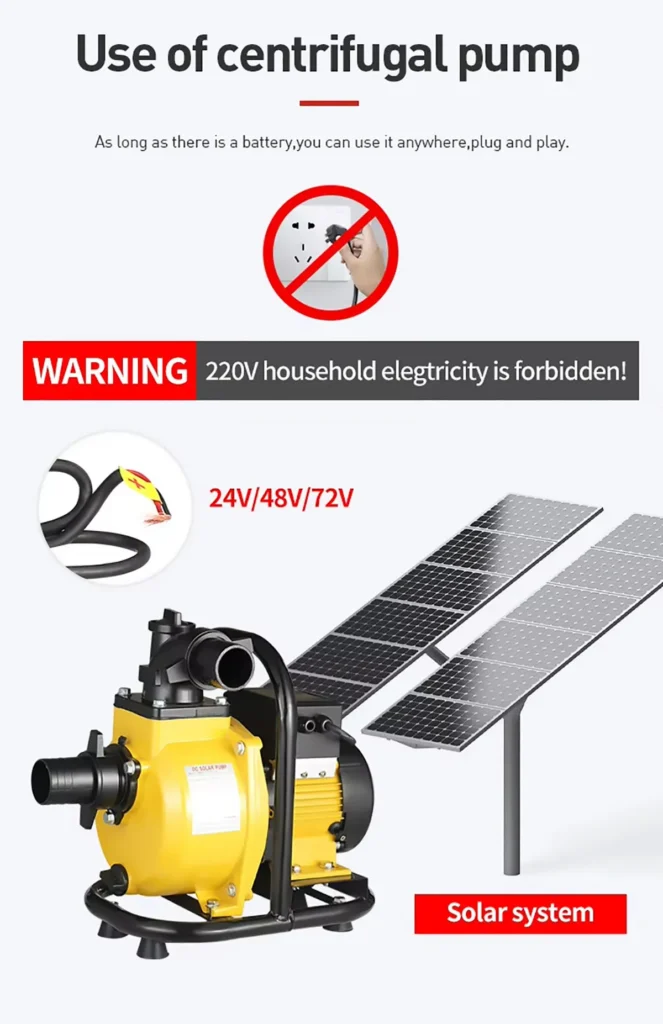
When evaluating the solar pump vs diesel pump cost, it is essential to look at the 10-year TCO. As a versatile Solar Irrigation Pump manufacturer, we produce both solar and diesel pumps, so our comparison is completely unbiased and data-driven.
| Cost Factor (10-Year Horizon) | Solar Submersible Pump | Solar Surface Pump | Diesel Irrigation Pump |
|---|---|---|---|
| Upfront CAPEX | $1,500 – $3,500 | $200 – $2,000 | $500 – $5,000 |
| Annual Energy/Fuel Cost | $0 | $0 | $1,500 – $6,000 |
| Annual Maintenance | $100 – $300 | $100 – $300 | $300 – $1,000 |
| 10-Year TCO (Typical 3 HP) | $3,000 – $5,000 | $2,500 – $4,500 | $20,000 – $30,000 |
| Payback Period | 3 – 5 years | 2 – 4 years | Never (ongoing cost) |
For a 5 HP equivalent over 10 years, solar saves roughly $12,800–$25,000 compared to diesel. This makes the gasoline irrigation pump running cost and diesel equivalent a poor long-term choice. The submersible solar pump vs surface solar pump cost difference is minimal compared to the massive savings versus fossil fuels.
4. Real Case Study: Overseas Procurement Loss & Optimization
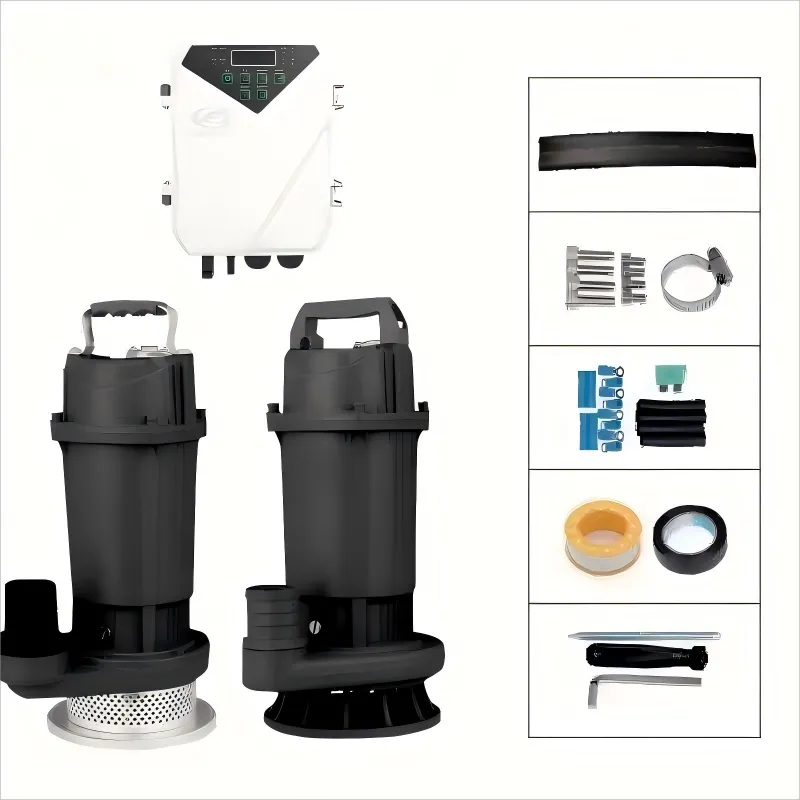
An overseas maize farm (85 m well depth, 15,000 L/day demand) initially bought a cheap solar pump package from a local trader. Within the first season, they faced undersized PV, wrong pump type, no water-level sensor, and surprise customs fees—exceeding their budget by 32%. They then engaged Jingong Tech, a trusted Solar Irrigation Pump manufacturer, for a recovery solution. This farm pump procurement cost saving case demonstrates the value of factory-direct sourcing.
| Optimization Action | Result |
|---|---|
| Replaced with 2 HP deep-well submersible solar pump | Correct 85 m lift, stable 10 m³/h flow |
| Sized PV array to 8 × 450 W (3,600 W total, 1.8× pump power) | Full water yield even on cloudy days |
| Factory-direct MPPT controller + surge protector + water-level sensor | Zero dry-run risk; 95%+ system efficiency |
| Outcome after 3 years of operation | Only 1 scheduled service; $150/month diesel-equivalent saved; ROI achieved in 22 months |
5. Professional Solar Pump Procurement Checklist

Print this solar pump procurement checklist and use it when negotiating with any supplier. A credible Solar Irrigation Pump manufacturer will be able to answer “yes” to every single item. This serves as your ultimate solar pump buying guide for farmers.
| Phase | Checklist Items |
|---|---|
| ① Selection Phase | • Water depth measured (static level + drawdown)? • Daily water demand calculated (m³/day)? • Submersible vs surface correctly chosen? • TDH (Total Dynamic Head) computed with +10% safety margin? |
| ② Quotation Phase | • PV array sized at 1.3×–1.5× pump rated power? • MPPT controller (not PWM) specified? • Full BOM included: cable, connectors, combiner, surge protector, mounting, piping, valves, filter, sensor? • Logistics terms (FOB/CIF/DAP/DDP) explicitly stated? |
| ③ Supplier Phase | • Is the counterpart a real Solar Irrigation Pump manufacturer or a trading middleman? • Factory audit report / ISO / CE certification available? • Spare parts inventory guaranteed for 10+ years? • Local after-sales partner in your country? |
| ④ Cost Phase | • 10-year TCO calculated (not just bare pump price)? • Diesel alternative 10-year cost compared? • Payback period verified (typically 3–5 years)? |
6. How to Avoid Hidden Costs & Reduce Total Expense
The best way to reduce solar irrigation pump total cost is to work directly with a Solar Irrigation Pump manufacturer that offers a one-stop, transparent solution. Our engineering team provides free site assessments to ensure you how to buy solar irrigation pump without hidden cost. We help you how to avoid solar pump procurement traps at the design stage, not after installation.
For farms seeking a low cost maintenance solar irrigation pump, our factory-direct MPPT controllers, stainless steel pump bodies, and standardized spare parts ensure minimal downtime and maximum ROI. Whether you need a Solar Submersible Pump or a Solar Surface Pump, our solutions are engineered for longevity.
7. FAQ — Buyer Common Questions
Q1: Are solar water pumps more cost-effective than diesel pumps in the long term?
A1: Absolutely. The gasoline irrigation pump running cost and diesel equivalent are significantly higher over a decade. Solar pumps offer a payback period of 3–5 years and then essentially free water for the next 10–15 years. This is why choosing a reliable Solar Irrigation Pump manufacturer is a strategic financial decision.
Q2: What hidden fees are included in solar pump bulk procurement?
A2: The most common solar pump bulk procurement hidden fees include under-declared customs values, port demurrage, remote area trucking surcharges, and non-standard installation accessories. A direct Solar Irrigation Pump manufacturer quotes all-inclusive FOB or CIF prices to prevent these surprises.
Q3: Which is better for farm irrigation: submersible solar pump or surface solar pump?
A3: It depends entirely on the water source depth. For deep wells, a submersible pump is mandatory. For shallow ponds or rivers, a surface pump is more cost-effective. Understanding the submersible solar pump vs surface solar pump cost difference is key to avoiding the wrong solar pump selection cost.
Q4: How to calculate the total cost of a solar irrigation pump project?
A4: Always use the TCO formula: Procurement + Installation + Energy + Maintenance + Component Replacement + Yield Loss. Never evaluate based on the bare pump price alone. A professional Solar Irrigation Pump manufacturer will provide this calculation for free.
Q5: Why do cheap solar pumps cause higher long-term costs?
A5: Cheap pumps use inferior materials, leading to frequent breakdowns and a solar water pump maintenance cost trap. Over 10 years, the total expense of a cheap pump often exceeds that of a high-quality unit from a reputable Solar Irrigation Pump manufacturer.
8. Conclusion
Navigating the solar pump procurement traps requires expertise and transparency. By understanding the hidden cost of solar water pump systems and focusing on the solar irrigation pump total cost of ownership, you protect your farm’s profitability. As a dedicated Solar Irrigation Pump manufacturer, Jingong Tech is committed to providing honest, data-driven solutions. Avoid the common solar irrigation pump buying mistakes and partner with a factory that stands behind its products for the next decade.
9. Get Your Custom Solar Irrigation Solution
As a leading Solar Irrigation Pump manufacturer, Jingong Tech offers a full range of Solar Submersible Pumps, Solar Surface Pumps, Booster Pumps, and Diesel/Gasoline Pumps. We provide free selection consultation and wholesale pricing. Check our Overseas Project Cases to see how we reduce solar irrigation pump total cost for farms worldwide.

0 Comments