1. Introduction — Why a Standardized Water Pump Test Matters

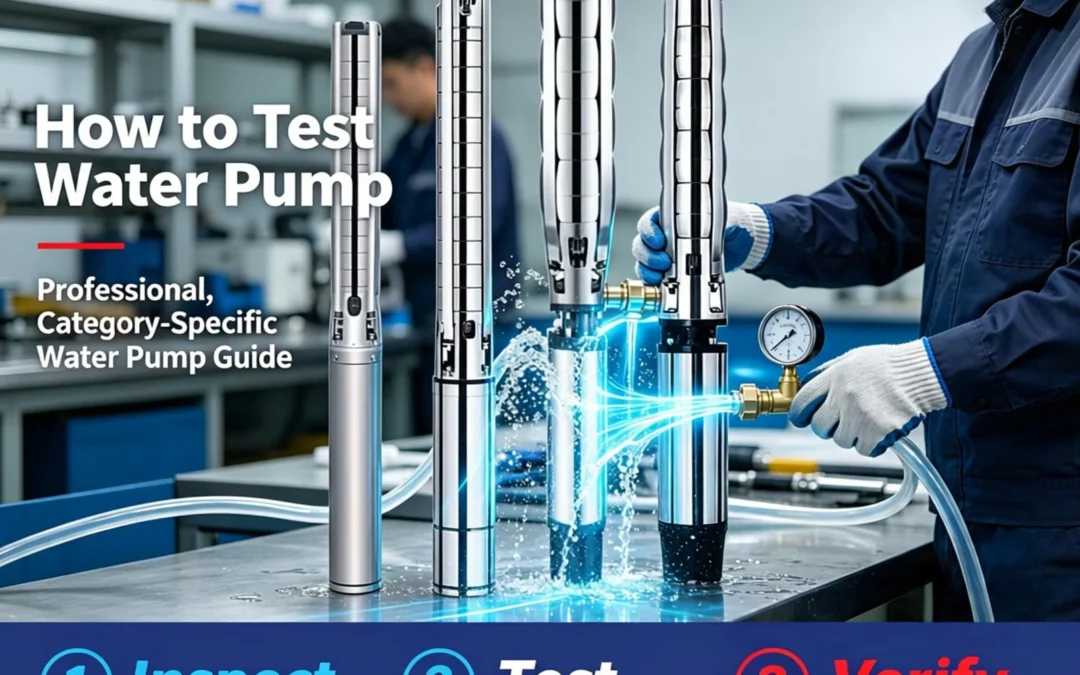
Pump failure in the field rarely begins with a catastrophic bang; it usually starts with a slow drift—falling flow rates, creeping pressure drops, and rising amperage draws. Whether you are a farmer troubleshooting a solar pump on a remote plot, a facilities engineer signing off a diesel fire-pump set, or a distributor verifying a batch of submersibles before shipment, a disciplined water pump test workflow is the difference between a 3-year lifespan and a 10-year operational life.
Jingong is a -based manufacturer and trading integrated supplier with 15+ years specializing in booster pumps, submersible pumps, surface/land pumps, solar water pumps, and gasoline/diesel engine-driven pumps. This guide synthesizes our in-house factory QA protocols (aligned with ISO 9906 / GB/T 12785), overseas after-sales field notes from 30+ countries, and real-world testing data.
1.1 Industry Pain Points in Pump Testing
In the Jingong after-sales logs, the most frequent complaints trace back to lapses in the initial water pump test rather than inherent manufacturing defects:
- New-unit underperformance: Flow or head 15–30% below the nameplate rating, almost always due to installation errors or skipped pre-commissioning checks.
- Dry-run damage: Centrifugal and solar pumps burning out within hours because suction-side validation was ignored.
- Category confusion: Buyers applying a submersible testing mindset to a diesel pump, leading to misinterpretation of results.
- Acceptance ambiguity: Procurement teams signing off on batches without a documented test sheet, leading to warranty disputes six months later.
1.2 The Value of a Professional Water Pump Test
A rigorous water pump test provides a lifecycle leverage point:
- Early Defect Detection: Reject a leaky seal or unbalanced impeller before it leaves our factory.
- Sizing Validation: Confirm the pump meets the duty point (Flow × Head) required for your specific application.
- Energy Baseline: Document “new” current and efficiency metrics to track degradation over time.
1.3 Jingong Product Matrix & Testing Logic
This guide divides every water pump test procedure into universal steps and category-exclusive protocols, covering our four core product lines:
- Submersible Pumps: Focusing on underwater sealing, high-voltage insulation, and sediment tolerance.
- Surface / Land Pumps: Emphasizing suction lift, NPSH, and dry-run protection during the surface water pump test.
- Solar Water Pumps: Validating PV-array matching and low-irradiance startup performance.
- Gasoline & Diesel Pumps: Integrating engine diagnostics with hydraulic output for a complete fuel water pump performance test.
Note: All factory procedures align with ISO 9906:2012 (Rotodynamic Pumps) and relevant GB/T national standards.
2. Basic Principles & Pre-Test Preparation
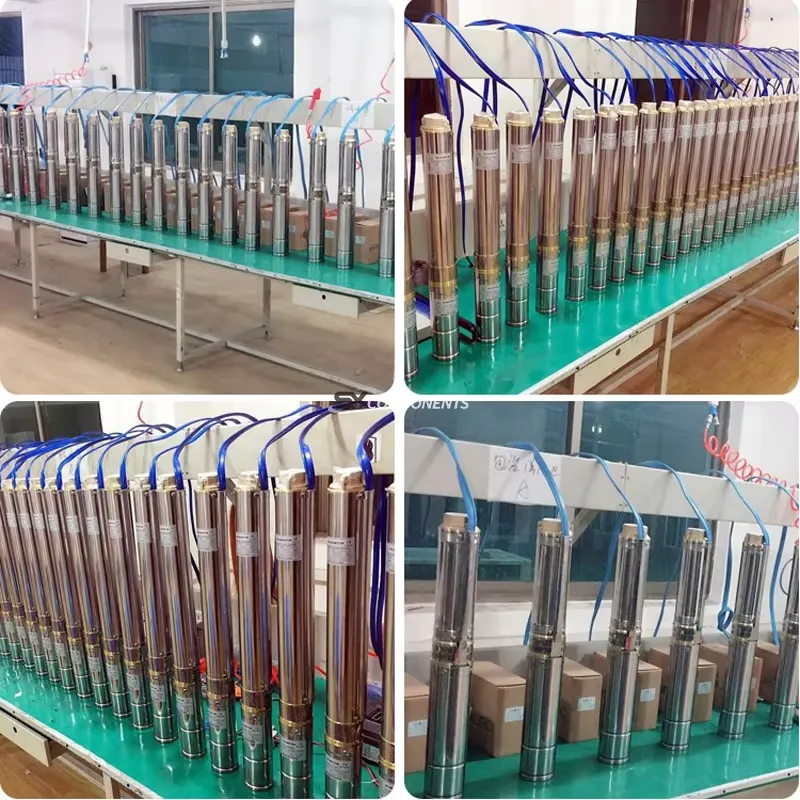
Before a single gauge is connected, 60% of field water pump test errors occur during preparation. Accuracy starts here.
2.1 Core Metrics of Any Water Pump Test
Regardless of power source, these seven metrics define performance:
- Head (H): Total Dynamic Head (m/ft).
- Flow Rate (Q): Volume output (m³/h or L/min).
- Pressure (P): Inlet vs. Outlet (bar/psi).
- Power Input: Electrical (Volts × Amps) or Fuel Consumption (L/h).
- Sealing Integrity: Static and dynamic leak detection.
- Running Stability: Vibration (mm/s) and Temperature Rise (K).
- Start Performance: No-load and loaded startup behavior.
2.2 Universal Pre-Test Checklist
- Safety First: Lockout/Tagout procedures. Disconnect power or kill the fuel solenoid.
- Ambient Logging: Record air and water temperature.
- Pipe Preparation: Flush suction lines and ensure strainers are clear.
- Gauge Calibration: Ensure pressure transducers and flow meters are within calibration dates.
2.3 Category-Specific Preparation
- Submersible: Inspect cable entries and prepare a test tank.
- Surface/Land: Anchor the base to dampen vibration and perform a priming check—the precursor to a valid water pump suction test.
- Solar: Align the PV simulator or wait for stable irradiance (>700 W/m²).
- Diesel/Gasoline: Check oil levels, coolant, and fuel quality.
3. Universal Water Pump Testing Steps (7-Step Core Flow)
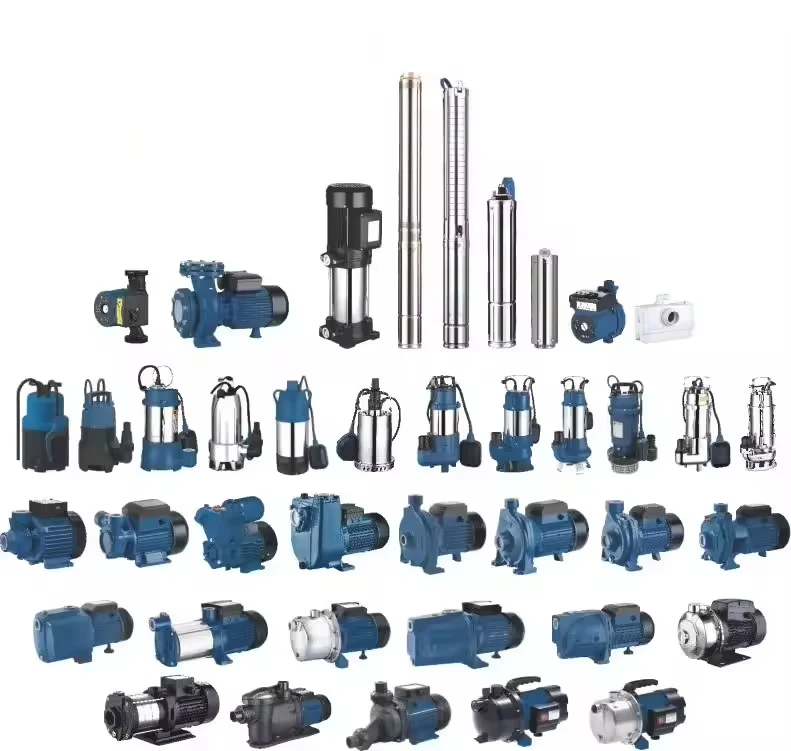
This section outlines the universal water pump test sequence applicable to all categories before moving to specific nuances.
3.1 Step 1: Visual & Structural Inspection
Conduct a thorough visual sweep. Look for casing cracks, corrosion, flange gasket integrity, and coupling alignment. Photograph the nameplate for records.
3.2 Step 2: Manual Rotation Test
Rotate the shaft or coupling by hand. It should feel smooth through 360 degrees without grit or axial play. Resistance indicates bearing seizure or impeller rub.
3.3 Step 3: Leakage & Sealing Test
Perform a static leak test by pressurizing the casing to 1.5x the rated discharge pressure. Hold for 5 minutes. A drop >0.1 bar indicates a fail. For submersibles, this involves an air-immersion bubble count.
3.4 Step 4: Startup Performance Test
Execute a no-load start (briefly closing the discharge valve on centrifugals). Record the startup amp spike and time-to-stable-speed. Listen for abnormal harmonics or hunting.
3.5 Step 5: Hydraulic Performance Test
This is the heart of the water pump test. Run the pump through 5–7 duty points from shut-off to max flow. Log suction/discharge pressure and flow rate at each interval. Plot the Q-H curve and compare it against the factory guarantee. According to ISO 9906 Grade 1B, measurements should be within ±3% Head and ±5% Flow.
3.6 Step 6: Power & Efficiency Test
Calculate efficiency. For electric pumps, measure input power (V x A). For diesel units, a fuel water pump performance test requires measuring fuel consumption (L/h) to determine thermal efficiency. Solar pumps require calculating Wire-to-Water efficiency based on PV input versus hydraulic output.
3.7 Step 7: Long-Run Stability Test
Run the pump at 90–100% duty for at least 30 minutes. Monitor bearing temperature (should not exceed 75°C), winding temperature rise, and vibration trends. Jingong factory aging tests often extend to 500 hours for export-grade units.
4. Category-Specific Professional Testing
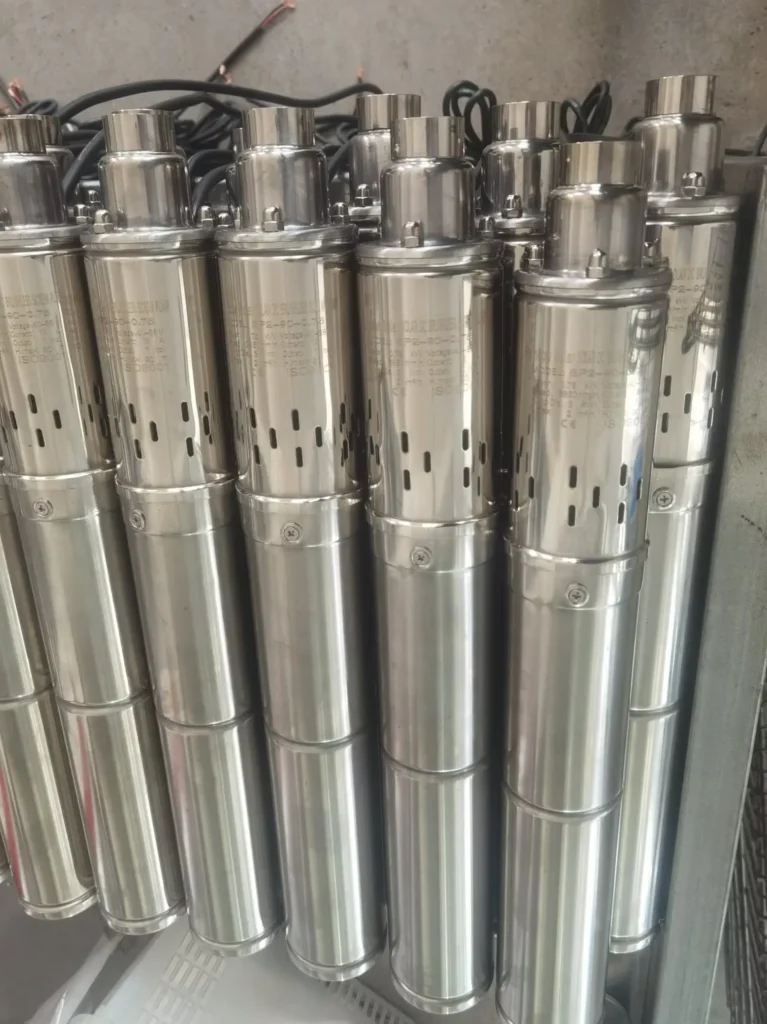
This section differentiates a generic guide from an expert-level water pump test protocol tailored by Jingong engineers.
4.1 Submersible Water Pump Test
Submersibles prioritize electrical safety.
- Insulation Resistance: Use a 500V Megger. A cold-state reading of ≥50 MΩ is the Jingong standard.
- Water-Tightness: Subject the assembled pump to 0.2 MPa air pressure while immersed. Less than 5 bubbles per minute is a pass.
- Sediment Adaptation: Run with a controlled sand load (500 ppm) to ensure seal integrity.
4.2 Surface / Land / Centrifugal Water Pump Test
For above-ground units, suction is king.
- Suction Lift Verification: This is the core of the water pump suction test. Apply a vacuum gauge to the suction side. The available NPSHa must be at least 0.5m above the NPSHr on the curve.
- Land Pump Pressure Test: Verify shut-off pressure. If a pump rated for 4.5 bar only reaches 3.5 bar, suspect a clogged impeller or reversed rotation.
- Dry-Run Protection: Simulate a dry condition and ensure the motor cuts out within 30 seconds.
- Centrifugal Water Pump Test: Align testing with ISO 9906. Pay close attention to the Net Positive Suction Head (NPSH) to avoid cavitation.
4.3 Solar Water Pump Test
Solar testing focuses on variability.
- Irradiance Ramping: Simulate varying sunlight conditions from 200 W/m² to 1000 W/m².
- Low-Light Start: Confirm the pump initiates at ≤350 W/m². Poor low-light performance is a common failure point.
- MPPT Tracking: Introduce partial shading to ensure the Maximum Power Point Tracking controller adjusts without stalling.
4.4 Gasoline & Diesel Water Pump Test
Engine-driven pumps require a dual approach.
- Engine Ramp: Time the crank (target ≤5 seconds) and governor stability under load steps.
- Fuel Water Pump Performance Test: Measure fuel consumption at the duty point. Excessive fuel use indicates engine tuning issues or hydraulic drag.
- Portable Diesel Pump Test: Evaluate performance on a slight incline to ensure oil pickup remains consistent during field use.
- Gasoline Water Pump Test: Check carburetor float levels and spark plug readings post-run.
5. Fault Diagnosis via Testing
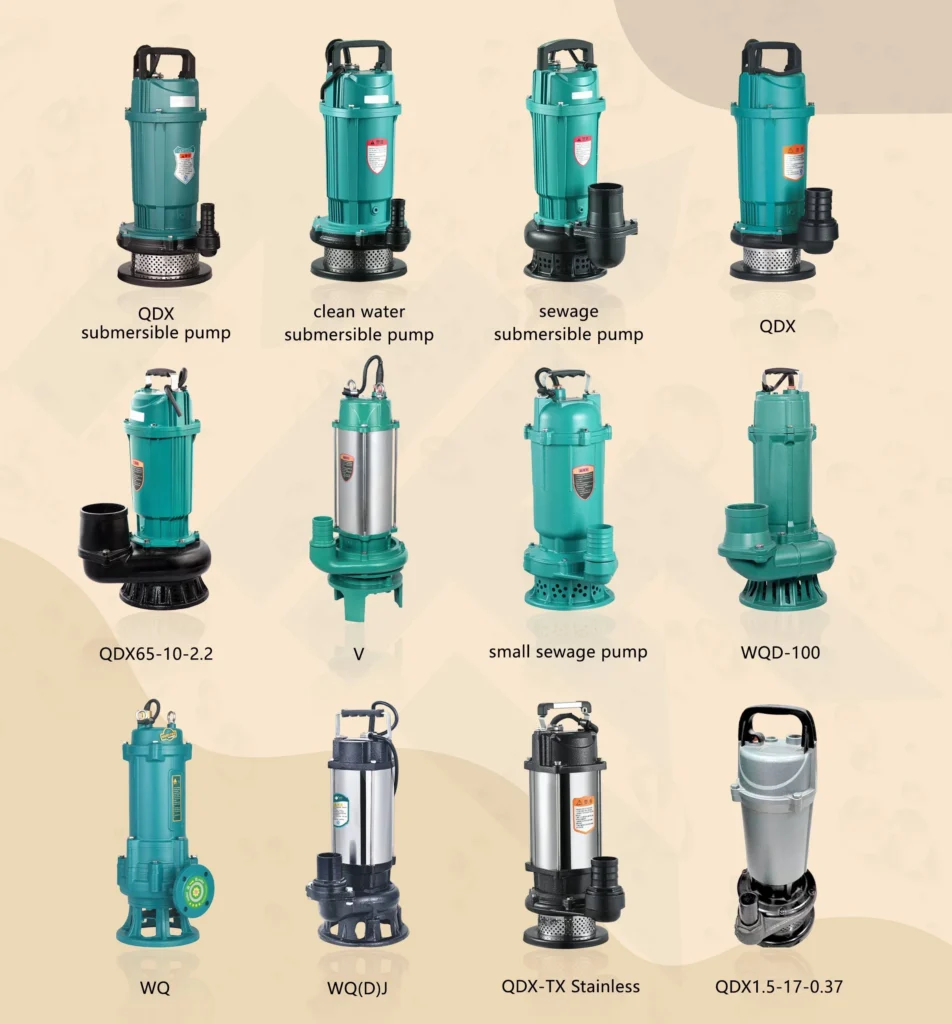
Use your water pump test data to pinpoint issues.
| Symptom (Test Data) | Likely Cause | Verification Method |
|---|---|---|
| Flow -20%, Head OK | Clogged Impeller / Strainer | Disassembly and visual inspection |
| Flow -30%, Head Drop | Suction Leak (Air Ingestion) | Vacuum hold water pump suction test |
| High Amps, Low Flow | Mechanical Seal Drag / Bearing Failure | Manual rotation check, Amp draw vs. FL |
| Diesel: Low Pressure, High Fuel | Impeller Wear or Gov Issue | Fuel water pump performance test + Overhaul |
6. Factory Standard Test vs. On-Site Test
6.1 Jingong Factory Test Standard
Every Jingong unit undergoes a stringent water pump test protocol:
- Hydraulic Bench: ISO 9906 Grade 1B compliance (±3% Head / ±5% Flow).
- Pressure Decay: 1.5x rated pressure hold for 5 mins.
- Electrical Safety: Hi-Pot testing (1500V/1min) and Megger checks.
- Aging: 2-hour 100% run per unit + 500-hour batch sampling.
6.2 On-Site / DIY Testing
For field technicians without a full lab, a simplified water pump test using a discharge pressure gauge, a clamp meter, and a stopwatch (for bucket timing) is sufficient to establish a health baseline.
6.3 Reconciling the Gap
Expect field data to read 3–7% lower than factory data due to site-specific piping losses, warmer water, and voltage drop. Build this tolerance into your acceptance criteria.
7. Test Data Recording & Acceptance Standard
7.1 Jingong Acceptance Criteria
Our internal gates for a passing water pump test include:
- Head Deviation: +3% / -5% of nameplate @ rated Q.
- Flow Deviation: ±5% of curve @ rated H.
- Insulation (Sub): ≥50 MΩ (Cold), ≥2 MΩ (Hot).
- Vibration: ≤2.8 mm/s (Rigid), ≤4.5 mm/s (Flexible).
- Noise: ≤85 dB(A) for diesel; ≤72 dB(A) for surface.
7.2 Documentation
Every export carton from Jingong includes a signed “Water Pump Test Report” detailing the 5-point Q-H log and electrical safety checks. This document is critical for resolving international trade disputes.
8. FAQs — Long-Tail Catchment
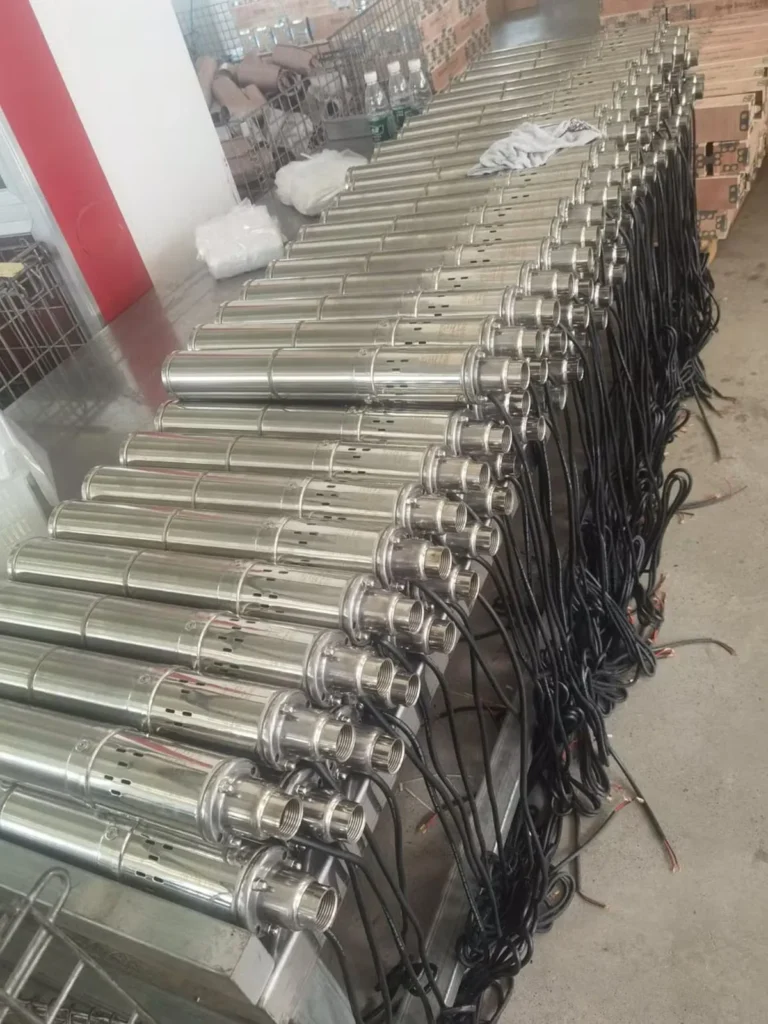
8.1 How do you check if a water pump is working correctly without special tools?
A minimum DIY water pump test involves a discharge pressure gauge, a clamp ammeter, and a stopwatch with a bucket. Compare the pressure to the nameplate shut-off and the timed fill to the rated flow. If values are within 10%, the pump is functionally healthy.
8.2 Can you test a submersible pump out of water?
A brief (<30 sec) no-load spin to check rotation is acceptable, but never run a submersible under load out of water. The mechanical seal relies on water for cooling and lubrication. A full water pump test requires immersion.
8.3 How to test a solar water pump without sun?
Use a PV Array Simulator in a lab setting. In the field, a DC power supply can simulate the Voltage/Current curve of a solar panel to verify controller functionality.
8.4 Why is my diesel water pump not pumping enough water?
If the engine sounds healthy but flow is low, perform a portable diesel pump test focusing on the hydraulic side: check for suction hose collapse, a stuck foot valve, or a sheared impeller key.
9. Conclusion & Expert Tips
A water pump test is not merely a commissioning formality; it is the baseline upon which all future maintenance decisions are made. At Jingong, we have seen $200 submersibles last eight years because the owner logged test data quarterly, while $3,000 units failed in months due to neglected baselines.
9.1 Scenario-Based Recommendations
- Agricultural Irrigation: Test at season start and post-harvest. Sediment significantly impacts impeller clearance.
- Industrial Transfer: Log amperage monthly. An 8% increase indicates seal drag or bearing wear.
- Off-Grid Solar: Perform a low-irradiance test at dawn to confirm your water tank buffer sizing is adequate.
Need a customized test sheet for your Jingong unit? Our engineering team can tailor a 1-page checklist for your specific model (Submersible, Surface, Solar, or Diesel). Contact the Jingong Tech Desk for support within 24 business hours.