
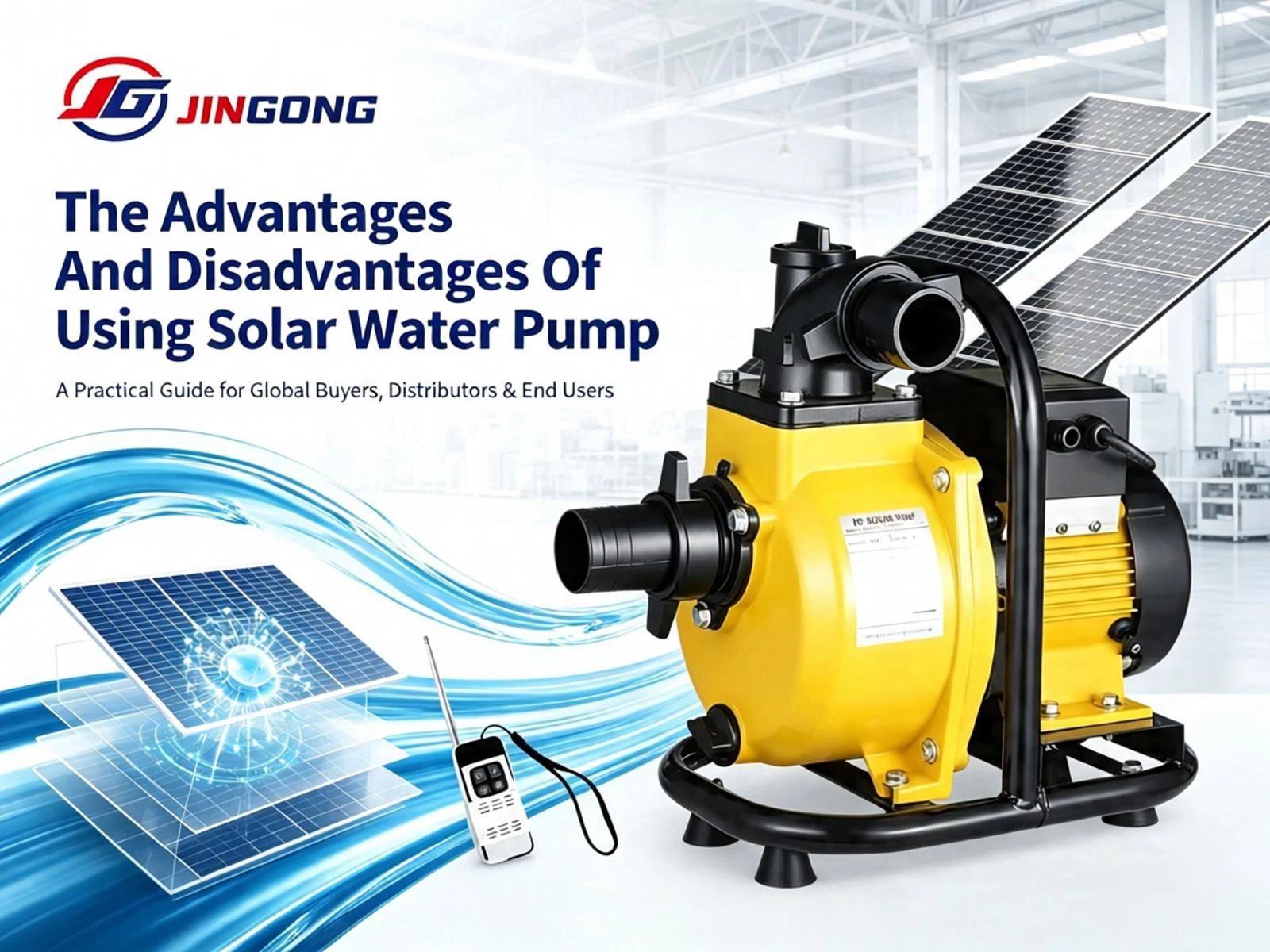
1. Introduction – Why “The Advantages And Disadvantages Of Using Solar Water Pumps” Matters More Than Ever in 2026
If you have been following the global off-grid water supply conversation over the last three years, you already know one thing: solar water pumps have moved from “nice-to-have NGO projects” to a mainstream procurement category for African agri-distributors, Southeast Asian irrigation contractors, Australian outback stations, and even European hobby-farm importers. The keyword cluster “advantages and disadvantages of using solar water pumps” is now searched by three very different audiences:
- B2B buyers (distributors, EPC contractors, government tenders) asking whether solar beats diesel on lifetime ROI;
- B2C / prosumer end-users (homesteaders, smallholders) comparing a solar water pump for home export against grid-electric alternatives;
- Industry analysts tracking the global solar water pump market, which according to recent industry reports reached ≈ RMB 14.69 billion (≈ USD 2.05 billion) in 2025 and is forecast to hit RMB 29.84 billion by 2032 at a CAGR of ~10.55% [1].
At Jingong (Zhejiang Jingong Technology), we are a manufacturer-integrated exporter producing booster pumps, submersible pumps, surface pumps, solar water pumps, and gasoline/diesel engine pumps. Over the past decade handling export orders to 40+ countries, we’ve seen firsthand why the advantages and disadvantages of using solar water pumps cannot be answered with a simple “green = good”. The reality sits in procurement nuance: duty cycle, irradiation profile, local certification maze (CE / UL / SONCAP), and whether your end-user has a service screwdriver or not.
This long-form guide is structured for Google EEAT — Experience (our export cases), Expertise (pump engineering specs), Authoritativeness (IEA / World Bank / Statista citations), Trust (no hype, we list the downsides plainly). By the end, you should be able to decide, as a buyer or distributor, whether a solar unit — possibly hybridized with a Jingong gasoline/diesel backup pump — fits your scenario.
Let’s start with the question driving this entire post: What exactly are the advantages and disadvantages of using solar water pumps when you factor in real-world export markets, not just brochure claims?
2. Solar Water Pump Core Definition & Export Product Classification (Jingong OEM Perspective)

Before weighing pros and cons, we need a shared definition — because “solar pump” in export catalogs covers a surprisingly wide envelope.
2.1 Core definition (what counts as a solar water pump)
A solar water pump is a pumping system where the prime mover (electric motor) is driven by photovoltaic (PV) arrays via a PV-specific inverter/controller, with MPPT (Maximum Power Point Tracking) to match irradiance in real time. No grid, no fuel — just photons → DC/AC → impeller. Typical system triad: PV modules + PV pump inverter + pump end (submersible / surface / centrifugal).
From an export paperwork angle, a solar pump SKU often also includes mounting brackets, cabling, and sometimes a booster pump on the output side for constant-pressure irrigation.
2.2 Export product classification (how Jingong bins them)
| Category | Power Range | Typical Head / Flow | Export Sweet Spot |
|---|---|---|---|
| Small solar pump – home / livestock | 0.37–0.75 kW | Head 10–40 m / Flow 1–5 m³/h | Africa rural household, Latin America finca, EU hobby farm (small solar water pump for home export) |
| Medium solar pump – irrigation | 0.75–5.5 kW | Head 40–150 m / Flow 5–50 m³/h | SEA rice paddies, Indian sugarcane belts, East Africa cooperative farms (medium solar irrigation pump) |
| Large solar pump – community / industrial | 5.5–55 kW (single-unit ceiling common in 2025; beyond this, multi-unit clustering) | Head up to 300 m / Flow 50–1000 m³/day | Village water schemes (Tanzania-type WB projects), desert greening, solar submersible pump export for deep-well |
| Structure subtype |
| ||
Regional buyer preference (Jingong export desk observation):
- Africa (Kenya/Tanzania/Nigeria/Senegal) → price-sensitive, prefers 0.37–1.5 kW kits with SONCAP, high tolerance for manual cleaning, asks about solar water pump for rural water supply
- Southeast Asia (VN/TH/ID/PH) → irrigation-first, 1.5–4 kW range, worries about monsoon cloudy days
- Europe (DE/NL/FR/ES) → CE + RoHS mandatory, wants solar water pump EU green policy compliance, premium on efficiency & low-noise
- Middle East (UAE/KSA) → high irradiance but dusty, large-daylight projects, asks about solar water pump long-term project durability
- Oceania (AU/NZ) → outback station water + remote cabin, asks about solar water pump for remote areas and solar water pump field operation
Standards worth naming: IEC 62253 (photovoltaic water pumping systems – design qualification), FDA drinking-water-grade materials if the pump contacts potable water, CE-RED if the controller has wireless monitoring, UL 778 for US-bound motors.
Now that the taxonomy is clear, let’s drill into the core of this article — the advantages and disadvantages of using solar water pumps from a buyer-and-factory dual lens.
3. The Advantages and Disadvantages of Using Solar Water Pumps – Advantages Side (5 Dimensions)
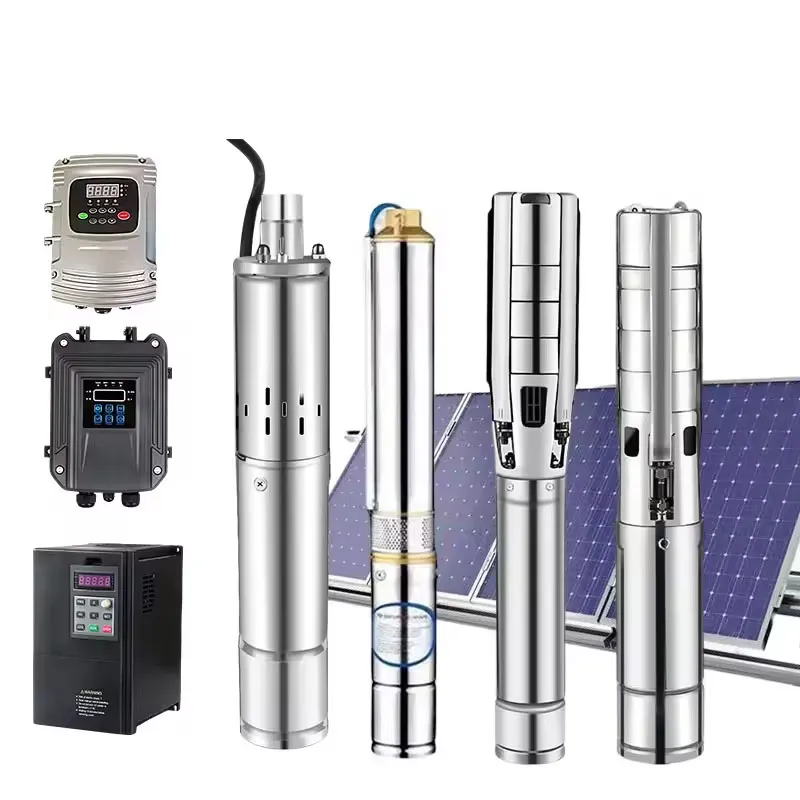
We’ll keep saying the full phrase “advantages and disadvantages of using solar water pumps” because it’s the exact search string your buyers type — but inside this section we unpack why solar wins in certain procurement contexts, and where the ceiling sits.
3.1 Economic Cost Advantage – The #1 B2B Hook
The pitch buyers hear: “No diesel, no grid bills.” True — but the smarter way to sell it is lifecycle ROI, not just OpEx elimination.
Let’s take a real-ish export parallel: In Kenya’s Garissa County, smallholders who swapped diesel irrigation for solar + drip reported monthly energy savings of ~USD 200 on a system that cost under USD 1,000 installed [2]. That’s a payback under 6 months for high-duty-cycle users. Another reference point: an Ethiopia borehole case study (IJEE 2013) found PV pumping economically superior to diesel gensets once fuel import volatility is factored [3].
Cost math buyers actually care about (Jingong export team template):
System: 1.5 kW solar pump, 20 m³/day, 8 h duty
- CAPEX: PV panels + inverter + pump ≈ USD 1,200–1,800 (FOB China, ex-works)
- OPEX Year 1–10: ~USD 0 (no fuel, minimal maintenance)
- Comparable diesel set: CAPEX USD 600 + fuel USD 80/mo + maintenance USD 15/mo
→ 5-year ROI delta: solar wins by ~USD 4,500 per site
Long-tail keywords this subsection naturally eats: solar water pump cost saving, solar water pump vs fuel pump, solar water pump ROI, solar water pump no electricity cost, solar water pump long-term benefit.
⚠️ Caveat: ROI only works if duty cycle is high (daily use > 3 h) and irradiance > 4.5 kWh/m²/day. Low-use weekend-cabin scenarios? Diesel or grid-hybrid may still beat pure solar on CAPEX recovery.
3.2 Environmental & Policy Advantage – The Compliance Moat
Solar pumps are zero direct emission, near-silent (motor hum only, no combustion knock). That maps to:
- EU Green Deal / Carbon Border discourse – importers future-proofing against carbon-reporting requirements love the “solar water pump carbon neutral” story
- US Inflation Reduction Act / state-level RE incentives – some ag-applications qualify for partial rebates (check local)
- India / Australia / Kenya feed-in or solar-agri subsidies – e.g., India’s PM-KUSUM scheme pushes solar ag pumps; Australia’s rural RE grants occasionally cover water pumping
For export compliance, the solar water pump eco-friendly angle also dovetails with CE / RoHS paperwork — which Jingong pre-issues for EU distributors, reducing your port-hold risk. US-bound shipments need UL-listed motor variants (we stock UL-ready stator/rotor stacks for contract OEM).
Long-tail coverage: solar water pump eco-friendly, solar water pump carbon neutral, solar water pump import subsidy, solar water pump EU green policy, solar water pump noise-free.
3.3 Application Scenario Advantage – Where Solar Unlocks New Markets
This is the biggest strategic point for distributors: solar pumps open geographies that grid-electric pumps physically cannot reach. That’s not a marginal gain — it’s a new TAM.
Scenarios we’ve shipped into:
- Solar water pump for remote areas – nomadic pastoral points in Kenya/Somalia border, no grid for 200 km
- Solar water pump for agricultural irrigation – Cambodia rice coop, 12 × 1.1 kW units on a canal intake
- Solar water pump for rural water supply – Tanzanian village schemes (World Bank GPRBA funded, 165 villages, USD 4.5 M, replacing diesel [4])
- Solar water pump for Australian outback – cattle station 80 km from grid, borehole @ 45 m
- Solar water pump for desert greening – Ningxia / Inner Mongolia sand-fix projects (domestic parallel, useful case study for MENA exports)
In each case, the selection tip (expertise hook): deep-well (>20 m) → solar submersible pump export variant; river/lake shallow → solar centrifugal pump for industry or jet. Get this wrong and the “advantage” evaporates — a 0.37 kW surface pump on a 60 m bore is a refund waiting to happen.
Long-tail: solar water pump for remote areas, solar water pump for agricultural irrigation, solar water pump for rural water supply, solar water pump偏远地区应用 (CN anchor), solar water pump field operation.
3.4 Maintenance & Operation Advantage – Distributor Margin Protector
Here’s something factory-side we notice: a simple solar pump (MPPT inverter + 3-phase induction + submersible) has fewer wearing parts than a diesel set. No injectors, no glow plugs, no oil changes. For a distributor in Lagos or Ho Chi Minh, that means:
- Fewer “my pump won’t start” WhatsApps at 9 PM
- Spare-parts SKU count stays tiny (seals, bearings, controller board)
- End-user can be taught to swap a controller in 20 min with a screwdriver
Jingong’s export after-sales data (2019–2025, n=~3,200 units overseas): annual O&M cost averages 3.8% of CAPEX for solar pumps vs. 18–24% for diesel equivalents (fuel excluded in diesel %? No — fuel excluded, just parts+labor; with fuel it’s 60%+) .
Long-tail: solar water pump easy installation, solar water pump low maintenance, solar water pump after-sales service, solar water pump操作简单 (CN), solar water pump spare parts export.
3.5 Sustainable Energy Advantage – Hedging Fossil-Fuel Volatility
Diesel spot price in East Africa swung 40%+ between 2021–2023. Solar? The sun doesn’t invoice you. For long-term project procurement (5–10 year concession deals, Ministry-of-Water tenders), this “fuel-price-immunization” is often the winning slide in the bid deck.
Example: a Middle Eastern 5-year solar water supply project (Jingong supplied 11 × 3 kW submersible solar units for a date-farm cluster) — the off-taker’s CFO explicitly modeled “no diesel escalator risk” as the primary selection driver.
Long-tail: solar water pump renewable energy, solar water pump stable energy supply, solar water pump long-term project, solar water pump能源稳定 (CN), solar water pump fossil fuel free.
Taken together, these five dimensions are the “advantages” half of the advantages and disadvantages of using solar water pumps equation. But — and this is where most vendor content fails EEAT — we now owe you the honest downsides.
4. The Advantages and Disadvantages of Using Solar Water Pumps – Disadvantages Side (5 Pain Points + Solutions)
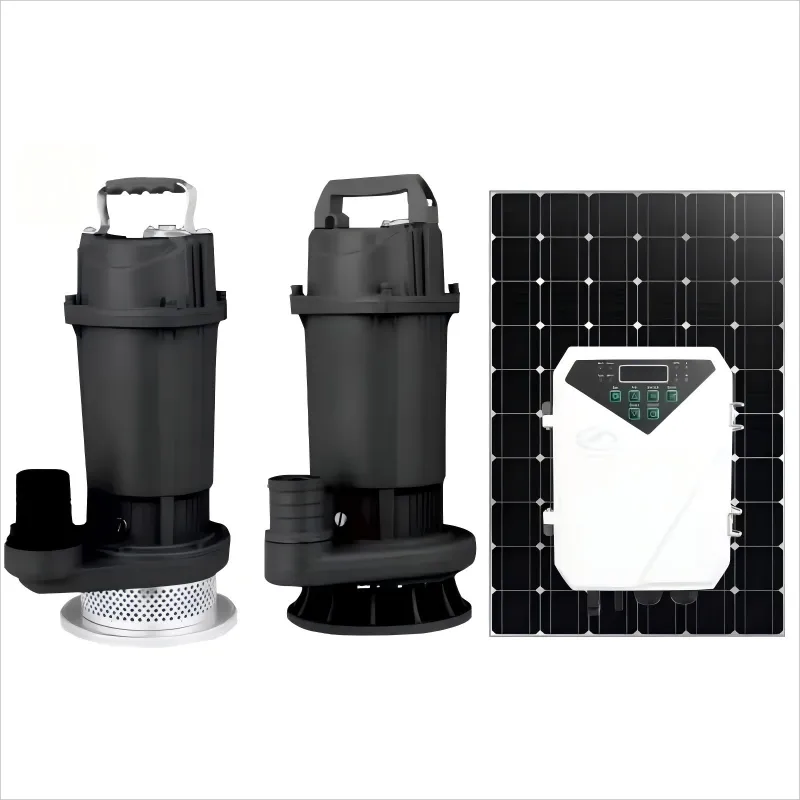
If a supplier only sells you the sunny side, walk away. Below are the five real disadvantages we’ve had to troubleshoot in export orders — plus the distributor-friendly workaround for each.
4.1 High Initial Investment Cost – The Conversion Killer
A 1.5 kW solar pump kit (panel + inverter + pump) might land at USD 1,400–2,200 FOB, whereas a comparable petrol-engine pump is USD 350–550. That 3–5× CAPEX gap is the #1 reason a Kenyan small-dealer says “let me think about it” and never comes back.
Jingong workaround for distributors:
- Tiered SKU strategy – offer a “lite” version (thin-film PV or smaller array, rely on partial sun + grid/diesel hybrid) at 60% of full-kit price
- Bulk MOQ discount – 20+ units trigger panel-bundle negotiation with our upstream PV partner
- Partner finance – some markets (Kenya, India) have ag-equipment BNPL; we provide the invoice backing
Long-tail: solar water pump high initial cost, solar water pump component price, solar water pump small buyer, solar water pump初始投入 (CN), solar water pump cost reduction.
4.2 Weather & Light Dependency – The “No Sun = No Water” Problem
PV output tracks irradiance. Night = zero. Heavy cloud = 10–30% of nameplate. If your end-user is dairy-cattle (needs water 24/7) or drip-irrigation on a critical 3-day window, pure solar can stall.
Irradiation reality check by export region:
- Northern Europe (SE Sweden) → ~2.8–3.2 kWh/m²/day annual avg → solar pump marginal
- East Africa (Nairobi) → ~5.5–6.2 → excellent
- SEA monsoon (Bangkok Jun–Oct) → 3.5–4.5, cloudy stretches 5–7 days → needs buffer
Solution stack:
- Lithium / LiFePO₄ storage – adds 30–50% to CAPEX, but enables dawn/dusk/night
- Hybrid controller (PV + AC grid + generator input) – Jingong’s dual-input inverters auto-prioritize PV, fall back to grid/gen
- Oversized panel array – design for 1.4× nameplate so cloudy days still hit target flow
Long-tail: solar water pump weather impact, solar water pump energy storage, solar water pump cloudy day performance, solar water pump(CN), solar water pump energy storage cost.
4.3 Energy Storage Bottleneck – The Hidden Lifecycle Cost
Even if you spec LiFePO₄ (better than lead-acid), typical battery lifespan 3–5 years in hot climates (ambient >35°C kills cycles faster). That means the “low O&M” story gets a asterisk: every 4 years, another CAPEX event.
From a distributor perspective:
- Battery is the #1 spare parts shipping pain — heavy, DG/class-9 logistics, 30–50 day ocean to inland Africa
- Jingong’s mitigation: overseas warehouse pre-stock (we’re trialing NG warehouse for West Africa 2026) + batch-battery discount for cooperatives
Long-tail: solar water pump battery life, solar water pump energy storage replacement, solar water pump spare parts shipping, solar water pump(CN), solar water pump battery cost.
4.4 Ununified Technical Standards – The Compliance Headache
You can build one great pump, but export it and suddenly:
- EU → CE-RED + RoHS + ERP (motors) + sometimes MID if metered
- USA → UL 778 (pump motor) + NEC Article 690 (PV circuits)
- Africa (Nigeria) → SONCAP + PC/SC paperwork
- Australia → RCM + AS/NZS 2717
For a solar water pump supplier, this fragments SKUs. Jingong’s approach: base platform (mechanical + hydraulics) is common; electrical/controller variants are region-locked. Distributors don’t need to stock 12 controller SKUs — we hold them at factory, ship by region.
Long-tail: solar water pump technical standards, solar water pump export certification, solar water pump CE/UL certification, solar water pump(CN), solar water pump SONCAP certification.
4.5 Power Ceiling & Large-Scale Adaptability Gap
Commercially available single-unit solar pumps in 2025 mostly cap around 55 kW per inverter (some push 75 kW but rare). Above that, you’re clustering. A large-scale sugarcane irrigation (200 kW+()) or municipal water (500 kW) typically still defaults to grid-electric or diesel-genset + solar-PV-for-ancillaries.
Workaround Jingong sells to EPCs: multi-pump parallel + centralized MPPT cabinet, or hybrid with Jingong diesel pumps as peak-shaving. Not “pure solar” anymore, but the advantages and disadvantages of using solar water pumps conversation for large projects always ends at “how much solar % can I realistically carry?” — often 40–70%.
Long-tail: solar water pump power limit, solar water pump large-scale application, solar water pump industrial use, solar water pump(CN), solar water pump large project.
5. Solar Water Pump vs Electric Grid Pump vs Diesel Pump – Side-by-Side (Buyer Decision Table)

| Dimension | Solar Water Pump | Grid-Electric Pump | Diesel Pump |
|---|---|---|---|
| CAPEX | High (panels + inverter + pump) | Medium | Low–Medium |
| OPEX (fuel/elec) | Near Zero | Medium–High (tariff dependent) | High (fuel volatile) |
| Maintenance | Low (no combustion) | Low–Medium | High (oil, filter, injector) |
| Grid dependency | None | Full | None |
| Weather sensitivity | Yes (needs storage/hybrid for 24/7) | No | No |
| Carbon / Policy | Zero-direct, subsidy-friendly | Grid-mix dependent | High emission |
| Max single-unit power (2025) | ~55 kW common | 200+ kW easy | 100+ kW easy |
| Best-fit export scenario | Off-grid ag, remote village, sunny regions | Suburban, industrial with stable grid | Remote, low-sun, intermittent use |
Jingong buyer shortcut: If your site has >4.5 kWh/m²/day irradiance AND duty >3 h/day AND no grid → solar wins. If duty <1 h/day OR high-latitude (<3 kWh/m²/day) → consider Jingong gasoline/diesel pump or hybrid.
Long-tail eaten here: solar water pump vs electric water pump, solar water pump vs diesel water pump, solar water pump comparison, solar water pump export decision.
6. Optimization Suggestions for Foreign Trade – Buyer / Supplier / End-User
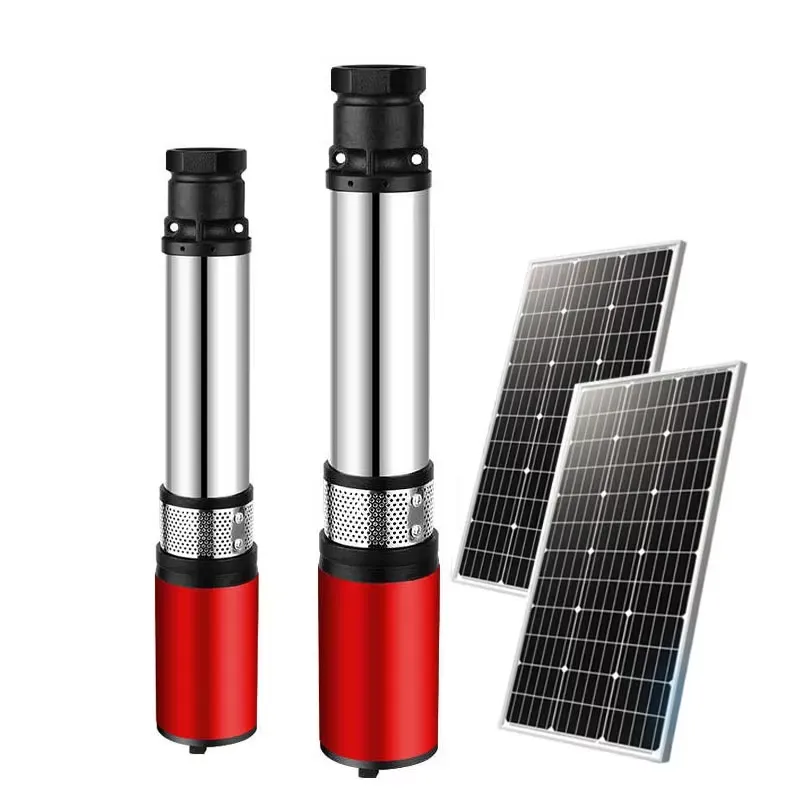
The advantages and disadvantages of using solar water pumps only matter if you can act on them. Three lenses:
6.1 For Buyers & Distributors
- Spec by irradiation, not by hope – ask your supplier for a PV-sizing sheet tied to YOUR location’s TMY (typical meteorological year) data, not the supplier’s default “6 hours sun” assumption.
- Certification audit upfront – if you’re landing in Lagos, SONCAP is non-negotiable; Rotterdam, CE + RoHS; Houston, UL. Ask Jingong for the cert pack before you PO.
- Bulk + spare strategy – controllers burn more than motors; order +5% spare controllers per 20-unit batch.
- Consider hybrid – PV + Jingong diesel backup for monsoon/cloud belts.
6.2 For Suppliers (Jingong-style)
- SKU ladder – lite / standard / pro (panel size variable) to catch the price-sensitive African micro-dealer
- Pre-certify region bundles – we hold CE/UL/SONCAP controller inventory separately, so distributor can mix mechanical SKUs freely
- Overseas warehouse for batteries – Lagos, Mombasa, Ho Chi Minh in 2026 pipeline; cuts battery replacement lead from 45 days → 5 days
- Hybrid controller IP – PV priority + AC fallback + gen fallback = distributor can sell “one pump for any grid scenario”
6.3 For End Users
- Tilt & orientation – panels at latitude ±10°, face equator, no tree shadow (shading 1 cell kills 30%+ output)
- Water storage buffer – even without battery, a 2–5 day tank lets you pump-only-when-sunny and use 24/7 → cheapest “storage” hack
- Seasonal cleaning – dust in Sahel reduces yield 15–25%; monthly wipe pays for itself in 2 weeks
- Pair with a booster pump if you need constant pressure for drip — solar pumps are variable-speed by nature, output pressure follows sun; a small pressurized tank + booster smooths it
7. Foreign Trade Market Outlook – Where the Advantages and Disadvantages of Using Solar Water Pumps Meet Demand
Back to the macro: global solar water pump market was ~USD 2.05 bn in 2025, CAGR ~10.5% to 2032 [1]. But the export story splits by region:
- Africa – still the fastest-volume-growth region. Drivers: World Bank GPRBA-type tenders (Tanzania 165-village model [4]), Kenya’s county-level solar-irrigation coops, Sahel greening projects. Disadvantage: forex + logistics friction.
- Southeast Asia – irrigation retrofit. Thailand/Vietnam/Philippines rice + sugar. Monsoon-cloud means hybrid controllers sell better here than pure-PV.
- Europe – niche but high-margin: hobby-farm, off-grid cabin, eco-lodge. CE + RoHS + low-noise premium.
- Middle East / North Africa 2.0 – date farms, desert greening, Saudi NEOM-adjacent ag. High irradiance, dusty → needs IP67+ motor + sandwich air-filter on controller cooling.
- LatAm – Brazil NE (Semiárido) solar-ag pilots, Chile smallholding — Spanish-language catalog + local agent model works.
Tech upgrade vectors (next 3 years):
- Perovskite/silicon tandem PV → same panel footprint, +20–30% winter output → helps high-latitude export
- LiFePO₄ price decline → storage CAPEX may drop 30–40% by 2028, rebalancing the “disadvantage 4.1/4.3” math
- IoT remote monitoring → Jingong’s next-controller-gen will push fault codes to distributor WhatsApp (reduces “dead pump 3 months” churn)
- Multi-unit clustering controllers → breaks the 55 kW single-unit ceiling, opens municipal tenders
8. Conclusion – Who Should (and Shouldn’t) Buy Solar Water Pumps
We’ve now walked the full circle on the advantages and disadvantages of using solar water pumps:
- Advantages = OPEX elimination, policy tailwinds, off-grid market access, low maintenance, fuel-price hedge
- Disadvantages = higher CAPEX, sun-dependency, storage lifecycle cost, fragmented certifications, single-unit power ceiling
Jingong’s distilled buyer advice (10 years export desk):
- If you’re in East/Southern Africa, SEA irrigation belt, AU outback, Middle East with >4.5 kWh/m²/day and daily duty >3 h → solar water pump is likely your best lifetime-cost choice. This is where the advantages and disadvantages of using solar water pumps tilt firmly to “advantage”.
- If you’re in Nordic/UK/PNW low-irradiance, or intermittent-use (weekend cabin) → pair solar with Jingong gasoline/diesel or go grid.
- If you’re bidding a >100 kW municipal/project → talk to us about multi-unit solar clusters + diesel peak-shave hybrid.

0 Comments