
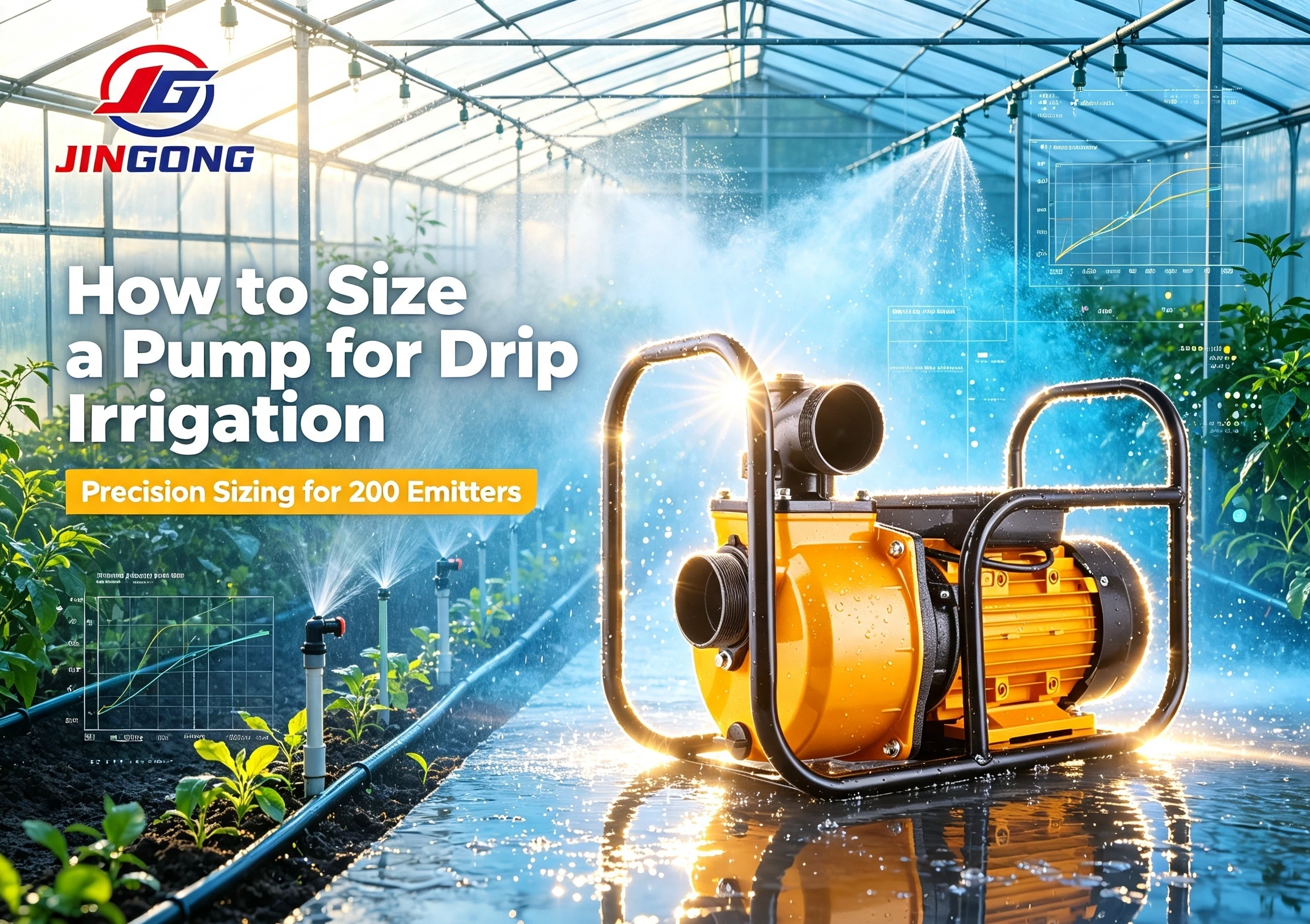
As a seasoned irrigation water pump manufacturer with over a decade of experience supplying systems for global agriculture, we at Jingong Tech understand the backbone of any successful drip irrigation setup: the pump. Whether you manage a small family farm, a commercial orchard, or a greenhouse operation, selecting the wrong pump leads to catastrophic failures—uneven watering, stunted crop growth, and premature equipment burnout.This guide focuses specifically on sizing a pump for a system with 200 drip emitters. This configuration is the “Goldilocks zone” for many small to mid-sized agricultural projects. We will cut through the technical jargon and provide a step-by-step, field-tested methodology. By the end of this article, you will be able to calculate exact flow rates, determine total dynamic head, and select the perfect pump type—be it a submersible, surface, solar, or diesel unit—for your specific needs.
Why Trust This Guide?
This content is engineered by the R&D team at Jingong Tech. With 10+ years as a professional irrigation water pump manufacturer, we have deployed thousands of units across diverse terrains, from the sun-baked fields requiring solar solutions to deep-well installations needing robust submersible power. This isn’t just theory; it’s practical engineering.
The Fundamentals: Understanding Flow Rate and Head Pressure

Before diving into calculations, every farmer and contractor must grasp two critical concepts. As an established irrigation water pump manufacturer, we emphasize these parameters daily: Flow Rate (GPM/m³/h) and Total Dynamic Head (TDH).
1. Flow Rate (Q): How Much Water?
Flow rate refers to the volume of water the pump can move per unit of time. In drip irrigation, this is dictated by your emitters.
- Emitter Flow Rate: Most standard drip emitters flow at 0.5 to 2 Gallons Per Hour (GPH). For precision, we often use 1 GPH (approx. 3.78 L/h) as a baseline for calculations.
- System Demand: You must satisfy all 200 emitters simultaneously for consistent soil moisture.
2. Total Dynamic Head (TDH): How Hard Must the Pump Work?
TDH is the total equivalent height that a fluid is to be pumped, accounting for friction losses in the pipe. It comprises:
- Static Head: The vertical distance between the water source (well/pond) and the highest emitter.
- Friction Loss (FHL): Resistance inside pipes, fittings, and valves. Longer pipes and smaller diameters increase friction.
- Operating Pressure: The pressure required by the emitters themselves (usually measured in PSI).
Table 1: Common Drip Emitter Specifications (Reference)
| Emitter Type | Flow Rate (GPH) | Recommended Pressure (PSI) | Ideal Scenario |
|---|---|---|---|
| Turbulent Flow (Pressure Compensating) | 0.5 – 1.0 | 15 – 30 PSI | Undulating terrain, long rows |
| Laminar Flow (Non-PC) | 1.0 – 2.0 | 10 – 15 PSI | Flat terrain, greenhouses |
Step-by-Step Calculation: Sizing Your Pump for 200 Emitters
Here is the core calculation process used by every expert irrigation water pump manufacturer. Let’s assume a standard scenario: 200 emitters, each flowing at 1 GPH, with a desired operating pressure of 20 PSI.
Step 1: Calculate Required Flow Rate (GPM)
First, convert hourly demand to minute demand (GPM).
- Formula: (Number of Emitters × Emitter Flow Rate) ÷ 60 minutes
- Calculation: (200 emitters × 1 GPH) ÷ 60 = 3.33 GPM
Pro Tip: Always add a 10-15% safety margin for system inefficiencies. Your target flow rate is approximately 3.8 GPM (or roughly 0.86 m³/h).
Step 2: Calculate Total Dynamic Head (TDH)
To convert PSI to Head (feet), multiply by 2.31.
- Elevation Head: Assume your field is 10 feet above your water source. (10 ft)
- Pressure Head: 20 PSI × 2.31 = 46.2 feet.
- Friction Loss: Assume 500 feet of 3/4″ PVC pipe. Using hydraulic charts, 3.8 GPM in 3/4″ pipe loses approx. 4.2 feet per 100 feet. (5 × 4.2 = 21 feet).
- TDH Total: 10 + 46.2 + 21 = 77.2 Feet.
Step 3: Match Pump Performance Curves
Now, look for a pump curve where the intersection of 3.8 GPM and 77.2 feet occurs within the pump’s Peak Efficiency Zone. As a reliable irrigation water pump manufacturer, Jingong provides detailed performance curves for every model to ensure optimal matching.
Table 2: Quick Sizing Reference for 200 Emitters
| Scenario | Min Flow Rate (GPM) | Min TDH (Feet) | Recommended Pump Type |
|---|---|---|---|
| Standard Garden (Low Pressure) | 3.5 | 40 | Surface Pump |
| Orchard (High Pressure) | 4.0 | 80+ | Submersible / Booster |
| Off-Grid Solar Setup | 3.5 | 50 | DC Solar Pump |
Choosing the Right Pump Type: A Guide for 200 Emitter Systems
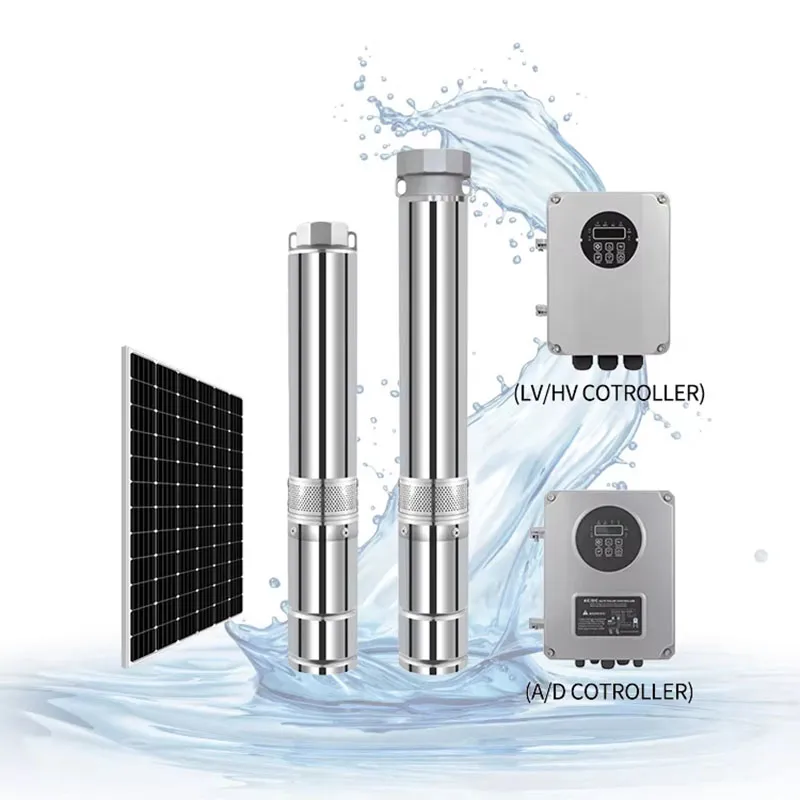
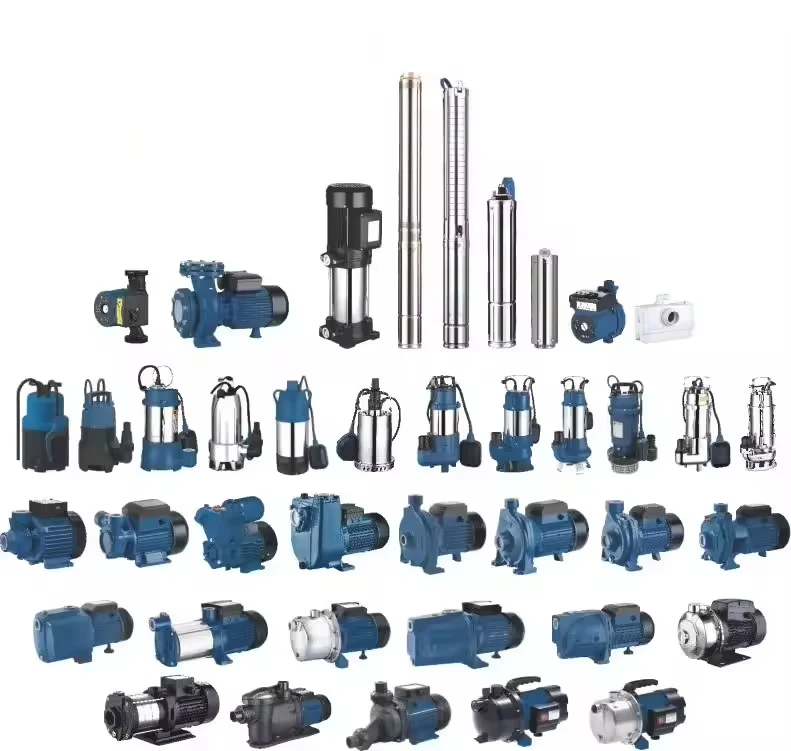
Not all pumps are created equal. As a full-spectrum irrigation water pump manufacturer, we produce four main categories suitable for drip irrigation. Here is how they stack up for a 200-emitter layout.
1. Submersible Pumps: The Deep Well Solution
If your water source is a well, borehole, or a pond with significant depth, a submersible pump is essential. These units sit underwater and push water to the surface.
- Pros: Highly efficient (no priming required), quiet operation, protected from weather.
- Cons: Requires electricity at the source or a long cable; harder to service.
- Sizing for 200 Emitters: Look for models providing 4-6 GPM at heads ranging from 60 to 200 feet. Our submersible pumps for drip irrigation are engineered to maintain constant pressure even as the water table fluctuates.
2. Surface Pumps (Centrifugal/Jet Pumps): The Versatile Choice
Ideal for drawing water from shallow wells (less than 25 feet), rivers, lakes, or storage tanks. They are installed above ground.
- Pros: Easy installation, simple maintenance, cost-effective.
- Cons: Requires priming; suction lift limitations (cannot pull water from very deep).
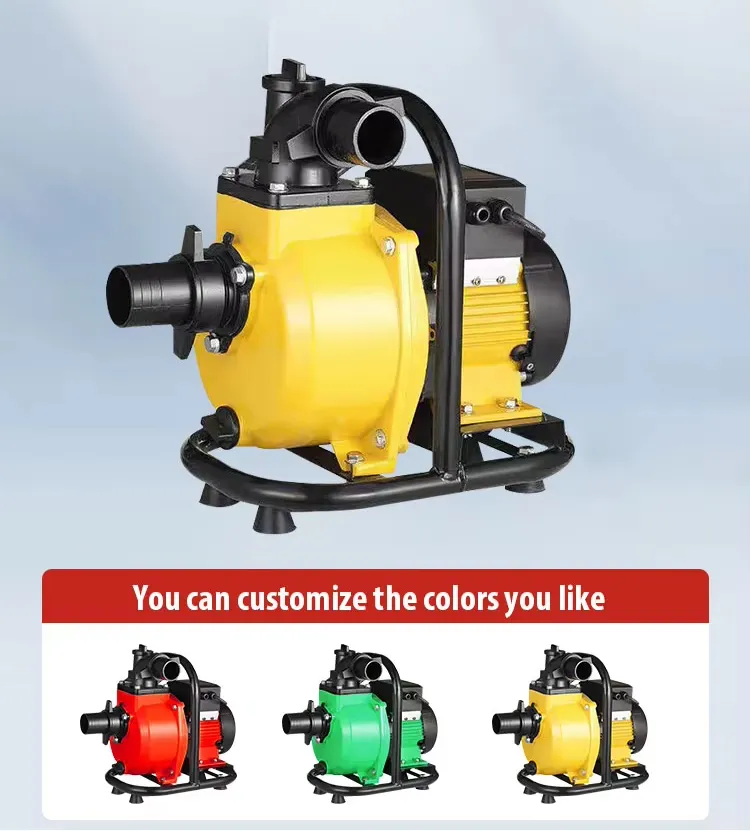
- Sizing for 200 Emitters: A standard centrifugal pump with a 0.5HP to 1HP motor usually suffices. Explore our range of surface water pumps for drip irrigation designed for high-volume, low-to-medium head applications.
3. Solar Pumps: The Sustainable Powerhouse
For remote farms without grid access, solar pumps are revolutionizing agriculture. As a forward-thinking irrigation water pump manufacturer, Jingong Tech specializes in DC brushless solar pumps.
- Pros: Zero fuel costs, low maintenance, environmentally friendly.
- Cons: Dependent on sunlight; requires battery backup for night irrigation.
- Sizing for 200 Emitters: A 400W to 750W solar panel array paired with a DC pump is typical. Our solar drip irrigation pumps come with MPPT controllers to maximize power harvest throughout the day.
4. Gasoline & Diesel Pumps: The Emergency Backup
When the grid fails or during peak drought when electricity is rationed, engine-driven pumps save crops.
- Pros: High mobility, independent of external power, high power output.
- Cons: Noise, emissions, fuel costs, higher maintenance.
- Sizing for 200 Emitters: A small 2-inch gasoline or diesel pump is overkill for flow but necessary if you need to move water quickly or have high-pressure requirements. Check our diesel irrigation pumps for robust, portable solutions.
Table 3: Comparative Analysis of Pump Types for 200 Emitters
| Pump Type | Best Application | Power Source | Jingong Recommendation |
|---|---|---|---|
| Submersible | Deep Wells, Ponds | AC Electric | Jingong 4″ & 6″ Series |
| Surface | Tanks, Shallow Wells | AC Electric | Jingong JG-C Series |
| Solar | Remote/Off-grid Farms | Solar DC | Jingong Sun-Pro Series |
| Diesel/Gas | Emergency, High Flow | Fossil Fuel | Jingong Engine-Driven Series |
Common Mistakes in Drip Irrigation Pump Sizing
Even experienced farmers make these errors. Avoiding them saves thousands in operational costs.
- Mistake 1: Ignoring Friction Loss. Many users only calculate elevation. A long, narrow pipe can consume more energy than lifting the water vertically. Always calculate Total Dynamic Head (TDH).
- Mistake 2: Oversizing the Pump. “Bigger is better” does not apply here. An oversized pump operates inefficiently, wastes energy, and creates pressure spikes that blow out emitters. A professional irrigation water pump manufacturer will always recommend right-sizing.
- Mistake 3: Neglecting Voltage Drop. For electric pumps far from the panel, voltage drop can prevent the motor from starting. Use the correct gauge wire.
- Mistake 4: Skipping Filtration. Drip emitters clog easily. A sand-filled pump impeller is a common sight in repair shops. Always install a quality filter between the pump and the irrigation lines.
- Mistake 5: Wrong Pump for the Source. Using a surface pump for a 100-foot deep well will result in cavitation and failure. Conversely, using a submersible pump in a shallow tank is unnecessary and expensive.
Field Report: Optimizing a 200-Emitter Orchard in Spain
Recently, a client in Valencia approached us facing issues with uneven watering in their almond sapling orchard. They had 200 emitters but were using a repurposed sump pump.
The Problem: Emitters at the end of the 300-meter line received almost no water.
Our Diagnosis: The pump lacked the necessary head pressure. While it moved enough volume (flow), it couldn’t overcome the massive friction loss in the 3/4″ pipe.
The Solution: As their trusted irrigation water pump manufacturer, we supplied a Jingong JG-C 1HP high-head surface pump and recommended upgrading to 1″ PVC piping. Post-installation, pressure at the last emitter matched the first, increasing sapling survival rates by an estimated 25%. This case highlights why calculating TDH is non-negotiable.
Frequently Asked Questions (FAQs)

What size pump do I need for 200 drip emitters?
For 200 standard 1 GPH emitters, you need a pump capable of delivering at least 3.5 to 4.0 GPM. However, the most critical factor is the Total Dynamic Head (TDH). You must calculate your vertical lift plus friction loss to ensure the pump can deliver that flow at the required pressure (typically 20-30 PSI).
Can a solar pump run 200 drip emitters?
Yes, absolutely. A properly sized solar pump is ideal for 200 emitters, especially in remote locations. You typically need a 400W-750W DC pump system paired with appropriate solar panels and a controller. Ensure the solar pump is specifically designed for irrigation to handle the startup pressure requirements.
Is a submersible pump better than a surface pump for drip irrigation?
It depends on the water source. If you are drawing from a well deeper than 25 feet, a submersible pump is mandatory. For ponds, lakes, or shallow wells, a surface pump is more cost-effective and easier to maintain. As a leading irrigation water pump manufacturer, we suggest matching the pump type to the hydrological conditions.
How much pressure is needed for 200 drip emitters?
Most drip emitters require between 15 and 30 PSI to function correctly. Pressure Compensating (PC) emitters perform best at the higher end of this range. Remember, the pump must generate enough pressure to overcome elevation and friction loss plus this operating pressure.
Why is my drip irrigation pump overheating?
Overheating usually results from “dead-heading” (running the pump with a closed valve) or insufficient NPSH (Net Positive Suction Head), causing cavitation. It can also occur if the pump is running dry. Always ensure there is a pressure relief valve and that the water source is adequate.
Conclusion & Buying Guide
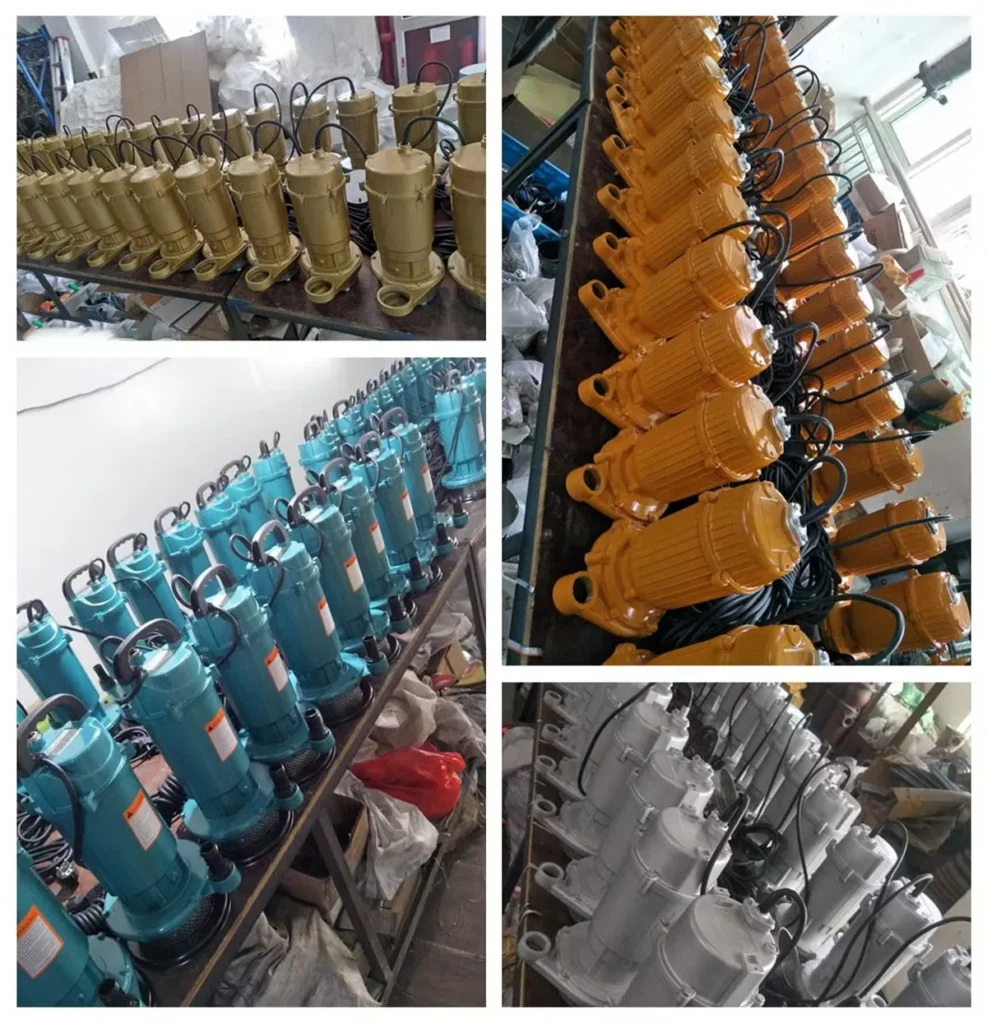
Sizing a pump for 200 drip emitters doesn’t have to be complicated. By focusing on Flow Rate (approx. 4 GPM) and Total Dynamic Head (factoring in elevation and friction), you can select a pump that delivers precise, efficient water delivery. Whether you opt for the silent efficiency of a submersible pump, the accessibility of a surface pump, the eco-friendly nature of a solar pump, or the raw power of a diesel pump, accuracy is key.
As a premier irrigation water pump manufacturer, Jingong Tech is committed to supporting your agricultural success. We don’t just sell pumps; we engineer water management solutions. Our extensive catalog includes specialized irrigation water pump manufacturer tested models for every climate and condition. We pride ourselves on being a transparent irrigation water pump manufacturer that provides real data, not just marketing claims.
If you are looking for a reliable irrigation water pump manufacturer for your next project, consider our expertise. Unlike a generic supplier, a dedicated irrigation water pump manufacturer like Jingong offers custom impeller trimming and motor matching. When you choose a factory-direct irrigation water pump manufacturer, you ensure quality control from casting to final assembly. We are the irrigation water pump manufacturer trusted by farms across Europe, Africa, and the Americas. Contact our engineering team today for a free system audit, or browse our collection of high-efficiency pumps designed specifically for drip irrigation systems. Let our experience as a global irrigation water pump manufacturer help you grow.Readyto Optimize Your IrrigatGet a personalized quote from a leading irrigation water pump manufacturer. We guarantee precision, durability, and un

0 Comments