Selecting the right Water Pump Material of Construction (MOC) is the single most critical decision influencing your pump’s lifespan, maintenance costs, and operational reliability. As a leading manufacturer with over 20 years of expertise in engineering submersible pumps, land pumps, solar pumps, and gasoline/diesel pumps, Jingong Technology presents this definitive guide to help B2B buyers navigate the complexities of pump material selection.
Introduction — Why Water Pump Material Selection Determines Service Life, MTBF & TCO
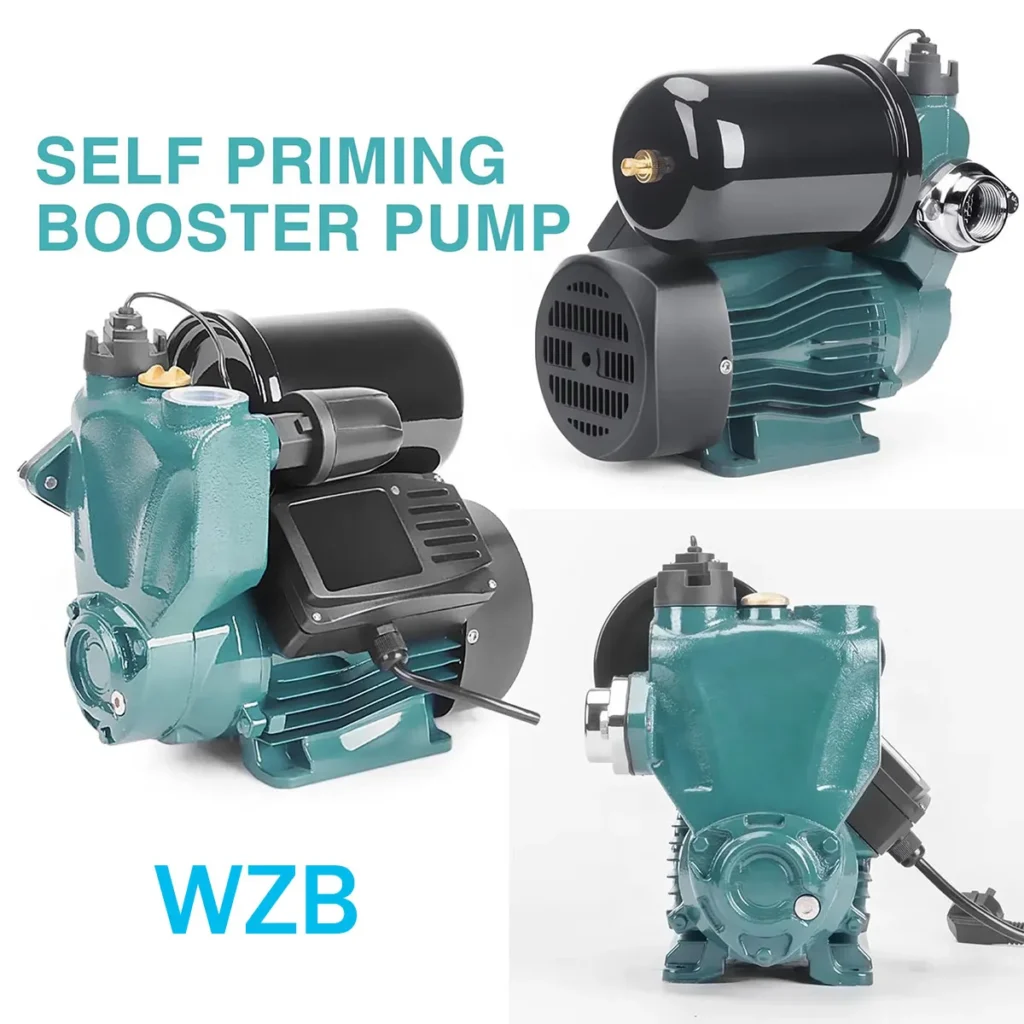
Pump failure is rarely about hydraulics first. In our two decades supplying pumping solutions to municipal, agricultural, and industrial projects across 30+ countries, Jingong’s engineering team has traced more than 60% of premature pump failures back to material incompatibility—not motor power, impeller design, or installation errors.
A submersible sewage pump specified in standard grey cast iron for a chloride-rich wastewater stream might appear “cost-effective” at CapEx. However, six months later, pitting corrosion perforates the volute, seals fail, and the downtime cost for a single municipal station can exceed 10× the original pump price. This logic applies across all sectors:
- Solar Pumps: Non-UV-stabilized polypropylene housings in equatorial regions lead to housing crazing within 18 months.
- Diesel Transfer Pumps: Off-spec aluminum casings result in stress cracking at threaded ports under constant vibration.
- Land Pumps: Using 304 stainless steel for brackish agricultural water (“because stainless is stainless”) results in chloride pitting by month eight.
Expert Definition: In pump engineering, MOC (Material of Construction) refers to the combined specification of the casing, impeller, shaft, seal faces, fasteners, and elastomers. “The pump is stainless” is a marketing phrase, not a specification. You need the grade, the ASTM standard, and the elastomer match.
This guide distills Jingong’s extensive field data alongside ASTM / ISO / NACE baseline requirements into a decision framework applicable to all four of our core product families.
Core Principles of Water Pump Material Selection (MOC Criteria)

Before selecting a grade, evaluate these five universal filters. They apply to submersible, land, solar, and fuel pumps before we narrow down specific types.
1. Fluid Compatibility — Chemistry, pH, Solids, Viscosity
The fluid dictates the primary material choice. Ignoring chemistry leads to rapid failure.
| Fluid Property | Why It Matters for MOC | Jingong Product Tie-in |
|---|---|---|
| pH < 5 or > 9 | Acid/alkali attack on ferrous metals | Sewage submersible → 316 or Duplex |
| Cl⁻ > 200 ppm | Pitting/Chloride SCC on 304 SS | Coastal solar pump → 316L minimum |
| Solids > 5% by weight | Erosion of impeller/volute | Construction dewatering → High-chrome or Duplex |
| Viscosity > 500 cSt | Cavitation risk, requires positive displacement | Land pump — Gear/Lobe, not Centrifugal |
Jingong Field Note: A shrimp farm in Thailand initially used 304 stainless land pumps on brackish intake (Cl⁻ ~4,000 ppm). Pitting failure occurred at 7 months. Upgrading to 316L + FKM seals resulted in zero corrosion issues after 4 years.
2. Mechanical Strength — Wear, Pressure, Impact
Abrasive duty (sand, slurry) demands material hardness. Grey cast iron (HB 180–220) is borderline; high-chrome white iron or Duplex 2205 (Yield ≥ 65 ksi / 447 MPa) is the professional standard. High-pressure land pumps (>16 bar) require robust casing—aluminum is prohibited; use Class 250 cast iron or stainless/duplex steel.
3. Environmental Resistance — UV, Outdoor, Temperature Extremes
Solar pumps are 10–15 year outdoor assets. UV stabilization in plastics (PP/ABS) is non-negotiable. 316 stainless steel is the premium choice for outdoor solar units, resisting rain and thermal cycling without coatings.
Temperature Limits:
- Polypropylene (PP): ≤ 80°C
- Polyvinylidene Fluoride (PVDF): ≤ 140°C
- 316 Stainless Steel: Continuous to 425°C (Caution: Chloride SCC risk increases above 60°C)
4. Lifecycle Cost (TCO) — CapEx + OpEx + Downtime
B2B buyers focusing solely on “cheapest MOC” usually incur higher losses. Use this formula:
TCO = Purchase Price + (Energy Cost × Years) + (Maintenance Parts × Frequency) + Downtime Loss + Replacement CapEx
A 316 stainless solar pump housing costing $45 more than coated carbon steel often pays for itself in Year 3 in coastal environments by avoiding replacement logistics.
5. Industry Compliance — ASTM, ISO, NACE, CE
Jingong specifies all pump lines against international standards:
- ASTM A48 / A536 (Grey Cast Iron)
- ASTM A240 (Stainless Plate & Bar)
- ASTM A790 / A928 (Duplex Tubing)
- NACE MR0175 / ISO 15156 (Sulfide Stress Cracking)
- ISO 5199 (Centrifugal Pumps – Technical Specifications)
Common Pump Construction Water Pump Material: Pros, Cons & Application Match

This section covers the core materials used in Jingong’s manufacturing process.
Grey Cast Iron (ASTM A48 Class 25B / ASTM A536 65-45-12)
Pros: Low cost, excellent machinability, superior vibration damping. Cons: Poor corrosion resistance in aggressive media, no chloride tolerance, brittle under impact.
Jingong Applications: Entry-level submersible clean-water pumps, agricultural land centrifugal pumps (fresh water), and diesel pump bodies (where fuel is non-corrosive).
Warning: Never use cast iron for seawater, pH < 5 media, or chloride-rich sludges. Failure mode is general thinning and perforation.
Stainless Steel 304 & 316/316L (ASTM A240)
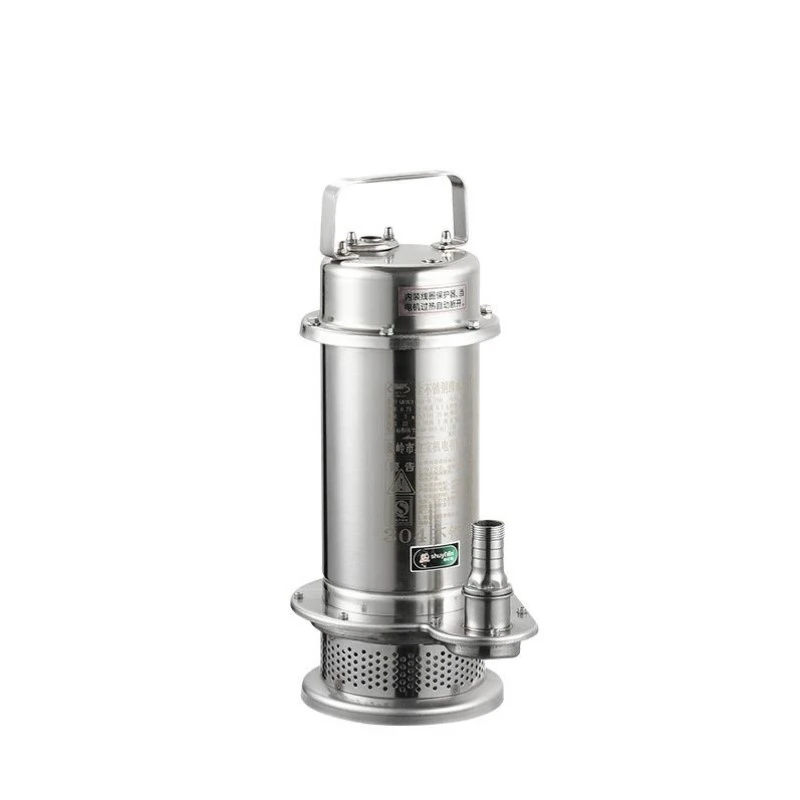
304 (18Cr-8Ni): No Molybdenum. Suitable for potable water, food-grade applications, and mild organics. Unsuitable for chlorides.
316 / 316L (18Cr-10Ni-2Mo): Molybdenum provides pitting resistance. 316L (Low Carbon) prevents sensitization during welding.
| Grade | PREN* | Jingong Application |
|---|---|---|
| 304 | ~18 | Land pumps for clean water, Solar pumps (inland, non-coastal) |
| 316 | ~24 | Submersible sewage (municipal), Solar pumps (coastal), Land pumps (brackish) |
| 316L | ~24 | Welded solar pump housings, large land pump casings |
Bronze & Brass — Marine & Anti-Galling
Pros: Natural biofouling resistance, excellent anti-galling properties (critical for impeller-to-shaft interfaces). Cons: Higher cost, unsuitable for strong acids (pH < 5), susceptible to erosion-corrosion in high-velocity seawater.
Jingong Applications: Submersible seawater models, marine bilge pumps, and bronze-fitted land pumps for shipboard use.
Engineering Plastics (PP, ABS, PVDF, F46)
Lightweight, corrosion-proof, and cost-effective for specific duties.
| Plastic | Temp Limit | Chemical Fit | Jingong Application |
|---|---|---|---|
| PP (Polypropylene) | ~80°C | Acids (<80°C), Alkalis | Small solar pump housings |
| ABS | ~70°C | Neutral water, impact-resistant | Domestic booster land pumps |
| PVDF | ~140°C | Strong acids, oxidizers | Chemical-duty small submersibles |
| F46 (FEP Lining) | ~200°C | Near-universal acid duty | Lined land pumps for chemical transfer |
Critical Warning: PP without UV stabilizers will chalk and fail on solar pumps within 12–18 months. Always specify “UV-Stabilized PP” for outdoor units.
Aluminum Alloys — Portable & Fuel Pump Bodies
Pros: Lightweight, excellent heat dissipation, highly machinable. Cons: Poor wear resistance against abrasives; galvanic corrosion risk when coupled with stainless steel in saline environments.
Jingong Applications: Gasoline & Diesel self-priming transfer pumps (portability is key). Fuel itself is not corrosive to aluminum, but ethanol blends can attack incompatible seals.
Duplex & Super-Duplex Stainless (UNS S31803 / S32205 / S32760)
This is where expert content separates from generic blogs. Most guides ignore these high-performance alloys.
Duplex 2205 (UNS S31803 / S32205): 22Cr-5Ni-3Mo-N. PREN ~35. Yield strength ~90 ksi (620 MPa)—double that of 316 SS. Excellent Chloride Stress Corrosion Cracking (SCC) resistance. Compliant with ASTM A790 / A928.
Super-Duplex S32760 (F55): 25Cr-7Ni-3.5Mo + W + Cu. PREN ≥ 40. Tensile strength ≥ 750 MPa. Used in offshore oil & gas, seawater desalination, and refinery services.
Cost Context: Duplex costs ~2.5–3× 316 stainless, but in chloride + abrasive duty, TCO wins by Year 2–3 due to near-zero maintenance.
Fluoroplastic Linings — Aggressive Chemical Duty
When even 316 fails (concentrated H₂SO₄, HCl, hot NaOH), Jingong utilizes F46 (FEP) or PFA lined land pumps. These feature a carbon steel shell for pressure containment, a thick fluoropolymer liner for corrosion resistance, and PTFE mechanical seals. Ideal for plating shops, PCB etching, and fertilizer production.
Watet Pump Material Selection by Pump Type — Jingong Product-Aligned Recommendations
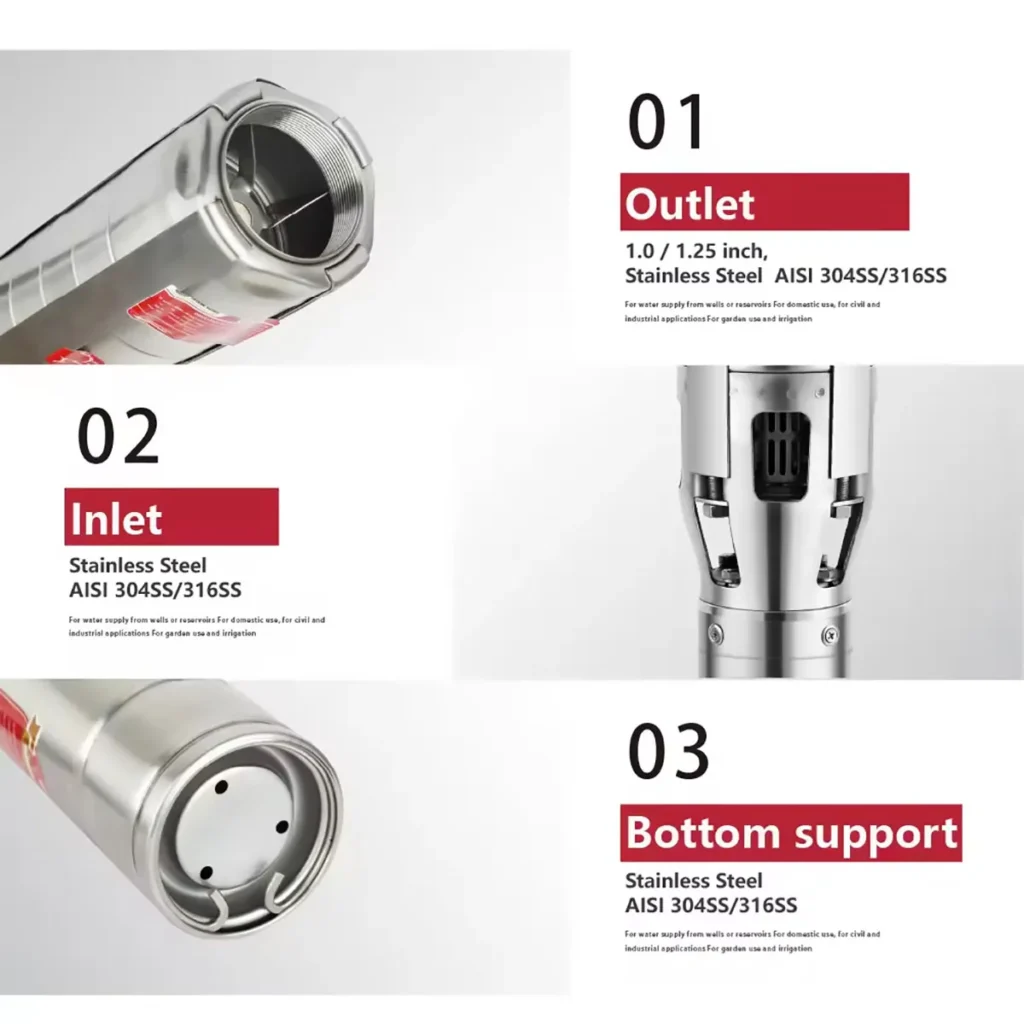
Water Pump Materials
This section provides direct recommendations for Jingong’s four core product lines.
Submersible Pumps — Underwater Corrosion, Sand Abrasion, Seal Integrity
Submersibles face the harshest conditions: full submersion, dirty water, and the mechanical seal is the primary failure point.
| Duty | Casing | Impeller | Shaft | Seal Faces |
|---|---|---|---|---|
| Clean Water (Residential) | Cast Iron | Cast Iron / SS304 | SS420 | Carbon/Ceramic |
| Sewage (Municipal, Neutral) | Cast Iron + E-Coat | SS304 / 316 | SS316 | SiC/SiC |
| Sewage + Chloride/Brackish | 316L | 316L / Duplex 2205 | 316L / Duplex | SiC/SiC + FKM |
| Construction Dewatering (Sandy) | 316L or Duplex | High-Chrome Duplex | 316L | Tungsten Carbide |
| Seawater Lift | Bronze or Duplex | Duplex 2205 | Duplex | SiC/SiC + EPDM |
View Jingong Submersible Pump Series →
Land Pumps (Centrifugal / Horizontal / Vertical) — Industrial, Agricultural, Municipal

Land pumps allow for mixed-MOC configurations (e.g., Cast Iron casing + SS Impeller) to optimize cost and performance.
- Agricultural Booster (Fresh Water): CI casing + SS304 impeller (Cost-optimized).
- Brackish Irrigation: 316L casing + 316L impeller.
- Boiler Feed Multistage: Cast Steel or 316L (High-pressure rated).
- Chemical Transfer: PP, PVDF, or F46-lined casing + PTFE mechanical seal.
Solar Pumps — UV-Resistant, Outdoor Long-Cycle, Maintenance-Free
Solar pumps are 10–15 year investments. MOC mistakes manifest slowly but destroy ROI.
- Economy Tier: UV-Stabilized PP Housing + SS304 Shaft + NBR Seal (Inland fresh water only).
- Standard Tier: SS304 Body + SS316 Impeller + EPDM (Most agricultural wells).
- Premium Coastal Tier: SS316L Full Wetted Parts + FKM + UV-Stable Coating (Seawater, brackish, Middle East/Africa coast).
Pro Tip: Ensure the controller enclosure is Polycarbonate + UV-Stabilized. Also, use 316 stainless fasteners; 304 fasteners on a 316 pump in coastal environments will seize within 18 months due to galvanic corrosion.
Compare Jingong Solar Pump Models →
Gasoline & Diesel Pumps — Fuel Compatibility, Vibration, Heat Dissipation
Fuel is relatively benign to metals, but additives and operating conditions are destructive.
- Body: Aluminum A356-T6 (Portable) or Cast Iron (Stationary Industrial).
- Impeller: Aluminum or SS304 (Closed-type).
- Seal: FKM (Viton) is mandatory for diesel and ethanol-blended gasoline (E10+). Avoid NBR.
- Fasteners: Zinc-plated or 304 stainless.
View Jingong Fuel Transfer Pumps →
Water Pump Material Selection by Working Condition
Corrosive Media (Acid, Alkali, Seawater, Chlorides)
Dilute Nitric Acid (HNO₃) → 304/316. Hot Concentrated Sulfuric Acid (H₂SO₄) → High-Silicon Iron or Alloy 20. Seawater/Brine → 316 minimum, Duplex preferred. Hot Sodium Hydroxide (NaOH) → 316L.
Abrasive Media (Sandy Water, Slurry, Particulates)
If sand exceeds 100 ppm, upgrade from Cast Iron → 316 → Duplex 2205. Impellers must be high-chrome or duplex. Seal faces require Tungsten Carbide; Carbon/Ceramic pairs will erode in hours.
Extreme Temperature & Outdoor Environments
< -10°C: Use EPDM or Low-Temp FKM (NBR stiffens). > 110°C: 316L is suitable, but above 200°C, consider Alloy 20 or Hastelloy C276. For 10+ year outdoor exposure: 316L SS > Coated CI > UV-Stabilized PP.
High Pressure & Continuous Operation
For multistage boiler feed pumps, casing stress is critical. Use Cast Steel, thick-wall 316L, or Duplex. Avoid thin-wall 316 on 25+ bar continuous duty to prevent fatigue cracking.
Common Mistakes in Water Pump Material Selection & How to Avoid Them
- “Stainless is stainless”: Using 304 in seawater guarantees pitting failure within 12 months.
- Ignoring Elastomers: A perfect 316 pump is ruined by an NBR seal exposed to biodiesel.
- Fastener Mismatch: Using 304 bolts on a 316 pump in coastal areas causes galvanic corrosion and seizing.
- Buying on Unit Price: Ignoring TCO, downtime, and freight for emergency replacements.
- Plastic without UV Stabilizer: Leads to chalking and cracking on solar pumps.
- Cast Iron on “Slightly Acidic”: Even pH 6.2 will eat cast iron over two years.
- Over-Spec’ing: Using Hastelloy for neutral water wastes capital (less common than under-spec’ing).
Lifecycle Cost Analysis:Water Pump Material Performance vs Budget
TCO Formula for B2B Buyers
Case Study: 10 m³/h Sewage Submersible, Municipal Station, Chloride ~800 ppm, Sand ~150 ppm, Duty 16 h/day.
Option A: Cast Iron + 304 Impeller CapEx: $420. Fails at month 14 (corrosion + sand erosion). Replacement + Downtime: $2,420. Total 2-Year Cost: $2,840.
Option B: 316L Casing + Duplex Impeller CapEx: $780. Runs 5+ years with only minor seal kit maintenance ($60 every 2 years). Total 5-Year Cost: ~$840.
Result: Option B saves ~70% over 5 years despite higher initial outlay.
Premium vs Standard Material — When the Upgrade Pays Off
Jingong’s Rule of Thumb:
- If (OpEx + Downtime Risk) > 2× (CapEx Delta) → Upgrade MOC.
- If duty is Continuous + Hard-to-Access (Deep wells, rooftops, remote sites) → Always bias premium.
- If duty is Intermittent + Fresh Water + Accessible → Standard MOC is acceptable.
FAQs — Water Pump Material Selection (Optimized for Google Snippets)
Q: What is the best material for a submersible sewage pump? A: For neutral municipal sewage, grey cast iron with e-coat and a 304/316 impeller is standard. For chloride-rich or brackish sewage, a 316L casing with a duplex impeller is recommended. For sandy slurry, duplex 2205 throughout the wetted end is mandatory.
Q: Is stainless steel 316 better than cast iron for water pumps? A: Not universally. For fresh, clean water, cast iron is cost-effective and durable. 316 outperforms only when chloride, mild acid/alkali, or coastal atmospheres are present. Over-specifying 316 for pure freshwater wastes budget.
Q: What material should I choose for an outdoor solar pump? A: 316L stainless steel for premium coastal/desert duty; UV-stabilized PP + 304 components for economy inland use. Always pair with a UV-stable controller enclosure and 316 fasteners in coastal zones.
Q: Can aluminum pumps handle diesel and gasoline? A: Yes, aluminum (A356-T6) is the industry standard for portable fuel transfer pumps. The critical factor is seal compatibility: use FKM (Viton) for diesel and ethanol-blended gasoline; avoid NBR on E10+ fuel.
Q: Which pump material is most wear-resistant for sandy water? A: Duplex 2205 (UNS S32205) or high-chrome alloys for the casing and impeller, paired with tungsten carbide seal faces. Cast iron or 304 stainless will erode rapidly above ~100 ppm sand concentration.
Q: What’s the difference between Water Pump Material 304 and 316 stainless for pumps? A: 316 contains 2–3% Molybdenum, significantly raising pitting resistance (PREN ~24 vs ~18). 304 is suitable for potable/clean water; 316 is the minimum requirement for any chloride exposure (seawater, brackish water, pools, coastal air).
Conclusion & Expert Recommendation from Jingong Engineering Team
Pump Water Pump Material material selection is not a spec-sheet checkbox—it is the defining factor between a 2-year operational headache and a 10-year reliable asset. At Jingong, we do not lead with “what’s cheapest.” We lead with a data-driven approach based on:
- Fluid Chemistry: pH, Chlorides (Cl⁻), Solids, Temperature.
- Duty Cycle: Continuous vs. Intermittent; Remote vs. Accessible.
- Compliance: Adherence to ASTM, ISO, and NACE standards.
- TCO Analysis: Balancing CapEx against long-term operational savings.
If you are specifying submersible, land, solar, or fuel pumps Water Pump Material and the MOC decision is unclear, contact the Jingong Engineering Team. Submit your duty sheet (fluid specs, flow, head, and duty hours), and we will provide a professional material recommendation and TCO comparison within 24 hours.
Get a Material-Matched Quote: Contact Jingong Engineering today

0 Comments