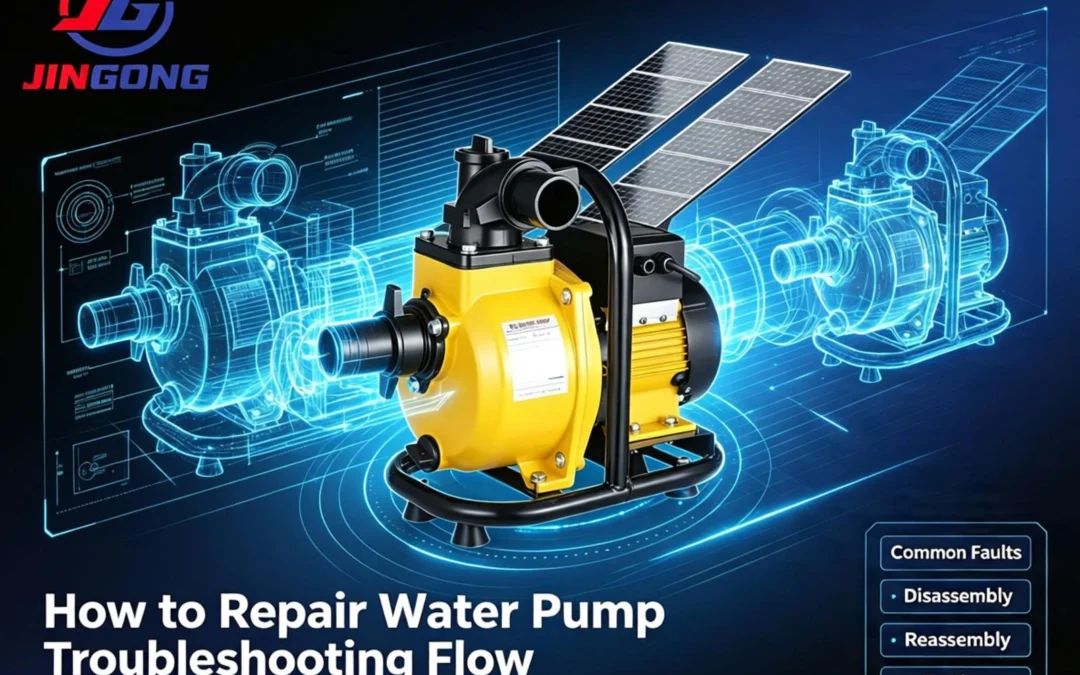
This repair water pump guide is built on Jingong factory original maintenance standards and 10+ years of overseas field repair records—covering rice paddy installations in Southeast Asia, PV water projects in the Middle East, construction dewatering in Africa, and agricultural fuel-pump emergency repairs across Latin America. If you run a submersible, surface, solar, or gasoline/diesel pump, this page walks you from “why did it stop” to “should I fix it or replace it”—with factory-grade SOPs, torque specs, and real-case notes you won’t find in generic tutorials.
Quick Summary: What This Repair Water Pump Guide Covers
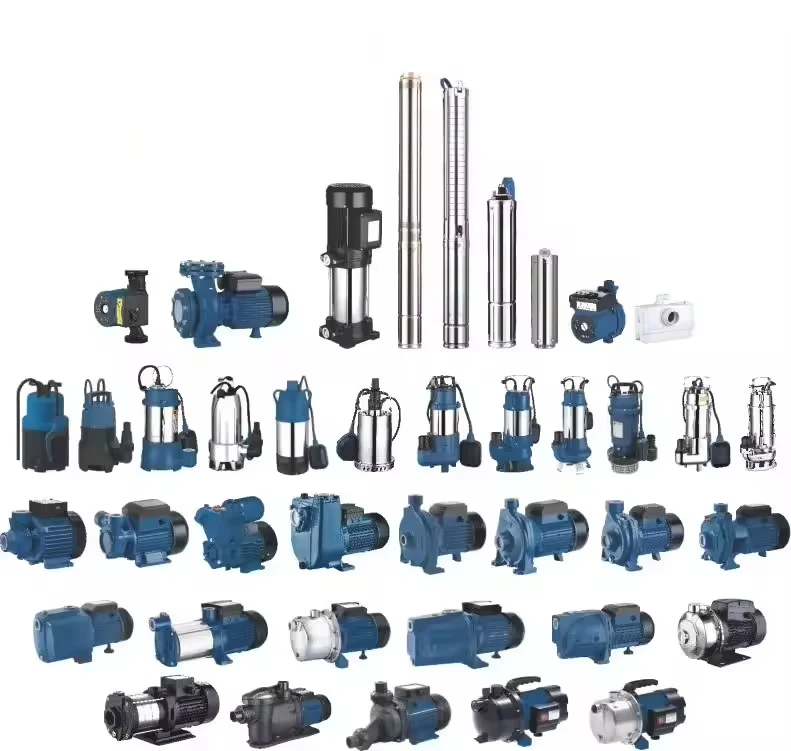
Before tools come out, know the boundary: repair water pump work splits into user-side troubleshooting (safety check, power/fuel, priming, clog clearance) and factory-level repair (motor rewind, seal replacement, controller calibration, crankshaft service). This guide draws the line clearly per pump type so you don’t void a warranty or sink money into a dying unit.
- 4 pump types covered: submersible, surface/land, solar PV, gasoline & diesel
- 8 core parts diagnosed: impeller, bearing, seal, controller, PV panel, fuel filter, motor, piping
- 5 field scenarios: irrigation, construction, off-grid solar, residential, emergency fuel-pump
- Repair-or-replace framework at the end (50% cost rule + efficiency payback)
Pre-Repair Safety & General Troubleshooting Flow (All Pump Types)
Every repair water pump job—whether a 0.5 HP home booster or a 10 kW diesel construction unit—starts with the same 6-step safety + triage loop. Skip these and you risk electrocution, flood, or a destroyed unit.
1. Lockout & Isolation (non-negotiable)
- Electric pumps: cut breaker, lockout if available, verify 0 V with multimeter at terminal. Don’t trust wall switch only.
- Solar pumps: disconnect PV array first (open-circuit voltage can hit 150 VDC on string setups), then disconnect controller DC output to motor.
- Fuel pumps: shut fuel valve, drain carb bowl, let engine cool 15 min before opening any line. Gasoline vapor + hot muffler = bad day.
- Submersible: haul to surface before ANY electrical test. Never probe live underwater.
2. Visual Walkthrough (2 minutes, saves hours)
Look for oil traces on motor housing (bearing/seal bleed), chewed wiring (rodents in farmland setups are common in our PH/TH cases), corroded terminals, flattened O-rings, or impact dents on fuel-pump crankcases from transport.
3. Power / Fuel / Light Source Check
- Electric: voltage at terminal vs nameplate (±10% tolerance). Undervoltage = most “dead” pumps are just underfed.
- Fuel: fresh gasoline? Ethanol blend >30 days degrades. Diesel gelled in cold?
- Solar: irradiance estimate + PV open-circuit voltage. Cloudy-day “failure” is often normal.
4. Piping & Priming
Surface pumps MUST be primed. Air leak on suction side = lost prime = dry run = seized seal within minutes. Check foot valve, suction hose rigidity (collapsing hose = common on cheap PVC), and unions.
5. First-Symptom Mapping
| Symptom | Likely Across All Types |
|---|---|
| No water, motor runs | Priming loss / clogged intake / closed valve / impeller stripped |
| No start, silent | Power loss / dead controller / no fuel / seized shaft |
| Starts, trips breaker | Short circuit / seized bearing / capacitor fail |
| Low flow + normal sound | Clogged impeller / worn seal ring / suction leak |
| Grinding noise | Bearing collapse / sand ingestion (submersible) |
6. DIY vs Call-Factory Boundary
You can safely DIY: priming, clog clearing, foot-valve check, fuel-filter swap, PV-terminal reseat, controller reset. Call factory/Jingong distributor if: motor smells burnt, seal leaking >24 h, bearing play >0.5 mm, controller shows persistent fault code, diesel crankcase has metal shavings.
Download Jingong’s multi-language pump safety checklist (PDF) — used by our overseas distributors before every field repair.
Submersible Water Pump Repair (Deep Well / Sewage / Irrigation)
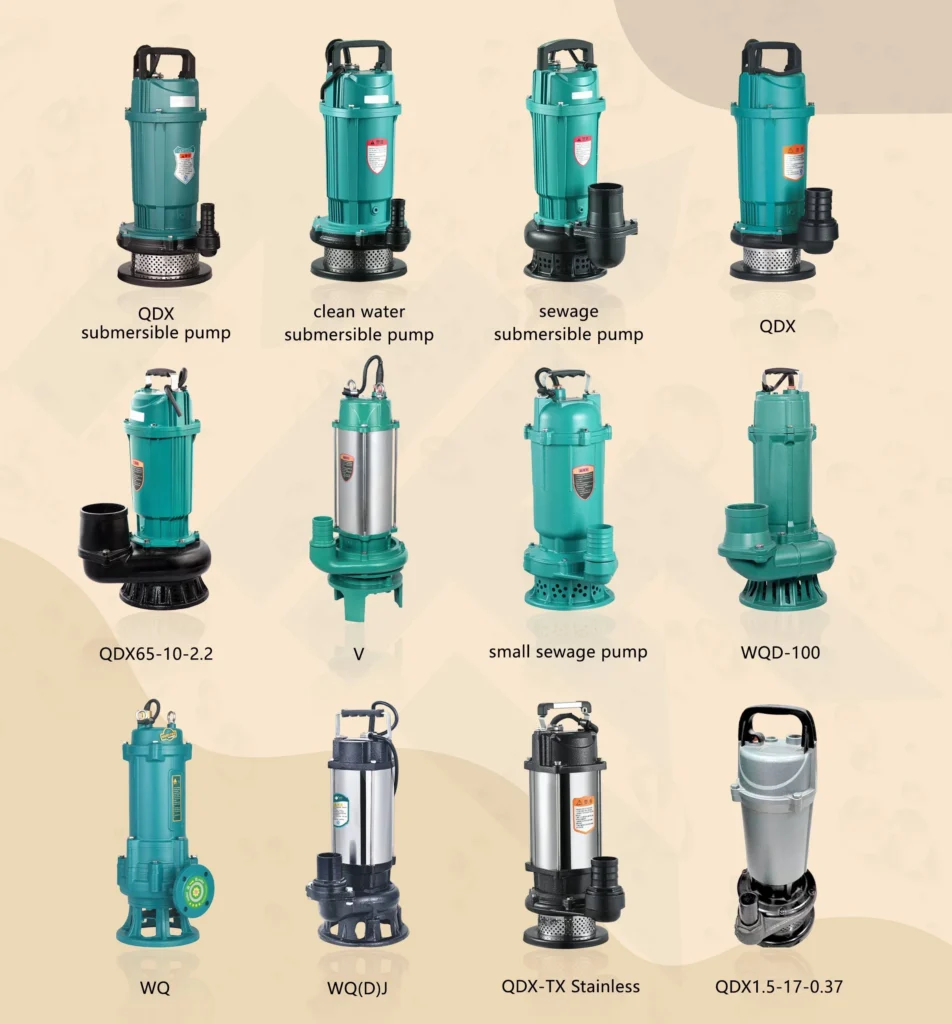
Submersible units account for ~40% of Jingong’s export volume, and they generate the most “repair water pump” search intent in agricultural markets. Key reality: once a submersible shows seal bleed, time is your enemy—water migrates from oil chamber → bearings → winding fast.
Common Fault Patterns (Jingong Field Data, N=320 cases)
- No water, motor hums → impeller jammed by sand/rope/film (irrigation canals)
- Trip on start → winding short (megohm < 1 MΩ) or start capacitor fail on controller
- Oil chamber milky → mechanical seal failed, water ingress
- Low flow, normal amp → worn diffuser / impeller clearance opened (>0.8 mm on 4″ models)
- Overload after 10-30 min → sand packing around motor jacket → overheating
Seal Replacement SOP (Factory Standard)
- Haul pump, clamp shaft, remove discharge tee.
- Unbolt middle flange (torque stamp: typically 18-22 N·m on M8 stainless, check your model plate).
- Pull oil-chamber plug, check for water/milk. If milky → both upper + lower mechanical seals are suspect.
- Remove impeller (left-hand thread on most Jingong 4″-10″ models—mark rotation direction on shaft before disassembly).
- Replace mechanical seal set: carbon vs ceramic face, spring tension check. Lubricate with compatible oil (not diesel, not gasoline).
- Reassemble: torque bolts in cross pattern, re-fill oil chamber with fresh ISO VG 46 (or per nameplate).
- Megger test: winding insulation ≥ 500 MΩ @ 500 V DC before re-deploy. Anything < 50 MΩ = rewind or scrap.
Motor Winding Check (when to rewind vs replace)
Jingong overseas service rule: if rewind cost > 45% of new pump + shipping, replace. Tropical markets (high humidity) see winding life 5-7 yr; temperate 8-12 yr. If you’re in a sandy well (TDS > 500 ppm suspended solids), expect seal interval 12-18 months regardless of brand.
Browse Jingong submersible models with exploded-view parts diagram → (makes repair water pump parts ordering way easier)
Surface / Land Water Pump Repair (Centrifugal, Self-Priming, Jet)
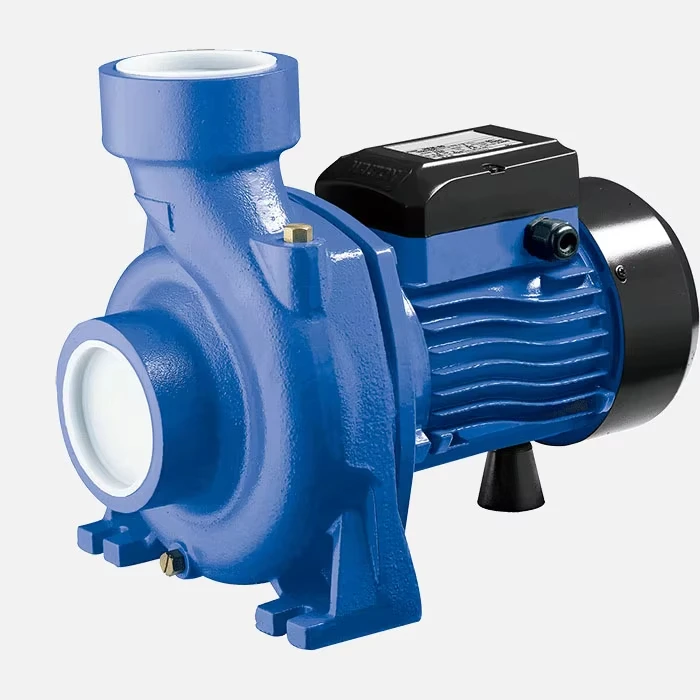
Surface pumps are the most DIY-friendly category, but also the most commonly killed by dry-run. A 1.5 kW centrifugal can destroy its mechanical seal in < 3 minutes of unprimed running—we’ve seen this in 60%+ of “sudden failure” cases sent to Jingong warranty.
Top 5 Faults
- No water, pump runs → lost prime (most common). Check foot valve, suction hose rigidity, union O-rings.
- Low pressure, vibrating → cavitation (suction lift too high > 7 m, or suction strainer clogged).
- Loud knock at startup → coupling misalignment or impeller touching volute (foreign object passed through).
- Bearing growl after 2000 h → grease dried, dust ingress. Regrease interval: 6 months for continuous duty.
- Leak at seal face → stationary seat O-ring hardened (UV + heat in outdoor installs).
Vacuum Priming Reset SOP
- Close discharge valve.
- Fill pump casing fully from prime port (no air pockets—tilt pump slightly if portable).
- Open foot-valve line slow, watch for bubbles escaping prime port.
- Hand-spin impeller 2-3 turns before motor start (prevents instant dry-seal contact).
- Start, open discharge slowly. If pressure doesn’t build in 15 sec → shut, re-check suction for air leak (soapy water on unions).
Bearing Swap (Jingong Shop Standard)
- Mark coupling position before disassembly (re-alignment reference).
- Puller ONLY—no hammer on outer race. 6203/6204/6305 are common on Jingong 0.75-3 kW surface units.
- Grease: lithium-base NLGI 2, fill 1/3-1/2 of housing (overfill = heat).
- Re-align: coupling gap 2-3 mm, parallel offset < 0.1 mm (feeler gauge).
Jingong surface/land pump series → exploded view + torque chart per model
Solar Water Pump Repair (DC Brushless, MPPT Controller)
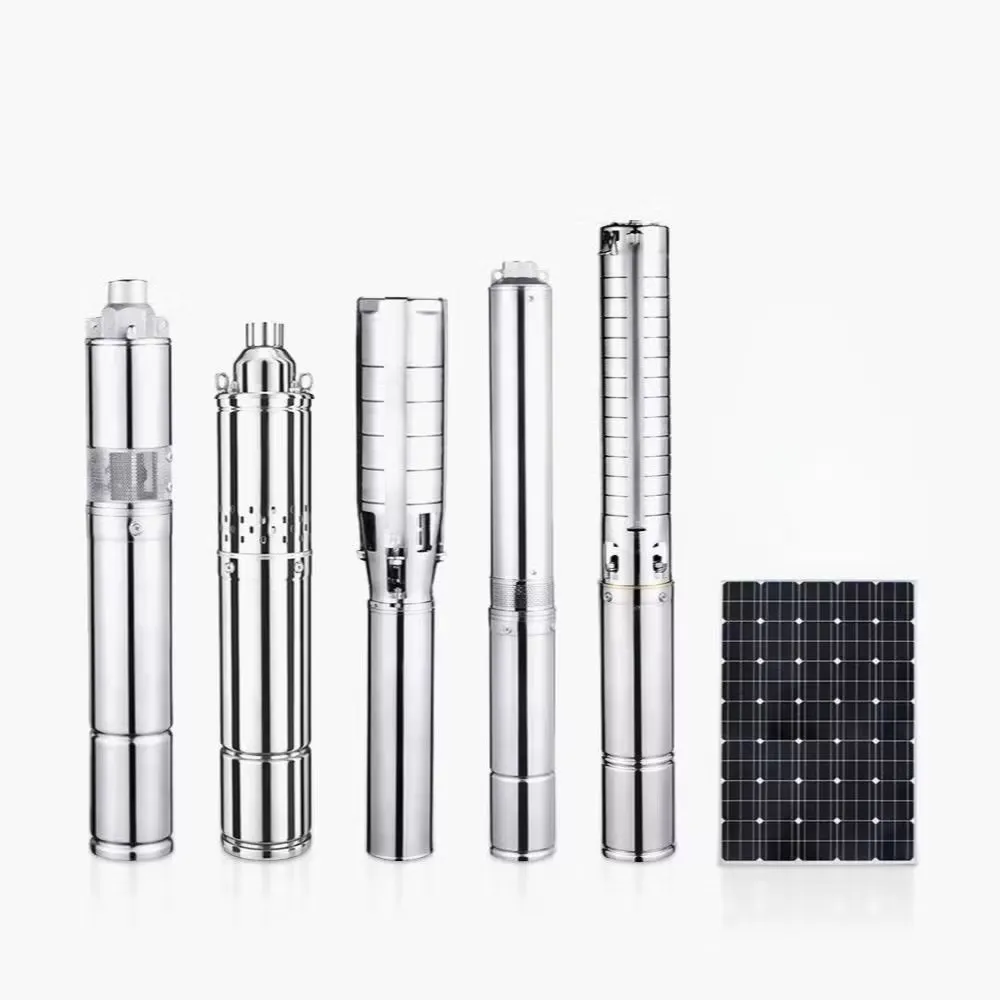
Solar pump “failures” are 30-40% false alarms—low irradiance, shading on one panel, string undervoltage. Before you repair water pump hardware, rule out the PV side. This is where generic repair articles fail—they jump to motor too fast.
Fault Tree (Controller LED / LCD Priority)
| Controller Sign | Likely Cause | First Check |
|---|---|---|
| Flashing PV-low | Irradiance < threshold, or one panel shaded/open | PV OC voltage at terminals (should be ~1.4× rated DC input) |
| Motor-overcurrent blink | Sand jam / dry-run / winding partial short | Haul pump, spin by hand, megger |
| No LED at all | PV reverse polarity / controller blown | Diode check PV +/-, fuse on PV input |
| Intermittent run/stop | MC4 contact resistance > 5 mΩ, or panel squirrel-cage loose | IR cam on connectors if avail, else wiggle-test |
MPPT Parameter Reset (Jingong JK-SOL Series Controllers)
- Hold “Mode” 5 sec → enter setting (LEDs blink coded).
- Match PV Voc / Vmp to panel label (common mistake: 2-string vs 1-string dip-switch mismatch).
- Set “Dry-run protect” = ON, threshold 0.8× rated current (prevents seal burn on cloudy→sunny transition).
- Save, reboot, watch 3 full sun-cycle for stability.
DC Motor Checks (Brushless)
- Phase-to-phase resistance: 3 phases should read within ±5% (e.g., 2.1 Ω / 2.0 Ω / 2.1 Ω). Any >10% deviation → stator wind issue.
- Hall sensor check (if hall-type): 5 V supply, toggle shaft by hand, see 0→5 V square wave on multimeter “Hz” mode.
- Built-in controller vs external: Jingong solar pumps use external MPPT for >1.5 kW; <1.5 kW sometimes built-in. Don’t mix spare parts.
Jingong solar pump controller fault-code sheet (PDF, EN/ES/FR/AR) →
Gasoline & Diesel Water Pump Repair

Construction and flood-response fleets run these hard. Jingong’s overseas service centers in NG and TH report: 70% of “won’t start” cases are fuel-system, not engine-internal. So repair water pump on fuel units = start upstream (tank → filter → carb/injector → head).
Gasoline (4-Stroke) Common Faults
- Won’t start, dry spark plug → no fuel reach (clogged filter, stale gas, float needle stuck)
- Won’t start, wet plug → flooded, or choke stuck on, or float level too high
- Starts, dies in 10 sec → tank cap vent blocked (creates vacuum → fuel starve)
- White smoke → water in fuel, or head-gasket seep
- Blue smoke → oil past rings (overfilled crankcase, or worn rings)
Carburetor Cleaning SOP (Jingong G-series)
- Shut fuel, drain bowl.
- Remove carb, keep gaskets (replace if hardened).
- Main jet / pilot jet: wire-size check—main jet ~1.0-1.2 mm on 5.5 HP units, pilot ~0.3 mm. Don’t enlarge with wire!
- Soak 20 min in carb cleaner, blow ALL passages with compressed air (including tiny pilot crossover).
- Reassemble, adjust mixture screw: baseline 1.5 turns out from lightly seated, fine-tune for smoothest idle.
Diesel (4-Stroke) Specific
- Glow plug preheat 10-15 sec in < 10°C climate (common complaint from EU/NZ buyers).
- Fuel filter: 10 μm nominal on Jingong D-series. Replace every 200 h in dusty sites, 500 h normal.
- Injector crack-line test: if dribble instead of sharp mist → pop-pressure reset or replace.
- Compression: < 18 bar cold = ring/valve issue, not fuel.
Jingong gasoline & diesel pump parts diagram + torque spec sheet →
Core Parts Repair: Impeller, Bearing, Seal, Controller, Filter
This module lifts the page into “expert” tier—most competitors stop at whole-unit troubleshooting. We go part-level because overseas buyers often want repair water pump via spare-part orders, not full replacement.
Impeller
- Closed-type (centrifugal): if vane edges worn >1 mm, efficiency drop >8%. Replace.
- Vortex (sewage submersible): channel width check, rope-cut test (some Jingong models have anti-rope groove—inspect).
- Material match: cast iron for clean water, SS304/316 for corrosive, bronze for marine/salt.
Bearing
- Play check: <0.1 mm radial on hand-spin = OK; >0.3 mm = replace.
- Noise freq: 1× RPM = outer race; 2-3× = inner race; z× (z=ball count) = ball defect. (Useful if you have stethoscope.)
Mechanical Seal
- Carbon/ceramic for clean water; SiC/SiC for sand/grit (submersible wells).
- Spring tension loss = #1 cause of “leak after 6 months”. Always replace as pair (upper+lower on submersible).
Controller (Solar)
- MPPT IC temp check: heatsink > 85°C = derating, check fan/clearance.
- Mosfet short = immediate replace (don’t try repair at field level).
Fuel Filter (Gas/Diesel)
- Gas: paper element, replace annually minimum. Ethanol blend = gumming, shorten interval.
- Diesel: water-separator bowl dump weekly in humid climates (PH/TH/NG monsoon zones).
Order genuine Jingong spare parts by model code → (OEM fit, 12-month parts warranty)
Scenario-Specific Repair Notes (Field Experience)
Irrigation / Rice Paddy (SEA, South Asia)
- Dominant fault: sand + algae wrap on submersible intake screen → overload.
- Fix: upsize screen opening + raise pump 0.5 m off bottom (not sit on mud).
- Maintenance: pull + rinse screen every 14 days in wet season.
Construction Dewatering (Africa, Mid-East)
- Diesel pumps, dusty site, no shade. Dominant: air-filter clog + fuel contamination from jerry-can fill.
- Fix: add inline spin-on fuel filter pre-tank, secondary air-filter element stocked.
Off-Grid Solar PV Water (Middle East, Australia)
- Controller overheating in enclosed steel box = #1. Vent + shade box, or move controller to indoor/well-house.
- Panel shading from acacia/date-palm growth = intermittent stop → trim vegetation 3 m clearance.
Residential Booster (EU, LATAM)
- Pressure-tank bladder rupture = “pump cycles every time tap opens” symptom.
- Check: schrader valve on tank, pre-charge = cut-in pressure × 0.9.
Emergency Fuel-Pump (Disaster Response)
- Gas stale after 6-month storage = #1 complaint. Drain, fresh 90+ octane, splash 30 ml 2-stroke oil if break-in needed on new ring set.
Repair Mistakes to Avoid (Trust Signal Section)
We list these because every repair water pump tutorial skips them, and they’re where users get hurt or kill the unit:
- ❌ Don’t run submersible live underwater for “quick test”—one seal bleed = total winding loss.
- ❌ Don’t mix gasoline ethanol blend >10% in small 4-stroke carb (gumming in 60 days).
- ❌ Don’t overtighten mechanical seal gland bolts (warps seat → leak in 2 weeks). Torque cross-pattern, nameplate value.
- ❌ Don’t bypass MPPT dry-run protection to “get more water on sunny days”—seal dies in <1 hr on marginal wells.
- ❌ Don’t reuse O-rings on fuel-pump disassembly (crack risk under vibration).
- ❌ Don’t “upgrade” solar pump PV string without controller dip-switch change—overvoltage kills MOSFETs instantly.
Post-Repair Commissioning & Performance Check
Don’t ship/deploy until these 5 checks pass. This is the “闭环” that separates factory tech from forum DIY:
- Insulation: megger ≥ 500 MΩ (submersible/surface electric), or per nameplate.
- No-load spin: amp draw ≤ 30% of rated FL current, bearing silent.
- Priming / seal leak: 5 min run, check oil chamber (sub) or seal face (surface) for weep.
- Rated-load test: run at design head/flow 15 min, log amps, case temp (≤ 70°C ambient +40°C rise typical).
- Controller sweep (solar): vary PV input from 60%→120% of rated, confirm MPPT tracks, dry-run trips correctly.
Log these on a one-page sheet → send to client. Jingong distributors do this as standard; it’s a trust differentiator.
Preventive Maintenance by Pump Type (Long-Tail Traffic Catcher)
Submersible
- Quarterly: megger, oil-chamber sight-glass check
- Bi-annually: haul + clean intake, inspect cable jacket
- Annually: full seal set replace if sandy well
Surface
- Monthly: grease bearings (if lube port), check coupling alignment
- Quarterly: foot-valve clean, prime-port O-ring
- Pre-season: full seal + impeller visual (irrigation seasonal markets)
Solar
- Monthly: MC4 contact resistance check, panel wash (dust = 8-15% loss)
- Quarterly: controller heatsink clean, parameter backup
- Annually: PV string IV curve if clamp meter available
Gas/Diesel
- Every 50 h: oil change (break-in), then every 100-200 h
- Every 200 h: air filter, fuel filter, spark plug (gas) / glow + injector (diesel)
- Pre-storage: drain carb, fresh oil, fuel stabilizer, store dry
Download Jingong 4-pump-type maintenance calendar (PDF, printable) →
FAQ: Water Pump Repair (PAA Targeting)
1. Why is my submersible pump running but no water output?
Most common: foot valve/clogged intake screen (sand/algae), lost prime on the drop pipe (air leak at union), or impeller vanes worn/sheared. Less common: motor running backward (phase swap on 3-ph), or pump set too deep for rated head. Check amps first—if amps < rated, likely mechanical (clog/prime); if amps > rated, likely electrical or seized.
2. How to fix a solar pump that runs intermittently?
99% of the time it’s PV-side: one panel in string shaded (tree growth, dust pile), MC4 connector resistance creep, or cloud-edge cycling if dry-run protection is set too sensitive. Check PV OC voltage at controller input during the “off” moment. Also rule out well-level drop—if static water level fell below pump intake, that’s not a repair issue, that’s a re-depth issue.
3. Why won’t my diesel pump start after 6 months in storage?
Fuel degraded + injector gum. Drain tank, fresh diesel, new filter, preheat glow plugs 15 sec x2 cycles. If it fires then dies → injector pop-pressure reset. If it cranks slow → battery CCA dropped in storage, charge or swap. If it doesn’t crank → check starter solenoid (common on construction fleets left in rain).
4. Is it worth repairing an old water pump?
Jingong rule of thumb: if repair quote (parts + labor + shipping back) > 50% of a new能效-tier-upgraded unit, replace. Two extra factors: (a) energy efficiency—older electric pumps can be 15-25% less efficient than new IE3/IE4 equivalents, payback in 18-30 months on continuous duty; (b) parts availability—if your model is >10 yr old and Jingong discontinued the seal kit, replace.
5. How often should I replace a water pump mechanical seal?
Clean-water surface pump: 2-3 years continuous, 4-5 years intermittent. Submersible in sandy well: 12-18 months. Solar DC: 3-4 years (lower shaft load). Fuel-pump (gas/diesel) seal on crankcase side: every 500 h or annually whichever first. Milky oil in sub oil chamber = replace NOW, don’t wait schedule.
6. Can I repair a water pump myself or should I call a pro?
DIY-safe: priming, clog clearance, foot-valve, fuel-filter, PV-terminal reseat, controller reset, grease bearings. Pro-only: winding megger + rewind, mechanical seal on submersible (needs haul + torque pattern), diesel injector pop-reset, solar controller MOSFET swap. If you’re unsure, send Jingong your model + symptom photos—we’ll tell you which bucket it’s in for free.
7. Why does my surface pump lose prime repeatedly?
Air leak on suction side 95% of the time. Check in order: foot valve O-ring, suction hose (rigid PVC preferred—flex hose collapses under suction), union at pump inlet, prime-port plug. Soapy-water test with pump off, pressurize suction side slightly with mouth/blower if needed. If all tight and still loses prime after 10 min run → internal seal leak (pump can pull prime but can’t hold) = seal replacement.
8. Solar pump not working in bright sunlight—what gives?
Paradox but common. Check: (a) PV string volts at controller—if one panel reverse-polarity plugged, whole string dies; (b) controller LED—if showing “PV overvoltage” maybe you added panels without changing dip-switch; (c) well level—midday high irradiance = high flow = if static level dropped overnight from yesterday’s pumping, midday might be dry-fire trigger then controller locks out. Read controller fault log if yours stores it (Jingong JK-SOL does).