
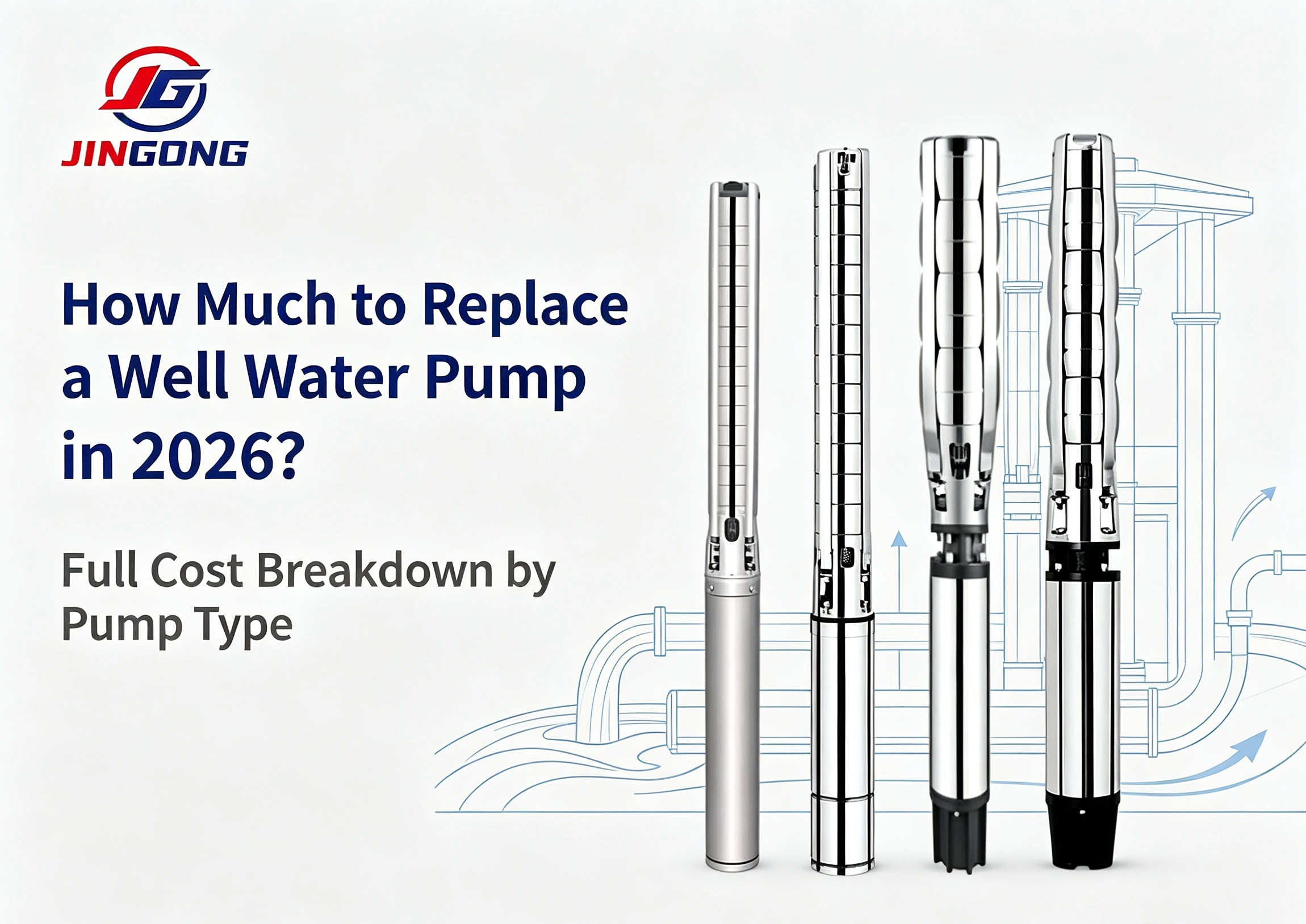
Expert Guide by a 15-Year Well Water Pump Manufacturer — Covering submersible, land self-priming, solar, and diesel/gasoline well pumps. Featuring 2026 price benchmarks, regional labor costs, hidden fees, and ROI analysis for homeowners, farmers, and contractors.
Introduction: The Rising Cost of Well Pump Replacement in 2026
As we navigate 2026, the global water industry faces significant shifts. Raw material costs for copper and 304 stainless steel remain elevated, while skilled labor rates for well installers continue to climb across North America, Australia, and Europe. Concurrently, solar pumping technology has reached a maturity tipping point, making it a primary consideration for off-grid properties. As a leading Well Water Pump manufacturer with twelve years of specialized experience, Jingong Technology has supplied equipment for thousands of well projects—from residential deep wells in Texas to agricultural irrigation systems in Southeast Asia and municipal water supply in Australia.
Through our extensive field data, we observe three recurring challenges faced by end-users: First, a lack of transparency regarding why quotes for seemingly identical pumps can vary by 200-300%. Second, the prevalence of “hidden fees” related to old pump retrieval, pipe corrosion, or electrical upgrades. Third, the high long-term cost of selecting an incorrect pump type, leading to premature failure and repeated capital expenditure. This comprehensive guide addresses these issues head-on.
What You Will Learn: An exhaustive 2026 cost breakdown categorized by our four core pump types, a country-by-country comparison of labor rates, a checklist for avoiding hidden charges, a lifecycle cost analysis comparing new OEM pumps to refurbished units, and insider strategies to reduce your total expenditure by sourcing directly from a Well Water Pump manufacturer.
At Jingong, we don’t just sell pumps; we engineer water solutions. Our expertise as a Well Water Pump manufacturer allows us to provide insights unavailable from retailers or general contractors. We encourage you to explore our specific product lines relevant to this discussion:
Key Factors Determining Your 2026 Well Pump Replacement Cost

Before analyzing specific pump prices, it is crucial to understand the variables that influence the final invoice. A reputable Well Water Pump manufacturer evaluates these six factors before providing a quotation.
1. Pump Type and Horsepower (HP)
This is the primary cost determinant. A 4-inch submersible pump designed for a 300-foot well requires significantly more engineering and materials than a 1.5 HP jet pump for a 25-foot shallow well. Furthermore, power sources vary: solar pumps require PV panels and MPPT controllers, while diesel pumps necessitate fuel systems and robust engines. As a full-spectrum Well Water Pump manufacturer, we ensure you only pay for the technology necessary for your specific hydraulic conditions.
2. Well Depth and Diameter
Depth dictates the length of required electrical cable, drop pipe, and the lift capacity of the pump. According to recent 2026 public infrastructure bidding data from Inner Mongolia, China, the all-inclusive cost for a 200-meter (656 ft) deep monitoring well—including casing, a high-efficiency submersible pump, wire rope, and heat tracing—was standardized at ¥320/meter (approx. US$44/m) with a 2-year warranty (Inner Mongolia Forestry Group, 2026). For international residential applications, depth remains the most volatile variable in any estimate.
3. Supporting Components and Accessories
The pump itself is often only 40-60% of the total project cost. Essential accessories include pressure tanks, control boxes (or Variable Frequency Drives), check valves, electrical wiring, and mounting hardware. In a 2026 rural water supply maintenance tender in Guizhou Province, a 9.2 kW submersible pump unit was listed at ¥8,500 (US$1,170), while the mandatory inverter added ¥4,100 (US$565), and installation labor accounted for ¥1,275 (US$175) (Hezhang County Government, 2026). Always demand an itemized parts list from your supplier.
4. Regional Labor Rates
Geographic location dramatically impacts installation costs. While labor in rural Philippines might be US$15/hour, certified well drillers in Sydney or California often exceed US$150/hour. We provide a detailed labor matrix in Section 4.
5. Quality: OEM vs. Grey Market Pumps
A genuine Well Water Pump manufacturer utilizes 304 stainless steel casings, high-grade silicon steel stator cores, and 100% copper windings. Grey market or counterfeit pumps often use aluminum windings and plastic impellers, leading to rapid failure. We quantify this difference in Section 5.
6. Site-Specific Contingencies
Unforeseen issues such as a stuck pump, collapsed well casing, or inadequate electrical service can increase costs by 20-40%. Preparation is key.
2026 Full Cost Breakdown by Pump Type (Manufacturer’s Analysis)

As an export-oriented Well Water Pump manufacturer serving over 40 countries, the following tables represent our 2026 FOB factory pricing combined with average global installation costs. These figures serve as a benchmark; actual costs depend on local tariffs, taxes, and site logistics.
3.1 Submersible Well Pumps: The Deep Well Standard
Ideal for wells exceeding 25 feet. As a core product of our Well Water Pump manufacturer capabilities, our stainless steel submersible pumps offer superior corrosion resistance and efficiency.
| Cost Component | Shallow Well (≤100 ft / 30m) | Deep Well (100–400 ft / 30–120m) |
|---|---|---|
| Pump Unit (Export Price) | $180 – $450 USD | $450 – $1,200 USD |
| Submersible Cable (Per Ft/M) | $0.8 – $1.5 x Length | $0.8 – $1.5 x Length |
| Control Box / VFD | $120 – $350 | $200 – $600 |
| Drop Pipe & Fittings | $80 – $200 | $200 – $700 |
| Labor: Pull Old + Install New | $300 – $700 | $700 – $1,800 |
| TOTAL ESTIMATED COST | $680 – $1,800 USD | $1,600 – $4,500+ USD |
Material Insight: Authentic 304 stainless steel is non-negotiable for longevity. In a 2026 government procurement project in Inner Mongolia, a 13 kW stainless steel submersible unit (including logistics, installation, and auxiliary materials) was contracted at ¥36,500 (approx. US$5,000) (Inner Mongolia Procurement Center, 2026). Sourcing directly from a Well Water Pump manufacturer like Jingong provides access to this same metallurgical quality without the retail markup.
👉 View Technical Specs: Stainless Steel Submersible Pumps
3.2 Land Self-Priming Well Pumps: The Shallow Well Economy
For wells less than 25 feet deep, a surface-mounted self-priming pump is the most cost-effective solution. Our range as a Well Water Pump manufacturer covers 1 HP residential units to 3 HP farm irrigation models.
| Component | 1 HP Residential Model | 2–3 HP Farm/Orchard Model |
|---|---|---|
| Pump Unit (Factory Export) | $60 – $140 | $140 – $350 |
| Suction Hose & Foot Valve | $40 – $90 | $90 – $180 |
| Pressure Tank & Switch | $120 – $250 | $200 – $400 |
| Installation Labor | $150 – $400 | $250 – $600 |
| TOTAL ESTIMATED COST | $370 – $880 | $680 – $1,530 |
These pumps are ideal for garden irrigation and domestic use where the water table is high. They are easier to service than submersible pumps because they remain above ground.
👉 Explore Land Self-Priming Pump Series
3.3 Solar Powered Well Pumps: The 2026 Growth Leader
Solar pumps eliminate electricity operating costs entirely. As an innovative Well Water Pump manufacturer integrating advanced MPPT (Maximum Power Point Tracking) algorithms, our systems are engineered for maximum yield even in low-light conditions.
| Component | Small System (0.5–2.2 kW) | Medium System (3–11 kW) | Large System (15–30 kW) |
|---|---|---|---|
| DC/AC Solar Pump | $200 – $600 | $600 – $1,500 | $1,500 – $4,000 |
| Solar PV Panels | $150 – $500 | $800 – $2,500 | $3,000 – $9,000 |
| MPPT Controller / Inverter | $100 – $300 | $400 – $1,200 | $2,000 – $6,000 |
| Battery Bank (Optional) | $200 – $600 | $800 – $2,500 | $3,000 – $10,000 |
| Mounting & Labor | $200 – $500 | $500 – $1,200 | $1,500 – $4,000 |
| FULL SYSTEM COST | $750 – $2,500 | $3,100 – $8,900 | $11,000 – $33,000 |
Market Data: A complete 4 kW solar pumping system (IP65 rated, wide voltage input, 3-year warranty) was listed at US$3,500 – US$3,900 in early 2026 (GoldSupplier Industry Listing, 2026). Similarly, a hospital solar pumping initiative in Weifang, China, capped total project costs at ¥18,000 (approx. US$2,500) (Weifang Government Report, 2026).
ROI Analysis: Assuming a grid electricity cost of US$0.15/kWh, a 1 kW electric pump running 8 hours daily incurs ~US$440 in annual energy costs. A solar pump typically pays back its initial premium within 3–5 years and operates virtually free for the subsequent decade. This economic reality drives every forward-thinking Well Water Pump manufacturer to prioritize solar R&D.
👉 Get Off-Grid Solar Well Pump Kits
3.4 Gasoline & Diesel Pumps: Remote & Emergency Applications
For sites lacking grid power, flood control, or high-volume temporary irrigation, engine-driven pumps are indispensable. As a heavy-duty Well Water Pump manufacturer producing 2″–8″ diesel and gasoline self-priming pumps, our 2026 pricing reflects industrial-grade durability.
| Pump Size & Engine Type | Unit Export Price (FOB) | Installed Cost (w/ Tank, Hoses, Labor) |
|---|---|---|
| 2″ Portable Gasoline Pump | $30 – $70 | $200 – $500 |
| 3″–4″ Diesel Pump (6–10 HP) | $180 – $330 | $500 – $1,200 |
| 4″ High-Flow Diesel (Farm) | $600 – $1,700 | $1,500 – $3,500 |
| 6″–8″ Industrial Diesel | $1,390 – $1,690 | $3,000 – $6,000 |
Sourcing Data: 2026 wholesale directories indicate 2″–8″ gasoline and diesel pumps range from US$29 to US$1,707 per unit FOB from verified Chinese manufacturers (Made-in-China Verified Supplier, 2026).
Operational Cost Warning: A 6 HP diesel pump consuming 1.5 L/hr at US$1.10/L costs approximately US$4.00 per hour to operate. This is roughly 3 times the cost of grid power and 10 times the cost of solar energy. As a responsible Well Water Pump manufacturer, we advise these pumps are best suited for intermittent or emergency use rather than continuous daily operation.
Itemized Cost Breakdown: Labor, Parts & Hidden Fees in 2026
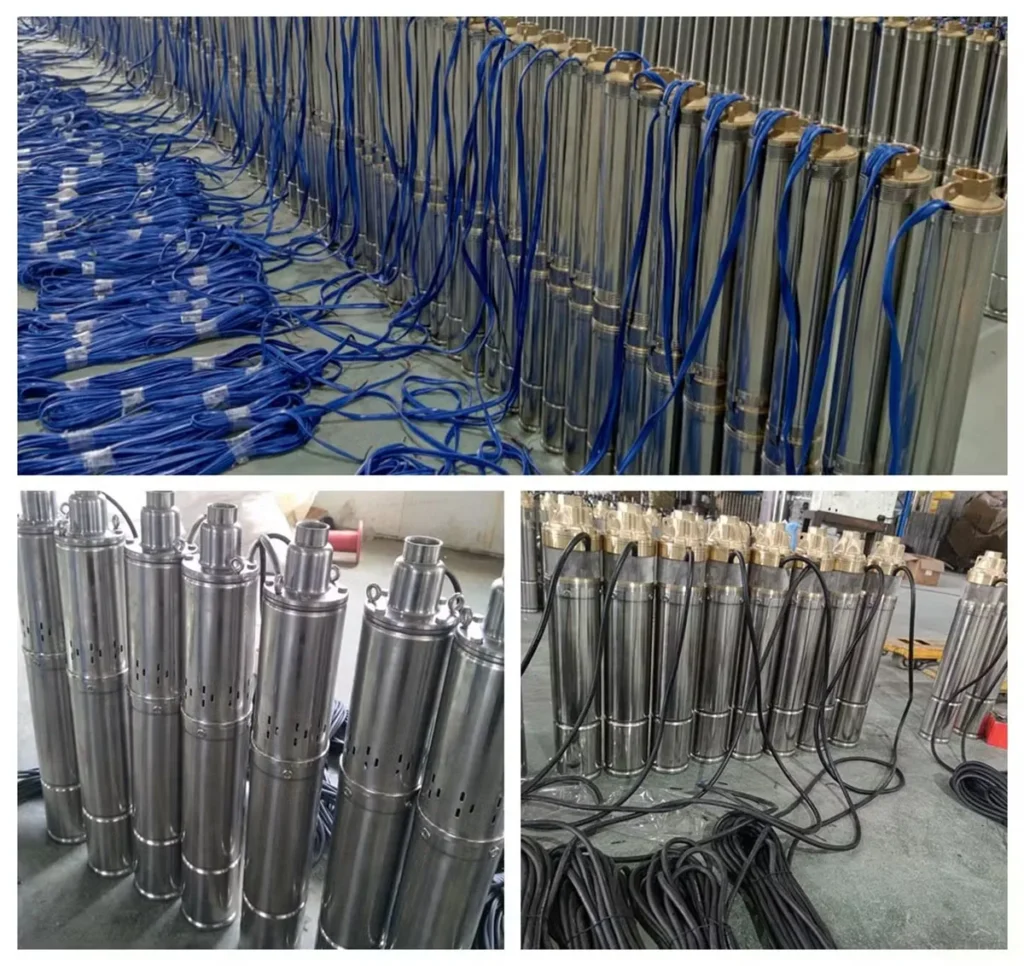
Global Well Pump Installation Labor Cost Comparison (2026)
| Region | Avg. Labor Rate (Per Hour) | Typical Submersible Replacement Job |
|---|---|---|
| USA (Rural) | $75 – $130 | $800 – $2,000 |
| USA (Metropolitan) | $120 – $180 | $1,500 – $3,500 |
| Australia | $90 – $160 | $1,200 – $3,000 |
| Canada | $80 – $140 | $900 – $2,500 |
| Philippines / Vietnam | $8 – $20 | $150 – $500 |
| Middle East (UAE/KSA) | $30 – $70 | $400 – $1,200 |
| Western Europe | $100 – $170 | $1,300 – $3,200 |
Common Replacement Parts Price List (2026 Estimates)
- Control Box / VFD: $120 – $600 (Depends on HP and features)
- Pressure Tank (20–80 Gallon): $150 – $500
- Submersible Cable: $0.8 – $1.5 per foot
- Drop Pipe (PVC/SS, per 10 ft): $8 – $40
- Check Valves & Fittings: $15 – $60 each
- Pressure Switch: $20 – $50
- Well Cap & Seal: $30 – $120
Hidden Extra Charges to Prepare For
⚠️ These fees frequently surprise property owners. Insist on a written contingency clause in your contract:
- Old Pump Retrieval: If the pump is stuck or the pipe is sheared off, expect $150 – $600 extra.
- Drop Pipe Replacement: If existing pipes are corroded, add $10 – $40 per foot.
- Electrical Service Upgrade: Upgrading breakers or wiring: $200 – $800.
- Well Deepening / Re-Drilling: Geological dependency; approx. $80 – $320 per meter.
- Jet Pump Conversion: Converting to a submersible setup: $500 – $1,500.
- After-Hours/Emergency Premium: 1.5x – 2x standard labor rates.
Partnering directly with a Well Water Pump manufacturer like Jingong eliminates distributor markups and ensures transparent, itemized quotations, potentially reducing your total project cost by 30–50%.
New OEM Pump vs. Second-Hand / Refurbished: 2026 Lifecycle Cost Analysis

Some property owners opt for refurbished pumps to minimize upfront CAPEX. However, as a professional Well Water Pump manufacturer, our longitudinal tracking of product performance reveals a stark contrast in Total Cost of Ownership (TCO).
| Metric | New Stainless Steel (Jingong OEM) | Refurbished / Grey Market |
|---|---|---|
| Upfront Cost (4″ Sub.) | $450 – $1,200 | $200 – $500 |
| Expected Lifespan | 8–15 Years | 2–4 Years |
| Warranty Coverage | 2–5 Years | 0–6 Months |
| Motor Burnout Risk | Low (Copper Windings, Thermal Cutoffs) | High (Aluminum Windings, No Protection) |
| Avg. Annualized Cost (10 Yrs) | $45 – $120 / Year | $130 – $330 / Year (+ Repeated Labor) |
| 10-Year TCO | $450 – $1,200 + 1 Installation | $600 – $1,500 + 2–3 Installations |
The conclusion is unequivocal: purchasing directly from a Well Water Pump manufacturer is not merely about upfront savings—it is about asset preservation and reliability. Jingong provides 2–5 year warranties on all stainless steel submersible pumps and offers lifetime technical support for B2B clients.
How to Diagnose Well Pump Failure: Signs by Pump Type
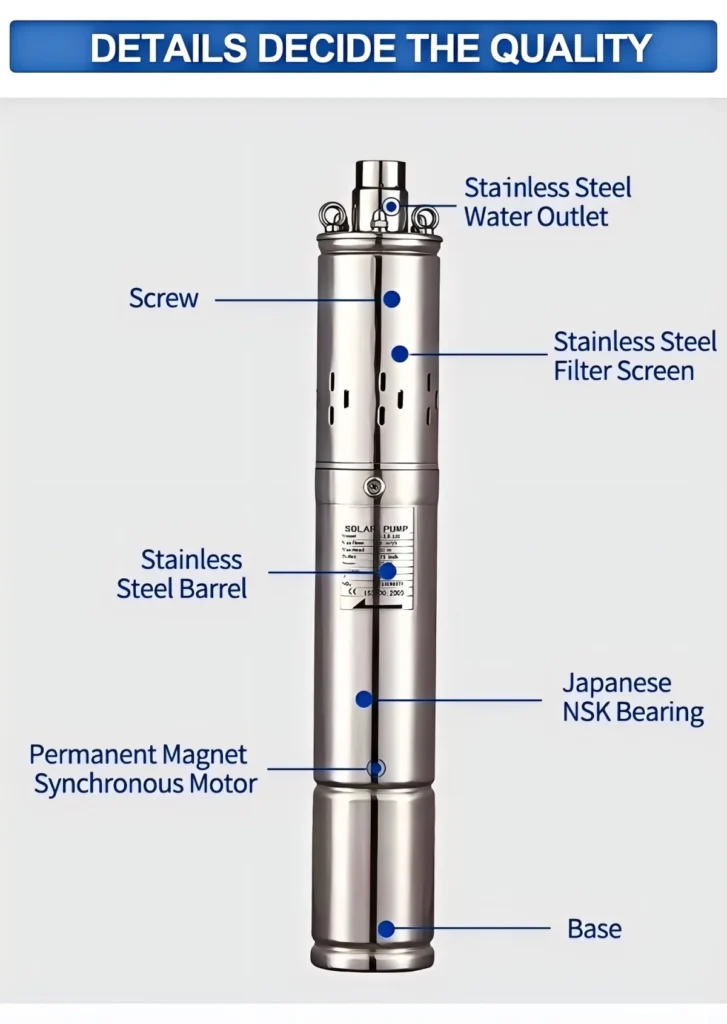
Recognizing failure symptoms early can prevent catastrophic failure and costly well damage. Based on our experience as a Well Water Pump manufacturer, here are the definitive signs:
🔵 Submersible Well Pump Failure
- Surging Water Pressure: Inconsistent flow often indicates a failing impeller or clogged intake.
- Frequent Cycling: Turning on and off rapidly suggests a waterlogged pressure tank or a leak in the drop pipe.
- Air Spitting from Faucets: Indicates a breach in the suction line or a falling water table.
- Muddy or Sandy Water: Signifies a failed pump seal or screen, allowing sediment ingress.
🟢 Land Self-Priming Pump Failure
- Loss of Prime: Inability to hold water after initial priming usually points to a faulty mechanical seal or cracked suction line.
- Overheating: Excessive heat from the pump body during short cycles indicates internal friction or cavitation.
- Loud Noise/Vibration: Worn bearings or an unbalanced impeller.
🟠 Solar Well Pump Failure
- Reduced Output on Sunny Days: Could be clouded PV panels, but more likely indicates MPPT controller failure or battery degradation.
- No Output in Morning: Potential issue with the low-voltage disconnect setting or a dead battery bank.
- Error Codes on Controller: Requires diagnostic software, usually available only from the original Well Water Pump manufacturer.
🔴 Diesel/Gasoline Pump Failure
- Hard Starting: Fouled spark plugs (gas) or glow plugs (diesel), or stale fuel.
- Excessive Smoke: Black smoke (rich fuel mixture), Blue smoke (burning oil), White smoke (coolant leak or cold start).
- Loss of Suction: Worn out impeller or clogged inlet filter.
Expert Money-Saving Strategies for 2026 (From a Well Water Pump Manufacturer)

Leverage these insider tips from our 12 years of manufacturing expertise to optimize your investment:
- Right-Size Your Pump: Oversizing a pump wastes energy and accelerates wear; undersizing causes overheating. Use our free hydraulic calculation tools or consult our engineers to match GPM (Gallons Per Minute) and TDH (Total Dynamic Head) precisely.
- Capitalize on Solar Incentives: Many U.S. states, Australia, and EU nations offer tax credits or rebates covering 30-50% of solar pump installation costs. Ask your installer or contact us for documentation supporting your application.
- Bulk Procurement for Farms/Contractors: If managing multiple wells, leverage your buying power. As a Well Water Pump manufacturer, we offer tiered OEM pricing and custom branding for bulk orders. Contact our B2B department for a tailored quote.
- Eliminate the Distribution Chain: Traditional distribution involves 4-5 markups (Factory -> Exporter -> Importer -> Wholesaler -> Retailer -> Installer). Buying directly from a source like Jingong cuts out the middlemen, passing the savings to you.
- Implement Preventative Maintenance: Test your pressure tank’s air charge quarterly, clean inlet screens annually, and check amp draw monthly. A $20 pressure gauge can prevent a $1,000 pump failure.
Frequently Asked Questions (FAQ)
- Q1: What is the “all-in” cost to replace a residential well pump in 2026?
- A: For a standard 150-foot well using a 4-inch stainless steel submersible pump, the average all-in cost in the USA is between $2,000 and $3,500. This includes the pump ($600-$1,200), parts ($400-$800), and labor ($1,000-$1,500). Prices vary significantly based on local labor rates and geological conditions.
- Q2: Are solar well pumps worth the higher initial investment?
- A: Absolutely, in the long term. While the upfront cost is 50-100% higher than AC pumps, the elimination of electricity bills results in a payback period of 3-5 years in sunny regions. Over a 15-year lifespan, a solar pump saves thousands in operating expenses compared to grid or diesel power.
- Q3: Can I replace a well pump myself to save money?
- A: DIY replacement is feasible for shallow well jet pumps or surface pumps if you have mechanical aptitude. However, replacing a deep well submersible pump involves specialized tools (pipe wrenches, torque converters), heavy lifting, and high-voltage electrical connections. Mistakes can lead to a dropped pump (requiring costly fishing) or electrical hazards. We recommend professional installation for submersibles.
- Q4: How long does a factory-produced well pump last?
- A: A high-quality pump from a reputable Well Water Pump manufacturer using 304 stainless steel and copper windings typically lasts 10-15 years. Sand infiltration, running the pump dry, and power surges are the primary killers of pump longevity.
- Q5: Why do some installers quote $1,500 while others quote $4,000 for the “same” job?
- A: The discrepancy usually lies in the equipment quality and scope of work. Low bids often involve “builder-grade” pumps with plastic components and aluminum wiring. High bids typically include premium stainless steel pumps, new control boxes, new drop pipe, and comprehensive warranties. Always compare the model numbers and material specs.
Conclusion: Secure Your 2026 Water Supply with a Trusted Manufacturer
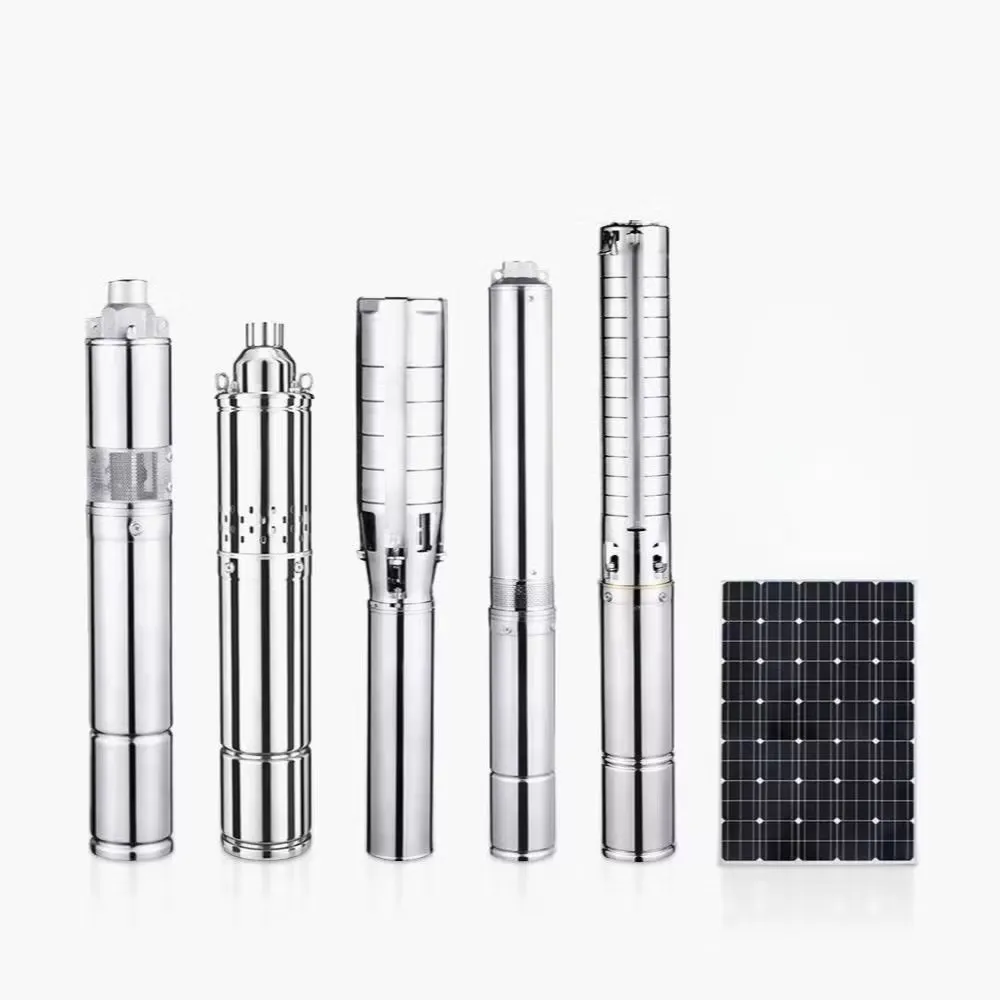
Replacing a well pump is a critical infrastructure investment. In a market saturated with middlemen and variable quality, partnering with a vertically integrated, 12-year veteran Well Water Pump manufacturer is your best defense against overspending and underperformance. Zhejiang Jingong Technology combines advanced engineering, stringent quality control, and global export experience to deliver reliable water solutions—whether you require the silent efficiency of a deep well submersible, the eco-friendly power of a solar array, or the rugged dependability of a diesel engine.
Don’t leave your water security to chance. Choose the factory that builds the pumps, not just the one that sells them.
Get Your 2026 Factory-Direct Quote
Skip the distributor markup. Provide your well depth, desired flow rate (GPM), and power preference. Our senior engineers will respond within 12 business hours with a precise technical recommendation and a transparent FOB price list.

0 Comments