


1. Introduction
In the complex landscape of industrial fluid management, selecting the optimal water transfer solution is critical for operational efficiency. A surface pumps is distinct from other pumping mechanisms in that it is mounted on dry land—above the water level—rather than being submerged within the fluid source. While submersible pumps are installed entirely underwater in wells or basins, surface pumps remain accessible for easier maintenance and monitoring.
For industrial buyers in sectors ranging from large-scale agriculture to manufacturing and municipal water transfer, the choice of pump can dictate the success of the entire system. An incorrectly sized pump can lead to energy waste, frequent mechanical failures, and costly downtime. Conversely, a well-engineered system ensures consistent flow and pressure, vital for irrigation networks and cooling systems.
At JG PowerTech, we recognize that navigating the technical specifications of these units can be challenging. This guide is designed to help industrial buyers understand the critical technical distinctions, interpret performance curves, and vet manufacturers effectively to ensure they source reliable, high-performance equipment.
2. Understanding the Mechanics: Surface vs. Submersible
To choose the right equipment, buyers must first understand the fundamental mechanical differences between the two main categories of pumps. As noted in general industry guidelines, the core distinction lies in how the water is moved: Submersible pumps push water up, whereas surface pumps pull water via suction.
- The Physics of Suction Lift:
Because surface pumps are mounted above the water source, they rely on creating a vacuum at the inlet. Atmospheric pressure then forces the water up the pipe into the pump. This creates a physical limitation known as “suction lift.” Regardless of the pump’s horsepower, physics dictates that a surface pump can typically only lift water vertically about 25 feet (approximately 7.6 meters) at sea level. If your water source is deeper than this, a standard surface setup may cavitate or fail to prime, necessitating a deep well jet assembly or a submersible alternative. - Positive Suction Head:
However, not all surface applications involve lifting water from deep underground. In many industrial scenarios, such as transferring water from a storage tank to a processing line, the water level in the tank may be physically higher than the pump inlet. This creates a “positive suction head,” where gravity assists the pump, eliminating suction lift constraints and allowing for highly efficient operation.
Whether you are dealing with a shallow well application or a booster system with positive pressure, understanding these mechanics is the first step in selecting the correct model from our Surface Pump Series. By accurately calculating your total dynamic head and suction conditions, you can ensure your system operates within its peak efficiency range.
3. Types of Surface Pumps for Industrial Use
Industrial applications vary wildly, from agricultural irrigation to manufacturing cooling lines. Consequently, manufacturers like JG PowerTech offer a diverse range of configurations within their Surface Pump Series to meet specific hydraulic demands.
- Centrifugal / Shallow Well Pumps:
These are the workhorses of high-volume water transfer. Designed for applications where the water table is less than 25 feet below the pump intake, centrifugal pumps utilize a rotating impeller to create velocity. They are ideal for moving large quantities of water quickly. For example, the CPM Series High Pressure Centrifugal Pump is engineered specifically for agricultural environments where consistent flow rates are required to cover large acreage efficiently.
- Convertible Jet Pumps:
Jet pumps are versatile units that incorporate an “ejector” mechanism. By forcing a portion of the water back through a venturi nozzle, they create a vacuum that aids in lifting water. While a standard setup works for shallow wells, “convertible” models can be configured with the ejector package down in the well, allowing them to pull water from depths of up to 90 feet. While they generally offer lower flow rates than standard centrifugal pumps, their ability to handle greater depths makes them indispensable in areas with fluctuating water tables. - Booster and High-Pressure Solutions:
In many industrial setups, the water is already available (from a tank or municipal line) but lacks the necessary pressure for filtration systems or long-distance piping. Booster pumps are designed to increase the PSI of an existing line.For applications requiring portability without sacrificing power, the Portable multifunctional diaphragm pump offers a unique solution, combining ease of movement with the ability to boost pressure for varied site tasks. Similarly, for clean water applications requiring significant head pressure—such as feeding a boiler or a high-rise piping system—the QBS Series Stainless Steel Peripheral Water Pump utilizes a peripheral impeller design to develop high pressure even at lower flow rates.

4. Key Technical Specifications to Evaluate
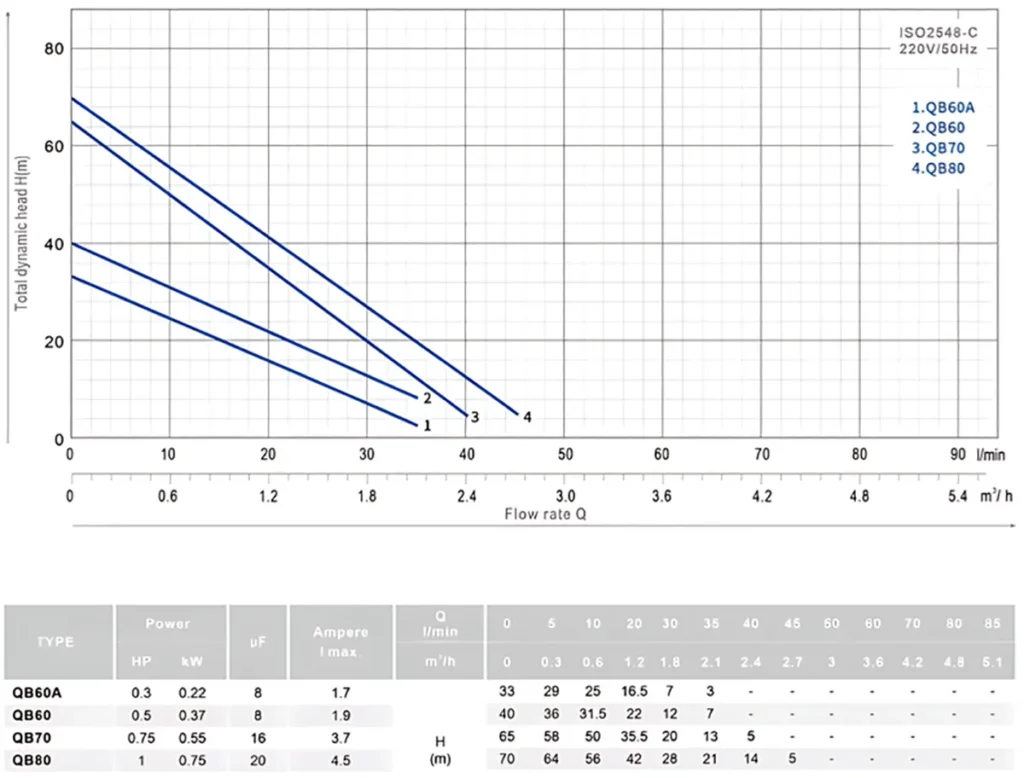
Selecting the right pump requires more than just matching pipe sizes; it involves a careful analysis of the system’s hydraulic curve.
- Flow Rate (GPM/GPH):
The Flow Rate, measured in Gallons Per Minute (GPM) or Gallons Per Hour (GPH), dictates the volume of liquid the pump can move. It is crucial to calculate the specific demand of your application. For instance, an irrigation system with 50 sprinkler heads requires a precise GPM calculation to ensure all heads operate simultaneously. Undersizing the flow rate will result in uneven coverage and equipment strain. - Pressure (PSI) and Head:
Pressure is the force at which the water is delivered. In pump terminology, this is often expressed as “Total Dynamic Head” (TDH). There is an inverse relationship between flow and pressure: as the required pressure increases (pumping higher or through restrictive filters), the flow rate decreases. Buyers must consult the manufacturer’s performance curve to ensure the pump can deliver the required GPM at the required PSI. - Priming Requirements:
One of the most critical operational aspects of surface pumps is priming. Unlike submersible pumps, surface units contain air in the intake line upon installation. This air must be evacuated before the pump can function; otherwise, the pump will “run dry,” causing rapid seal failure and overheating.To mitigate this risk, many modern industrial units are designed to be self-priming. The ZB Series 220V Self- Priming Water Pump is an excellent example of this technology. Once the pump casing is initially filled with water, the design allows it to evacuate air from the suction line automatically on subsequent startups, significantly reducing maintenance labor and the risk of operator error. - Motor Protection:
Industrial pumps often run for extended cycles. It is vital to ensure the motor is equipped with thermal overload protection. This feature automatically shuts down the motor if it reaches unsafe temperatures due to jamming, voltage fluctuation, or running dry, preventing catastrophic burnout and extending the equipment’s lifespan.
7. Conclusion
Selecting the right equipment doesn’t have to be complicated if you follow a logical process. To ensure you get the best performance and longevity from your investment, simply remember these three critical steps:
- Determine Suction Lift: Verify the vertical distance from your water source to the pump intake to ensure the pump can physically move the water.
- Calculate GPM & PSI: Assess your specific flow rate (Gallons Per Minute) and pressure requirements based on your application, whether it’s drip irrigation or household boosting.
- Select Pump Type: Match these figures with the appropriate model, such as our robust CPM Series for high pressure or the versatile ZB Series for self-priming needs.
At JG PowerTech, we understand that every project has unique demands. If you are unsure which specifications match your needs, or if you require a specialized configuration, we are here to help.
Ready to upgrade your water system?
Contact Us today for a free consultation on custom surface pump solutions tailored specifically for your industry.

0 Comments