
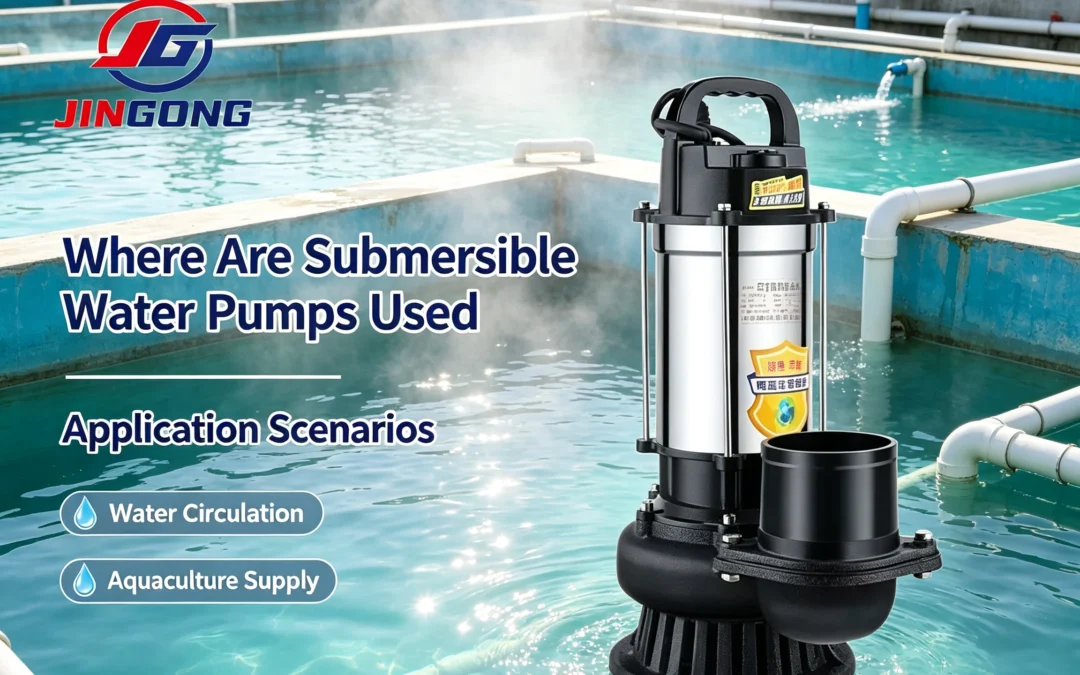
Introduction – Why Submersible Pumps Dominate Global Water Movement
When your water source sits below ground, inside a borehole, at the bottom of a construction pit, or in a sewage wet well, a surface pump simply cannot reach it. Atmospheric pressure limits suction lift to ~7–8 meters (25 ft). Beyond that, you need a pump that pushes water upward instead of pulling it — and that’s exactly what a submersible water pump is designed to do.
At Jingong Technology, we’ve been manufacturing water pumping solutions for 15+ years — from submersible & surface electric pumps to solar-powered and diesel/gasoline portable units. We supply agricultural cooperatives in Africa, dewatering contractors in Southeast Asia, municipal wastewater plants, and residential deep-well projects across 30+ countries. This guide distills what we’ve learned from thousands of field installations into one EEAT-grade resource.
What we’ll cover:
- How submersible pumps work (and why they beat surface pumps in deep/debris applications)
- 7 core application scenarios — residential, agricultural, construction, municipal, industrial/mining, emergency flood, aquaculture/landscape
- Submersible vs surface pump: when to choose which
- Power-type matching: electric / solar / diesel-gasoline — and how Jingong’s 4 product lines map to each
- 6-dimension selection framework (flow, head, media, power, material, IP rating)
- FAQs written to target Google Featured Snippets
💡 Quick Definition: A submersible water pump is a sealed motor+pump assembly that operates fully submerged in the fluid it moves. The Submersible Water Pump motor sits below the pump section, water flowing past provides cooling, and the entire unit “pushes” fluid to the surface through a riser pipe. No suction limit, no cavitation, near-silent.
What Is A Submersible Water Pump? Working Principle & Structure
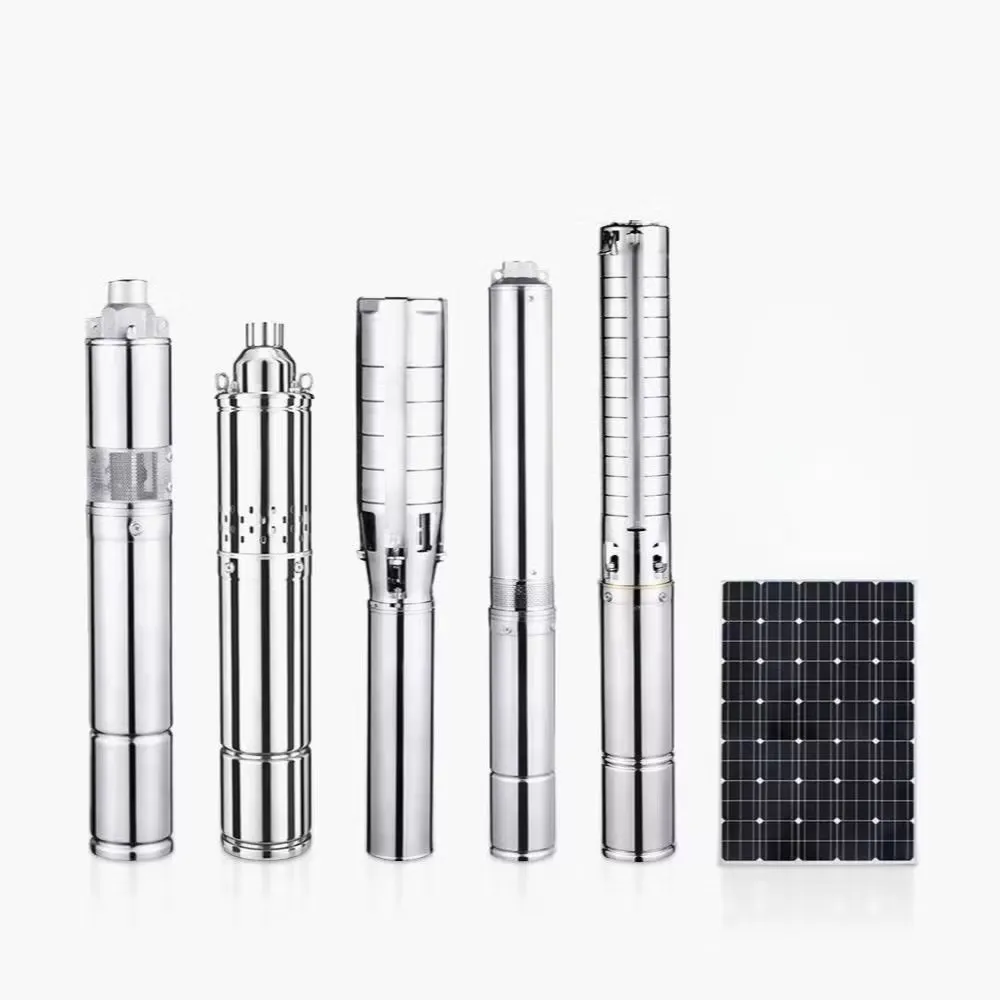
The “Push” Mechanism — Why It Outperforms Suction at Depth
A surface pump creates a vacuum to pull water up. Submersible Water Pump Physics caps that at ~7–8 m. A submersible pump lives below the water level and uses multi-stage impellers to push water upward through a drop pipe. No theoretical depth limit — commercial units operate at 300–500 m+ in deep boreholes.
Core components (field-terminology your buyers search for):
| Component | Function | Jingong Spec Note |
|---|---|---|
| Hermetically sealed motor | Oil-filled or water-filled, waterproof | IP68, Class F insulation |
| Impeller stages (diffuser bowls) | Each stage adds head; 30–50 stages for 200 m lift | Cast iron / SS304 / SS316 |
| Intake screen / strainer | Blocks sand >0.5 mm | Critical for borehole life |
| Submersible power cable | Waterproof, voltage-drop sized | 3×+GND, EPR/PVC jacket |
| Riser / drop pipe | HDPE (small) or G.I. steel (large) | Velocity 1.5–3.0 m/s |
Three Advantages You Can’t Get from a Surface Pump
- No cavitation — Submersible Water pump is already under hydrostatic pressure, so vapor bubbles don’t form. Longer impeller life.
- Near-silent — water dampens motor noise; critical for residential basements and hotel landscapes.
- No priming needed — self-priming by design; surface pumps can lose prime if air leaks in.
Power-Type Classification (Preview)
- Electric submersible — grid-tied, municipal/residential/industrial
- Solar submersible — off-grid farms, remote boreholes, NGO water projects
- Diesel/gasoline water pump — mobile, emergency, no-grid sites, flood relief
⚠️ Common buyer mistake: Specifying a submersible pump in clean water application but forgetting sand content. In boreholes with >50 ppm sand, you need hardened impellers or a vortex sewage-type design — otherwise you’re rebuilding at 6 months.
7 Core Application Scenarios of Submersible Water Pump

1. Residential & Domestic Household Use
Typical buyers: Homeowners, villa developers, property management, basement waterproofing contractors.
Sub-scenarios:
- Basement flooding & sump pits — after heavy rain, groundwater seepage into foundations. A 0.5–1.5 HP automatic submersible sump pump with float switch keeps the pit dry.
- Domestic deep well — rural homes where static water level >8 m. 4″ borehole submersible (SS304, 0.37–2.2 kW) is the global standard.
- Pond & fountain circulation — koi ponds, garden water features. Small silent submersibles (under 0.25 kW) with built-in filtration.
- Septic / sewage lift — homes not on gravity sewer; grinder or non-clog sewage submersible pumps (2″–3″ solids handling).
Jingong product match: Small electric submersibles (0.25–2.2 kW), SS304 domestic borehole series, utility drainage pumps.
2. Agricultural Irrigation & Farm Water Supply (⭐ B2B Priority)
This is the single largest B2B inquiry driver for Jingong’s Submersible Water Pump solar + electric + diesel lines. Let’s break it down by water source.
Farms with Grid Access → Electric Submersible
Deep well boreholes (30–200 m) feeding drip/sprinkler systems. 4″–6″ borehole pumps, 1.5–15 kW, SS304 as baseline, SS316 if saline.
Off-Grid / Remote Farms → Solar Submersible (Jingong Key Line)
Africa Sahel, Central Asia, Latin American highlands — no grid, 300+ sunny days. Solar submersible pumps pair a BLDC/MPPT controller with a brushless submersible motor. No diesel running cost, 10+ year lifespan.
🌾 Field pattern we see repeatedly: 15 m³/h × 40 m head, 2.2 kW DC solar submersible, 4×350W panels, 3000L tank. Powers 8 ha drip irrigation for a cooperative. Payback vs diesel: ~18 months.
Pasture / Livestock → Portable Diesel Submersible
Seasonal grazing, no fixed infrastructure. Trailer-mounted diesel engine + submersible pump end, 4″ discharge, drag to river/lake, run 10 hours continuous.
Jingong product match: Solar Agri Series, Diesel Portable Units.
3. Construction & Civil Engineering Dewatering (⭐ High-Flow B2B)
Buyers: Submersible Water Pump Site contractors, dewatering service companies, rental fleets, infrastructure EPC.
Sub-scenarios:
- Foundation pit / excavation dewatering — high flow, moderate head (8–25 m), often with silt/sand. Wear-resistant vortex impeller or semi-open.
- Tunnel / metro / underground station — confined space, 3-phase electric submersible, often auto-coupled rail system for retrieval without entering pit.
- Roadwork / bridge pier — portable units, quick deploy.
Spec sweet spot: 3–30 kW, flow 20–300 m³/h, head 10–50 m, non-clog through 50–80 mm solids.
Jingong product match: Heavy-duty dewatering submersible, wear plate + hard alloy impeller option, auto-coupling system available.
4. Municipal & Urban Water Treatment
Buyers: Municipalities, EPC contractors, WWTP operators, urban drainage bureaus.
Applications: Sewage wet well transfer (non-clog, 80 mm solids); Stormwater pumping stations; River/lake regulation (high-flow low-head axial or mixed-flow submersibles); High-rise building water supply booster (submersible borehole + VFD).
Jingong product match: Sewage submersible series, large flow axial flow pumps.
5. Industrial & Mining Operations (⭐ High Ticket)
Buyers: Mine operators, industrial plant engineers, EPC for mineral processing.
- Mine shaft dewatering — explosive atmosphere zones → flameproof motors required (Ex d rating).
- Slurry / tailings — high-chrome alloy impellers, 27% Cr typical.
Jingong product match: Slurry submersible (high-chrome), mining-duty dewatering, IP68 + Exd options.
6. Emergency Flood Relief & Disaster Rescue (⭐ Seasonal Spike)
Buyers: Fire departments, disaster management agencies, rental fleets, NGOs.
Applications: Urban pluvial flooding; River overbank dewatering; Basement garage flood; Post-typhoon recovery.
Product logic: Portability > efficiency. Diesel/gasoline engine + submersible end, trailer or skid-mounted, quick hose coupling, 6–48 hour continuous run.
🚨 Jingong field note: After 2024 typhoon season SEA inquiries, we standardized a 6″ diesel portable (150 m³/h @ 15 m) with auto-priming assist — most requested spec for municipal fire depts.
Jingong product match: Emergency Diesel Submersible Pumps.
7. Aquaculture & Landscape Water Features
Applications: Fish/shrimp pond circulation + aeration; Ornamental fountains, villa waterfalls; Swimming pool filtration loop.
Jingong product match: Small, silent submersibles, often plastic or SS304, 0.1–0.75 kW.
Submersible Pump VS Surface Pump — Which One Do You Actually Need?
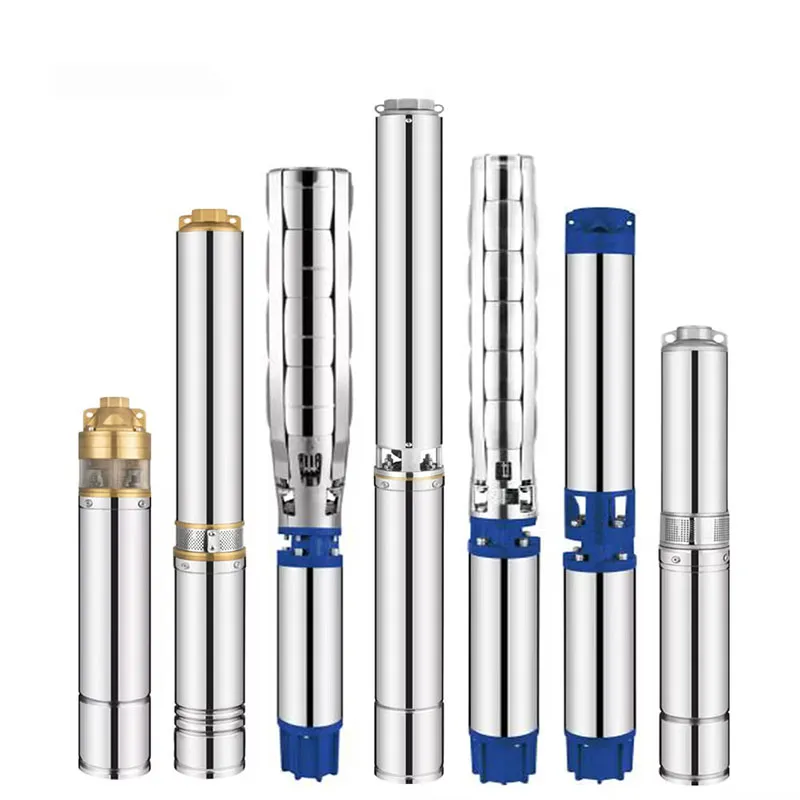
This is the #1 comparison query your buyers type. Let’s make it scannable.
| Dimension | Submersible | Surface (Land) Pump |
|---|---|---|
| Position | Fully underwater | Above ground, near source |
| Max depth | 100–500 m+ | ~7–8 m (physics limit) |
| Priming | Self-priming | May need manual prime |
| Noise | Near-silent | Audible, may need enclosure |
| Maintenance | Retrieve from pit → harder | Above ground → easier |
| Upfront cost | Higher | Lower |
| Best for | Deep wells, sewage, dewatering | Shallow wells, ponds, transfer |
| Jingong line | Submersible Collection | Surface Booster Collection |
✅ Decision Rule:
- Choose submersible if: static water level >7 m OR you’re moving sewage/slurry OR noise matters OR you need dewatering/well.
- Choose surface if: water <7 m deep, easy access, budget-first, maintenance access matters.
Power Type Classification & Application Matching (Jingong 4-Line Matrix)
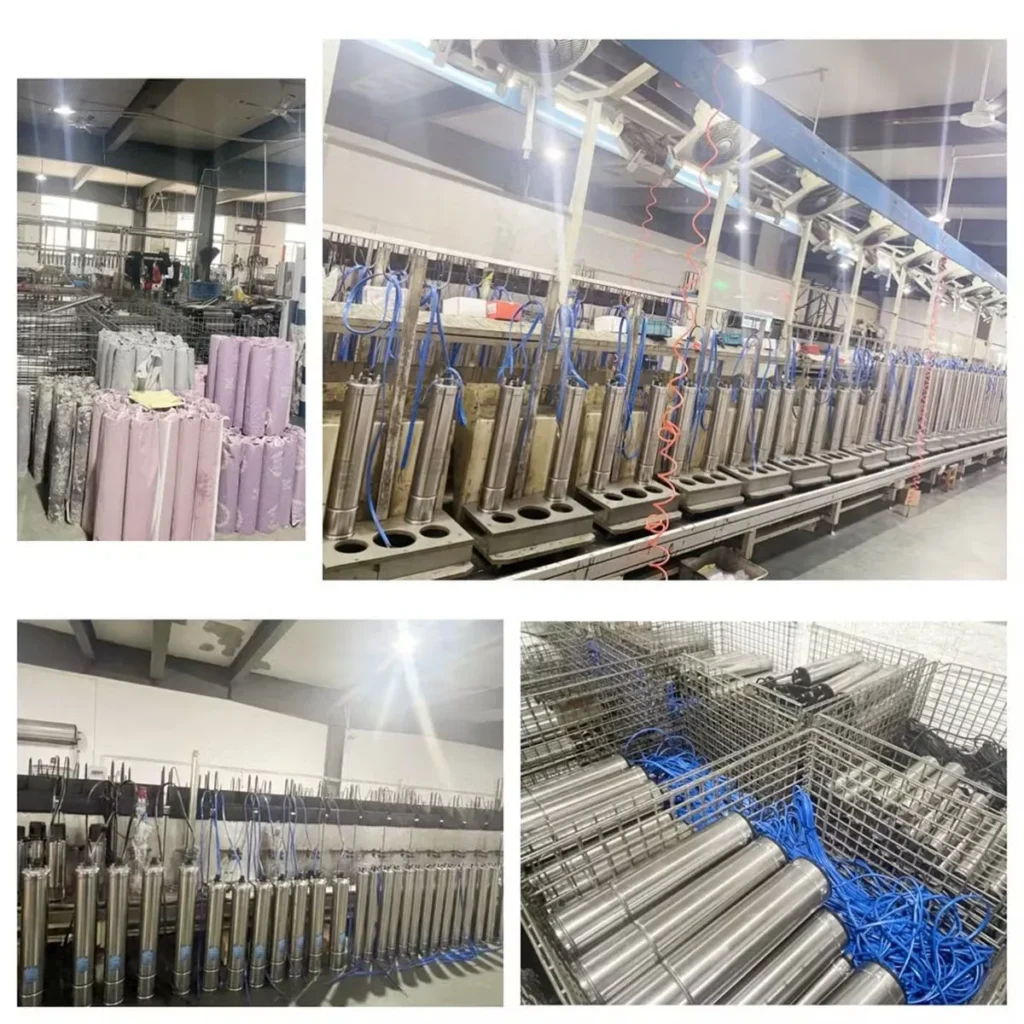
This section differentiates us from generic “pump wiki” content — most competitors only talk electric. As a factory, we map them directly to your sourcing needs:
Electric Submersible Pump
Grid-tied. Residential well, municipal sewage, industrial dewatering, construction site with power.
Solar-Powered Submersible Pump
Off-grid farms, remote villages, NGO water projects, Middle East/Africa/South Asia. BLDC + MPPT, 3-year controller warranty. Explore Solar Line.
Gasoline/Diesel Submersible Pump
No grid + mobile. Emergency flood,野外工程, disaster relief, rental fleet, mining exploration camp. Explore Diesel/Gas Line.
(Bonus) Surface Boosters & Land Pumps
Not submersible, but part of Jingong matrix — shallow well, garden irrigation, tank transfer. Explore Surface Line.
Key Selection Criteria — 6 Dimensions Before You Buy
Every inquiry Jingong receives goes through this checklist. Use it to sound like an expert in your RFQs:
- Flow (m³/h or GPM) — peak demand + 20% buffer.
- Head (m) — static lift + friction loss (pipe + fittings + valves).
- Media — clean water / sandy / sewage / slurry / corrosive → determines impeller type & material.
- Power source — grid / solar / diesel → determines motor + controller.
- Material — Cast iron (cheap, clean water) / SS304 (standard) / SS316 (saline/aggressive) / High-chrome (slurry).
- Ingress protection — IP68 minimum for submersible; Ex d if mine/explosive zone.
📐 Rule of thumb for borehole: Pump OD must be ≤ (casing ID – 25 mm). A 4″ pump needs min 5″ casing; 6″ pump needs min 8″ casing.
Need help calculating? Visit our Pump Sizing Tool.
FAQs — Targeted for Google Featured Snippet
Q1: Are submersible pumps good for irrigation?
A1: Yes — especially for drip/sprinkler fed from deep boreholes. For off-grid locations, solar submersible pumps are the new standard across Africa, Asia, and Latin American agricultural projects.
Q2: Can submersible pumps work in muddy water?
A2: Standard clean-water submersibles — no, sand will erode impellers in weeks. For muddy/sandy conditions, use a vortex or non-clog sewage-type submersible with a hardened impeller.
Q3: Solar vs diesel submersible pump — which is better?
A3: Solar is superior if you have consistent sun and require a stationary install (lower OPEX). Diesel is better for mobility, emergency response, or areas with limited sunlight. Many farms utilize a hybrid approach.
Q4: How long can a submersible pump run continuously?
A4: Properly sized, with clean cooling water flow past the motor → 8,000–12,000 hours between services. Sewage/slurry duty cycles are shorter, typically 3,000–6,000 hours.
Q5: Submersible or surface pump for home use?
A5: If your well is >8 m deep → submersible. If shallow well, pond, or tank transfer → surface. Most rural homeowners globally opt for submersible pumps due to quiet operation and no priming requirements.
Conclusion & Custom Solution — Talk to Jingong
Submersible pumps aren’t a “one-size” product — the gap between a 0.25 kW koi-pond circulator and a 250 kW mine-dewatering unit is vast, despite sharing the same name.
At Jingong Technology, we cover all four corners:
- 🏠 Residential / domestic — small electric submersibles, borehole, sewage lift
- 🌾 Agriculture — solar submersibles (our fastest-growing line), electric deep-well, diesel portable
- 🏗️ Construction / municipal — dewatering, sewage, high-flow axial
- ⛏️ Industrial / mining — slurry, flameproof, high-chrome
What we offer beyond product:
- Custom spec matching (send us your flow + head + media + power → we size it)
- OEM/ODM for distributors (15 yr factory, ISO, CE)
- Spare parts kits matched to your order
- Video call commissioning support
👉 Ready to size yours? Contact Jingong Technical Team for a 24-hour response quotation.
About the Author: This guide was compiled by the Engineering Team at Jingong Technology, a leading manufacturer of submersible, solar, and diesel water pumps based in Zhejiang, China. With 15 years of field experience, we provide reliable water solutions to over 30 countries worldwide.