Water Pump Types & Working Principles:
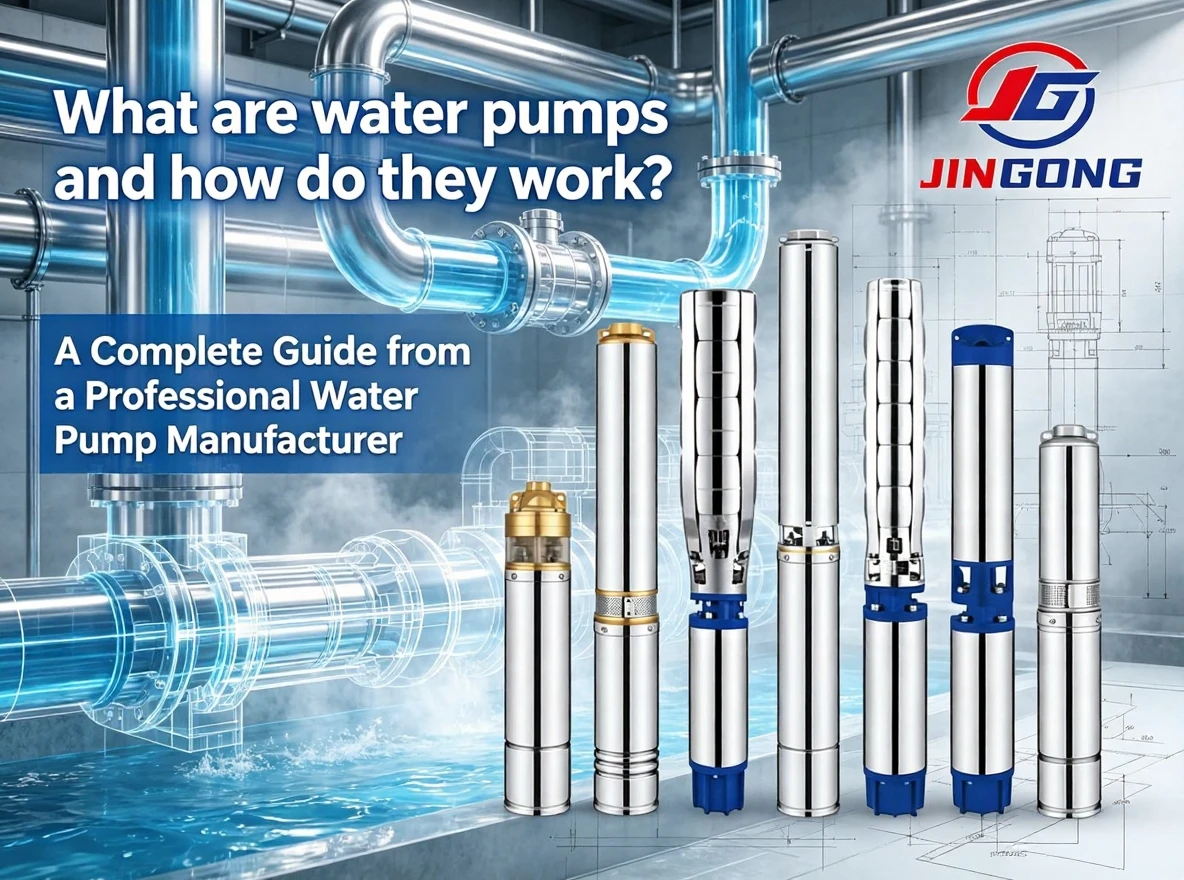
A Complete Guide from a Professional Water Pump Manufacturer
As a leading water pump manufacturer with decades of engineering, production, and global export experience, Jingong Tech has built this definitive technical resource. Whether you are an importer, distributor, engineer, or end-user, this guide gives you the exact knowledge a trusted water pump manufacturer uses to help clients choose the right pumping solution. From industrial water pump definition to commercial water pump function, we cover it all.
📚 What This Guide Covers
- 1. What Is a Water Pump? Core Definition & Working Principle
- 2. The 4 Core Pump Types — Working Principle, Advantages & Use Cases
- 3. Core Parameter Comparison & Product Selection Guide
- 4. Common Failures, Maintenance & Troubleshooting
- 5. Industry Advantages & Brand Strength
- 6. FAQ — High-Value Long-Tail Question Bank
1: What Is a Water Pump? (Core Definition & Industry Overview)
1.1 Professional Definition of a Water Pump
A water pump is a mechanical device that converts mechanical energy into hydraulic energy to transport, lift, pressurize, or circulate fluid from one location to another. According to international standards such as ISO 5199 (Centrifugal Pumps — Technical Specifications) and ISO 9906 (Rotodynamic Pumps — Hydraulic Performance), a water pump must reliably move fluid against a defined head and flow rate under continuous duty. This aligns with the universal industrial water pump definition recognized by engineers worldwide.
As an established water pump manufacturer, Jingong Tech defines a water pump not just by its physics, but by its real-world job: delivering dependable water supply for industrial, agricultural, residential, and commercial scenarios. The core commercial water pump function revolves around three actions — water pump for fluid transfer, pressure boosting, and water lifting. In essence, every water pump machine we build serves as a fluid pressure booster pump, a water lifting equipment, or a water circulation machine depending on the installation environment. A professional water pump manufacturer understands that balancing efficiency, durability, and application fit is the key to a successful water pump machine.
💡 Key Takeaway: An industrial water pump definition centers on fluid transfer, pressure boosting, and water lifting. A commercial water pump function applies the same physics to buildings, farms, and infrastructure. Every water pump machine is essentially a fluid pressure booster pump and water lifting equipment.
1.2 Core Working Principle of General Water Pumps
Understanding how a water pump works starts with one universal truth: a water pump converts mechanical energy (from an electric motor, engine, or solar-driven system) into fluid kinetic energy. The water pump working principle relies on either:
- Centrifugal Force — A rotating impeller spins water outward, converting velocity into pressure (used in centrifugal pumps, submersible pumps, and most surface pumps). This is the foundation of centrifugal pump basic working theory.
- Positive Displacement — A fixed volume of fluid is trapped and mechanically forced out (used in diaphragm, piston, and gear pumps).
- Pressure Difference — Water moves from high-pressure to low-pressure zones created inside the pump chamber, explaining how does a water pump move water in basic physics terms.
Every water pump shares four core components that a seasoned water pump manufacturer engineers with precision. The general water pump mechanical principle is only as reliable as these parts:
1.3 Core Classification & Industry Application Scenarios
As a global water pump manufacturer, we classify pumps by power source, installation method, and usage scenario. The water pump classification by power source and water pump installation types give us four dominant families that cover 95% of worldwide demand for different types of water pumps and uses:
🌊 Submersible
Fully submerged underwater operation. Ideal for water pump for deep well and submersible drainage pump applications.
⚙️ Surface / Land
Installed above ground. Perfect for self priming surface water pump and land pump for construction sites.
☀️ Solar
PV-driven solar powered water pump for off-grid solar water pump system and remote irrigation.
⛽ Fuel (Gas / Diesel)
Engine-driven portable gasoline water pump for emergency and high flow diesel irrigation pump needs.
High-demand global scenarios where a reliable water pump manufacturer must deliver include: agricultural irrigation, construction engineering, domestic water supply, flood drainage, and remote-area water supply. These cover both industrial vs agricultural water pumps and residential needs. Each scenario demands a different pump personality — and that is exactly where Jingong Tech, your dedicated water pump manufacturer, brings unmatched value with our water pump for irrigation and drainage expertise.
2: Working Principle & Core Advantages of 4 Core Main Products

3: Core Parameter Comparison & Product Selection Guide
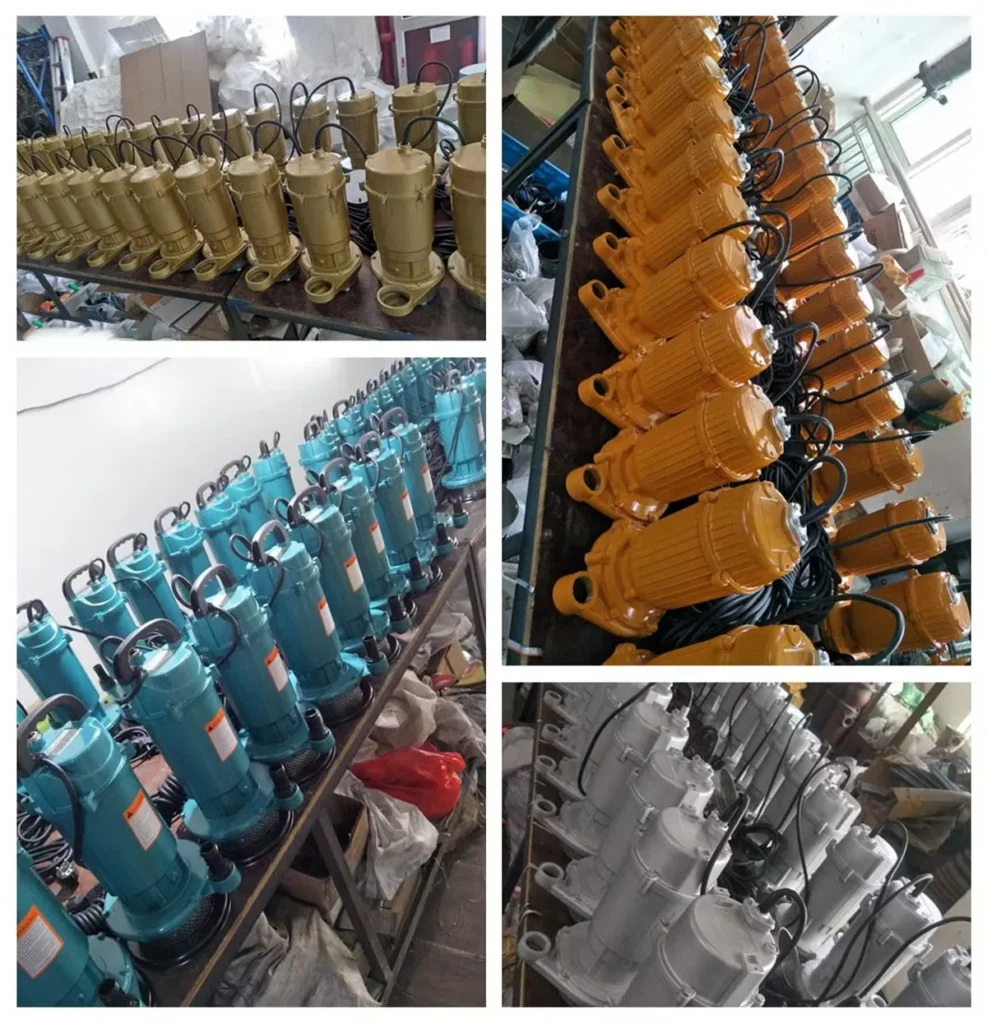
This is where 80% of buyers get it wrong. Spec sheets throw numbers; a professional water pump manufacturer translates those numbers into real-world fit. Here is the horizontal comparison our engineering team uses for every client consultation — a true water pump selection guide for finding the best water pump for different uses:
🎯 5-Step Pump Selection Framework (From a Water Pump Manufacturer Who Knows)
- Measure your water source depth — Over 8m? You need a submersible or solar submersible pump. This is key for water pump selection by lift and flow.
- Calculate required flow (L/min or m³/h) — Match to your irrigation or supply demand. A cost effective water pump for farm starts with correct flow sizing.
- Check power availability — No grid? Solar or fuel pump. Stable electricity? Submersible or surface electric.
- Evaluate duty cycle — Continuous heavy use favors diesel; intermittent use favors gasoline or electric.
- Factor total cost of ownership — A professional water pump manufacturer always shows CAPEX + OPEX over 5 years, not just sticker price. Read our full water pump buying guide for more.
👉 Need a personalized recommendation? Talk to our water pump manufacturer engineers today.
4: Common Working Problems, Maintenance & Troubleshooting
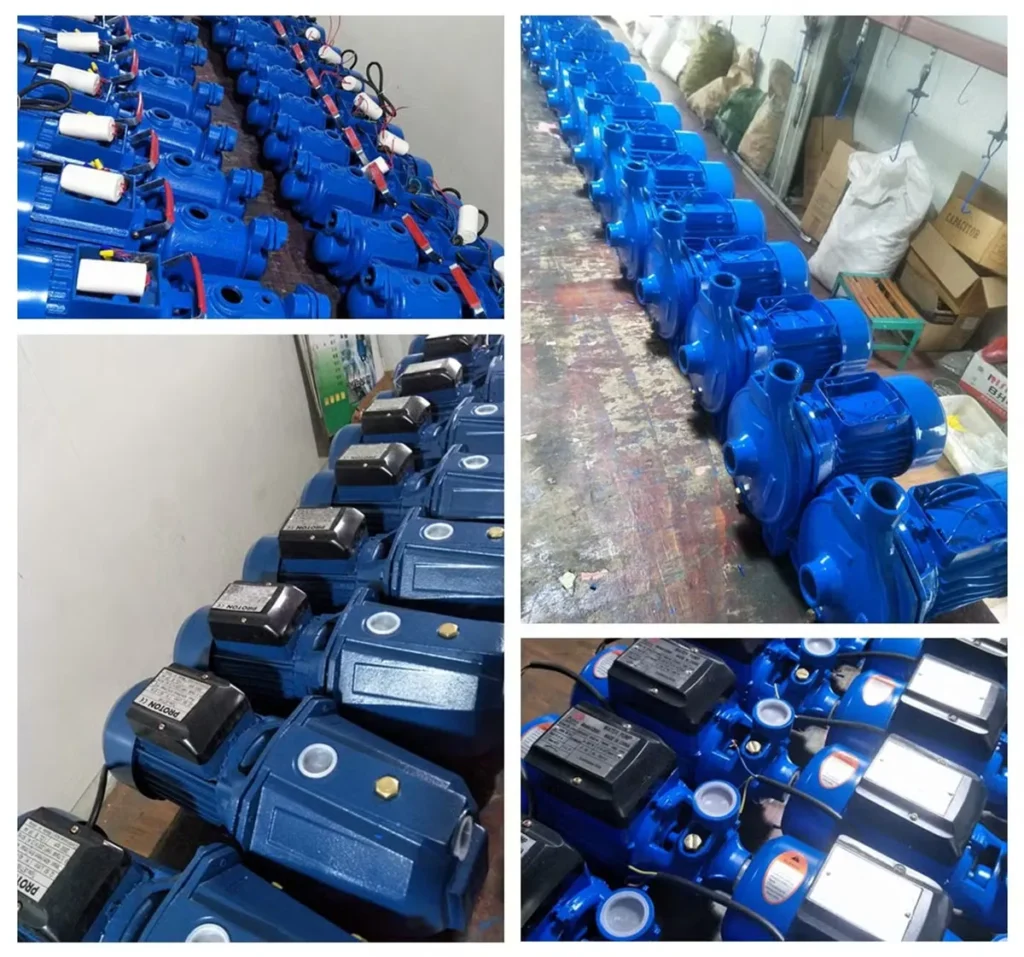
Based on global after-sales big data and overseas local service experience, Jingong Tech — your professional water pump manufacturer — summarizes the most common faults and one-to-one troubleshooting solutions for all four pump types. This is essential water pump troubleshooting knowledge:
🚫 Submersible Pump No Water
Check cable sealing, impeller blockage, and voltage stability. This submersible pump no water problem solution resolves 80% of field calls.
⚡ Solar Pump Low Pressure
Clean PV panels, check MPPT controller settings, verify battery storage. A quick solar pump low pressure fix starts with panel cleaning.
🔧 Diesel Pump Engine Failure
Inspect fuel filter, spark plug/injector, and oil level. Follow standard diesel pump engine failure troubleshooting procedures.
🔊 Motor Noise / Vibration
Worn bearings, impeller imbalance, or cavitation. Stop immediately to prevent further damage. Part of our water pump common problems and solutions guide.
📋 Daily Maintenance Checklist (How to Maintain Water Pump)
- Inspect seals and gaskets monthly for leaks or aging
- Clean strainers and impeller chambers every quarter
- Drain water before long-term storage to prevent freezing or corrosion
- For fuel pumps, drain carburetor after each use
These water pump maintenance tips come directly from our water pump manufacturer after-sales database of 10,000+ global units.
5: Industry Advantages & Brand Strength
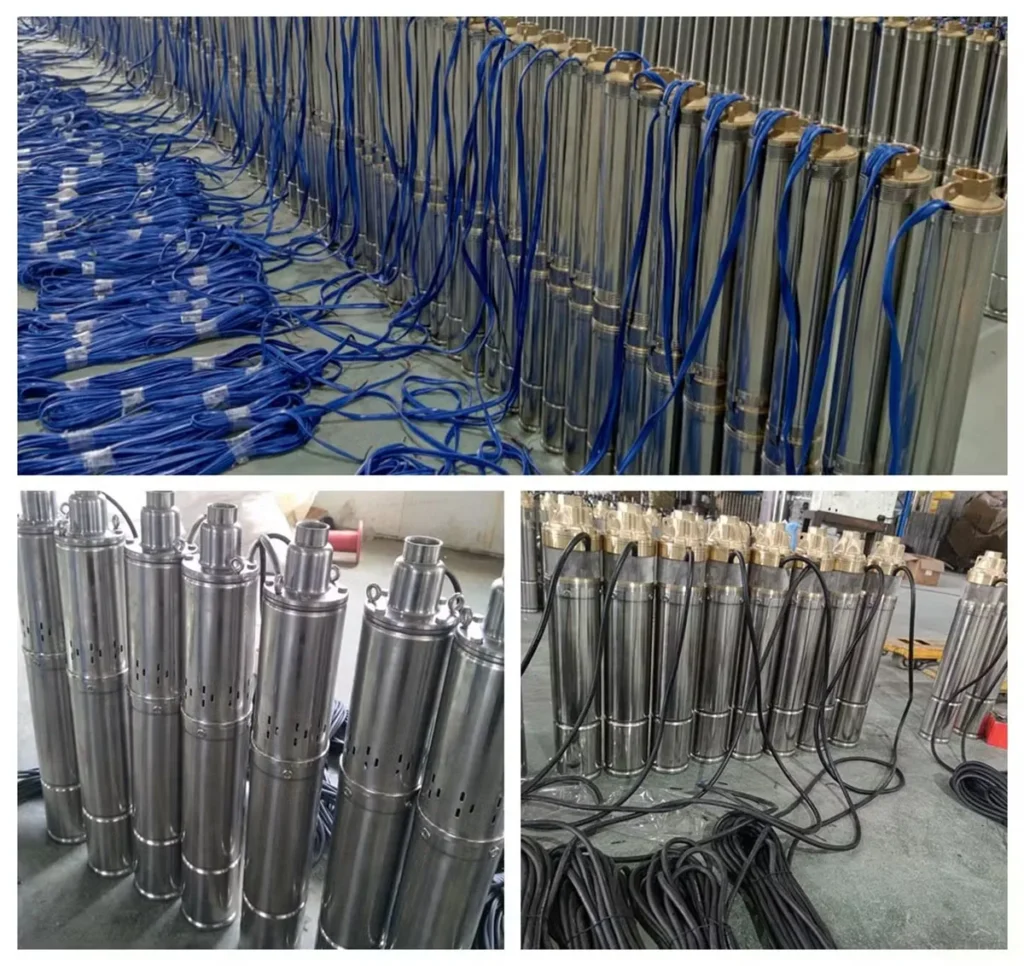
Jingong Tech is a professional water pump manufacturer and reliable water pump supplier with decades of R&D, manufacturing, and foreign trade operation experience. As a factory-direct water pump manufacturer, we offer high quality submersible solar diesel water pumps and industrial grade water pumps to the wholesale water pump for global market sector. Our core strengths:
- Decades of Expertise: Years of water pump R&D, production, and foreign trade operation experience. We are a true industrial grade water pump producer.
- Quality Certifications: Products certified with CE, ISO, and other international standards. See our certification page.
- Global Market Reach: Customers in 30+ countries across agriculture, construction, municipal, and industrial sectors. We provide durable irrigation water pumps worldwide.
- Technical Advantages: Continuous material optimization, energy-saving upgrades, and durability improvements from our in-house engineers.
- Reliable Supply Chain: Integrated manufacturing ensures quality control from casting to final assembly, backed by a responsive after-sales system.
As your trusted water pump manufacturer, Jingong Tech is more than just a reliable water pump supplier — we are your long-term partner for global business growth. Learn more about our factory strength.
6: FAQ — High-Value Long-Tail Question Bank

Q1: Is a submersible pump better than a surface pump? (Submersible pump vs surface pump difference)
A: Neither is universally “better.” Submersible pumps excel in deep wells and high-head applications. Surface pumps are ideal for shallow water (≤8m) where easy maintenance is a priority. The choice depends on your specific water pump installation types and depth requirements.
Q2: How long can a solar water pump work per day? (Solar water pump working hours)
A: In optimal sunlight, a direct-drive system runs 8–10 hours. With battery storage, operation extends to 24 hours. This makes the off-grid solar water pump system highly adaptable for remote farming.
Q3: What is the difference between gasoline and diesel water pump? (Gasoline vs diesel water pump)
A: Gasoline pumps are lighter and cheaper upfront, suited for intermittent light-duty tasks. Diesel pumps offer superior fuel economy under load, longer engine life, and are built for heavy-duty continuous operation — the preferred fuel powered water pump for professionals.
Q4: Can land pump be used underwater? (Land pump usage limitation)
A: Absolutely not. A non-submersible water pump lacks waterproof sealing. Submerging it will cause immediate motor failure. Always use a proper submersible water pump for underwater applications.
Q5: How to improve water pump water pressure? (Water pump pressure improvement)
A: Check for pipe blockages or leaks, inspect impeller wear, verify motor RPM, and consider adding a booster pump or VFD controller. Proper water pump selection by lift and flow from the start prevents pressure issues.
Ready to Find Your Ideal Water Pump Solution?
Jingong Tech — your global trusted water pump manufacturer — provides one-stop service from selection to after-sales. Contact us today for a personalized quote on wholesale water pumps for global market or technical support.

0 Comments