
If you’re sourcing a Solar Water Pump for agricultural irrigation in Kenya, livestock watering in Australia, or rural drinking water in Nigeria, the “features” that matter to an African distributor differ vastly from what a German installer prioritizes. We are Jingong Technology , a Wenzhou/Jinhua-based pump manufacturer specializing in booster pumps, submersible pumps, centrifugal pumps, Solar Water Pumps, and gasoline/diesel engine pumps. With over 15 years of export experience, this guide breaks down the 7 core feature clusters that actually impact your ROI.
1. Energy Efficiency & Power Saving: The #1 Reason Buyers Switch
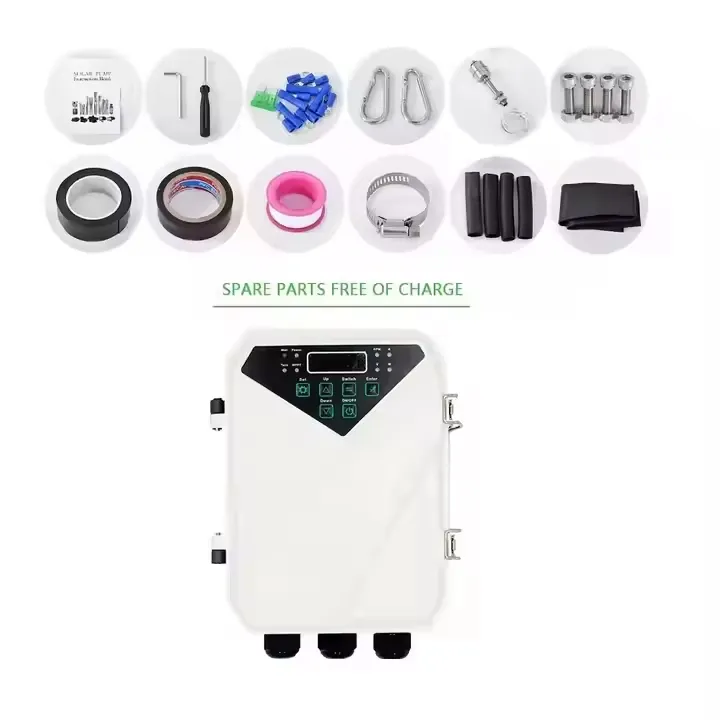
Most inquiries for a Solar Water Pump don’t come from eco-enthusiasts; they come from businesses tired of volatile diesel prices. Efficiency in a solar pumping system involves three stages: PV panel conversion, MPPT tracking, and motor drive efficiency.
1.1 The Critical Role of MPPT Technology
MPPT (Maximum Power Point Tracking) is the brain of the operation. Unlike cheaper PWM controllers, a quality MPPT controller adjusts the electrical operating point of the modules, ensuring the Solar Water Pump extracts maximum available power. Our industrial-grade controllers utilize FOC (Field-Oriented Control) algorithms achieving MPPT efficiencies of >99%.
Real-World Data: A 5.5 kW Solar Water Pump system we supplied to a Nigerian sorghum farm replaced a 7.5 kW diesel genset. With diesel costs at approximately $0.60/L, the solar system paid for itself in just 14 months, drastically reducing the farm’s OPEX.
1.2 Regional Efficiency Standards
- EU/Australia: Focus on motor IE3/IE4 equivalent standards and CE LVD compliance.
- Africa (Off-grid): Prioritize total cost per cubic meter lifted; high-efficiency motors are mandatory.
- Middle East: High-temperature derating performance (>50°C ambient) is crucial.
2. Performance & Application Fit: Head, Flow, and Water Quality
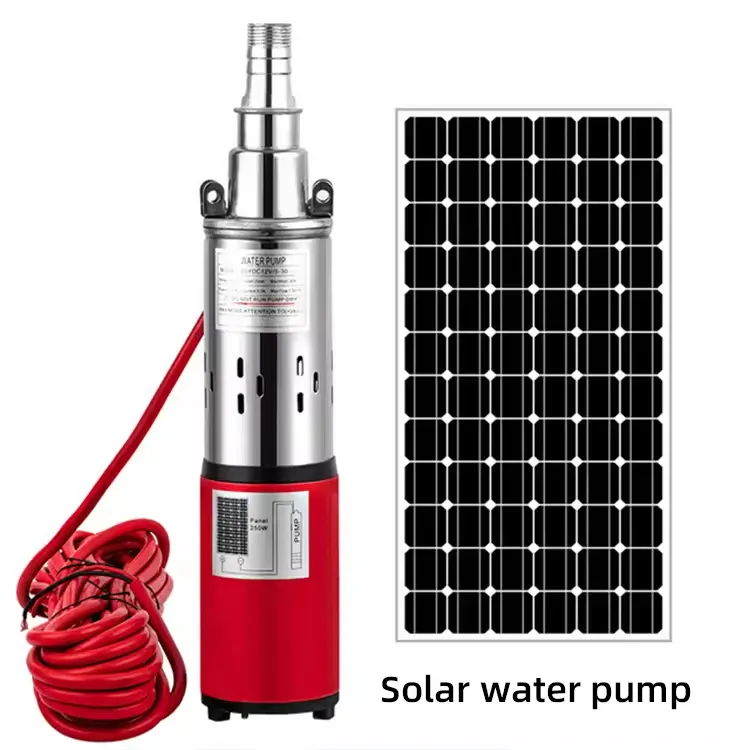
Efficiency is useless if the pump cannot move water to the required height or volume. As a manufacturer, we emphasize matching specs to the environment.
2.1 Head and Flow Ranges (Real Numbers)
Our export-series Solar Water Pump models cover a wide spectrum:
| Model Series | Rated Power | Voltage | Max Head | Max Flow | Typical Application |
|---|---|---|---|---|---|
| JG-SPS 0.37-0.75 | 0.37-0.75 kW | 220V | 59-101 m | 1.2-6 m³/h | Home wells, small livestock |
| JG-SPS 1.5-3.0 | 1.5-3.0 kW | 220V/380V | 158-222 m | 12 m³/h | Village supply, medium irrigation |
| JG-SPS 5.5-7.5 | 5.5-7.5 kW | 380V | 255-340 m | 12 m³/h | Large-scale irrigation, high-lift |
2.2 Water Quality Adaptability
A Solar Water Pump is not a “one-size-fits-all” device. For clean water (domestic use), 304 Stainless Steel centrifugal impellers are standard. For abrasive sandy water (common in river beds), we recommend semi-vortex impellers or screw pumps with Silicon Carbide (SiC) mechanical seals. For seawater or brackish water (Middle East), 316L stainless steel is the minimum requirement.
3. PV Compatibility & Off-Grid Stability
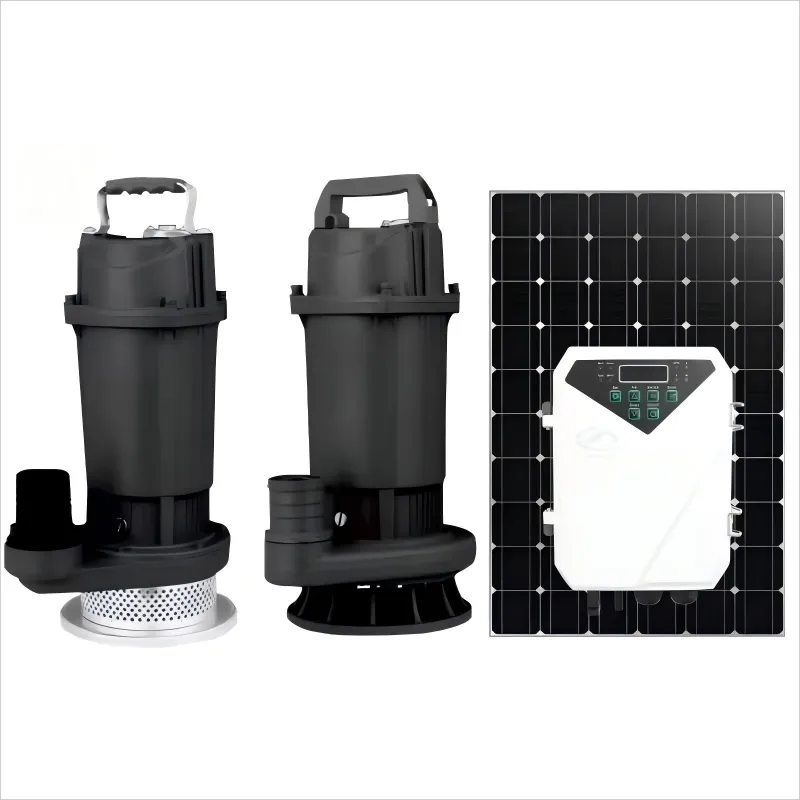
The ability to operate independently of the grid is a primary selling point for any Solar Water Pump.
3.1 Hybrid AC/DC Operation
Modern systems should support “Solar Priority.” When sunlight is sufficient, the pump runs on PV power. When clouds pass or at night, the controller should automatically switch to AC grid or diesel generator power without manual intervention. This ensures 24/7 water availability for critical applications.
3.2 Weather Resistance
Overseas installations face harsh conditions. Our controllers feature IP65-rated enclosures with natural cooling (eliminating failure-prone fans). Submersible motors carry an IP68 rating. All cable glands are stainless steel-reinforced to prevent ingress during monsoon seasons or desert sandstorms.
4. Installation & Maintenance: Reducing Total Cost of Ownership

For overseas buyers, maintenance complexity equals hidden cost. Our engineering philosophy focuses on modularity.
4.1 Modular Design
A Solar Water Pump from Jingong features a modular architecture. Controllers can be swapped in under 10 minutes. Crucially, we use industry-standard mechanical seals rather than proprietary parts, meaning a farmer in Kenya can source a replacement seal locally without waiting for a shipment from China.
4.2 Remote Monitoring (IoT)
For EPC contractors managing dozens of units, GPRS/4G/Bluetooth modules are transformative. Users can monitor PV voltage, pump RPM, tank levels, and fault codes via a mobile app. This allows for predictive maintenance—dispatching a repair team only when an actual fault occurs, saving thousands in logistics.
5. Material & Durability: The “Cheap vs. Costly” Debate
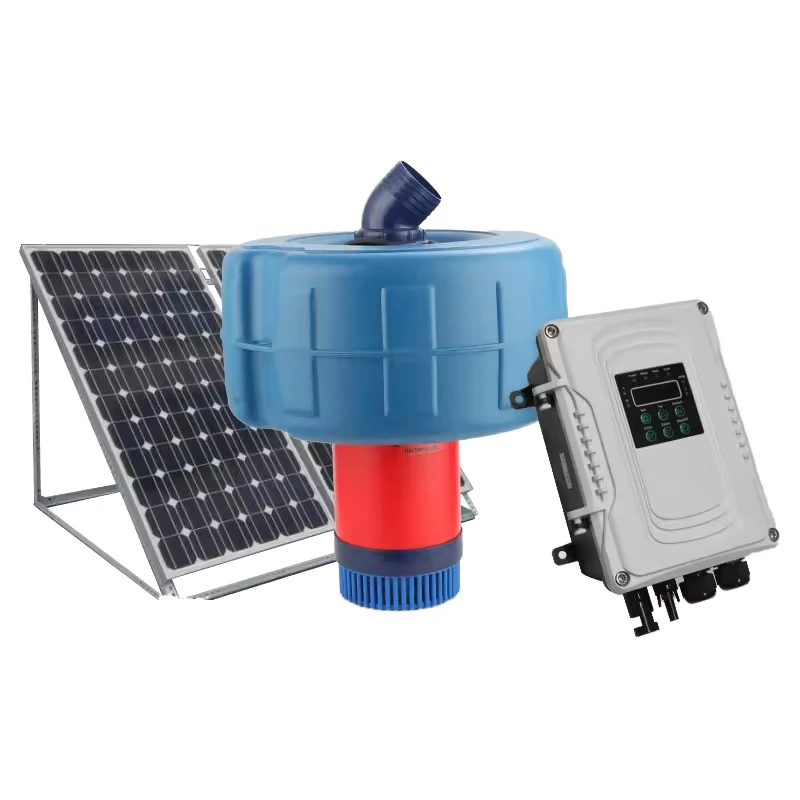
Durability is non-negotiable for a Solar Water Pump expected to last a decade.
5.1 Material Selection
Budget pumps use cast iron; export-grade pumps use 304 or 316L stainless steel. For high-wear environments, we upgrade shafts to duplex stainless steel and mechanical seals to SiC/SiC (Silicon Carbide). This resists corrosion from saline water and erosion from suspended solids.
5.2 Design Life vs. Warranty
While a Solar Water Pump may have a design life of 15 years, electronics (controllers) typically last 5-7 years due to capacitor aging, while motors last 8-10 years. We advise clients to budget for one controller replacement during the system’s lifecycle—honesty that builds long-term trust.
6. Smart Control & Protection Systems

Advanced protection features prevent catastrophic failures:
- Dry-Run Protection: Automatically shuts down the Solar Water Pump if the well level drops, preventing seal burnout.
- Soft-Start: Reduces water hammer in long PVC pipes, extending pipe lifespan.
- Overload & Surge Protection: Guards against motor jams and lightning strikes.
- Tank-Full Auto-Stop: Integrates with float switches to prevent overflow.
7. Compliance & Certifications: Navigating Global Trade Barriers
Certification is the gatekeeper for international trade. Without the right paperwork, your Solar Water Pump will never leave the port.
7.1 The Certification Map
- EU: CE (LVD + EMC) – Mandatory.
- Nigeria: SONCAP (PC + SC) – Note: 2025 updates require ILAC-MRA lab reports less than 1 year old.
- USA/Canada: UL 778 – Required for electric water pumps.
- Australia/NZ: SAA / RCM – Based on AS/NZS standards.
- Thailand: TISI – Mandatory for market entry.
As a factory, Jingong holds a comprehensive portfolio of these certifications, ensuring our partners face no regulatory hurdles.
8. Solar Water Pump Types Compared

Choosing the right type of Solar Water Pump is critical for success:
8.1 Submersible Solar Pumps
Features: Fully submerged, high head (up to 300m+), lower flow.
Best For: Deep wells, boreholes (Africa, Afghanistan).
Internal Link: Explore our Submersible Range
8.2 Surface Centrifugal Solar Pumps
Features: Installed above ground, high flow, moderate head (10-60m).
Best For: River/lake pumping, paddy fields (SE Asia).
Internal Link: View Centrifugal Models
8.3 Solar Screw Pumps
Features: Positive displacement, handles high viscosity and sand.
Best For: Livestock slurry, muddy water (Australia).
Internal Link: See Screw Pump Specs
8.4 Solar Booster Pumps
Features: Multi-stage, high pressure.
Best For: Home pressure systems, villas (Middle East, EU).
Internal Link: Discover Booster Solutions
9. Mapping Features to Buyer Types
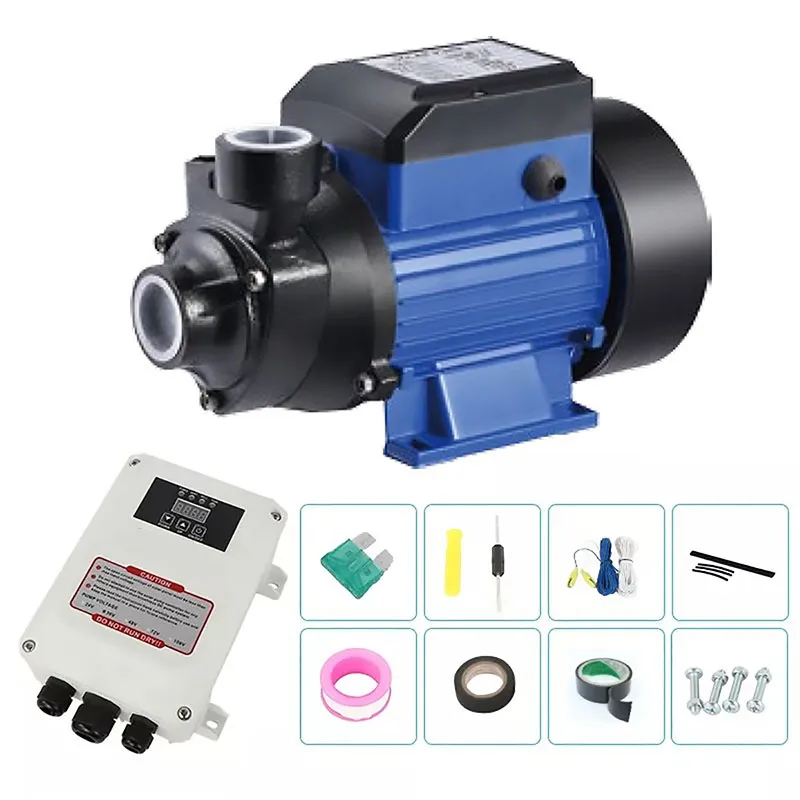
Different buyers prioritize different aspects of a Solar Water Pump:
- African Distributors: Off-grid reliability, low maintenance, SONCAP readiness.
- SEA Irrigation Dealers: High flow rates, monsoon performance, easy spare parts.
- Australian Station Agents: Remote monitoring, heat tolerance (+60°C).
- EU NGOs: Full CE documentation, IE3 motor equivalence.
10. Common Myths Clarified by the Factory
- Myth: “A Solar Water Pump only works in direct sunlight.”
Fact: Quality MPPT controllers allow operation at irradiances as low as 200 W/m² (cloudy but bright). Hybrid systems switch to AC power when needed. - Myth: “Maintenance requires a technician from China.”
Fact: Modular designs and standard seals allow local technicians to perform routine maintenance easily. - Myth: “All MPPT controllers are the same.”
Fact: Efficiency varies wildly (93% vs 99%). A 4% difference translates to significant water loss over a season.
11. Technical Parameter Snapshot
Model: JG-SPS 5.5
Rated Power: 5.5 kW
PV Input: 200–750 VDC
Max Head: 255 m
Max Flow: 12 m³/h
MPPT Efficiency: ≥99%
Protection: Dry-run, Overload, UV/OV, Soft-start
Enclosure: IP65 (Controller), IP68 (Motor)
12. Summary & Actionable Advice
A Solar Water Pump is a long-term investment. By focusing on MPPT efficiency, material durability, correct sizing (head/flow), and verified certifications, you mitigate risk and maximize ROI. At Jingong, being a factory allows us to control these variables from casting to final assembly.
Ready to specify your Solar Water Pump? Contact our engineering team with your (1) Head & Flow requirements, (2) Water quality, and (3) Target market. We provide full technical dossiers and compliant certification packs.