
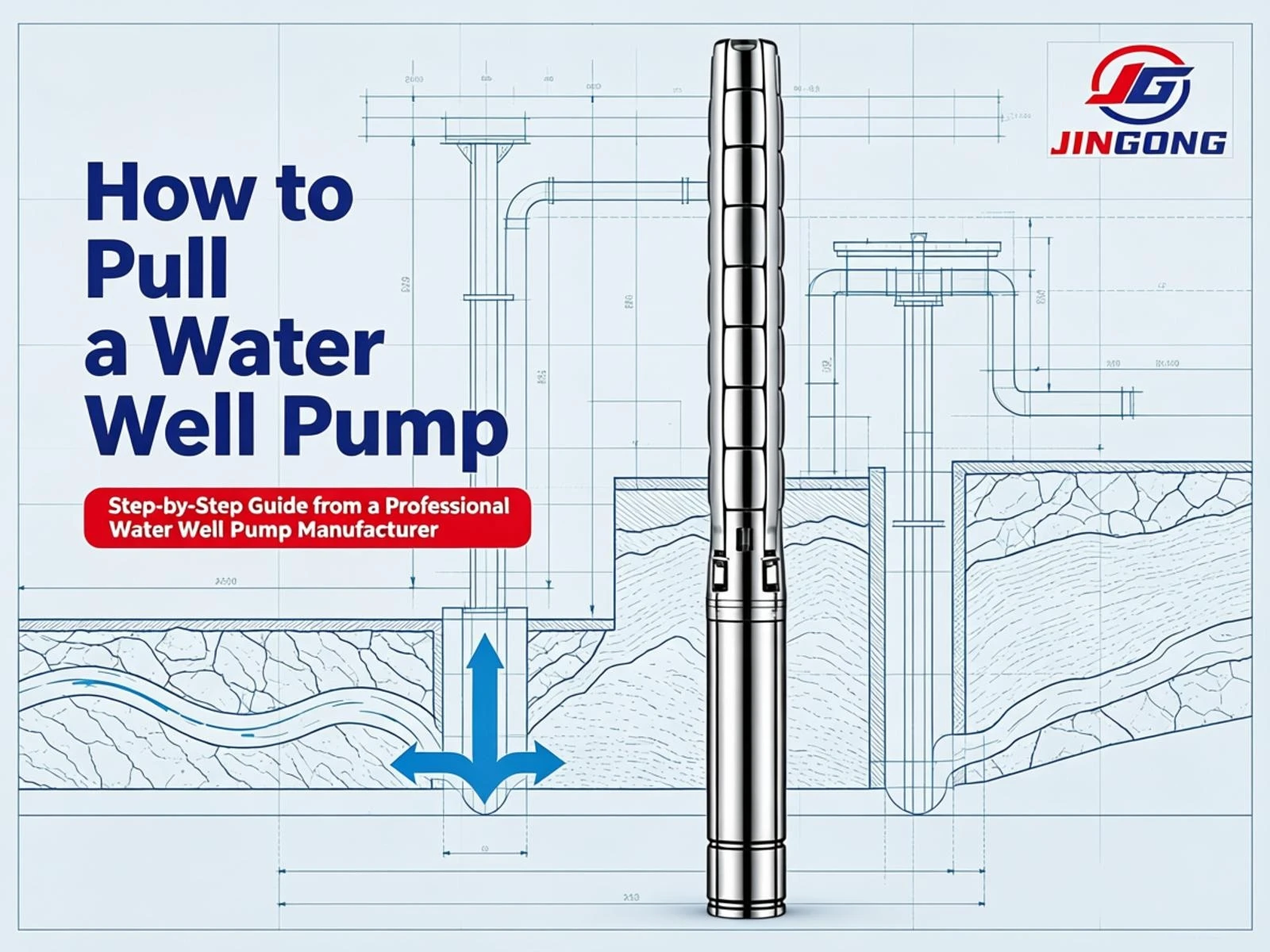
How to Pull a Water Well Pump: Step-by-Step Guide from a Professional Water Well Pump Manufacturer
Pulling a water well pump is one of the most technically demanding field operations in the water supply industry. As a trusted Water Well Pump Manufacturer, Jingong Technology has engineered and exported more than 2,000 pump models across 40+ series to 60+ countries. In this guide, our engineering team walks you through how to pull a water well pump safely and efficiently — covering submersible well pumps, surface pumps, solar well pumps, and gasoline / diesel well pumps. Whether you are a farmer, contractor, or distributor evaluating replacement options, this article gives you the expert-level knowledge you need.
⚠️ Safety Notice: Pump pulling involves high-voltage electricity, heavy loads (often 100+ lbs at just 100 ft depth), and deep confined spaces. According to Lancaster Water Group’s official service manual, the pump, cable and water-filled pipe combination is extremely heavy and NEVER pull the pump by the electrical cable. At least two physically capable people are required, and a licensed well contractor should be called for deep wells or stuck pumps. Reference: Lancaster Pump Service Manual
Why You Need to Pull a Well Pump — and Why the Right Water Well Pump Manufacturer Matters
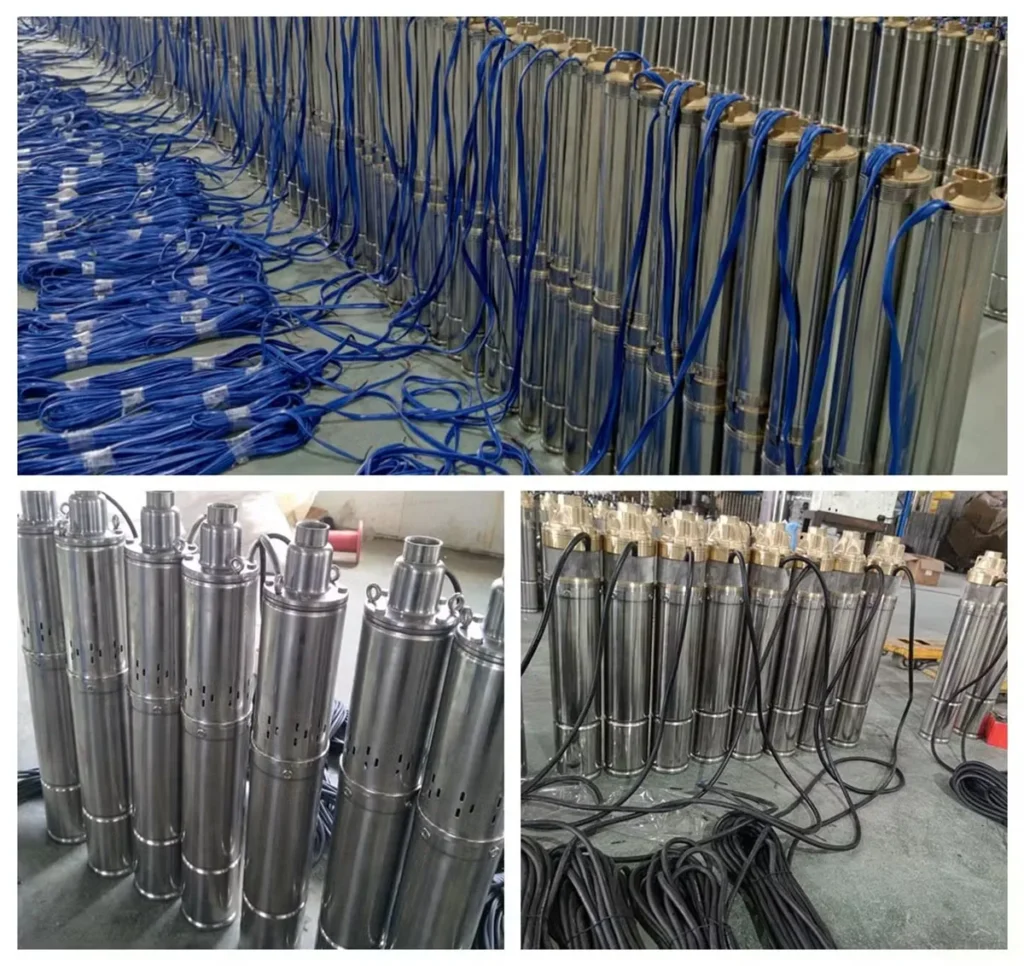
Well pumps are pulled for four primary reasons: routine maintenance, fault replacement, well casing inspection, and equipment upgrade. A knowledgeable Water Well Pump Manufacturer like Jingong can help you diagnose whether the issue is the pump itself, the controller, the drop pipe, or the cable — in our field logs, roughly 30% of warranty “pump failures” are actually controller surge damage, undersized DC cabling, or rope corrosion, not the pump mechanism.
Choosing the right Water Well Pump Manufacturer directly affects how easy future maintenance becomes. Pump design — such as integrated lifting eyes, standardized NPT threads, and corrosion-resistant materials — determines whether your next pump pull is a 2-hour job or a 2-day nightmare.
Types of Well Pumps and How Extraction Differs
| Pump Type | Typical Placement | Design Life | Pulling Difficulty |
|---|---|---|---|
| Solar Submersible | Inside well casing, below water level | 10–15 yrs | High (deep well, DC cable) |
| AC Submersible | Inside well casing | 8–12 yrs | High (deep well, heavy pipe) |
| Surface / Land Pump | Above ground, near wellhead | 6–10 yrs | Low (bolted to base) |
| Gasoline / Diesel Pump | Portable, above ground | 3–5 yrs (engine) | Very Low (portable unit) |
Data compiled from Jingong field service records. Read more in our Solar Submersible Well Pump Lifespan Guide.
Safety Preparation & Tools Needed to Pull a Well Pump

A professional Water Well Pump Manufacturer always emphasizes that 80% of pump-pulling accidents happen because teams rushed the preparation phase. Here is the checklist Jingong engineers use on every service call:
1. Electrical Safety — Zero Energy State
- Switch off the dedicated circuit breaker feeding the well pump
- Lock out and tag out (LOTO) the disconnect switch
- Verify zero voltage with a certified non-contact voltage tester at the pressure switch and wellhead
- Disconnect solar PV input and generator transfer switches for solar / hybrid systems
- For wells deeper than 150 ft, have a licensed electrician verify the disconnect — cable capacitance can retain dangerous residual charge
2. Required Tools List
| Universal Tools | Submersible-Specific | Surface / Diesel / Solar |
|---|---|---|
| Pipe wrench / chain wrench | Pulling tee (5 ft × 1 in NPT steel pipe) | Adjustable wrench set |
| Heavy-duty winch or hoist (rated above pump weight) | Well pipe tongs / lifting clamp | Fuel shut-off & oil drain pan |
| Non-slip gloves | Safety rope (never lift by cable!) | MC4 connector wrench (solar) |
| Voltage tester & LOTO tags | Tripod / derrick for deep wells | Engine hoist or come-along |
Explore our full well pump pull tools collection, supplied by a Water Well Pump Manufacturer that understands real field conditions.
🚫 Do NOT attempt DIY pulling if: the pump is stuck in casing · the well is deeper than 150 ft · you lack a rated hoist · the drop pipe is rigid PVC or galvanized steel · you are working alone. Call a licensed contractor or consult your Water Well Pump Manufacturer for a professional recovery service.
Step-by-Step: How to Pull a Submersible Well Pump
This is the most complex scenario — and where the expertise of a seasoned Water Well Pump Manufacturer becomes critical. The following procedure follows the industry-standard protocol documented in Lancaster Pump’s official service manual.
Step 1: Confirm Well & Pump Depth
Measure total well depth and depth-to-pump using a sounding line. You need enough clear ground area to lay out the pipe as it comes out. A Water Well Pump Manufacturer can provide exact pump dimensions from the model tag.
Step 2: Achieve Zero Energy State
Turn off the breaker, LOTO, and verify with a voltage tester. Disconnect the pump cable from the control box. At least two people are required to physically lift the pipe during removal.
Step 3: Remove Well Cap & Loosen Pitless Adapter
Screw a pulling tee clockwise into the female thread of the pitless adapter until fully engaged. Extend the tee handles beyond the well casing OD. Raise the tee to lift the pitless adapter and piping above the casing top.
Step 4: Attach Safety Rope & Lifting Gear
NEVER pull the pump and piping by the electrical cable. Use a proper well pump lifting clamp or stainless steel strap around the pump housing. Set up a tripod, boom, or hoist rated above the total weight (pump + motor + full water column in pipe — often 100+ lbs per 100 ft).
Step 5: Pull the Pump Slowly & Steadily
Apply steady upward pressure. For poly pipe, coil it as it emerges. For rigid PVC or galvanized pipe, use a pipe vise to hold each section while unscrewing. A third person guides the flexible pipe away from the well casing to prevent scraping.
Step 6: Inspect Pump, Pipe & Cable
Once on the surface, set the pump on wooden blocks. Check for: burned motor windings, worn impellers, sand abrasion, cracked pipe threads, damaged cable insulation, failed check valve. This is where a quality-focused Water Well Pump Manufacturer adds value — Jingong’s diagnostic checklist covers 27 inspection points per pump.
How to Pull a Surface Land Pump
Surface pumps are the easiest to service. As a Water Well Pump Manufacturer producing both jet pumps and centrifugal surface pumps, Jingong recommends this simplified procedure:
- Cut power at the breaker and verify with a voltage tester
- Close isolation valves on suction and discharge lines
- Drain the pump body via the drain plug at the lowest point
- Disconnect plumbing — unthread the union couplings on both sides
- Remove electrical conduit and label all wires
- Unbolt the pump from its base (typically 4 bolts) and lift straight up
- Inspect the mechanical seal, impeller, and foot valve — these are the most common failure points
Surface pumps typically last 6–10 years. A reputable Water Well Pump Manufacturer will offer rebuild kits so you can replace just the mechanical seal and bearings instead of buying a whole new unit. Browse Jingong surface well pumps →
How to Pull a Solar Well Pump — Off-Grid Specifics
Solar well pumps combine a BLDC submersible pump with a PV array and MPPT controller. As an experienced Water Well Pump Manufacturer in solar pumping systems, Jingong field data shows that 30% of “pump failures” are actually controller surge damage or undersized DC cabling — not the pump itself. The pulling procedure adds solar-specific steps:
Solar-Specific Preparation
- Cover the solar panels with opaque material or disconnect MC4 connectors at the array
- Power down the MPPT controller and wait 5 minutes for capacitor discharge
- Disconnect DC output at the controller before touching any pump-side wiring
- Label all DC cables — polarity reversal during reinstallation will destroy the BLDC motor instantly
Pulling Steps (Same as Submersible, Plus:)
Once the pump is on the surface, inspect the DC cable for UV degradation, rodent damage, and water ingress at the splice points. A quality Water Well Pump Manufacturer uses IP68-rated splices and stainless steel hanging rope to maximize service life (10–15 years for the pump, 25 years for PV).
How to Pull / Service a Gasoline or Diesel Pump
Portable engine-driven pumps are the simplest to service — there is no drop pipe, no deep well, and no high-voltage cable. A Water Well Pump Manufacturer specializing in diesel and gasoline pumps (like Jingong) recommends the following field procedure:
| Step | Action |
|---|---|
| 1. Engine shutdown | Run engine until fuel starvation, then turn off ignition. Wait for cool-down. |
| 2. Fuel isolation | Close fuel shut-off valve. Drain carburetor bowl to prevent stale fuel issues. |
| 3. Disconnect hoses | Remove suction and discharge hoses. Cap openings to prevent debris entry. |
| 4. Unbolt & lift | Unbolt pump-to-engine coupling. Lift pump assembly straight off. |
| 5. Inspect | Check impeller, mechanical seal, wear plate, and engine coupling alignment. |
Diesel engines typically require a rebuild every 3–5 years, with OPEX at 15–20% of CAPEX annually. A forward-thinking Water Well Pump Manufacturer will advise you on when to transition from diesel to solar — Jingong’s payback analysis shows solar breaks even at year 3–5 on fuel savings alone, then runs virtually free for 10+ more years. Explore Jingong diesel & gasoline pumps →
Troubleshooting: Stuck Pumps, Broken Pipes & Other Emergencies
Even the most experienced Water Well Pump Manufacturer encounters stuck pumps. Here is how to handle the most common scenarios:
| Problem | Cause | Solution |
|---|---|---|
| Pump stuck in casing | Mineral scale, sand packing, casing deformation | Stop pulling immediately. Use scale-dissolving chemicals. Call a pro with a pulling rig. |
| Drop pipe twisted off | Over-torquing during pull, corroded threads | Use fishing tools or well bore camera. Professional recovery required. |
| Rusted bolts (surface pump) | Outdoor exposure, chemical corrosion | Penetrating oil, bolt extractor, or cut and replace base plate. |
| Pump fell back into well | Inadequate lifting gear, solo attempt | Contact your Water Well Pump Manufacturer for recovery service referral. |
✅ Pro Tip from Jingong Engineers: Forcing a stuck pump often snaps the drop pipe, making recovery nearly impossible without expensive fishing tools. If steady upward pressure doesn’t break it free within 30 seconds, STOP. A responsible Water Well Pump Manufacturer will always recommend calling a licensed well contractor rather than risking a lost pump.
Post-Pull Inspection: Repair or Replace?
After pulling the pump, you face a critical decision. A transparent Water Well Pump Manufacturer will give you an honest assessment — not just push for a sale. Jingong’s field team uses this decision matrix:
| Condition Found | Recommendation | Typical Cost |
|---|---|---|
| Minor seal leak, clean impeller | Repair — replace mechanical seal kit | Low |
| Sand-abraded impeller, reduced flow | Repair if pump < 5 yrs; otherwise replace | Medium |
| Burned motor winding, cracked housing | Replace — repair is not cost-effective | Full replacement |
| Controller surge damage (solar) | Replace controller, keep pump if motor is healthy | Low–Medium |
Selecting Your Replacement — Why Pump Type Matters
When choosing a replacement, work with a Water Well Pump Manufacturer that produces all four pump types — so they have no incentive to push you toward the wrong technology. Jingong’s honest recommendation framework:
- Off-grid / unreliable grid, well depth 30–200 m, steady daily duty → Solar Submersible Well Pump
- Grid-stable deep wells, 8–12 yr lifespan needs → AC Submersible Well Pump
- Shallow source (< 20 m), canal transfer, CAPEX priority → Surface / Land Pump
- Emergency, flood, portable, intermittent heavy-duty → Gasoline / Diesel Pump
Frequently Asked Questions

Q1: How hard is it to pull a well pump?
On the DIY difficulty scale, pulling a submersible well pump ranks 9 out of 10. It is not a casual weekend repair. Surface pumps and portable gasoline/diesel pumps are significantly easier. A professional Water Well Pump Manufacturer always recommends calling a licensed contractor for submersible pulls deeper than 100 ft.
Q2: How much does it cost to pull a well pump?
Professional submersible pump pulling typically costs $800–$2,500 depending on well depth, pipe material, and accessibility. If the pump is stuck or dropped, recovery costs can exceed $5,000. Choosing a Water Well Pump Manufacturer with robust, pull-friendly designs (integrated lifting eyes, standardized threads) can significantly reduce long-term service costs.
Q3: How often should you pull a submersible pump for maintenance?
A properly sized submersible pump should run 8–12 years without pulling. Solar submersibles last 10–15 years. Only pull when performance degrades (low flow, high amps, frequent cycling). Preventive pulling every 3–5 years is unnecessary and risks damaging the drop pipe. Consult your Water Well Pump Manufacturer for a condition-based maintenance schedule.
Q4: Can I pull a solar well pump by myself?
No. Solar well pumps combine the complexity of a submersible pull with DC electrical hazards. At minimum, you need two people — one to operate the hoist, one to guide the pipe and DC cable. A Water Well Pump Manufacturer like Jingong provides detailed pulling diagrams with every solar pump shipment to ensure safe field service.
Q5: Is a diesel well pump easy to remove?
Very easy. With no drop pipe involved, removal is mainly disconnecting hoses, draining fuel, and unbolting the coupling. As a professional Water Well Pump Manufacturer, we recommend draining the carburetor bowl after every field deployment to extend engine life.
About Jingong — Your Reliable Water Well Pump Manufacturer
Jingong Technology is an integrated R&D, manufacturing, and export Water Well Pump Manufacturer with over 10 years of deep industry expertise. Our product line fully covers all four series: submersible pumps, surface pumps, solar pumping systems, and gasoline/diesel pumps. We provide one-stop custom, replacement, and after-sales solutions for residential, agricultural, engineering, and off-grid water supply projects in 60+ countries worldwide. As your Water Well Pump Manufacturer, we deliver not only high-performance products but also lifetime technical consultation and field support.
Need a tailored pump recommendation for your specific well conditions? Contact the Jingong engineering team today for a free selection guide →

0 Comments