
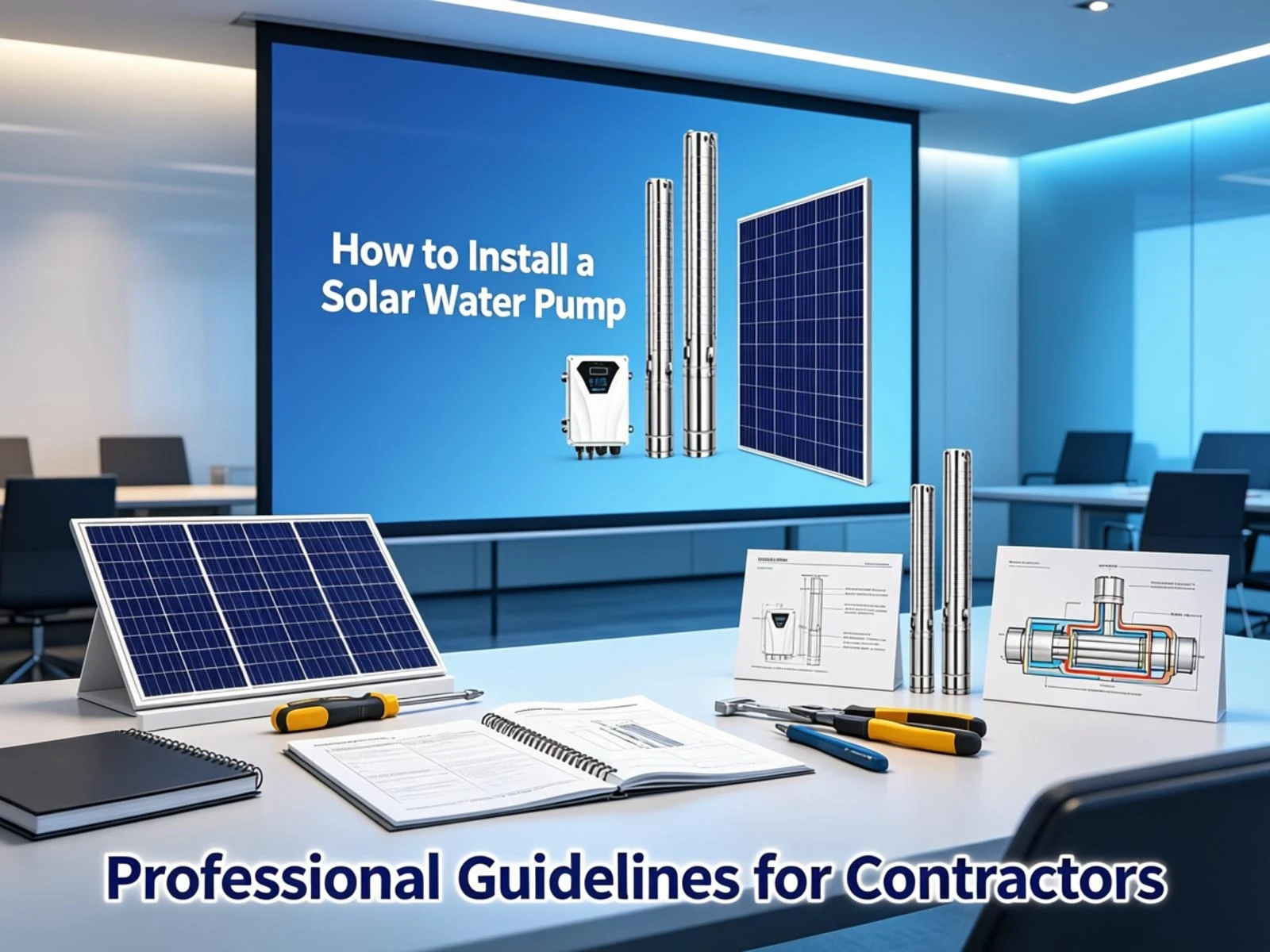
As a leading Solar Water Pump manufacturer, Jingong Technology has delivered thousands of solar pumping systems to contractors across Europe, Africa, Southeast Asia, and the Americas. This comprehensive, contractor-grade guide distills our engineering experience, field data, and compliance knowledge into a step-by-step solar water pump installation blueprint — helping you avoid the three most costly pitfalls: low installation efficiency, frequent system failures, and non-compliance with local electrical codes.
Authored by Jingong Technology — an ISO 9001 & CE-certified Solar Water Pump manufacturer with 15+ years of R&D and production expertise in submersible pumps, centrifugal pumps, booster pumps, and solar pumping systems. Our products comply with IEC 62253 (Photovoltaic Pumping Systems – Design Qualification), IEC 62109 (Inverter Safety), EN 60335, and UL 1741 standards. This guide references international best practices including IEC, NFPA/NEC, and EU CE directives.
1. Pre-Installation Preparation — Eliminate Risks Before Breaking Ground
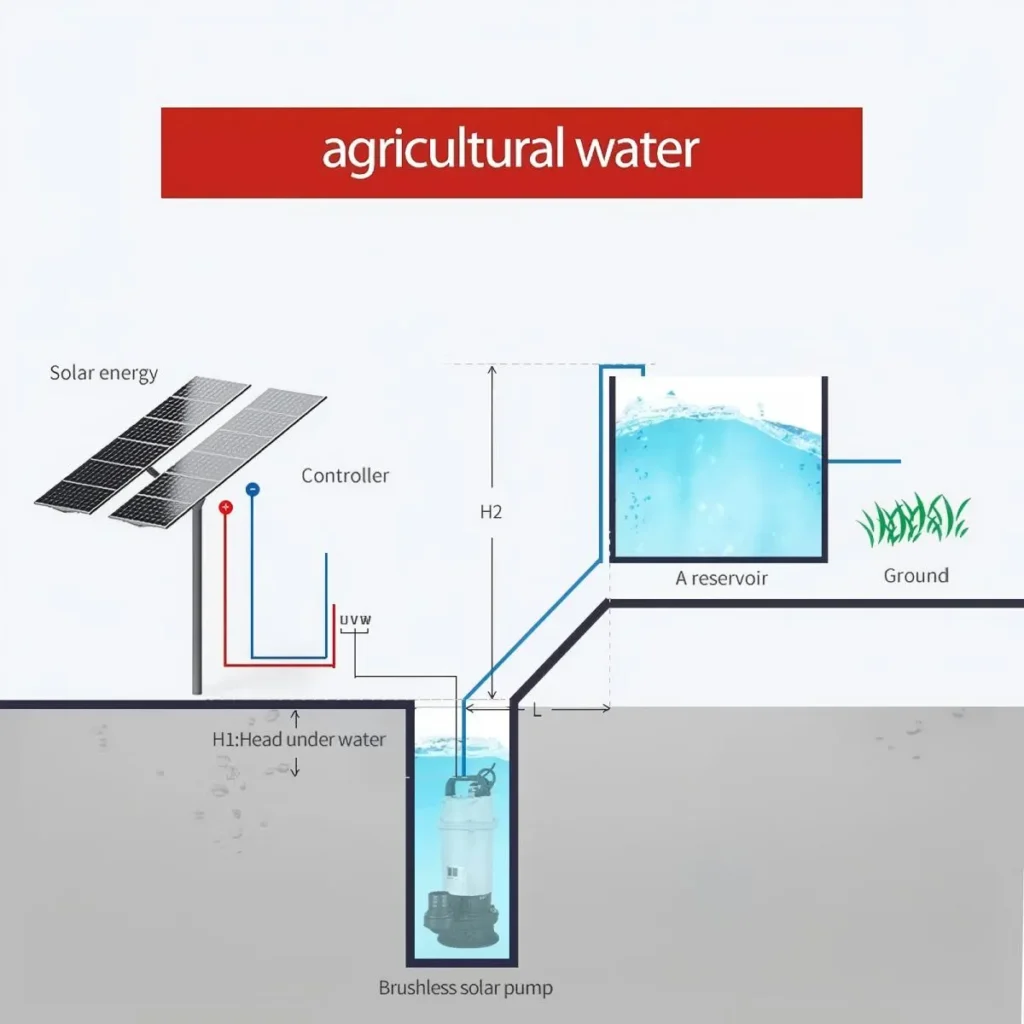
Every reputable Solar Water Pump manufacturer will tell you: 80% of solar pump failures trace back to poor pre-installation planning. As a professional Solar Water Pump manufacturer serving global contractors, Jingong Technology emphasizes three pillars of preparation.
1.1 Site Assessment — Solar Irradiance, Water Source & Climate
A qualified Solar Water Pump manufacturer engineers the system around your specific site. Contractors must evaluate:
| Assessment Factor | Key Metric | Tool Required | Why It Matters |
|---|---|---|---|
| Solar Irradiance | Peak sun hours (PSH) / kWh/m²/day | Pyranometer / Global Solar Atlas | Determines PV array capacity; a Solar Water Pump manufacturer sizes panels accordingly |
| Water Source Survey | Static water level, yield, water quality (TDS, sand, salinity) | Water level meter, TDS meter, sieve analysis | Decides submersible vs. centrifugal pump; filtration needs |
| Terrain & Mounting Space | Rooftop area / ground clearance, soil bearing | Measuring tape, drone survey | Fixes array tilt angle & foundation design |
| Climate Adaptation | Min/max temperature, wind load, hail risk | Local weather station data | Dictates anti-freeze, anti-corrosion, and structural reinforcement strategy |
1.2 Equipment & Tools Preparation — Component Matching & Quality Control
A reliable Solar Water Pump manufacturer matches every component to the application scenario. Below is the essential bill of materials for a contractor:
| Component | Selection Criteria | Compliance Mark |
|---|---|---|
| PV Modules | Mono-crystalline ≥ 20% efficiency; power = 1.3–1.5× inverter rating | IEC 61215, IEC 61730 |
| Solar Pump Inverter / Controller | MPPT efficiency ≥ 98%; power = 1.1–1.3× motor rating | IEC 62109, UL 1741 |
| Submersible / Centrifugal Pump | Head & flow matched to daily water requirement | CE, ISO 9001 |
| Battery / Storage (optional) | Deep-cycle LiFePO₄ or gel; 2–3 days autonomy | UN 38.3, IEC 62619 |
| Mounting Structure | Aluminum 6063-T5 or stainless steel 304; wind-rated | EN 1090 |
| Tools | Torque wrench, MC4 crimper, multimeter, wire stripper, insulating tape | — |
Whether you need agricultural irrigation, livestock watering, or industrial water transfer, partnering with an experienced Solar Water Pump manufacturer ensures component compatibility. Jingong Technology, as your trusted Solar Water Pump manufacturer, supplies complete kits with pre-matched PV + inverter + pump combinations validated in our factory test bay.
1.3 Safety & Compliance Preparation — Codes, Training & PPE
Before any Solar Water Pump manufacturer ships equipment to a jobsite, contractors must confirm adherence to local electrical codes. Key frameworks include:
- EU Market: EN 60335 (LVD), EN 55014 (EMC), CE Declaration of Conformity
- US Market: NEC Article 690 (Solar PV), UL 1741 (Inverter), OSHA 1926 (Construction Safety)
- International: IEC 62253 (PV Pumping Systems), IEC 60364 (Wiring Regulations)
2. Step-by-Step Installation Process — Contractor-Grade Execution

This section — refined by Jingong Technology, a veteran Solar Water Pump manufacturer — walks you through the exact sequence our overseas installation partners follow.
2.1 Solar Panel Installation — Tilt, Mount, Wire
The first physical step any Solar Water Pump manufacturer recommends is PV array deployment:
- Foundation & Mounting: Use concrete footings (ground mount) or stainless brackets (roof mount). Torque all bolts to manufacturer spec.
- Tilt Angle: Set equal to local latitude ± 5° for optimal annual yield. A Solar Water Pump manufacturer in the tropics recommends 5°–15°; in temperate zones, 30°–45°.
- Wiring: Connect panels in series/parallel per inverter Vdc window. Use MC4 connectors; never leave exposed copper.
- Waterproofing: Apply IP67 junction boxes; seal conduit entry with UV-stable silicone.
| Latitude Zone | Optimal Tilt Angle | Typical Market |
|---|---|---|
| 0°–15° (Tropical) | 5°–15° | Indonesia, Malaysia, Kenya |
| 15°–35° (Subtropical) | 15°–30° | Egypt, India, Florida USA |
| 35°–55° (Temperate) | 30°–45° | Germany, France, China North |
2.2 Pump & Pipeline Installation — Submersible vs. Surface
A specialized Solar Water Pump manufacturer differentiates installation by pump type:
| Pump Type | Installation Key Points | Filtration Requirement |
|---|---|---|
| Submersible Solar Pump | Lower slowly with nylon rope; never by cable. Ensure pump clearance ≥ 1 m from bottom to avoid silt intake | Shroud screen 0.5–1 mm for sandy wells |
| Centrifugal / Surface Pump | Fixed on vibration-damping base; inlet pipe must be airtight (priming critical) | Y-strainer at suction; check valve on discharge |
| Booster Pump (Solar-fed) | Install after storage tank; pressure switch set to 1.5–3.0 bar | Whole-house sediment filter 100 micron |
Jingong Technology, as your dedicated Solar Water Pump manufacturer, provides pump-specific installation diagrams for every model we produce — from deep-well submersibles to high-flow centrifugal units.
2.3 Electrical System Connection — Inverter, Controller, Grounding
Proper electrical integration separates a professional Solar Water Pump manufacturer’s guidance from amateur advice:
- DC Side: PV+ → Inverter PV+ ; PV− → Inverter PV−. Use 4–6 mm² PV cable for runs < 30 m.
- AC Side (for 3-phase pump): Inverter U/V/W → Motor terminals in correct phase order. Reverse any two phases if pump runs backward.
- Grounding: CRITICAL — PV array frame, inverter chassis, pump body, and control cabinet must each have independent grounding electrodes (never daisy-chain). Ground rod depth ≥ 2.5 m (frost line).
- Surge Protection: Type 1+2 SPD at inverter DC & AC sides in lightning-prone regions.
2.4 System Assembly & Final Fixing
Once all subsystems are connected, a quality-driven Solar Water Pump manufacturer instructs contractors to:
- Reinforce all brackets with secondary safety cables (anti-theft & anti-typhoon)
- Label every disconnect switch, terminal, and warning sign
- Clean the site — remove packaging, tool debris, and tripping hazards
- Photograph the completed installation for the project file
3. Post-Installation Testing & Commissioning
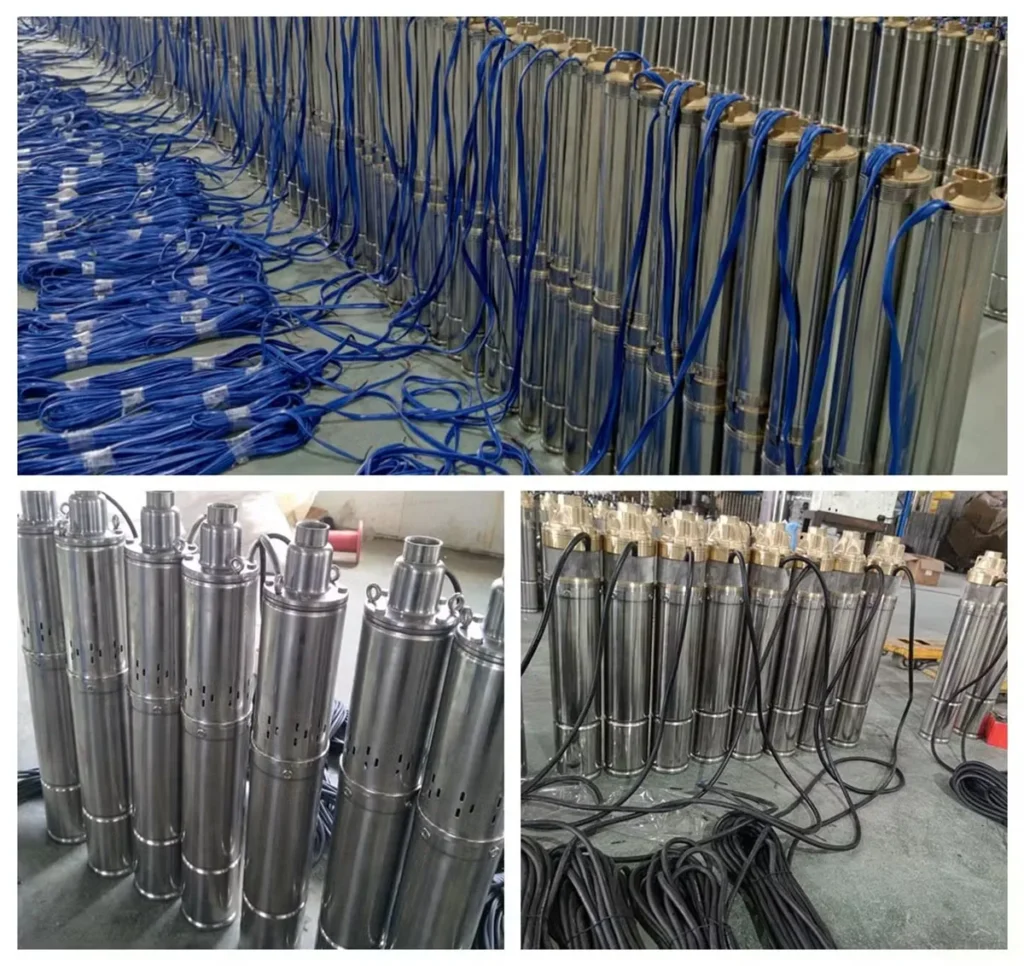
A responsible Solar Water Pump manufacturer never considers the job done until documented commissioning passes.
3.1 System Inspection
- Visual check: No loose connections, no water leaks, no exposed conductors
- Pressure test: Pipe network pressurized to 1.5× operating pressure for 30 min — zero drop
- Insulation test: ≥ 1 MΩ between motor windings and ground
- Mechanical check: Pump securely fixed; no vibration at idle
3.2 Operational Testing
| Test | Procedure | Acceptance Criteria |
|---|---|---|
| No-Load Test | Run pump without water for ≤ 10 seconds | Smooth rotation, no abnormal noise, current within 30% of rated |
| Load Test | Operate at design head & flow | Flow ≥ 95% of rated; head within ±5% of design |
| PV Stability Test | Monitor output under variable cloud cover | Inverter MPPT tracks; pump speed adjusts smoothly; no nuisance trips |
3.3 Commissioning & Acceptance
Your Solar Water Pump manufacturer should provide a commissioning report template. Jingong Technology delivers bilingual (EN/FR/ES/AR) acceptance documents with every project. Key commissioning parameters:
- Set inverter max frequency (typically 50/60 Hz)
- Configure dry-run protection (low current cutoff)
- Set water level sensors (high/low float switches)
- Document: as-built drawings, test results, warranty certificate, CE/UL compliance docs
4. Common Installation Mistakes & Troubleshooting
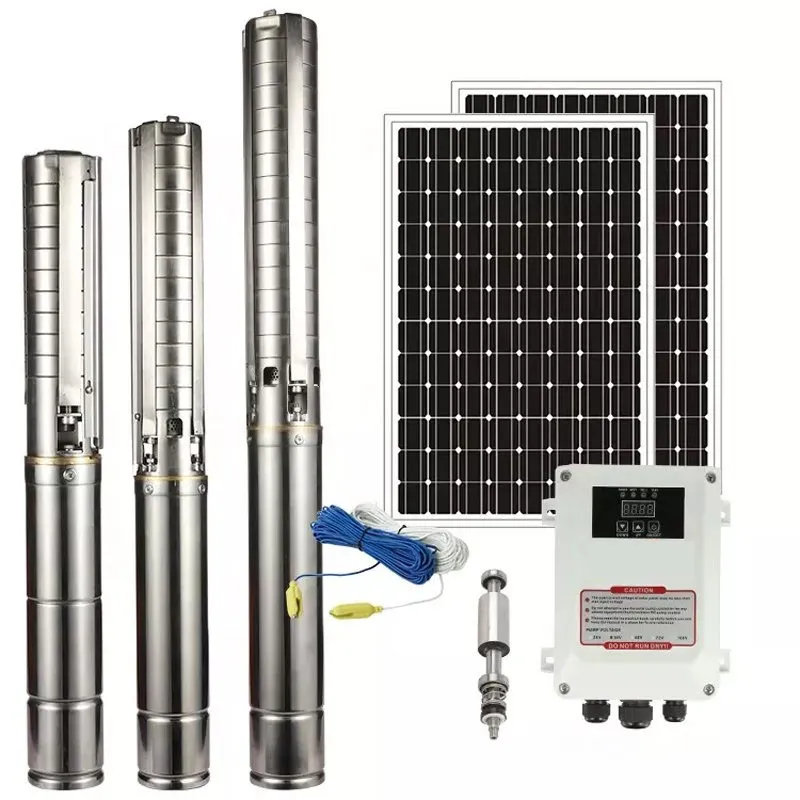
Having supported over 60 countries, our Solar Water Pump manufacturer engineering team compiled the most frequent contractor errors:
4.1 Top 6 Installation Mistakes
| # | Mistake | Consequence | Prevention |
|---|---|---|---|
| 1 | Wrong PV tilt angle | 20–40% energy loss | Follow latitude-based table from Section 2.1 |
| 2 | Shared/daisy-chained grounding | Lightning destroys inverter & pump | Independent ground rods per IEC 60364 |
| 3 | Undersized pipe diameter | Friction loss → reduced flow | Hydraulic calculation; size for ≤ 3% head loss |
| 4 | No filtration in silty water | Impeller erosion within months | Install shroud + periodic desilting |
| 5 | Pump too close to well bottom | Sand ingestion → bearing failure | ≥ 1 m clearance; use sump sleeve |
| 6 | Incorrect phase sequence | Pump runs backward → zero flow | Swap any two AC output phases |
4.2 Troubleshooting Flowchart
Symptom → Diagnosis → Action
🔴 Pump does not start → Check DC input voltage > inverter startup threshold → Verify PV open-circuit voltage; clean panels
🔴 Low flow / head → Pipe blockage or incorrect sizing → Inspect filter; recalculate friction loss
🔴 Inverter alarm E-01 (over-current) → Pump seized or phase short → Megger the motor; replace if < 0.5 MΩ
🔴 PV output unstable → Loose MC4 or shading → Re-crimp connectors; trim shading objects
🔴 Pipeline leakage → Joint not sealed → Re-do with PTFE tape + torque to spec
5. Maintenance & Long-Term Operation Guidelines

solar water pump
A forward-thinking Solar Water Pump manufacturer designs for 10+ year service life. Here is the maintenance schedule our partners rely on:
| Interval | Task | Responsibility |
|---|---|---|
| Weekly | Visually inspect panels for shade/debris; check pump sound | Site operator |
| Monthly | Clean PV modules (if dust accumulation > 5%); tighten electrical terminals | Technician |
| Quarterly | Descale pump impeller; lubricate bearings; test grounding resistance | Certified contractor |
| Annually | Full system performance test; replace worn seals; firmware update inverter | Solar Water Pump manufacturer authorized service |
• Desert/Arid: Clean panels bi-weekly; install larger filter area
• Tropical/Humid: Quarterly anti-fungal treatment on seals; check for termite damage on cables
• Cold/Temperate: Winterize with drain-back or glycol; heat-trace exposed pipes below 0°C
6. Compliance & Certification Guidelines for Global Markets
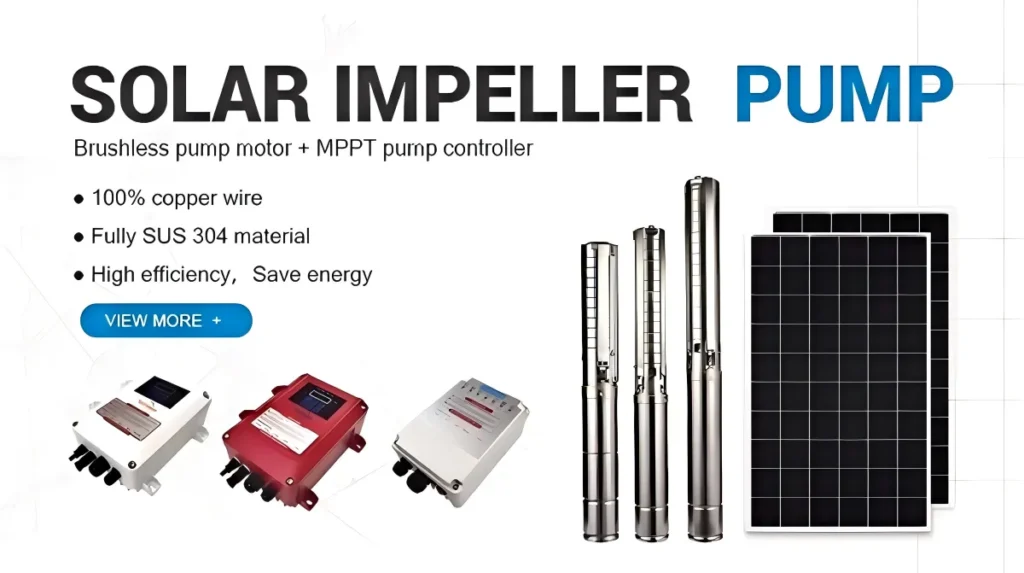
As an export-oriented Solar Water Pump manufacturer, Jingong Technology holds the following certifications for seamless market entry:
| Market | Required Certifications | Standard Reference |
|---|---|---|
| European Union | CE (LVD + EMC), EN 60335, EN 12100 | EU 2014/35/EU, 2014/30/EU |
| United States | UL 1741, UL 778 (pump), NEC 690 | NFPA 70 |
| Canada | CSA C22.2, UL 1741-SA | CSA Group |
| Australia/NZ | AS/NZS 5033, AS 4777 | Clean Energy Council approved |
| Middle East/Africa | CE + SASO (KSA) + SONCAP (Nigeria) | Regional authority |
| Global (base) | ISO 9001, IEC 62253, IEC 62109 | IEC International |
Working with a certified Solar Water Pump manufacturer eliminates customs delays and ensures your installation passes local inspection on the first visit. Jingong Technology, your reliable Solar Water Pump manufacturer, provides full documentation packages in English, French, Spanish, Arabic, and Russian.
7. Expert Advice & Overseas Case Studies
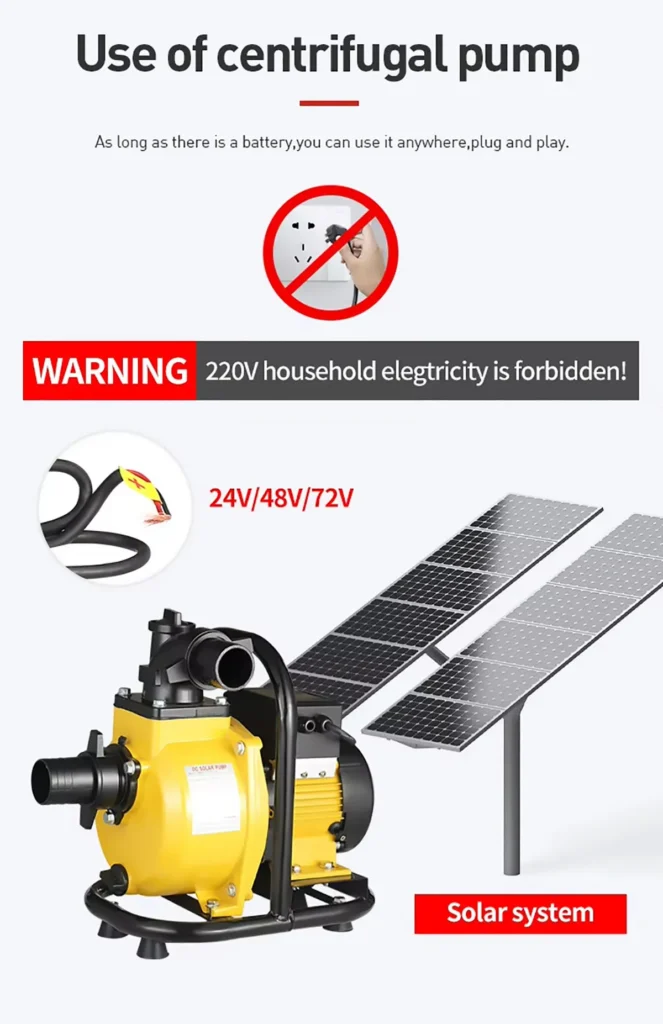
7.1 Expert Recommendations from Jingong Technology
As a Solar Water Pump manufacturer with deep field exposure, we offer contractors these hard-earned insights:
“Never undersize the PV array to save upfront cost. A 20% undersized array permanently caps your water output and frustrates the end-user. As a Solar Water Pump manufacturer, we’ve seen ROI destroyed by this single error.”
— Chief Engineer, Jingong Technology
“For agricultural projects, always add a 20% headroom on flow rate. Crops’ water demand spikes in summer exactly when irradiance is highest — your solar pumping system must absorb the peak. A competent Solar Water Pump manufacturer models this for you.”
— Director of International Projects, Jingong Technology
7.2 Overseas Project Case Studies
| Project | Location | Configuration | Outcome |
|---|---|---|---|
| Agricultural Irrigation | Andalusia, Spain | 18 kWp PV + 15 kW submersible pump, head 80 m, flow 12 m³/h | Zero electricity bill; 40 hectares irrigated; payback 2.8 years |
| Village Water Supply | Garissa County, Kenya | 3 kWp PV + 1.5 kW submersible, head 45 m, flow 2.5 m³/h | 2,500 villagers served; 99.2% uptime over 24 months |
| Industrial Cooling | Java, Indonesia | 30 kWp PV + 22 kW centrifugal pump, flow 30 m³/h | Reduced diesel generator usage by 85% |
Each case was engineered by Jingong Technology, a trusted Solar Water Pump manufacturer, in collaboration with local contractors who followed the exact protocol described in this guide.
8. FAQ for Contractors
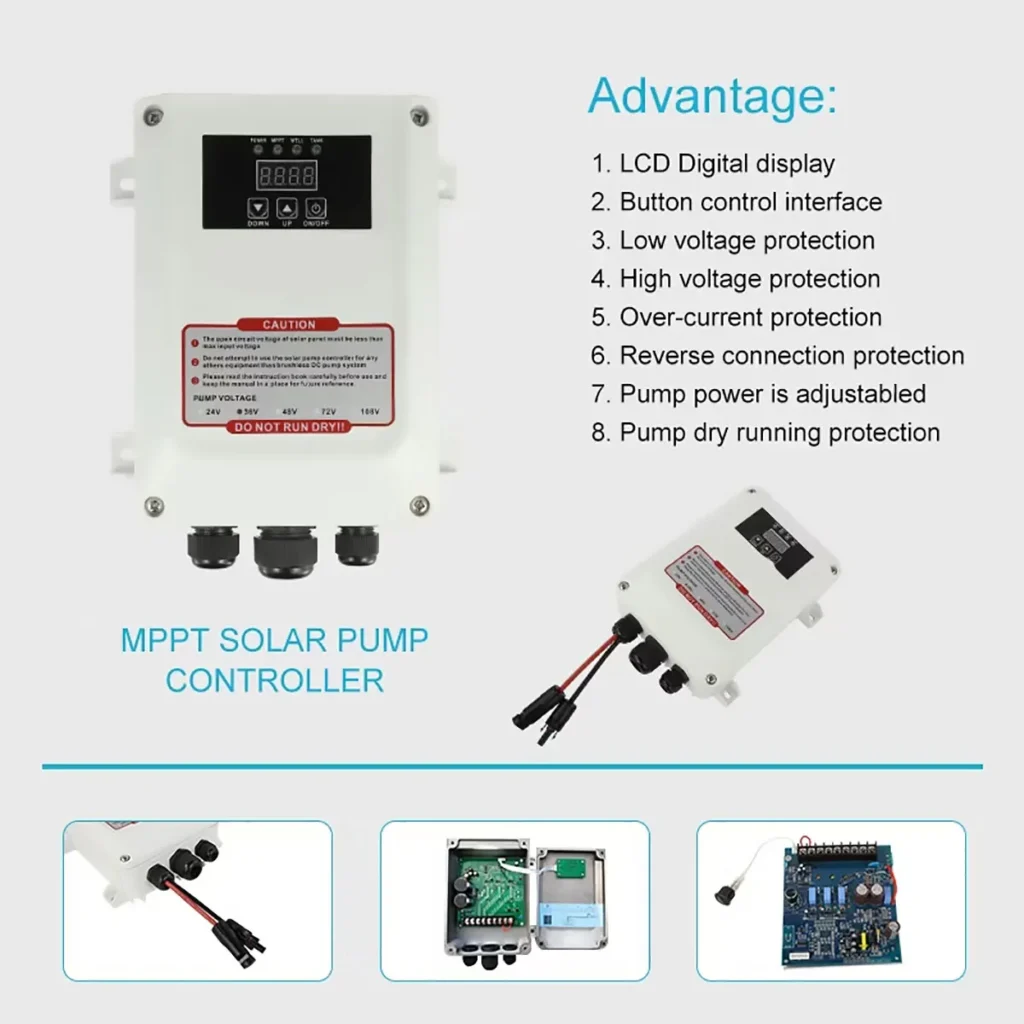
Q1: How do I select the right Solar Water Pump manufacturer for my project?
A: Evaluate their certifications (CE, UL, IEC 62253), factory audit report, warranty terms (minimum 2 years), and local service network. A genuine Solar Water Pump manufacturer will provide free system sizing tools and engineering support.
Q2: What is the typical cost to install a solar water pump system?
A: For a 5 HP (3.7 kW) agricultural system, budget $3,500–$6,000 all-in, depending on head, array size, and site complexity. Partnering directly with a Solar Water Pump manufacturer like Jingong cuts 15–25% off distributor pricing.
Q3: Can a solar water pump work on cloudy days?
A: Yes, but at reduced output. A quality Solar Water Pump manufacturer sizes the array with 1.3–1.5× oversizing so the pump still delivers usable flow at 30–50% irradiance. Battery storage extends operation into nighttime.
Q4: How deep can a solar submersible pump lift water?
A: Commercial units from a professional Solar Water Pump manufacturer reach heads up to 300 m. For deeper wells, multi-stage submersible pumps or intermediate storage tanks are recommended.
Q5: Do I need grid connection for a solar water pump?
A: No. Standalone (off-grid) solar pumping is the most common configuration. Hybrid systems (solar + grid + generator) are available from your Solar Water Pump manufacturer for mission-critical applications.
Q6: How long does a solar water pump last?
A: PV modules: 25 years (80% output). Pump & inverter: 8–10 years with proper maintenance. A reputable Solar Water Pump manufacturer warrants the pump motor for 2–3 years and provides spare parts for 10+ years.
Q7: What maintenance does the system require in dusty environments?
A: Bi-weekly panel cleaning; quarterly impeller inspection; annual full service by a certified technician from the Solar Water Pump manufacturer.
Q8: Are there government incentives for solar water pumps?
A: Many markets (EU, USA, India, Kenya) offer subsidies or tax credits. Your Solar Water Pump manufacturer can supply the CE/UL certificates required for incentive applications.
Core SEO terms: solar water pump contractor FAQ, solar pump installation cost, solar pump export FAQ, solar pump maintenance questions.
9. Conclusion & Resource Links
Professional solar water pump installation is both an engineering discipline and an art honed by experience. By following this contractor-grade guide — and partnering with a proven Solar Water Pump manufacturer like Jingong Technology — you ensure maximum system efficiency, regulatory compliance, and decades of trouble-free operation.
Remember: a Solar Water Pump manufacturer is only as good as the contractor who installs the system. Jingong Technology, your long-term Solar Water Pump manufacturer partner, stands ready to support your next project with pre-sale engineering, on-site training, and lifetime technical assistance. As a full-spectrum Solar Water Pump manufacturer, we also produce booster pumps, submersible pumps, centrifugal/land pumps, and gasoline/diesel pumps — making us a one-stop Solar Water Pump manufacturer for all your water movement needs. Contact our Solar Water Pump manufacturer team today to request a customized system design.
This guide is authored by Jingong Technology, a leading Solar Water Pump manufacturer based in Zhejiang, China. With 15+ years of expertise across solar water pumps, submersible pumps, centrifugal pumps, booster pumps, and engine-driven pumps, we serve contractors in 60+ countries. When you need a Solar Water Pump manufacturer that delivers quality, compliance, and support — choose Jingong. Every Solar Water Pump manufacturer claims excellence; we prove it through 10,000+ successful installations worldwide. Trust your water future to a Solar Water Pump manufacturer that understands both the engineering and the business of solar pumping.

0 Comments