
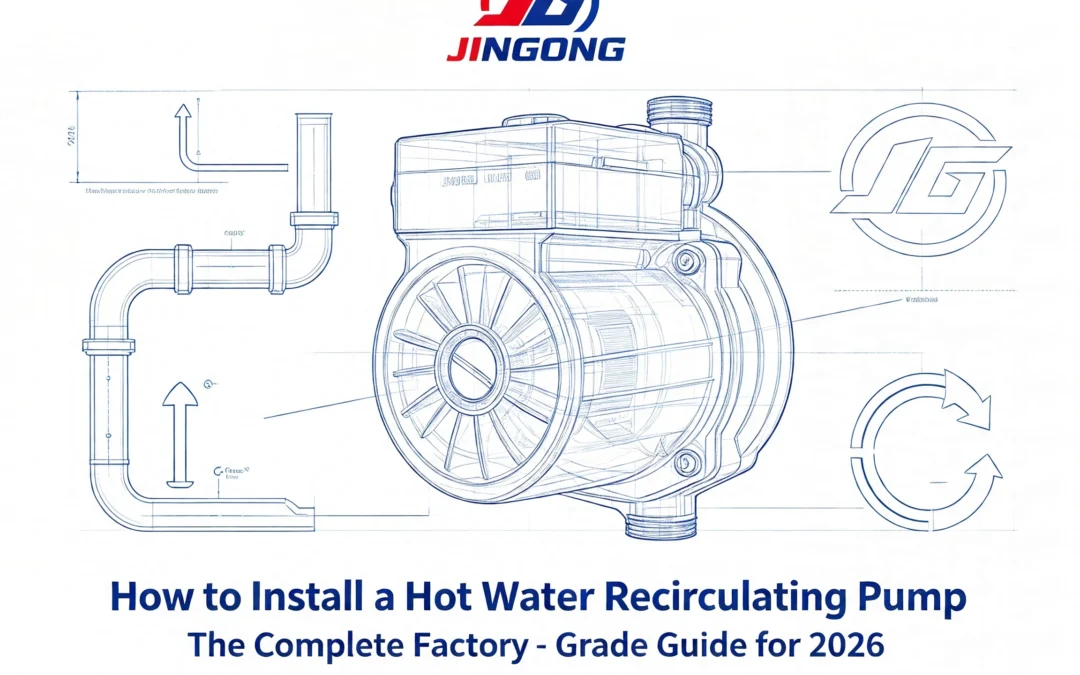
If your shower still spits 30 seconds of icy water before warming up, or your remote bathroom wastes gallons waiting for hot water, a Hot Water Recirculating Pump is the fix most homeowners—and many contractors—underuse. At Jingong (Zhejiang Jingong Technology Co., Ltd.), we’ve been manufacturing submersible pumps, land pumps, booster pumps, solar pumps, and gasoline/diesel pumps for 15+ years, shipping to 40+ countries, and supporting installation teams from single-family homes to small commercial buildings. This guide distills our workshop and field experience into one long-form
Whether you’re a DIY homeowner, a plumber expanding your service menu, or a procurement officer specifying equipment for a villa project, this post covers:
- Why a Hot Water Recirculating Pump matters (beyond “comfort”)
- How different pump types work and which one fits your heater layout
- Pre-install checks most tutorials skip
- Two mainstream installation methods (with & without return line)
- Electrical wiring, smart controls, commissioning, and leak checks
- Mistakes we see every week in after-sales tickets
- Maintenance, cost math, and how to pair recirculation with Jingong’s broader pump lineup
1. Why Install a Hot Water Recirculating Pump?
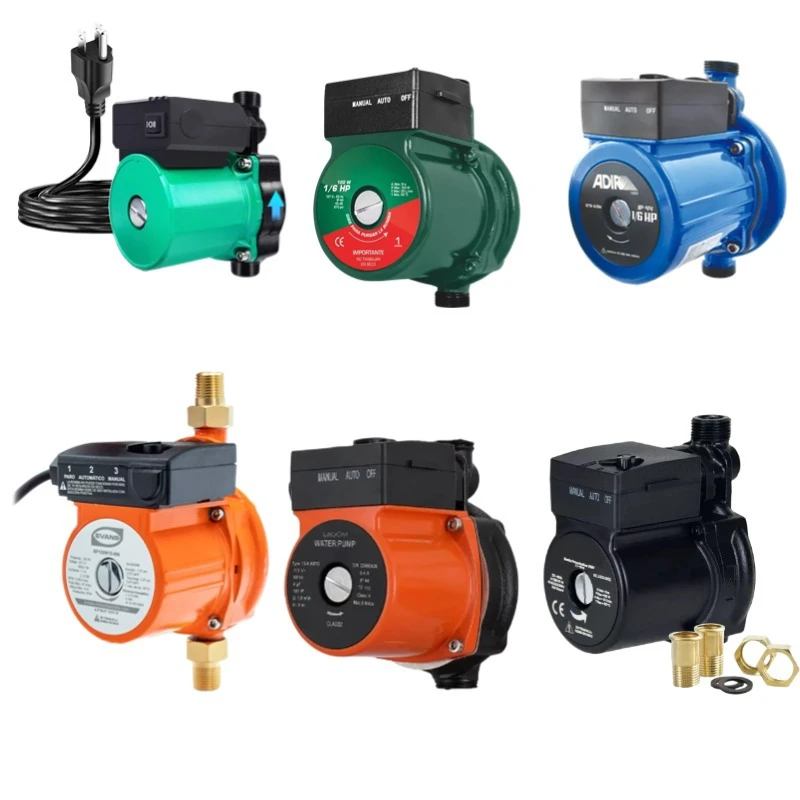
Let’s start with the problem a Hot Water Recirculating Pump actually solves—because if you don’t size the problem, you’ll oversize the equipment.
1.1 The “Cold Water Wait” Most Guides Understate
In a typical two-bathroom US home with the water heater in the garage, the farthest fixture holds 2–4 gallons of cold standing water. Every time the hot side sits idle, that column cools to ambient. The EPA estimates homes without recirculation waste 2,000–6,000 gallons per household annually. A properly specified Hot Water Recirculating Pump closes that loop, ensuring hot water is available within 2–5 seconds of opening the tap.
1.2 Three Groups Who Benefit Most
| Scenario | Why Recirculation Pays Off |
|---|---|
| Single-family / Villa | Comfort + water savings; payback 12–24 months in water-heavy regions. |
| Small Commercial (Salon, Clinic) | Reduces client complaints; avoids scald-risk “burst” hot water. |
| Off-grid / Solar Hybrid | Pair with Jingong solar pumps + thermostatic mixing; reduces generator runtime. |
Key takeaway: A Hot Water Recirculating Pump isn’t a luxury gadget—it’s a water and energy retrofit with measurable ROI.
2. How a Hot Water Recirculating Pump Works & Types Explained
Before touching a wrench, you need to know what you’re installing. This distinguishes a Hot Water Recirculating Pump from our submersible pumps or land pumps.
2.1 The Core Principle: Zero-Wait via Loop
The pump creates a closed loop between the water heater outlet and the return line (or a crossover valve). It keeps hot water “standing but moving,” so the pipe never goes fully cold.
2.2 Three Main Types
- Timer-Based: Runs on a schedule (e.g., 6–9 AM). Simple but less efficient.
- Thermostat-Controlled: Kicks in when loop temp drops below a setpoint (e.g., 90°F). More efficient.
- Demand/Push-Button: User activates the pump via a button or app. Most water-efficient; popular in EU/AU markets.
2.3 Pump Comparison Table
| Pump Type | Primary Job | Use for Recirculation? |
|---|---|---|
| Hot Water Recirculating Pump | Circulate hot water | ✅ Yes |
| Submersible Pump | Deep well lifting | ❌ No (Seals not rated for constant 140°F+) |
| Land / Centrifugal Pump | Irrigation/Booster | ❌ No (Overkill flow rate) |
| Gasoline/Diesel Pump | Jobsite supply | ⚠️ Supply only |
3. Pre-Installation: Site Check, Pump Sizing, Tools & Safety
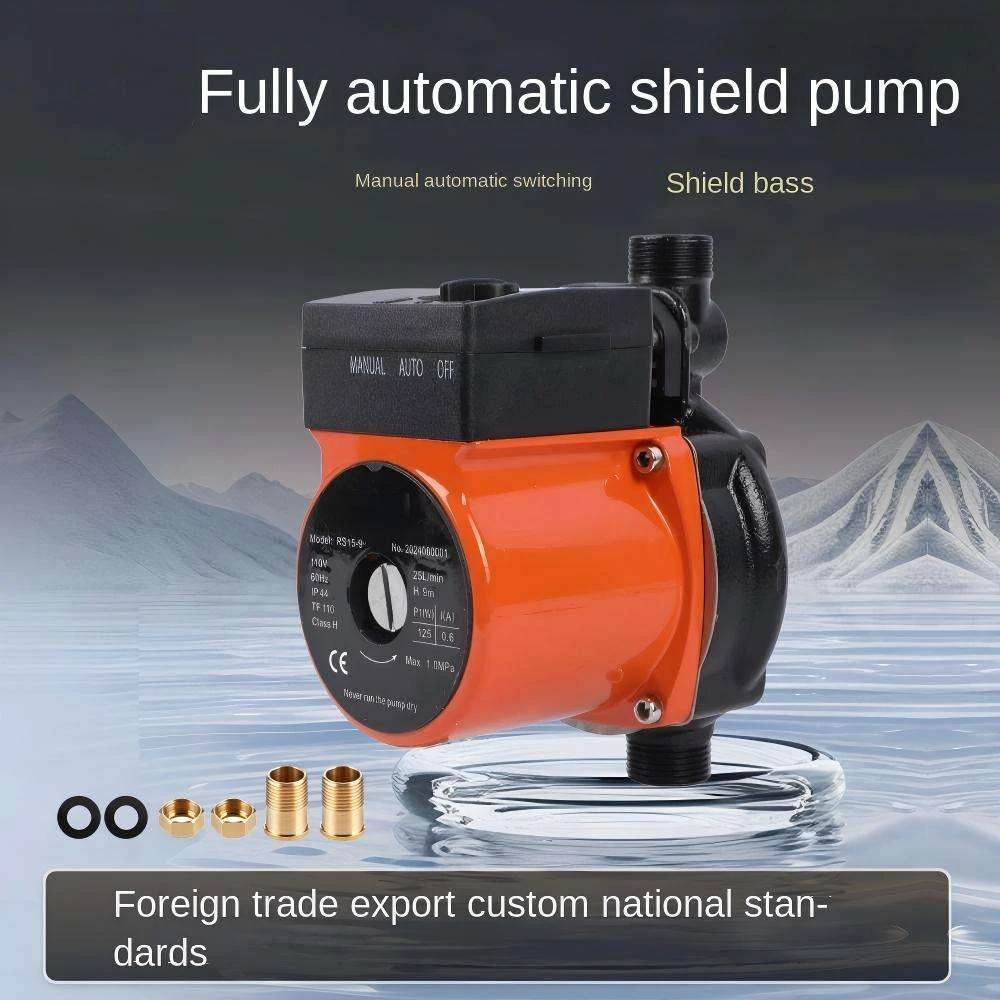
This module builds Trustworthiness. Skipping prep leads to Module 7 (troubleshooting).
3.1 Pump Sizing (The Numbers)
A Hot Water Recirculating Pump is sized for low head (3–8 meters) and low flow (0.5–3 m³/h). Oversizing causes noise; undersizing causes lukewarm water.
- Small Condo (1 bath): 0.5–1 m³/h, 3–4m head.
- Standard Home (2–3 baths): 1–2 m³/h, 4–6m head.
- Villa (4+ baths): 2–3 m³/h, 6–8m head.
3.2 Safety First (Non-Negotiable)
- Kill the breaker to the water heater.
- Shut the cold water inlet valve.
- Open a hot faucet to relieve pressure.
- Verify 0V with a non-contact voltage tester.
Warning: ~18% of “dead on arrival” pumps at Jingong are actually burned motors from forgetting to kill the 240V breaker.
4A. Method A: Install at Water Heater Outlet (No Return Line)
This is the most common DIY method. The Hot Water Recirculating Pump mounts on the heater’s hot outlet, and a crossover valve at the farthest fixture uses the cold line as a return path.
Step-by-Step Installation
- Shut Down: Follow Module 3 safety steps.
- Dry-Fit: Assemble: Heater Outlet → Union → Check Valve → Pump (arrow facing flow) → Union.
- Seal: Use Teflon tape (3–4 wraps clockwise). Do not tape union seats.
- Mount: Ensure the pump is accessible for future service.
- Crossover Valve: Install under the farthest sink. Connect cold in, cold out to faucet, and the third port to the hot line.
- Bleed: Open all hot faucets to purge air before powering on.
4B. Method B: Install with Dedicated Return Line
For premium homes or commercial buildings with a dedicated return pipe. No crossover valve is needed.
The Hot Water Recirculating Pump mounts similarly at the heater, but the return line connects to the heater’s dedicated return port (or the cold inlet). Crucially, install a balancing valve at the farthest fixture to ensure even heat distribution across all branches.
5. Electrical Wiring & Smart Controls (110V/220V)
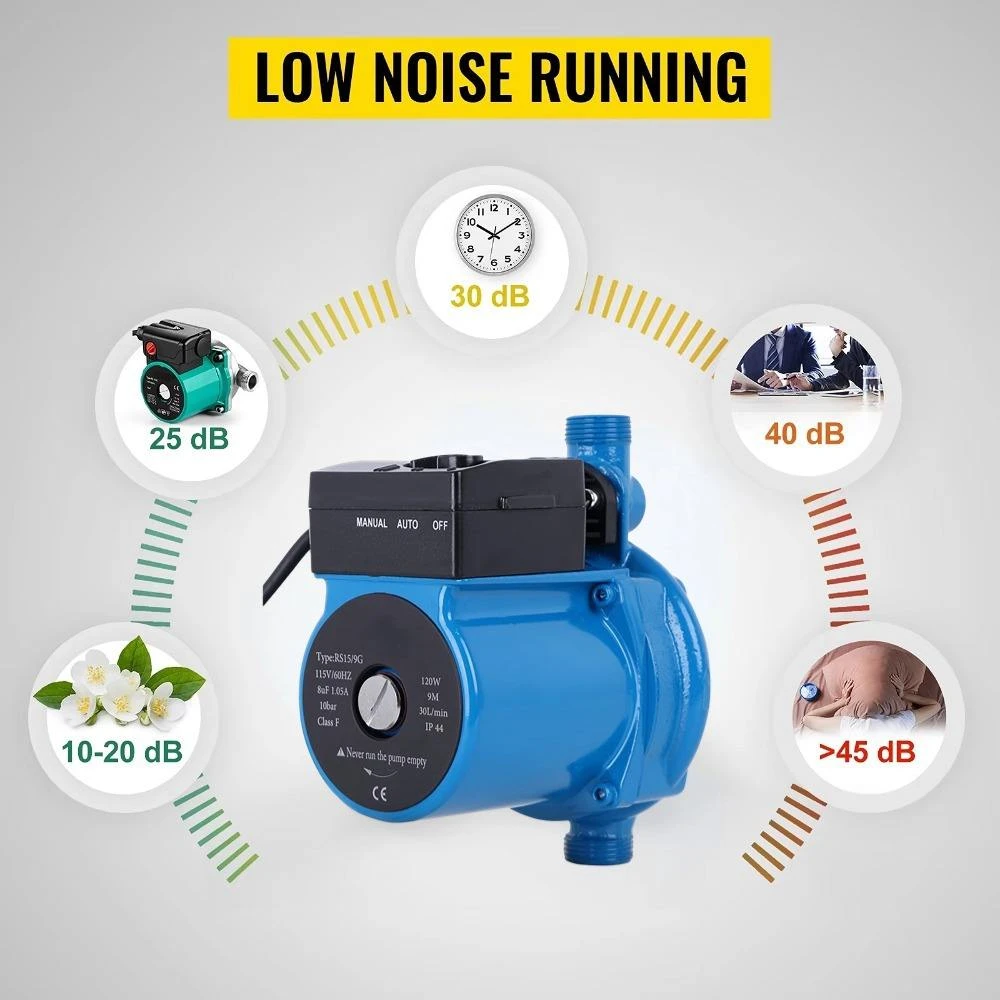
Most residential units are 110V plug-in. However, commercial or European models may be 220V hardwired. Always ground the pump motor.
- Plug-and-Play: Simplest. Plug into a GFCI outlet.
- Hardwired: Use a junction box. Match color codes (Black/Live, White/Neutral, Green/Ground in US).
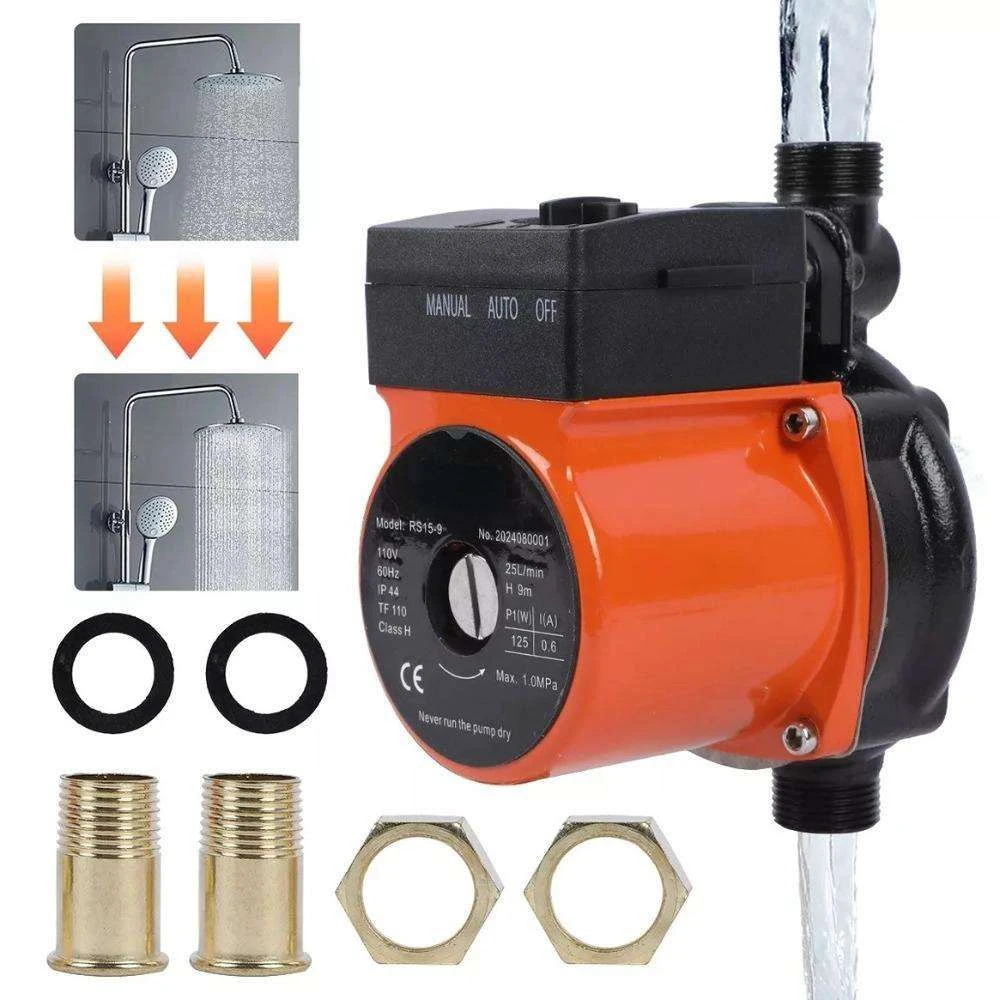
- Smart Control: Jingong’s advanced Hot Water Recirculating Pump models support WiFi relays. Users can trigger a 3-minute circulation cycle via a smartphone app or voice command.
Pro Tip: Never tap the heater’s dedicated 240V circuit for the pump unless the pump manual explicitly allows it.
6. Commissioning, Air Bleed & Leak Check
Installation isn’t complete until the system is purged of air.
Air Bleed Procedure
- With the pump OFF, open all hot faucets.
- Slowly open the cold inlet to the heater.
- Wait until water flows steadily without sputtering at all fixtures.
- Close faucets starting from the one closest to the heater.
- Power on the Hot Water Recirculating Pump and test the farthest fixture.
Leak Check: Wrap dry paper towels around unions. If damp after 2 hours, tighten 1/8th of a turn.
7. Common Installation Mistakes & Fixes
As a factory, we see these errors repeatedly. Addressing them builds immense trust with readers.
- Flow Arrow Backward: Symptom: Pump runs, but no hot water. Fix: Flip the pump. (Accounts for 12% of Jingong RMAs).
- No Check Valve: Symptom: Short cycling. Fix: Install a swing check valve downstream.
- Air Lock: Symptom: Humming noise, no flow. Fix: Re-bleed the system.
- Crossover Valve Mis-set: Symptom: Lukewarm cold water at ice maker. Fix: Adjust thermostat to 95°F (35°C).
- Poor Service Clearance: Symptom: Impossible to remove pump later. Fix: Ensure 6″ clearance on both sides.
8. Maintenance & Winter Protection
To extend the life of your Hot Water Recirculating Pump beyond 10 years:
- Quarterly: Inspect for leaks; listen for unusual noises.
- Bi-Annually: Clean inlet screen/strainer if accessible.
- Winterization: If installed in an unheated garage or cabin that freezes, the pump must be drained. Water expands 9% when frozen and will crack the pump housing.
9. Scenario-Based Pump Selection (Jingong Solutions)
A Hot Water Recirculating Pump is just one piece of a complete water management system. Here’s how to integrate it with Jingong’s core product lines:
9.1 Residential & Villa Systems
Standard homes benefit from our dedicated circulation pumps. For properties with wells, pair the recirculation system with our high-efficiency Submersible Pumps to ensure consistent pressure and hot water delivery simultaneously.
9.2 Off-Grid & Solar Applications
For cabins or eco-homes relying on solar, our Solar Water Pumps can provide the initial water lift and pressure. A DC-powered Hot Water Recirculating Pump (or AC pump with inverter) maintains loop temperature without draining batteries.
9.3 Commercial & Industrial Sites
Construction sites or agricultural facilities without grid power often use Gasoline or Diesel Pumps for bulk water transfer. Once water reaches a temporary office or welfare unit, a robust Hot Water Recirculating Pump ensures staff have immediate access to hot water for hygiene.
9.4 Fixed Installation & Boosting
In large estates, our Land Pumps (Centrifugal/Self-Priming) act as whole-house boosters. Integrating a Hot Water Recirculating Pump downstream ensures that boosted pressure doesn’t come at the cost of waiting for hot water.
10. FAQs (People Also Ask)
Q: Do I need a return line for a recirculating pump?
A: Not necessarily. A crossover valve system (Method A) eliminates the need for a dedicated return line, making it ideal for retrofits.
Q: Is a Hot Water Recirculating Pump worth the money?
A: Yes. Most families recoup the cost through water savings in 1–2 years. The comfort and reduced wear on the water heater are additional benefits.
Q: Can I install a Hot Water Recirculating Pump myself?
A: If you are comfortable with basic plumbing and electrical safety (shutting off breakers, soldering/PEX crimping), a Method A install is very DIY-friendly.
Q: Will a recirculating pump work with a tankless water heater?
A: Yes, but caution is required. Ensure the pump’s flow rate meets the tankless unit’s minimum activation flow rate to prevent short-cycling.
11. Cost, ROI & Closing: From Installation to Jingong Solutions
The cost of a quality Hot Water Recirculating Pump ranges from $150 to $500. Installation adds $300–$800 if hiring a pro. However, saving 5,000–10,000 gallons of water annually offers a clear ROI.
Why Choose Jingong?
As a leading manufacturer in Zhejiang, China, Jingong doesn’t just sell pumps; we engineer complete fluid solutions. Our factory performs rigorous QC on every Hot Water Recirculating Pump, testing for noise, seal integrity, and thermal performance.
From the deep well submersible pumps to the surface land pumps, and from sustainable solar pumps to reliable gasoline/diesel pumps, Jingong is your partner in industrial and residential water movement.
Ready to upgrade your hot water system? Explore our full range of Booster & Circulation Pumps or contact our technical team for a custom solution tailored to your specific layout and voltage requirements.