
How to Calculate Total Dynamic Head (TDH) for Solar Booster Pumps: The Definitive Guide
Expert TDH Calculation Framework for Solar Pumps, Submersible Pumps, Land Pumps & Diesel/Gasoline Pumps | By Jingong Technology
Leading Solar Booster Pump manufacturer & Industrial Pump Factory with 15+ Years of Expertise
1. Introduction: What is Total Dynamic Head (TDH) and Why It Matters?
In the water pumping industry, Total Dynamic Head for solar booster pumps is the total equivalent height that a fluid is to be pumped, taking into account friction losses in the pipe. For an experienced Solar Booster Pump manufacturer like Jingong Technology, we know that accurate TDH calculation is the absolute foundation of any successful off-grid or on-grid water supply project.
Solar booster pumps operate under unique conditions: fluctuating PV (photovoltaic) power, frequent start-stop cycles, and the absence of grid voltage stabilization. Unlike standard electric pumps or diesel gasoline pumps, a minor miscalculation in TDH can lead to catastrophic results:
- Insufficient Flow Rate: The pump cannot deliver water to the required height or distance.
- Pump Burnout: The motor runs dry or overloads due to excessive backpressure.
- PV Overload: Solar panels cannot meet the dynamic power demand of an oversized TDH.
- Wasted Investment: Oversizing the pump leads to unnecessary capital expenditure.
Whether you are an engineering contractor, a farm owner, or a procurement specialist, mastering the solar pump sizing guide starts with understanding TDH. This article provides a universal framework applicable to Submersible Solar Pumps, Surface/Land Pumps, and Diesel Irrigation Pumps. Whether you need a custom Solar Booster Pump manufacturer or standard models, mastering this guide is your first step to success.
2. Core Definition & The Universal TDH Formula
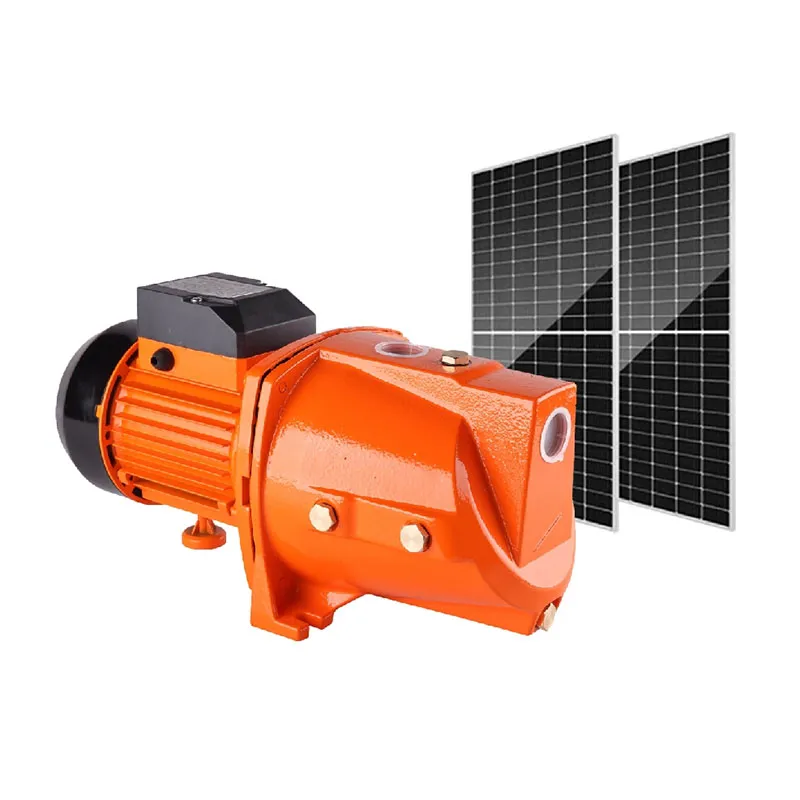
To establish Authority and Expertise, let’s define the universal solar pump total dynamic head formula. TDH is the sum of the static head, friction head, minor losses, and any residual pressure head.
Universal TDH Calculation Formula
TDH = Static Head + Friction Head + Minor Loss Head + Pressure Head
Simplified Formulas by Pump Type:
| Pump Category | Simplified TDH Formula | Key Note |
|---|---|---|
| Solar Submersible Pumps | TDH = Static Head + Pipe Friction Loss + Fitting Loss | No suction lift loss (submerged) |
| Land/Surface Booster Pumps | TDH = Static Head + Suction Lift + Friction Loss + End Pressure | Must account for suction pipe resistance |
| Diesel/Gasoline Pumps | TDH = Vertical Lift + Horizontal Pipe Loss + Valve/Bend Loss | Higher tolerance for power fluctuation |
* Unit Conversion Standard: 1 PSI = 2.31 feet of head. Always use Metric (Meters) or Imperial (Feet) consistently.
3. The 4 Key Components of TDH (Deep Dive)
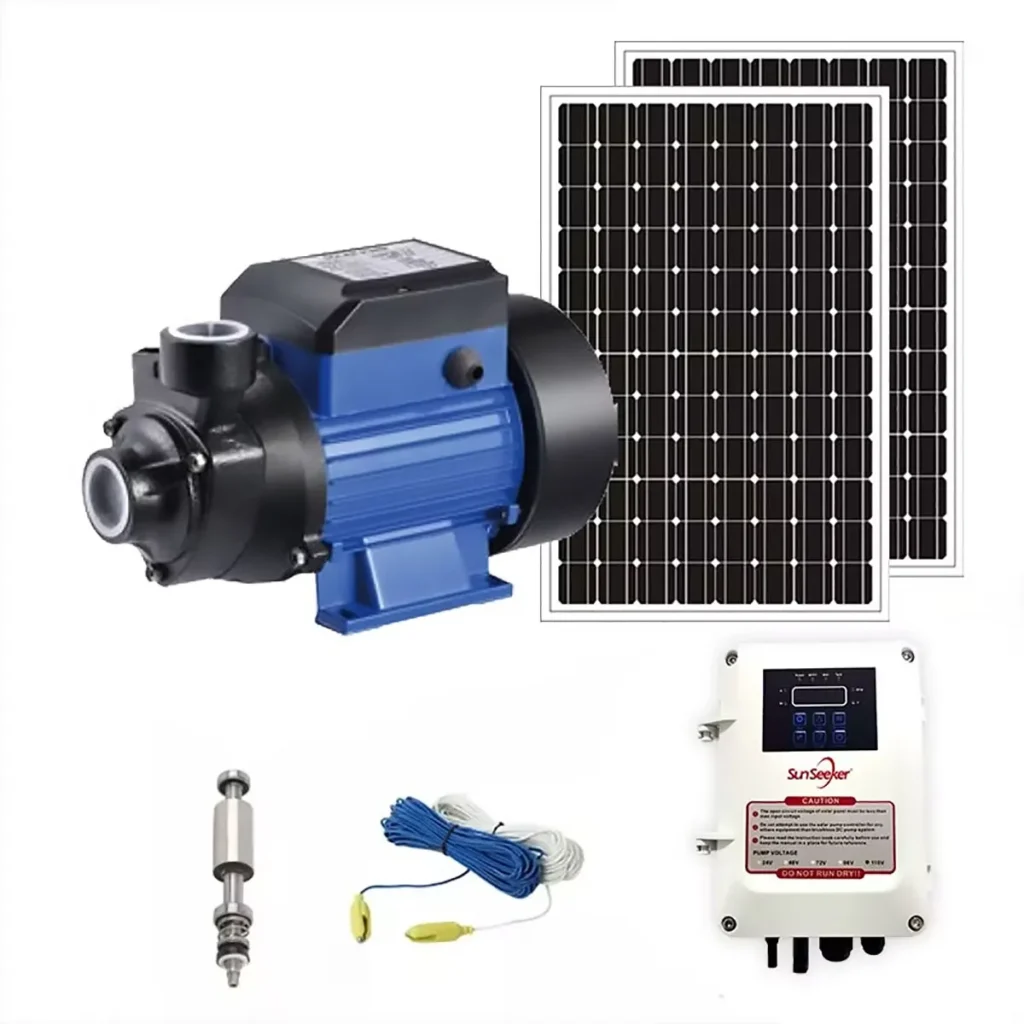
3.1 Static Head (Elevation Head)
The vertical distance between the water source and the highest delivery point. For submersible pumps, this is the depth of the borehole plus the height above ground. For land pumps, it includes the suction lift and the discharge head. This is the core difference in the static head vs dynamic head comparison.
3.2 Friction Head (Pipe Resistance)
The loss of pressure due to the friction of water moving through the pipes. It depends on pipe length, diameter, and material. Use the Hazen-Williams equation for accurate pump friction loss calculation. This is a vital part of the pump head loss calculation process.
3.3 Minor Loss Head (Fittings & Valves)
Pressure drops caused by elbows, tees, valves, and filters. A standard rule of thumb is to add 10% to 15% of the friction head to account for these minor losses, ensuring precise pump fitting loss calculation.
3.4 Pressure Head (Residual Pressure)
If the water is discharged into a pressurized system (like a pressure tank), the required operating pressure must be converted into head and added to the TDH.
4. Step-by-Step TDH Calculation for Solar Booster Pumps

As your dedicated Solar Booster Pump manufacturer, we provide this 5-step actionable guide for how to calculate TDH for solar water pumps:
Step 1: Site Assessment. Measure the total vertical distance and horizontal pipe length.
Step 2: Measure Static Head. This is your baseline elevation requirement.
Step 3: Calculate Friction & Minor Losses. List all pipes, elbows, and valves. Calculate total equivalent length and apply the friction loss rate.
Step 4: Add Pressure Head. Convert any required PSI at the nozzle into feet of head (PSI x 2.31).
Step 5: Apply Solar Safety Factor. Multiply your calculated TDH by a 1.1 to 1.2 safety factor. This ensures the pump performs even on slightly cloudy days.
5. Pump Type Differentiated TDH Calculation (Jingong Product Matrix)

As a comprehensive Solar Booster Pump manufacturer, Jingong Technology produces all major types, each requiring a unique calculation focus:
5.1 Solar Submersible Pumps
Focus on vertical lift and long discharge pipe friction. Since the pump is underwater, there is zero suction lift. Ensure the submersible pump TDH sizing accounts for the depth of the borehole. This is why you need a reliable Solar Booster Pump manufacturer for guidance.
5.2 Solar Surface / Land Pumps
These require careful land pump head calculation. You must calculate the suction lift and ensure it does not exceed the pump’s NPSH to avoid cavitation. Jingong, a veteran Solar Booster Pump manufacturer, offers professional anti-cavitation designs.
5.3 Diesel & Gasoline Pumps
For diesel gasoline pump head parameter sizing, the engine provides stable power. The TDH calculation focuses more on massive flow rates and horizontal distance friction. Our Diesel pumps, built by a robust Solar Booster Pump manufacturer, are designed for heavy-duty farming.
5.4 General Booster Pumps
Focus shifts heavily to Pressure Head. These pumps are designed to increase pressure in existing pipelines, making the solar booster pump selection heavily reliant on the target PSI. A professional Solar Booster Pump manufacturer ensures the pressure head is perfectly matched.
6. Real Calculation Case Study: Farm Irrigation Solar Pump
To demonstrate Experience , here is a real-world TDH calculation for submersible solar pump from one of our clients:
- Scenario: Off-grid farm using a solar submersible pump.
- Static Head: 50 meters (Well depth 30m + Tank height 20m).
- Pipe: 100m of 2-inch PVC pipe.
- Friction Loss: 1.2m per 10m of pipe = 12m total.
- Minor Loss (Fittings): 15% of friction = 1.8m.
- Pressure Head: 0 (Open discharge to tank).
- Raw TDH: 50 + 12 + 1.8 = 63.8m.
- Final TDH (x1.15 Safety Factor): 73.37m.
Based on this, Jingong Technology, your trusted Solar Booster Pump manufacturer, recommended a 72V DC Submersible Pump rated for 75m TDH at 3,000 LPH. The system has been running flawlessly for 2 years.
7. Common TDH Calculation Mistakes & Fixes

Avoid these pitfalls to ensure your solar pump system sizing is accurate:
| Common Mistake | Consequence | The Fix |
|---|---|---|
| Ignoring Friction Loss | Pump delivers 50% less flow than expected | Always calculate pipe friction using Hazen-Williams |
| No Solar Safety Factor | Pump fails during peak sun hours variation | Multiply TDH by 1.1 – 1.2 |
| Wrong Suction Lift (Land Pumps) | Cavitation, noise, and impeller damage | Keep suction lift under 7m (25ft) and use larger pipes |
Avoid these pitfalls by consulting an expert Solar Booster Pump manufacturer before finalizing your purchase.
8. TDH vs Flow Rate vs Solar Pump Power Matching
Understanding the TDH flow rate pump power relation is crucial for system configuration. As TDH increases, the flow rate decreases, and the required motor power increases. A top-tier Solar Booster Pump manufacturer will provide exact performance curves showing how many Watts are needed to overcome a specific TDH at a specific flow rate.
9. Frequently Asked Questions (FAQ)
Q: Is static head the same as TDH?
A: No. Static head is only the vertical elevation. TDH includes static head plus all friction and pressure losses. Ignoring friction is the most common solar pump sizing error.
Q: Do solar pumps need a higher TDH calculation than regular pumps?
A: Yes, due to the fluctuating nature of solar power, a safety factor (1.1x – 1.2x) is highly recommended for off-grid solar pump total dynamic head formula calculations.
Q: Can I ignore minor head loss in a small system?
A: It is not advised. Even small systems have elbows and valves. Always include at least a 10% addition for minor losses to ensure accurate pump friction loss calculation.
Q: What is a good TDH for an irrigation pump?
A: It depends on your field elevation and pipe length. Generally, adding a 20% safety margin to your measured TDH is best practice. Jingong, as your Solar Booster Pump manufacturer, suggests a professional on-site evaluation.
10. Conclusion & Why Choose Jingong Technology
Calculating Total Dynamic Head is the most critical step in designing an efficient water pumping system. Whether you need a high efficiency solar booster pump, a deep well submersible pump, or a robust diesel irrigation pump, precision in TDH ensures longevity and performance.
Jingong Technology, your expert Solar Booster Pump manufacturer, offers:
- 15+ years of expertise in pump engineering and manufacturing.
- A full range of Submersible, Land, Solar, and Diesel/Gasoline pumps.
- Free technical support for solar pump system sizing and TDH calculation.
Get a Free TDH Calculation & Pump Quote
Struggling with your solar booster pump selection? Let our engineers do the math for you. Contact Jingong Technology today for a custom solution tailored to your exact site conditions.
© 2026 Jingong Technology. All rights reserved. Global B2B market professional Solar Booster Pump manufacturer.

0 Comments