
The price of a water pump isn’t a single number—it swings dramatically from $50 for a small household booster to $10,000+ for an industrial centrifugal or a complete solar-powered irrigation system. As a direct manufacturer at Jingong Tech, we’ve analyzed thousands of quotes and specifications to give you the real numbers.
Here is the straight answer based on 2025–2026 market averages:
- Household (Booster/Well): $50 – $1,500 (Median: $120–$800)
- Agricultural Irrigation: $300 – $5,000 (Median: $1,000–$2,500)
- Industrial Centrifugal/Sewage: $500 – $10,000+ (Median: $2,000–$5,000)
- Solar Water Pump System (Pump + PV + Controller): $800 – $15,000+ (Median: $3,000–$8,000)
This guide breaks down every price tier, the six core factors driving costs, and—since you are likely sourcing a supplier—exactly how to vet a solar water pump supplier to avoid costly mistakes.
Why Water Pump Prices Vary So Wildly (Before We Get to Numbers)
If you’ve searched “how much is a water pump” and seen ranges from $80 to $8,000, you’re not imagining things. The spread comes from six variables: Power (HP), Flow (m³/h), Head (m), Material, Brand Tier, and Customization. Solar pumps add another layer: the PV array and controller quality.
Water Pump Price Ranges by Category (2025–2026)
Data Disclaimer: All prices below are ex-works/factory averages. They exclude VAT, shipping, and installation. Prices fluctuate with steel, copper, and polysilicon markets (which saw ±12% swings recently). Treat these as baselines.
Household Water Pumps
| Type | Price Range (USD) | Median | Key Drivers |
|---|---|---|---|
| Water Pressure Booster (0.5–1 HP) | $50 – $300 | $120–$180 | Brand (Grundfos/Wilo $150+); Material (Stainless vs Cast Iron) |
| Well Pump (Jet/Submersible, 10–50m) | $200 – $1,500 | $500–$800 | Head rating; Stainless steel adds 30–50% vs Cast Iron. |
| Small Submersible Pump (Garden/Aquarium) | $80 – $250 | $120–$180 | Seal quality; Thermal protection. |
Jingong Insight: We manufacture booster pumps and submersible pumps in this range ($60–$220 ex-factory). We offer 304/316 SS options with CE/ISO certification, ensuring durability beyond no-name traders.
Agricultural Water Pumps

| Type | Price Range (USD) | Median | Notes |
|---|---|---|---|
| Irrigation Pump (Electric) | $300 – $5,000 | $1,000–$2,500 | Diesel versions cost $200–$500 more. |
| Submersible Irrigation (Deep Well) | $500 – $3,500 | $1,200–$2,000 | 5–10 HP common for 10–100 acres. |
| Gasoline/Diesel Engine Pump Set | $400 – $4,000 | $1,000–$2,000 | No grid needed; high fuel OPEX. |
Industrial Water Pumps
| Type | Price Range (USD) | Median |
|---|---|---|
| Centrifugal (10 m³/h, Cast Iron) | $500 – $1,200 | — |
| Centrifugal (50 m³/h, Stainless/Alloy) | $2,000 – $5,000 | — |
| Diaphragm (Chemical/Explosion-Proof) | $2,500 – $8,000 | $3,000–$5,000 |
| Sewage (Industrial/Corrosion-Resistant) | $800 – $3,000 | +20–50% Premium |
Special-Scenario Water Pumps
- Fire Pumps (NFPA Standard): $1,500 – $20,000+
- Seawater Pumps (Marine/Aquaculture): $1,000 – $8,000 (Titanium casing adds 100% cost)
Solar Water Pump Systems (The Critical Category)

This is where most guides fail. A solar pump isn’t just a pump; it’s a system. Here is the pricing for the complete kit (Pump + Controller + PV Array):
| System Size | Pump Power | PV Array | Full System Price (USD) | Use Case |
|---|---|---|---|---|
| Small DC Solar | 0.15–0.75 kW | 200–800 W | $800 – $2,500 | Livestock, Home Well, 1–3 Acres |
| Mid Farm Irrigation | 1–3 kW | 1.5–4 kWp | $2,500 – $6,000 | 10–50 Acres, Drip/Sprinkler |
| Large Irrigation | 5–7.5 kW | 6–10 kWp | $6,000 – $12,000 | 50–200 Acres, Community Supply |
| Industrial/Project | 10+ kW | 12–25 kWp | $12,000 – $30,000+ | Govt. Tenders, Multi-Well |
Brand Benchmark: A Grundfos SQFlex (pump only) costs $1,200–$3,500. A Lorentz PS series (pump only) costs $1,500–$12,000. At Jingong Tech, a complete 2.2 kW system (Pump + MPPT + PV) runs $2,800–$4,200 ex-factory—roughly 50–70% less than Western pump-only pricing, with comparable 304 SS wet ends.
6 Factors That Actually Drive the Price (Manufacturer’s View)
1. Specifications (The Big Three)
From our production floor, we see clear patterns:
- Power (HP): Every +0.5 HP increases cost by ~15–30%.
- Flow (m³/h): Scaling from 10 to 50 m³/h triples the price, not doubles.
- Head (m): A 50m head pump costs 3x a 10m head pump in the same family.
2. Material & Process
Material dictates lifespan in harsh conditions.
- Cast Iron/Plastic: Baseline. Fine for clean water.
- 304 Stainless Steel: +20–40% cost. Essential for potable water/corrosion.
- 316 Stainless/Titanium: +50–100% cost. Mandatory for seawater/mining.
- Precision Casting: +10–15% vs Sand Casting. Improves hydraulic efficiency.
3. Brand Tier & Quality
- Tier 1 (Grundfos, Wilo, Lorentz): +30–80% premium for global service networks.
- Tier 2 (Established Chinese Exporters): Best value. Look for ISO/CE marks.
- No-Name/Traders: 50% cheaper, but high failure rates. We see 40% DOA rates on $40 “1HP” solar pumps from trading companies.
4. Scenario Customization
Standard SKUs are cheap. Custom voltages (110V/380V/415V), flanges (ANSI/DIN), or firmware for solar tracking add 10–30%.
5. Supply Chain & Market
- Raw Materials: Steel/Copper prices directly impact costs (±5% swing per 10% change in CRU index).
- Seasonality: Irrigation season (Mar–May in Africa) inflates prices by 10–20%.
- Origin: Chinese factories offer 50–70% savings vs. European brands on identical specs.
6. Accessories & Service
The pump is only half the cost.
- Controllers: Basic PWM ($80); Advanced MPPT ($200–$600). Never buy solar pumps with PWM for irrigation.
- Warranty: 1-year standard. 3-year extended coverage adds ~10% to price but saves 30% in downtime.
Budget-Based Selection Guide (Avoid Over/Under Buying)
$50 – $300: Household Basics
Use Case: Apartment pressure, garden watering.
Spec: 0.5–1 HP, Cast Iron/ABS.
Recommendation: Choose CE-certified booster pumps. Avoid placing plastic pumps in sandy wells.
$300 – $2,000: Small Farm / Workshop
Use Case: 10–50 acre irrigation, deep wells (30–80m).
Spec: 1–5 HP, 304 SS recommended.
Recommendation: Verify ISO 9001 certificates online. Prioritize suppliers offering 2+ years warranty.
$2,000 – $10,000+: Industrial & Solar Projects
Use Case: Large-scale irrigation, process water, fire safety.
Spec: 5+ HP, Custom materials (316 SS/Titanium).
Recommendation: For solar, ensure the PV-to-Pump power ratio (α) is 1.2–1.5. Undersized α causes morning/evening stalling.
Solar-Specific Selection
When looking for a solar water pump supplier, match your budget to these tiers:
- $800–$2,500: DC systems (0.15–0.75 kW). Ideal for homes/livestock. (See our JP-DC Series).
- $2,500–$6,000: Hybrid AC/DC (1–3 kW). Designed for 10–50 acre farms.
- $6,000–$12,000: High-power (5–7.5 kW). Community water supply.
Price Trap Guide (How to Vet Your Supplier)
Based on 15 years of industry experience, here are the most common scams and how to avoid them:
Trap 1: Power Falsification
A $55 “1 HP” pump is likely 0.5 HP. Fix: Request a third-party test report showing input power (Watts), not just output.
Trap 2: The “Pump Only” Solar Quote
Buyers think “$2,000” covers everything. It doesn’t. Fix: Ensure the quote explicitly lists: Pump Unit, MPPT Controller, PV Modules (Qty & Wattage), and Mounting Kits.
Trap 3: Incorrect PV Sizing (α Ratio)
Suppliers often undersize panels to win bids. An α ratio < 1.1 leads to system failure during cloudy weather. Fix: Demand the PV-to-Pump power ratio in writing. It must be between 1.2 and 1.5.
Trap 4: Fake Certificates
CE and ISO certificates are easily faked. Fix: Check the certification number on the issuing body’s website (e.g., SGS, TÜV, Intertek). If it’s from a generic “International Certification Group,” it’s fake.
How to Vet a Solar Water Pump Supplier (The Checklist)
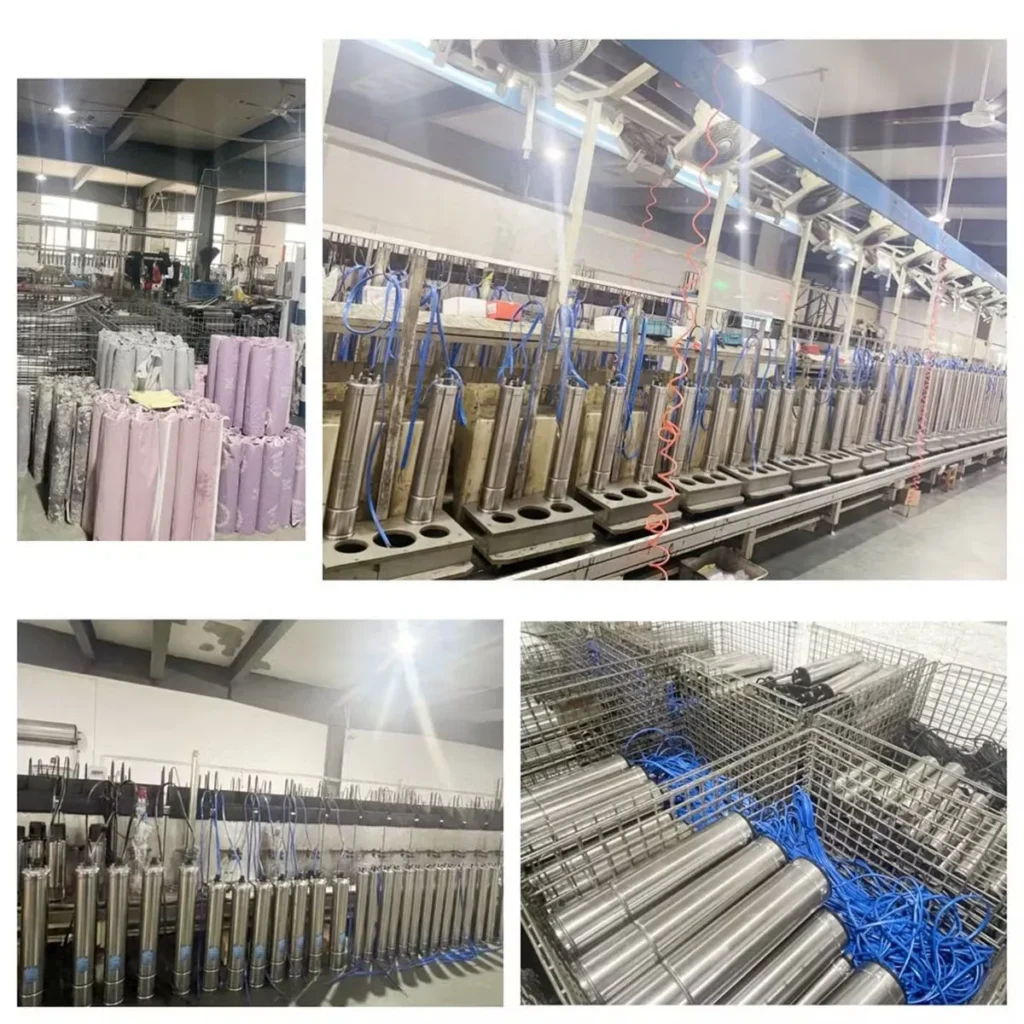
- Manufacturer vs. Trader: Ask for factory videos. Traders add 20–40% margin.
- Integration Expertise: Do they understand PV curves? Or just pumps?
- Controller Type: Do they provide MPPT (Maximum Power Point Tracking)? PWM is unacceptable for professional irrigation.
- Warranty Logic: “5 years on everything” for a $2,000 system is a red flag. Expect: Pump (2 yrs), Controller (18 mos), PV (10–25 yrs).
- Borehole Sizing: Do they ask for Static Water Level and Daily Volume? If they quote based on “acres” alone, they are guessing.
Data Sources & Authority References
To ensure transparency and authority (E-E-A-T), this guide references:
- Internal Data: Jingong Tech production logs (2019–2026), 500+ distributor quotes, 30+ solar project BOQs.
- Industry Reports: Global Market Insights: Solar Pumps Market (CAGR 13.83%).
- Brand Benchmarks: Grundfos SQFlex Catalog; Lorentz PS Series Technical Data.
- Standards: ISO 9001, ISO 5199, CE Marking Directives, GB/T 5657-2013.
- Associations: China General Machinery Industry Association (CGMIA); Europump.
Frequently Asked Questions (FAQ)
How much does a solar water pump system cost in 2026?
Between $800 and $15,000+. A typical 2.2 kW farm irrigation kit from a reputable Chinese manufacturer like Jingong costs $2,800–$4,200 ex-factory, whereas the pump alone from Grundfos or Lorentz often exceeds $6,000.
Is a solar water pump cheaper than diesel long-term?
Yes. Field data from Hainan, China, shows diesel pumping costs ~$1.50 per ton of water, while solar costs ~$0.20 per ton. Although CAPEX is higher, OPEX is near zero for 25 years.
What is the right PV-to-Pump ratio?
The optimal ratio (α) is 1.2 to 1.5. Anything lower results in poor performance during low-light conditions; anything higher wastes capital on unused PV capacity.
Are Chinese solar pumps reliable?
Tier 1 Chinese manufacturers using MPPT controllers and 304/316 stainless steel offer comparable performance to Western brands at 50–70% lower cost. The primary risk is dealing with trading companies rather than direct factories.
Conclusion & Next Steps

Pump pricing is logical once you understand the specs. For solar systems, the complexity lies in the integration of the PV array and controller. If you are currently evaluating a solar water pump supplier, prioritize technical accuracy over the lowest bid.
Need a second opinion on a quote? Our engineering team at Jingong Tech offers free technical audits. Send us your BOQ, and we will verify if the specifications meet your site conditions—no hard sell, just expert advice.
Download our Free Resource: Solar vs. Diesel TCO Worksheet to calculate your 10-year savings.

0 Comments