
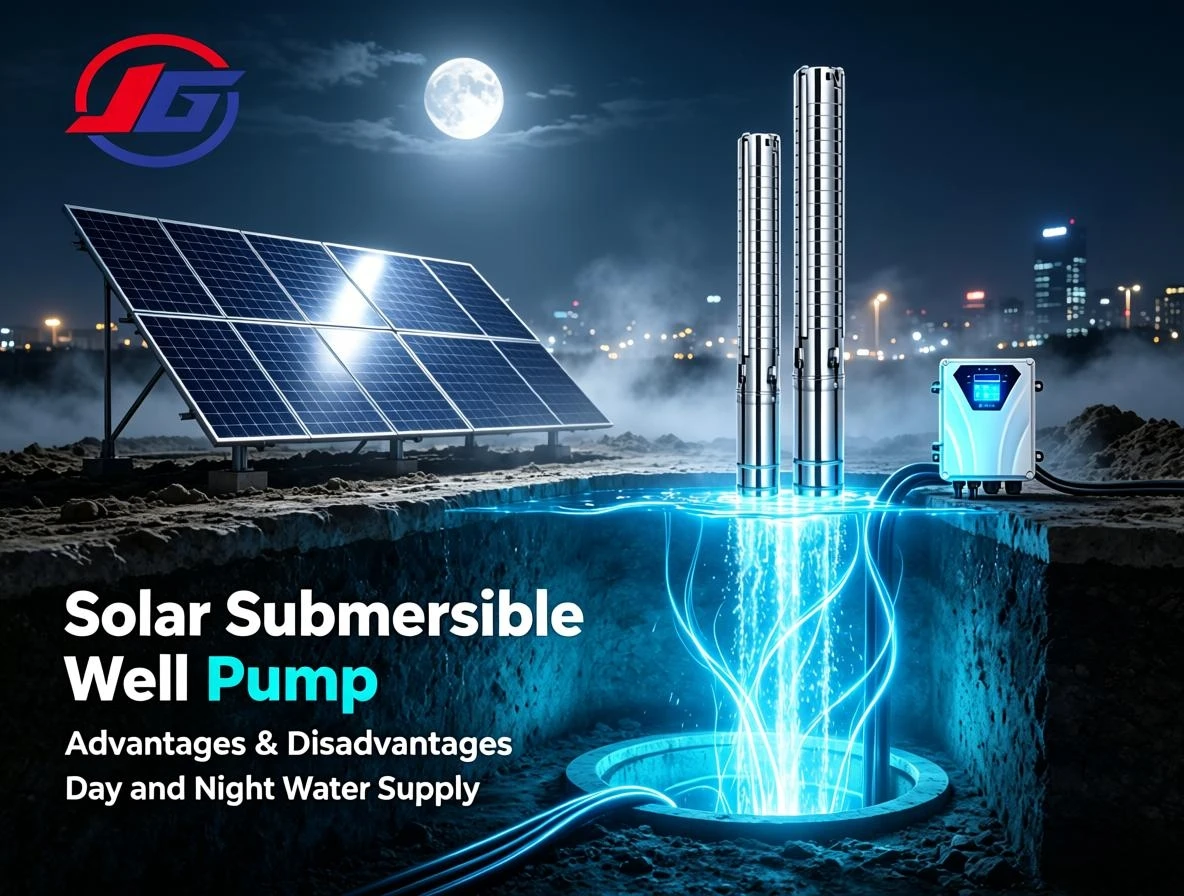
For off-grid farms in Spain, livestock stations in Australia, or remote village wells in Africa, the first question is always: “How deep can a solar pump actually pull water?” The answer isn’t a single number—it’s a complex interplay of pump type, Total Dynamic Head (TDH), power matching, and installation physics. As a leading Solar Water Pump Supplier, Jingong Technology cuts through the marketing noise to give you the engineering reality.
Why “Draw Depth” Depends on More Than Just the Label

In our 15 years of manufacturing solar water pumps, submersible pumps, surface pumps, and diesel/gasoline pumps, we’ve seen one costly mistake repeated: buyers confusing “suction lift” with “discharge head.”
The Off-Grid Pain Point
Imagine a farmer in Texas purchasing a solar pump based on a catalog claiming “100m lift,” only to find it fails in a 15m well. Why? Because the pump was a surface pump, relying on atmospheric pressure to suck water up, rather than a submersible pump pushing water up. This guide prevents that $2,000 mistake.
Jingong’s Experience-Backed Definition
Unlike generic blogs, we base our data on ISO testing standards and field deployments across 40+ countries. We will clarify:
- Suction Depth: Relevant only to Surface Pumps (Limit: ~7m).
- Discharge Head: Relevant to Submersible Pumps (Limit: 200m+).
- Total Dynamic Head (TDH): The true metric for success.
This article serves as your definitive (selection) guide. Whether you need a Solar Surface Pump for a pond or a Solar Submersible Pump for a deep well, we have the data.
Critical Terminology: Decoding the Spec Sheet
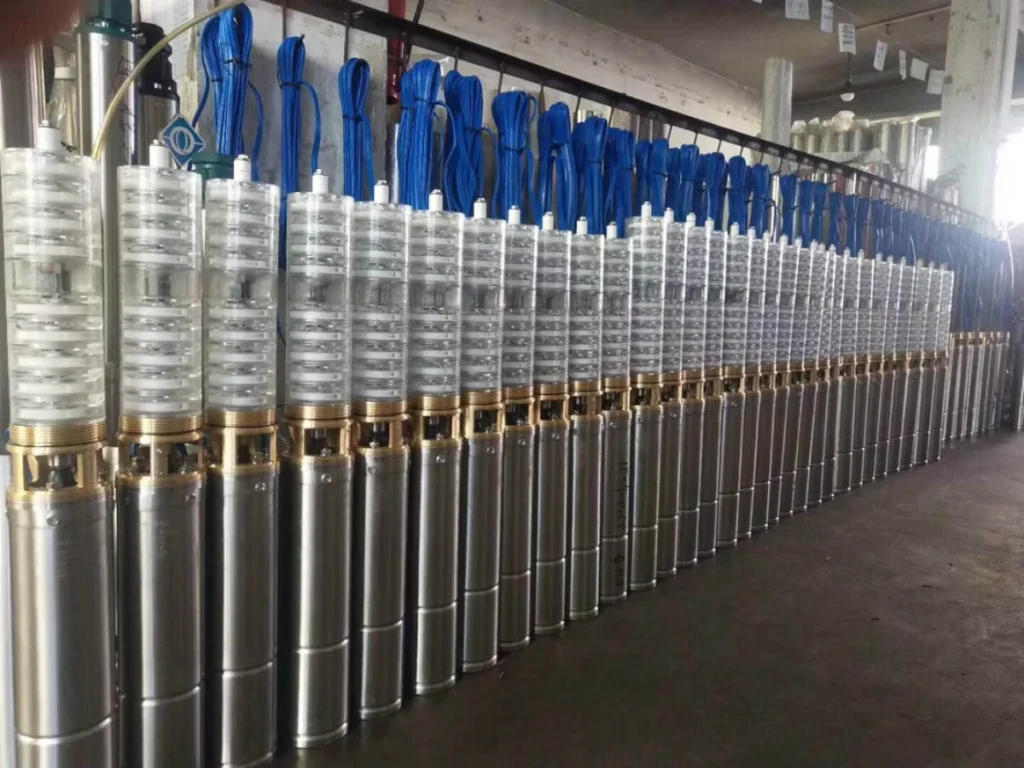
To trust a supplier, you must understand their language. and so do we. Here are the non-negotiable terms for evaluating any solar pumping system.
1. Total Dynamic Head (TDH)
This is the most important number. It is the total equivalent height a pump must push water. It is calculated as:
TDH = Static Lift + Friction Loss + Pressure Requirement
- Static Lift: Vertical distance from the water source to the outlet.
- Friction Loss: Resistance inside pipes, valves, and bends.
- Pressure: If you need 2 Bar pressure (standard tap pressure), that equals roughly 20 meters of head.
If your well is 50m deep and you need 2 Bar pressure, your TDH is not 50m; it is likely closer to 75m once friction is included. Ignoring TDH is the #1 cause of pump failure.
2. Suction Depth vs. Submersion Depth
A common confusion. Suction Depth applies to Surface Pumps. Physics dictates that at sea level, atmospheric pressure can only push water up a pipe about 10.3 meters. After accounting for pump inefficiencies and vapor pressure (NPSH), the real-world limit is 6-7 meters. Any deeper, and the pump cavitates and fails.
Submersion Depth applies to Submersible Pumps. This is how deep the pump body can be underwater. Jingong solar submersibles are typically rated for 120m-200m submersion, depending on the housing material and seal integrity.
3. Static vs. Pumping Water Level
Your well might be 30m deep when idle (Static), but drop to 45m when the pump is running (Pumping Level). Always size your pump for the Pumping Water Level during the driest month of the year.
4. Friction Loss (The Hidden Killer)
Using a narrow pipe drastically increases friction. A 100m run of 1-inch pipe might lose 15 meters of head to friction, while a 1.5-inch pipe might only lose 3 meters. Always consult a friction loss chart.
Solar Water Pump Depth Limits by Category (Jingong Lab Data)
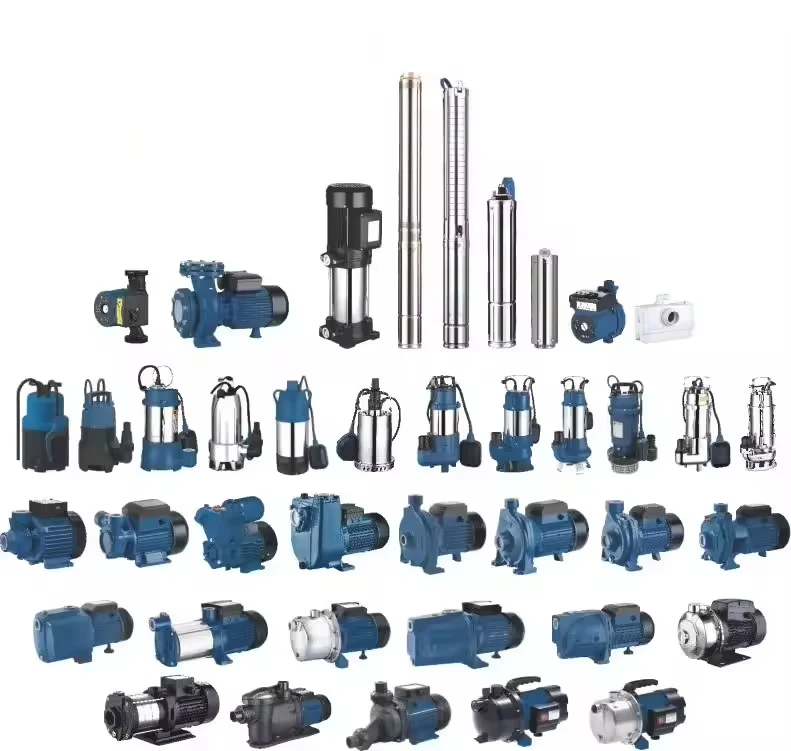
As a manufacturer, we provide these parameters based on factory stress tests. Note: These figures assume optimal solar irradiance and correct pipe sizing.
Solar Surface Water Pumps (The Shallow Water Specialist)
| Parameter | Jingong Specification | Notes |
|---|---|---|
| Maximum Suction Depth | 6 – 7 Meters | Physical limit at sea level. |
| Maximum Total Head | Up to 20 Meters | Best for high-flow, low-height applications. |
| Ideal Scenario | Ponds, Rivers, Canals, Shallow Wells | Easy maintenance as the pump stays above ground. |
Verdict: Do not buy a surface pump if your water source is deeper than 7m. Explore our Solar Surface Pump Collection for specifications.
Solar Submersible Water Pumps (The Deep Well Workhorse)
These pumps sit underwater and push water to the surface. There is no “suction” limit, only a “discharge head” limit.
- Shallow Well (20m – 50m): Typically uses multi-stage centrifugal impellers. Ideal for domestic supply and small-scale irrigation.
- Standard Deep Well (50m – 150m): Our most popular range. Uses 0.75kW to 2.2kW motors. Perfect for village water supply and medium farms.
- Ultra-Deep Well (150m – 200m+): Requires Helical Screw technology. Jingong’s JGP-SC series excels here, handling high heads and abrasive water with high sand content.
Browse our Solar Submersible Water Pump Series for detailed curves.
Performance by Power (1HP vs. 4HP)
| Power Rating | Typical Max Head (TDH) | Flow Rate (Approx.) | Application |
|---|---|---|---|
| 1 HP (0.75 kW) | 56m – 95m | 2 – 4 m³/h | Small farms, livestock, 1-3 families. |
| 4 HP (3.0 kW) | 120m – 180m+ | 3 – 8 m³/h | Village clusters, large irrigation. |
Factors That Reduce Your Effective Pumping Depth
A pump rated for 100m might only deliver 70m in the field. Here is why, based on Jingong’s field service reports.
1. Altitude
Atmospheric pressure decreases with altitude. At sea level, max suction is ~7m. At 2,500m (common in Peru or Ethiopia), it drops to ~5.2m. If you are at high altitude, you MUST derate your surface pump expectations.
2. Solar Irradiance & Cloud Cover
Solar pumps run on DC power from PV panels. On cloudy days or during winter months with low sun angles, the voltage sags. While modern MPPT controllers optimize this, extreme low light will reduce the motor’s RPM, lowering the achievable head. Systems with batteries maintain consistent depth.
3. Pipe Diameter & Material
Using a smaller diameter pipe than recommended creates massive friction loss. We recommend upsizing the pipe diameter by one increment (e.g., from 1″ to 1.25″) to significantly boost effective depth.
4. Water Quality (Sand/Sediment)
High sand content acts as an abrasive. Over time, it wears down centrifugal impellers, reducing head capacity. In sandy boreholes, Jingong recommends our Helical Screw Solar water Pumps, which are far more tolerant of particulates than standard impeller pumps.
Jingong 4-Pump Lineup: Which Pump for Which Depth?
One of our unique strengths is manufacturing all four major pump types. Here is how they compare regarding depth and application.
| Pump Type | Max Depth / Head | Pros | Cons | Best For |
|---|---|---|---|---|
| Solar Surface Pump | 7m (Suction) | Cheap, easy to service, high flow. | Cannot handle deep wells. | Ponds, rivers, flat irrigation. |
| Solar Submersible Pump | 200m+ (Head) | Deep reach, energy efficient, silent. | Harder to service (requires winch). | Deep wells, off-grid living. |
| Diesel/Gasoline Pump | High (depends on model) | Extremely powerful, independent of sun. | Fuel costs, noisy, emissions. | Emergency, construction sites, mining. |
| Electric Submersible Pump | 300m+ (Head) | Very high head, reliable grid power. | Requires electricity grid. | Industrial dewatering, municipal supply. |
Need help choosing? Compare our Solar vs. Diesel Pumps or Submersible vs. Surface Pumps in detail.
Scenario-Based Selection Guide for B2B Buyers
Matching the pump to the environment is crucial for ROI. Here are Jingong’s recommendations for common scenarios:
Scenario A: Shallow Pond or River (0-7m)
Solution: Solar Surface Water Pump.
Why: Easy access for maintenance. High flow rates suitable for flood irrigation.
Jingong Model Example: JGP-SF series (0.5HP – 1.5HP).
Scenario B: Domestic Shallow Well (10-50m)
Solution: Standard Solar Water Submersible Pump (Centrifugal).
Why: Reliable, quiet operation. Pushes water to overhead tanks.
Jingong Model Example: JGP-SJ series (0.75HP – 1.5HP).
Scenario C: Deep Well Irrigation (50-200m+)
Solution: Helical Screw Solar Deep Well Pump.
Why: Handles high head and high-pressure requirements of center pivots or drip systems. Tolerates sand.
Jingong Model Example: JGP-SC series (1.5HP – 4HP).
Scenario D: Remote Village / Off-Grid Community
Solution: Customized Solar Submersible System with Battery Backup.
Why: Ensures water supply during cloudy days and at night. Jingong provides complete kits including panels, controller, pump, and cables.
Action: Contact our engineering team for a Custom Quote.
Top 4 Mistakes When Calculating Solar Water Pump Depth

- Confusing Suction with Head: Assuming a surface pump can lift water 20m because the catalog says “20m Head.” Remember: 7m suction limit.
- Ignoring Friction Loss: Sizing the pump for 50m TDH when the pipes will actually require 70m TDH. Always oversize pipe diameter.
- Buying by Power (HP/kW) Alone: A 1HP screw pump and a 1HP centrifugal pump have vastly different depth capabilities. Focus on the Head-Flow curve, not just the motor power.
- Neglecting Seasonal Changes: Not accounting for the dry season water level drop. If your well drops 10m in summer, your pump must be 10m deeper or rated for that extra lift.
Solar Water Pump Frequently Asked Questions (FAQ)
Optimized for Google’s “People Also Ask” boxes.
Q1: What is the absolute maximum depth a solar pump can work?
A: Based on current Jingong engineering and industry standards, our high-end Helical Screw Solar Submersible Pumps can operate effectively at depths of 200 meters (650 feet) or more. However, for surface pumps, the physical limit is 7 meters.
Q2: Can a solar surface pump draw water from a 10m deep well?
A: No. Due to atmospheric pressure limits (NPSH), a solar surface pump cannot realistically pull water from deeper than 6-7 meters. For a 10m well, you must use a solar submersible pump.
Q3: How deep can a 1HP (0.75kW) solar submersible pump go?
A: A 1HP solar submersible pump typically handles Total Dynamic Heads (TDH) between 56m and 95m. The exact depth depends on the required flow rate and pipe friction.
Q4: Does cold weather or shade affect the pumping depth?
A: Yes. Solar pumps rely on PV power. Low light (clouds/shade) reduces voltage, which reduces motor RPM and subsequently the achievable head (depth). Battery backups mitigate this issue.
Q5: Solar water pump vs. diesel pump: Which has deeper drawing capacity?
A: Generally, industrial diesel pumps can achieve higher heads (300m+) than standard solar pumps. However, for depths up to 200m, solar submersible pumps are more cost-effective and sustainable. For depths beyond 200m, a high-power diesel or grid-powered electric submersible is usually required.
Q6: How do I calculate the required TDH for my solar water pump?
A: TDH = (Vertical Depth to Water) + (Friction Loss in Pipes) + (Required Pressure Head). For example: 50m depth + 5m friction + 20m (for 2 Bar pressure) = 75m TDH. Always select a pump whose performance curve meets or exceeds your calculated TDH.
Conclusion & Jingong Expert Support
Determining how deep a solar water pump can draw water is not about a single magic number; it’s about understanding the physics of TDH, the limitations of suction, and the capabilities of modern solar submersible technology. As a premier Solar Water Pump Supplier, Jingong Technology provides the transparency and engineering support you need to get it right the first time.
We don’t just sell pumps; we provide complete water solutions. Our factory-direct pricing on Solar Pumps, Submersible Pumps, Surface Pumps, and Diesel Pumps ensures you get the best value for your off-grid project.
Get Your Free Engineering Consultation
Stop guessing. Let our 15 years of experience work for you. Send us your well depth, pipe length, and water requirements, and we will provide a free TDH calculation and customized pump recommendation.
Request a Free Quote & TDH Calculation

0 Comments