
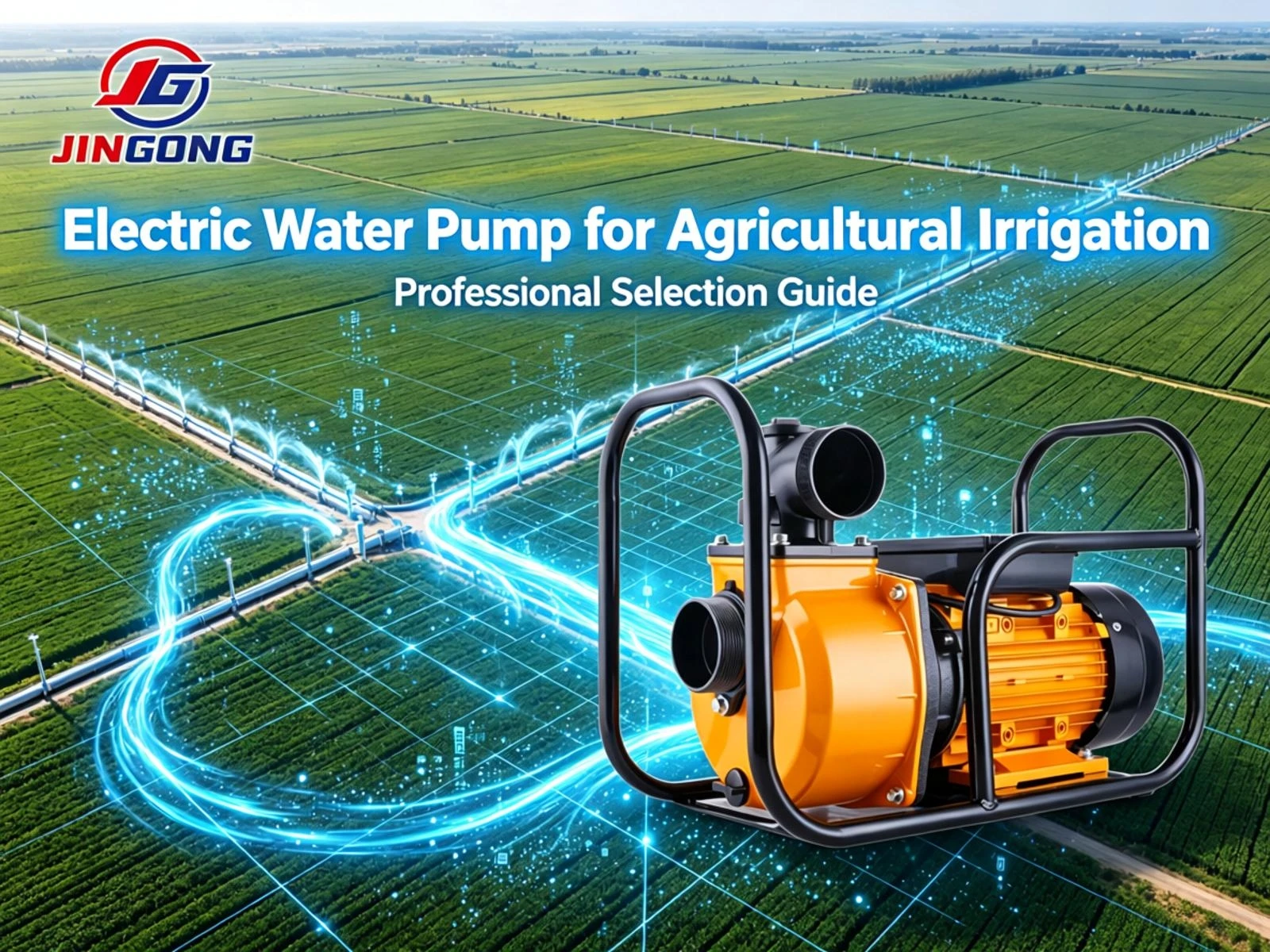
As a premier Electric Water Pump for Agricultural Irrigation manufacturer, Jingong Tech has engineered and deployed pumping solutions across five continents. This comprehensive guide is crafted for farm owners, irrigation contractors, procurement managers, and international distributors seeking more than just a catalog—you need quantifiable data, real-world engineering insights, and a reliable partner. Choosing the wrong Electric Water Pump for Agricultural Irrigation manufacturer often results in catastrophic pump failure, exorbitant energy costs, and lost harvests. This document ensures you select the right equipment the first time.
Navigating the complexities of modern agriculture requires precision. Whether you require a robust submersible pump for deep-well access, a versatile land pump for surface water transfer, an eco-friendly solar water pump, or a powerful gas/diesel water pump, understanding the hydrodynamics is critical. This guide represents the collective expertise of our R&D team and serves as the definitive resource from a seasoned Electric Water Pump for Agricultural Irrigation manufacturer.
📋 Table of Contents
- 1. The High Cost of Poor Selection
- 2. Analyzing the 4 Core Pump Families
- 3. Quantified Selection Parameters (Expertise)
- 4. Scenario-Based Selection Matrix
- 5. Comparative Analysis & Pitfalls
- 6. Installation & Lifecycle Maintenance
- 7. Certifications & Factory Strength
- 8. Technical FAQ (Featured Snippets)
- 9. Request a Custom Quote
1. The High Cost of Poor Selection (Experience)

In the realm of agricultural infrastructure, the pump is the heart of the irrigation system. As an established Electric Water Pump for Agricultural Irrigation manufacturer, we have witnessed recurring, costly errors in the field. A rice cooperative in Southeast Asia attempting to use a surface pump for a 45-meter borehole; a vineyard in Spain undersizing their solar array; a cotton farm in Uzbekistan ignoring water turbidity levels—these mistakes lead to downtime during critical growing seasons.
According to agricultural engineering standards, effective pump selection hinges on evaluating discharge (flow rate), total dynamic head (pressure), Net Positive Suction Head (NPSH), power source reliability, lifecycle cost, and environmental factors. A professional Electric Water Pump for Agricultural Irrigation manufacturer must translate these variables into a precise specification before a single unit is shipped.
1.1 The Four Pillars of Pump Selection
| Pillar | Impact on Selection | Typical Field Data |
|---|---|---|
| Water Source | Dictates pump type: Deep Well → Submersible; Pond/River → Surface; Off-grid → Solar/Fuel. | Boreholes, open canals, reservoirs, tanks. |
| Topography | Directly influences Total Dynamic Head (TDH) and friction loss calculations. | Flat plains, rolling hills, mountainous terrain. |
| Power Infrastructure | Determines motor design: Single-phase, Three-phase, DC, or Combustion Engine. | 220V/50Hz, 380V/60Hz, Unstable Grid, No Grid. |
| Crop & Scale | Defines flow requirements: Rice (High Flow) vs. Orchards (High Pressure). | 2 Ha (Smallholdings) to 500+ Ha (Agribusiness). |
2. Analyzing the 4 Core Pump Families (Expertise)
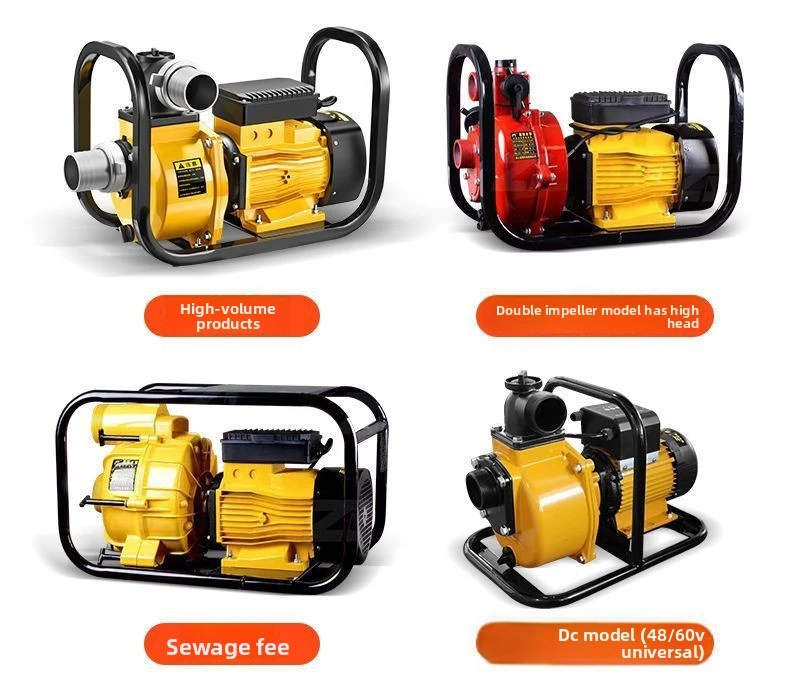
A reputable Electric Water Pump for Agricultural Irrigation manufacturer offers a diverse portfolio because no single pump technology suits every application. Here, we dissect the four pillars of modern agricultural pumping.
2.1 Agricultural Submersible Pump
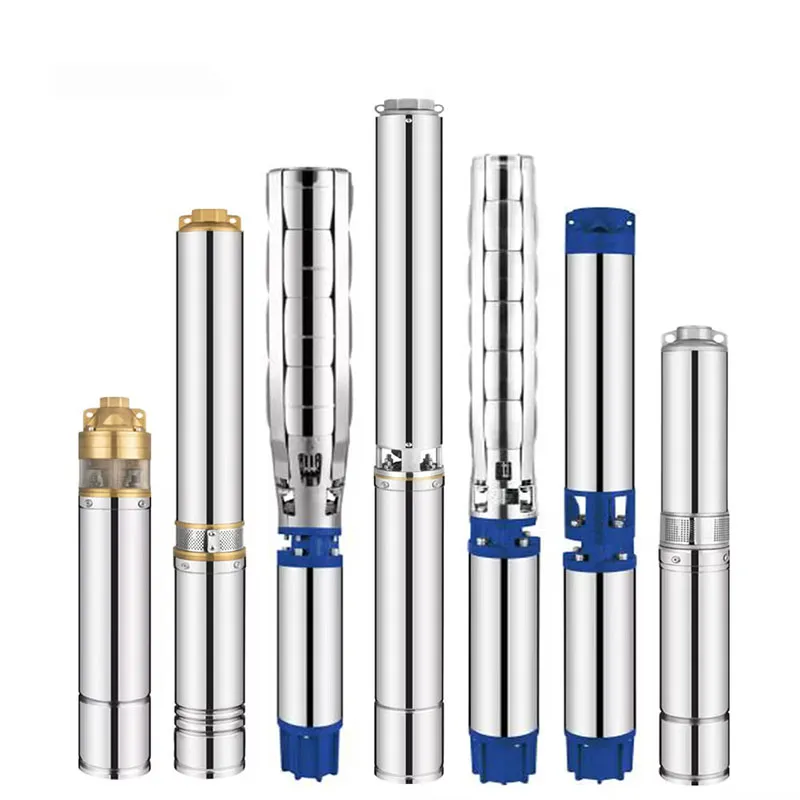
Designed to operate while fully submerged, the submersible pump utilizes a hermetically sealed motor cooled by the surrounding fluid. This design eliminates the issue of “cavitation” caused by high suction lifts.
| Parameter | Technical Specification |
|---|---|
| Flow Rate (Q) | 3 – 120 m³/h (Standard Industrial Range) |
| Total Head (H) | 20 – 280 m (Multi-stage configurations available) |
| Motor Power (P) | 0.37 kW – 18.5 kW (IE3 Premium Efficiency) |
| Construction Materials | Cast Iron, 304 SS (AISI 304), 316 SS (Corrosion Resistant) |
Advantages: High efficiency due to positive inlet pressure, quiet operation, and suitability for high-head applications.
Disadvantages: Retrieval for maintenance is labor-intensive; requires high-quality submersible cables; sensitive to high sand content (>50g/m³).
Field Validation: In a 2023 project in the Mekong Delta, our 7.5kW stainless steel submersible pumps serviced 90 hectares of rice paddies. With proper pre-filtration, the Mean Time Between Failures (MTBF) exceeded 28 months. This is the standard expected from a top-tier Electric Water Pump for Agricultural Irrigation manufacturer.
Explore our Submersible Pump Series for detailed performance curves.
2.2 Agricultural Surface / Land Pump
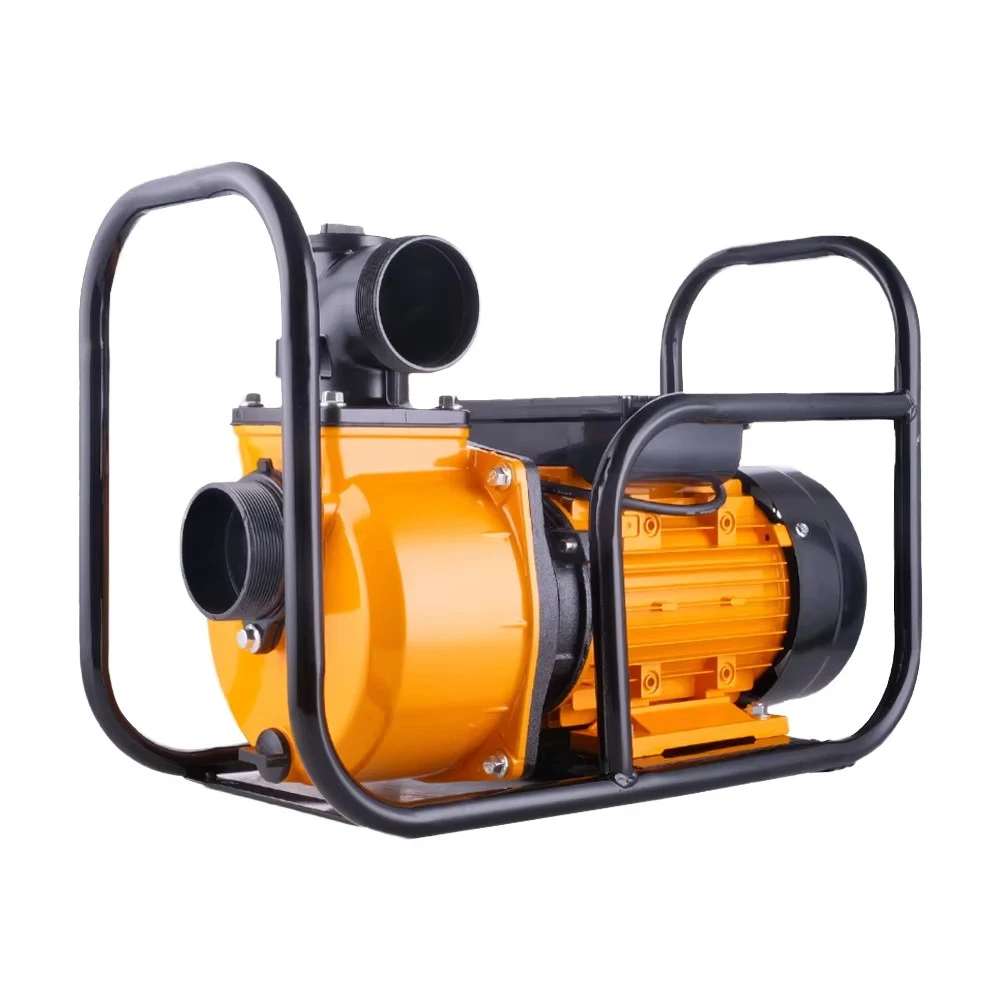
Commonly referred to as centrifugal pumps, these units are installed above ground. They rely on an impeller to impart velocity to the water, converting it into pressure. Their primary limitation is atmospheric pressure, restricting suction lifts to approximately 7-8 meters.
| Feature | Operational Detail |
|---|---|
| Dominant Power Range | 1.5 kW – 7.5 kW (Covers ~70% of surface irrigation needs) |
| Prime Applications | Pond-to-field transfer, canal diversion, booster service for drip irrigation. |
| Lifecycle Cost | ~35% lower maintenance cost over 5 years compared to submersibles (accessibility). |
An experienced Electric Water Pump for Agricultural Irrigation manufacturer will always recommend a surface pump for shallow water sources due to superior accessibility and lower initial investment.
View our Land Pump (Surface Centrifugal) Range.
2.3 Solar Water Pump for Agriculture
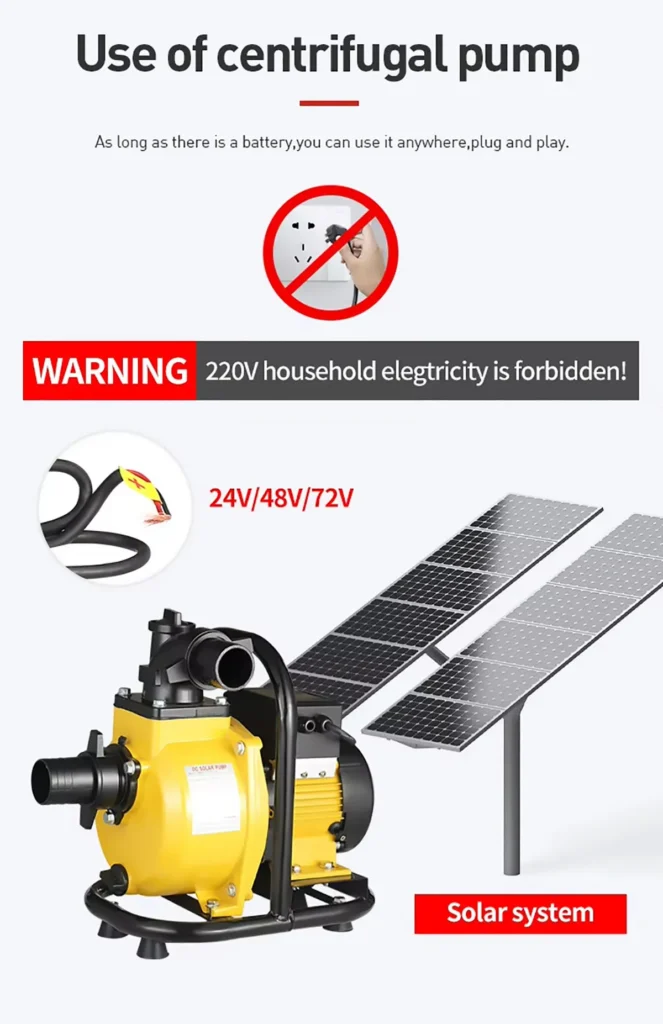
Harnessing photovoltaic energy, solar pumps convert DC/AC power directly into mechanical shaft power. As an innovative Electric Water Pump for Agricultural Irrigation manufacturer, we engineer three primary configurations:
| System Type | Energy Architecture | Optimal Use Case |
|---|---|---|
| Pure DC Solar Pump | PV Array → VFD Controller → DC Brushless Motor | Maximum efficiency, direct drive, zero batteries. |
| AC Solar Pump | PV Array → Inverter → AC Induction Motor | Global spare part compatibility, robust design. |
| AC/DC Hybrid | Solar Priority + Grid/Generator Backup | Critical for night irrigation and high-latitude regions. |
ROI Analysis: In a 2024 deployment in a remote Kenyan maize farm (10 hectares), our 4.0kW hybrid solar pumping system replaced a diesel unit consuming $200/month in fuel. The solar system’s fuel cost is $0. Projected ROI: 3.5 years. A legitimate Electric Water Pump for Agricultural Irrigation manufacturer provides financial modeling, not just hardware.
Discover our Solar Pump Solutions.
2.4 Gasoline & Diesel Agricultural Pump
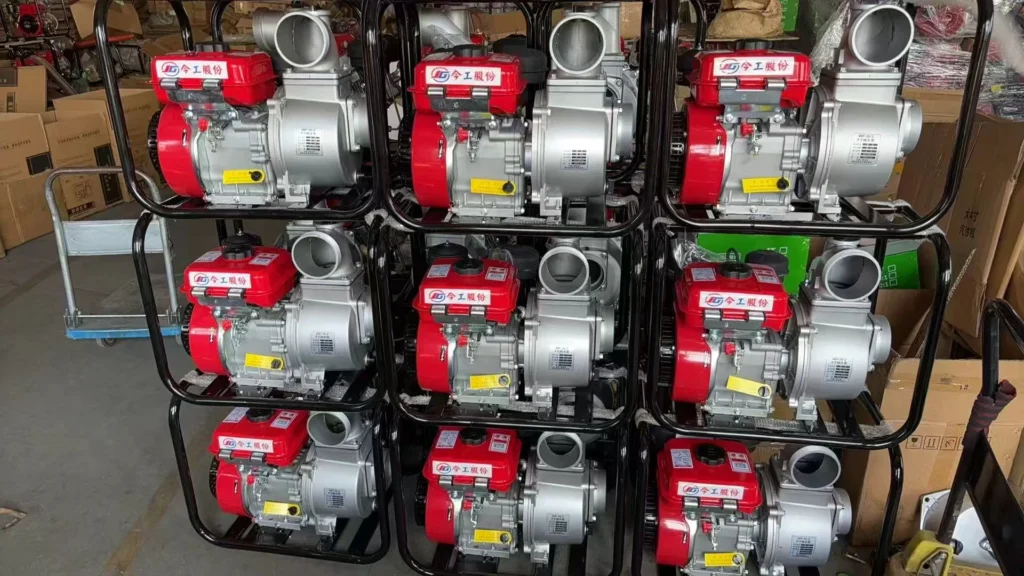
When grid power is unavailable or unreliable, internal combustion engines provide the necessary autonomy. Our expertise as a full-spectrum Electric Water Pump for Agricultural Irrigation manufacturer extends to high-durability engine-driven pumps.
| Metric | Performance Benchmark |
|---|---|
| Configuration | 6.5 HP Air-Cooled Diesel Engine, 4″ Outlet |
| Stress Test Data | 2023 Pakistan Heatwave (48°C): 12h/day for 30 consecutive days. Only routine oil checks required. |
| Rated Capacity | 280 m³/h @ 12m head (Stable operation) |
These units are indispensable for emergency dewatering, land reclamation, and temporary construction sites. A versatile Electric Water Pump for Agricultural Irrigation manufacturer ensures you have the right tool for every contingency.
Browse our Gasoline / Diesel Pump Series.
3. Quantified Selection Parameters (Expertise)
This section distinguishes a true engineering-focused Electric Water Pump for Agricultural Irrigation manufacturer from a mere trading company. Pump sizing is a mathematical exercise based on fluid dynamics.
3.1 Calculating Total Dynamic Head (TDH)
TDH is the total equivalent height that a fluid is to be pumped, accounting for friction losses in the pipe.
Formula: TDH = Static Lift + Friction Loss + Pressure Requirement
Note: 1 Bar ≈ 10.2 meters of head.
3.2 Hydraulic Power Calculation
To determine the theoretical power required to move the water:
P_hydraulic (kW) = (ρ * g * Q * H) / 1000
Where:
  ρ (Density) = 1000 kg/m³ (Fresh Water)
  g (Gravity) = 9.81 m/s²
  Q (Flow) = m³/s
  H (Head) = m

To find the Electrical Input Power (Shaft Power):
  P_input (kW) = P_hydraulic / (η_pump * η_motor) * Service_Factor
  (Service Factor typically 1.15 for agricultural duty)
3.3 Efficiency Benchmarks by Pump Type
| Pump Technology | Typical Efficiency (η) | Primary Application |
|---|---|---|
| End-Suction Centrifugal | 60% – 80% | General field irrigation |
| Multistage Centrifugal | 65% – 78% | High-pressure spray/drip |
| Submersible (Borehole) | 65% – 75% | Deep well extraction |
| Positive Displacement | 80% – 92% | Fertigation, Chemical Injection |
3.4 Practical Example: Drip Irrigation System Sizing
Scenario: 3-hectare orchard, crop water requirement 6mm/day, irrigation efficiency 85%, 10 hours/day operation, pump efficiency 70%.
- Step 1: Calculate Water Volume: (3 ha * 6mm) / 0.85 = 211,764 Liters/day.
- Step 2: Calculate Flow Rate (Q): 211,764 L/day ÷ 10 hrs ÷ 3600 s/hr = 5.88 L/s (or 21.17 m³/h).
- Step 3: Determine TDH: Elevation 15m + Drip Pressure 20m + Filter Loss 5m + Pipe Friction 10m = 50m.
- Step 4: Calculate Power: P = (9.81 * (5.88/1000) * 50) / 0.70 = 4.12 kW.
- Selection: A 5.5 kW (7.5 HP) motor is recommended to handle startup loads and future expansion.
Any quotation lacking this level of detail from your Electric Water Pump for Agricultural Irrigation manufacturer should be treated with skepticism.
3.5 Motor Sizing Safety Chart
| Calculated Hydraulic kW | Required Motor kW | Typical Application |
|---|---|---|
| 0.5 – 1.1 kW | 1.5 kW (2 HP) | Small gardens, nurseries |
| 1.2 – 2.2 kW | 3.0 kW (4 HP) | Orchards, small-scale drip |
| 2.3 – 4.0 kW | 5.5 kW (7.5 HP) | Medium farms, sprinklers |
| 4.1 – 7.5 kW | 11.0 kW (15 HP) | Large fields, center pivots |
| 7.6 – 15.0 kW | 18.5 kW (25 HP) | Commercial agribusiness |
4. Scenario-Based Selection Matrix (Experience)
Drawing from extensive global field experience, a senior Electric Water Pump for Agricultural Irrigation manufacturer utilizes the following decision matrix:
| Agricultural Scenario | Recommended Pump Type | Strategic Advantage | Critical Warning |
|---|---|---|---|
| Flat Terrain / Flood Irrigation | High-Flow Volute Pump | High volume transfer, low cost per m³ | Ensure pipe diameter matches flow to reduce friction |
| Orchards / Vineyards | Multistage Booster Pump | Consistent high pressure for micro-sprinklers | Pressure surges can burst drip tapes |
| Deep Boreholes (> 8m) | Submersible Turbine Pump | Unlimited suction depth, efficient | Sand content must be monitored rigorously |
| Off-Grid / Arid Regions | DC Solar Submersible Pump | Zero OPEX, sustainable water access | Requires oversizing of PV array (1.3x rule) |
| Emergency / Temporary Sites | Self-Priming Diesel Pump | Fuel independence, rapid deployment | High carbon footprint and noise pollution |
| Variable Water Levels | Floating Pump / Trash Pump | Handles debris and fluctuating water sources | Impeller wear is higher with abrasive solids |
5. Comparative Analysis & Purchasing Pitfalls (Trustworthiness)
5.1 Four-Way Technical Comparison
| Criteria | Submersible | Surface/Land | Solar | Gas/Diesel |
|---|---|---|---|---|
| CapEx | Medium | Low | High | Medium |
| OpEx | Low (Electricity) | Low (Electricity) | Near Zero | High (Fuel/Oil) |
| Max Head | Very High (>250m) | Low (<30m typical) | High (>200m) | Medium |
| Maintenance Access | Difficult (Retrieval) | Easy (Accessible) | Minimal | Frequent (Engine) |
5.2 Five Critical Mistakes to Avoid
- Overestimating Suction Lift: Expecting a surface pump to pull water from 15 meters underground. Physics dictates this is impossible.
- Ignoring Friction Loss: Only calculating static head and neglecting pipe friction, resulting in a pump that cannot deliver the required flow at the nozzle.
- Undersizing Wire Gauge: Using cables that are too thin for long runs to submersible pumps, causing significant voltage drop and motor burnout.
- Mismatching Solar Array: Configuring a solar pump system without accounting for worst-case (cloudy day) scenarios or seasonal sun angle variations.
- Choosing Price Over Quality: Selecting a pump without checking the shaft material (stainless vs. carbon steel) or bearing quality. A reputable Electric Water Pump for Agricultural Irrigation manufacturer will provide material specifications.
6. Installation & Lifecycle Maintenance
Proper installation and proactive maintenance are vital for maximizing ROI. As your Electric Water Pump for Agricultural Irrigation manufacturer, we provide these guidelines:
- Submersible Pumps: Never operate dry. Use a torque arrestor to prevent the pump from spinning in the well casing. Ensure the drop cable is securely taped to the pipe every 3-5 meters.
- Surface Pumps: Ensure a flooded suction (water flows to the pump naturally) whenever possible. Use a foot valve with a strainer. Prime the pump casing completely before startup.
- Solar Pumps: Clean PV panels monthly in dusty environments. Check electrical connections for corrosion. Ensure the controller is mounted in a shaded, ventilated location.
- Diesel Pumps: Adhere strictly to the break-in procedure. Drain water separators daily. Use only manufacturer-recommended fuel and oil grades.
7. Certifications & Factory Strength (Authoritativeness)

Jingong Tech stands as a pillar of reliability in the industry. When selecting an Electric Water Pump for Agricultural Irrigation manufacturer, verify these credentials:
- Quality Management: ISO 9001:2015 Certified manufacturing processes ensuring consistency.
- Product Compliance: Full compliance with CE, RoHS, and other relevant international standards.
- Manufacturing Capability: State-of-the-art CNC machining centers, automated winding machines, and dynamic balancing equipment.
- Testing Regime: Every pump undergoes a rigorous performance test on a computerized testing rig before leaving the factory.
- Global Reach: Proven track record exporting to over 50 countries, supported by a network of service partners.
Our authority is built on transparency and a commitment to engineering excellence.
8. Technical FAQ (Optimized for Featured Snippets)

Q1: Which pump is best for agricultural irrigation?
A: There is no universal “best” pump. The optimal choice depends on your water source depth, required flow rate, pressure needs, and available power. Submersible pumps excel in deep wells, while surface pumps are ideal for shallow sources. Solar pumps offer long-term savings in sunny, off-grid locations. Consult a qualified Electric Water Pump for Agricultural Irrigation manufacturer for a precise match.
Q2: How do I calculate the size of the water pump I need for my farm?
A: You need two key figures: Flow Rate (how much water you need per hour) and Total Dynamic Head (the vertical distance plus friction losses). Use the formula: Power (kW) = (Flow m³/h * Head m * 9.81) / (3600 * Efficiency). Always add a 15-20% safety margin to the calculated power.
Q3: Are solar water pumps reliable for 24/7 irrigation?
A: Solar pumps are highly reliable during daylight hours. For 24/7 operation, a hybrid system (Solar + Battery Backup) or a Solar + Grid/Diesel Generator system is required. A professional Electric Water Pump for Agricultural Irrigation manufacturer can design a system that stores water in elevated tanks during the day for gravity-fed night irrigation, eliminating the need for batteries.
Q4: What is the average lifespan of an agricultural irrigation pump?
A: With proper sizing, installation, and maintenance, a high-quality electric pump from a reputable manufacturer should last 8-12 years. Diesel engines typically require major overhauls after 3,000-5,000 operating hours. Factors like water quality (sand content) significantly impact longevity.
9. Request Your Custom Engineering Solution
Don’t leave your irrigation success to chance. Partner with Jingong Tech, the Electric Water Pump for Agricultural Irrigation manufacturer that combines engineering precision with global field experience.
To receive a tailored proposal, please provide:
1. Water source details (well depth, diameter, or surface water description).
2. Required daily water volume and irrigation method (sprinkler, drip, flood).
3. Distance from water source to field and elevation changes.
4. Local power supply specifications (Voltage, Phase, Hz).
Get My Free Pump Sizing Report »
About Jingong Tech: Based in Zhejiang, China, we are a leading vertically integrated Electric Water Pump for Agricultural Irrigation manufacturer. We specialize in R&D, precision manufacturing, and global export of Submersible, Surface, Solar, and Engine-Driven pumps. Trust Jingong for performance, durability, and expert support.

0 Comments