
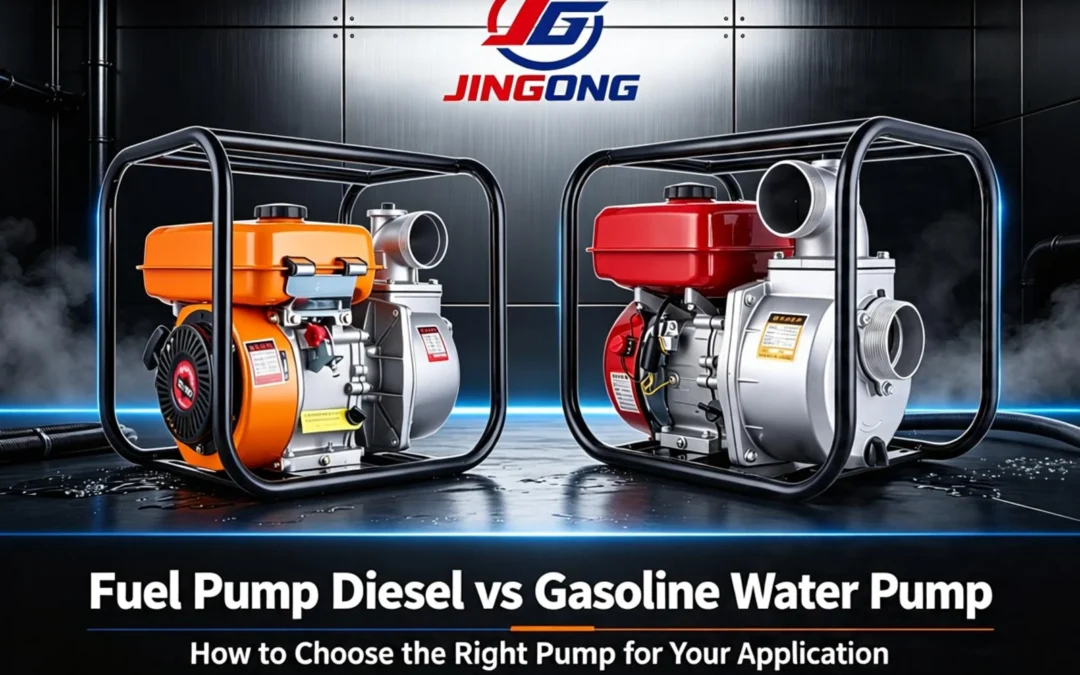
Introduction: Why Pump Fuel Choice Decides Your ROI
If you’ve ever stood on a job site watching a Diesel vs Gasoline Water Pump gasoline water pump stall under a 12-hour shift, or priced out a diesel water pump only to choke at the upfront number—you’re not alone. After supplying pumps to farms, mines, municipal contractors, and off-grid households across 30+ countries, we at Jingong keep seeing the same mistake: buyers pick by sticker price, not by duty cycle. The result? High fuel burn, premature wear, unexpected downtime, and a pump that outlives its usefulness in half the time.
Jingong is a China-based manufacturer integrating R&D, production, and export across submersible pumps, surface pumps, solar water pumps, and fuel-powered (gasoline & diesel) pumps. This guide isn’t a spec-sheet rehash. It’s a field-tested comparison built from real commissioning cases—irrigation in Zhejiang paddy fields, dewatering on Southeast Asian construction sites, and emergency drainage during flood season.
By the end of this article, you’ll know:
- When a gasoline water pump saves you money—and when it bleeds you dry.
- Why a diesel water pump is overkill for some jobs but the only sane choice for others.
- How fuel pumps compare to our other core lines (solar, submersible, electric land pumps) so you can mix the right combo.
This guide is essential for farm owners, irrigation contractors, site engineers, municipal procurement, and distributors building a robust pump portfolio. Explore our Gasoline Water Pump Collection and Diesel Water Pump Collection to see the products we’ll be referencing.
Basic Overview: What Are Diesel & Gasoline Water Pumps?
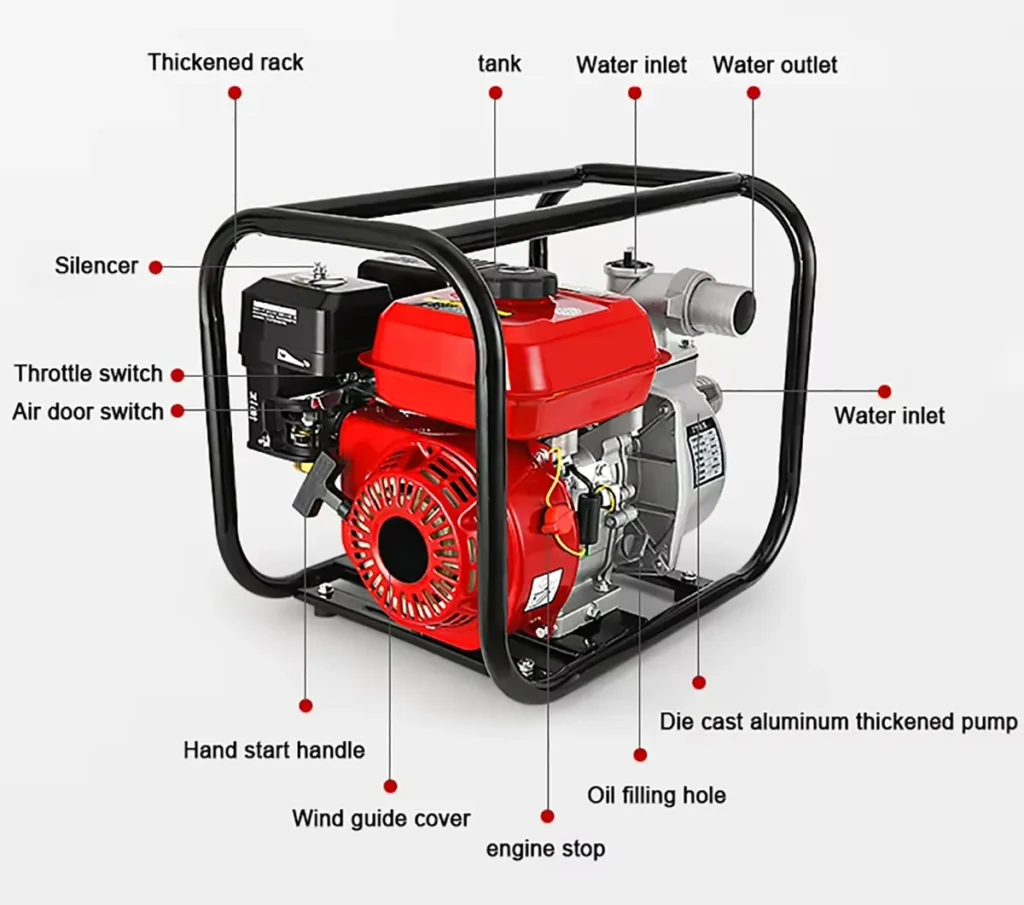
Gasoline Water Pump – Lightweight Portable Land Pump
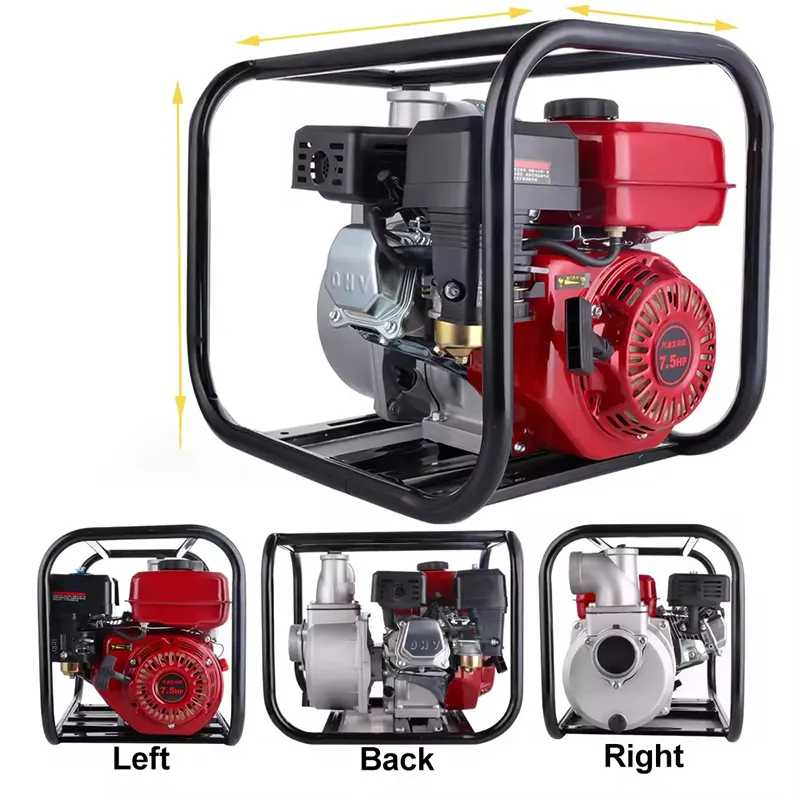
A gasoline water pump is an internal-combustion-driven centrifugal pump, usually a single-cylinder 4-stroke (air-cooled), mounted on a tubular or alloy frame. In our lineup, it sits under “Land Pumps”—meaning it operates above ground, is mobile, and independent of grid power.
Diesel vs Gasoline Water Pump Typical specifications include:
- Power Range: 5–15 HP (3.7–11 kW)
- Weight: 28–90 kg (depending on port size, 1″–6″)
- Head: Up to ~95 m (high-head compact units)
- Flow: 20–150 m³/h
- Fuel: 92# + unleaded gasoline
It’s the go-to for no-grid light duties: garden pond transfer, small fish-pond turnover, pool draining, and weekend irrigation.
Diesel Water Pump – Heavy-Duty Industrial Land Pump
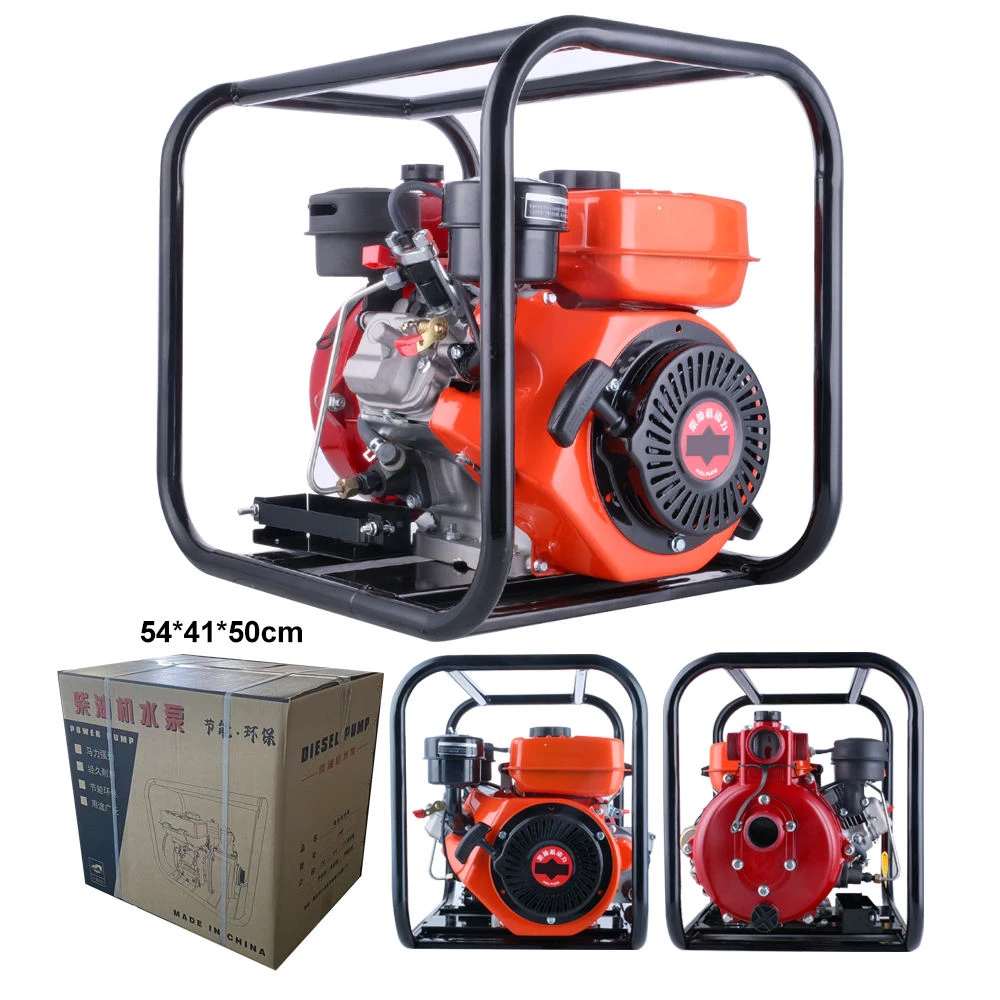
A Diesel vs Gasoline Water Pump diesel water pump uses a compression-ignition engine (single-cylinder 4-stroke air-cooled direct-injection). The torque curve is flatter, thermal efficiency is higher, and the whole machine is built for 24-hour continuous slog.
Typical specifications (6″ class):
- Power: 7.5–12 kW (10–16 HP equivalent)
- Weight: 60–130 kg (6″ ~120 kg)
- Head: 20–30 m at high flow; high-head variants push 50+ m
- Flow: 100–200 m³/h
- Fuel Burn: ≤275 g/kW·h (real-world ~2–2.5 L/h)
This is your long-shift, dirty-fuel, rough-handling machine: large-acreage irrigation, mine dewatering, and flood response.
Where They Sit in Jingong’s Portfolio

Fuel pumps are land pumps. They complement:
- Submersible Pumps: Underwater fixed, silent, for wells/sumps.
- Electric Land Pumps: Grid-tied, lower OpEx, no fuel fuss.
- Solar Water Pumps: Off-grid, zero fuel cost, lighter duty.
A diesel water pump and a gasoline water pump Diesel vs Gasoline Water Pump don’t replace these—they cover the “no grid + mobile + high flow” gap.
Core Differences: Diesel vs Gasoline Water Pump (8 Dimensions)
| # | Dimension | Gasoline Water Pump | Diesel Water Pump |
|---|---|---|---|
| 1 | Torque & Load | High RPM, peaker power, softens under sustained load. | Low RPM, high torque, shrugs at continuous load. |
| 2 | Fuel Efficiency | Higher consumption (~5 L/100m³). | Lower consumption (~3 L/100m³), ~30–40% less energy. |
| 3 | Upfront Price | Lower—often 50–60% of diesel equivalent. | Higher—heavier build, complex injection system. |
| 4 | Weight / Mobility | 28–85 kg, one person can manhandle. | 60–130 kg, usually requires two people. |
| 5 | Runtime per Tank | 2–5 hrs (standard); 8–12 hrs (extended tank). | 8–12 hrs (standard); 20+ hrs (dual-tank options). |
| 6 | Service Life | 800–1,500 hrs before major refresh. | 3,000–5,000 hrs typical; some exceeding 8,000 hrs. |
| 7 | Noise / Emission | Quieter at idle, cleaner exhaust. | Louder (75–82 dB@7m), higher NOx/PM emissions. |
| 8 | Maintenance | Spark plug, air filter, oil—homeowner-friendly. | Injector, compression release—requires trained hands. |
💡 Jingong Pro Tip: If the pump runs <3 hrs/day, <60 days/year → a gasoline water pump wins on CapEx. If it’s >6 hrs/day, >90 days/year → a diesel water pump pays back within 18 months on fuel savings alone.
Pros & Cons of Diesel Water Pump
Advantages of Diesel
- High Torque: Doesn’t bog down when suction gets dirty.
- Fuel Economy: Uses roughly 30–40% less fuel per m³ pumped.
- Endurance: Designed for 24-hour continuous operation.
- Longevity: Lifespan is typically 2–3× that of a gasoline engine.
- Durability: Runs on cheaper fuel and handles high sediment.
Disadvantages of Diesel
- Higher CapEx: 1.8–2.5× the cost of a gasoline unit.
- Weight: Heavy (6″ diesel ~120 kg vs ~85 kg gasoline).
- Noise: Louder operation (78–82 dB @ 7m).
- Cold Starts: Requires glow plugs/decompression levers.
- Maintenance: Requires a skilled mechanic for injector servicing.
Best-Fit Scenarios: Large farmland irrigation (>20 acres), construction site dewatering, municipal flood response, and remote infrastructure projects. View our Heavy-Duty Diesel Pump Lineup.
Pros & Cons of Gasoline Water Pump
Fuel Pumps Advantages of Gasoline
- Affordability: Lowest entry price point.
- Portability: Light enough for one person to carry (28–50 kg).
- Ease of Start: Starts instantly with recoil or key; no pre-heating.
- Low Noise: More suitable for noise-sensitive suburban areas.
- Simple Maintenance: Spark plug, oil, and filter changes are DIY-friendly.
Fuel Pumps Disadvantages of Gasoline
- Lower Torque: Struggles with high-head or slurry lifts.
- Higher Fuel Burn: Less efficient per cubic meter pumped.
- Shorter Life: Aluminum alloy cases wear faster at high RPMs.
- Runtime Limit: Not designed for 24-hour non-stop operation.
- Heat Sensitivity: Derates significantly above 35°C ambient.
Best-Fit Scenarios: Home garden/pool drain, small fish ponds (<5 acres), weekend cabins, and short-term event site dewatering. Diesel vs Gasoline Water Pump Browse our Portable Gasoline Pump Models.
Fuel Pumps Application-Based Selection Guide (High-Conversion Matrix)
| Scenario | Recommended Solution | Reasoning |
|---|---|---|
| Residential / Pool / Garden | Gasoline Water Pump (2–3″) or Small Submersible | Short runtime; portability > cost. |
| Small Farm / Fish Pond (<5 acres) | Gasoline 4″ or Light Diesel 4″ | Duty ~2–4 hrs/day; budget sensitive. |
| Large Irrigation / Orchard | Diesel 4–6″ | 8–12 hr shifts; fuel saving dominates. |
| Construction / Flood Drainage | Diesel 6″ High-Head / Trash Variant | 24 hr tolerance; handles solids. |
| Off-grid Long-term | Diesel + Solar Hybrid | Diesel covers cloudy periods. |
| Near Residential (Noise Cap) | Gasoline or Silenced Electric Land Pump | Compliance with <75 dB limits. |
⚠️ Warning: A common misstep is buying a gasoline water pump for 10 hrs/day irrigation because “it’s cheaper.” Over two seasons, the extra fuel bill + one engine rebuild wipes the CapEx saving. We often re-quote these customers to a diesel water pump after the fact.
Fuel Pump vs Jingong’s Other Core Products
Fuel Pump vs Solar Water Pump
A diesel or gasoline water pump runs day and night, independent of weather, but incurs ongoing fuel costs. A solar water pump is DC brushless, PV-fed, has zero fuel cost, and is quiet, but output tracks the sun (zero at night unless battery-backed). The Hybrid Play: Off-grid livestock/irrigation often runs a Diesel vs Gasoline Water Pump diesel water pump as backbone + a solar water pump for daylight topping—cutting diesel run-hours by 40–60%.
Fuel Pump vs Submersible Water Pump
A fuel land pump (gasoline/diesel) operates above ground, is mobile, handles trash/sediment, but is loud. A submersible pump hangs in a well/sump, is silent, cannot move easily, and has no suction line priming issues. Rule: If the water source is a deep well → submersible. If it’s a river/pond/flood pool → fuel land pump.
Fuel Pump vs Electric Land Pump
Fuel pumps require no grid, are mobile, but louder with fuel OpEx. Electric land pumps are grid-tied, silent, have the lowest OpEx, but are fixed location. Rule: If 230V/415V is at the site edge → electric land pump. If not → fuel.
Maintenance & Troubleshooting (Trustworthiness)
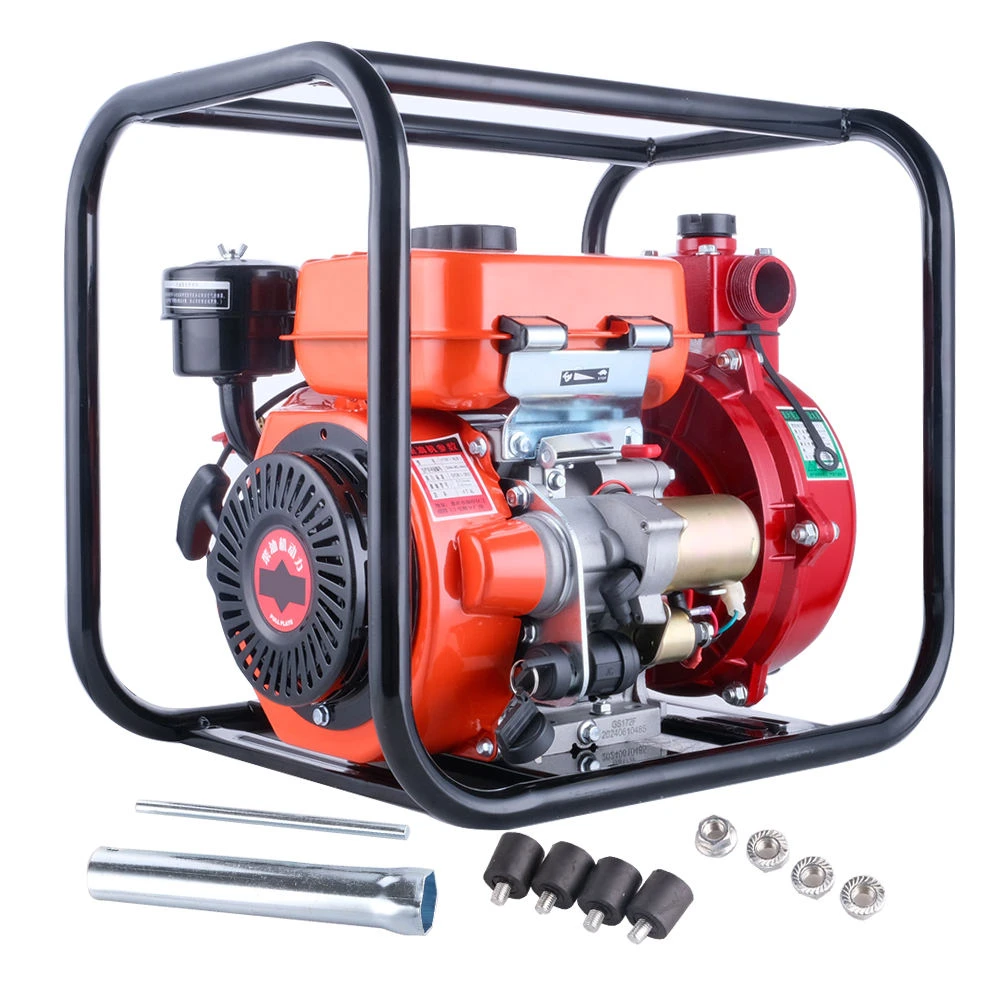
Diesel Water Pump – Maintenance Checklist
- Fuel Filter: Every 250 hrs (Dirty diesel kills injectors).
- Air Filter: Every 100 hrs (Sooner in dusty conditions).
- Oil Change: 20-hr break-in, then every 100 hrs (CF-4 grade).
- Injector Test: Annually for hard-used units.
- Cooling Fins: Keep clear of debris (prevents silent overheating).
- Long Storage: Drain carburetor bowl, run until fuel dry, grease spindle.
Gasoline Water Pump – Maintenance Checklist
- Spark Plug: Clean/gap every 100 hrs.
- Oil: 20 hr break-in, then 50 hrs (SAE 10W-30).
- Carb Clean: If ethanol fuel sits >30 days.
- Recoil Rope: Lubricate lightly.
- Frame: Check welds if dragged roughly.
Common Faults – Quick Fix Table
| Symptom | Gasoline Fix | Diesel Fix |
|---|---|---|
| Won’t start (Cold) | Check spark, choke, prime. | Glow plug, decomp, fuel solenoid. |
| Starts, then dies | Carb jet clogged / bad gas. | Air lock / filter clogged. |
| Low Flow | Clogged inlet / worn impeller. | Same + injector dribble. |
| Overheating | Blocked fin / low oil. | Same + overloaded head. |
Jingong provides spare kits, exploded-view diagrams, and video call troubleshooting for all fuel pumps we ship—ensuring your gasoline water pump or diesel water pump stays operational.
Fuel Pumps FAQ – Capturing Long-Tail Traffic
Q1: Are Diesel vs Gasoline Water Pump diesel water pumps better than gasoline?
A: Not universally. Diesel wins on fuel economy (~30–40% less per m³), lifecycle, and continuous duty. Gasoline wins on price, weight, and short-run convenience. “Better” depends entirely on your annual operating hours.
Q2: Which is more fuel efficient, diesel or gasoline water pump?
A: Diesel, hands down. Roughly 3L diesel / 100m³ pumped vs 5L gasoline for a comparable lift.
Q3: What Diesel vs Gasoline Water Pump water pump is best for farm irrigation?
A: >20 acres or >6 hrs/day → diesel water pump. <5 acres, seasonal → gasoline water pump. No grid + sunny → add a solar water pump.
Q4: Can I use a gasoline water pump for long continuous work?
A: Technically yes for 8–10 hrs, but not recommended for 24 hrs × 30 days. Valves soften and oil cooks. That’s what a diesel water pump is engineered for.
Q5: Is a diesel water pump worth the extra cost?
A: If runtime exceeds 500 hrs/year—yes. Payback occurs within 12–20 months via fuel savings and longer life. Under 200 hrs/year—stick with gasoline.
Q6: Solar pump vs diesel pump for off-grid?
A: Solar handles daylight with zero fuel cost. Diesel ensures 24/7 reliability. The smartest setup for many off-grid farms is a hybrid system.
Conclusion & Buying Guide (Conversion Close)
Here is the distilled version of everything covered:
- Short, light, portable, <200 hrs/yr → Gasoline Water Pump
- Long shifts, >500 hrs/yr, rugged → Diesel Water Pump
- Underwater / Well → Submersible Pump
- Grid available, fixed station → Electric Land Pump
- Off-grid + Sun → Solar Water Pump
Jingong ships gasoline water pump (2–6″, 5–15 HP) and diesel water pump (3–6″, 7.5–12 kW) units globally. All products are factory-direct, with CE/ISO certification available, and support custom voltage/frequency configurations.
👉 Get a Tailored Recommendation: Tell us your flow (m³/h), head (m), daily hours, fuel access, and grid status. We’ll size the right pump (or hybrid pair) and deliver a quote within 24 hours.
Related Resources: Ultimate Water Pump Buying Guide | Pump Maintenance Tips | Solar Pump Solutions