

Why is My Centrifugal Pump Not Holding Prime? Professional Troubleshooting Guide
By Jingong Technology — Centrifugal Water Pump Manufacturer | 15+ Years of R&D, Export & Field Service Experience
The #1 Cause of Pump Downtime in Agriculture, Industry & Off-Grid Water Supply
If your centrifugal pump not holding prime has become a recurring nightmare — causing intermittent flow, repeated manual priming, dry running, burnt mechanical seals, or worst of all, a seized impeller — you are not alone. As a Centrifugal Water Pump Manufacturer serving clients across Southeast Asia, the Middle East, Africa, South America and Europe, Jingong Technology estimates that over 70% of all “pump failures” returned to us actually trace back to a loss of prime caused by suction-side issues, not by pump defects themselves. Prime loss often leads to pump suction failure, water pump vacuum loss, and complete centrifugal pump no water pressure in severe cases.
Whether you operate a solar water pump for off-grid irrigation, a diesel pump on a construction site, a submersible pump for deep well extraction, or a standard land centrifugal pump for domestic boosting, this guide delivers a field-proven, step-by-step diagnostic framework. Every recommendation below comes from real warranty data, installer feedback, and 15+ years of engineering practice from your trusted Centrifugal Water Pump Manufacturer.
By the end of this article, you will be able to:
✅ Identify the exact reason your centrifugal pump loses prime after running
✅ Apply a 5-minute DIY diagnostic to confirm air leakage
✅ Understand why your pump won’t hold prime no leak situations still happen
✅ Choose the right fix for your specific pump type — solar, diesel, submersible, or surface
✅ Prevent recurrence with a maintenance schedule tailored by pump type
Table of Contents
- What is Pump Priming & Why Does It Matter?
- 10 Root Causes of Centrifugal Pump Not Holding Prime
- Step-by-Step Troubleshooting Guide (By Pump Type)
- Permanent Fixes & Prevention Tips
- Frequently Asked Questions
- Conclusion: Choose a Reliable Centrifugal Water Pump Manufacturer
1. What is Pump Priming & Why Does It Matter?
Priming is the process of filling a pump’s casing and suction line completely with liquid so that the impeller can generate the pressure differential needed to move fluid. A pump is “primed” when there is zero air in the casing and suction pipe. The moment air enters, the system loses its ability to create suction — this is exactly what we mean when we say a centrifugal pump not holding prime.
💡 Key Engineering Fact
Air is roughly 1,000× less dense than water. A centrifugal pump spinning in air alone cannot generate enough pressure difference to pull water upward. This is why standard centrifugal pumps are NOT self-priming by default — they must be manually primed, and once air enters, they cannot remove it without external intervention. Only specially designed self-priming centrifugal pumps can automatically evacuate air using a built-in reservoir chamber.
1.1 Priming Mechanisms Across Pump Types
As a professional Centrifugal Water Pump Manufacturer, we engineer five distinct product lines — each with a fundamentally different priming mechanism:
When you source from a reputable Centrifugal Water Pump Manufacturer like Jingong Technology, you receive not just the hardware but the engineering insight to avoid these pitfalls. Many low-cost suppliers simply ship a box — we ship 15+ years of field-tested knowledge.
1.2 The Real Cost of Running Un-Primed
Water in a centrifugal pump serves dual purpose: coolant and lubricant. Without it:
- Mechanical seal destruction — Dry running can melt the rubber components of a mechanical seal within 60 seconds
- Impeller cavitation damage — Vapor bubbles collapse against the impeller, causing pitting and imbalance
- Motor winding burnout — Loss of cooling leads to thermal overload; motor can fail in minutes
- Bearing seizure — Heat expands clearances, leading to catastrophic bearing failure
This is precisely why every responsible Centrifugal Water Pump Manufacturer emphasizes: a pump that loses prime is not a pump problem — it is a system problem. The following sections reveal exactly where to look.
2. 10 Root Causes of Centrifugal Pump Not Holding Prime
Based on warranty return data collected by our Centrifugal Water Pump Manufacturer engineering team, here are the ten most common causes of prime loss, ordered by diagnostic priority (simplest → most complex):

2.1 Air Leakage in the Suction Line (~60% of all cases)
Because the suction side operates below atmospheric pressure, even a pinhole leak can draw in air and break the vacuum. Common leak points include:
- Flange gaskets and O-rings (especially after thermal cycling)
- Threaded connections and hose clamps
- Mechanical seal interfaces
- Cracked or aging suction hoses (PVC becomes brittle after 12–18 months in high-temperature climates)
Jingong Engineering Insight: As a Centrifugal Water Pump Manufacturer, we upgraded our priming port O-rings from standard NBR to Viton for export markets in the Middle East and North Africa in 2024. NBR tends to harden after 12–18 months, allowing microscopic air leaks. This specification change alone reduced related warranty claims by approximately 40%.
2.2 Insufficient or Improper Priming
If the pump casing or suction line is not completely filled with liquid before startup, residual air pockets prevent the establishment of a continuous liquid column. This is especially common with:
- Solar surface pumps after a power cycle (PV voltage dips below startup threshold)
- Diesel pumps where operators forget to prime both the fuel line AND the pump casing
- Any pump after a disconnect — never assume the system holds its charge
Pro Tip from your Centrifugal Water Pump Manufacturer: Always vent the highest point of the suction line after refilling. Trapped air at high points is a prime killer.
2.3 Excessive Suction Lift
Atmospheric pressure can theoretically lift water 10.3 metres, but 4–5 metres is the safe maximum in real-world conditions. Beyond this, the pump struggles to maintain prime. This is governed by Net Positive Suction Head (NPSH). Factors that worsen suction lift:
- High altitude (reduced atmospheric pressure)
- High water temperature (water vaporizes more easily)
- Long horizontal suction runs (friction losses)
If your installation requires >5m suction lift, consult your Centrifugal Water Pump Manufacturer about a self-priming model or relocating the pump closer to the water source.
2.4 Clogged Suction Screen / Filter / Foot Valve
Debris, sand, sediment, or biological growth restricts flow, reducing inlet pressure and increasing the risk of air ingress or vapor formation. Common in:
- Agricultural irrigation (submersible & land pumps drawing from open sources)
- Construction dewatering (diesel trash pumps)
- Raw water intake from rivers, ponds, or shallow wells
2.5 Failed Foot Valve or Check Valve
A foot valve at the suction inlet prevents liquid from draining back when the pump stops. If this valve leaks or fails to seal:
- The suction line drains when the pump stops
- Air fills the line
- The pump starts dry on the next cycle → repeated loss of prime
Thermal contraction at night is a silent culprit: as temperatures drop, PVC fittings contract, and any minor suction leak expands into a full prime loss by morning. This is why your solar water pump prime loss often occurs overnight.
2.6 Mechanical Seal or Packing Leak
Worn mechanical seals or gland packing can let air seep into the casing. The leak may not drip liquid externally but can still destroy prime. Particularly common in older pumps or those that have experienced previous dry-running episodes.
2.7 Impeller Damage & Cavitation
Cavitation occurs when the pressure in the pump drops below the vapor pressure of the liquid being pumped, forming vapor bubbles that collapse against the impeller. This damages the impeller and reduces pumping efficiency, making prime retention impossible. Driven by:
- Clogged suction line
- Excessive suction lift
- High pumping speed relative to NPSH available
2.8 Power System Issues (Solar & Engine-Driven Pumps)
This is where a specialized Centrifugal Water Pump Manufacturer adds unique value:
Solar Pumps: When PV panel output drops below the controller’s startup threshold (e.g., cloudy conditions, dust accumulation, or end-of-day voltage sag), the pump may start/stop repeatedly. Each restart requires re-priming — if the foot valve isn’t perfect, prime is lost.
Diesel/Gasoline Pumps: Low engine RPM, clogged fuel filter, or incorrect choke/primer bulb usage means the impeller spins too slowly to generate adequate vacuum. Result: your diesel pump not priming even after manual filling.
Electric Land Pumps: Voltage drop at the motor terminals (undersized wiring) reduces impeller speed → insufficient vacuum → prime loss under load.
2.9 Poor Pipework Layout
Bad suction design kills prime:
- High points in the suction line collect air (air traps)
- Sharp elbows directly at the pump inlet create turbulence
- Undersized piping increases friction losses → reduced NPSH
- Collapsed or non-reinforced hoses that flatten under vacuum
2.10 Low Source Liquid Level
If the fluid level drops below the suction inlet:
- Air enters the suction line
- The pump begins to draw a mixture of air and liquid
- Prime is lost
Common in submersible pump prime issue cases where the pump is installed too high in the borehole, or land pumps drawing from a depleted tank. A Centrifugal Water Pump Manufacturer with proper application engineering will specify the correct pump type and installation depth for your exact water source dynamics.
3. Step-by-Step Troubleshooting Guide
Follow this 5-level diagnostic hierarchy. As a Centrifugal Water Pump Manufacturer, we’ve ordered these steps from “zero disassembly required” to “full mechanical overhaul” — saving you time and money.
3.1 Level 1: 3-Minute Visual Self-Check (No Tools Needed)
- Verify the water source level — Is the tank/well/pond above the suction inlet? For submersibles, is the pump fully submerged?
- Inspect all visible joints — Look for weep marks, corrosion, loose clamps on the suction side
- Re-prime the pump — Fill the casing and suction line completely with water, vent the highest point
- Restart and observe — Does flow stabilize? If yes → intermittent leak. If no → proceed to Level 2
- Listen for backflow — After shutdown, do you hear water draining back? That confirms a faulty foot valve
3.2 Level 2: Air Leak Detection (The Soapy Water Test)
This is the single most valuable diagnostic technique. As a Centrifugal Water Pump Manufacturer, we teach every distributor this method:
3.3 Level 3: Pump-Type-Specific Deep Diagnostics
🔧 Land Centrifugal & Self-Priming Pumps
- Measure actual suction lift — Use a laser level or tape measure. If >5m, relocate pump or switch to submersible
- Test the foot valve — Close the discharge, fill the system, mark the water level in a transparent section. If it drops overnight → replace foot valve
- Check the priming chamber (self-priming models) — Ensure it retains liquid. Flush after handling solids
- Inspect mechanical seal — Drip rate should be 1 drop per minute max. More = replace. Contact your Centrifugal Water Pump Manufacturer for genuine OEM seals.
🔧 Submersible Pumps (Borehole / Sewage / Drainage)
- Verify submersion depth — Pump should be fully underwater with at least 1m clearance below the intake. Water table drops? Lower the pump
- Check cable & pipe connections at the splice — Water ingress here causes “prime issue” symptoms (actually air in the column)
- Inspect intake screen — Remove and clean. Sand/silt clogging reduces flow → pump “appears” to lose prime
- Confirm single-phase vs three-phase rotation — Wrong rotation destroys prime immediately. As your Centrifugal Water Pump Manufacturer, we label all three-phase pumps with rotation arrows to prevent this error.
- Measure PV open-circuit voltage at the controller input — Must exceed startup threshold by 20% margin
- Check for voltage sag under load — Undersized wiring between panels and controller causes brownouts → pump stops → re-prime needed
- Verify the controller’s “soft start” settings — Too-aggressive ramp can fail to establish prime on each cycle
- Inspect the foot valve after dust storms — Thermal cycles loosen unions; sand intrusion damages valve seats
- Confirm battery buffer (if hybrid) — A small battery bank eliminates PV fluctuation-induced prime loss
🔧 Gasoline / Diesel Engine Pumps
- Confirm engine RPM reaches rated speed — Low idle = insufficient impeller speed = no vacuum. Adjust throttle/governor
- Prime BOTH systems — Fuel line (primer bulb/choke) AND pump casing (fill with water)
- Check fuel filter & air cleaner — Restricted flow reduces engine power → impeller slows → prime lost
- Flush the priming chamber after each job — Prevents debris buildup that blocks the internal recirculation passage
- Grease throttle linkages before storage — Sticky linkage prevents full RPM → chronic prime failure
3.4 Level 4: Deep Mechanical Inspection (Disassembly Required)
Only proceed here if Levels 1–3 yield no definitive cause. Contact your Centrifugal Water Pump Manufacturer for genuine spare parts:
- Remove and inspect the impeller — Look for cavitation pitting, erosion, or foreign object damage. Replace if vanes are compromised
- Check the volute/casting for internal erosion that creates bypass leakage
- Replace mechanical seal assembly — Always use OEM-spec seals. A Centrifugal Water Pump Manufacturer like Jingong stocks Viton, NBR, and EPDM variants for different fluids
- Inspect bearings — Noise, heat, or play indicates replacement needed
- Pressure-test the pump casing — Reveals hairline cracks invisible to the naked eye
4. Permanent Fixes & Prevention: Maintenance Schedule by Pump Type
A world-class Centrifugal Water Pump Manufacturer doesn’t just sell you a pump — we help you make it last. Here’s the exact maintenance cadence our engineering team recommends:
5. Frequently Asked Questions

Q1: Why does my centrifugal pump lose prime overnight?
A: The #1 cause is a leaking foot valve, which allows water to drain back into the source overnight. A secondary cause: nighttime temperature drops cause PVC suction pipes to contract, widening microscopic air leaks that were undetectable during the day. Our Centrifugal Water Pump Manufacturer technical team recommends pressure-testing your foot valve monthly in fluctuating temperature environments.
Q2: Can a clogged filter cause a pump to lose prime?
A: Absolutely. A clogged intake screen or filter restricts flow, lowering inlet pressure and increasing the risk of air ingitation or cavitation. This breaks the vacuum seal required for prime retention. Our Centrifugal Water Pump Manufacturer recommends cleaning intake filters every 30 days for agricultural applications.
Q3: Do submersible pumps need priming? Why does mine lose prime?
A: Submersible pumps do not require priming in normal operation, as they are fully immersed. If you experience “prime loss” symptoms (no flow, air spitting), it is almost always due to: 1) Insufficient submersion depth (pump drawing air from the surface), 2) Clogged intake screen causing flow restriction, or 3) Water ingress at cable splices creating an air lock.
Q4: Why does my diesel water pump not hold prime after running?
A: Most commonly, this traces back to low engine RPM (insufficient impeller speed to generate vacuum) or a leaking foot valve. Less common: a clogged fuel filter reducing engine power, or a worn mechanical seal allowing air ingress. As a Centrifugal Water Pump Manufacturer, we include a pre-shipment vacuum test report with every diesel pump to rule out factory defects.
Q5: Will solar pump low power cause prime loss?
A: Yes. Low PV voltage (from cloud cover, dust buildup, or end-of-day voltage sag) prevents the pump from reaching rated RPM, making it impossible to establish a stable vacuum. Frequent starts/stops from voltage fluctuations also require repeated priming—if your foot valve has even a minor leak, prime is lost on every restart.
Q6: Is air in the pump line the only cause of prime loss?
A: Air ingress is the leading cause (60%+ of cases), but not the only one. Excessive suction lift, impeller cavitation, worn mechanical seals, insufficient engine/motor power, and poorly designed suction piping (e.g., high points trapping air) all contribute to prime loss.
6. Conclusion: Choose a Reliable Centrifugal Water Pump Manufacturer
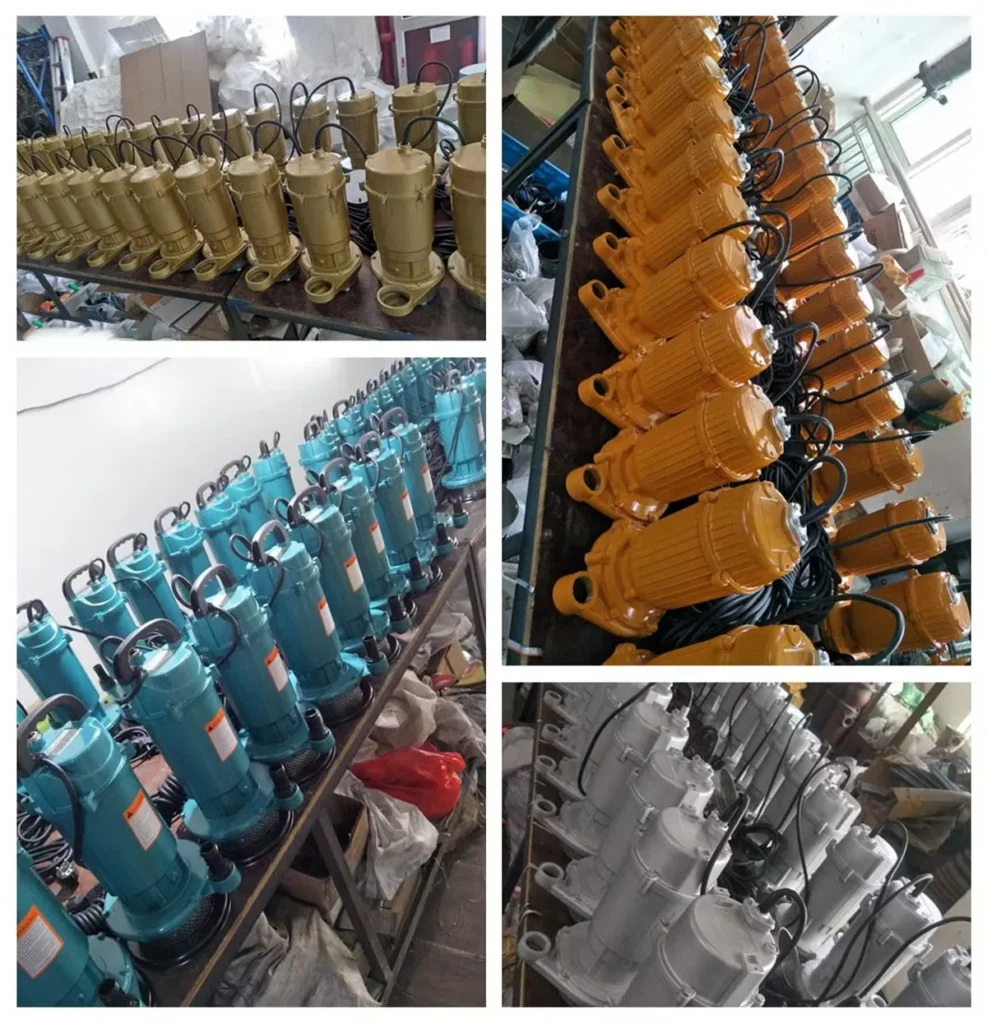
As a leading Centrifugal Water Pump Manufacturer with 15+ years of R&D and field service experience, Jingong Technology understands that prime loss is rarely a “pump defect”—it is almost always a system design or maintenance issue. Our full product portfolio covers land centrifugal pumps, self-priming pumps, deep well submersible pumps, solar water pumps, and gasoline/diesel engine pumps, all engineered to withstand harsh operating conditions from agricultural irrigation to remote off-grid water supply.
If you are struggling with recurring centrifugal pump not holding prime issues, don’t just replace parts—optimize your entire system. Contact Jingong Technology, your reliable Centrifugal Water Pump Manufacturer, for application engineering support, genuine spare parts, and customized maintenance schedules. Choose Jingong Technology as your long-term Centrifugal Water Pump Manufacturer to eliminate downtime and maximize your pumping system’s lifespan
Get a free, no-obligation head calculation and product recommendation from a senior engineer at Jingong — your trusted Agricultural Irrigation Centrifugal Water Pump manufacturer.

0 Comments