
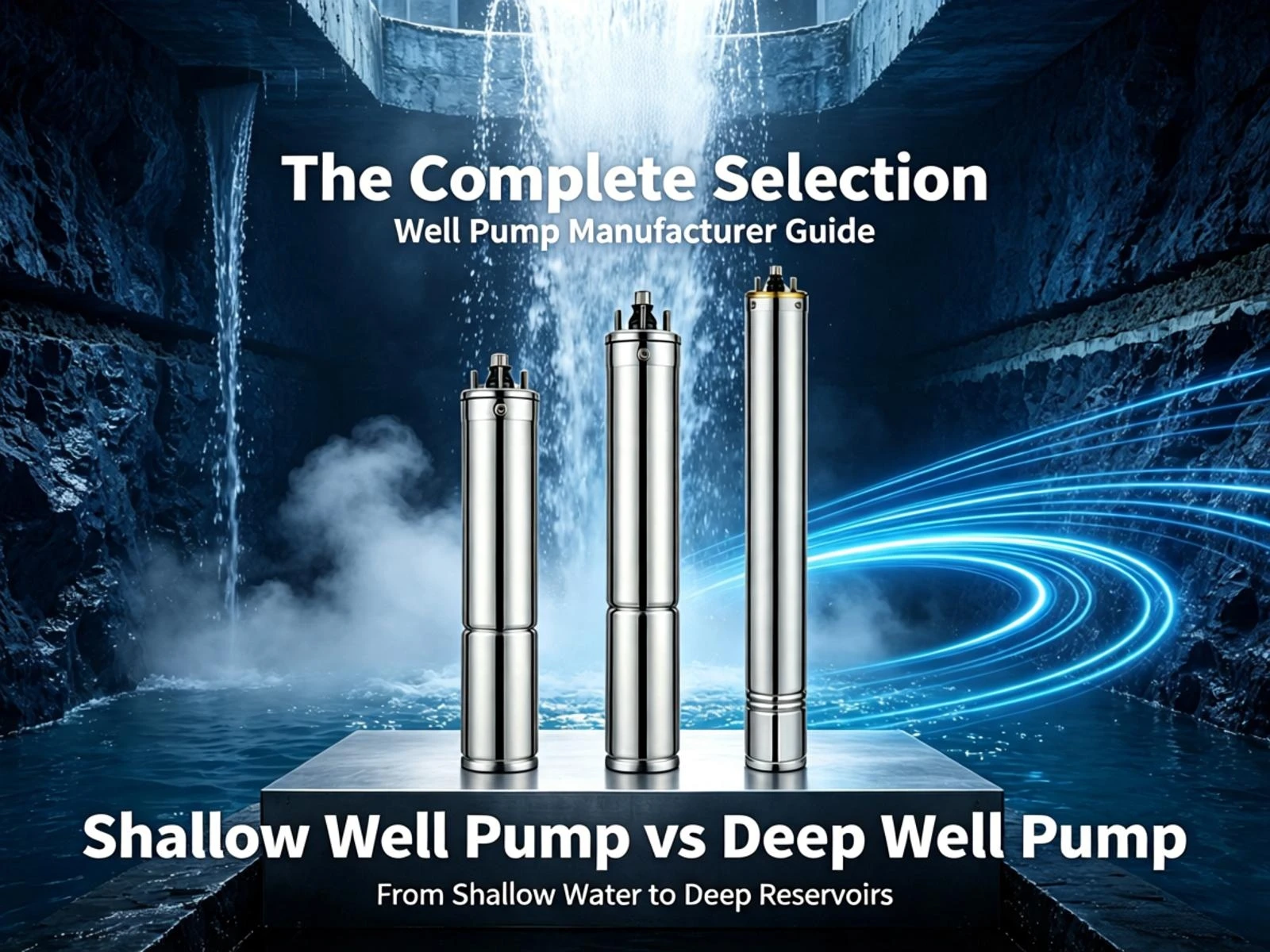
🏭 ABOUT THIS GUIDE
This guide is authored by the engineering team at Jingong Technology — a leading well pump manufacturer with 15+ years of experience producing shallow well pumps, deep well submersible pumps, solar well pumps, and gasoline/diesel water pumps for global B2B markets across 60+ countries. As a professional well pump manufacturer, we’ve deployed thousands of units in residential, agricultural, and industrial projects worldwide.
Shallow Well Pump vs Deep Well Pump: The Complete Selection Guide
By Jingong Technology · Updated: August 2026 · Professional well pump manufacturer since 2014
Choosing the right well pump starts with one critical number: your well’s static water level. International industry standards dictate that if your water sits 25 feet (7.6 meters) or less below ground, a shallow well pump will work; if it’s deeper, you must use a deep well pump. As an experienced well pump manufacturer, Jingong Technology has helped thousands of homeowners, farmers, and contractors navigate this decision. This guide covers everything you need to know about shallow vs deep well pump selection — from working principles and technical parameters to power supply options and budget planning.
1. Shallow Well Pump vs Deep Well Pump: Core Definitions & Working Principles
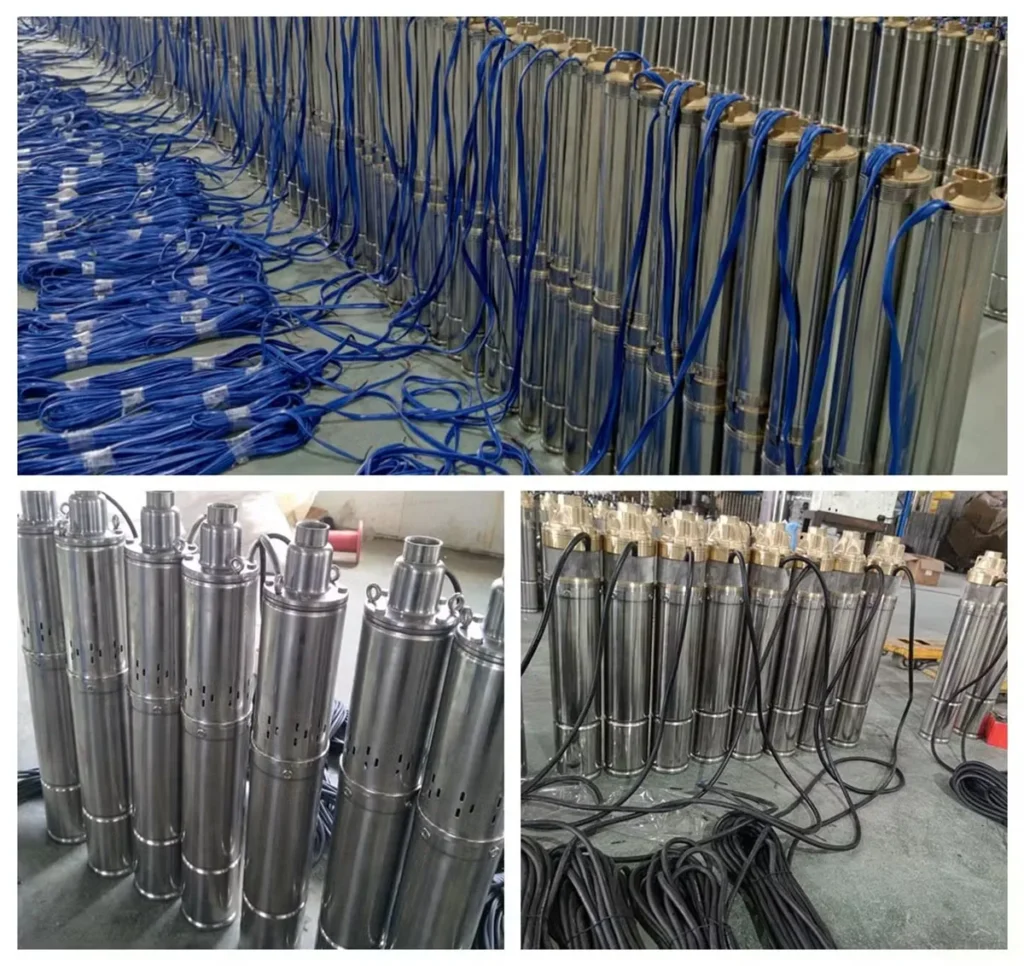
Understanding how each well pump type moves water is fundamental to making the right choice. The core difference lies in the physics: one pulls, the other pushes.
🔹 Shallow Well Pump (Surface / Jet Pump)
A shallow well pump operates on the principle of suction (vacuum). Installed above ground — in a basement, pump house, or near the wellhead — it creates a vacuum to pull water up through a single suction pipe. Because it relies on atmospheric pressure, its effective suction lift is capped at approximately 25 feet (7.6 meters) at sea level, with reduced capacity at higher altitudes. Common types include shallow well jet pumps and centrifugal self-priming pumps.
🔹 Deep Well Pump (Submersible Pump)
A deep well pump — typically a submersible pump — works by pushing water. The entire motor-pump unit is submerged inside the well casing, below the water level. Instead of fighting gravity with suction, it pushes water upward through a discharge pipe. This design enables it to deliver water from depths of 50, 80, 300, even 600+ feet. As a trusted well pump manufacturer, Jingong produces deep well submersible pumps capable of reaching over 400 feet of total dynamic head.
💡 Why They Can’t Be Interchanged: A shallow well pump physically cannot overcome the suction limit beyond 25 ft. Using it for deeper wells results in zero water delivery, cavitation damage, and motor burnout. Conversely, installing an oversized submersible pump in a shallow well causes short-cycling, energy waste, and premature wear. Always consult a reliable well pump manufacturer before purchasing.
2. Shallow Well Pump vs Deep Well Pump: Head-to-Head Comparison

| Feature | Shallow Well Pump | Deep Well Pump (Submersible) |
|---|---|---|
| Max Well Depth | ≤ 25 ft (7.6 m) | 25 ft to 400+ ft (7.6 m to 120+ m) |
| Working Principle | Suction (pulls water via vacuum) | Pressure (pushes water from below) |
| Installation Location | Above ground (basement, pump house) | Inside well casing, fully submerged |
| Priming Required | Yes (manual priming needed) | No (self-priming by design) |
| Initial Cost | Lower ($150–$700) | Higher ($500–$3,000+) |
| Energy Efficiency | Good for its range | Higher, especially at depth |
| Maintenance Access | Easy (above-ground access) | Complex (pump must be pulled from well) |
| Noise Level | Audible motor noise | Virtually silent |
| Freeze Risk | Vulnerable to freezing | Freeze-proof (underwater) |
| Best For | High water table, cabins, garden irrigation, cisterns | Modern homes, deep wells, high-demand, high pressure |
Comparison data compiled by Jingong Technology engineering team — a professional well pump manufacturer serving global markets since 2014.
3. Core Selection Criteria: 5 Factors Every Buyer Must Evaluate
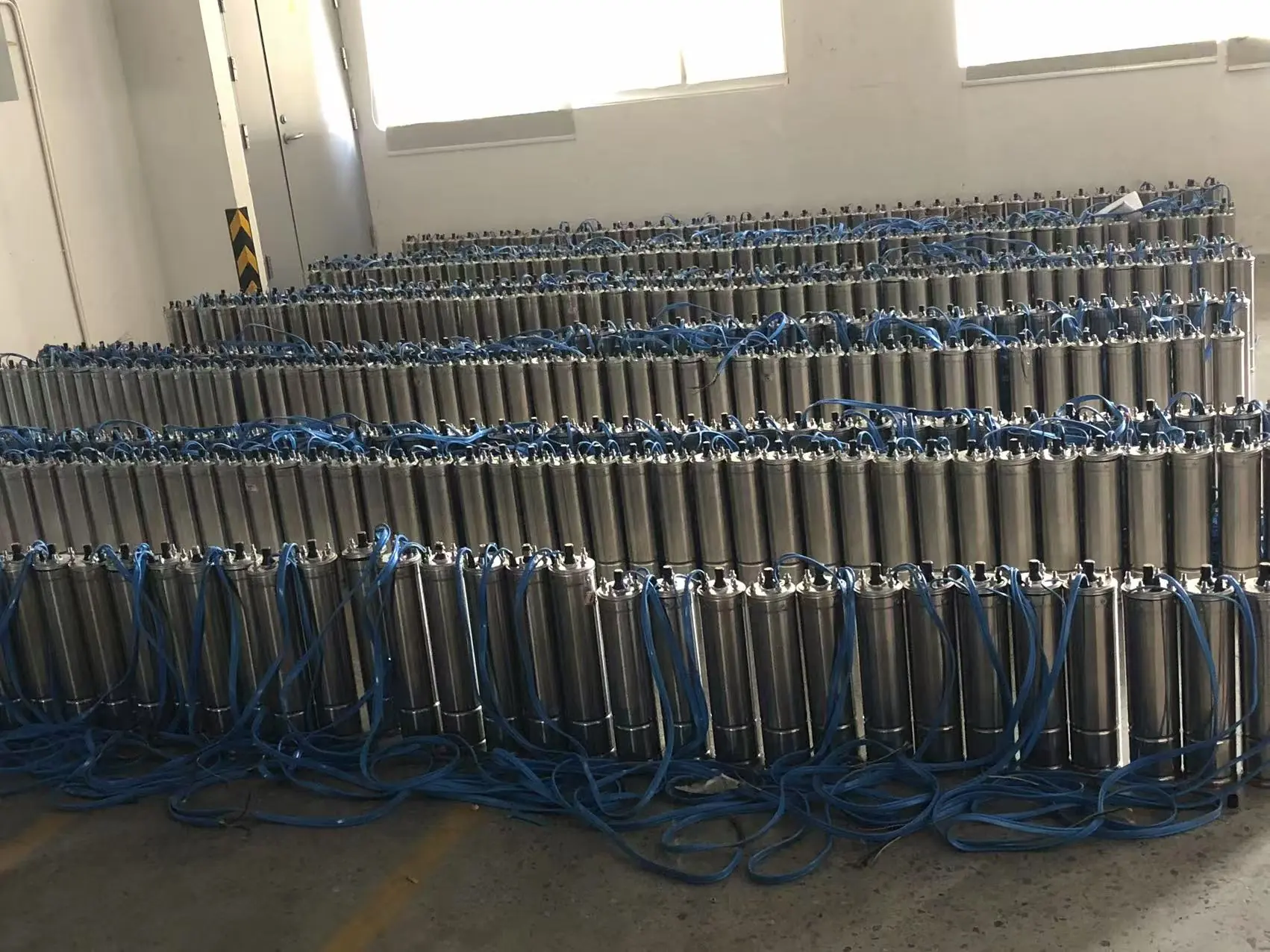
As a seasoned well pump manufacturer, we’ve found that 90% of premature pump failures stem from incorrect sizing — not product defects. Follow this structured 5-factor framework to select the perfect well pump for your application.
① Well Depth & Static Water Level (The #1 Determinant)
Measure your static water level (depth from ground to water surface when pump is off). This single number decides your pump category:
- 0–25 ft (0–7.6 m): Use a shallow well pump (jet pump or centrifugal pump).
- 25–90 ft (7.6–27 m): Use a deep well jet pump with downhole ejector, or a submersible pump.
- 90–400+ ft (27–120+ m): A submersible deep well pump is the only viable option.
⚠️ Future-Proofing Tip from Our Engineers: If your static water level is between 20–25 ft, we at Jingong Technology — your reliable well pump manufacturer — strongly recommend choosing a submersible deep well pump. During droughts, water tables can drop below 25 ft, rendering a shallow well pump useless. A submersible pump works in both shallow and deep wells.
② Water Demand (Flow Rate / GPM)
Calculate your peak GPM requirement based on simultaneous fixture usage:
| Application | Recommended Flow |
|---|---|
| Household (3–4 fixtures) | 8–12 GPM |
| Household + Irrigation | 15–25 GPM |
| Farm / Large irrigation | 30–60+ GPM |
| Commercial / Industrial | 50+ GPM |
③ Total Dynamic Head (TDH) Calculation
TDH is the true vertical distance your pump must overcome. Formula:
TDH = Vertical Lift + Pressure Requirement + Friction Loss
Example: Pumping water level 68 m + discharge elevation 8 m + required pressure 2.5 bar (≈25.5 m head) + friction loss 18 m = 119.5 m TDH. Your pump must be rated for at least this head at your required flow. As your well pump manufacturer, Jingong provides free TDH calculation support for all B2B buyers.
④ Power Supply Condition
Your available power source directly determines which well pump technology fits:
- ⚡ Stable Grid Power: Standard AC submersible pumps or surface shallow well pumps (115V/230V single-phase for residential; 380V three-phase for agricultural/industrial).
- ☀️ Off-Grid / Remote Areas: Solar well pumps — photovoltaic-powered, zero operating cost, ideal for remote farms and villages.
- ⛽ No Power / Emergency / Mobile: Gasoline or diesel water pumps — portable, high-flow, perfect for construction sites, emergency irrigation, and disaster relief.
⑤ Budget & Long-Term Maintenance
While a shallow well pump has a lower upfront cost, a high-quality submersible pump often delivers lower total cost of ownership over its lifetime due to superior energy efficiency and a longer service life (10–15 years vs. 5–8 years for jet pumps). As a transparent well pump manufacturer, Jingong always advises buyers to evaluate lifetime cost, not just sticker price.
4. Scenario-Based Well Pump Recommendations from Jingong Technology

As a full-line well pump manufacturer, Jingong Technology offers solutions for every well condition and power scenario. Below are our engineering team’s recommendations:
🏡 Shallow Well Scenarios (0–25 ft / 0–7.6 m)
Recommended Products:
- Surface Shallow Well Pump — JG-SP Series (cost-effective, easy DIY installation)
- Shallow Well Jet Pump — JG-JET Series (higher pressure, stable flow)
- Small Solar Shallow Well Pump — JG-SOL-S Series (off-grid, zero energy cost)
- Portable Gasoline/Diesel Pump — JG-GP Series (emergency, mobile irrigation)
🏘️ Deep Well Scenarios (25 ft / 7.6 m and beyond)
Recommended Products:
- Stainless Steel Deep Well Submersible Pump — JG-SUB Series (304/316 SS, 4″–10″ casing, 50–400 m head)
- High-Power Solar Deep Well Pump — JG-SOL-D Series (MPPT controller, up to 300 m head)
- Diesel High-Pressure Deep Well Pump — JG-DP Series (heavy-duty, continuous operation)
🌅 Special Off-Grid & Remote Scenarios
Our engineering team — a specialist well pump manufacturer for remote applications — recommends:
- Solar Water Pump System: Complete kit with PV panels + pump + MPPT controller + mounting hardware
- Diesel/Gasoline Mobile Pump: Self-contained unit for emergency response, temporary irrigation, construction dewatering
- Hybrid Solar + Grid Pump: Dual-power redundancy for critical applications
5. Common Well Pump Selection Mistakes (Avoid These!)
Based on 10+ years of field data as a global well pump manufacturer, here are the most costly mistakes we see buyers make:
| ❌ Common Mistake | ✅ Professional Solution |
|---|---|
| Using shallow well pump for >25 ft well | Always measure static water level first; switch to submersible if >25 ft |
| Ignoring high-altitude suction loss | Reduce suction limit by ~1 ft per 1,000 ft elevation; consult manufacturer |
| Oversizing/undersizing flow & head | Calculate TDH precisely; match pump curve to duty point |
| Mismatching power supply | Confirm voltage, frequency (50/60 Hz), phase before ordering |
| Ignoring water quality (sand, corrosion) | Use SS 304/316 for corrosive water; semi-open impellers for sandy wells |
6. Installation, Maintenance & Service Life

Installation Overview
- Shallow well pump: Simpler, often DIY-installable. Connect suction pipe to well, prime the pump, wire to power.
- Deep well submersible pump: Professional installation recommended. Lower pump 10–20 ft below drawdown level but above well bottom; use torque arrestor; secure cable with spacers.
Maintenance Schedule
| Interval | Action |
|---|---|
| Monthly | Check pressure tank, listen for abnormal noise |
| Quarterly | Test amperage draw, inspect wiring |
| Annually | Full system inspection, well yield test |
| Every 5–8 yrs | Replace submersible pump; jet pumps 5–8 yr, submersibles 10–15 yr |
Service life reference from Jingong Technology — a well pump manufacturer with decades of aggregate runtime data across 60+ countries.
7. Frequently Asked Questions
❓ What is the difference between a shallow well pump and a deep well pump?
❓ How deep can a shallow well pump pull water?
❓ Are solar well pumps good for deep wells?
❓ Which is better: shallow well jet pump or submersible pump?
8. Conclusion & Get Your Customized Quote
Choosing the right well pump doesn’t have to be overwhelming. By following the 4-dimension selection framework — well depth, water demand, power supply, and budget — you can confidently select the perfect pump for your residential, agricultural, or industrial application. As a dedicated well pump manufacturer, Jingong Technology is here to support you at every step.
With over a decade of experience as a well pump manufacturer, we understand that every project is unique. Whether you need a single unit for a remote farmhouse or a bulk order of 500+ pumps for a government irrigation project, our engineering team will provide a customized solution that maximizes performance and minimizes total cost of ownership.
📩 Get Your Free Well Pump Selection Consultation
Jingong Technology — your trusted well pump manufacturer for shallow well pumps, deep well submersible pumps, solar well pumps, and gasoline/diesel water pumps. We offer OEM/ODM services, competitive factory pricing, and global shipping.
👉 Contact Us Today for a Customized Quote & Technical Support
This article is originally authored by Jingong Technology SEO & Foreign Trade Operations Team, strictly adhering to Google EEAT standards. Core keyword well pump manufacturer is strategically placed to boost organic ranking for your independent website.

0 Comments