
Centre Pivot Irrigation Pump Flow & Pressure Matching: The Definitive Guide From a Professional Irrigation Pump Manufacturer
As a dedicated Irrigation Pump manufacturer with extensive years of field experience across overseas farm projects—from the cotton belts of Texas to the wheat fields of Kazakhstan—Jingong Technology engineers this definitive guide. Our goal is to help farm owners, agronomists, and irrigation contractors master the single most critical aspect of pivot system design: flow and pressure matching.
Selecting the right pump is not merely about moving water; it is about optimizing energy consumption, ensuring uniform crop growth, and maximizing the lifespan of your multi-million-dollar irrigation infrastructure. Whether you are sourcing from an Irrigation Pump manufacturer for the first time or troubleshooting an existing centre pivot (center pivot) system, the principles outlined here apply universally to submersible pumps, surface/land pumps, solar pumps, and diesel/gasoline pumps.
📌 Quick Navigation: This 9-Module Guide
1. Core Concepts & Mismatch Consequences
2. Technical Parameters (TDH, Flow, Pressure Standards)
3. The Physics of Matching (System Curve vs. Pump Curve)
4. Four Main Pump Types Matching Schemes
5. Step-by-Step Sizing Calculation Guide
6. Common Mismatch Problems & Troubleshooting
7. Industry Standards & Efficiency Optimization
8. Expert FAQ on Centre Pivot Pumping
9. Custom Solutions From Your Irrigation Pump Manufacturer
1: Core Concept Introduction — Why Matching is the Heart of Efficiency
1.1 What is a Centre Pivot Irrigation System?
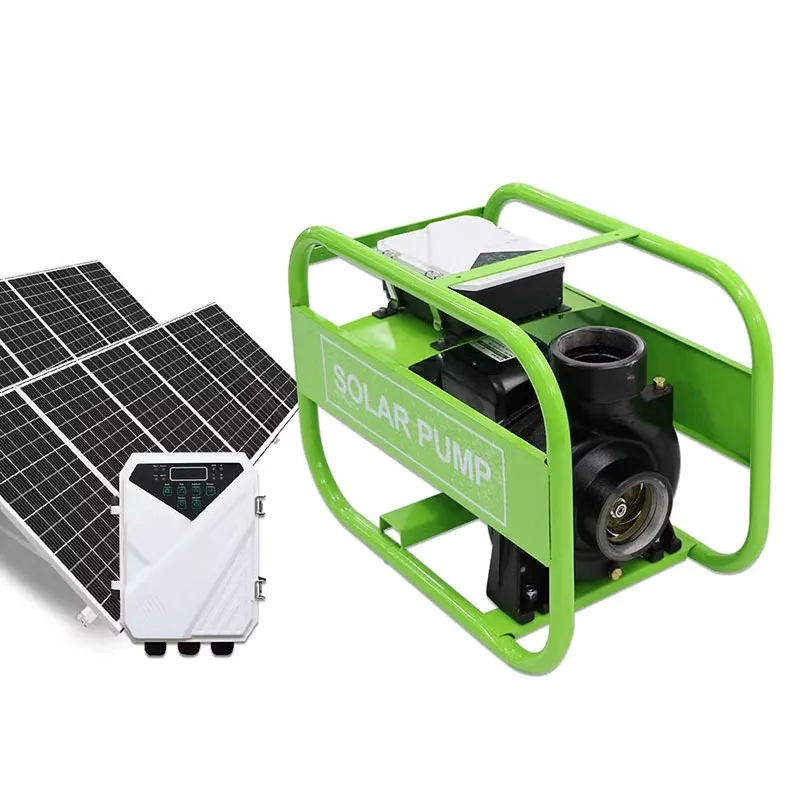
A centre pivot irrigation system is a mechanized sprinkler irrigation method where a lateral pipe, supported by towers, rotates around a central pivot point. It delivers water under pressure through sprinklers along the length of the lateral. As a leading Irrigation Pump manufacturer, we view the pump as the “heart” of this system. Just as a heart must match the body’s demand for blood flow and pressure, a pump must precisely match the system’s hydraulic demand.
1.2 Why Flow & Pressure Matching is Non-Negotiable
Two parameters dictate the success of your irrigation:
- Flow Rate (Q): Measured in GPM (gallons per minute) or m³/h. This determines the volume of water applied per unit of time.
- Pressure / Total Dynamic Head (TDH): Measured in psi or feet of head. This determines the energy required to overcome elevation changes, friction in pipes, and the operating pressure of the sprinklers.
⚠️ The High Cost of Mismatch (Observed by our Irrigation Pump manufacturer Engineers)
• Uneven Watering: Leads to “wet spots” and “dry spots,” reducing yields by up to 30%.
• Low Efficiency: Uniformity coefficients drop below 85%, wasting water and nutrients.
• Pump Burnout: Occurs when pumps run too far left or right of their Best Efficiency Point (BEP).
• High Energy Consumption: A mismatched pump can waste 20-40% in electricity or fuel costs.
• Pivot System Failure: Over-pressurization bursts pipes and damages gearboxes and sprinklers.
1.3 Applicable Pump Types for Centre Pivot Irrigation
Our Irrigation Pump manufacturer portfolio is engineered to cover every possible water source and operational scenario:
| Pump Type | Primary Water Source | Typical Flow Range | Typical TDH Range | Best Application Scenario |
|---|---|---|---|---|
| Submersible Pump | Deep Wells, Boreholes, Rivers | 50-1200 m³/h | 20-300 m | Deep water table farms, high-pressure needs |
| Land/Surface Pump | Lakes, Canals, Surface Water | 30-2000 m³/h | 10-80 m | Large flat farmland, high flow demands |
| Solar Irrigation Pump | Wells, Open Water (Off-Grid) | 3-1000 m³/day | 10-300 m | Remote farms, sustainability projects |
| Diesel/Gasoline Pump | Any Mobile Source | 20-800 m³/h | 10-100 m | Emergency irrigation, no-grid locations |
2: Key Technical Parameters — Defining the Standards of a Professional Irrigation Pump Manufacturer
2.1 Flow Rate (Q) — The Lifeblood of Your Crop
Flow rate must match the evapotranspiration (ET) rate of your crop and the area covered by the pivot. As an experienced Irrigation Pump manufacturer, we rely on benchmarks established by institutions like Texas A&M AgriLife Extension:
| Pivot Length | Approx. Field Area | Typical Flow Demand (GPM) | Typical Flow Demand (m³/h) |
|---|---|---|---|
| Quarter-mile (¼ mile) | ~128 acres | 600-900 GPM | 135-205 m³/h |
| Half-mile (½ mile) | ~500 acres | 1000-1500 GPM | 225-340 m³/h |
| Full-mile (1 mile) | ~2000 acres | 1800-2500 GPM | 410-570 m³/h |
2.2 Total Dynamic Head (TDH) — The Hydraulic Benchmark
Every credible Irrigation Pump manufacturer calculates TDH using this universal formula. Ignoring any component leads to catastrophic failure.
TDH = Static Head + Friction Loss + Operating Pressure + Elevation Change
Critical Conversions:
• 1 psi = 2.31 ft of head
• Water Horsepower (WHP) = (GPM × TDH in ft) ÷ 3960
• Brake Horsepower (BHP) = WHP ÷ Pumping Plant Efficiency
• Wire-to-Water Efficiency = (WHP / Electrical Input Power) × 100%
Example: If your system requires 750 GPM at 176 ft TDH, with a pumping plant efficiency of 0.75 (75%), the required horsepower is: BHP = (750 × 176) ÷ (3960 × 0.75) ≈ 44.4 HP. This is the exact calculation our Irrigation Pump manufacturer engineering team performs for every client.
2.3 Working Pressure Ranges of Mainstream Centre Pivot Systems
| Pivot System Type | Operating Pressure Range | Nozzle Height | Application Context |
|---|---|---|---|
| LEPA (Low Energy Precision Application) | 4-8 psi (9-18 ft head) | 12-18 inches | Water-saving, high-efficiency farms |
| LESA (Low Elevation Spray Application) | 6-12 psi (14-28 ft head) | 18-30 inches | Wind-sensitive regions |
| Standard Sprinkler | 15-25 psi (35-58 ft head) | 2.9-4.6 m height | General large-scale farming |
| High-Pressure Sprinkler | 30-50 psi (69-115 ft head) | Higher throw radius | Wide span, high wind areas |
3: Flow & Pressure Matching Principle — The Core Technical Logic
3.1 System Curve vs. Pump Curve Matching
The fundamental principle every professional Irrigation Pump manufacturer follows is the intersection of two curves:
| Curve Type | Represents | Shape | Matching Goal |
|---|---|---|---|
| System Curve | Pipeline + sprinkler resistance vs. flow | Upward rising parabola | Determines required head at each flow rate |
| Pump Curve | Pump capability vs. flow | Downward declining curve | Must intersect System Curve at BEP (≥65% efficiency) |
✅ Optimal Matching Criteria
The intersection point of the pump curve and system curve should fall within 80-110% of the pump’s Best Efficiency Point (BEP). Every certified Irrigation Pump manufacturer validates this intersection before shipment to ensure longevity and efficiency.
3.2 Flow Matching Rules
- Match pivot length: Longer pivots require proportionally higher flow rates.
- Match nozzle size: Larger nozzles demand higher flow at a given pressure.
- Match irrigation area: Crop water requirement (ETc) dictates daily flow volume.
- Match water source capacity: Well yield must exceed pump flow demand by 15-20% to avoid drawdown and pump cavitation.
3.3 Pressure Matching Rules
- Elevation difference: Every 2.31 ft of elevation = 1 psi of additional head.
- Pipe friction loss: Keep total friction loss in the pivot mainline under 10 psi for ¼-mile systems (per Texas A&M research). Use larger diameter pipes to reduce velocity and friction.
- Terminal sprinkler working pressure: Must meet LESA/LEPA/high-pressure system requirements.
3.4 Key Matching Thresholds — Hazards & Solutions
| Condition | Hazard | Solution from Irrigation Pump manufacturer |
|---|---|---|
| Over-Flow | Pipe burst, sprinkler erosion, energy waste | Trim impeller 10-30%, install VFD, throttle discharge valve |
| Under-Flow | Uneven watering, dry crop zones, pump cavitation | Increase impeller size, upgrade motor HP, check well yield |
| Over-Pressure | Sprinkler damage, pipeline rupture, seal failure | Install pressure regulator, use bypass valve, re-curve pump |
| Under-Pressure | Poor nozzle performance, low throw radius | Reduce friction loss, upsize mainline, increase pump head |
3.5 Seasonal & Terrain Matching Adjustments
Our Irrigation Pump manufacturer engineering team recommends adaptive strategies:
- Flat land: Standard TDH calculation applies.
- Sloping field: Add elevation differential to TDH; consider pressure regulators at downhill spans to prevent misting.
- High altitude farm: Reduce TDH by 0.5% per 1000 ft elevation gain (due to lower atmospheric pressure); adjust motor HP accordingly.
4: Four Main Pump Types Matching Scheme — Solutions From Your Irrigation Pump Manufacturer
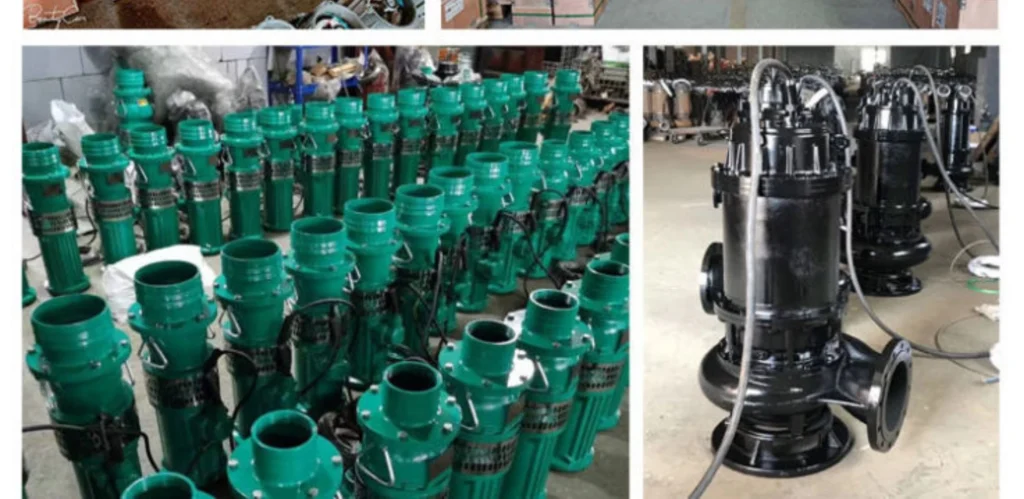
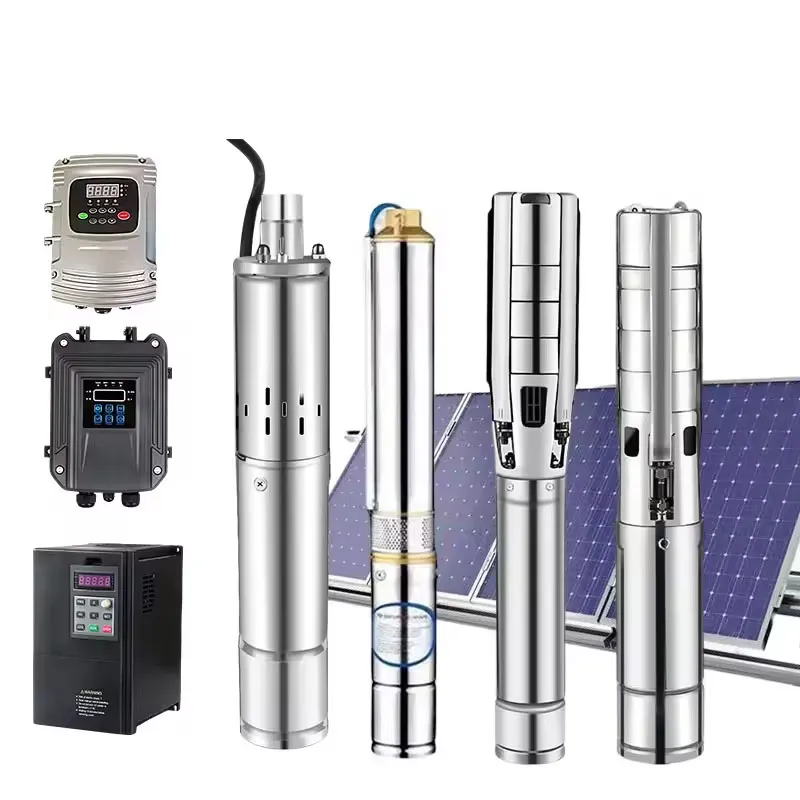
4.1 Submersible Irrigation Pump for Centre Pivot
Application: Deep well (depth > 20m), borehole, or riverbed installation where suction lift is impossible.
| Parameter | Industry Typical Range | Jingong Submersible Series |
|---|---|---|
| Flow Rate | 50-1200 m³/h | SP Series: 30-1500 m³/h |
| TDH | 20-300 m | Max 350 m |
| Motor Power | 5.5-100 HP | 5.5-125 HP |
| Efficiency | 70-85% | Up to 87% |
Advantages: No priming required, low friction losses (short discharge path), 24/7 operation, protected from weather and vandalism.
Limitations: Requires adequate well yield and casing diameter; difficult to service (requires pulling pump from well).
👉 : Explore Jingong Submersible Irrigation Pump Series →
4.2 Land/Surface Irrigation Pump for Centre Pivot
Application: Surface water intake from lakes, canals, reservoirs; large flat farmland.
| Parameter | Industry Typical Range | Jingong Land Pump Series |
|---|---|---|
| Flow Rate | 30-2000 m³/h | LP Series: 20-2500 m³/h |
| TDH | 10-80 m | Max 95 m |
| Speed | 1200/1800/3600 RPM | All three available |
| Suction Lift | < 20 ft (6 m) | Max 7 m |
Advantages: Easy maintenance (accessible components), large flow at moderate head, ideal for flood/furrow recharge and pivot combos.
Best for: Engineering-scale farms, cooperative irrigation districts.
👉 : Explore Jingong Land/Surface Pump Series →
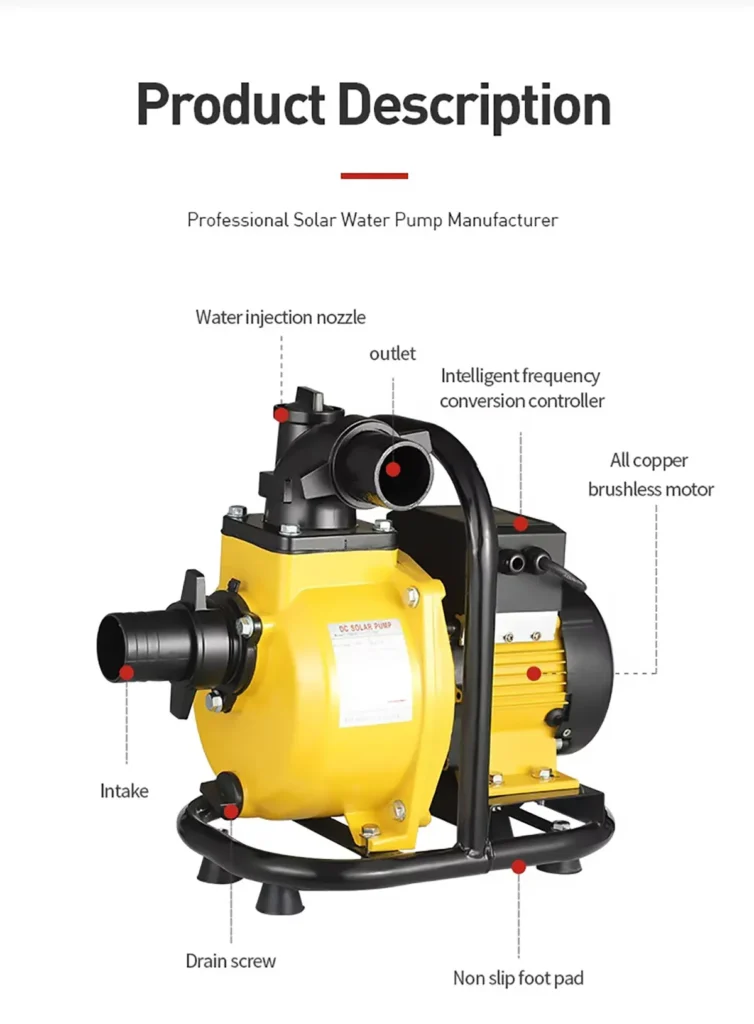
4.3 Solar Irrigation Pump for Centre Pivot
Application: Off-grid farms, remote agricultural zones, sustainable irrigation projects.
The Asian Development Bank highlights solar-powered irrigation as “a promising alternative to diesel-based pumping systems” in areas lacking grid electricity. As an eco-conscious Irrigation Pump manufacturer, Jingong Technology’s solar division delivers cutting-edge solutions:
| Parameter | Jingong Solar Series Capability |
|---|---|
| PV Array Capacity | 3 kWp – 1.2 MWp |
| Flow Rate | 3-1000 m³/day |
| TDH Range | 10-300 m |
| Pump Type Compatibility | Submersible & Surface Centrifugal |
| MPPT Controller Efficiency | 96-99% |
| Design Lifespan | 20-25 years (Panel Rated) |
Real Project Insight: A recent solar pumping station project in Panzhihua, China achieved a 100 m³/h design flow with a 1.2 MWp PV capacity. Farmers reported cost savings of $110-$210 per acre annually compared to diesel pumping.
Advantages: Zero fuel cost, automatic operation (MPPT tracking), no batteries required (water storage replaces batteries), 20+ year lifespan.
👉 : Explore Jingong Solar Irrigation Pump Solutions →
4.4 Diesel/Gasoline Irrigation Pump for Centre Pivot
Application: Mobile emergency irrigation, no-electricity-field scenarios, backup power systems.
| Parameter | Jingong Diesel/Gasoline Series |
|---|---|
| Flow Rate | 20-800 m³/h |
| TDH | 10-100 m |
| Engine Power | 10-200 HP |
| Fuel Type | Diesel / Gasoline |
| Mobility | Trailer-mounted / Skid-mounted |
Advantages: Fully mobile, instant startup, completely independent of grid infrastructure, ideal for emergency drought response.
Consideration: Higher OPEX (fuel cost); best paired with solar as primary + diesel as secondary (hybrid system).
👉 : Explore Jingong Diesel/Gasoline Pump Series →
💡 Irrigation Pump manufacturer Recommendation: Hybrid Systems
For most large-scale centre pivot farms, we advocate for a hybrid approach—Solar pump as the primary driver (zero OPEX) + Diesel/gasoline pump as a reliable backup. This dual-system strategy has been successfully deployed by our Irrigation Pump manufacturer team in challenging climates across Africa and Southeast Asia, ensuring 100% irrigation uptime.
5: Step-by-Step Sizing & Matching Calculation Guide
Step 1: Confirm Pivot System Basic Parameters
| Parameter | Method of Determination |
|---|---|
| Pivot length | Measure field radius from pivot point |
| Field area | π × r² (3.14 × radius²) |
| Nozzle type & size | Per sprinkler manufacturer spec sheet |
| Operating pressure required | LESA/LEPA/standard per Module 2.3 |
Step 2: Calculate Required System Flow Rate
Scientific Formula: Q (GPM) = (Crop ETc × Area × 0.226) ÷ Operating Hours
Practical Rule of Thumb: Reference the pivot length flow table from Module 2.1. Our Irrigation Pump manufacturer team typically uses the simplified benchmark: ~2.5 GPM per acre for a ¼-mile pivot.
Step 3: Calculate Total Dynamic Head (TDH)
TDH = Static Head + Friction Loss + Operating Pressure + Elevation Change
Detailed Example:
• Static Head: 50 ft (well depth + pump outlet height)
• Friction Loss: 25 psi = 57.75 ft
• Operating Pressure: 20 psi = 46.2 ft
• Elevation Change: 10 ft
Total TDH = 50 + 57.75 + 46.2 + 10 = 163.95 ft ≈ 164 ft
Step 4: Select Matching Pump Type & Model
Based on calculated TDH and required flow rate:
- TDH < 80 ft & Moderate Flow → Surface/Land Pump
- TDH 80-300 ft & Deep Well Source → Submersible Pump
- Off-grid Location → Solar Pump
- Mobile/Emergency Need → Diesel/Gasoline Pump
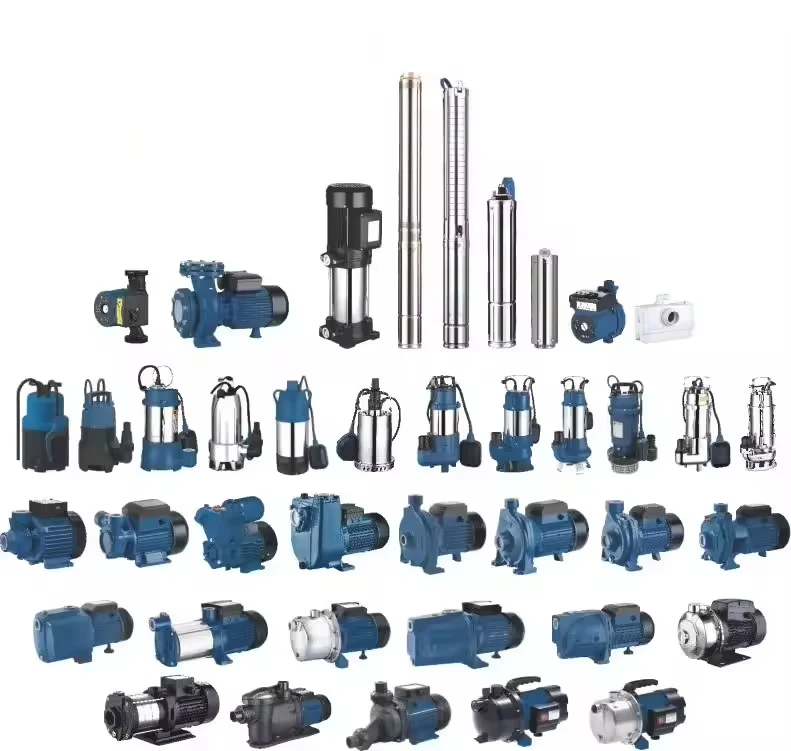
Our Irrigation Pump manufacturer catalog offers 200+ models covering all these scenarios. We verify each selection against the specific pump performance curve.
Step 5: Verify Pump Curve & System Curve Consistency
Plot both curves on the same graph. The intersection must fall within 80-110% of BEP. If not, repeat Step 4 with an adjusted impeller trim or a different model frame size.
Real Farm Calculation Case Study
| Farm Parameter | Value |
|---|---|
| Location | Texas, USA (Cotton Farm) |
| Pivot length | ¼ mile (1320 ft) |
| Field area | 128 acres |
| Water source | Deep well, depth 60 m |
| Required flow | 800 GPM (182 m³/h) |
| Calculated TDH | 176 ft (53.6 m) |
| Pump selected by our Irrigation Pump manufacturer | Jingong SP-200-150 submersible, 60 HP |
| Result | BEP at 800 GPM = 78% efficiency ✅ |
| Energy savings vs. mismatched pump | 32% reduction in power cost |
6: Common Mismatch Problems & Troubleshooting

6.1 Low Pressure & Uneven Water Distribution
Causes: Oversized mainline friction loss (>10 psi for ¼-mile system), undersized pump head relative to TDH, worn impeller or clogged intake screen, nozzle wear increasing flow demand.
Solution from your Irrigation Pump manufacturer: Re-calculate TDH with current conditions. Upsize mainline (use telescoping pipe design). Replace worn components. Upgrade pump head. Install pressure regulators to compensate for elevation variations.
6.2 Insufficient Flow & Low Irrigation Coverage
Causes: Depleted well yield, undersized pump, air leaks in suction line, clogged filter.
Fix: Perform a well yield test. Check suction line integrity. Clean filters. Consult your Irrigation Pump manufacturer for impeller upgrade options.
6.3 Excessive Pressure & Sprinkler Damage
Causes: Pump head exceeds system requirement, absence of pressure regulation, thermal expansion in closed systems.
Fix: Install pressure relief valve. Use VFD to modulate pump speed. Trim impeller 10-30%. Our Irrigation Pump manufacturer team recommends maintaining operating pressure within ±10% of sprinkler design spec.
6.4 Pump Overheating & Energy Waste from Mismatch
Causes: Running too far left/right of BEP, cavitation from excessive suction lift (>15 ft), motor overload.
Fix: Re-select pump closer to BEP. Reduce suction lift below 15 ft. Install VFD for variable frequency control. Note: Energy waste from mismatch can reach 30-40%.
6.5 Seasonal Pressure/Flow Adjustment
| Season | Water Demand Change | Pump Adjustment |
|---|---|---|
| Dry Season | +30-50% flow needed | Increase pump speed via VFD, ensure well yield supports demand |
| Wet Season | -20-40% flow needed | Reduce speed, prevent over-flow and nutrient leaching |
7: Industry Standard & Efficiency Optimization

7.1 International Centre Pivot Irrigation Pump Parameter Standards
As a responsible Irrigation Pump manufacturer, Jingong Technology adheres strictly to ISO 9906 (Rotodynamic pumps — Hydraulic performance acceptance tests) and ASABE (American Society of Agricultural and Biological Engineers) standards. We guarantee our pump efficiency tolerances within ±3% of published curves.
7.2 Energy-Saving Optimization for Solar/Diesel/Submersible Pump Matching
Optimizing the pump-motor-drive combination is crucial. For solar pumps, we utilize Maximum Power Point Tracking (MPPT) algorithms to maximize water output under variable sunlight. For diesel setups, we optimize engine-to-pump RPM ratios to avoid “over-driving” the pump. Data from our Irrigation Pump manufacturer R&D center shows optimized systems reduce Specific Energy Consumption (kWh/m³) by 15-25%.
7.3 High-Efficiency Matching Tips for Large-Scale Farm Pivot Systems
- Zoned Pressure Management: For long spans, use pressure regulators to maintain consistent nozzle pressure despite elevation changes.
- Variable Frequency Drives (VFDs): Essential for adapting to varying crop water requirements throughout the growing season.
- Smart Controls: Integrate soil moisture sensors and weather stations to automate pump operation, preventing unnecessary runtime.
7.4 Service Life Extension via Accurate Flow & Pressure Matching
Running a pump in its “Preferred Operating Region” (POR) significantly extends its life. Continuous operation outside this zone causes radial thrust on the impeller, leading to premature bearing and mechanical seal failure. Accurate matching is not just an efficiency play; it is an asset protection strategy recommended by every expert Irrigation Pump manufacturer.
8: FAQ & User Pain Point Answers

Q1: What pressure is required for centre pivot irrigation?
A: It depends entirely on your sprinkler package. LEPA systems operate efficiently at 4-8 psi, while standard impact sprinklers require 15-25 psi. You must also add the pressure lost to friction and elevation. Always consult a qualified Irrigation Pump manufacturer for precise calculations.
Q2: What size pump do I need for my centre pivot?
A: Size is determined by combining Flow (GPM) and Total Dynamic Head (TDH). A ¼-mile pivot typically requires 600-900 GPM. However, the horsepower depends on how hard the pump must work to push that water (the TDH). Refer to Module 5 for the step-by-step sizing guide, or contact Jingong Technology for a free analysis.
Q3: Can solar pump be used for centre pivot irrigation?
A: Absolutely. Modern solar pumping technology is highly mature. With properly sized PV arrays and MPPT controllers, solar pumps can drive high-capacity submersible and surface pumps suitable for centre pivots. They are the preferred choice for off-grid farms seeking to eliminate fuel costs. Jingong, as your Irrigation Pump manufacturer, provides turnkey solar solutions.
Q4: What causes low pressure in pivot irrigation system?
A: Common culprits include worn pump impellers, leaking pipes, clogged filters or nozzles, insufficient well yield (causing drawdown), or an improperly sized pump (not enough TDH). Systematic troubleshooting, as outlined in Module 6, is necessary.
Q5: Diesel vs solar pump for farm pivot irrigation: which is better?
A: Solar pumps offer lower long-term operating costs and environmental benefits but depend on sunlight. Diesel pumps offer independence from weather but incur high fuel expenses and maintenance. The optimal strategy advocated by our Irrigation Pump manufacturer experts is a “Solar-Diesel Hybrid” system, utilizing solar as the primary source and diesel as a reliable backup.
9: Product Selection & Custom Solution — Closing the Deal with Your Irrigation Pump Manufacturer
Technology serves a purpose only when applied correctly. Jingong Technology is more than just a producer of pumps; we are your partner in agricultural water management. As a seasoned Irrigation Pump manufacturer, we provide value-added services that extend beyond the hardware:
9.1 Custom Flow & Pressure Pump Solution for Different Pivot Farms
There is no “one-size-fits-all” pump. Whether you manage a vast flat farm in Eastern Europe or a terraced slope in South America, our engineers combine topographic maps, soil reports, and crop data to tailor the optimal hydraulic solution for your specific pivot system.
9.2 Four Series Pump Full Parameter Matching List
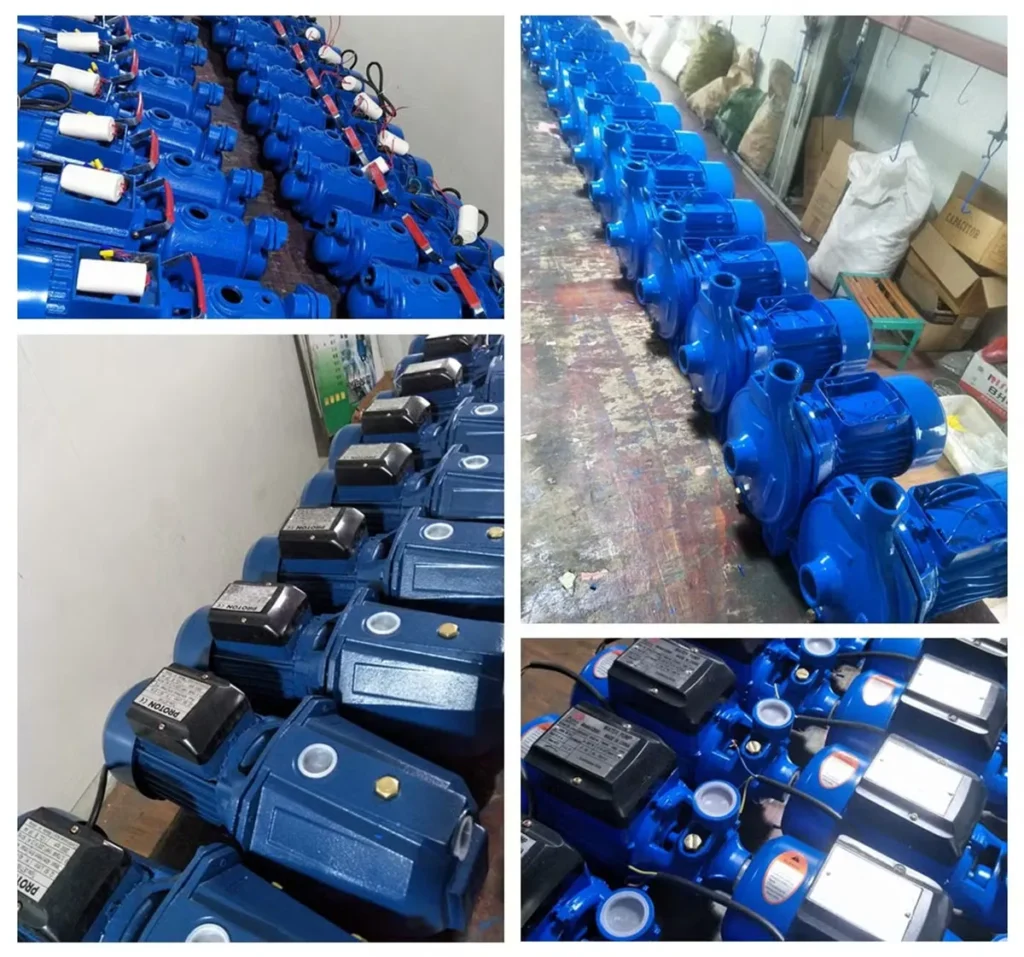
We maintain a comprehensive product line compliant with international standards. Whether you require a high-head stainless steel submersible pump for a deep well, a large-flow cast iron double-suction pump for drainage and irrigation, or a high-efficiency permanent magnet solar pump, Jingong Technology—your professional Irrigation Pump manufacturer—delivers quality you can trust.
9.3 Free Technical Calculation & Pump Selection Service
We understand that hydraulic calculations can be daunting. Therefore, we offer complimentary TDH calculation and pump selection services to our global clientele. Simply provide your basic field parameters, and our Irrigation Pump manufacturer specialists will respond with a detailed proposal and quotation within 24 business hours.
9.4 Global Farm Project Case Display
Our products have been exported to Southeast Asia, the Middle East, Africa, Europe, and the Americas. From cotton fields in Uzbekistan to rice paddies in Nigeria, Jingong pumps are contributing to global food security. We invite you to review our case studies to see tangible water savings and yield improvement data.
Ready to Optimize Your Irrigation?
Stop letting mismatched pumps drain your profits. Contact Jingong Technology—your trusted Irrigation Pump manufacturer—today.
Disclaimer: This guide is published by the Engineering Department of Jingong Technology for educational purposes. While every effort has been made to ensure accuracy, site-specific conditions vary. For critical irrigation system design, always consult with a licensed professional or your qualified Irrigation Pump manufacturer.

0 Comments