
Written by the engineering team at Jingong Technology — a global Surface Pump manufacturer producing centrifugal surface pumps, self-priming pumps, submersible pumps, solar surface pumps, and gasoline / diesel water pumps for irrigation, mining, municipal, and off-grid applications. This Surface Pump Troubleshooting guide consolidates 20+ years of field data from overseas installations across agriculture, industrial, and remote-power sites.
1. Introduction: Why Surface Pump Troubleshooting Matters
“No prime” or “loss of prime” is the single most reported field failure for any Surface Pump manufacturer serving agriculture, mining, and municipal water sectors. When a surface-mounted centrifugal or self-priming pump fails to draw water, the entire operation stops — irrigation cycles stall, processing lines go idle, and mining dewatering halts. Effective Surface Pump Troubleshooting is therefore not a “nice-to-have” skill; it is a frontline requirement for every engineer, farm manager, and procurement officer specifying equipment from a Surface Pump manufacturer.
As an established Surface Pump manufacturer, Jingong Technology sees a recurring pattern: more than 85% of “pump is broken” reports are actually system-level issues — air leaks, foot valve backflow, excessive suction lift — not pump defects. This guide exists to give field engineers a standardized Surface Pump Troubleshooting protocol that distinguishes true mechanical failure from installation or maintenance errors.
Scope of this guide:
- Electric centrifugal & self-priming surface pumps
- Solar-powered surface pumps
- Gasoline & diesel engine-driven surface pumps
- Contrast with submersible pumps (which do not require priming)
Every Surface Pump Troubleshooting procedure below reflects real-world field data collected by our engineering team across thousands of installations. When you purchase from a Surface Pump manufacturer with genuine field experience, you gain access to this operational intelligence — not just hardware.
⚠️ Safety First: Never run a surface pump dry for more than 30–60 seconds. Dry running destroys mechanical seals and overheats the motor. Proper Surface Pump Troubleshooting always begins with a controlled power-off inspection.
2. How Surface Pump Priming Works (Engineering Basics)
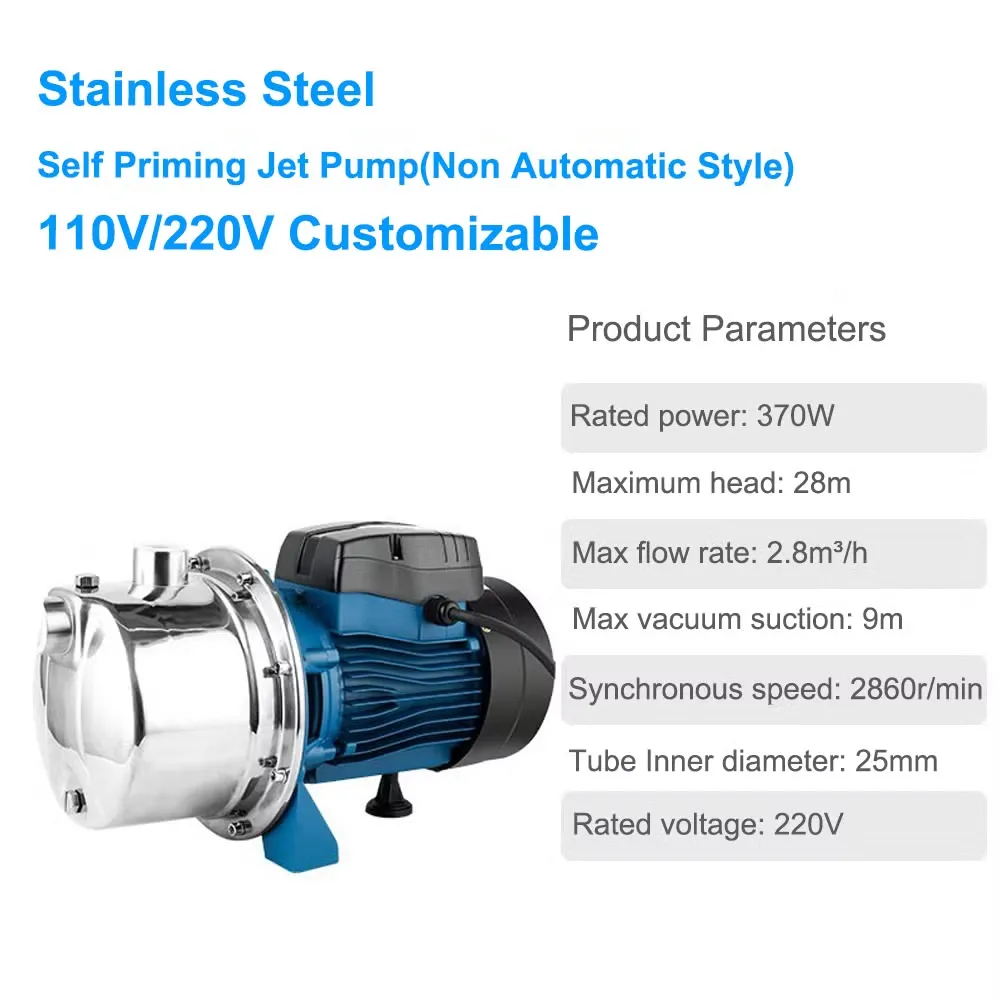
To master Surface Pump Troubleshooting, you must first understand the physics. A surface pump sits above the water source. It does not “suck” water in the literal sense; instead, it creates a localized vacuum at the impeller eye. Atmospheric pressure then pushes water up the suction pipe to fill that vacuum.
2.1 The Priming Cycle
- The pump casing and suction line must be completely filled with liquid.
- The impeller spins, expelling air out of the casing through the discharge or a bleed port.
- A vacuum forms at the impeller eye.
- Atmospheric pressure drives water up the suction line.
- The foot valve prevents backflow when the pump stops, preserving the prime.
Any break in this chain is a target for Surface Pump Troubleshooting. As a Surface Pump manufacturer, we emphasize to every client: a centrifugal pump cannot pump air. If air enters the suction line, the prime is lost. This single principle explains 80% of all field failures our Surface Pump Troubleshooting team encounters.
2.2 Why Submersible Pumps Don’t Have Priming Issues
Submersible pumps are submerged in the water source, eliminating suction lift entirely. They are flooded from the start. This is why a reputable Surface Pump manufacturer will often recommend a submersible solution when suction lift exceeds 8 meters — no amount of Surface Pump Troubleshooting can compensate for a fundamentally mismatched installation.
2.3 Suction Lift Limits Every Surface Pump Troubleshooting Engineer Must Know
Theoretical maximum suction lift is ~10.3 meters (34 ft) at sea level, but practical limits for a Surface Pump manufacturer‘s standard centrifugal units are:
| Pump Type | Practical Suction Lift | Notes |
|---|---|---|
| Standard centrifugal surface pump | ≤ 7 m | Reduced by friction losses |
| Self-priming surface pump | ≤ 7.5 m | Requires casing filled initially |
| Jet surface pump | ≤ 25 m (deep well jet) | Uses ejector assembly |
| Submersible pump | N/A | No suction lift limitation |
When Surface Pump Troubleshooting reveals that your installation exceeds these numbers, the solution is not a bigger pump — it’s a different pump type. Consult your Surface Pump manufacturer for a hydraulic recalculation (Total Dynamic Head, NPSH available vs. required).
3. 5-Minute On-Site Surface Pump Troubleshooting Checklist
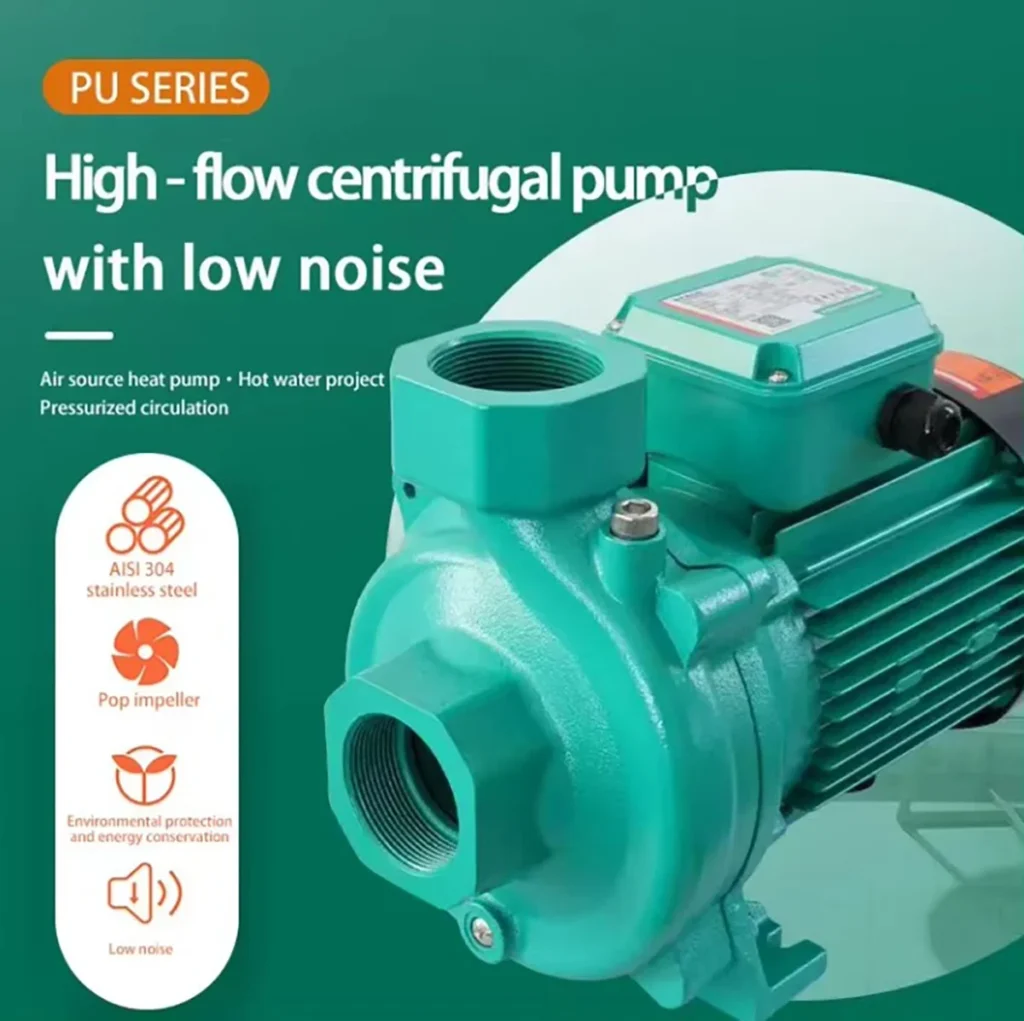
Before diving into deep diagnostics, every Surface Pump Troubleshooting procedure should start with this rapid triage. As a Surface Pump manufacturer, we train our field service engineers to complete this checklist in under 5 minutes:
✅ Quick Surface Pump Troubleshooting Triage
- 1. Is the pump casing full of water? Remove the priming plug. If empty, refill completely. This is the #1 overlooked step in Surface Pump Troubleshooting.
- 2. Are all suction valves fully open? A half-closed gate valve silently kills prime. During Surface Pump Troubleshooting, verify each valve handle position physically — don’t trust markings.
- 3. Is the foot valve submerged? If the water source level dropped, the foot valve may be exposed. Your Surface Pump manufacturer should have specified a minimum water level line during procurement.
- 4. Is the suction line visibly cracked or disconnected? Look for hairline cracks at unions, especially on PVC. Air leaks are invisible during operation but deadly to prime.
- 5. Is the strainer clogged? Lift the foot valve (if accessible) and inspect the integrated screen. A clogged strainer is a frequent finding in Surface Pump Troubleshooting for agricultural sites.
- 6. Is the suction lift within specification? Measure vertical distance from water surface to pump inlet. Exceeds 7–8m? That’s your answer.
- 7. Power check (electric pumps): Voltage within ±10% of rated? Phase imbalance >2% on 3-phase? Solar pumps: array voltage > pump startup threshold under current irradiance?
- 8. Engine check (gasoline/diesel): RPM at rated speed? Fuel supply adequate? Governor functioning?
Pro Tip from a Surface Pump manufacturer: 70% of Surface Pump Troubleshooting calls we receive are resolved at step 1 or 4. Always check casing fill and suction leaks before assuming mechanical failure.
4. Step-by-Step Surface Pump Troubleshooting (7 Root Causes)
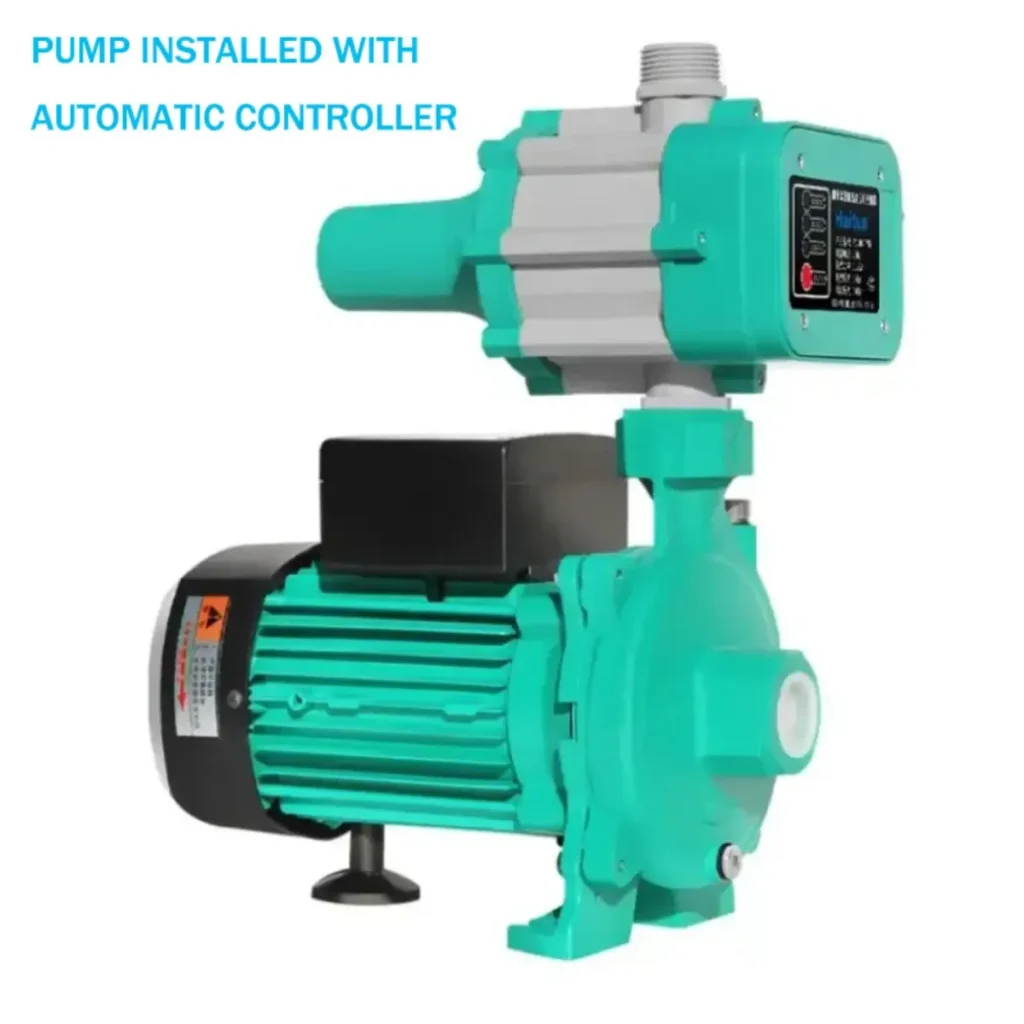
This is the core of professional Surface Pump Troubleshooting. Work through these layers from easiest/most-likely to hardest/least-likely. A senior Surface Pump manufacturer engineer follows this exact sequence in the field.
4.1 Air Leakage in the Suction Line (≈45% of all cases)
Symptom: Pump runs, but no water; bubbling at suction joints; prime lost shortly after shutdown.
Cause: Loose unions, cracked pipe, dried O-rings, failed thread sealant, porous flange gaskets.
Surface Pump Troubleshooting Action:
- Shut off power. Pressurize the suction line with air (0.5–1 bar) and apply soapy water to all joints. Bubbles = leaks.
- Tighten all unions to spec torque. Never over-tighten PVC — it cracks.
- Replace flattened or cracked O-rings with genuine parts from your Surface Pump manufacturer.
- Re-seal threaded fittings with PTFE tape + thread sealant (not one or the other).
- For buried suction lines, a pressure decay test is mandatory. If you cannot locate the leak, call a professional — repeated dry starts will destroy the pump.
4.2 Air Lock / Trapped Air Inside Pump Housing (≈15%)
Symptom: Pump was primed, but after maintenance or source-tank refill, it won’t draw. Sound is normal but no flow.
Cause: High points in suction piping trap air pockets. The impeller churns air but cannot expel it.
Surface Pump Troubleshooting Action:
- Open the casing bleed/priming port. Pour water until it overflows steadily — no bubbles.
- Close the port, start the pump, and keep the discharge valve closed for 10–15 seconds to build pressure faster.
- Eliminate high points in the piping. Suction line should slope continuously upward toward the pump with no “humps.”
- If air keeps returning, install an automatic bleed valve at the highest point. A quality Surface Pump manufacturer includes this in their installation manual.
4.3 Foot Valve / Check Valve Failure (≈12%)
Symptom: Pump primes initially, runs fine, but after shutdown the prime is gone. Repeated re-priming required every start.
Cause: Debris lodged between disc and seat; worn spring; warped seal; broken hinge on swing-type foot valve. The foot valve’s job is to hold the water column when the pump stops. When it fails, water drains back, and your next Surface Pump Troubleshooting session begins from zero.
Surface Pump Troubleshooting Action:
- Access the foot valve (if in a well or buried, call a pro).
- Disassemble and clean debris from the strainer and disc.
- Inspect the disc seal. If worn, replace the entire foot valve — never “repair” a foot valve seal with makeshift materials. Your Surface Pump manufacturer supplies OEM replacements.
- For wells deeper than 20m, consider a swing-check valve installed above ground near the pump as a secondary retention device.
“We’ve seen more pumps destroyed by cheap foot valves than almost any other suction-side failure. A high-pressure-drop foot valve strangles the pump before fluid even reaches the impeller.” — Field Engineering Note, Surface Pump manufacturer best practice
4.4 Clogged Suction Strainer & Pipeline Blockage (≈10%)
Symptom: Slow prime, weak flow, pump noisy but not fully primed. Suction lift appears normal.
Cause: Sand, silt, algae, weeds, plastic wrap, aquatic life, or pipe scale blocking the strainer or interior of the suction pipe. Collapsed hose liner (common on flexible suction hoses) mimics this exactly.
Surface Pump Troubleshooting Action:
- Remove and clean the foot valve strainer. For standard centrifugal pumps, a 3mm mesh is typical; heavier debris requires 5mm mesh.
- Inspect flexible suction hoses for internal collapse. Squeeze along the length; a soft spot indicates liner failure.
- Flush the suction line with clean water under pressure.
- Install a secondary Y-strainer before the pump inlet for high-debris sources. Your Surface Pump manufacturer can specify the correct mesh size for your fluid.
4.5 Excessive Suction Lift & Improper Installation (≈8%)
Symptom: Pump never primes no matter how many times you try. No leaks found. Foot valve is perfect.
Cause: The vertical distance from water surface to pump inlet exceeds the pump’s capability. Long horizontal runs, too many elbows, and high points compound the problem by increasing friction losses.
Surface Pump Troubleshooting Action:
- Calculate Total Static Suction Lift = vertical rise + equivalent length friction loss.
- If > 7m for standard centrifugal: relocate the pump closer to the source, or switch to a deep-well jet pump or submersible.
- Reduce elbow count. Each 90° elbow adds ~0.5m of equivalent friction loss.
- Shorten the suction line. As a Surface Pump manufacturer, we recommend suction runs ≤ 10 pipe-diameters-equivalent wherever possible.
- Upsize the suction pipe one diameter. Going from 2″ to 3″ suction dramatically reduces friction loss.
4.6 Mechanical Failure: Impeller, Seal, Bearings (≈6%)
Symptom: Pump primes but delivers low flow/pressure. Or: pump was run dry, now won’t prime. Or: loud grinding noise.
Cause: Worn impeller vanes (erosion from abrasive media), damaged mechanical seal (allows air ingress under vacuum), seized bearings, cavitation pitting.
Surface Pump Troubleshooting Action:
- De-energize and lock out power. Disassemble the pump casing per your Surface Pump manufacturer‘s service manual.
- Inspect impeller for worn vanes, debris wrap, or cavitation pits. Minor pits can be welded; severe erosion = replace.
- Check mechanical seal faces. Scored faces = air leaks under suction vacuum = chronic prime loss. Replace as a set (both rotating and stationary faces).
- Spin the shaft by hand. Roughness or end-play indicates bearing failure — replace bearings before reassembly.
- Never reuse a gasket. Always install fresh gaskets/OEM seal kits from your Surface Pump manufacturer.
4.7 Power & Drive Adaptation Failure (≈4%, but pump-type specific)
This is where Surface Pump Troubleshooting diverges by energy source. A leading Surface Pump manufacturer must address each variant:
Electric Surface Pump Power Issues
- Voltage below 90% of rated → motor can’t reach speed → insufficient vacuum → no prime.
- Single-phasing on 3-phase → motor hums but doesn’t spin.
- Capacitor failure on single-phase → motor won’t start, just buzzes.
- Fix: Verify voltage under load (not just at rest). Test capacitors. Check phase sequence.
Solar Surface Pump Power Issues
- Array voltage below pump startup threshold (typically 1.2× rated DC voltage).
- Partial shading on PV panels → voltage collapse under load.
- MPPT controller misconfigured → pump sees insufficient power → won’t spin up to priming speed.
- Fix: Measure array open-circuit voltage (Voc) and short-circuit current (Isc). Compare to pump nameplate. A competent Surface Pump manufacturer will provide a solar-sizing spreadsheet specific to your latitude and irradiance.
Gasoline / Diesel Surface Pump Power Issues
- Engine RPM below rated → impeller speed too low → insufficient vacuum.
- Fuel starvation (clogged fuel filter, water in diesel) → engine misfires under load.
- Governor failure → engine bogs down when pump loads up.
- Fix: Verify governed RPM with a tachometer. Replace fuel filters. Drain fuel water separators. For sustained priming, throttle must be set to HIGH (max RPM) during the priming cycle, then can be reduced for running.
5. Surface Pump Troubleshooting by Pump Type
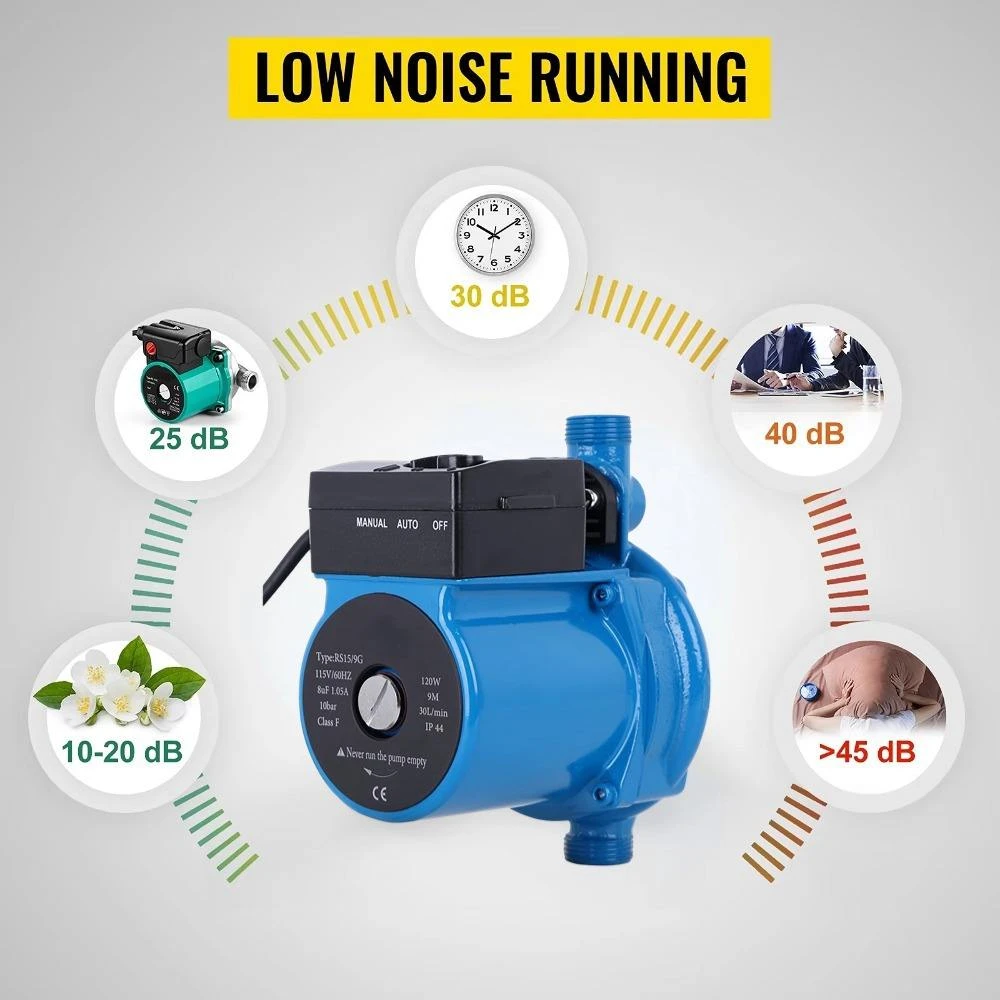
Generic Surface Pump Troubleshooting guides ignore the critical differences between drive types. As a full-spectrum Surface Pump manufacturer, Jingong Technology engineers this section specifically for your pump category.
5.1 Electric Surface Pump Troubleshooting
Key failure modes unique to electric surface pumps:
- Dry-run sensor tripping: Modern motors have dry-run protection. If the sensor is faulty, the pump shuts down immediately even when primed. Bypass test (temporarily) to confirm.
- VFD / soft starter issues: Variable frequency drives ramp up slowly. If the ramp time exceeds the pump’s prime-holding window, the pump loses prime before reaching speed. Set VFD acceleration time to ≤ 3 seconds for priming.
- Capacitor start failure (single-phase): The start capacitor provides the initial torque to spin the impeller fast enough to create vacuum. A failed start capacitor = pump hums but never primes.
- Thermal overload from repeated priming attempts: Each failed prime attempt dumps heat into the motor windings. After 3–4 attempts, the thermal protector trips. Wait 30 min for cooldown before retrying.
Surface Pump Troubleshooting for electric pumps always starts at the electrical panel, not the pump.
5.2 Solar Surface Pump Troubleshooting
Solar surface pumps present unique Surface Pump Troubleshooting challenges because their power source is variable by nature:
- Low irradiance at startup: Early morning or cloudy conditions may not provide enough voltage to spin the pump to priming RPM. Solution: schedule automatic startup for peak solar hours, or add battery buffer.
- PV array mismatch: Too few panels in series → voltage too low. Too many → over-voltage trip. Your Surface Pump manufacturer specifies exact panel configuration (e.g., “4 × 400W, 2S2P”).
- Controller MPPT lockout: Some MPPT controllers disable output if they detect a pump fault. A single prime failure can lock the controller. Power-cycle the controller (disconnect PV + battery for 30 sec) to reset.
- Dust on panels: Reduces Voc by 10–25%. In arid agricultural zones, weekly panel cleaning is part of routine Surface Pump Troubleshooting.
Jingong Technology, as your Surface Pump manufacturer, provides a solar surface pump troubleshooting flowchart in every manual, mapping LED blink codes to specific faults.
5.3 Gasoline / Diesel Surface Pump Troubleshooting
Engine-driven pumps are the workhorses of off-grid and emergency Surface Pump Troubleshooting scenarios:
- Prime loss due to engine RPM droop: Under load, a worn governor allows RPM to sag below the threshold needed to maintain vacuum. Result: pump primes at no-load but loses prime the instant water demand increases. Fix: rebuild governor, or replace engine.
- Exhaust backpressure affecting carburetor: A clogged muffler or restricted exhaust reduces engine power → insufficient pump speed → prime loss. Check exhaust flow.
- Altitude derating: Above 1,500m, naturally aspirated engines lose 15–20% power. The pump may not reach priming speed. Upsize the engine or use turbocharged version. Your Surface Pump manufacturer provides altitude correction curves.
- Fuel volatility: Winter-grade gasoline in summer, or summer-grade in winter, causes vapor lock → fuel starvation → engine bogs → pump loses prime. Use season-appropriate fuel.
5.4 Submersible Pump Contrast (Why They Don’t Need Priming)
For completeness in this Surface Pump Troubleshooting guide: submersible pumps are flooded by design. They sit below the water surface, eliminating suction lift entirely. There is no prime to lose. If your application has a suction lift > 8m, a knowledgeable Surface Pump manufacturer will steer you to a submersible or deep-well jet solution rather than fighting physics with a surface pump. This is a critical Surface Pump Troubleshooting insight that saves clients thousands in misapplied equipment.
6. Common Priming Mistakes Engineers Make

From a Surface Pump manufacturer‘s perspective, the most expensive Surface Pump Troubleshooting calls are those where the “repair” made things worse. Avoid these:
❌ Mistake #1: Running the Pump Dry to “Force It to Prime”
Each minute of dry running can destroy a mechanical seal. The heat generated by an impeller spinning in air (with no water to cool and lubricate) warps the seal faces permanently. A 5-minute dry-run = a $50 seal replacement + $200 in labor. Proper Surface Pump Troubleshooting mandates: never run dry > 60 seconds total across all attempts.
❌ Mistake #2: Ignoring Suction Lift and Adding a “Bigger Pump”
Procurement often says: “Just send a bigger pump.” But if your suction lift is 9m and the pump’s limit is 7m, no pump size will fix it. The only Surface Pump Troubleshooting solution is relocating the pump, deepening the suction line, or switching to a jet/submersible. A responsible Surface Pump manufacturer will refuse to sell you a mismatched pump — we calculate TDH first.
❌ Mistake #3: Using Pipe Dope Instead of PTFE Tape + Dope on Suction Joints
Suction side operates under vacuum. Pipe dope alone shrinks and cracks under negative pressure, letting air in. Proper Surface Pump Troubleshooting sealing technique: PTFE tape (3 wraps, clockwise) + thin layer of anaerobic thread sealant on top. This combination expands slightly under vacuum, tightening the seal.
❌ Mistake #4: Reusing Old Gaskets and O-Rings
Every disassembly for Surface Pump Troubleshooting should include a fresh gasket kit from your Surface Pump manufacturer. Compressed fiber gaskets take a “set” and will never seal the same way twice. Cost of a gasket kit: $5–$20. Cost of a callback service visit: $300+. The economics are obvious.
❌ Mistake #5: Over-Tightening PVC Fittings
PVC gets brittle with age and UV exposure. Torque specs for PVC unions are low (hand-tight + 1/4 turn with channel locks). Over-tightening cracks the fitting, creating micro-leaks that defeat every Surface Pump Troubleshooting effort. Use a torque wrench for critical flanges: 20–30 N·m for DN80, 30–40 N·m for DN100.
❌ Mistake #6: Bypassing the Foot Valve
Some field mechanics, frustrated by foot valve debris issues, remove it entirely and rely on a check valve near the pump. This is catastrophic for Surface Pump Troubleshooting: the long water column drains back through the foot valve location, and the pump must re-prime a column of water equal to the full suction pipe length every single start. The foot valve MUST be at the bottom of the suction line, fully submerged, with integrated strainer.
❌ Mistake #7: Wrong Strainer Mesh Size
Too fine = rapid clogging = suction lift increases = prime loss. Too coarse = debris enters pump = impeller damage. A Surface Pump manufacturer specifies mesh based on pump clearance and fluid. For typical centrifugal surface pumps in irrigation: 3mm mesh. For trash pumps: 6–10mm. For clean municipal water: 1.5–2mm. Match your strainer to your fluid, not to a generic assumption.
7. Long-Term Prevention & Maintenance

The best Surface Pump Troubleshooting is the troubleshooting you never have to do. As a Surface Pump manufacturer, Jingong Technology recommends this maintenance cadence:
7.1 Daily (for continuous-duty industrial pumps)
- Listen for abnormal noise/vibration (early cavitation or bearing warning).
- Verify discharge pressure gauge reads within 5% of baseline.
- Check for wet spots around seals and flange joints.
- Solar pumps: visually confirm PV array is clean and unshaded.
- Engine pumps: check fuel level, oil level, and listen for governor stability under load.
7.2 Weekly
- Inspect suction line for new cracks, especially at unions and elbows.
- Verify foot valve strainer is not accumulating debris (if accessible).
- Test the pump’s auto-priming behavior: does it re-prime within 30 seconds of startup? If not, schedule a deep Surface Pump Troubleshooting session.
- Engine pumps: drain water from fuel separator. Check air filter condition.
7.3 Monthly
- Torque-check all suction flange bolts to spec.
- Measure and log suction lift vs. specification.
- Inspect mechanical seal faces for weeping (a few drops per hour is normal; a stream is not).
- Solar pumps: megger-test the motor windings for insulation resistance (>1 MΩ at 500V DC).
- Engine pumps: replace fuel filter, check spark plug (gasoline) or glow plug (diesel).
7.4 Quarterly / Seasonal
- Full disassembly and inspection of pump casing, impeller, wear rings, and mechanical seal.
- Pressure-decay test of the entire suction line (proof-test for micro-leaks).
- Calibrate the pressure switch and verify cut-in/cut-out pressures match spec.
- Winterization (for temperate climates): drain casing and suction line completely. A frozen pump casing is a total loss — no Surface Pump Troubleshooting can recover a cracked casing.
- Solar pumps: re-torque PV array mounting, check MC4 connector integrity, verify controller firmware is current.
7.5 Annual
- Replace mechanical seal proactively (even if not failing — it’s a wear item).
- Replace foot valve as preventative maintenance if the source is debris-heavy.
- Complete hydraulic recalculation: has the water source level dropped? Has pipe scaling reduced effective diameter? Your Surface Pump manufacturer should re-validate the original sizing.
- Engine pumps: valve adjustment, compression test, cooling system service.
Preventative Maintenance ROI: A $200 annual seal + foot valve replacement prevents a $1,500 emergency motor replacement. This is the financial argument every Surface Pump Troubleshooting guide should make explicit.
8. FAQs on Surface Pump Troubleshooting

Q1: Why does my surface pump keep losing prime after running fine for weeks?
A: Intermittent prime loss almost always points to a slow air leak on the suction side or a foot valve that’s beginning to weep. The leak is small enough that the pump can maintain prime under normal operation, but after shutdown, the slow air ingress over hours/days gradually displaces water in the casing. Classic Surface Pump Troubleshooting: perform a pressure-decay test on the suction line. If it holds pressure but still loses prime, replace the foot valve. If it fails the pressure test, find and seal the leak.
Q2: Can a clogged filter cause a pump to not prime?
A: Absolutely. A clogged suction strainer or inline filter creates excessive suction lift (the pump must pull harder to overcome the restriction). If the effective suction lift exceeds the pump’s capability, it cannot create enough vacuum to draw water past the clog, and priming fails. During Surface Pump Troubleshooting, always clean the strainer first — it’s a 5-minute fix vs. hours of chasing phantom leaks. A Surface Pump manufacturer will always list “clean strainer” as step one in their troubleshooting flow.
Q3: How do you prime a solar surface pump correctly?
A: Solar surface pump priming follows the same hydraulic principles but with a power-source twist:
- Ensure PV array voltage exceeds pump startup threshold (typically 1.2× rated DC voltage).
- Fill the pump casing completely via the priming port.
- Open the isolation valve on the suction line fully.
- Close the discharge valve (to reduce starting load).
- Allow the controller to spin up the pump as solar irradiance reaches sufficient level.
- Once flow is confirmed (listening for steady water movement), slowly open the discharge valve.
- If the pump stops due to cloud cover, repeat. A quality Surface Pump manufacturer programs their controller to auto-restart when voltage recovers.
Critical Surface Pump Troubleshooting note: never force-prime a solar pump by artificially boosting voltage beyond spec — you’ll burn the motor windings.
Q4: Is air leak the main cause of pump priming failure?
A: In our experience as a Surface Pump manufacturer, yes — approximately 45% of all Surface Pump Troubleshooting cases trace to suction-side air leaks. The remaining 55% distribute across foot valve failure (12%), air lock (15%), clogging (10%), excessive suction lift (8%), mechanical wear (6%), and power issues (4%). This is why every professional Surface Pump Troubleshooting protocol begins with leak detection.
Q5: What is the maximum suction lift for a surface pump?
A: Theoretical max is 10.3m at sea level (one atmosphere of pressure). Practical, reliable limits from a conservative Surface Pump manufacturer:
- Standard centrifugal surface pump: 7m (23 ft) — derated for friction losses
- Self-priming surface pump: 7.5m (25 ft)
- Deep-well jet surface pump: up to 25m (82 ft) using a two-pipe ejector
- Above 8m suction lift: switch to submersible or deep-well jet — no Surface Pump Troubleshooting trick can overcome physics
Altitude reduces these numbers: at 2,000m elevation, atmospheric pressure is ~78% of sea level, reducing usable suction lift proportionally. Your Surface Pump manufacturer provides altitude correction tables.
Q6: My diesel surface pump primes but loses prime under load. Why?
A: This specific Surface Pump Troubleshooting symptom is classic engine RPM droop. Under no load, the engine reaches rated RPM and the pump primes. When water flow starts, the pump imposes a load, and a worn governor or fuel delivery issue allows RPM to sag. Below a critical RPM threshold, the impeller can no longer maintain vacuum, and the prime collapses. Fix: rebuild/replace the governor, replace fuel filters, verify injector timing (diesel), or simply upsize the engine. A competent Surface Pump manufacturer will have already sized the engine with a 20% power margin precisely to avoid this.
Q7: Should I use a check valve instead of a foot valve?
A: No. A foot valve integrates TWO functions: backflow prevention AND debris filtration, and it’s positioned at the very bottom of the suction line where it belongs. An inline check valve near the pump prevents backflow but does NOT filter debris, and worse, it allows the entire water column between the check valve and the source to drain — meaning the pump must re-prime that entire volume on every start. From a Surface Pump Troubleshooting perspective, foot valves are superior in every scenario where the suction line is exposed to a raw water source. This is non-negotiable engineering practice at any reputable Surface Pump manufacturer.
9. Talk to a Surface Pump Manufacturer for Custom Solutions
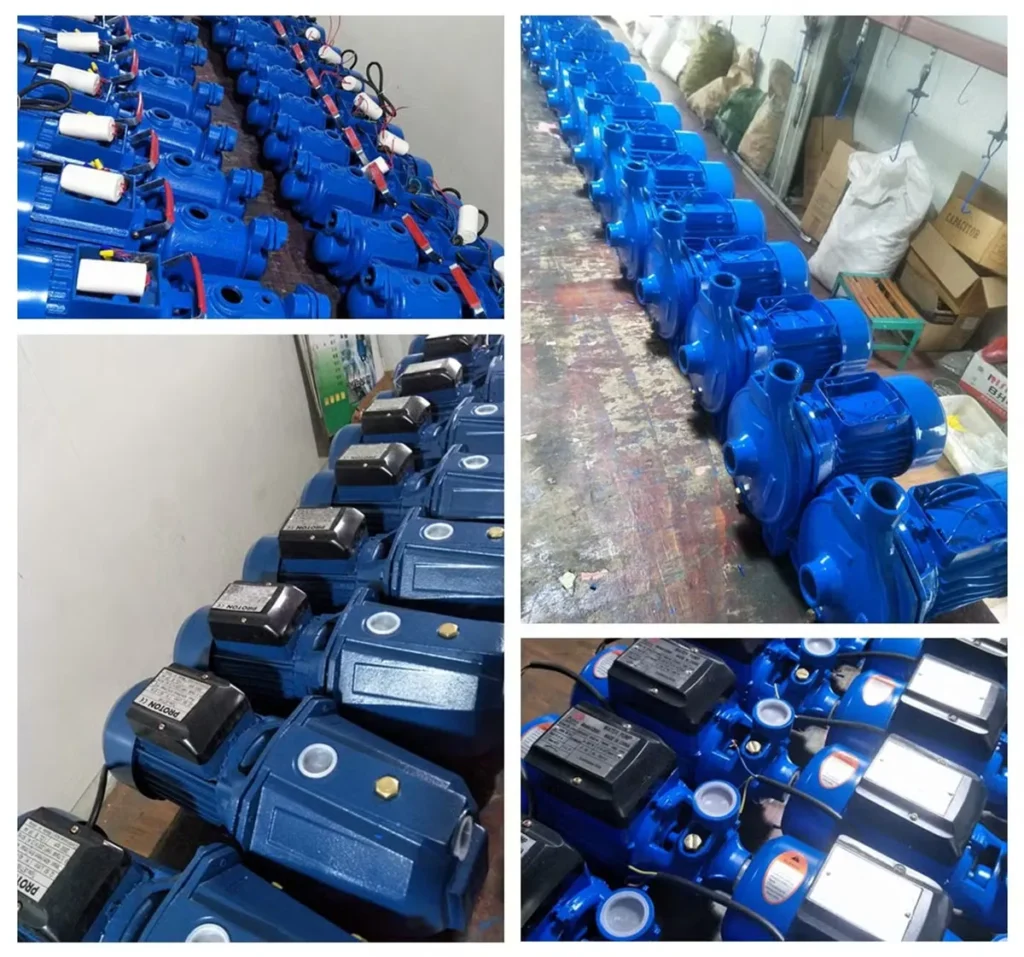
If your Surface Pump Troubleshooting efforts reveal that your current pump is mismatched to your application — excessive suction lift, wrong pump type, inadequate power source — it’s time to consult a Surface Pump manufacturer directly rather than continuing to fight the physics.
Jingong Technology is a leading Surface Pump manufacturer with two decades of engineering expertise across four product families:
- Centrifugal & Self-Priming Surface Pumps — for standard irrigation, industrial water transfer, and municipal supply up to 7m suction lift.
- Submersible Pumps — for deep wells, boreholes, and applications exceeding 8m suction lift. No priming required, ever.
- Solar Surface Pumps — DC brushless motor technology with MPPT controllers matched to your PV array and irradiance profile. Our Surface Pump Troubleshooting team sizes every system to your exact latitude and seasonal solar resource.
- Gasoline & Diesel Surface Pumps — portable, off-grid workhorses for emergency dewatering, remote agriculture, and construction sites. Engineered with 20% power margin to eliminate RPM-droop prime loss.
As your Surface Pump manufacturer, we don’t just sell hardware — we provide:
- Hydraulic calculation & system design (TDH, NPSH, suction lift validation)
- OEM spare parts with global shipping from our warehouses
- Field Surface Pump Troubleshooting support via video call with our senior engineers
- Custom pump configurations for extreme environments (high altitude, high temperature, abrasive media, corrosive fluids)
- 2-year warranty on all manufacturing defects, with optional extended coverage
Whether you need a single replacement pump or a fleet for a major agricultural project, our Surface Pump Troubleshooting and engineering teams are ready to help. Contact Jingong Technology, your trusted Surface Pump manufacturer, for a free system assessment and quote.
📧 Email: [email protected]
🌐 Website: https://www.jgpowertech.com/
📞 WhatsApp: +86 15888920959
This Surface Pump Troubleshooting guide is maintained by the engineering department of Jingong Technology, a global Surface Pump manufacturer serving clients in 60+ countries. For the latest version with regional suction lift corrections and pump-specific troubleshooting matrices, visit our technical resource center or contact our engineering team directly.

0 Comments