
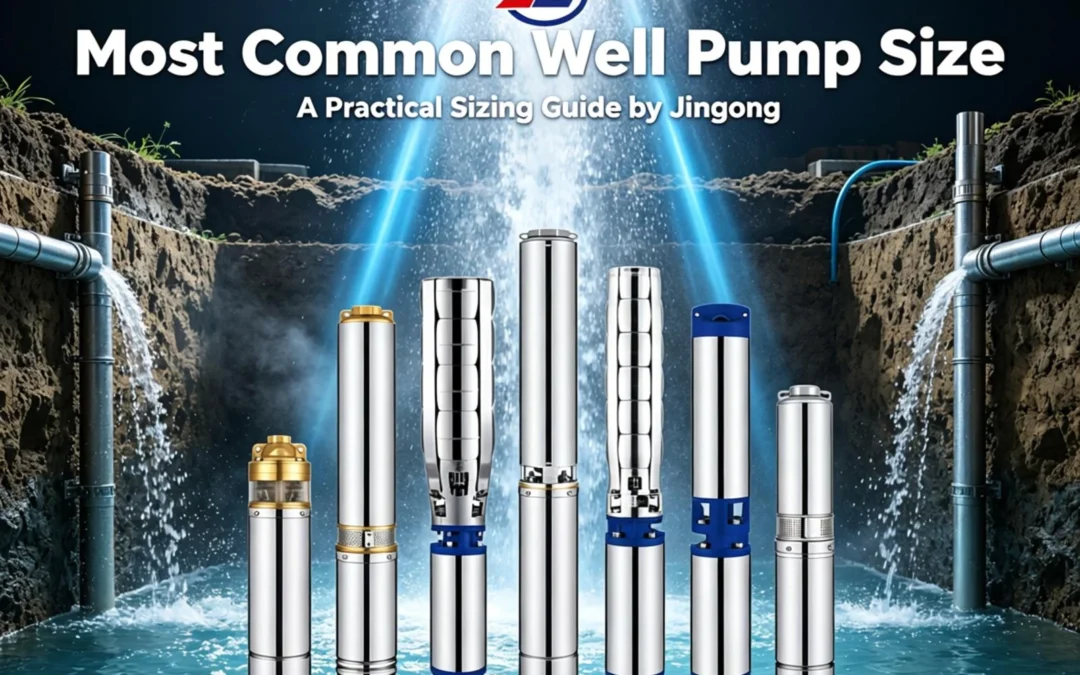
Quick Answer – What Is the Most Common Well Pump Size?
If you’re searching “most common well pump size” because you need to replace a failing unit or spec out a new borehole, here’s the short answer that also wins Google’s featured snippet:
For single-family residential wells in the US/EU/AU markets, the most common well pump size is ½ HP submersible, 8–12 GPM, 4-inch bore compatible, 150–300 ft head range. That single configuration covers an estimated 60–70% of suburban home installs. For farms, the most common well pump size jumps to 1–1½ HP, 20–40 GPM. For off-grid, solar well pump kits at DC 48V / 750W–1.1kW are the global default.
But “size” isn’t one number. In the trade, well pump size means a bundle: HP (motor), GPM (flow), head (lift + friction), and outside diameter (must fit the bore). Ignore any one of those and the “standard” size becomes wrong for your hole.
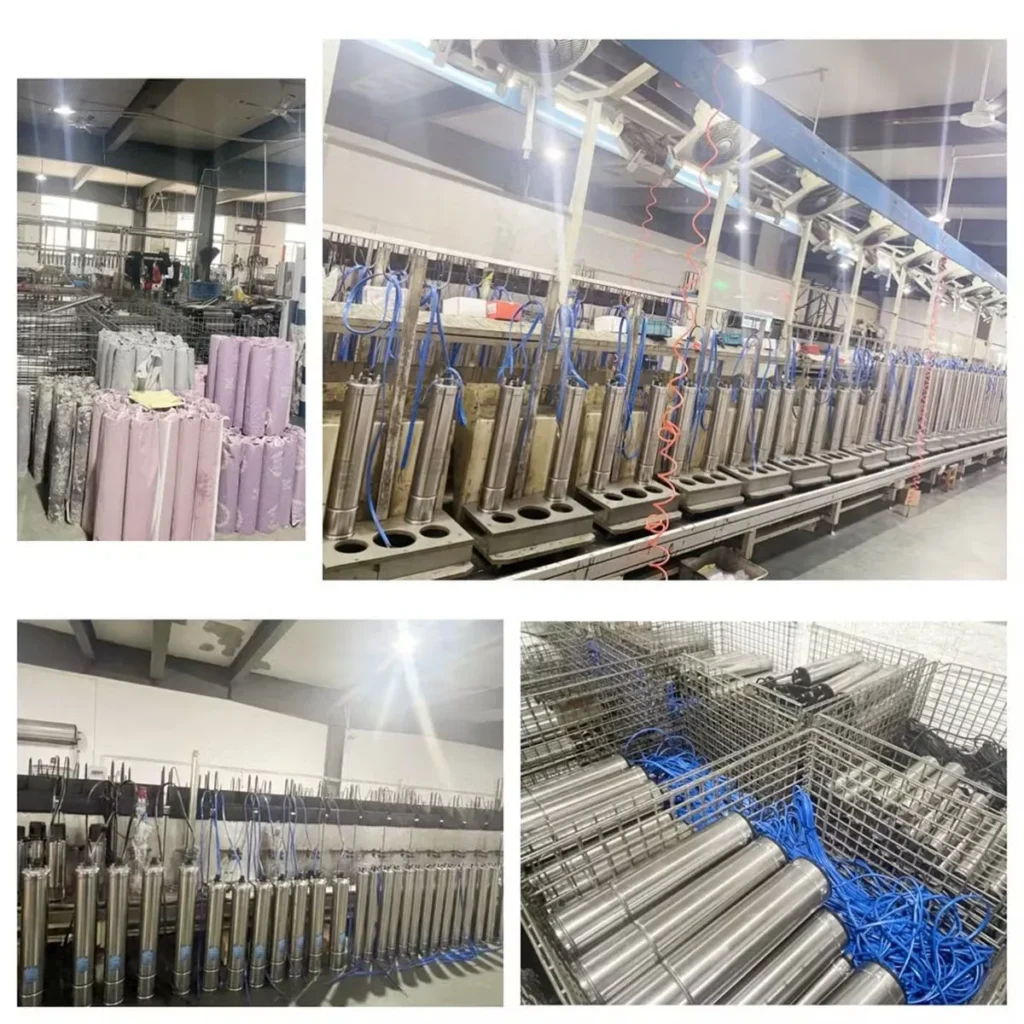
At Jingong, we’ve manufactured and exported submersible, surface, solar, and gasoline/diesel pumps to 40+ countries since 2012. This guide distills sizing rules we’ve iterated across 10,000+ wells — residential yards in Texas, maize fields in Kenya, remote cabins in Chile, and municipal bores in Southeast Asia. Our goal: give you a sizing reference that’s actually usable, not a marketing brochure.
In this guide you’ll get:
- The real-world most common well pump size per scenario (not just “½ HP” headlines)
- Why HP alone is a misleading metric — and what to check instead
- Jingong’s 4 product lines mapped to standard sizes (so you can cross-shop)
- A printable size chart you can screenshot for the field
- Oversize/undersize failure modes we see monthly in after-sales
Well Pump Size Parameters: HP, GPM, Head, PSI, Well Diameter
Before we talk numbers, let’s define what “well pump size” actually bundles. Most DIY threads and even some supplier pages reduce it to “½ HP vs ¾ HP”. That’s incomplete — and it’s why so many pumps burn out inside 18 months.
HP (Horsepower) – Motor Rating, Not Flow Rating
HP tells you how much work the motor can do, not how much water you get. A ½ HP well pump size might push 6 GPM at 300 ft, or 14 GPM at 80 ft — same HP, very different utility. Rule of thumb from our test bench: for every +100 ft of total dynamic head (TDH), you need roughly +0.15–0.2 HP to hold the same GPM.
GPM (Gallons Per Minute) – The Flow You Actually Use
GPM is what your fixtures care about. A typical 3-bedroom US home needs ~8–12 GPM peak (shower + washer + irrigation zone overlapping). If your well pump size only delivers 4 GPM, your pressure tank will short-cycle and your shower will die when the sprinkler kicks on.
| Home Fixtures | Estimated Peak GPM | Recommended Well Pump Size (GPM rating) |
|---|---|---|
| 2-bed / 1 bath | 6–8 | 8 GPM |
| 3-bed / 2 bath (typical) | 10–12 | 12 GPM ← most common well pump size bracket |
| 4+ bed / 3+ bath + irrigation | 14–18 | 18–20 GPM |
Head (Total Dynamic Head = Static Lift + Friction Loss + Pressure)
Static lift = depth to water. Friction loss = pipe run + fittings. Pressure = what your fixtures want (typically 40–60 PSI = ~92–138 ft of head). A “deep well pump size” spec always quotes head in feet, not just HP.
PSI & Pressure Tank Matching
Residential systems in North America run 40/60 PSI cut-in/cut-out. Your well pump size must be able to hit 60 PSI at your GPM without the switch short-cycling. We usually pair ½–¾ HP home units with a 20-gal pressure tank minimum; 1 HP+ goes 44-gal+.
Well Diameter (Bore Size) – The Hard Constraint
This is where many buyers mess up. In the US, 4″ SCH40 PVC casing is standard; in parts of Africa/Asia, 6″ and 8″ are common. A 4″ bore limits you to 4″ OD pumps (most submersibles are 3.8–4″ OD, fine). But if you try to drop a 6″ pump into a 4″ casing, it’s a no-go — and vice versa, a skinny 4″ pump in an 8″ bore can “rattle” on start if not centered.
Bottom line on parameters: When someone asks us at Jingong “what’s the right well pump size“, we don’t answer HP until we know GPM need, TDH, and bore diameter. Everything else is guesswork.
Global Most Common Well Pump Sizes by Usage Scenario
Sizing isn’t universal — a “standard” in Ohio is wrong in rural Kenya. Below is Jingong’s internal shipment breakdown (2023–2025, 40+ countries) translated into public guidance.
Residential (Single-Family Home) – The True Default
The statistically most common well pump size worldwide for homes:
- HP: ½ HP (entry) to ¾ HP (preferred)
- GPM: 8–12
- Head: 150–300 ft (covers water table at 50–200 ft + pressure conversion)
- Bore: 4″ standard
- Pump type: 4″ submersible (stainless or thermoplastic, depending on water chemistry)
In Europe (220–240V), the equivalent is often 0.37–0.55 kW single-phase. In 120V US markets, ½ HP 120V is the shelf default at Home Depot / Lowe’s — but pros spec ¾ HP 230V because it runs cooler.
Agricultural Irrigation – Where Size Jumps
Farm bores are why “most common well pump size” splits by sector. Typical ag specs:
- HP: 1 HP – 2 HP (center pivot can go 5–10 HP)
- GPM: 20–60 (drip = lower; flood = higher)
- Head: 100–400 ft (depends if it’s boosting to a tank or direct to pivots)
- Pump type: Submersible for deep bores; diesel engine pump for mobile irrigation / no-electricity fields
Commercial / Light Municipal
- HP: 2–5 HP typical, 10+ HP for small municipal clusters
- GPM: 50–150
- Pump type: Multi-stage submersible or vertical turbine; sometimes diesel backup
Off-Grid & Remote (No Grid Power)
This is where Jingong’s Solar Water Pump line lives. Most common well pump size here:
- DC 48V, 750W–1.1kW (solar array 800W–1600W)
- GPM: 5–10 (residential off-grid), 15–25 (small farm off-grid)
- Head: 100–650 ft (we make solar subs up to 1800 ft TDH)
- Bore: 4″ standard, 6″ for higher GPM
Well Pump Size by Jingong’s 4 Core Product Lines
This section is where our guide diverges from generic “what size” blog posts. As a manufacturer of all four major categories, we can tell you which well pump size belongs to which product type — and where crossover happens.
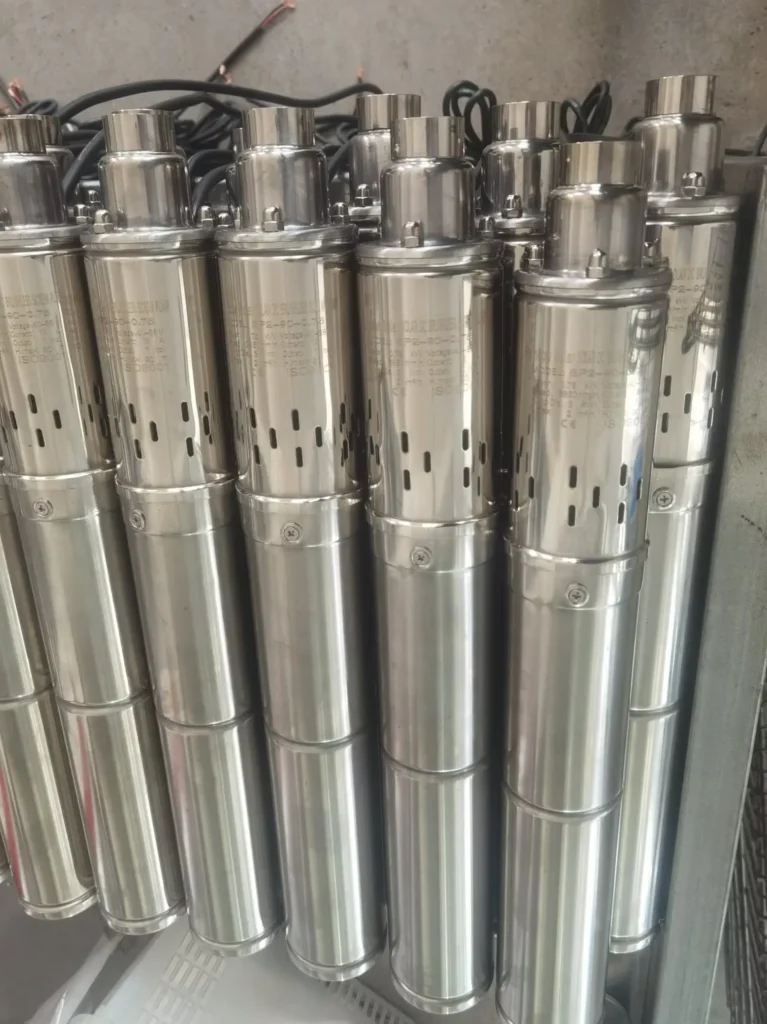
Submersible Well Pump – Deep Well Mainstream Sizes
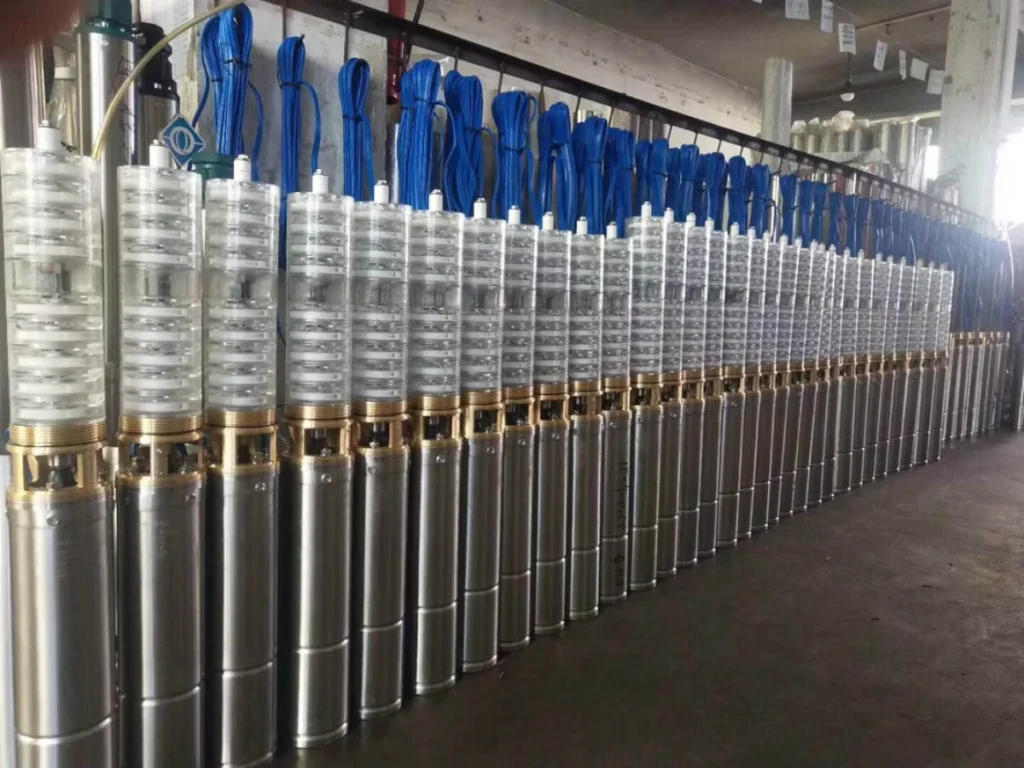
Jingong Submersible Pumps are our #1 export SKU. For deep wells (100 ft+ water table), submersible is the default — it pushes rather than pulls, avoids cavitation, and sits below water so it’s frost-protected.
Jingong’s most-shipped submersible sizes (4″ series):
- 0.37 kW / ½ HP, 8 GPM, 150 ft head – studio cabin / tiny home (our entry mover)
- 0.55 kW / ¾ HP, 12 GPM, 250 ft head – the true “most common well pump size” for US/EU 3-bed homes
- 0.75 kW / 1 HP, 18 GPM, 300 ft head – 4-bed + irrigation
- 1.1 kW / 1.5 HP, 25–30 GPM, 400 ft head – small farm / B&B cluster
- 6″ & 8″ series: 2.2 kW–7.5 kW, 40–120 GPM – ag / municipal
Material note: for potable, we default 304SS or 316SS stages; for sandy bores, we upsell V-sand-handling impellers. This affects “size” choice — a sand-heavy well may need +0.5 HP to compensate for wear margin.
Surface Well Pump – Shallow Well Standard Sizes
Jingong Surface Pumps (centrifugal + jet) cover 0–100 ft lifts. They sit above ground (easier service), but suction lift physics caps them at ~26 ft practical (8.5 psi atmospheric limit).
Common surface well pump size brackets:
- 0.5 HP jet pump, 6–10 GPM, 80–120 ft head – shallow domestic (most common)
- 0.75–1 HP centrifugal, 15–25 GPM, 100–150 ft – farm tap / pond transfer
- 1.5–2 HP, 30–50 GPM – irrigation boost
Jet pumps handle shallow wells better (self-priming + deeper suction via ejector). Centrifugals are for shallow + high flow (pond→tank, tank→sprinkler).
Solar Water Pump – Off-Grid Standard Sizes
Jingong Solar Pump line: DC brushless, MPPT controller built in, 48V/72V/110V/220V DC options, also hybrid AC/DC.
Our most common solar well pump size configs:
-
- 48V DC, 750W, 5–8 GPM, 230 ft head – single home off-grid (Africa/LatAm top seller)
- 72V DC, 1.1 kW, 10–12 GPM, 330 ft head – home + small livestock
- 110V DC, 2.2 kW, 20–30 GPM, 500 ft+ – community bore / small farm
- AC/DC hybrid 3 kW–5.5 kW – where grid is flaky but exists
Solar sizing has a twist: you size the pump to worst-day sun + tank storage. So “most common well pump size” in solar often overspecs GPM vs a grid-tied equivalent, because you’re banking water midday.
Gasoline & Diesel Water Pump – Emergency / Large-Scale Irrigation
Jingong Engine Pumps (Honda-clone GX-series +diesels) are for: no-power fields, flood drainage, construction dewatering, fire backup, and mobile irrigation.
Common engine pump sizes:
- 2″, 5.5–6.5 HP gas, 150–180 GPM, 85–100 ft head – contractor standard
- 3″, 7–9 HP gas/diesel, 250–350 GPM – farm mobile irrigator
- 4″, 10–13 HP diesel, 500–900 GPM, 100+ ft – canal lift / flood
- 6″ high-cap diesel, 20+ HP, 1300+ GPM – municipal drain / large ag
For “well” specifically: engine pumps are usually surface-coupled to a shallow well (jet-assist) or pulling from a cistern the well fills. True deep-well engine setups exist (line shaft turbine driven by diesel), but they’re niche — most clients wanting engine-driven deep water go solar-hybrid instead now.
Well Depth & Well Diameter Matching Rules
Sizing by depth is the oldest rule — but it still gets violated weekly. Here’s Jingong’s field cheat sheet.
0–100 ft (Shallow Well): Which Size?
- Surface jet pump: ½–¾ HP, 6–12 GPM → most cost-effective
- Shallow submersible (special 2-wire 4″) also works if you want freeze protection
- Most common well pump size here: ½ HP jet, 8 GPM, 80 ft head
100–300 ft (Medium Depth): Standard Picks
- 4″ submersible, ¾–1 HP, 12–18 GPM, 250–350 ft head
- This bracket is ~50% of all residential installs globally
300+ ft (Deep Well): What You Must Upsize
- 4″ sub at 1–1.5 HP minimum, or jump to 6″ if GPM >30 needed
- Head rating must exceed static depth + 40–60 PSI pressure conversion + friction (~10–20%)
- Don’t “just add HP” without checking voltage drop on the wire — deep bores need 2.5mm²+ wire, sometimes 4mm², or your “right-sized” pump undervolts and cooks
4″ vs 6″ vs 8″ Bore – Pump Diameter Fitment
| Bore ID | Pump OD Max | Jingong Default |
|---|---|---|
| 4″ | 3.8–4.0″ | 4″ submersible series (all HP) |
| 6″ | 5.5–6.0″ | 6″ high-cap sub (2.2–7.5 kW) or 4″ + centralizer |
| 8″+ | 7.5–8.0″ | 8″ sub / turbine, or multiple 4″ on manifold |
Oversize vs Undersize: What Actually Happens

We get 2–3 warranty inquiries a month that trace back to sizing, not defects. Here’s what each extreme does.
Over-Sizing Risks
- Short cycling with small pressure tank: Big pump, small tank = pump hits 60 PSI in 20 seconds, shuts off, drops to 40 in 15, restarts. Kills motor contacts in <2 years.
- Cycling deadhead on low draw: If your home GPM draw << pump GPM, pressure spikes, bypass/relief valve chatters.
- Higher energy bill obviously — but less obvious: oversized subs in narrow bores can overheat if flow past motor is too low (motor cooling depends on water movement).
Under-Sizing Risks
- Pressure sag: Shower + irrigation zone = pressure drops to 20 PSI, shower goes cold (mixing valve shifts).
- Overheat: Pump runs continuous trying to meet demand it can’t, thermal trips.
- Cavitation in deep setups: Undersized on head means impeller runs near/below NPSHr, pits impellers in months.
Jingong rule of thumb: Size for peak fixture GPM × 1.2–1.5, then pick HP/head to hit that GPM at TDH. Don’t reverse-engineer from HP.
Industry Standard Well Pump Size Chart (Printable Reference)
Below is the quick-lookup version. Screenshot this section for field use.
| Scenario | Well Depth | Bore | Typical HP | GPM | Head (ft) | Jingong Product Match |
|---|---|---|---|---|---|---|
| Studio / Tiny Home | 0–150 ft | 4″ | ½ HP (0.37 kW) | 6–8 | 150 | 4″ Sub / Solar 48V |
| 3-bed Home (most common well pump size) | 100–250 ft | 4″ | ¾ HP (0.55 kW) | 10–12 | 250 | 4″ Sub |
| 4-bed + Irrigation | 150–300 ft | 4″ | 1–1.5 HP | 18–25 | 300–400 | 4″ Sub / 6″ Sub |
| Small Farm (ag drip) | 200–400 ft | 6″ | 2–3 HP | 30–50 | 400 | 6″ Sub / Diesel |
| Large Farm / Pivot | 300–600 ft | 8″ | 5–10 HP | 80–150 | 600+ | 8″ Sub / Turbine |
| Off-Grid Home | 80–300 ft | 4″ | 750W–1.1 kW DC | 5–12 | 230–330 | Solar Sub |
| Emergency / Flood | Surface | N/A | 5.5–13 HP gas/diesel | 150–900 | 80–120 | Engine Pump |
Note: All HP/KW ratings are motor input; GPM is at midpoint of head curve, not max. TDH = static lift + 30–40% friction + pressure conversion.
FAQ – People Also Ask on Well Pump Size
Q1: What is the most common HP for a residential well pump?
A: ½ HP to ¾ HP. ¾ HP is increasingly the pro default because it handles fixture overlap better. If your water table is >150 ft, lean ¾–1 HP.
Q2: Which is better: ½ HP vs ¾ HP well pump?
A: For a 3-bed / 2-bath home on a 100–200 ft well, ¾ HP gives you ~12 GPM vs 8 GPM, handles irrigation overlap, and runs cooler. ½ HP is fine for smaller cabins. The “most common well pump size” in new installs is trending ¾ HP.
Q3: What size solar pump do I need for my well?
A: Match DC wattage to GPM×head÷(sun hours×efficiency). Practically: off-grid home = 48V 750W–1.1 kW; small farm = 2.2 kW DC. See Jingong Solar Pump line.
Q4: Can I use a surface pump for deep wells?
A: Not beyond ~26 ft suction lift. For deep, you need submersible or jet-assist. Surface pumps are for shallow wells, pond transfer, boost — not 100 ft+ lifts.
Q5: What size diesel pump is best for farm irrigation?
A: 3″ 7–9 HP diesel, 250–350 GPM for mobile sprinkler; 4″ 10–13 HP if you’re lifting from a canal. See Jingong Engine Pumps.
Q6: How do I choose well pump size by number of household fixtures?
A: Count simultaneous fixtures × fixture GPM (shower=2.5, washer=3–4, hose bib=5). Peak usually 8–12 GPM for 3-bed. Size pump GPM ×1.2–1.5 that peak, then match HP/head to depth.
Custom Sizing & Jingong Factory Solution
Jingong isn’t a reseller — we’re the factory behind hundreds of distributor brands. If your project doesn’t fit “most common well pump size” off the shelf, we do:
- Non-standard HP/GPM curves (custom impeller staging)
- Voltage variants: 110V/230V/460V single & 3-phase, 50Hz/60Hz
- Material upgrades: 316SS, duplex, V-sand impellers, nitrile vs EPDM seals
- OEM/ODM: label, carton, manual, accessory kit (control box, rope, cable)
- Project support: we’ve sized bores for 200-home compounds in East Africa, vineyard drip in Chile, desert off-grid in the UAE
Tell us three numbers and we’ll spec it: (1) static water level, (2) desired GPM, (3) bore diameter. Fourth optional: water chemistry (TDS, sand, pH).
Contact Jingong engineering for a sizing sheet → usually 24-hour turnaround for distributors.
Conclusion & Further Resources
The phrase “most common well pump size” sounds simple — but as you’ve seen, the real answer splits by scenario: ¾ HP / 12 GPM / 4″ sub for the average home; 1–2 HP for farms; 48V 750W–1.1 kW solar for off-grid; diesel 7–13 HP for mobile irrigation. HP alone won’t get you there; GPM, head, and bore diameter have to travel together.
At Jingong, we manufacture all four pump types discussed here, which lets us be honest about crossover: sometimes the “right” answer is a solar sub when you thought diesel, or a surface jet when you thought sub. That’s the value of talking to the factory, not just a catalog.
Published by Jingong Water Pump Technology — manufacturer of submersible, surface, solar, and engine water pumps. This guide reflects field data from 10,000+ wells shipped to 40+ countries