
By Jingong Pump Engineering Team | Updated: July 2026 | 15+ years manufacturing booster pumps, submersible pumps, surface pumps, solar pumps & diesel/gasoline pumps for global B2B markets.
Why This Guide Exists: Solving the Real-World Dilemma of DC vs AC Solar Submersible Pump
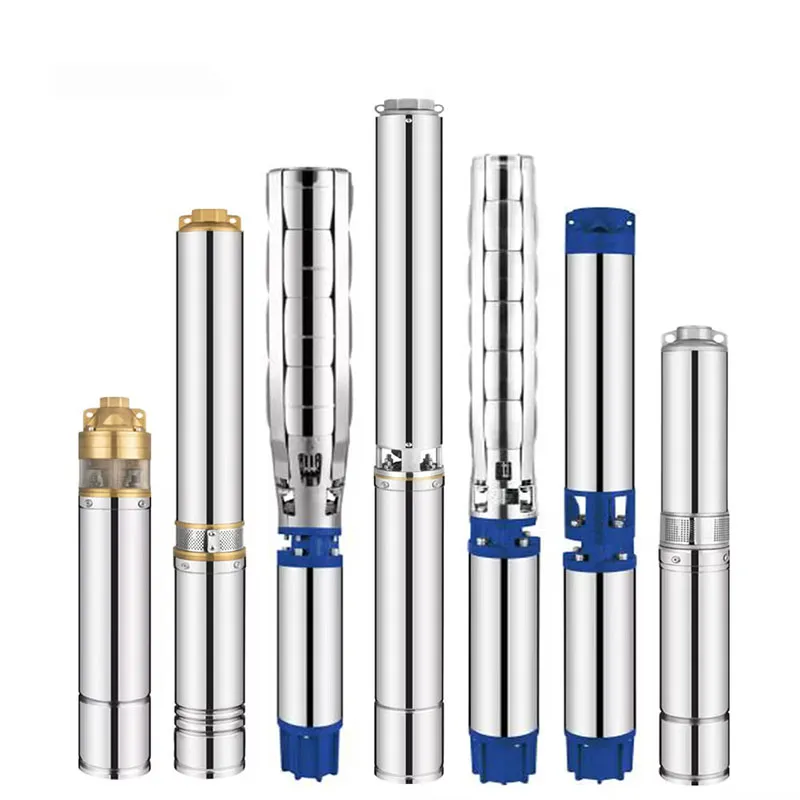
If you’ve landed here, you’ve likely typed “DC vs AC solar submersible well pump” into Google and found yourself drowning in contradictory advice. One forum says “Go DC, it’s more efficient!” while a supplier insists “AC is the only way for deep wells.” As a seasoned pump engineer, I understand your frustration. At Jingong Technology (Zhejiang), we don’t just sell pumps; we engineer water solutions. For over 15 years, our factory has supplied solar pumping systems to off-grid farms in Kenya, deep-well irrigation projects in Thailand, and livestock watering operations across South America.
We’ve witnessed the costly consequences of poor (selection). We’ve seen a 5 HP DC pump fail in six months due to voltage drop in a 120-meter well. We’ve watched a Texas rancher overspend by $1,100 on an unnecessary inverter for a tiny cabin setup. And we’ve troubleshooted countless Philippine village projects where solar panels were sized 1:1 with the pump nameplate, causing daily shutdowns during cloudy afternoons.
This guide Solar Submersible Well Pump is engineered to be the final stop for your research. We will move beyond marketing fluff and dive deep into electrical theory, hydraulic physics, real-world ROI calculations, and field maintenance. By the end, you won’t just know the difference; you’ll know exactly which system fits your specific scenario. We will cover:
- The fundamental electrical differences between Direct Current (DC) and Alternating Current (AC) systems.
- Hard data on motor efficiency, inverter losses, and water lifted per kWh.
- A comprehensive comparison table covering 12 critical dimensions.
- Scenario-based recommendations for farms, homes, and industrial sites.
- Detailed Cost Analysis: Solar vs. Diesel vs. Grid Power.
- Troubleshooting guides for common field failures.
- How Jingong’s full product matrix provides a turnkey solution.
This page is designed to be a high-authority resource. Whether you are a homeowner seeking energy independence, a farmer needing reliable irrigation, or a distributor sourcing from a trusted solar submersible well pump supplier, bookmark this page. Let’s begin.
Fundamental Definitions: What Exactly Are DC and AC Solar Submersible Pump?
To make an informed decision, you must first understand how these machines interact with photovoltaic (PV) energy. Remember, solar panels produce DC power. Your choice of pump determines whether you need to convert that power before it reaches the motor.
What is a DC Solar Submersible Well Pump?
A DC solar submersible pump utilizes a Permanent Magnet Brushless DC (BLDC) motor. It is designed to run directly on the Direct Current produced by your solar array. The typical system architecture involves: PV Array → MPPT Solar Pump Controller → DC Pump Motor.
Key Characteristics:
- No Inverter Required: When configured for a pure solar setup, DC pumps do not need an inverter to change DC to AC. This eliminates a major point of failure and system loss.
- Voltage Classes: Commonly operate at 12V, 24V, 48V, 96V, or 120V DC.
- Soft Start: The electronic controller ramps up the power gradually, eliminating harmful inrush currents that can damage motors and pipes.
- Safety: Low voltage (especially 12V-48V) is inherently safer for DIY installations and reduces the risk of arc flashes.
- Jingong Application: Ideal for our DC Solar Series, typically dominating the 0.1 HP to 3 HP range.
What is an AC Solar Submersible Well Pump?
An AC solar submersible pump uses a standard AC induction motor (similar to what you’d find in a washing machine or a grid-tied well pump). Since solar panels produce DC, you absolutely must include a solar pump inverter (Variable Frequency Drive – VFD) in the system: PV Array → Solar Pump Inverter (VFD) → AC Pump Motor.
Key Characteristics:
- Inverter Mandatory: The inverter converts DC from the panels to AC (Single Phase 110V/220V or Three Phase 380V/415V) for the motor.
- High Voltage Capability: Allows for the use of thinner gauge cables over long distances (crucial for deep wells).
- Scalability: AC motors are easier and cheaper to manufacture at very high horsepower (HP) ratings.
- Grid-Tie Ready: Can often be programmed to draw power from the grid at night or during low-sun periods.
- Jingong Application: Our AC Solar Series excels in the 3 HP to 30+ HP range.
Solar Submersible vs. Standard Grid Submersible vs. Surface Pumps
It is vital to distinguish between these categories. A “standard” electric submersible pump is designed for constant grid voltage (e.g., 220V AC). Running it on solar requires the inverter mentioned above. A surface pump, meanwhile, is located above ground and relies on suction lift (limited to roughly 8 meters). For deep wells, submersible is the only option.
| Pump Type | Power Source | Typical Use Case | Jingong Product Link |
|---|---|---|---|
| DC Solar Submersible | PV → MPPT → Pump | Off-grid homes, livestock, <3 HP | DC Solar Series |
| AC Solar Submersible | PV → Inverter → Pump | Deep wells, >3 HP, large irrigation | AC Solar Series |
| Standard Submersible | Mains Grid (110/220/380V) | Where grid is cheap and stable | Standard Submersible |
| Surface Pump | Mains / Generator | Garden ponds, shallow wells (<8m) | Surface Pump |
| Diesel/Gasoline Pump | Internal Combustion Engine | Emergency, construction, no sun/no grid | Diesel & Gasoline |
System Architecture & Electrical Theory: Why DC is More Efficient (But Not Always Better)
The core debate between DC and AC isn’t just about brand preference; it’s about physics and electrical conversion losses. To truly grasp the difference, let’s look under the hood.
DC System Architecture: Simplicity Equals Efficiency
The DC system is elegant in its simplicity. Sunlight hits the PV panels, generating DC voltage. This flows into an MPPT (Maximum Power Point Tracking) controller. The MPPT controller acts as the brain, optimizing the voltage and current to match the pump motor’s requirements perfectly.
Key Technical Advantages:
- Zero Conversion Loss: There is no DC-to-AC inversion. Energy goes from panel to motor with minimal transformation.
- MPPT Optimization: Even in low light (morning/evening), the MPPT controller “searches” for the optimal operating point to squeeze out every drop of water.
- Component Count: Fewer components mean fewer potential failure points. Just Panels, Controller, Pump.
AC System Architecture: Power Through Complexity
The Solar Submersible Well Pump AC system introduces a necessary middleman: the Inverter (VFD). Solar panels produce raw DC power. The inverter’s job is to synthesize a clean AC sine wave at the frequency required by the motor (typically 50Hz or 60Hz).
Key Technical Considerations:
- Inverter Losses: Modern IGBT inverters are highly efficient, but they are not perfect. Expect a 12% to 15% energy loss during the DC-to-AC conversion process. This means 1,000 Watts of solar energy might only deliver 850-880 Watts to the motor.
- Voltage Transformation: AC systems excel at stepping up voltage. High voltage (220V or 380V) allows for significantly lower current for the same power (Watts = Volts x Amps). Lower current means less resistive loss in cables.
- Motor Starting: AC induction motors have a high “Locked Rotor Amperage” (LRA) at startup. The VFD manages this, providing a soft start to prevent electrical surges.
The “3 HP Rule” and the Cable Drop Equation
In the pump industry, a general rule of thumb prevails: ≤3 HP favors DC; ≥3 HP favors AC. However, as engineers, we know rules are meant to be broken based on math.
Consider a 2 HP pump in a 100-meter deep well.
- DC Scenario: A 2 HP DC pump might run at 120V. To carry the required amperage over 100m without excessive voltage drop, you might need expensive 6mm² or 10mm² copper cable.
- AC Scenario: A 2 HP AC pump running at 220V draws roughly half the amperage of the 120V DC pump. You could likely use much cheaper 1.5mm² or 2.5mm² cable.
Jingong Engineering Insight: If your well is deeper than 80 meters, even for smaller pumps, you must calculate the Voltage Drop ($V_{drop} = \frac{2 \times L \times I \times R}{A}$) carefully. Often, the savings on copper cable with an AC system outweigh the cost of the inverter.
Motor Efficiency: BLDC vs. Induction
The Solar Submersible Well Pump motor itself is a major factor in the efficiency equation. Jingong’s internal testing (validated by third-party labs) shows distinct differences:
- DC BLDC Motors: Typically achieve 92%–95% efficiency. They use permanent magnets, so no energy is lost creating a magnetic field.
- AC Induction Motors: Typically achieve 85%–88% efficiency. A portion of the input energy is used to energize the stator windings to create the electromagnetic field.
System-Level Efficiency Summary: When you combine motor efficiency with system losses, a DC system generally lifts 15%–20% more water per kWh of solar energy than an AC system, provided the cable runs are short. This is why DC is the king of small-scale, shallow-to-mid-depth applications.
DC vs AC Solar Submersible Well Pump: Comprehensive 12-Point Comparison Matrix
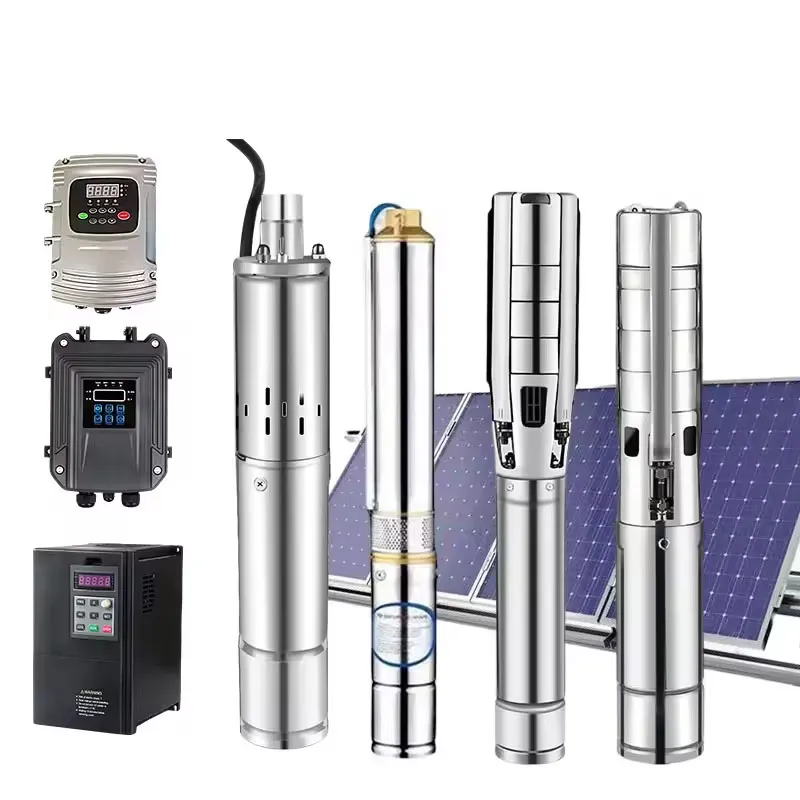
This table serves as a quick-reference cheat sheet. Bookmark it. We’ve compiled the data that matters most to procurement managers and field engineers.
| Dimension | DC Solar Submersible Pump | AC Solar Submersible Pump | Notes for Decision Making |
|---|---|---|---|
| 1. Initial Capital Cost (CAPEX) | Lower (No inverter cost) | Higher (Inverter adds 30-50% to cost) | DC wins for tight budgets. |
| 2. System Efficiency | Excellent (90%+) | Good (80-85%) | DC loses less energy in conversion. |
| 3. Power Range (HP) | 0.1 – 3 HP (Standard) | 0.5 – 30+ HP (Standard) | AC is the only choice for high horsepower. |
| 4. Inverter Requirement | NO | YES (Mandatory) | Inverter is the #1 failure point in AC systems. |
| 5. Deep Well Suitability (>80m) | Poor (Requires thick, expensive cable) | Excellent (Allows thin, cheap cable) | AC wins on total installed cost for depth. |
| 6. Installation Complexity | Simple (Plug-and-play with controller) | Moderate (Requires VFD programming) | DC is better for DIY/remote sites. |
| 7. Grid Compatibility | Requires separate charger/inverter | Native (Many VFDs accept AC input) | AC is better for hybrid grid-tie systems. |
| 8. Motor Lifespan | 8,000 – 10,000 Hours | 6,000 – 8,000 Hours | BLDC motors have fewer moving parts/wear. |
| 9. Noise Level | Very Low (Magnet-driven options) | Low to Medium (Audible hum) | DC is preferable for residential areas. |
| 10. Surge Protection | Built-in (MPPT handles startup) | Built-in (VFD handles startup) | Both protect against water hammer. |
| 11. Operating Voltage | 12V, 24V, 48V, 96V, 120V DC | 110V, 220V, 380V AC | Match voltage to available PV array. |
| 12. Maintenance Needs | Low (Check controller terminals) | Higher (Inverter cooling fans, capacitors) | AC inverters have finite electrolytic capacitor life. |
Scenario-Based Selection Guide: Matching the Pump to Your Reality
Theory is useless without application. Here is how we, at Jingong, Solar Submersible Well Pump guide our B2B clients through the selection process. Read the scenario that matches your situation.
Scenario 1: The Off-Grid Cabin or Remote Home (Shallow to Mid-Depth)
Profile: You live in a remote area, your well is 20-60 meters deep, and you need 1-3 cubic meters per hour for household use.
Recommendation: DC Solar Submersible Pump.
Reasoning: You don’t need the complexity or expense of an inverter. A DC system paired with a small battery bank offers silent, safe, and highly efficient operation. It’s the most cost-effective solution for residential off-grid living.
Jingong Solution: Our DC Solar Series (0.5 – 2 HP) is perfectly suited for this. See our Kenya Off-Grid Home Case Study.
Scenario 2: The Large-Scale Commercial Farm or Orchard (Deep Wells)
Profile: You manage a 50-acre orchard. Your well is 120 meters deep, and you need 10-20 cubic meters per hour for drip irrigation.
Recommendation: AC Solar Submersible Pump.
Reasoning: You need high horsepower (likely 7.5 HP to 15 HP). At this depth, the cost of copper cable for a DC system would be astronomical. An AC system running at 380V allows for thin, affordable cabling. The higher initial cost of the inverter is offset by decades of reliable, high-volume water delivery.
Jingong Solution: Our AC Solar Series (5 – 20 HP) combined with a high-efficiency VFD. See our Thailand Mango Farm Case Study.
Scenario 3: The Livestock Ranch (Reliability is Key)
Profile: You water cattle from a 40-meter well. The grid is available but unreliable (brownouts are common).
Recommendation: ACDC Hybrid Solar Pump.
Reasoning: You cannot afford for your cattle to go thirsty if the grid fails or clouds roll in. An ACDC hybrid pump prioritizes free solar power but automatically switches to grid or generator power the moment solar production dips. It’s the ultimate insurance policy.
Jingong Solution: Our AC DC Hybrid Series offers seamless transition between power sources.
Scenario 4: Emergency Backup or Temporary Sites
Profile: Construction site dewatering, or emergency flood control where no electricity exists.
Recommendation: Diesel or Gasoline Engine Pump.
Reasoning: Solar takes up space and depends on the sun. For temporary, high-power, or emergency situations, nothing beats the portability and immediate power of an internal combustion engine.
Jingong Solution: Our robust Diesel and Gasoline Pump lineup.
Common Buyer Mistakes (Avoid These!)
- Oversizing the Pump: Bigger is not better. An oversized pump cycles on and off too frequently (short cycling), destroying pressure tanks and wasting energy. Size for your actual GPM (Gallons Per Minute) needs.
- Ignoring Voltage Drop: Especially with DC. If you don’t size your cable correctly for the distance, your pump will struggle to start and burn out prematurely.
- Undersizing the PV Array: Rule of thumb: Size your solar array to 1.3x – 1.5x the pump’s rated wattage to account for cloudy days and system losses.
- Buying a “Pool Pump” for a Well: Pool pumps are not designed for high pressure or continuous submersion. Ensure you buy a true submersible well pump with the correct PSI rating.
- Neglecting the Controller/VFD Quality: The pump might last 10 years, but a cheap inverter might fail in 2. Invest in quality electronics.
Cost Analysis & ROI: Solar vs. Diesel vs. Grid Power
As a leading pump manufacturer, we speak with hundreds of procurement officers every year. Their number one concern is always Total Cost of Ownership (TCO). Let’s break down the numbers for a typical 2 HP (1.5 kW), 70-meter head, 3 m³/h flow requirement.
Capital Expenditure (CAPEX) Breakdown
| Component | DC Solar System | AC Solar System | Grid-Powered AC | Diesel Engine Pump |
|---|---|---|---|---|
| Pump Unit | $280 | $240 | $180 | $420 (Engine+Pump) |
| Electronics | $110 (MPPT) | $320 (VFD Inverter) | $40 (Starter) | N/A |
| PV Solar Panels (1.5kW) | $420 | $420 | N/A | N/A |
| Cabling (70m Run) | $90 (Heavy Gauge) | $45 (Light Gauge) | $45 | $30 |
| Installation Labor | $150 | $180 | $120 | $100 |
| Total CAPEX | ~$1,050 | ~$1,205 | ~$385 + Elec Bill | ~$550 + Fuel Cost |
Operational Expenditure (OPEX) & ROI (5-Year Projection)
Assumptions: 4 hours/day runtime; Electricity cost: $0.18/kWh; Diesel cost: $1.10/L; Solar maintenance negligible.
- DC Solar OPEX: Near $0. Annual savings compared to grid: ~$475. Payback Period: ~2.2 years.
- AC Solar OPEX: Near $0. Slightly higher CAPEX than DC. Payback Period: ~2.5 years.
- Grid AC OPEX: ~$1,050/year in electricity bills. Lowest upfront, highest long-term cost.
- Diesel OPEX: ~$1,500+/year in fuel + oil changes. Highest OPEX, moderate CAPEX.
Jingong’s Business Verdict: If you have reliable grid power at less than $0.10/kWh, stick with a standard AC pump. If your grid is expensive, unreliable, or non-existent, a solar pump (DC for small, AC for large) pays for itself in 2-3 years and then delivers virtually free water for the next decade.
Troubleshooting & Preventative Maintenance: Keeping Your Pump Running

A pump is an investment. Proper maintenance extends its life significantly. Solar Submersible Well Pump Here are the most common issues we see in the field and how to fix them.
DC Pump Specific Issues
- Symptom: Pump won’t start in the morning.Cause: Low voltage lockout. The MPPT controller is waiting for sufficient voltage to start safely.Fix: Ensure panels are clean and oriented correctly. Check for loose connections.
- Symptom: Controller displays “Overvoltage” error.Cause: Open-circuit voltage (Voc) of the PV array exceeds the controller’s maximum input rating (common on cold, sunny mornings).Fix: Reconfigure PV strings (reduce panels in series) or Solar Submersible Well Pump install a dump load/braking resistor.
- Symptom: Low flow/pressure.Cause: Well drawdown. The water level has dropped below the pump intake.Fix: Install a float switch or a dry-run protection device (standard on Jingong controllers).
AC Pump + Inverter Specific Issues
- Symptom: Inverter failure (no lights, burnt smell).Cause: Lightning strike (surge) or over-temperature.Fix: Install a DC surge protector on the PV input side. Solar Submersible Well Pump Ensure the inverter is mounted in a well-ventilated, shaded location.
- Symptom: Motor hums but doesn’t spin.Cause: Phase loss (for 3-phase) or incorrect VFD parameter settings (acceleration time too short).Fix: Check all phase connections. Solar Submersible Well Pump Reset VFD to factory defaults and re-program for “Pump” load profile.
- Symptom: Frequent tripping.Cause: Ground fault or short circuit in the submerged cable.Fix: Pull the pump and perform a megohm test (insulation resistance test) on the cable.
Preventative Maintenance Checklist (Every 6 Months)
- Clean PV Panels: Solar Submersible Well Pump Dust and bird droppings can reduce output by 15-25%. Wash with water and a soft brush.
- Inspect Electrical Connections: Check all terminals at the panels, controller/inverter, and pump disconnect. Tighten any loose lugs.
- Check Well Water Level: Ensure your pumping rate doesn’t exceed the well’s recharge rate.
- Winterization (Cold Climates): Drain all above-ground piping. Insulate the controller. If freezing is prolonged, consider pulling the pump.
- Visual Inspection: Look for signs of rodent damage to wires, Solar Submersible Well Pump rust on the well casing, or erosion around the foundation.
The Jingong Solar Submersible Well Pump Advantage: Your Complete Solar Pumping Solution
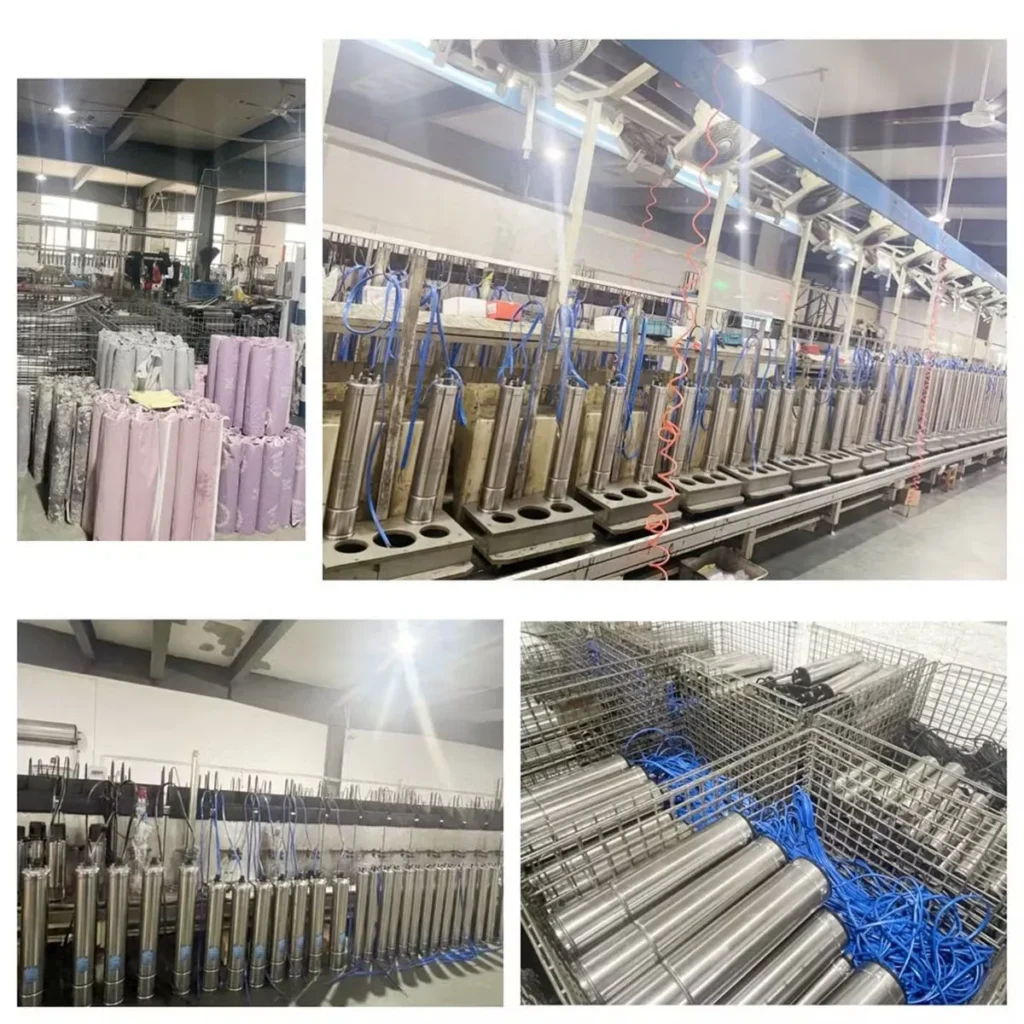
Zhejiang Jingong Technology is more than just a solar submersible well pump supplier; we are a vertically integrated manufacturer. With ISO 9001 and CE certifications, we control the entire process from casting the stainless steel impellers to winding the copper motors and programming the MPPT controllers. This ensures unmatched quality and compatibility.
🌞 Jingong DC Solar Submersible Series (0.1 – 3 HP)
Designed for efficiency and affordability. Features our high-efficiency BLDC motor and a rugged, sealed MPPT controller.
- Models: 4SP-DC, 6SP-DC
- Head Range: 20 – 150 meters
- Flow Rate: 1 – 8 m³/h
- Ideal For: Off-grid homes, livestock, small-scale irrigation.
- View DC Series Specifications →
⚡ Jingong AC Solar Submersible Series (3 – 30 HP)
Built for power. Robust AC motors paired with our intelligent VFD inverters capable of handling deep wells and high heads.
- Models: 4SP-AC, 6SP-AC, 8SP-AC
- Head Range: 50 – 400 meters
- Flow Rate: 5 – 50 m³/h
- Ideal For: Commercial agriculture, high-rise water supply, industrial dewatering.
- View AC Series Specifications →
🔄 Jingong ACDC Hybrid Series (0.75 – 5 HP)
The best of both worlds. Seamlessly switches between solar DC and grid/genset AC power without manual intervention.
- Input: 60–380V DC || 90–240V AC
- Ideal For: Areas with unreliable grids, mission-critical water supply.
- View Hybrid Series Specifications →
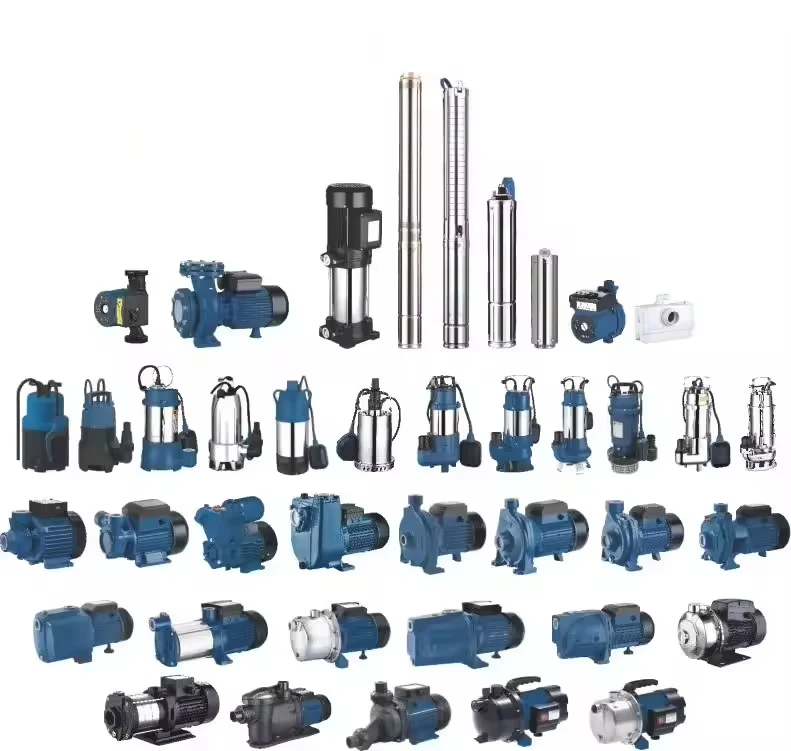
Complementary Jingong Products
No single pump solves every problem. We offer a full ecosystem:
- Booster Pumps: Increase pressure after the water storage tank.
- Surface Pumps: For pumping from lakes, rivers, or shallow wells.
- Diesel/Gasoline Pumps: Essential for emergency backup and construction sites.
Frequently Solar Submersible Well Pump Asked Questions (FAQs) About DC vs AC Solar Pumps
1. Are DC solar pumps more efficient than AC solar pumps?
Yes, in terms of system efficiency, DC pumps are superior. A DC BLDC motor is 92-95% efficient, and since it doesn’t require an inverter, there is no 12-15% energy loss from DC-to-AC conversion. Field tests show DC pumps lift approximately 18.7% more water per kWh of solar energy compared to AC pumps under identical conditions. However, AC pumps are more practical for deep wells due to thinner cable requirements.
2. Do AC solar pumps absolutely need an inverter?
Yes. Solar panels generate Direct Current (DC), while AC (Alternating Current) motors require AC power to function. A solar pump inverter (VFD) is a mandatory component in any AC solar pumping system. It converts the DC power from the panels into the appropriate AC voltage and frequency for the motor.
3. Which type of solar pump is best for a deep well (over 80 meters)?
For deep wells exceeding 80 meters, AC solar pumps are generally recommended. While DC pumps are more energy-efficient, their low operating voltage necessitates extremely thick and expensive copper cables to prevent voltage drop over long distances. AC pumps operate at higher voltages (220V/380V), allowing for the use of thinner, more affordable cables, making the total installed cost lower.
4. Can a DC solar pump run using batteries at night?
Yes. A DC solar pump system can easily incorporate a battery bank. During the day, the solar panels charge the batteries via the MPPT controller. At night or during cloudy weather, the controller draws power from the batteries to run the pump. This requires proper sizing of the battery bank and solar array to ensure sufficient energy storage.
5. Is a solar submersible pump better than a diesel pump?
For long-term, stationary applications, yes. Solar pumps have a significantly higher initial cost but near-zero operational costs (free fuel) and require much less maintenance (no oil changes, filters, or engine rebuilds). Diesel pumps have lower upfront costs and are excellent for portable, emergency, or temporary applications where solar infrastructure isn’t feasible, but their fuel and maintenance costs are substantially higher over time.
6. How long does a typical solar well pump last?
The lifespan varies by component. The submersible pump motor (whether DC or AC) typically lasts 8,000 to 10,000 operating hours (roughly 10-12 years at 2 hours/day). The MPPT controller or VFD inverter usually lasts 5-7 years, as they contain electronic components (capacitors) that degrade over time. Jingong provides an 18-36 month warranty and guarantees spare parts availability for 10+ years to support your investment.
Final Verdict: The Ultimate Solar Pump Selection Cheat Sheet
After diving deep into the technical specifications, financial implications, and real-world applications, the choice between DC and AC solar submersible pumps boils down to these simple rules:
- Choose DC Solar if: Your project is small-scale (<3 HP), your well is shallow-to-mid depth (<60m), you are completely off-grid, and your budget is limited. It is the king of efficiency and simplicity.
- Choose AC Solar if: Your project is large-scale (>3 HP), your well is deep (>80m), you require high flow rates, or you plan to integrate with the electrical grid. It is the king of power and scalability.
- Choose ACDC Hybrid if: Water reliability is mission-critical, and you experience frequent grid outages. It offers the ultimate peace of mind.
- Choose Grid AC or Surface Pump if: Reliable grid power is cheap and readily available. Don’t over-complicate your system with solar if the economics don’t justify it.
- Choose Diesel/Gasoline if: You need water now, temporarily, or in an emergency where solar panels cannot be deployed.
As a premier solar submersible well pump supplier, Jingong Technology possesses the engineering expertise and product breadth to fulfill all these roles. We don’t believe in a “one-size-fits-all” approach. We believe in providing the right tool for the job.
Ready to spec your project? Don’t guess. Send our engineering team your well depth, required flow rate (GPM/m³h), and local sunshine conditions. We will provide a complimentary system design, including PV array sizing and a detailed CAPEX/OPEX analysis, typically within 24 business hours.
Get Your Free Solar Pump Quote Now →

0 Comments