
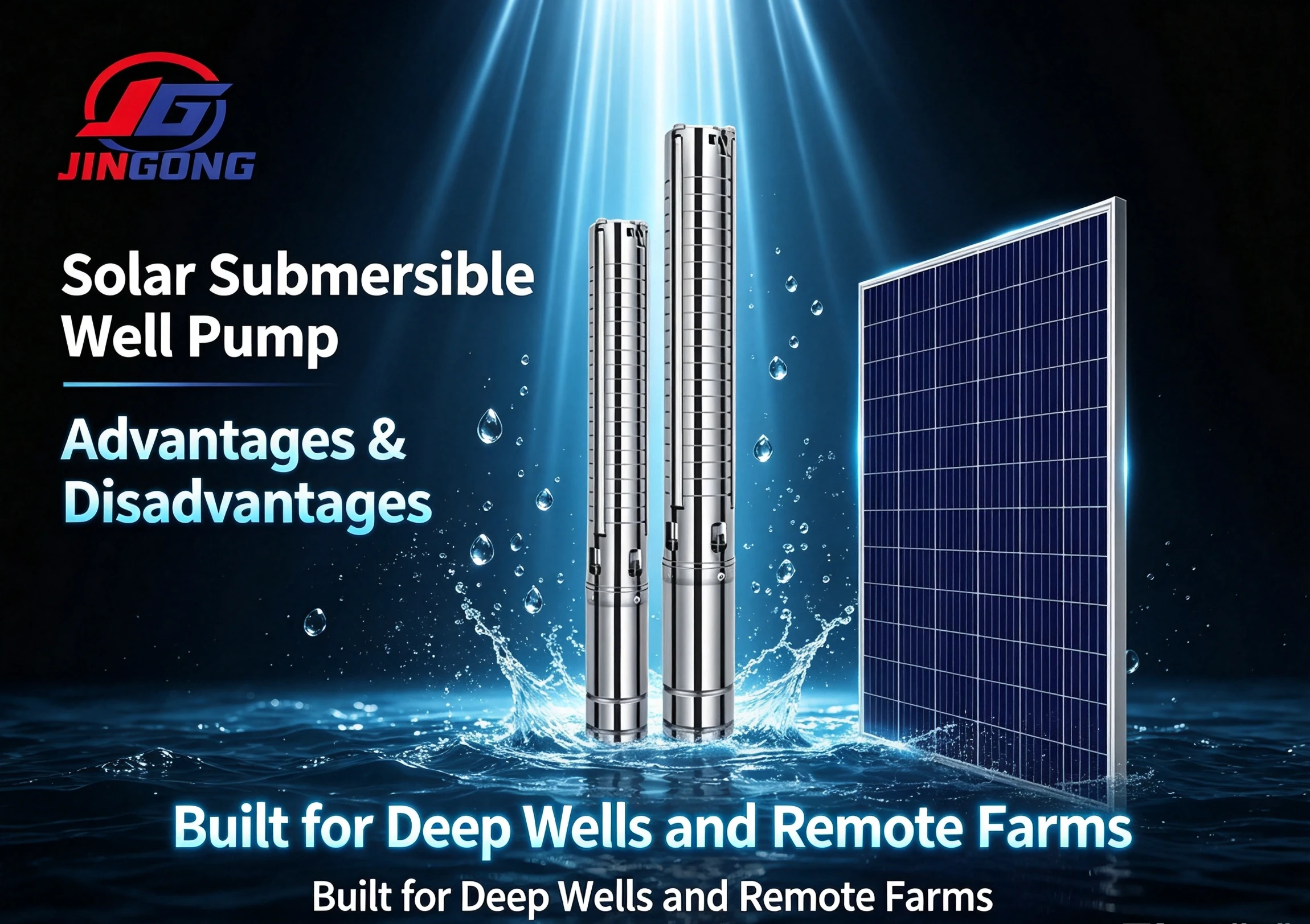
Defining the Solar Submersible Well Pump: Principles & Global Applications
Technical Definition & Working Principle
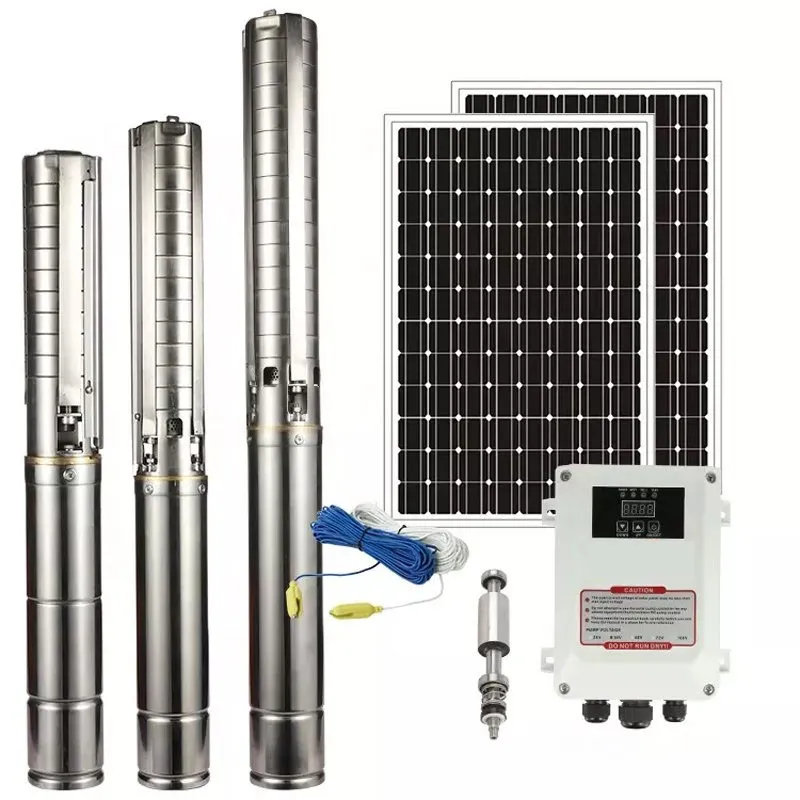
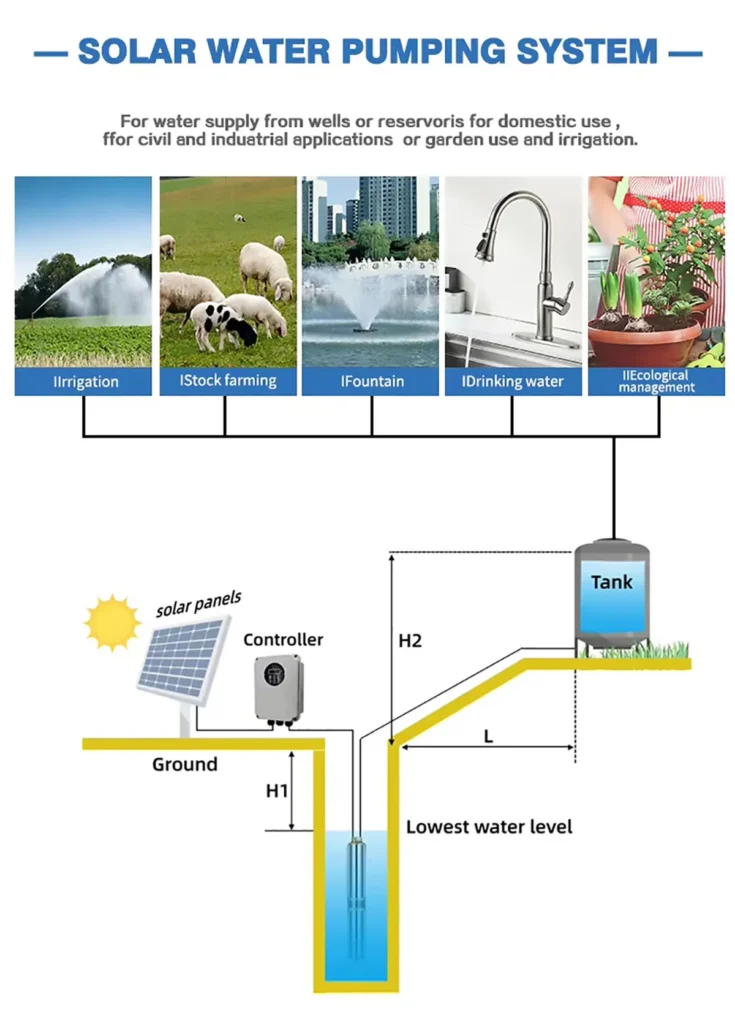
A solar submersible well pump (often termed a solar borehole pump or solar deep well submersible pump) is a motor-pump assembly designed to operate fully submerged in the well water column. It is driven by DC power generated from a Photovoltaic (PV) array, regulated by an MPPT (Maximum Power Point Tracking) controller, and optionally supported by a VFD/inverter for AC motor variants.
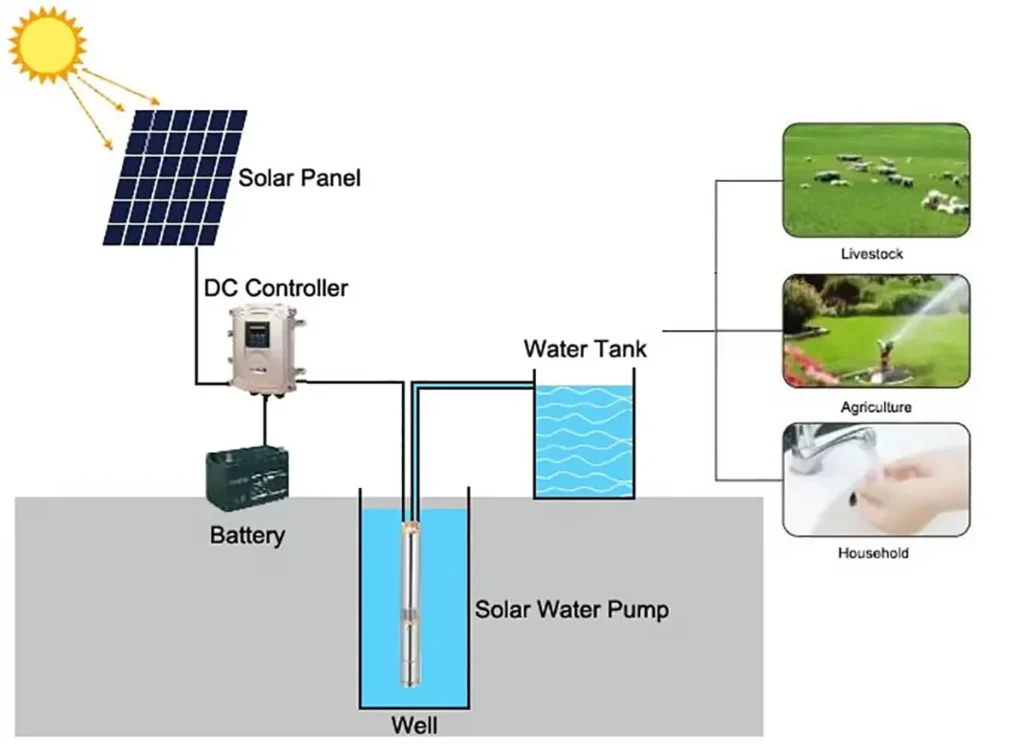
The Engineering Workflow: Sunlight hits the PV array → DC current flows to the MPPT controller → The controller optimizes voltage/current to match the motor’s maximum power extraction curve → The motor actuates the hydraulic end (multi-stage centrifugal impellers for high-head or helical screw for high-viscosity/sandy water) → Solar Submersible Well Pump Water is pressurized up the riser pipe into a storage tank or gravity-fed drip line.
When irradiance diminishes (dusk or heavy cloud), the MPPT algorithm throttles motor RPM. Flow rates decrease proportionally but do not hard-stop until reaching a pre-set cutoff threshold. Modern controllers often support “Solar Priority + Auto-Switch to Grid/Diesel” logic for hybrid resilience.

Global Deployment Scenarios
- Remote Farm Irrigation: Maize fields in Kenya, sorghum plantations in Australia.
- Pastoral & Livestock Watering: Nomadic steppe regions in Mongolia, sheep stations in Patagonia.
- Off-grid Village Drinking Water: Himalayan villages in Nepal, island barangays in the Philippines.
- Eco-Restoration: Wetland recharge projects requiring zero-carbon footprints.
- Construction Site Dewatering: Locations where the electrical grid has not yet been established.
Industry Trend: World Bank data indicates that the “break-even” system size for PV-versus-diesel has dropped significantly due to falling panel prices. What once required a 40kW system to be viable can now be justified at 7.5kW+. This means smallholder farms are now economically viable candidates for solar replacement, not just mega-irrigation schemes.
Compare this technology with our standard electric submersible pumps if your site has reliable grid access.
6 Core Advantages of Solar Submersible Well Pumps (The B2B Value Prop)
1. Superior Total Cost of Ownership (TCO) Over 5–10 Years
While the initial CAPEX is higher, the OPEX is near-zero. There is no fuel cost (the sun is free) and no recurring expenses for oil changes, filters, or injector servicing.
- Nigerian HOMER Study: A 0.4kW PV system versus a 0.5kW diesel generator showed a payback period of ~0.67 years. Over 20 years, the Net Present Cost (NPC) of diesel was 8.97x higher than PV.
- Jingong Field Data: Comparing a 1.1kW PV kit to a 3.3kW diesel generator (derated to 1.1kW pumping load) used 6 months/year: Payback occurred in 5 months, yielding a 5-year saving of $8,800 USD (approx. ¥62,678).
Rule of Thumb: If your site receives ≥ 4 Peak Sun Hours per day and diesel logistics are difficult, solar wins on TCO within 18–36 months.
2. Zero Emissions & ESG Compliance
Solar pumps produce no CO₂, NOx, or risk of diesel spillage into aquifers.
- A single small-scale system saves approximately 102kg of CO₂ annually.
- Many international funding bodies (World Bank, USAID, EU CAP) offer grants that exclusively fund renewable energy pumping, whereas diesel replacements are often ineligible.
3. Operational Stability in Deep-Well Environments
The submersible Solar Submersible Well Pump form factor outperforms surface pumps when the well depth exceeds 20 meters.
- Self-Priming: Being submerged eliminates NPSH (Net Positive Suction Head) issues and the need for complex priming systems.
- Acoustic Signature: With the motor underwater, surface noise levels are typically <35 dB (virtually silent), unlike noisy diesel engines.
- Dry-Run Protection: Integrated MPPT controllers accept water-level sensor inputs (float switches or pressure transducers) to auto-stop the pump when the well draws down, preventing burnout.
4. Minimal Maintenance vs. Internal Combustion
Diesel engines require oil changes every 100–250 hours. In contrast, a Brushless DC (BLDC) or Permanent Magnet Synchronous Motor (PMSM) solar pump has no wearing brushes.
- Wear Components: Only the mechanical seal (2–3 year life) and thrust bearing (ceramic in Jingong units) require periodic inspection.
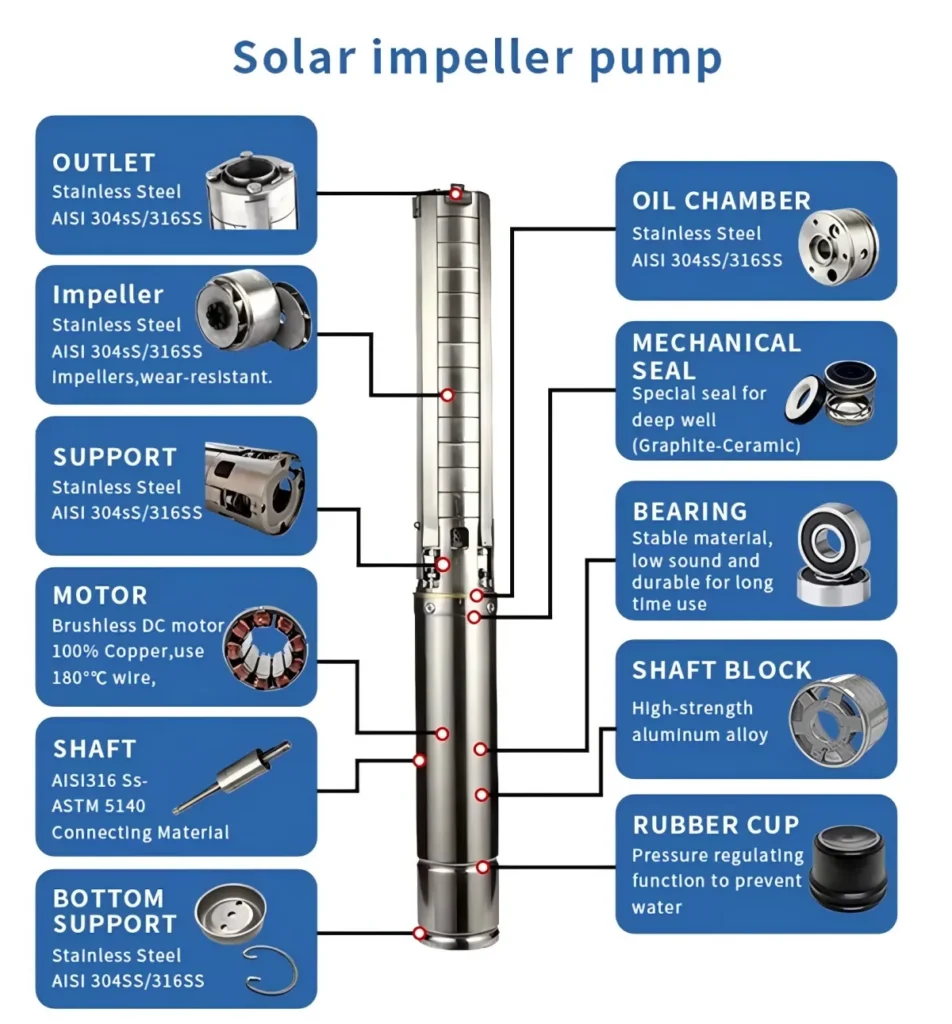
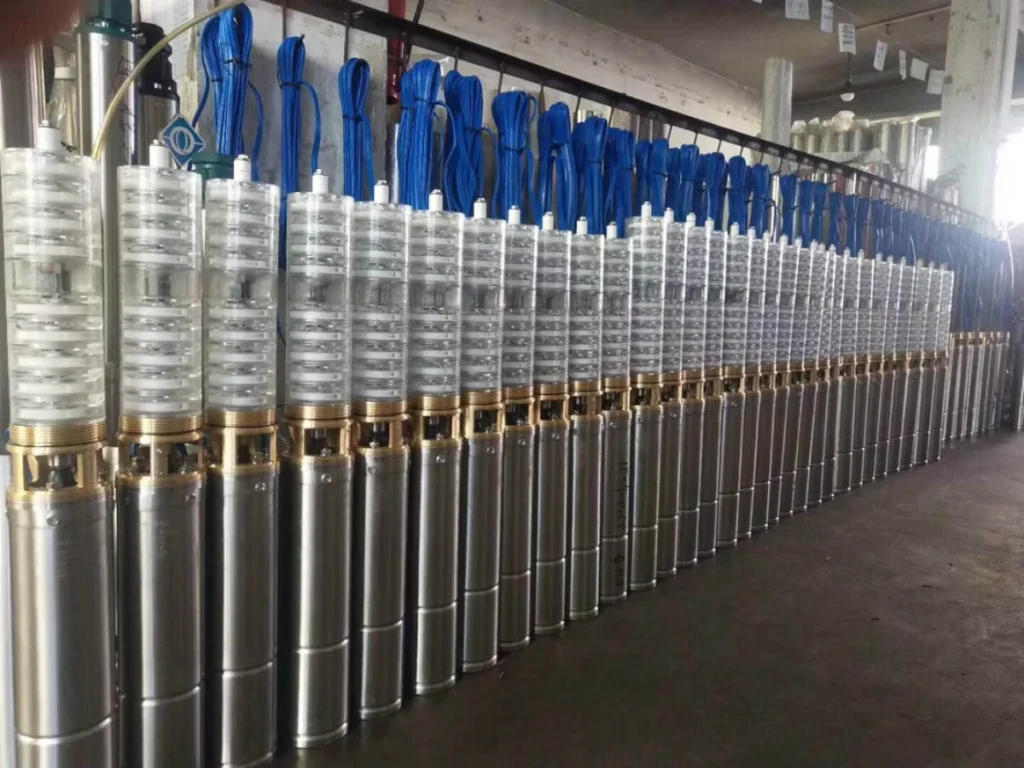
- Construction: Jingong solar submersibles utilize 304 or 316L stainless steel with ceramic thrust bearings, rated for 10+ years in clean boreholes.
Explore our low maintenance solar well pump series designed for harsh environments.
5. Solar Submersible Well Pump True Off-Grid Independence
No grid connection is required. This eliminates transformer pull fees and waiting periods for rural electrification. Systems run autonomously (unattended operation), which is critical for remote pastoral sites.
6. Durability in Aggressive Borehole Chemistry
Standard configurations use 304 Stainless Steel; upgrades to 316L or Duplex SS are available for high-chloride or saline bores. Motors feature IP68 ratings with potted cable entries. Hydraulic designs vary from sand-resistant screw-types (≤150 ppm sand tolerance) to high-efficiency centrifugals.
Disadvantages & Limitations of Solar Submersible Well Pumps (Building Trust)
Transparency regarding limitations is crucial for EEAT compliance. If a vendor only lists pros, both Google and your procurement team will discount the information.
1. Higher Initial CAPEX (Sticker Shock)
A complete solar kit (panels + controller + pump + mounting + riser + cable) typically costs 2–4x a bare diesel engine pump of equivalent hydraulic rating.
- Xingchi Domestic Benchmark: Solar ¥35,000 vs. Diesel ¥8,000 (Ratio ~4.4x).
- Nigerian Study: PV CAPEX = 1.71x diesel gen CAPEX (smaller system size).
Procurement Insight: If your project has a water-access horizon of less than 18 months and fuel is exceptionally cheap, diesel may still win on cash flow. Solar is a long-term infrastructure asset.
2. Sunlight Dependency & Weather Sensitivity
Nighttime operation requires batteries or a hybrid switch. During heavy overcast, flow rates drop proportionally to irradiance. In high-latitude winters (e.g., Nordic regions in December), daily volumes may be unattainable without massive over-sizing.
3. Battery Storage Adds Complexity & Cost
If you require 24/7 water (dairies, fish farms), a LiFePO₄ bank is necessary. This adds 30–50% to the system cost. Furthermore, LiFePO₄ batteries typically have a 5–8 year lifespan before capacity fade necessitates replacement—creating a second CAPEX wave.
4. Solar Submersible Well Pump Professional Sizing & Installation Threshold
Unlike bolting a surface pump to a patio, solar submersibles require expertise:
- PV sizing must align with the pump’s P-V curve, local peak sun hours, and well yield.
- Borehole deployment requires torque arrestors, centralizers, and proper check valve placement.
- Electrical safety demands correct DC cabling gauges and lightning protection (grounding ≤ 4Ω in highland sites).
Jingong mitigates this by providing pre-sized Bills of Materials and WhatsApp/video commissioning support.
5. Geographic & Seasonal Constraints
Sites above 45° latitude during winter or equatorial rainforest zones with <3 peak sun hours often require such significant array oversizing that the CAPEX becomes prohibitive compared to diesel alternatives.
6. Component Matching Sensitivity
The PV array’s open-circuit voltage (Voc) must remain within the controller’s input window. Using non-OEM spare parts or incorrect cable gauges (voltage drop) leads to premature controller failure.
Solar Submersible vs. Traditional Pumps: Side-by-Side Comparison
This section serves as the core conversion hub, linking all Jingong product categories.
| Dimension | Solar Submersible | Diesel/Gasoline | Grid-Electric Submersible | Surface/Land Pump |
|---|---|---|---|---|
| Power Source | PV → MPPT → DC/AC | Diesel/Gas Engine | Mains Electricity | Mains or Engine |
| CAPEX | High | Low–Medium | Medium | Low |
| OPEX | Near Zero | Very High (Fuel) | Medium (Tariff) | Medium |
| Maintenance | Low | Very High | Medium | Low–Medium |
| Max Depth | 200m+ (Centrifugal) 300m+ (Screw) |
Any (Primed) | 200m+ | ≤ 15–20m |
| Off-Grid | Yes | Yes | No | No |
| Lifespan | 8–12 Years | 2–4 Years (Engine) | 8–10 Years | 5–8 Years |
Jingong’s Procurement Cheat Sheet
- Pure Off-Grid + Sun ≥ 4h: Choose Solar Submersible (Our PMSM/BLDC lines).
- Emergency/Flood/Backup: Choose Diesel/Gasoline Pump (Our OHV series).
- Stable Grid + 30–120m Depth: Choose Grid-Electric Submersible.
- Shallow Well < 15m: Choose Surface Centrifugal.
Expert Tip: In 70% of RFQs, the optimal solution is a bundle: a solar primary unit paired with a small diesel/gas standby. Jingong specializes in these pump bundle solutions for monsoon-prone regions.
Suitable & Unsuitable Application Scenarios
✅ Ideal Use Cases (Fit-For-Purpose)
- Remote Cropland: Sahel, Australian Outback, Xinjiang.
- Pastoral Livestock: Semi-fixed stations requiring 10–50 m³/day.
- Village Water Access: Boreholes 30–150m deep.
- NGO/ESG Projects: Where carbon reporting is mandatory.
- Construction Sites: Where grid pull-in is delayed.
❌ Poor Fit Scenarios
- 24/7 Industrial Process: Breweries or fish farms without massive battery banks.
- High-Latitude Winters: Scandinavia or Northern Canada in December (Peak sun < 2h).
- Urban Grid-Connected Homes: Where grid-electric submersibles are cheaper.
- Large-Flow Firefighting: Requires diesel engine-driven centrifugals for GPM surge.
For specific advice, consult our well pump selection guide.
Professional Solar Submersible Well Pump Installation & Maintenance Guide (Jingong Field Notes)
Pre-Installation Checklist
- Well Yield Test: Conduct a 4-hour bail-down test. The solar pump’s draw rate must not exceed the sustainable yield.
- Peak Sun Hours: Utilize PVGIS or NREL databases. Never assume “we get sun all day.”
- Hydraulic Calculation: Flow (m³/h) × Total Dynamic Head (m) = Required kW. Always oversize the PV array by 1.3–1.5x the pump rating to account for controller losses.
Deployment Protocol
- Torque Arrestor: Install 1–2m above the pump to prevent torsion on the drop pipe.
- Centralizers: Place every 10–15m to keep the pump centered, preventing uneven sand scouring.
- Check Valve: Position the first valve 0.5–1m above the pump outlet to prevent water hammer.
- Cabling: Use submersible-grade cable (e.g., YJV22 or UL-approved), clamped to the pipe every 3m.
Maintenance Cadence
| Interval | Task |
|---|---|
| Monthly | Clean PV glass (dust can reduce yield by 5–15%). |
| 6 Months | Inspect controller terminals and Surge Protective Device (SPD) status. |
| 12 Months | Megger test drop cable (Insulation Resistance > 50 MΩ). |
| 24–36 Months | Inspect pump for sand wear (impeller/wear rings). |
| 60–96 Months | Replace LiFePO₄ batteries (if fitted). |
Need help? Contact our after-sales installation service team for technical drawings and video support.
Cost Analysis: CAPEX, OPEX & TCO (CFO Perspective)
5-Year Cost Model (1.1kW System Example)
Data Source: Jingong Export Quoting Sheets (Benchmarked against Domestic Market)
- Solar PV Kit CAPEX: $1,650 (~¥11,820)
- Diesel Gen + Pump CAPEX: $1,120 (~¥8,000) – Assuming gen is already onsite.
- Fuel Cost (6mo x 180d x 6hr x 1.65L/hr): $1,940/year ($9,700 over 5 years)
- Maintenance (Oil/Filters): $70/year ($350 over 5 years)
Result: Solar TCO over 5 years = $1,650. Diesel TCO = $11,370. Net Saving: $9,720.
10-Year TCO Snapshot (Scaled Irrigation)
- Solar: CAPEX $4,900 + OPEX $700 + Maint $700 = $6,300
- Diesel: CAPEX $1,120 + OPEX $29,400 + Maint $2,800 = $33,320
ROI crossover occurs within 18–30 months, heavily dependent on diesel price volatility.
Subsidies & Incentives
Do not ignore policy tailwinds. Programs like the USDA REAP (USA), state-level irrigation rebates (Australia), and CAP eco-schemes (EU) often cover 30–50% of the CAPEX for solar pumping—but explicitly exclude diesel replacements. Jingong provides full CE, ISO, and IEC 60034 documentation to facilitate these applications.
Request a formal quotation including subsidy-eligible documentation today.
Frequently Asked Questions (FAQ)
Note to Webmaster: Wrap this section in FAQPage Schema using Rank Math or Yoast.
Do solar well pumps work on cloudy days?
Yes, but at a reduced flow rate. MPPT controllers track available irradiance; during heavy overcast, you might see 30–60% of the rated flow. For consistent supply during cloudy periods or at night, a battery bank or a hybrid switch to grid/diesel is recommended.
How long do solar submersible well pumps last?
In clean boreholes, expect 8–12 years of service. Jingong units utilize 304/316L stainless steel, ceramic thrust bearings, and BLDC/PMSM motors (eliminating brush wear). Routine service items include the mechanical seal (every 2–3 years) and capacitors (in AC versions).
Do I need batteries with a solar well pump?
Only if you require 24/7 water delivery (e.g., dairies, hospitals). Most agricultural applications simply fill a storage tank while the sun shines and use gravity feed at night. Batteries add 30–50% to the CAPEX and require replacement every 5–8 years.
Can a solar pump completely replace my diesel pump?
In sun-sufficient sites (≥ 4 peak sun hours) with predictable daily volumes, yes—with a TCO payback of 18–36 months. However, for sites with monsoons or high-latitude winters, we recommend keeping the diesel as a “standby” backup. Jingong frequently supplies bundled solutions combining a solar primary with a 5.5 HP diesel portable.
How deep can a solar submersible pump go?
Multi-stage centrifugal solar pumps typically handle heads up to 200m. Helical screw-type pumps can manage 20–300m and are better suited for sandy or high-viscosity water. Jingong’s PMSM deep-well lines are rated for heads up to 680m.
More technical questions? Visit our pump FAQ hub.
Conclusion & Buying Recommendation
If you’ve read this far, you are evaluating a capital expenditure that will impact your water security for the next decade. Here is the Jingong engineering team’s final verdict:
Decision Matrix
- Choose Solar Submersible if: You have ≥ 4 peak sun hours, diesel logistics are painful, and you can utilize a tank buffer. Shop solar submersible well pumps here.
- Choose Diesel Primary if: You require fixed 24/7 flow regardless of weather and have cheap fuel access.
- Choose Grid-Electric if: Your utility is stable and tariffs are low.
- Choose Surface Pump if: Your well is < 15m deep or you are drawing from a river/lake.
Why Jingong?
As a manufacturer of all four pump categories, our recommendation isn’t biased toward selling you a solar unit if a surface pump or diesel unit makes more sense. For most remote-agricultural clients, the “Sweet Spot” is a Primary-Standby Pair (Solar 70% + Diesel 30%).
Next Step
To receive a sized Bill of Materials (BOM) with a 5-year CAPEX/OPEX table within 24 hours, please Request a Quote. Include: (1) Well depth & static/dynamic level, (2) Daily m³ requirement, (3) Latitude/Longitude or peak sun hours, and (4) Local diesel price (if applicable).
View the Full Jingong Pump Catalog to explore our entire range of B2B pumping solutions.

0 Comments