
Introduction: Why This Guide Exists
Traditional diesel and gasoline pumps carry hidden costs — volatile fuel prices, high maintenance, frequent breakdowns, and zero sustainability credentials. Grid-powered pumps fail in remote farmland where electricity is unstable or unavailable. An off-grid solar water pump for irrigation eliminates fuel cost, runs automatically, and delivers decades of low-cost operation. This article is your complete B2B reference — technically rigorous, commercially practical, and built to help you make confident procurement decisions.
Throughout this guide, we also cross-reference our full pump portfolio — solar pumps, submersible pumps, land/centrifugal pumps, and gasoline/diesel pumps — so you can see exactly how a full-spectrum solar water pump for irrigation manufacturer evaluates every application scenario. When you are ready to request a quote, our engineering team provides free selection support, OEM/ODM customization, and bulk pricing.
What Is a Solar Water Pump for Irrigation?
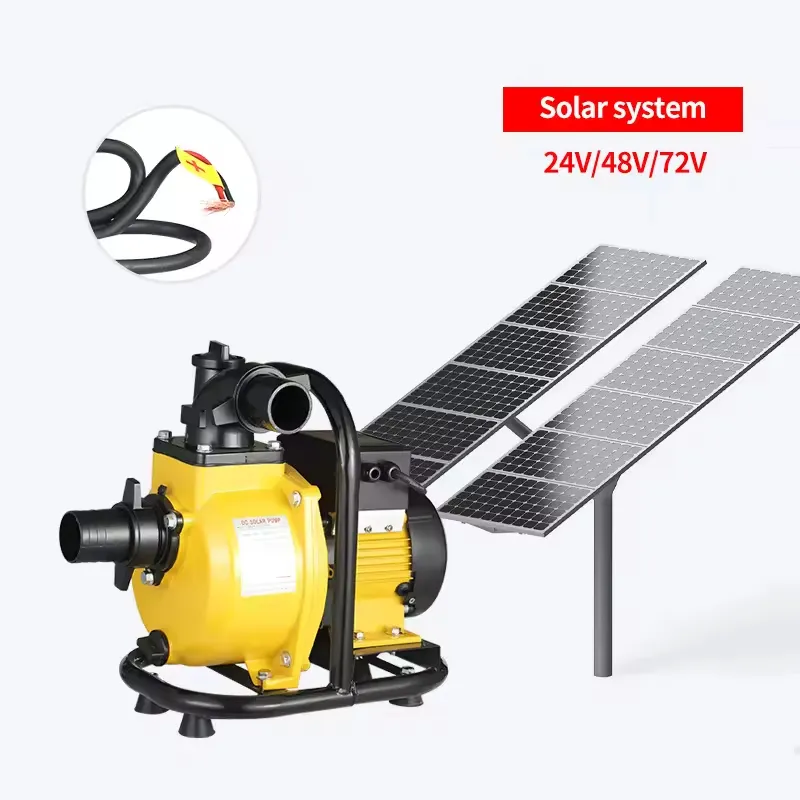
A solar water pump for irrigation is a commercial-grade water pumping system that converts sunlight into electrical energy via photovoltaic (PV) panels, then uses that energy to drive a pump body — extracting groundwater, river water, or pond water and delivering it to fields, orchards, greenhouses, or water storage tanks for agricultural irrigation.
Unlike small residential solar pumps designed for backyard gardening, a B2B-class solar water pump for irrigation — such as the systems engineered by a professional solar water pump for irrigation manufacturer like Jingong — is built for high duty cycles, large flow rates, deep-well lift capability, and 10–25 year service life. Core components include:
- Solar PV Array — monocrystalline or polycrystalline panels converting sunlight to DC electricity
- Solar Pump Controller (with MPPT) — the intelligent brain managing maximum power point tracking, soft start/stop, dry-run protection, over/under-voltage protection
- Pump Body — submersible or surface/centrifugal, selected per well depth and flow demand
- Sensors & Cabling — water-level sensors, brackets, and weather-proof wiring
- Optional Storage — batteries OR a “water storage instead of battery storage” design philosophy
The defining B2B advantage is off-grid independence: the entire system operates without municipal electricity, making it the preferred solution for remote farms, arid-zone agriculture, and developing-region irrigation projects. A credible solar water pump for irrigation manufacturer will always engineer the PV array size, controller rating, and pump curve together — not sell them as separate, mismatched parts.
Core Components & Working Principle of a Solar Irrigation Pump
System Architecture
A professionally engineered solar water pump for irrigation follows this energy chain:
- Photovoltaic Conversion: Solar panels absorb irradiance and generate DC electricity. Array wattage is calculated against pump rated power, with a 20% margin to absorb daily irradiation fluctuations.
- MPPT Controller Regulation: The controller tracks the Maximum Power Point in real time, ensuring the PV array always outputs optimal power even under morning, evening, or cloudy conditions.
- Pump Drive: DC pumps are driven directly; AC pumps pass through an inverter stage. The controller adjusts motor speed based on available solar power, preventing frequent start-stop and protecting the motor.
- Water Delivery: Submersible pumps push water upward through riser pipes; surface pumps draw water via suction and discharge it to the irrigation network or storage tank.
- Protection & Monitoring: Dry-run detection stops the pump when the water source is depleted; over-voltage/under-voltage/current limiting safeguards the motor; advanced controllers log operational data for remote monitoring.
Why “Water Storage Instead of Battery Storage” Matters
Leading solar water pump for irrigation manufacturer designs — including Jingong’s commercial systems — adopt the water-storage-instead-of-battery-storage philosophy. Excess daytime pumping fills elevated tanks or reservoirs, eliminating the need for expensive battery banks. This reduces system cost by 30–40% and removes the #1 maintenance headache of solar installations. The system pumps when the sun shines and irrigation draws from the tank anytime.
Engineering Insight: A properly sized solar irrigation pump with MPPT control can improve pumping efficiency by 40%+ over conventional fixed-frequency drives — a critical factor for a solar water pump for irrigation manufacturer targeting commercial-scale agriculture.
Main Types of Solar Irrigation Pumps
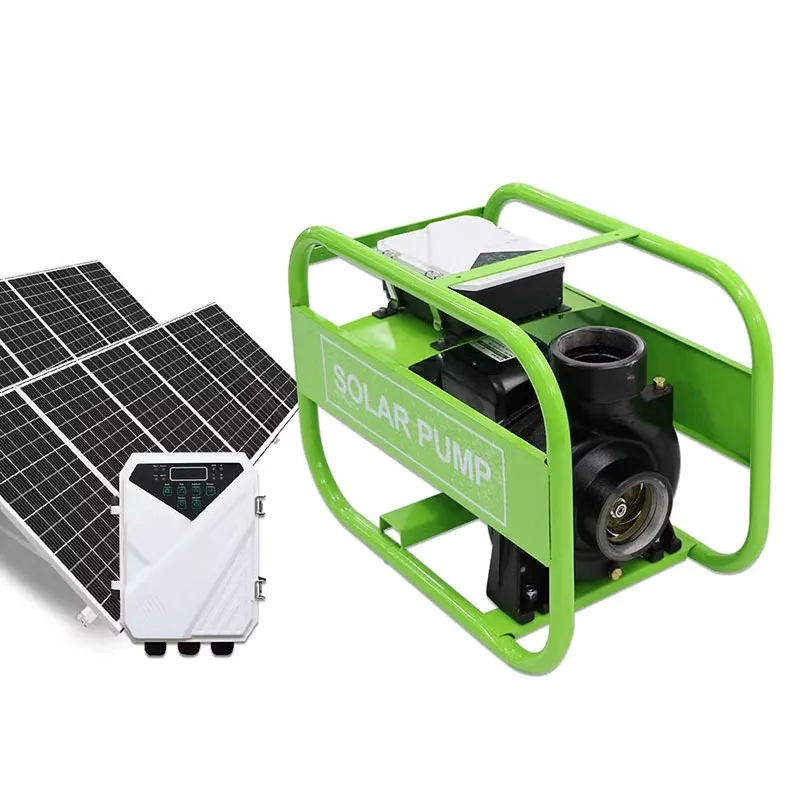
As a full-spectrum solar water pump for irrigation manufacturer, Jingong produces every major type of solar-driven agricultural pump. Below is the classification that matters for B2B buyers:
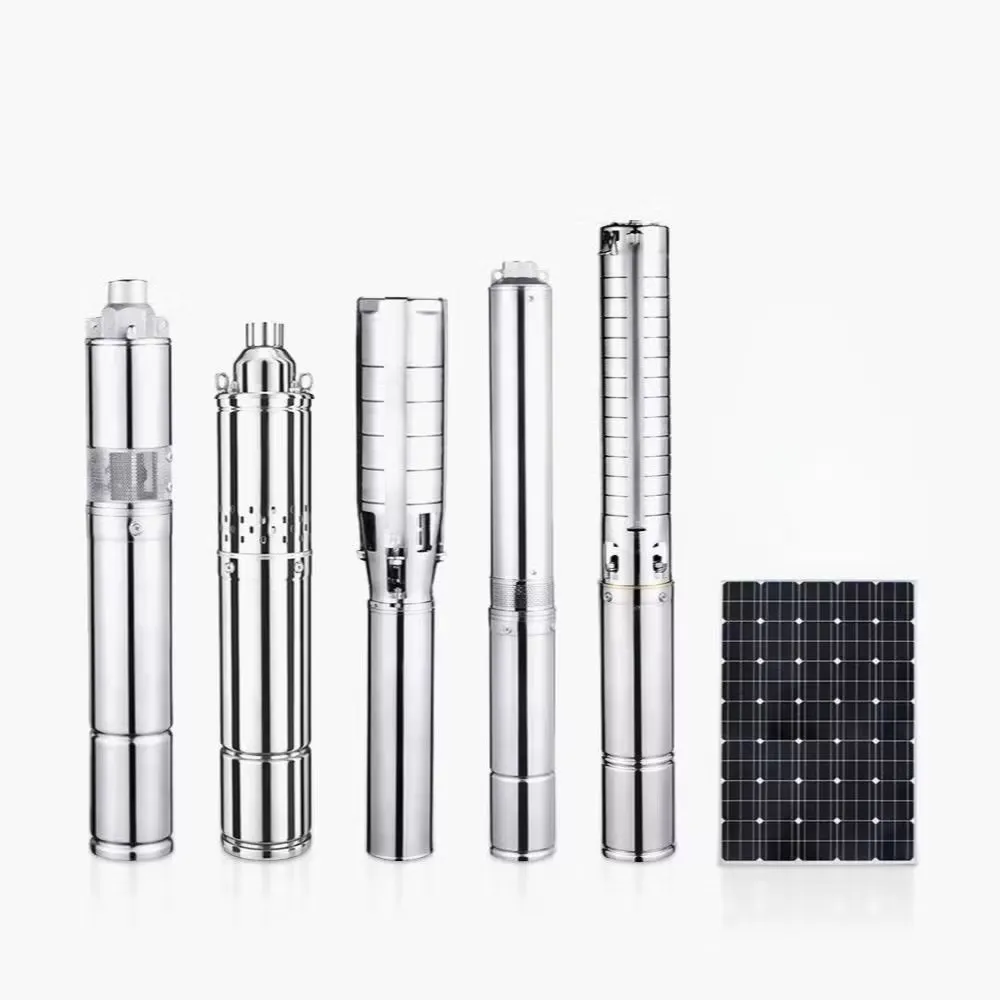
1. Solar Submersible Pump (Deep Well Solar Pump)
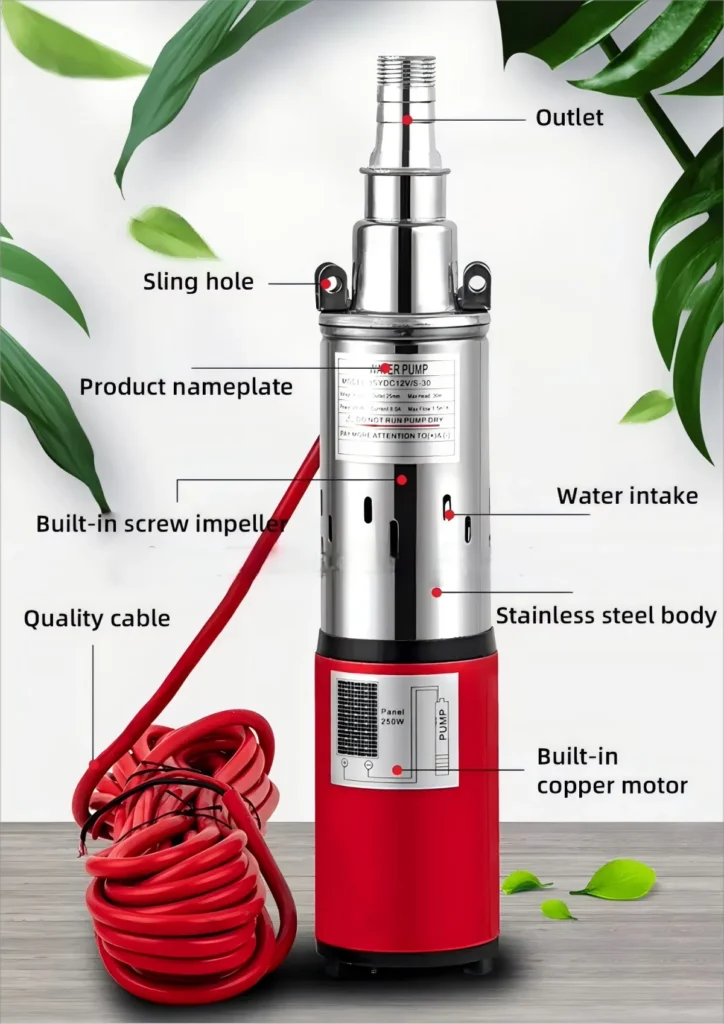
Installed underwater inside a well, borehole, or deep pond. Delivers high head, high pressure, and quiet operation. Ideal for:
- Deep-well agricultural irrigation (lift depths up to 200m+)
- Remote farmland where groundwater is the only source
- Large-scale farm projects requiring consistent high-pressure distribution
For any solar water pump for irrigation manufacturer, the submersible line represents the highest engineering bar — stainless steel construction, sand resistance, and motor cooling via passing water flow are non-negotiable.
2. Solar Land Pump / Solar Surface Centrifugal Pump
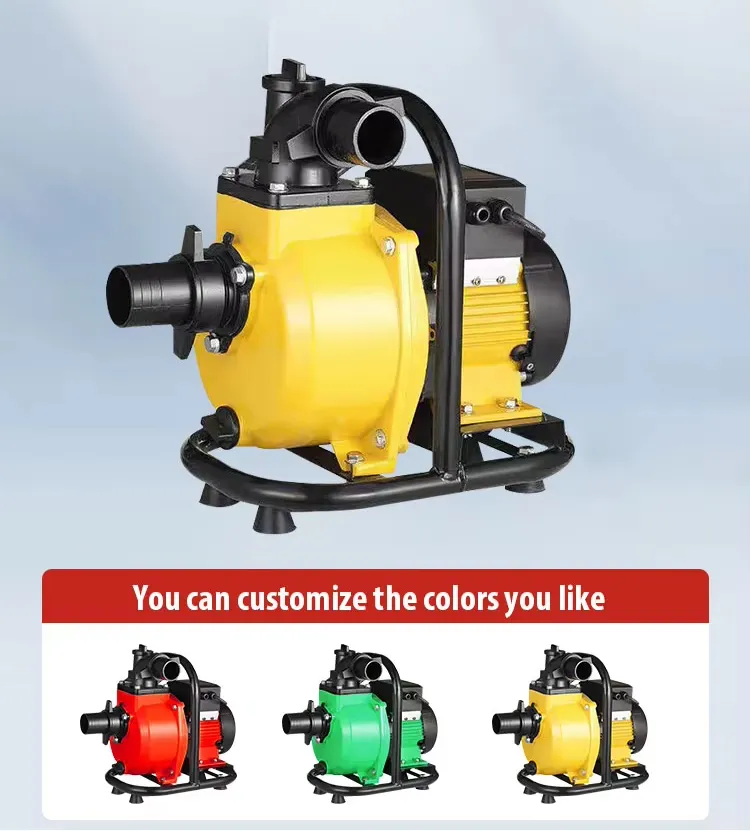
Installed above water level, drawing from rivers, lakes, ponds, or shallow wells. Characteristics:
- Easy installation and maintenance — no hoisting equipment needed
- Cost-effective for flat farmland, orchards, and medium-flow irrigation
- Self-priming and centrifugal variants available
A flexible solar water pump for irrigation manufacturer will offer both DC direct-drive surface pumps (simpler, cheaper) and AC surface pumps via inverter (broader model selection, higher power ceiling).
3. Solar Floating Pump
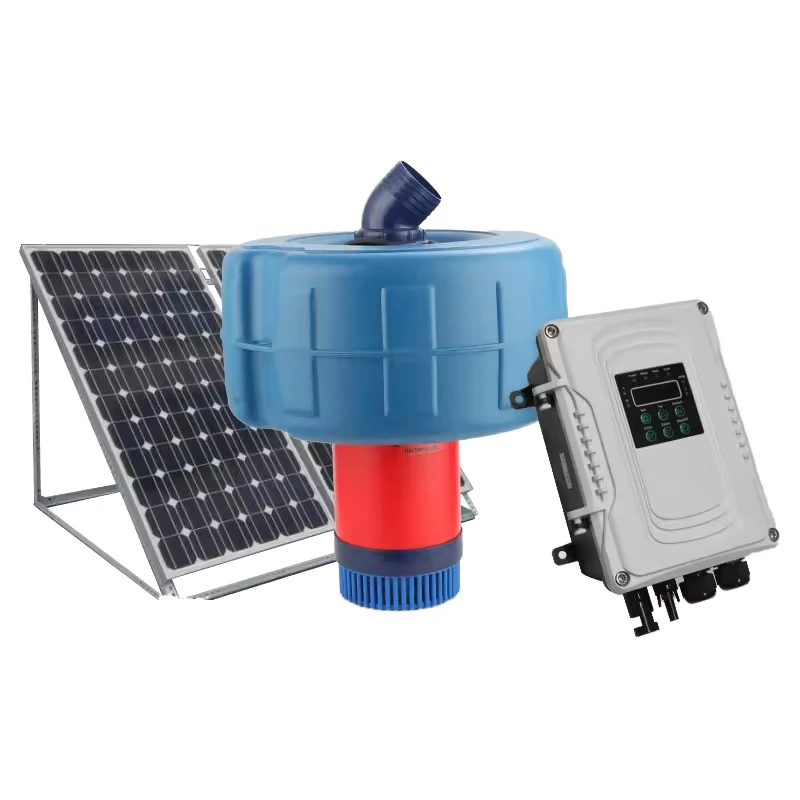
Directly floats on ponds, reservoirs, or water storage lagoons. Perfect for fish farms, reservoir irrigation, and aquaculture circulation.
4. Complementary Conventional Pumps (from the Same Manufacturer)
Jingong also manufactures gasoline and diesel water pumps for emergency, backup, or short-term irrigation scenarios — giving B2B buyers a single-source supply relationship. When you choose a solar water pump for irrigation manufacturer that also builds conventional pumps, you gain unified after-sales support, shared spare-part inventory, and consistent engineering standards across your entire pump fleet.
Key Advantages & Disadvantages of Solar Irrigation Pumps
Honest, B2B-focused assessment — no marketing fluff. Every reputable solar water pump for irrigation manufacturer should present both sides transparently.
✅ Advantages
- Zero fuel cost — sunlight is free; no diesel, no gasoline, no electricity bills
- Low operation cost — once installed, ongoing expenses approach near-zero
- Off-grid independence — perfect for remote farms, arid regions, and developing-country agriculture
- Low noise & eco-friendly — zero emissions, no noise pollution, supports carbon-neutral farming
- Long lifespan — 10–25 years of service with proper maintenance
- Low maintenance — fewer moving parts vs. internal combustion engines; mainly panel cleaning and periodic inspection
- Automated operation — starts at sunrise, stops at sunset, no operator required
- Scalable for large projects — multiple units can serve thousands of acres
⚠️ Disadvantages (and How a Professional Manufacturer Solves Them)
- Weather dependent → Solved by: oversized PV array + water storage tanks + optional battery backup for critical night irrigation
- Higher upfront investment → Solved by: 3–5 year ROI calculation vs. diesel; bulk order discounts from a direct solar water pump for irrigation manufacturer
- Requires professional system design → Solved by: free engineering selection service, on-site assessment support, and detailed installation manuals
- Component mismatch risk if poorly sourced → Solved by: integrated system supply from a single solar water pump for irrigation manufacturer ensuring PV array, controller, and pump are perfectly matched
Trust Signal: A transparent solar water pump for irrigation manufacturer never hides the downsides. We address every disadvantage with a concrete engineering solution — that is what separates a true factory from a trading company.
Solar Pump vs. Diesel/Gasoline Pump vs. Electric Pump: Full Comparison
This comparison table is the core decision-making tool for B2B buyers. As an established solar water pump for irrigation manufacturer, Jingong produces all four pump types, so this comparison is vendor-neutral and technically objective.
| Dimension | Solar Pump | Submersible Pump (Electric) | Land/Surface Pump (Electric) | Diesel/GasolinePump |
|---|---|---|---|---|
| Operating Cost | Near zero (free sunlight) | Electricity bill applies | Electricity bill applies | High — fuel + oil + maintenance |
| Off-Grid Capability | ✅ Full independent | ❌ Requires grid | ❌ Requires grid | ✅ Independent |
| Maintenance Frequency | Low — panel cleaning, annual check | Medium | Medium | High — engine servicing |
| Lifespan | 10–25 years | 8–15 years | 8–15 years | 3–7 years |
| Initial Investment | Higher | Medium | Lower | Lower |
| Environmental Impact | Zero emission | Grid-dependent | Grid-dependent | High emission, noisy |
| Best Use Case | Remote farms, large-scale sustainable agriculture | Deep wells with stable grid | Shallow water, flat farmland | Emergency, backup, short-term |
B2B Selection Recommendations
- Remote off-grid farmland → Solar pump (the definitive solution from any serious solar water pump for irrigation manufacturer)
- Deep well (>50m lift) → Solar submersible pump or electric submersible pump
- Short-term / emergency irrigation → Gasoline or diesel pump
- Fixed flat farmland with reliable grid → Electric land/surface pump
- Hybrid projects → Solar primary + diesel backup for 24/7 guarantee
Typical B2B Application Scenarios
A professional solar water pump for irrigation manufacturer serves diverse commercial and governmental clients. Key deployment scenarios include:
🌾 Large-Scale Commercial Farms
Thousands of acres of wheat, corn, soybeans, or rice. Multiple solar pumping stations with centralized water storage feed drip or sprinkler networks. Bulk procurement directly from a solar water pump for irrigation manufacturer like Jingong ensures uniform specifications and streamlined spare parts.
🍎 Orchards & Permanent Crop Plantations
Apple orchards, vineyards, olive groves, banana/citrus plantations — all benefit from consistent solar-powered micro-irrigation. Solar submersible pumps draw groundwater; solar surface pumps distribute from reservoirs.
⛰️ Remote & Arid-Zone Agriculture
Off-grid locations in Africa, the Middle East, Latin America, and Central Asia. A solar water pump for irrigation manufacturer with international project experience can deliver turnkey systems — PV array, controller, pump, tank, and drip lines — pre-configured for the buyer’s exact GPS coordinates and irradiance data.
🏛️ Government Agricultural Projects & Poverty Alleviation
Solar irrigation forms the backbone of many national agricultural modernization programs. From Pakistan to Turkey, from the Philippines to Kenya, solar pumping technology has been deployed in hundreds of projects under various development initiatives, with documented success in improving irrigation levels and farmer income.
💧 Terraced Fields & Mountainous Farmland
High-lift solar pumping stations (like the 235m lift station documented in Sichuan, China) prove that solar irrigation easily handles extreme terrain. A capable solar water pump for irrigation manufacturer engineers for high-head, low-flow conditions with precision.
🌱 Greenhouses & High-Value Crop Facilities
Controlled-environment agriculture demands precise water scheduling. Solar pumps with smart controllers enable automated, sensor-driven irrigation cycles.
B2B Purchasing & Selection Guide
Choosing the right system from a solar water pump for irrigation manufacturer requires disciplined engineering evaluation. Here is the exact framework Jingong’s sales engineers use for every bulk inquiry:
Step 1: Define Your Hydraulic Requirements
- Total Head (H_total) = well depth + discharge height + friction loss (approximately 3m per 100m of horizontal pipe)
- Daily Water Demand = crop water requirement × irrigated area × peak season factor
- Required Flow Rate = daily water demand ÷ average effective sunshine hours in your region
Step 2: Evaluate Site Conditions
- Local solar irradiance (peak sun hours/day)
- Water source type (deep well, borehole, river, pond, reservoir)
- Available installation space for PV array
- Need for night irrigation (→ battery option or oversized tank)
- Grid availability (hybrid possibility)
Step 3: Select Pump Type
- Well depth > 20m → Solar submersible pump
- Surface water source → Solar surface/centrifugal pump
- Very deep well (>150m) → High-head submersible with 3-phase AC motor + inverter
- Moderate flow, cost-sensitive → DC direct-drive solar pump
Step 4: Size the PV Array
Rule of thumb: PV array wattage ≈ pump rated power × 1.2–1.3 (20–30% margin). A professional solar water pump for irrigation manufacturer runs proprietary software simulation using your GPS coordinates, ensuring year-round adequacy.
Step 5: Choose Controller Features
Must-have: MPPT, soft start, dry-run protection, over/under-voltage protection. Optional: IoT remote monitoring, mobile app, multi-pump parallel control.
Step 6: B2B Bulk Order Considerations
- OEM/ODM: Private labeling, custom voltage (110V/220V/380V), custom panel branding
- MOQ & Lead Time: Direct factory orders reduce MOQ and shorten lead times vs. trading companies
- Spare Parts Package: Controllers, sensors, cables, mounting kits
- Technical Documentation: Installation manuals, wiring diagrams, maintenance guides in English/French/Spanish/Arabic
- After-Sales: 12–24 month warranty, remote troubleshooting, local service partner network
Why choose a direct solar water pump for irrigation manufacturer like Jingong? You eliminate trading-company margins, get authentic factory pricing for bulk orders, receive genuine technical support from the engineers who designed the system, and secure long-term spare part supply guaranteed by the production line itself.
Frequently Asked Questions
Are solar water pumps good for irrigation?
Yes. For off-grid or high-fuel-cost regions, a solar water pump for irrigation delivers the lowest total cost of ownership over its 10–25 year lifespan. A professional solar water pump for irrigation manufacturer like Jingong engineers each system for specific hydraulic and irradiance conditions, ensuring reliable daily water delivery without fuel expenses.
How long does a solar irrigation pump last?
Quality solar pumping systems operate 10–25 years. The PV panels typically carry 25-year performance warranties; the pump and controller last 10–15 years with proper maintenance. Choosing a reputable solar water pump for irrigation manufacturer with certified components is the single biggest factor in achieving maximum lifespan.
Can solar pumps work without battery?
Absolutely. Most modern commercial solar irrigation systems use the “water storage instead of battery storage” design — excess daytime pumping fills elevated tanks, eliminating battery cost and maintenance entirely. If night irrigation is mandatory, a solar water pump for irrigation manufacturer can integrate optional battery backup or hybrid grid connection.
Which is better: solar pump or diesel pump for farming?
For sustainable, long-term commercial agriculture, solar wins decisively on operating cost, maintenance, and environmental compliance. Diesel remains relevant only for emergency backup, extremely low sunlight regions, or very short-term projects. Many B2B buyers purchase both from a single solar water pump for irrigation manufacturer — solar as primary, diesel as backup.
What type of solar pump is best for deep well irrigation?
A solar submersible pump is purpose-built for deep wells. For lifts beyond 100m, a 3-phase AC submersible pump driven by a solar pump inverter delivers the necessary head and efficiency. A qualified solar water pump for irrigation manufacturer will calculate exact specifications using your well depth, pipe diameter, and daily water demand.
What certifications should a B2B buyer require from a solar water pump for irrigation manufacturer?
Look for ISO 9001 (quality management), CE, RoHS, IP65/IP68 ingress protection ratings for pumps and controllers, and TÜV or UL certification for PV components. Direct solar water pump for irrigation manufacturer partnerships ensure all documentation is authentic and readily provided.
How much can a farm save by switching from diesel to solar irrigation?
Documented projects show solar pumping stations can reduce daily pumping electricity and labor costs by up to 90%. Over a 10-year period, the cumulative savings typically exceed the initial system investment by 3–5×. A transparent solar water pump for irrigation manufacturer provides ROI projections tailored to your fuel prices and irrigation volume.
Conclusion: Your Partner in Solar Irrigation
Solar irrigation is no longer experimental — it is a mature, globally-proven technology deployed in hundreds of thousands of agricultural projects worldwide. As a dedicated solar water pump for irrigation manufacturer, Jingong Technology brings 10+ years of pump engineering expertise, full-category product coverage (solar, submersible, land/centrifugal, gasoline, diesel), international project deployment experience, and genuine factory-direct pricing for B2B buyers.
Whether you are an irrigation contractor specifying pumps for a 10,000-acre government project, a farm owner seeking to eliminate diesel costs, or a wholesaler looking for a reliable solar water pump for irrigation manufacturer for private-label supply — we have the engineering capability, production capacity, and global logistics experience to deliver.
Our commitment as your solar water pump for irrigation manufacturer extends beyond the sale: free system design, OEM/ODM customization, bulk order discounts, comprehensive technical documentation, 12–24 month warranty, and lifetime spare parts support.
🚀 Ready to Start?
- 📐 Free Engineering Selection — Send us your well depth, required flow, and location; receive a complete system proposal within 48 hours.
- 💰 Bulk Order Quotation — Transparent factory pricing with volume discounts.
- 🏷️ OEM/ODM Service — Private label, custom voltage, branded PV panels.
- 📦 Sample Order — Test our quality before committing to bulk volume.
- 🌍 Global Shipping — EXW, FOB, CIF, DDP terms available.
Contact Jingong Technology — your trusted Solar Water Pump for Irrigation manufacturer — and transform your agricultural irrigation into a zero-fuel-cost, sustainable operation.
🔗 Official Website |
All Solar Pump Products |
Contact Us for Bulk Quote

0 Comments