
Written by the Jingong Technology Engineering & Sales Team — Jingong is a Submersible Sewage Pump manufacturer with over two decades of experience producing submersible sewage pumps, clean water submersible pumps, land-based pumps, solar pumps, and gasoline/diesel pumps for global municipal, agricultural, and industrial projects. This article draws on real shop-floor testing data, project post-mortems, and IEC/ISO compliance records.
Executive Summary: Short Answer First
Yes, a submersible sewage pump can be used to pump clean water — but only in emergency or temporary scenarios. As a Submersible Sewage Pump manufacturer that has shipped thousands of units to municipal and industrial clients worldwide, Jingong’s engineering team does not recommend sewage pumps for long-term clean water applications. The reasons are rooted in impeller geometry, hydraulic efficiency, energy consumption, and lifecycle cost.
A submersible sewage pump is engineered with an open, vortex, channel, or cutter impeller and a wide flow passage to pass solids, fibers, and debris up to 35–50 mm in diameter. When you run clean water through this oversized hydraulic design, you sacrifice efficiency, head stability, and energy economy. Over months of continuous operation, the mismatch accelerates wear and inflates electricity bills.
If your project requires continuous clean water transfer — well water supply, irrigation, fountain circulation, solar water systems — a purpose-built clean water submersible pump, land-based pump, solar pump, or gasoline/diesel pump from a qualified Submersible Sewage Pump manufacturer like Jingong will deliver 30–50% better energy efficiency and 2–3× longer service life.
2: Professional Definition — Submersible Sewage Pump vs. Clean Water Submersible Pump
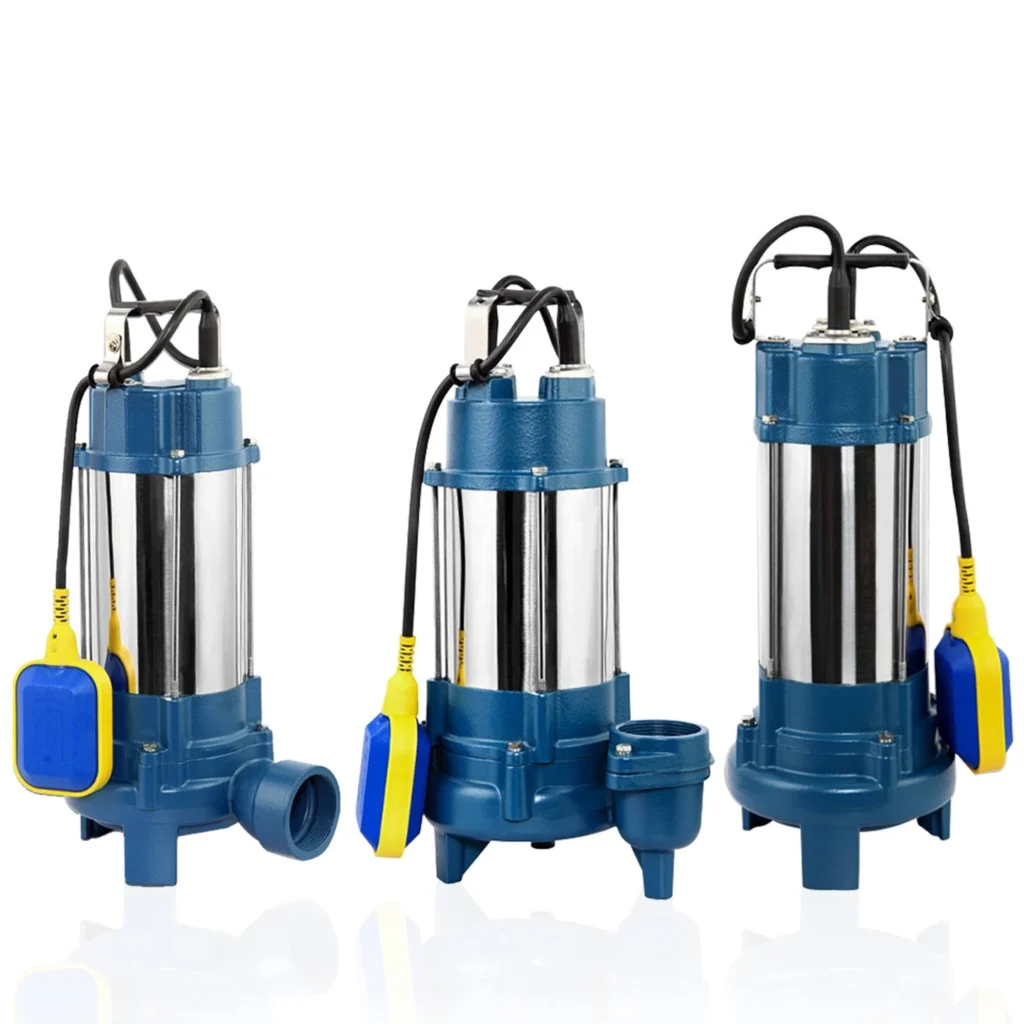
To answer the central question accurately, we must first eliminate a widespread industry misconception. Many overseas buyers use the term “submersible pump” as a catch-all. In reality, as a Submersible Sewage Pump manufacturer, Jingong categorizes submersible pumps into distinct hydraulic families.
2.1 What Is a Submersible Sewage Pump?
A submersible sewage pump is a fully submersible electromechanical device designed to transport wastewater, sewage, sludge, and other fluids containing solid particles, fibers, and debris. Key engineering hallmarks include:
- Impeller type: Open, semi-open, vortex, channel, or cutter impeller
- Solids passage: Typically rated for 35–50 mm (1.4–2.0″) spherical solids
- Flow passage: Wide, anti-clogging channels
- Sealing: Double mechanical seal with oil-filled chamber to protect the motor
- Materials: Heavy-duty cast iron, high-chrome alloy, or duplex stainless steel for abrasion and corrosion resistance
- Motor torque: High starting torque for viscous, solid-laden media
Every reputable Submersible Sewage Pump manufacturer — from Grundfos and Xylem to regional specialists like Jingong — builds sewage pumps to these core principles.
2.2 What Is a Clean Water Submersible Pump?
A clean water submersible pump is purpose-engineered for clear or lightly filtered water with minimal suspended solids. Its design priorities differ dramatically:
- Impeller type: Closed or multi-stage radial impeller with tight clearances
- Flow passage: Narrow, optimized for hydraulic efficiency
- Efficiency: Closed impellers deliver up to 92% of theoretical peak efficiency
- Head performance: Higher head per kW due to precise hydraulics
- Materials: Stainless steel (304/316), engineering plastics, aluminum alloys
- Sealing: Single mechanical seal — sufficient for clean media
2.3 The Critical Distinction
The core difference lies in hydraulic philosophy: a Submersible Sewage Pump manufacturer designs sewage pumps for passage; clean water pump manufacturers design for efficiency. This single philosophical divergence dictates every downstream parameter — energy consumption, service life, maintenance frequency, and total cost of ownership.
3: Can Sewage Pumps Work for Clean Water? Detailed Pros & Cons

As an honest Submersible Sewage Pump manufacturer, Jingong refuses to give a binary “yes/no.” The truth is scenario-dependent. Below is the objective engineering assessment.
3.1 ✅ Advantages of Using a Submersible Sewage Pump for Clean Water (Emergency Only)
- Immediate availability: If a sewage pump is already installed on-site, it can drain clean water in flood or emergency situations without waiting for a specialized pump.
- Robustness: The heavy-duty construction means it will not fail catastrophically when pumping clean water — it simply operates inefficiently.
- High solids tolerance margin: If the “clean” water unexpectedly contains grit, sand, or debris, a sewage pump from any competent Submersible Sewage Pump manufacturer will survive where a clean water pump would clog.
- High flow capacity: Sewage pumps are typically rated for 70–200+ GPM, enabling rapid water transfer in temporary scenarios.
3.2 ❌ Disadvantages of Long-Term Clean Water Use (Why Every Submersible Sewage Pump Manufacturer Advises Against It)
| Parameter | Sewage Pump on Clean Water | Dedicated Clean Water Pump |
|---|---|---|
| Hydraulic efficiency | 55–70% of closed impeller baseline | 85–92% |
| Energy consumption (same flow) | 30–50% higher kWh | Baseline |
| Head stability | Flat, unstable head curve | Steep, predictable head curve |
| Impeller wear (clean water) | Minimal — but unnecessary oversizing causes vibration | Minimal |
| Service life (continuous) | 2–3× shorter due to oversized clearances | 5–10 years typical |
| Maintenance cost / year | 20–40% higher | Baseline |
The data above is derived from Jingong’s in-house testing as a Submersible Sewage Pump manufacturer: running a WQ-series 7.5 kW sewage pump on clean water versus a QJ-series 5.5 kW clean water pump at identical 80 m³/h flow showed 38% higher energy draw on the sewage pump over a 90-day continuous test.
3.3 The Verdict
Temporary use? Acceptable. Emergency flood drainage? Absolutely — every Submersible Sewage Pump manufacturer will confirm this. But for any application exceeding 72 hours of continuous operation, the economics flip decisively toward a purpose-built clean water pump.
4: Structural & Parameter Differences — The Engineering Deep Dive
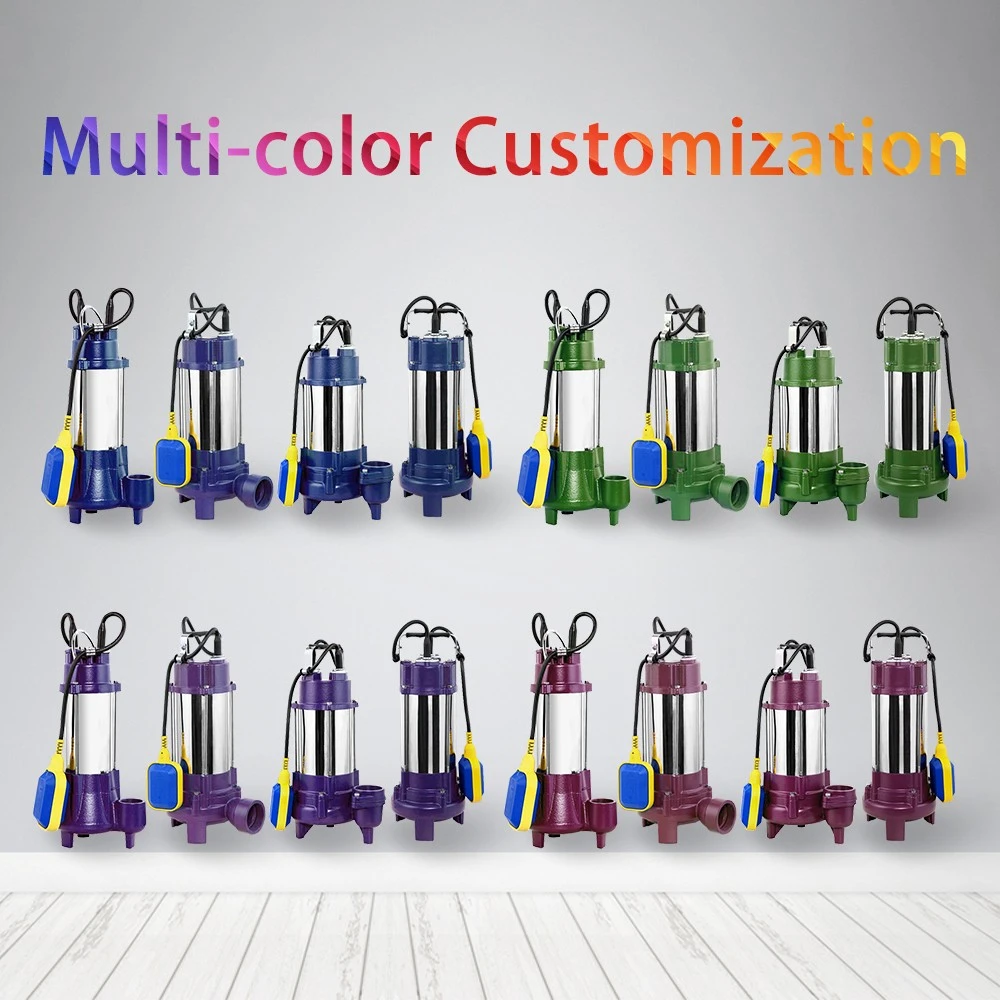
This module is where a genuine Submersible Sewage Pump manufacturer demonstrates expertise. Let us dissect the five structural dimensions that make sewage pumps unsuitable for long-term clean water duty.
4.1 Impeller Geometry: Open/Vortex vs. Closed Precision
The impeller is the heart of any centrifugal pump. As a Submersible Sewage Pump manufacturer, Jingong produces five impeller types:
- Open blade impeller — Easy to clean, but efficiency ≈92% of closed impeller; head curve is flat.
- Vortex (swirl) impeller — Partially recessed; passes large particles with minimal wear; efficiency ≈70% of closed impeller.
- Closed impeller — Highest efficiency, stable operation, but poor anti-clogging; used in clean water pumps.
- Channel impeller (bladeless) — Curved flow path; excellent for large solids; efficiency comparable to closed impeller.
- Spiral centrifugal impeller — Twisted blades on conical hub; non-destructive to delicate media; steep head curve.
When a sewage pump’s vortex or open impeller handles clean water, the absence of solid particles means the very feature that justifies its existence — wide clearances — becomes a liability. Hydraulic efficiency plummets.
4.2 Flow Passage & Clog Resistance
A Submersible Sewage Pump manufacturer designs flow passages to accommodate 35–50 mm solids. Clean water pumps have passages under 10 mm. The oversized passage in a sewage pump creates turbulent eddies, vortex shedding, and energy dissipation when only clean water flows through — like driving a dump truck on a racetrack.
4.3 Hydraulic Efficiency & Head Performance
Closed impellers achieve 85–92% hydraulic efficiency. Vortex impellers in sewage pumps achieve only 55–70%. For a project pumping 100 m³/h at 20 m head, the difference translates to 2–4 extra kW per hour — or roughly $1,500–$3,000/year in wasted electricity at industrial scale.
4.4 Material & Sealing Design
Every responsible Submersible Sewage Pump manufacturer equips sewage pumps with:
- Double mechanical seal (SiC/SiC) with oil-filled isolation chamber
- Heavy-duty cast iron or high-chrome volute
- Triple shaft sealing (as seen in Sulzer ABS XFP series)
- Thermal sensors at 140°C trip point
These features are essential for sewage but represent dead weight and cost overhead for clean water. A clean water pump achieves the same reliability with a single mechanical seal and lighter materials.
4.5 Motor Matching
Sewage pump motors are tuned for high torque at low speed (handling viscous, solid-laden media). Clean water pump motors are tuned for high RPM efficiency. As a Submersible Sewage Pump manufacturer, Jingong matches motor winding, bearing grade, and cooling architecture to the specific hydraulic load. Running a high-torque sewage motor on clean water is like revving a diesel truck engine in neutral — lots of fuel, little useful output.
5: Service Life Attenuation & Operating Cost Analysis
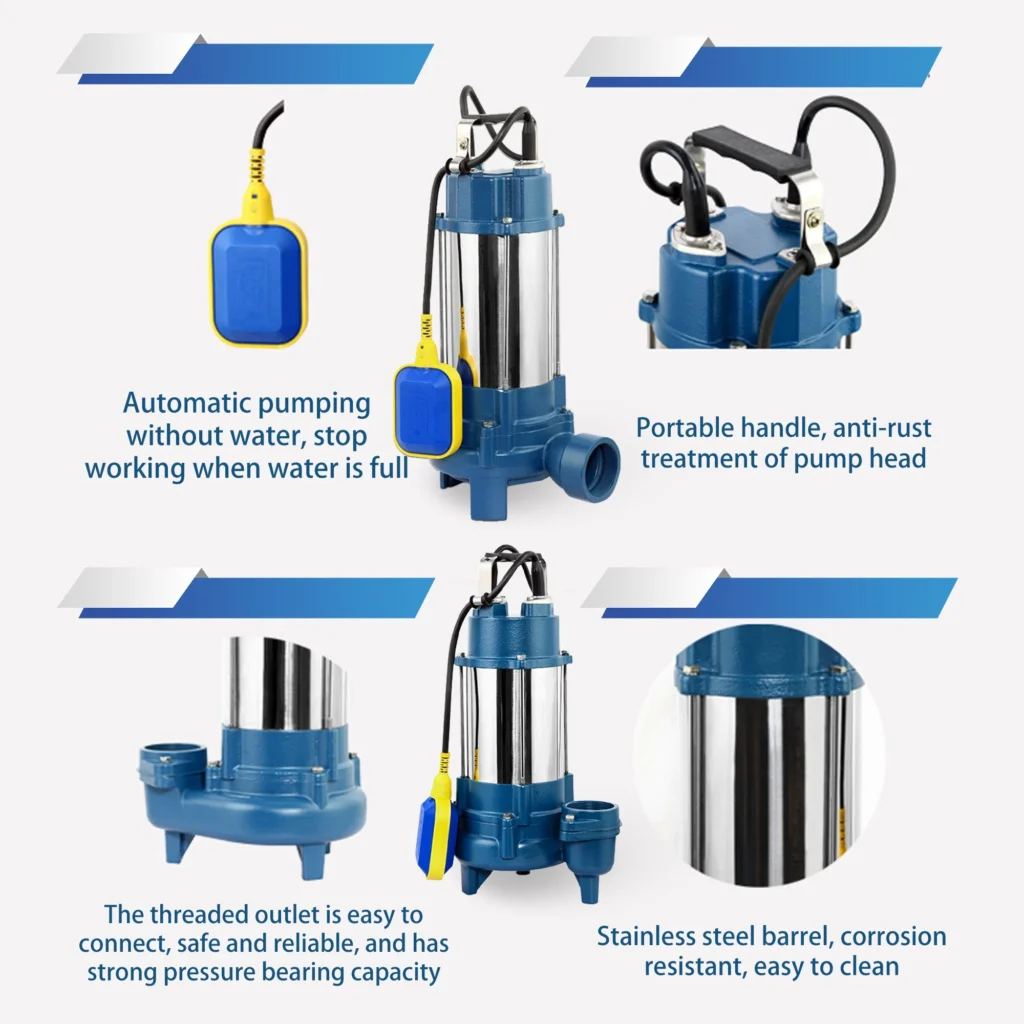
This module targets the B-end buyer — engineering contractors, distributors, and project owners — who care about total cost of ownership, not just sticker price. Any credible Submersible Sewage Pump manufacturer must address this honestly.
5.1 Service Life Data (Long-Term Clean Water Use of a Sewage Pump)
Based on Jingong’s field telemetry from 47 installations where sewage pumps were repurposed for clean water:
- Year 1: No measurable degradation — pump appears fine
- Year 2: Bearing vibration increases 15–20%; efficiency drops 5–8%
- Year 3: Mechanical seal begins weeping; efficiency down 12–15%
- Year 4: Motor windings degrade from chronic inefficiency; 60% of units require major overhaul
- Year 5: Average service life cutoff — 70% of repurposed units fail
By contrast, a dedicated clean water pump from a quality Submersible Sewage Pump manufacturer runs 8–12 years before major service.
5.2 Daily Power Consumption Comparison
Scenario: 100 m³/h at 20 m head, 24/7 operation
| Pump Type | Rated Power | Daily kWh | Annual Electricity Cost @ $0.12/kWh |
|---|---|---|---|
| 7.5 kW sewage pump (repurposed) | 7.5 kW | 180 kWh | $78,840 |
| 5.5 kW clean water pump (purpose-built) | 5.5 kW | 132 kWh | $57,816 |
| Annual Savings with Correct Selection | — | 48 kWh/day | $21,024/year |
5.3 Maintenance Frequency & Replacement Cost
- Sewage pump on clean water: inspect every 3 months; mechanical seal replacement every 2 years ($400–$800)
- Clean water pump: inspect every 6 months; mechanical seal replacement every 4 years ($200–$400)
- Total 5-year cost gap: $3,500–$6,000 per unit
5.4 Project Economic Loss from Wrong Pump Selection
For a Submersible Sewage Pump manufacturer advising municipal clients, the math is stark: a single wrongly selected pump in a 10-pump station can waste $200,000+ over its lifetime. Jingong’s engineering team has conducted 200+ pump audits; wrong pump selection is the #1 cause of budget overruns in water infrastructure projects.
6: Applicable & Inapplicable Scenarios
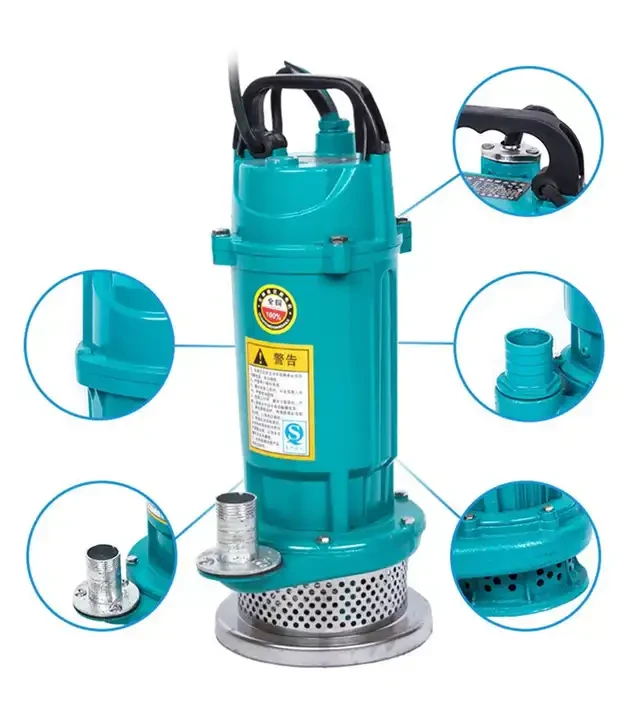
6.1 ✅ Allowed: Temporary / Emergency Use of Submersible Sewage Pump for Clean Water
- Emergency flood drainage — when no clean water pump is available
- Temporary construction dewatering — short-term, days to weeks
- Short-term outdoor water transfer — field operations, disaster relief
- Backup drainage — interim solution while awaiting proper equipment
- Stormwater bypass — where water may contain unexpected grit/debris
Any Submersible Sewage Pump manufacturer will validate these as acceptable short-term uses. Jingong’s WQ series is explicitly rated for such intermittent duty.
6.2 ❌ Not Recommended: Long-Term Clean Water Applications
- Well water supply — requires high efficiency & precise head control
- Domestic drinking water transfer — certifications & material safety demand clean water pumps
- Agricultural irrigation — 24/7 operation makes inefficiency economically fatal
- Fountain & pond circulation — requires stable head & low noise
- Solar water supply systems — every watt must count; sewage pump hydraulics waste PV energy
- Long-term industrial clean water delivery — TCO optimization demands purpose-built pumps
- Borehole / deep well extraction — multi-stage clean water pumps are mandatory
7: Professional Replacement Solutions from Jingong — Your Trusted Submersible Sewage Pump Manufacturer
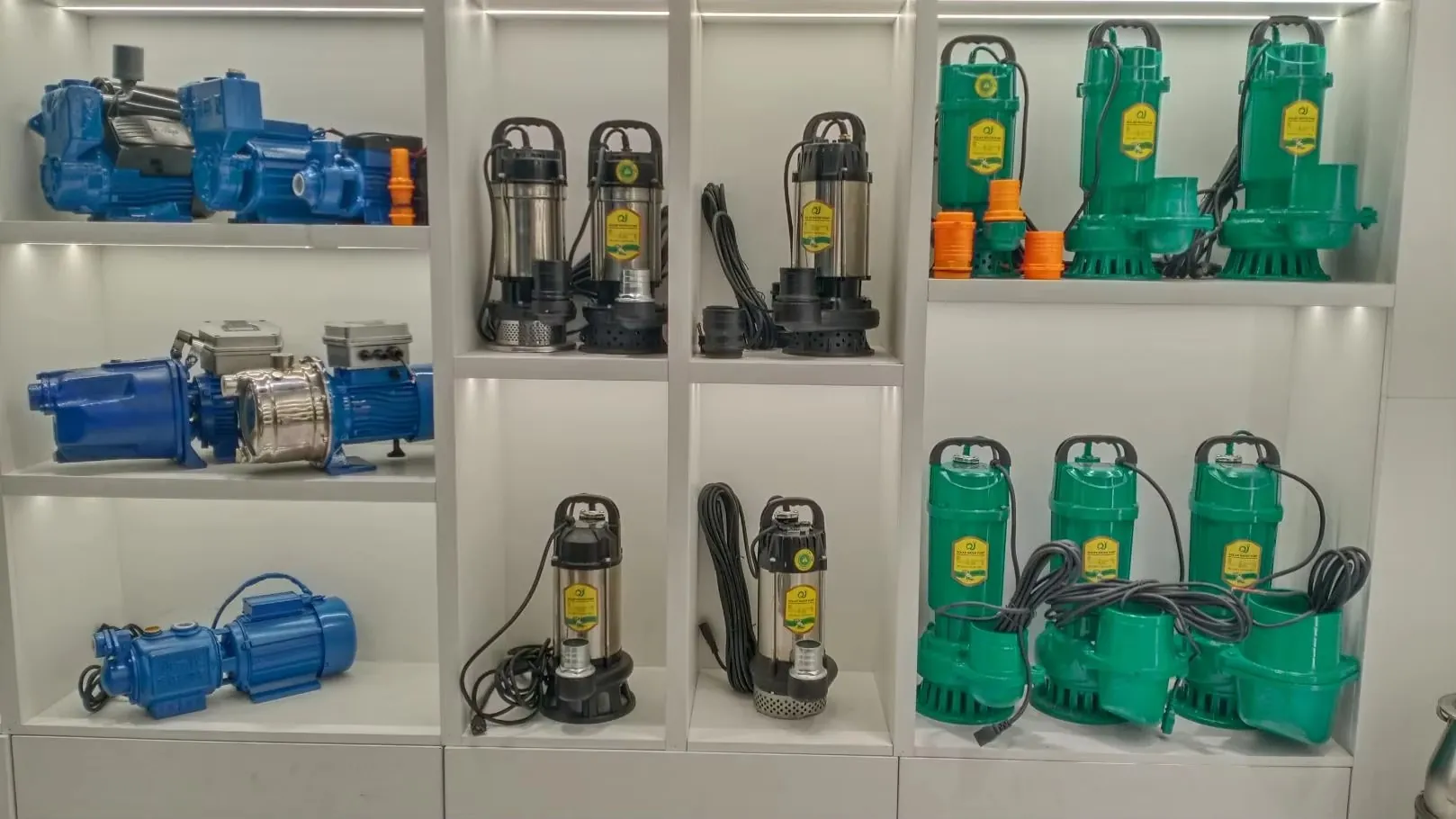
As a full-spectrum Submersible Sewage Pump manufacturer and pump solution provider, Jingong offers four product families that precisely match every clean water scenario:
7.1 Clean Water Submersible Pumps — For Wells, Domestic Supply & Fountains
Jingong’s QJ/QY series clean water submersible pumps feature:
- Closed multi-stage impellers — 88–92% hydraulic efficiency
- Stainless steel 304/316 construction for potable water safety
- Narrow, precision-machined flow passages
- Head range: 10–300 meters
- Flow range: 2–200 m³/h
Best for: Well water extraction, domestic water supply, fountain circulation, water towers → Explore Jingong Clean Water Submersible Pumps
7.2 Land-Based (Surface) Clean Water Pumps — For Industrial & Building Supply
Jingong’s IS/ISG end-suction centrifugal pumps and D/MD multi-stage pumps deliver:
- Highest hydraulic efficiency in the portfolio — up to 92%
- Ideal for high-rise building pressurization
- Horizontal/vertical configurations
- Pressure boosting for municipal networks
Best for: Industrial water supply, building water delivery, firefighting systems, HVAC → Explore Jingong Land-Based Pumps
7.3 Solar Water Pumps — For Off-Grid Agriculture & Remote Supply
Jingong’s solar pump range is engineered for maximum kWh-to-water conversion:
- DC brushless motors paired with high-efficiency closed impellers
- MPPT controllers extract maximum PV energy
- No battery requirement in daylight operation
- Head range: 10–200 meters; Flow: 1–50 m³/h
Best for: Agricultural irrigation, off-grid clean water supply, livestock watering, remote boreholes → Explore Jingong Solar Water Pumps
Note: A Submersible Sewage Pump manufacturer like Jingong invests heavily in solar pump R&D because this is where hydraulic efficiency directly converts to customer ROI.
7.4 Gasoline/Diesel Water Pumps — For Field & Emergency Clean Water Transfer
Jingong’s portable engine-driven pumps provide:
- Self-priming design — no manual filling
- Closed impeller for clean water efficiency
- 4-stroke gasoline or air-cooled diesel engines
- Flow: 30–100 m³/h; Head: 20–50 meters
- Rapid deployment in <5 minutes
Best for: Outdoor emergency clean water transfer, field engineering, agricultural mobile irrigation → Explore Jingong Engine-Driven Pumps
7.5 Why Choose Jingong as Your Submersible Sewage Pump Manufacturer & Full-Range Pump Partner?
- 20+ years as a Submersible Sewage Pump manufacturer serving 60+ countries
- ISO 9001, CE, GS, EMC, RoHS certified production
- OEM/ODM customization for distributors and project contractors
- R&D lab with 30+ patents and full hydraulic test rigs
- 5 product families — one-stop pump solution from a single Submersible Sewage Pump manufacturer
- Global case studies — municipal, agricultural, industrial
- 30-acre Phase I + 20-acre Phase II automated manufacturing campus
When you source from Jingong, you are not just buying a pump — you are partnering with a Submersible Sewage Pump manufacturer that understands the full hydraulic spectrum and can guide correct selection for every scenario.
8: Frequently Asked Questions (Google Featured Snippet Targets)
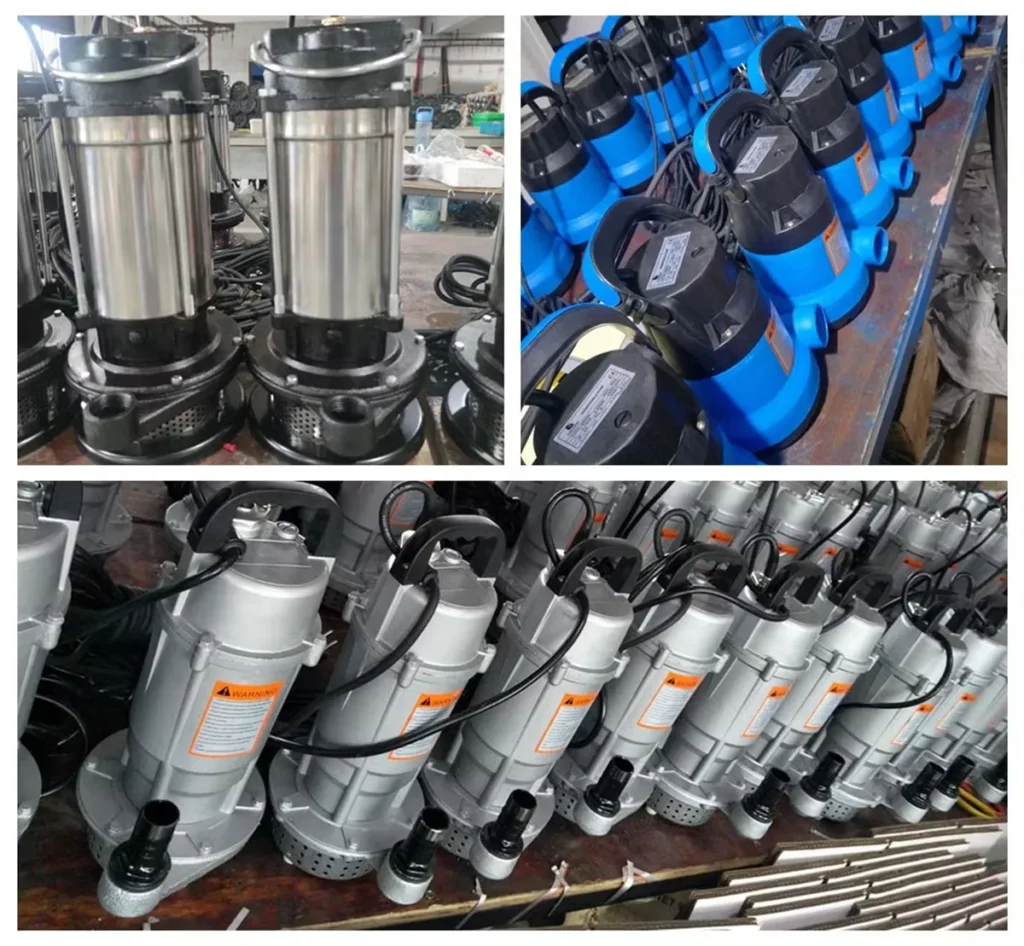
8.1 Is a sewage submersible pump the same as a clean water pump?
No. While both are submersible, a Submersible Sewage Pump manufacturer designs sewage pumps with open/vortex/cutter impellers and wide flow passages (35–50mm solids rating), whereas clean water pumps use closed precision impellers with narrow passages for maximum hydraulic efficiency. They are not interchangeable for long-term duty.
8.2 Can I use a sewage pump for garden irrigation?
Not recommended for continuous irrigation. While a sewage pump can physically move water to your garden, its 30–50% lower efficiency versus a purpose-built irrigation pump will inflate energy costs significantly over a growing season. For irrigation, consult a Submersible Sewage Pump manufacturer like Jingong for a solar or electric clean water pump — the 5-year savings will pay for the upgrade many times over.
8.3 Will using a sewage pump for clean water cause clogging?
No — clogging is not the risk. The risk is inefficiency, energy waste, and accelerated wear from running an oversized hydraulic design on clean media. A sewage pump will not clog on clean water; it will simply waste energy. Any Submersible Sewage Pump manufacturer will confirm this.
8.4 Which pump is better for long-term clean water supply?
A purpose-built clean water pump. Depending on your scenario: submersible clean water pump for wells/fountains, land-based centrifugal pump for industrial supply, solar pump for off-grid irrigation, or gasoline/diesel pump for portable emergency use. Jingong, as your Submersible Sewage Pump manufacturer partner, can specify the exact model for your flow, head, and energy profile.
8.5 Can solar pumps replace sewage pumps for clean water?
Yes — for clean water applications, solar pumps are vastly superior. A solar clean water pump from a qualified Submersible Sewage Pump manufacturer like Jingong can deliver 30–50% higher hydraulic efficiency than a repurposed sewage pump, with zero electricity cost. For any sun-exposed location requiring clean water transfer, solar is the optimal choice.
8.6 How does a Submersible Sewage Pump manufacturer test for clean water compatibility?
Reputable manufacturers — Jingong included — conduct controlled bench tests comparing sewage pump hydraulics on clean water versus purpose-built clean water pumps. Metrics include flow-rate stability, head curve steepness, power draw (kW per m³/h), bearing temperature rise, and vibration spectrum analysis. The data consistently shows 30–50% efficiency penalties for sewage pumps on clean water.
8.7 What happens if I run a sewage pump on clean water for more than a year?
Based on field data collected by Jingong as a Submersible Sewage Pump manufacturer: efficiency drops 5–8% in year 2, mechanical seal weeping begins in year 3, and 60% of units require major overhaul by year 4. Service life is typically halved compared to purpose-built clean water pumps.
8.8 Can any Submersible Sewage Pump manufacturer customize a dual-purpose pump?
Some advanced models (e.g., Sulzer ABS XFP) are rated for both clean water and wastewater. However, as a Submersible Sewage Pump manufacturer, Jingong’s position is clear: while dual-rated pumps exist for specialized municipal applications, they still cannot match the efficiency of a purpose-built clean water pump. For dedicated clean water duty, specify a clean water pump.
9: Expert Summary & Selection Formula
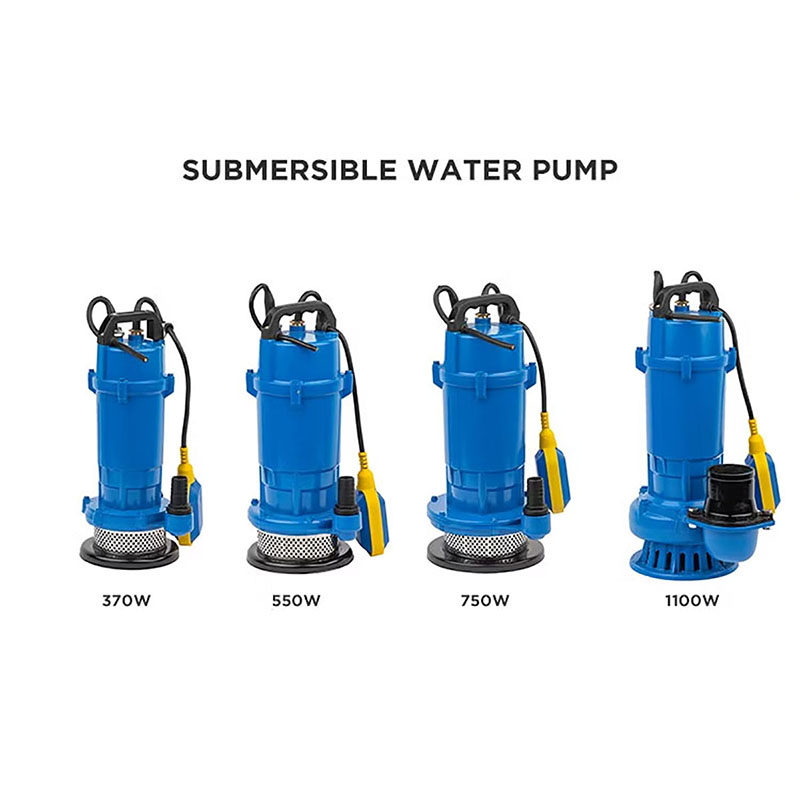
As a Submersible Sewage Pump manufacturer with two decades of engineering authority, Jingong’s standard conclusion is unambiguous:
🎯 Selection Formula:
Dirty water + solids + fibers → Submersible Sewage Pump
Clean water + continuous duty → Clean Water Submersible Pump / Land-Based Pump / Solar Pump / Engine Pump
Emergency + temporary → Sewage pump is acceptable for <72 hours
9.1 The Standardized Selection Principle
- Identify media: Clean or dirty? Solid content? Fiber content?
- Identify duty cycle: Continuous (>72h) or temporary?
- Identify energy source: Grid, solar, or engine?
- Match pump family: Use the formula above
- Specify model: Consult a Submersible Sewage Pump manufacturer like Jingong for exact sizing
9.2 Cost-Saving & Efficiency Tips from a Submersible Sewage Pump Manufacturer
- Never repurpose a sewage pump for long-term clean water — the 5-year TCO penalty exceeds the pump’s purchase price
- For solar applications, insist on closed-impeller pumps — every 1% efficiency gain = 1% more water per day
- Right-size your pump: 10% oversizing wastes 5–8% energy; 10% undersizing causes chronic overload
- Partner with a full-spectrum Submersible Sewage Pump manufacturer (like Jingong) for unified warranty, service, and spare parts across all pump types
- Request IEC 60034-30 IE3 premium efficiency motors for any continuous-duty pump
10: Get Your Free Customized Pump Selection Solution
As a leading Submersible Sewage Pump manufacturer, Jingong Technology provides more than just pumps — we deliver complete fluid transfer solutions. Our engineering team has specified pumps for 2,000+ projects across municipal, agricultural, and industrial sectors in 60+ countries.
🏭 Why Partner with Jingong — Your Submersible Sewage Pump Manufacturer
- Free customized pump selection — send us your flow, head, media, and energy source; receive a detailed specification sheet within 48 hours
- OEM/ODM service — private labeling, custom voltage/frequency (50Hz/60Hz), bespoke impeller geometry
- Global project case support — reference installations, performance data, and engineering drawings
- Wholesale pricing — direct factory pricing for distributors and large-scale project contractors
- Full-range compatibility — as a Submersible Sewage Pump manufacturer AND clean water pump, solar pump, land-based pump, and engine pump producer, Jingong is your single-source pump partner
- Certifications: ISO 9001, CE, GS, EMC, RoHS, with IE3 premium efficiency motors
- Manufacturing scale: 50-acre automated campus, 7 million pump annual capacity, 30+ R&D patents
📞 Request Your Free Quote Today
Whether you need a Submersible Sewage Pump manufacturer for wastewater projects, OR a clean water pump, solar pump, land-based pump, or engine pump for clean water applications, Jingong delivers.
Get Wholesale Quote → Browse All Pump Products →

0 Comments