
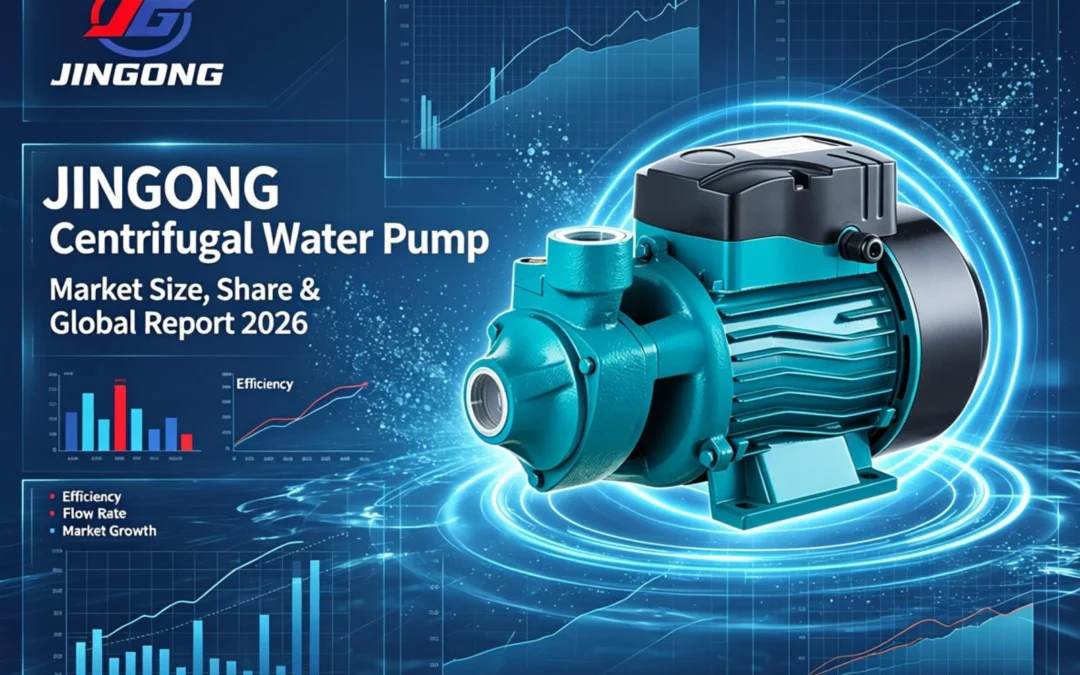
1. Executive Summary – Industry Overview
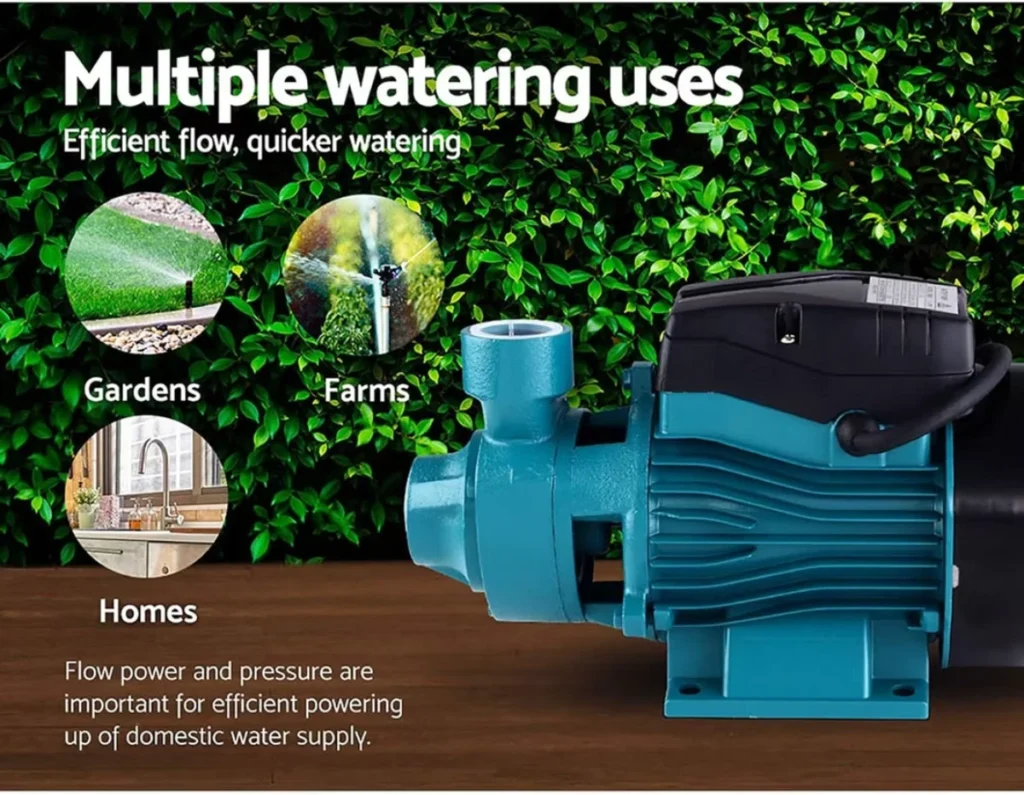
The Centrifugal Water Pump Market recovered strongly after 2021, reversing the 2017–2020 decline caused by global capex cuts. According to aggregated figures from QYResearch and Fortune Business Insights, the global centrifugal pump sector reached USD 60.8 billion in 2025, up ~4% YoY [1], while narrower “centrifugal water pump” definitions place 2025 revenue around USD 13.7–27.8 billion depending on scope (industrial vs. agricultural vs. residential) [5][7]. Between 2025 and 2032–34, mainstream forecasts converge on a CAGR of 2.9%–4.5% for the broader centrifugal pump category, with the water-pump sub-segment (especially solar and portable diesel/gasoline units) outperforming at double-digit rates in emerging regions [3][9].
Core takeaways for B2B buyers & distributors:
- Global Centrifugal Water Pump Market size (narrow water-only projected to exceed USD 50 billion by 2032 under high-adoption scenarios [7].
- Top growth drivers: municipal wastewater upgrade, off-grid solar irrigation, mining dewatering, emergency flood control, Middle East & Africa agricultural expansion.
- China remains the manufacturing hub (~60% global share of centrifugal pumps by volume) with domestic market growing 8–9% YoY, faster than the 6–7% global average [3][4].
- Jingong Tech’s four core lines — Submersible Centrifugal Pumps, Land Surface Centrifugal Pumps, Solar Centrifugal Pumps, Gas/Diesel Centrifugal Pumps — map directly onto the fastest-growing application buckets identified below.
From a jingong manufacturer’s lens, the Centrifugal Water Pump Market is no longer a “commodity iron-casting game” — it is splitting into high-efficiency IE4/IE5 regulated products, solar-PV-integrated off-grid systems, and portable fuel-driven rugged units for disaster-response. This report breaks those layers down.
2. Core Definition & Product Classification
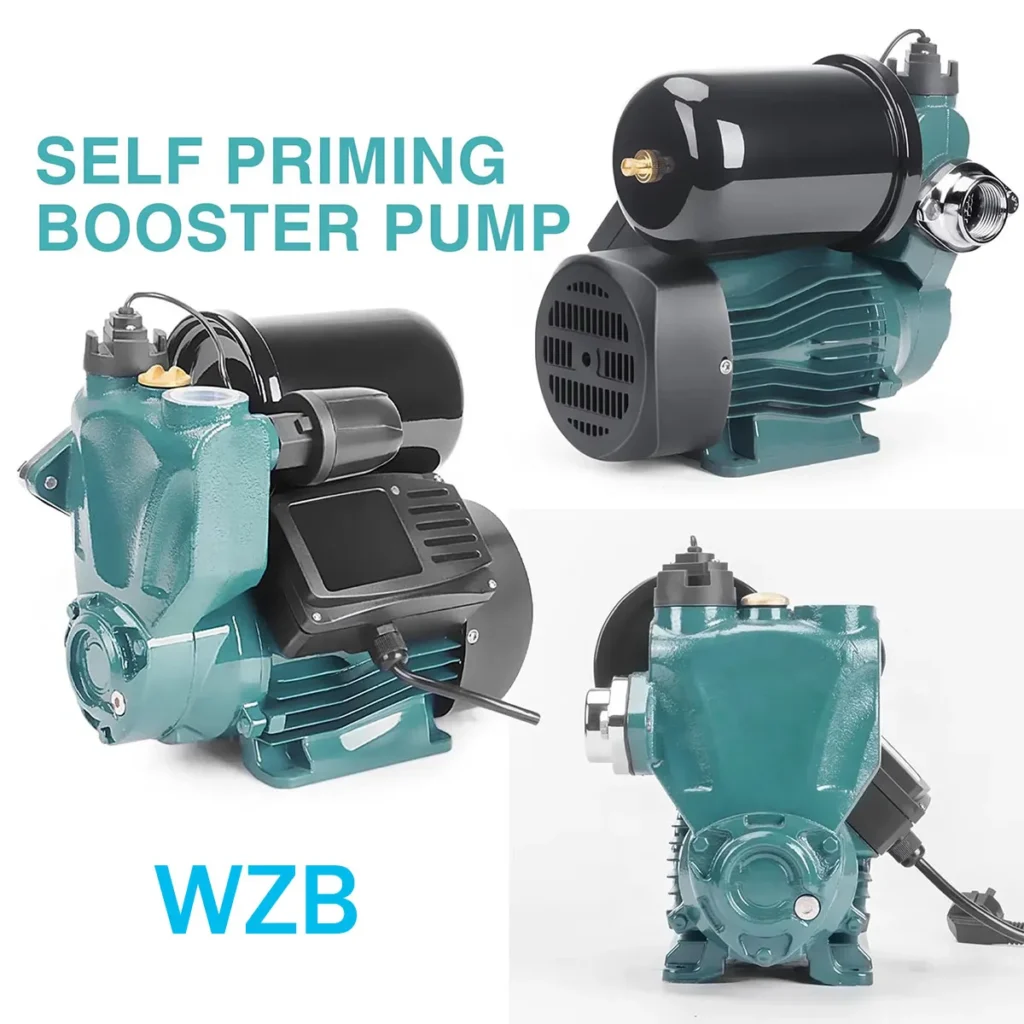
2.1 What Is a Centrifugal Water Pump?
A centrifugal water pump converts rotational kinetic energy (from an electric motor, diesel engine, or gasoline engine) into hydrodynamic energy using an impeller inside a volute casing. Fluid enters the impeller eye axially, is accelerated radially outward, and exits the discharge port at higher pressure. Compared to positive-displacement pumps, centrifugal designs dominate water-handling because of:
- High flow rates at moderate pressure (ideal for water vs. viscous fluids)
- Stable continuous operation with simple maintenance
- Scalability — single-stage for irrigation, multi-stage for high-rise boosting
- Driver flexibility — electric (grid/solar), diesel, gasoline, hydraulic
2.2 Industry-standard Classification
| Classification Axis | Common Types | Typical Use |
|---|---|---|
| Stage | Single-stage / Multi-stage | Irrigation / High-rise boosting |
| Impeller orientation | Radial / Mixed-flow / Axial | Clear water / Flood drainage |
| Shaft position | Horizontal / Vertical | Plant room / Deep well |
| Installation | Surface (land) / Submersible / Cantilever | Farm / Well / Sump |
| Driver | Electric (AC/DC) / Diesel / Gasoline / PTO | Grid / Off-grid / Remote |
| Construction material | Cast iron / SS304/316 / Bronze / PP+FRP | Sewage / Corrosive / Marine |
2.3 Jingong Product Mapping to Centrifugal Categories
Our four production lines at Jingong Tech cover the most export-active centrifugal subtypes:
- Submersible Centrifugal Pump — vortex/channel impeller, oil/water-cooled motor, 0.37–45 kW, for sewage, dewatering, deep-well lift. Product page →
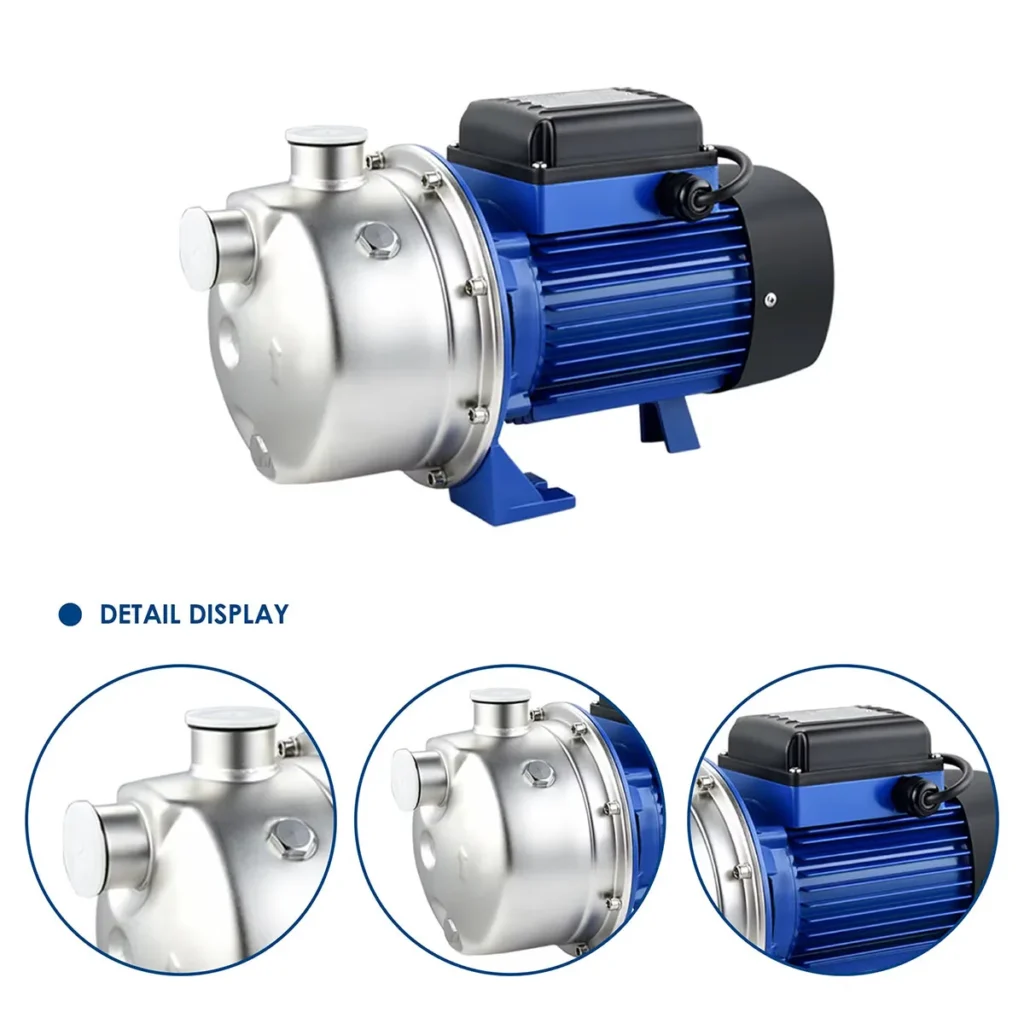
- Land (Surface) Centrifugal Pump — end-suction & multistage booster, cast-iron/SS, for building water supply, HVAC, light industrial transfer. Product page →
- Solar Centrifugal Pump (DC brushless) — MPPT controller + helical/single-stage centrifugal, 200 W–5.5 kW, off-grid irrigation & livestock. Product page →
- Gas/Diesel Centrifugal Pump — self-priming centrifugal volute + air-cooled engine, 2–15 HP, for construction site, flood emergency, no-grid zones. Product page →
3. Global Market Key Data Analysis 2026
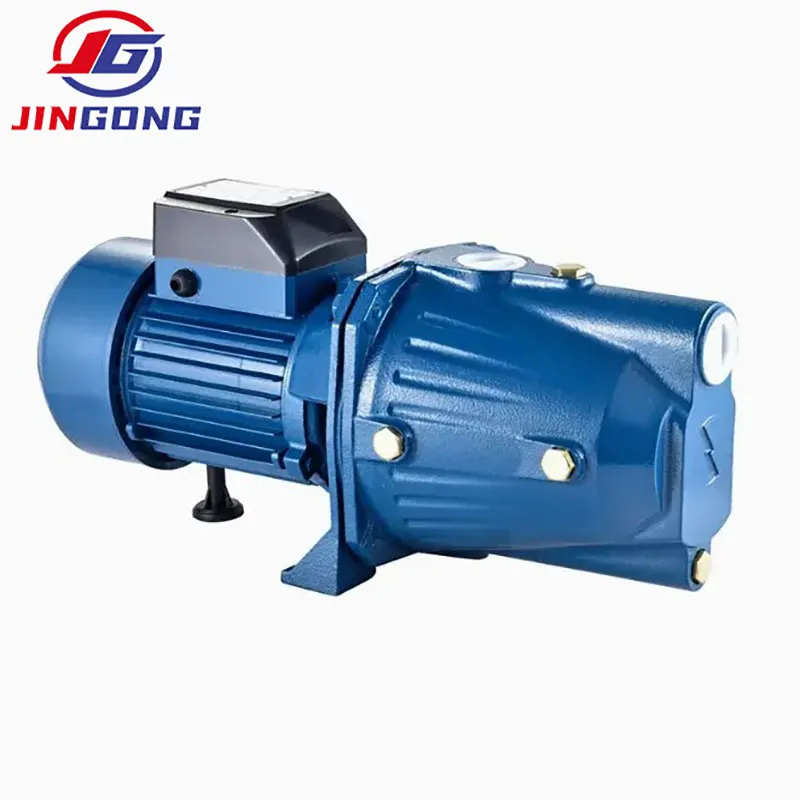
This section aggregates three widely cited datasets so B2B readers can see the range rather than one vendor’s number:
| Source / Scope | 2024/25 Base | 2031/32/34 Target | CAGR | Coverage Note |
|---|---|---|---|---|
| QYResearch – Centrifugal Pump (broad) | USD 33.7 bn (2024) | USD 41.1 bn (2031) | 2.9% | Incl. industrial process pumps [3] |
| Fortune Business Insights – wider pump family | USD 63.3 bn (China+Global water pump, 2025) | USD 86.3 bn (2032) | 4.5% | All water-pump types [9] |
| Narrow “Centrifugal Water Pump” | CN¥137 bn / ~USD 19 bn (2025) | CN¥502 bn / ~USD 70 bn (2032) | 20%+ (local CN calcs) | Water-only, China-heavy [7] |
Why the spread? “Centrifugal pump” sometimes includes oil & gas process pumps (large ticket, slow growth); “centrifugal water pump” narrows to agricultural, municipal, building — which is growing faster thanks to solar + emergency segments. For export planning, Jingong treats the Centrifugal Water Pump Market as the mid-to-high-single-digit CAGR bucket, with solar and diesel sub-segments at 10–18% locally.
3.1 Regional Share Snapshot (2026 est.)
- China: ~60% of global centrifugal pump volume, 2026 domestic market CN¥623 bn (~USD 86 bn) [5]
- Europe: Premium IE4/IE5 efficiency mandate, strong replacement demand
- North America: Municipal wastewater & flood-control capex steady
- Middle East & Africa: Solar irrigation + diesel emergency = fast-growing import region
- Southeast Asia & LATAM: Agricultural modernization driving submersible & land pump imports
3.2 Price-tier Structure
Centrifugal water pumps globally split into three tiers — a key insight for Centrifugal Water Pump Market positioning:
- Premium (EUR/USD brand): Grundfos, Wilo, Xylem, KSB — IE4/IE5, smart monitoring, 30–60% price premium
- Mid (Chinese export brand + local assembly): Jingong, local Asian factories — CE/ISO certified, 186–250 USD entry points, main B2B distributor tier
- Low (commodity): Sub-100 USD single-stage, thin margin, aftermarket-heavy
4. Four Core Product Segment Analysis – Jingong In-house Perspective
4.1 Submersible Centrifugal Pump Segment
Market context: Submersible centrifugal pumps sit inside the sewage, dewatering, and deep-well buckets. Globally, submersibles account for ~30% of centrifugal water pump unit shipments (higher in Asia due to monsoon/flood cycles).
Jingong field notes (10+ years manufacturing):
- Key buying pain: seal life in sandy water, cable entry leakage, motor burnout on low-water dry-run
- Our response: silicon-carbide mechanical seal as standard, IP68+ oil-chamber leak probe, optional float-switch auto cut-off
- Export hot regions: Southeast Asia drainage contractors, Middle East building sump, African municipal dewatering tenders
Explore Jingong Submersible Centrifugal Pumps →
4.2 Land (Surface) Centrifugal Pump Segment
Market context: Land surface centrifugal pumps cover end-suction, inline, and multi-stage boosters. Building water supply (residential high-rise, hotel, campus) and HVAC chilled-water loops are the two stable demand pillars.
Jingong field notes:
- Procurement preference shift: from cast-iron only → SS304 impeller at minimum for potable water
- Multi-stage boosters (2–8 stages) seeing +12% YoY export enquiry from LATAM & Southeast Asia high-rise projects
- Our differentiator: CNC-impeller balancing + hydro test 100% per unit, custom flange drilling (ANSI/DIN/JIS)
Explore Jingong Land Centrifugal Pumps →
4.3 Solar Centrifugal Pump Segment
Market context: Possibly the hottest sub-segment in the Centrifugal Water Pump Market right now. Driven by:
- India’s PM-KUSUM solar irrigation scheme
- Africa off-grid village water + livestock
- Middle East desert agriculture (UAE, Saudi NEOM alignments)
- LATAM remote farm subsidy programs
Solar centrifugal pumps combine a BLDC motor + MPPT controller + centrifugal impeller (helical for deep lift, radial for flow). Jingong’s export mix shows solar pumps growing from 8% → 22% of order count (2023–2026).
Key procurement criteria B2B buyers ask: controller compatibility with 1–1.5 kW panel array, sand resistance (helical > radial in >150 ppm TDS), 2–3 year warranty structure.
Explore Jingong Solar Centrifugal Pumps →
4.4 Gas/Diesel Centrifugal Pump Segment
Market context: Portable, self-priming centrifugal volute + air-cooled engine. Not a “growth at all costs” segment but a stable (must-have) segment — construction sites, flood emergency, rural no-grid zones, rental fleets.
Jingong field notes:
- 4-inch (100 mm) discharge = bestseller for contractor fleet (100–120 m³/h, 20–28 m head)
- Diesel preferred over gasoline in Asia/Africa (fuel availability + torque); gasoline still king in NA DIY/fire-protection
- Our differentiator: reinforced alloy volute (vs. stamped steel on cheap units), quick-fit coupling for engine swap
Explore Jingong Gas/Diesel Centrifugal Pumps →
5. Market Drivers, Restraints & Blue-ocean Opportunities

5.1 Growth Drivers
- Water-infrastructure upgrade: Municipal sewage treatment expansion in emerging APAC & MEA — drives submersible + land booster demand.
- Agricultural modernization: Drip irrigation + solar pumping subsidies — drives solar centrifugal pump uptake.
- Emergency & disaster preparedness: Climate volatility → gov tenders for diesel portable units (another Centrifugal Water Pump Market stable pillar).
- Off-grid new energy: PV + pump integration is moving from “niche” to “catalog standard” in Africa & South Asia.
- Replacement cycle in EU/NA: IE3→IE4/IE5 regulation pulls replacement orders, open window for Chinese mid-tier brands with CE/ERP compliance.
5.2 Restraints
- Raw material (copper, silicon steel, SS304) price volatility squeezes mid-tier margins
- Trade barriers: anti-dumping in limited regions, CE/EAC/SONCAP certification cost
- Homogeneous competition in single-stage commodity segment — price war risk
5.3 Blue-ocean Segments (Jingong R&D focus)
- Silent-series diesel centrifugal (construction-site night-use compliance)
- Anti-corrosion SS316 land pump for aquaculture & salt-spray coastal
- Smart IoT-ready booster (VFD + RS485) for EU commercial building retrofit
- Explosion-proof submersible for mine & petrochemical dewatering
6. End-user Industry Application Analysis

Below is how Jingong maps its four centrifugal lines to purchase decision-makers in each vertical:
| Industry | Typical Spec (Flow/Head) | Jingong Match | Buying Trigger |
|---|---|---|---|
| Agriculture irrigation | 5–80 m³/h, 15–55 m | Solar centrifugal / Land centrifugal | Solar subsidy, diesel fuel cost |
| Municipal sewage | 10–200 m³/h, solids ≤50 mm | Submersible (vortex) | Tender spec: EN12050 |
| Building water boost | 2–40 m³/h, 30–120 m | Multi-stage land centrifugal | High-rise code compliance |
| Mining dewatering | 30–300 m³/h, abrasion | Heavy-duty submersible / diesel portable | Site safety audit |
| Construction site | 80–150 m³/h, portable | Diesel/Gas centrifugal | Rental fleet replenishment |
| Off-grid livestock | 1–10 m³/h, 20–50 m | Solar centrifugal | No-grid, low OPEX |
Each of these verticals generates distinct search intent keywords — e.g. “centrifugal pump for agriculture irrigation” or “diesel pump for emergency water supply” — which is why the Centrifugal Water Pump Market content strategy must branch into application landing pages (see internal link plan below).
7. Regional Market Analysis – Export Layout

7.1 Asia-Pacific (ex-China)
SEA (Vietnam, Thailand, Indonesia, Philippines) — land pumps for building, submersibles for flood season, solar pilot projects. Preference: CE + ISO, 50 Hz, DIN flange.via ASEAN-China FTA.
7.2 Middle East
UAE, Saudi, Oman — solar centrifugal for greenhouse/date-farm irrigation; diesel portable for construction (Dubai Expo legacy projects winding down but NEOM-type infra ongoing). Buyer profile: trading company + engineer consultant.
7.3 Africa
Kenya, Nigeria, Ghana, SA — solar centrifugal (NGO/government tender) + diesel portable (construction + rental). Price-sensitive, after-sales spare-part availability = deal-breaker. Centrifugal Water Pump Market here is volume + margin mix.
7.4 South America
Brazil, Argentina, Colombia — land centrifugal for agriculture (soy/corn belt), submersible for smallholder, gas pump for remote farm. 60 Hz preference, NEMA standard for motors on some SKUs.
7.5 Europe & North America
Premium replacement market. Must have: ERP directive (EU), Energy Star (US), IE4/IE5 rating, low NOx (diesel). Jingong approach = mid-tier compliant units + private-label for regional distributors.
8. Competitive Landscape & Manufacturer Benchmarking
8.1 Global Head Brands (Premium Tier)
- Grundfos (Denmark): ~USD 3.8 bn pipeline, smart circulating & deep-well leader, high-rise booster stronghold [2][10]
- KSB (Germany): Energy/mining focus, ~USD 2.8–3.0 bn, 80+ countries [2]
- Sulzer (Switzerland): Process & wastewater, ~USD 2.5 bn [2]
- Xylem (US), Ebara (Japan), Wilo (Germany) — complete the top ~5 global names
8.2 Chinese Export Manufacturers
China holds ~60% global centrifugal pump volume [3]. Beyond Jingong, notable names: Nanfang (Southern), Leo, Kaiquan, Shimge. Jingong’s differentiation vs. commodity Chinese factories:
- Four-line coverage (solar + diesel often missing from pure-submersible factories)
- OEM/ODM custom voltage (110–600V), custom branding, mixed-container MOQ flexible
- In-house impeller hydro test + third-party CE/SONCAP/EAC on request
8.3 White-space for Mid-tier Brands
The Centrifugal Water Pump Market has a “middle gap”: premium too expensive for emerging-economy tender; commodity too unreliable for municipal. That’s where CE-certified Chinese export brands (including Jingong) win distributor shelf space.
9. Distribution Channels & B2B Export Business Model
Global centrifugal water pump sales split roughly:
- B2B Platforms & Independent Sites: Alibaba/MIIT/Made-in-China + Google organic (this post lives here)
- Offline Distributor / Agent: Regional stocking dealer, core for spare-part service
- Engineering Procurement (EPC): Municipal tender, solar-irrigation government scheme — requires bid docs, certificate dossier
- OEM/Private Label: Mid-size overseas brands white-labeling Chinese factory
Jingong’s export model: 40% distributor + 30% direct-project + 20% OEM + 10% platform inquiry (2025 ratio). For Centrifugal Water Pump Market entrants, we recommend: start with 1–2 distributors per target region, back them with certificate pack + spare-part kit, then layer EPC bids once reference projects accumulate.
10. Latest Industry Trends & Technology Innovation
- IE4/IE5 motor mandate pushing premium efficient centrifugal units in EU/China
- Solar-PV-pump integrated systems — MPPT + VFD + remote IoT monitoring (SMS/GPRS) becoming catalog standard for off-grid
- Smart predictive maintenance — vibration/temp sensors + edge computing (still early, premium only)
- Anti-sand & anti-corrosion materials — ceramic coating, SS316, duplex stainless for saline/mine
- Silent diesel centrifugal — Euro 5 engine + acoustic hood for urban night-work
- Green-hydrogen & seawater desalination — emerging high-spec centrifugal demand (long-term horizon)
Jingong’s 2026–2028 roadmap aligns Items 1–5 above across the four product lines — details in our R&D section.
11. Market Forecast 2026–2034 & Export Strategy Suggestions
Synthesizing the data layers, the Centrifugal Water Pump Market through 2034 will show:
- Broad centrifugal pump (all types): USD 60.8 bn (2025) → USD 75–82 bn (2034), CAGR ~2.9–4.5% [1][3][9]
- Water-only centrifugal sub-segment: outpacing broad mean, driven by solar + emergency + agricultural modernization
- Solar centrifugal: double-digit CAGR in MEA/APAC/LATAM, policy-dependent (subsidy continuity critical)
- Diesel/gas portable: flat-to-modest growth, but stable “always-needed” category for disaster & construction
11.1 Jingong’s Export Playbook (Manufacturer POV)
- Product mix: push solar + submersible as lead SKUs for MEA/APAC; diesel portable as stable cashflow; land booster as EU/NA compliant entry
- Certificate stack: CE (mandatory), EAC (Russia/CIS), SONCAP (Nigeria), COC (Kenya), ERP (EU)
- Content matrix: market-report posts like this one → application landing pages → product pages → case studies (the exact funnel this post sits in)
- Channel: 1 distributor per focus country, backed with mixed-container MOQ & spare-part local stock incentive
12. Conclusion & Jingong Custom Pump Solutions
The Centrifugal Water Pump Market between 2026 and 2034 offers a clear split: commodity single-stage will stay price-compressed; mid-tier compliant brands with certificate depth + application know-how will capture distributor shelf; premium smart/IoT stays with EUR/US heritage brands. For B2B buyers and distributors evaluating supply partners, the checklist should go beyond unit price:
- ✅ Does the factory cover multiple centrifugal subtypes (submersible / land / solar / diesel)?
- ✅ Are certificates (CE, EAC, SONCAP, ISO) issued per SKU, not just company-level?
- ✅ Is there hydro-test & impeller-balance documentation per batch?
- ✅ Can the supplier handle custom voltage/Hz/flange/OEM branding?
- ✅ Spare-part kit & local-agent backup for your region?
At Jingong Tech, we’ve built our export program around exactly these five questions — covering submersible, land, solar and gas/diesel centrifugal pumps from our Zhejiang facility, shipping to 30+ countries, with mixed-container MOQ and private-label support.
Ready to discuss your regional tender or distributor partnership?
👉 Contact Jingong Tech for a custom centrifugal pump quotation →
FAQs – Centrifugal Water Pump Market & Sourcing
Q1: What’s the difference between “centrifugal pump” and “centrifugal water pump”?
A: “Centrifugal pump” is the broad category including oil & gas process pumps, chemical pumps, etc. “Centrifugal water pump” narrows to water-handling — agricultural, municipal, building — which is the scope of this report and Jingong’s product lines.
Q2: Which segment of the Centrifugal Water Pump Market is growing fastest?
A: Solar centrifugal pumps (off-grid irrigation) and portable diesel units (emergency/construction) are outpacing the broad mean CAGR, especially in MEA, APAC and LATAM.
Q3: Why source centrifugal water pumps from China vs. European brands?
A: Chinese export brands (mid-tier, CE-certified) offer 40–60% cost advantage vs. EUR premium, with compliant efficiency grades (IE3/IE4) available. For tenders where brand-name is not mandated, Chinese factories like Jingong are the economic choice.
Q4: What certifications matter most for importing centrifugal water pumps?
A: CE (Europe), EAC (Eurasian), SONCAP (Nigeria), COC (Kenya), ERP (EU efficiency), plus ISO 9001 factory-level. Jingong issues per-SKU certs on request.