By Jingong Technical Team – Zhejiang Jingong Technology Co., Ltd. (Est. 2012). As an integrated manufacturer-trader, Jingong specializes in gasoline/diesel pumps, booster pumps, submersible pumps, surface/land pumps, and solar pumping systems. With 10+ years of export experience and 500+ field repair cases across Southeast Asia, the Middle East, Africa, and Europe, this guide is built on real-world data.
1. Introduction – Why This Gasoline Water Pump Repair Guide Matters
A gasoline engine water pump is mission-critical—whether it’s irrigating rice fields in the Philippines, draining construction pits in Dubai, or supplying freshwater to an RV in Germany. When it fails, productivity halts. This gasoline water pump repair guide is designed for three specific audiences: overseas distributors (for after-sales support), local repair shops (for technical reference), and end-users (for DIY fixes). We move beyond generic advice to provide structured diagnostics: Phenomenon → Cause → Diagnosis → Solution → Prevention. If you are looking to reduce downtime and maintenance costs, you are in the right place.

2. Gasoline Engine Water Pump Basics – Structure, Types & Failure Correlation
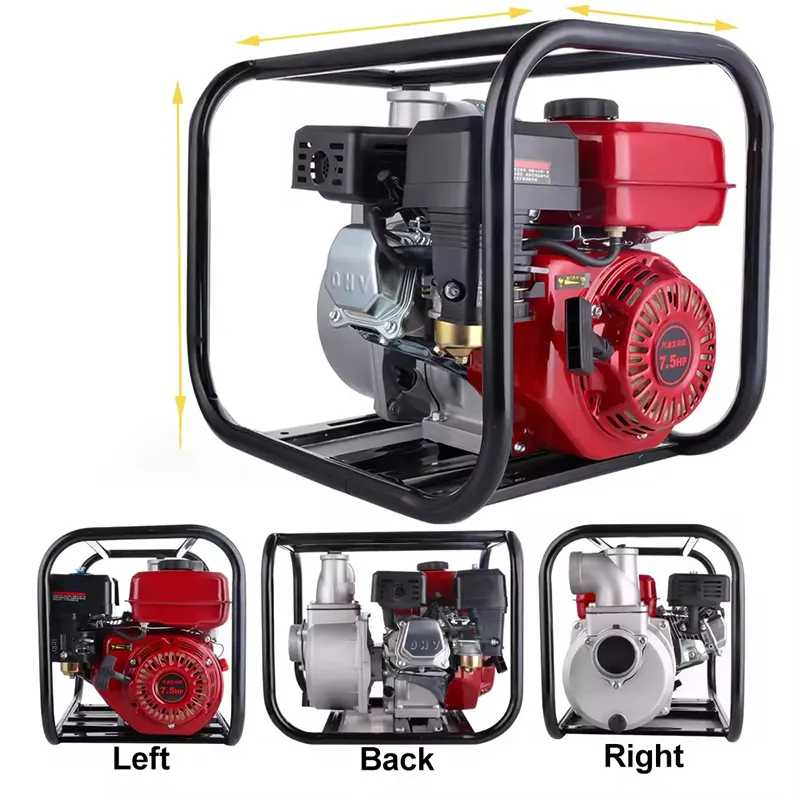
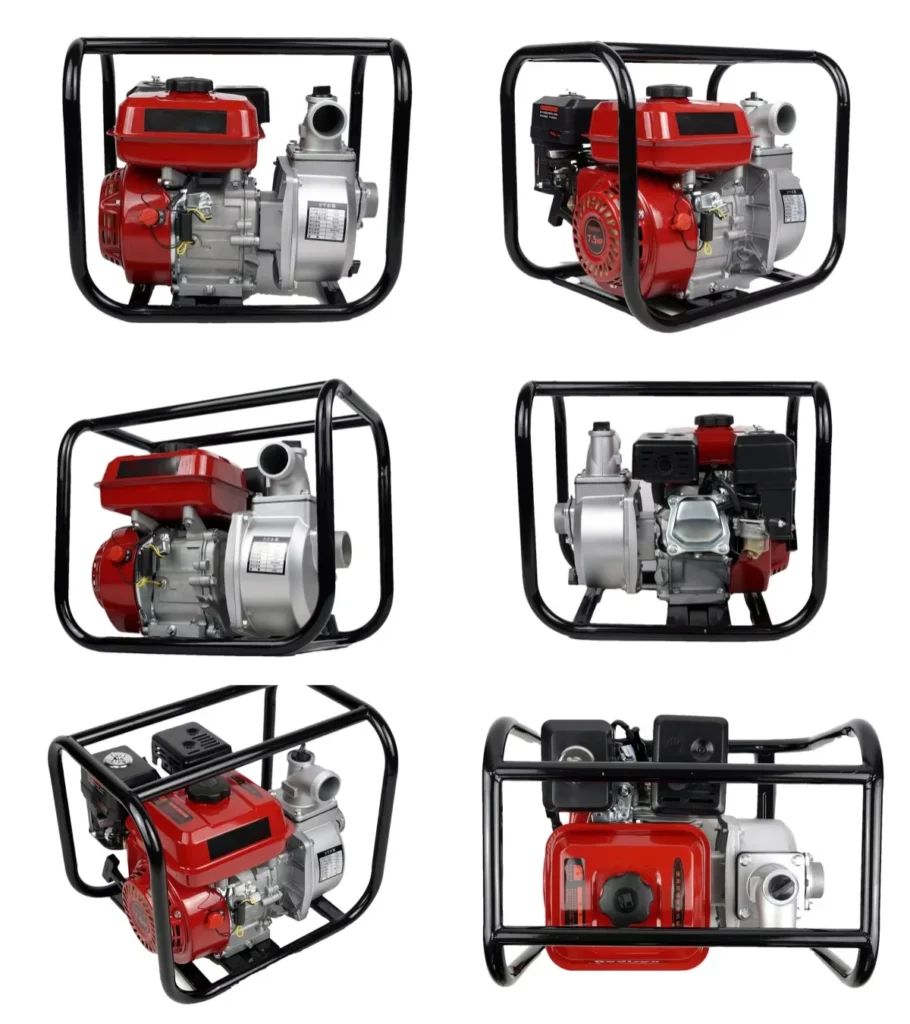
Understanding the anatomy prevents guesswork. A typical unit consists of a gasoline engine (ignition, fuel, cooling) and a water end (volute, impeller, Seal, Inlet/Outlet).
2.1 Core Components & Failure Mapping
| Component | Typical Failure Mode | Symptom |
|---|---|---|
| Spark Plug | Fouling, Gap Drift | Won’t start, Misfire |
| Carburetor | Clogging, Diaphragm Aging | Hard start, High fuel consumption |
| Mechanical Seal | Abrasion, Aging | Leaking at shaft |
| Impeller | Erosion, Chipping | Low flow, Vibration |
| Inlet Strainer | Debris Clogging | No output |
2.2 Portable vs. Industrial-Grade: Failure Patterns
Jingong supplies both segments. Portable units (2–5 kW) often suffer from fuel staleness due to seasonal storage. Industrial-grade units (7–13 kW) face abrasive wear from sand and continuous overheating. Our industrial line features imported-grade silicon carbide mechanical seals to significantly reduce the frequency of gasoline water pump repair interventions.
2.3 Pre-Start Inspection Checklist
- Oil level (SAE 10W-30)
- Fuel freshness (<30 days old)
- Air filter cleanliness
- Strainer clearance
- Spark plug gap (0.7–0.8 mm)
- Hose integrity
3. Common Failures – Phenomenon → Cause → Diagnosis → Solution → Prevention
3.1 Won’t Start / Hard to Start
Phenomenon: Engine cranks but won’t fire, or starts then immediately dies.
Causes: 1. Stale/Contaminated fuel (Ethanol separation). 2. Fouled spark plug. 3. Clogged fuel line. 4. Dead battery (Electric Start).
Diagnosis: Check fuel smell (sour = bad). Remove plug (black/wet = flooded). Check battery voltage (>12.3V).
Solution: Drain old fuel, refill with 90+ RON. Clean or replace plug (e.g., NGK BR6HS). Charge battery.
Prevention: Use fuel stabilizer during storage. Run carb dry before long-term shutdown.
3.1.1 Case Study: EU RV User
A German client reported a no-start issue in spring. Diagnosis revealed a 9.8V battery after winter storage and 5-month-old fuel. A 4-hour trickle charge and fresh fuel resolved the issue. Total gasoline water pump repair cost: €0.
3.2 Low / No Water Output
Phenomenon: Weak pressure or zero flow despite engine running smoothly.
Causes: 1. Clogged inlet strainer (60% of SEA cases). 2. Worn/Chipped impeller. 3. Air leak in inlet hose. 4. Suction lift too high (>5m).
Diagnosis: Inspect strainer for debris. Check impeller vanes for chips. Spray soapy water on hose connections while running to check for air leaks.
Solution: Clean strainer. Replace impeller if worn. Tighten hose clamps or use thread sealant. Relocate pump closer to water source.
Prevention: Clean strainer daily in muddy environments. Do not exceed 5m vertical suction lift.
3.3 Leaking / Seepage
Phenomenon: Water dripping from pump shaft or weeping from flanges.
Causes: 1. Worn Mechanical Seal. 2. Loose/Crushed O-rings. 3. Hairline cracks from shipping vibration.
Diagnosis: Dry the pump, run for 5 mins. If water appears at the shaft: seal issue. If at the flange: O-ring issue.
Solution: Replace mechanical seal kit. Torque flange bolts to 18-22 N·m. For minor cracks, use epoxy putty as a temporary fix.
Prevention: Never run the pump dry for more than 30 seconds. Request reinforced export crating for overseas shipments.
3.3.1 Note on Shipping Damage
Long sea freight journeys (e.g., to Nigeria) can cause micro-cracks invisible during unboxing. If a leak appears after 20 minutes of runtime, inspect the volute closely. Having a spare volute on hand avoids costly downtime.
3.4 Engine Overheating
Phenomenon: Excessive heat, automatic shutdown, loss of power.
Causes: 1. Low Coolant. 2. Clogged cooling fins (dust/chaff). 3. Overloading. 4. Low oil level.
Diagnosis: Check coolant level. Inspect fins for dust mats. Verify oil level.
Solution: Top up with 50/50 coolant mix. Clean fins with compressed air (do not use water). Reduce load or upsize the pump.
Prevention: Clean fins weekly in dusty environments (Middle East/Africa). Shade the unit during peak sun hours.
3.5 Abnormal Noise / Vibration
Phenomenon: Metallic rasping, knocking, or excessive vibration.
Diagnosis: High-pitched rasp = Bearing. Knocking = Impeller hitting volute. Rumble = Loose mounts.
Solution: Replace bearings using a proper puller tool. Replace damaged impeller. Tighten or replace rubber isolation mounts.
Prevention: Manually rotate the shaft monthly to feel for grittiness. Replace mounts annually in high-UV environments.
Ignoring early warning signs turns a simple $15 gasoline water pump repair into a $150 engine overhaul.
3.6 High Fuel Consumption
Phenomenon: Runtime significantly shorter than specified.
Causes: 1. Clogged Air Filter. 2. Dirty Carburetor. 3. Wrong Fuel Grade (e.g., 92 RON vs 95 RON). 4. Overloading.
Diagnosis: Inspect air filter light passage. Check spark plug color (Sooty Black = Rich).
Solution: Clean or replace air filter. Rebuild carburetor with a kit. Ensure correct fuel grade. Upsize pump if running at Wide Open Throttle (WOT) constantly.
Prevention: Tap out air filter daily. Perform carb maintenance every 300 hours.
3.6.1 Fuel Grade Differences: EU 95 vs SEA 92
Clients in Indonesia using 92 RON fuel reported 22% higher consumption on 95-jetted pumps. Jingong offers richer jetting options for specific markets upon request.
4. Troubleshooting Toolkit & Safety

4.1 Essential Toolkit
- Spark Tester (Inline)
- Multimeter
- Feeler Gauge (0.7-0.8mm)
- 10-14mm Socket Set
- Impeller Puller
- Seal Installation Tool
Jingong offers a bundled “Service Kit” including these tools and common spares for distributors (MOQ 20 sets).
4.2 Safety Protocols
Always allow the engine to cool for 15 minutes before servicing. Disconnect the spark plug boot to prevent accidental starting. Wear eye protection. Never force bolts on aluminum casings.
4.3 Emergency Field Repairs
In remote areas, temporary fixes include rope packing for minor seal leaks or balancing a chipped impeller by filing the opposite vane (short-term only). These stopgaps prevent a total gasoline water pump repair failure until proper parts arrive.
5. Maintenance Schedule
- Daily: Pre-start checklist, post-run flush (if muddy).
- Every 50 Hours: Oil change, Spark plug check, Air filter clean.
- Every 300 Hours: Carb kit, Mechanical seal kit, Impeller inspection.
- Long-Term Storage: Drain fuel, fog cylinder, store upright with breathable cover.
6. Frequently Asked Questions (FAQ)
Q1: Who handles warranty repairs for Jingong pumps overseas?
A: We have partners in Malaysia, UAE, Nigeria, and Germany. Otherwise, we ship parts DDP with video guidance. View Service Map.
Q2: Can I use E10 Ethanol fuel?
A: Only if consumed within 3 months. For longer storage, use non-ethanol fuel or a stabilizer.
Q3: How long does a typical gasoline water pump repair take?
A: A seal kit swap takes 10-15 minutes. An impeller change takes 15-20 minutes. Most professional technicians complete a full gasoline water pump repair in under 30 minutes if parts are on hand.
Q4: Do you sell a “Preventative Maintenance Bundle”?
A: Yes, our 300-Hour Kits include a seal, impeller, spark plug, and gaskets. MOQ 10 kits. Order Parts.
Q5: Can I convert a gasoline pump to diesel?
A: No, combustion chambers and seal speeds differ. Please use our dedicated JD-Series Diesel Pumps.
Q6: Why does my pump lose suction after 10 minutes?
A: This is almost always an air leak on the suction side. Check the foot valve and hose clamps.
Q7: What is the most common reason for overheating in the Middle East?
A: Dust-clogged cooling fins combined with low coolant levels.
Q8: How often should I replace the mechanical seal?
A: Every 500-800 hours in clean water, or proactively every 300 hours in sandy conditions to avoid a major gasoline water pump repair.
Q9: Is it worth buying non-OEM parts?
A: While cheaper, aftermarket seals often lack ceramic faces and fail quickly in abrasive water. We recommend genuine Jingong parts for longevity.
Q10: Do you offer on-site training for distributors?
A: Yes, for annual contracts exceeding $50k, we provide 2-day on-site technical training covering teardowns and gasoline water pump repair best practices.
7. Expert Viewpoint & Jingong Overseas Cases
7.1 Expert Insight
“Based on our 2024 audit of 500+ overseas repair logs, 68% of gasoline water pump repair tickets stem from three issues: stale fuel, clogged strainers, and abrasive seal wear,” says the Jingong Technical Lead. “Proactive maintenance and correct pump sizing at the PO stage eliminate nearly all service callbacks.”
7.2 Case Study: Philippines Agriculture
A cooperative reported low flow in 4 units. Diagnosis revealed algae-clogged strainers and eroded impellers. By implementing a daily cleaning SOP and upgrading to reinforced nylon impellers, they completed the season without a single repair ticket.
7.3 Case Study: Dubai Construction
A contractor faced daily overheating. Diagnosis: 80% blocked cooling fins and low coolant. After implementing a fin-cleaning routine and a 45min/15min work/rest cycle, overheating ceased.
8. Summary & Call to Action
Most gasoline water pump repair scenarios are preventable. A disciplined pre-start routine, coupled with a 300-hour proactive service kit, saves more money than any emergency fix. At Jingong, we believe in empowering our clients with knowledge and reliable parts.
Ready to minimize downtime?
- 🔧 Browse Genuine Parts & 300-Hour Kits
- 🌏 Find Your Local Service Agent
- 📞 Contact Us for Distributor Pricing
Remember, the best gasoline water pump repair is the one you never have to make